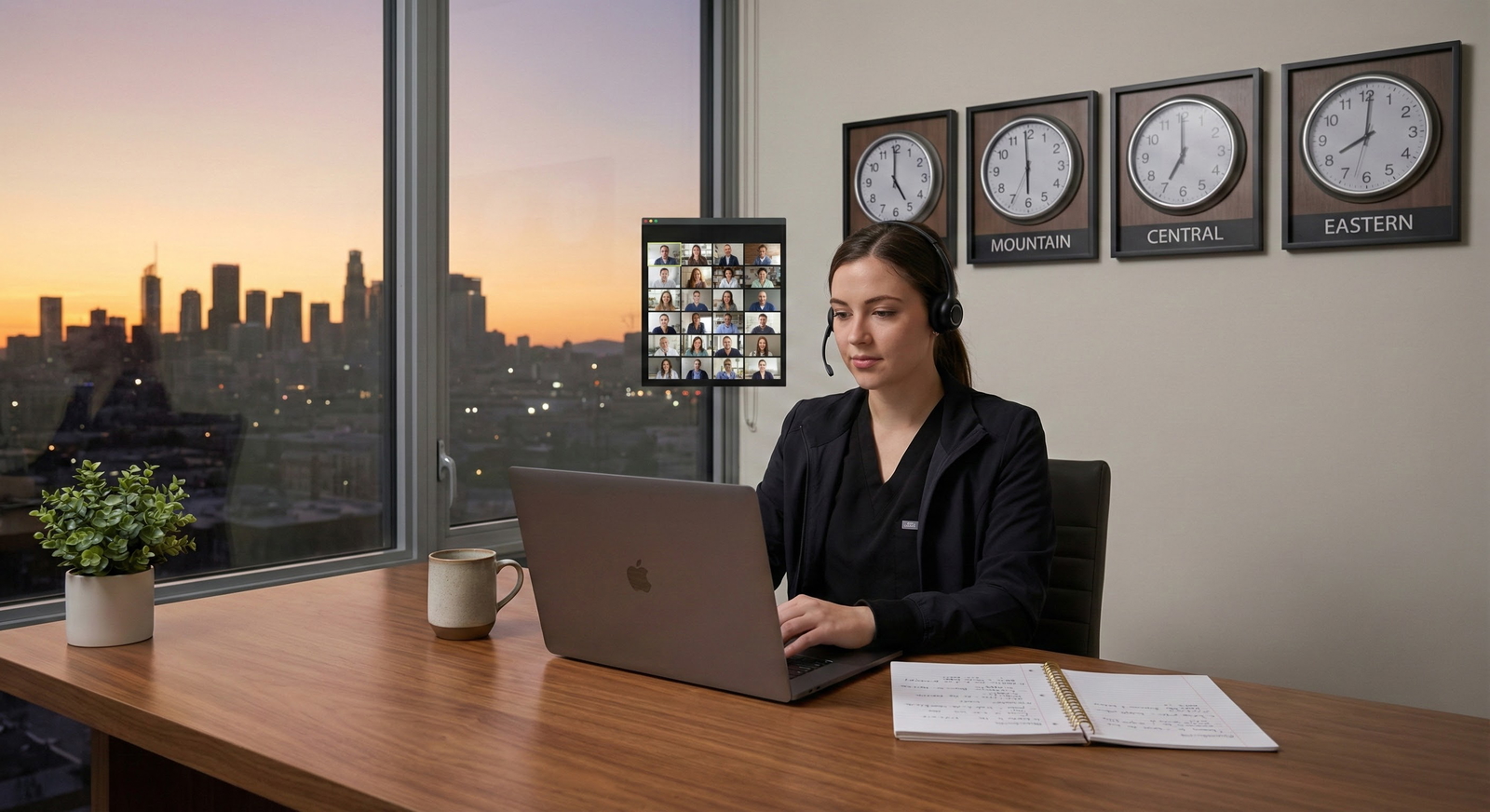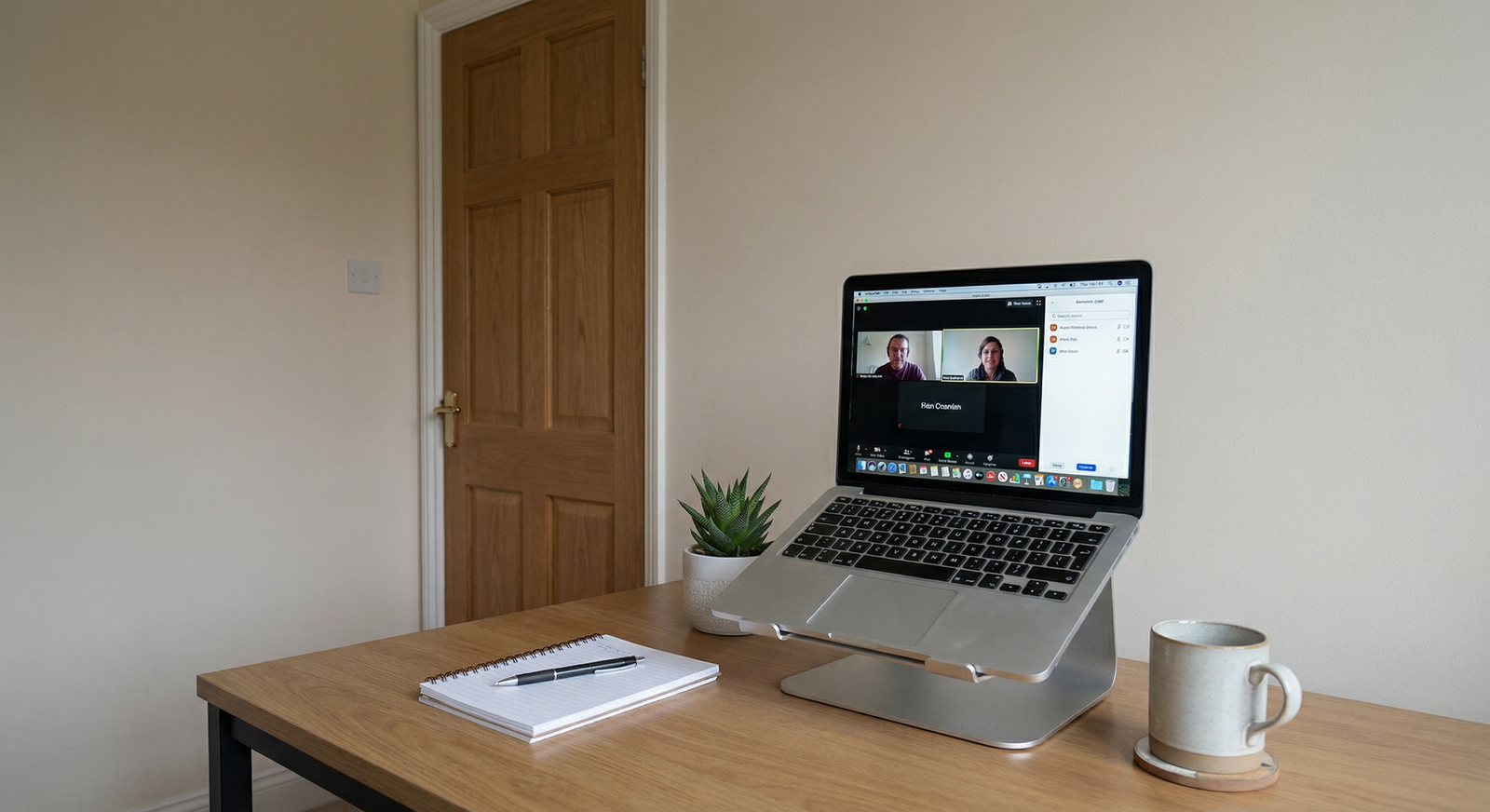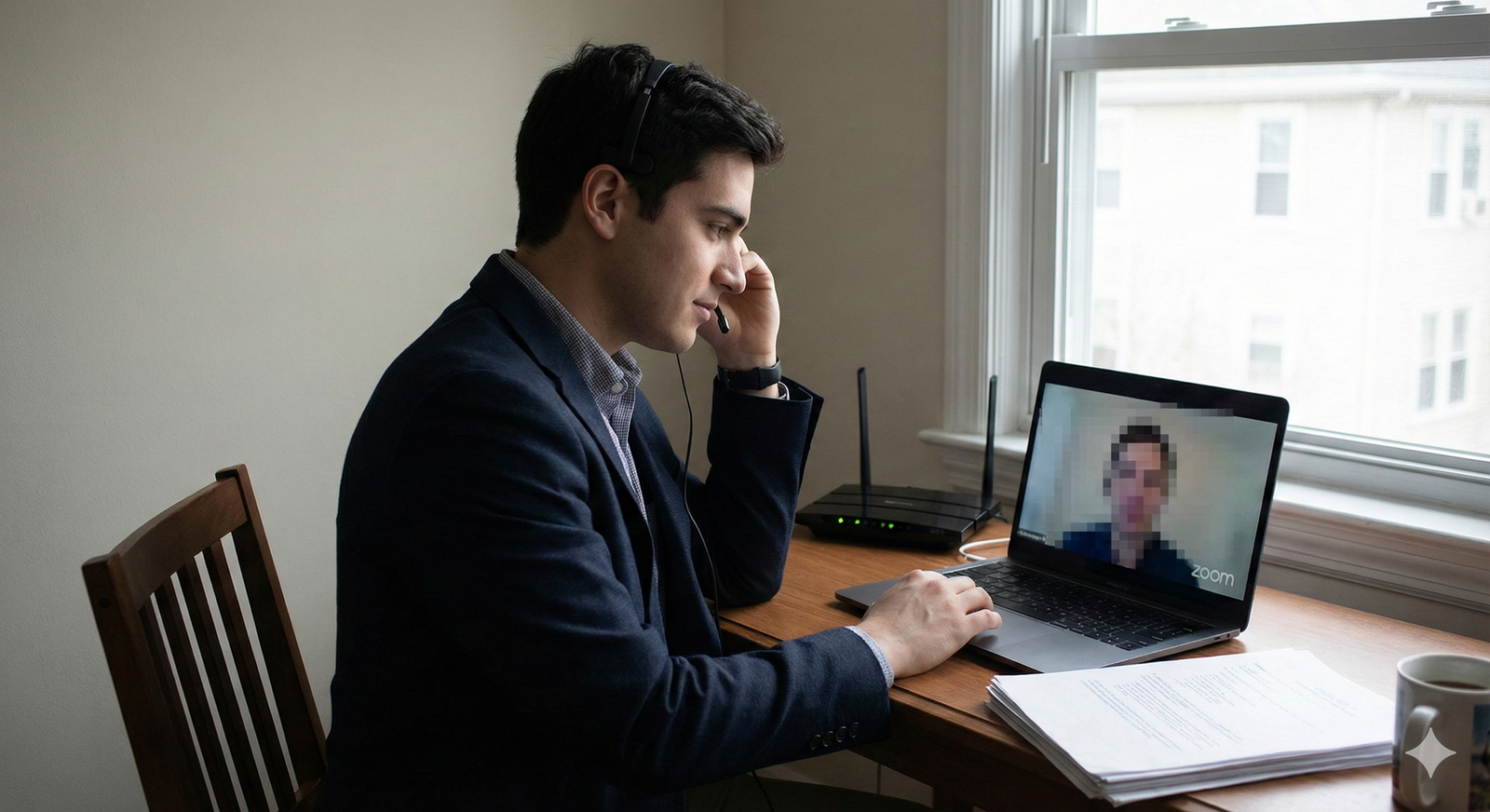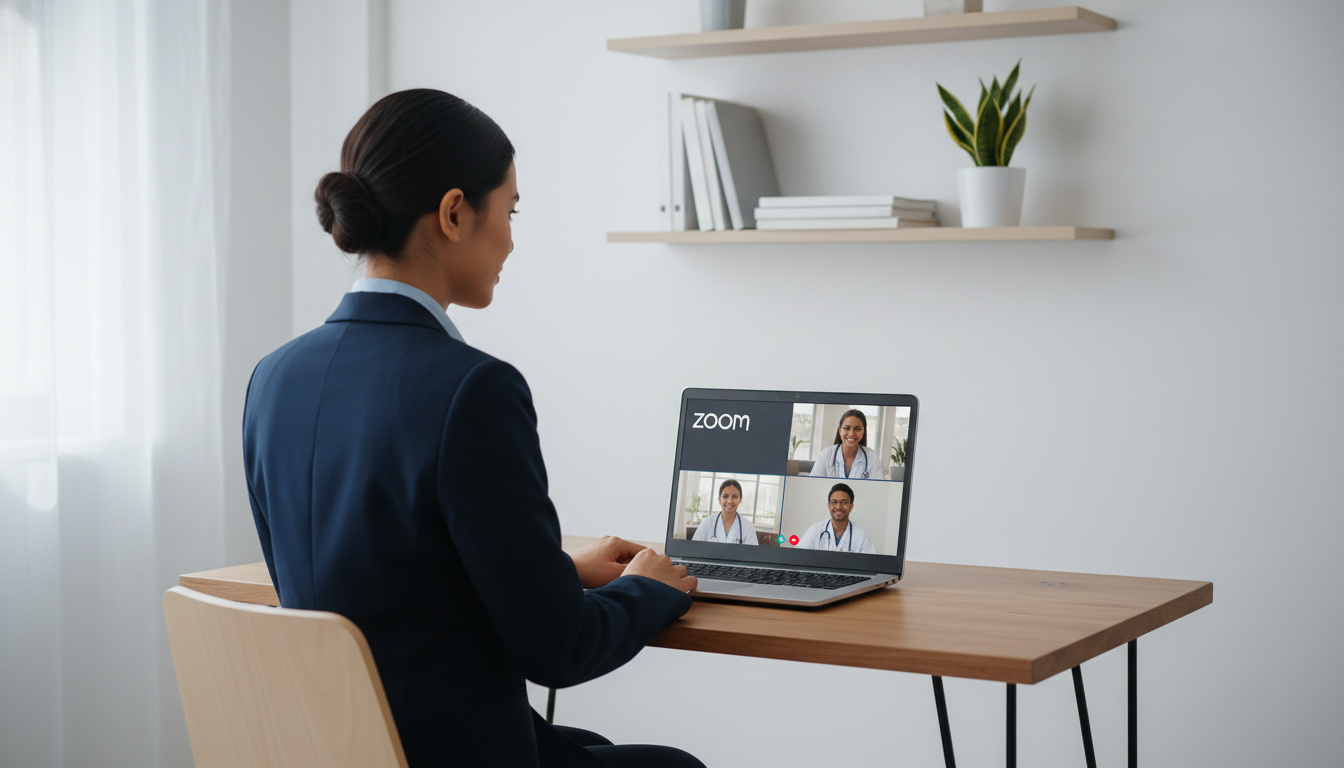
The Psychology of Virtual Residency Interviews: How to Impress Program Directors
Virtual Interviews have transformed the residency application landscape. What began as a pandemic-driven necessity has become a permanent feature of the residency selection process. For applicants, this means your ability to communicate, connect, and impress through a screen is now as critical as your Step scores and letters of recommendation.
Understanding the psychology behind virtual interviews—how people form impressions, process non-verbal cues, and build rapport online—gives you a powerful edge. By applying key psychological concepts and targeted Medical Interview Tips, you can use this format to your advantage and present yourself as a confident, thoughtful, and residency-ready physician.
This guide breaks down the psychological frameworks at play in Virtual Interviews and translates them into practical, high-yield strategies you can implement immediately.
Understanding the Virtual Residency Interview Landscape
Why Virtual Interviews Are Here to Stay
The shift to virtual formats has clear advantages for both applicants and programs:
- Cost and time savings: No flights, hotels, or days away from rotations.
- Broader access: Applicants can interview at more programs; programs can recruit more widely.
- Scheduling flexibility: Shorter, more focused interview days.
Surveys from recent match cycles show that a large proportion of residency programs either use fully virtual interviews or hybrid models. Many program directors report that virtual formats are efficient and sufficient for assessing applicants’ communication skills, professionalism, and fit.
However, this convenience introduces unique challenges:
- Reduced non-verbal information compared with in-person interactions
- Greater reliance on technology (and the potential for lapses)
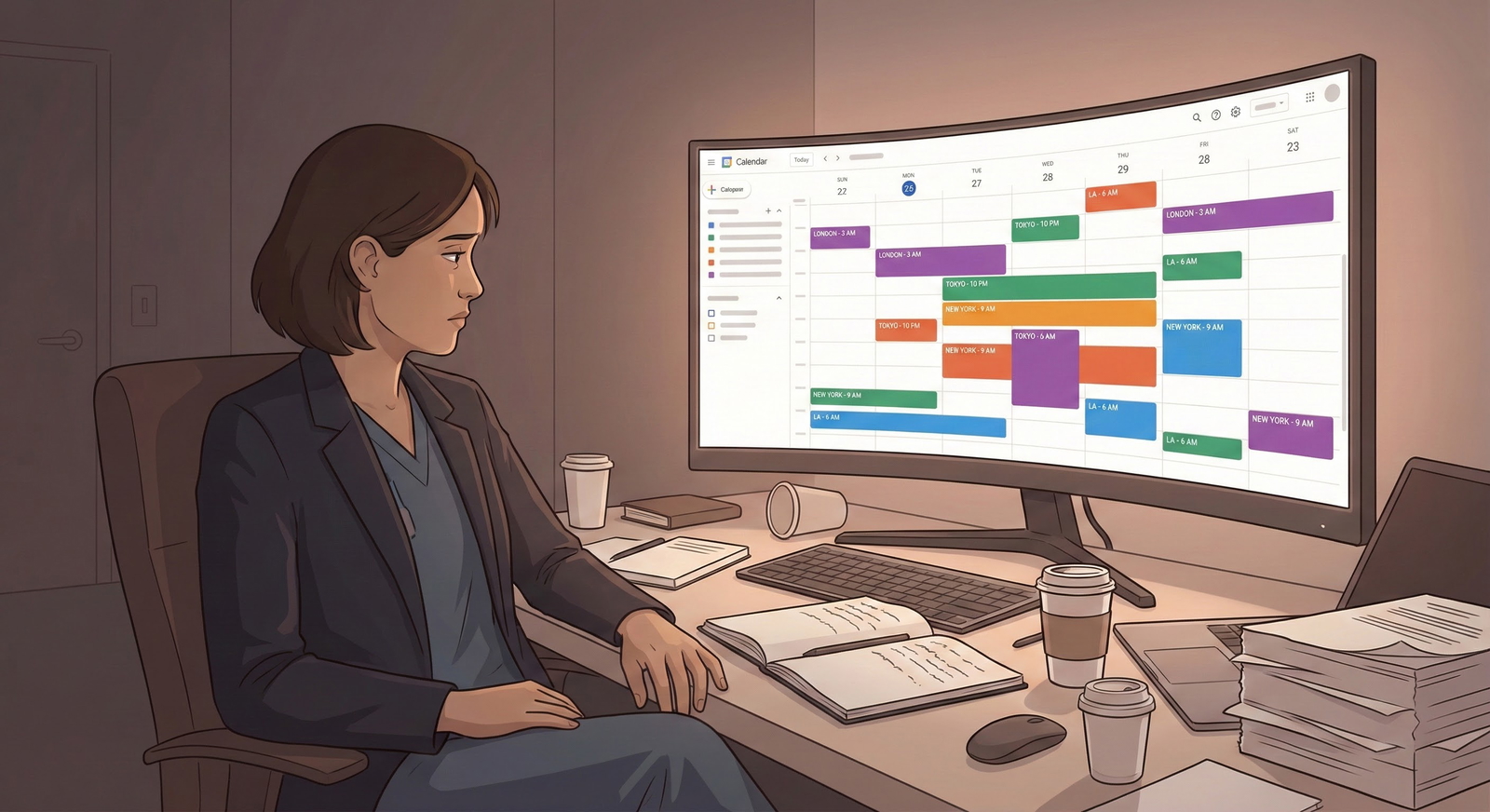
- “Zoom fatigue” for both interviewers and applicants
- Difficulty reading subtle social cues and group dynamics
All of these factors shape how interviewers form impressions of you—and how you feel about yourself on interview day.
The Psychological Stakes of Virtual Formats
Virtual Interviews compress enormous amounts of information into a short online encounter. Program directors are trying to answer key questions:
- Do I trust this person with patients, colleagues, and our program’s reputation?
- Do they seem coachable, resilient, and self-aware?
- Would I want to work 10–12 hours a day with this resident?
In a virtual environment, those questions are answered through what psychology calls thin-slice judgments—rapid, intuitive impressions formed in the first seconds to minutes of meeting someone. Your background, posture, tone of voice, and eye contact all feed into these judgments, often subconsciously.
The goal is not to fake a persona, but to reduce friction: remove distractions, highlight your best qualities, and make it easy for interviewers to see who you really are.
Key Psychological Frameworks Behind Virtual Residency Interviews
1. Impression Management: Shaping How Programs See You
Impression Management is the process of consciously or unconsciously shaping how others perceive you. In the context of residency applications, this is not manipulation; it is deliberate, professional self-presentation.
In in-person interviews, your entrance, handshake, body language, and physical presence all helped create that first impression. In Virtual Interviews, those signals are compressed into:
- Your camera view (framing, background, posture)
- Your lighting and sound quality
- Your facial expressions and micro-expressions
- Your responsiveness and energy
Psychology shows that first impressions are sticky—people unconsciously filter subsequent information through their initial impression. This means:
- A strong, polished start can create a positive halo effect.
- A disorganized, distracted initial impression can make it harder to recover, even if your content is excellent.
Practical Impression Management Tips
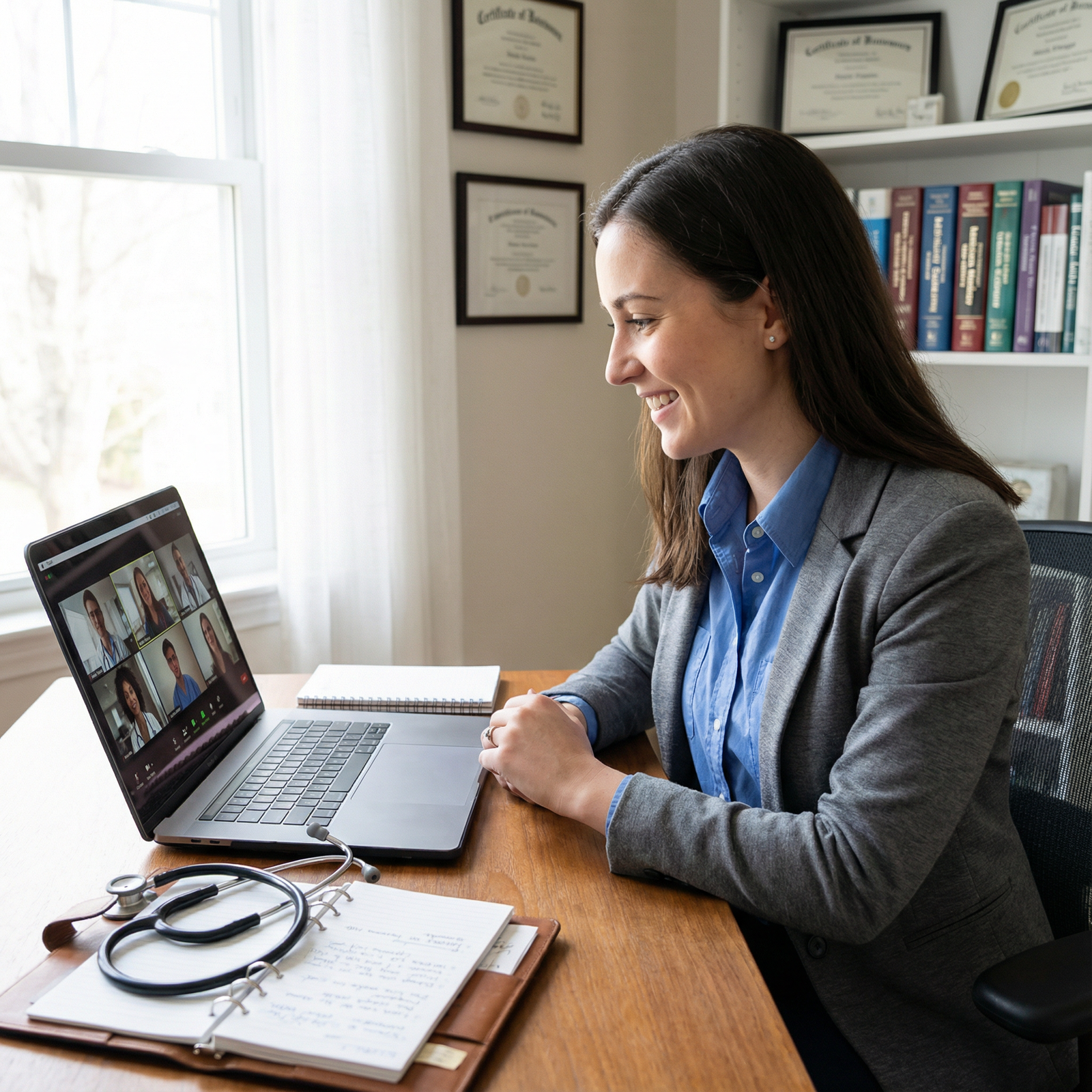
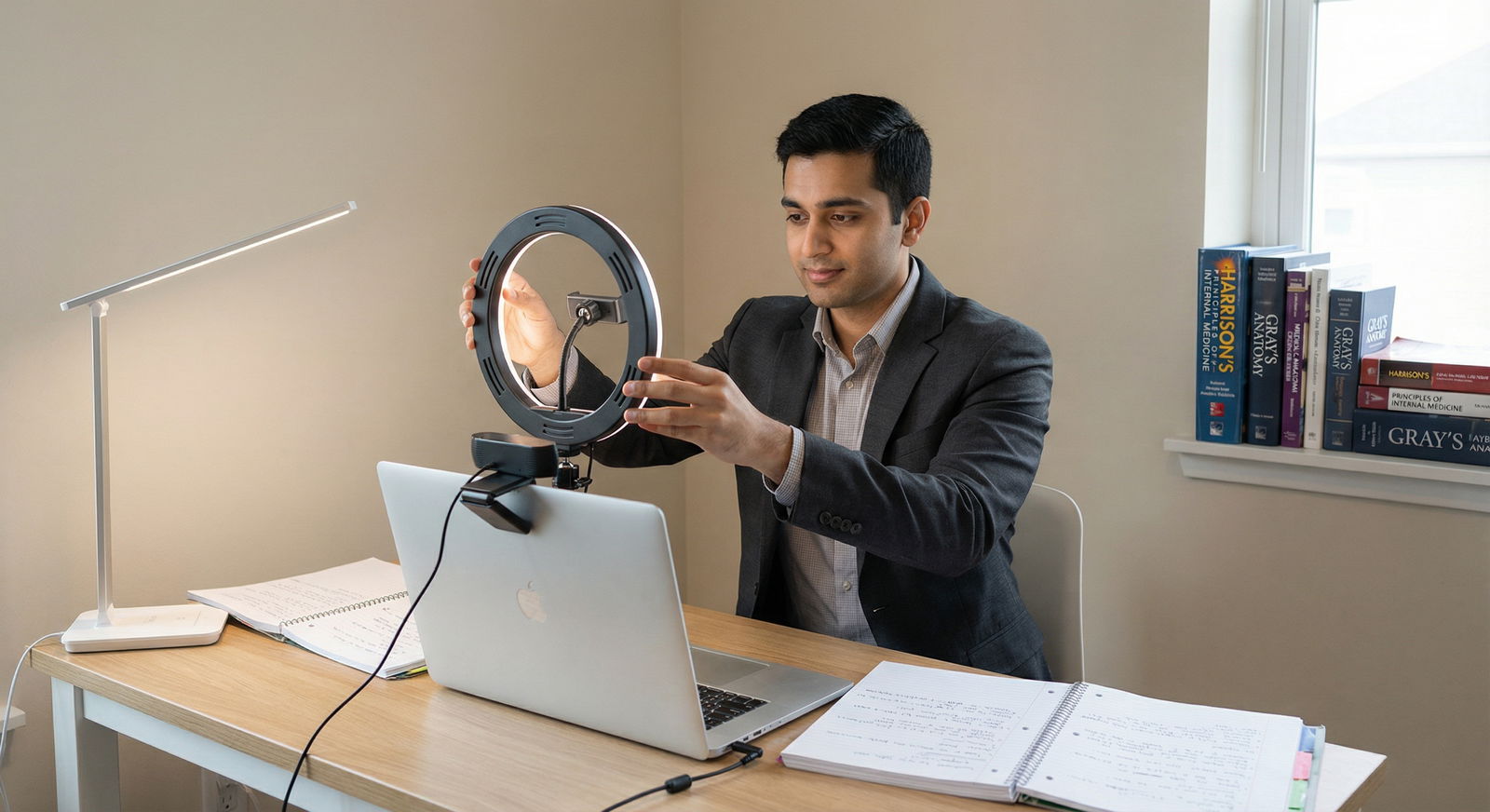
- Frame yourself correctly: Center your head and upper torso in the frame. Leave a little space above your head so you don’t look cramped or distant.
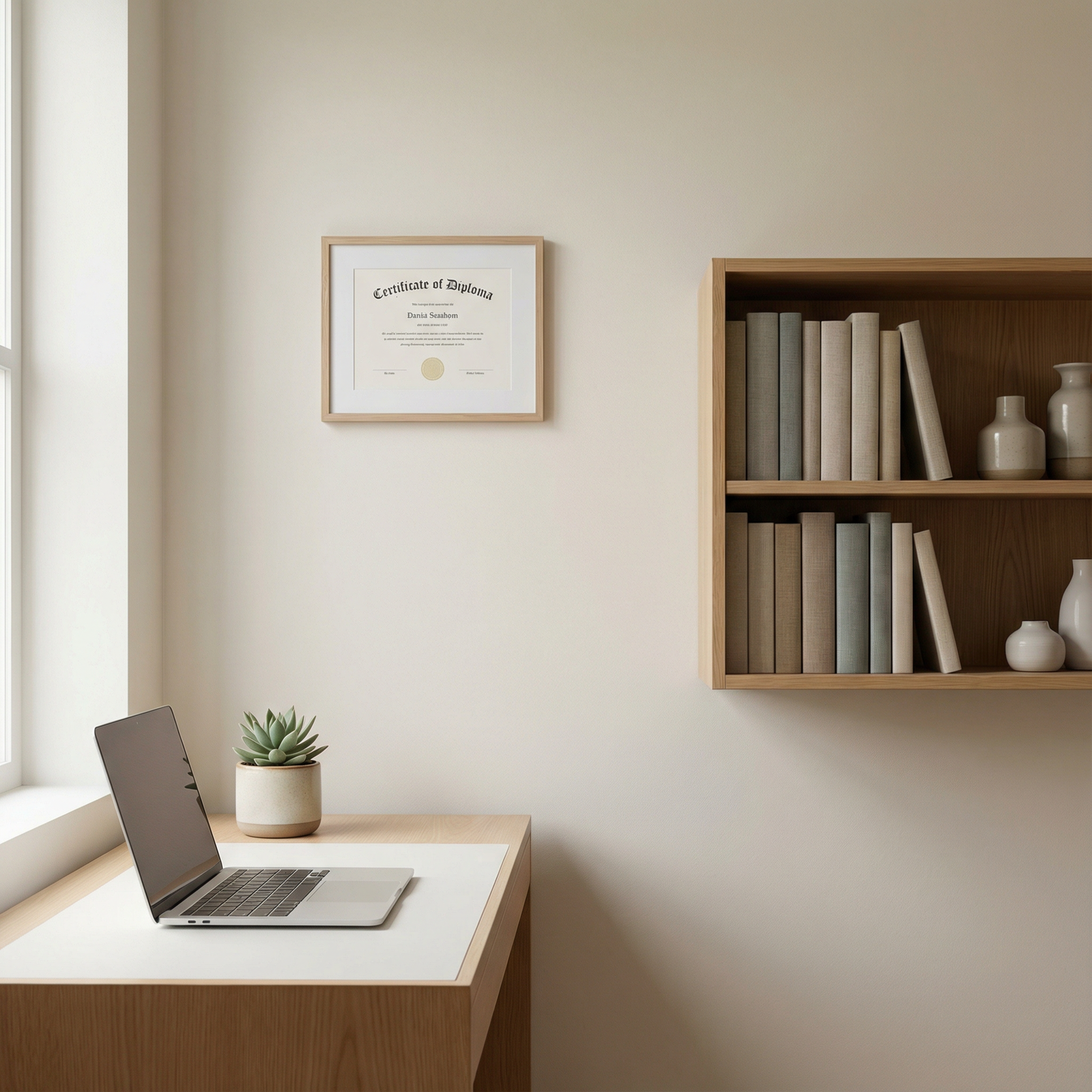
- Use professional, neutral backgrounds: A plain wall, bookshelf, or tidy office-like setting works best. Avoid clutter, beds, or high-traffic spaces.
- Dress as if you were in their conference room:
- Wear a suit or professional attire (jacket, tie or equivalent, modest blouse/dress).
- Avoid loud patterns that can distract or pixelate on camera.
- Optimize lighting and sound:
- Face a window or use a soft front light. Avoid having a bright window behind you.
- Use headphones or a simple lapel/USB mic if your laptop mic is poor.
- Warm but professional demeanor: Start with a genuine smile, greeting by name if possible, and steady, calm tone.
Your goal: when the interviewer first sees your video tile, their automatic response is, “This person looks professional, prepared, and easy to talk to.”
2. Cognitive Dissonance: Aligning Your Beliefs and Performance
Cognitive Dissonance arises when there’s a mismatch between your beliefs and your reality, causing psychological discomfort. For example:
- Belief: “I’m a strong, well-prepared applicant.”
- Feeling: “I’m completely out of my depth with Virtual Interviews.”
That tension can manifest as anxiety, imposter syndrome, or self-sabotage (“I’m just bad on camera”). Left unchecked, it undermines your confidence and your performance.
How to Reduce Cognitive Dissonance Before Interviews
Use psychology strategically to align your internal beliefs with your external behavior:
Deliberate practice:
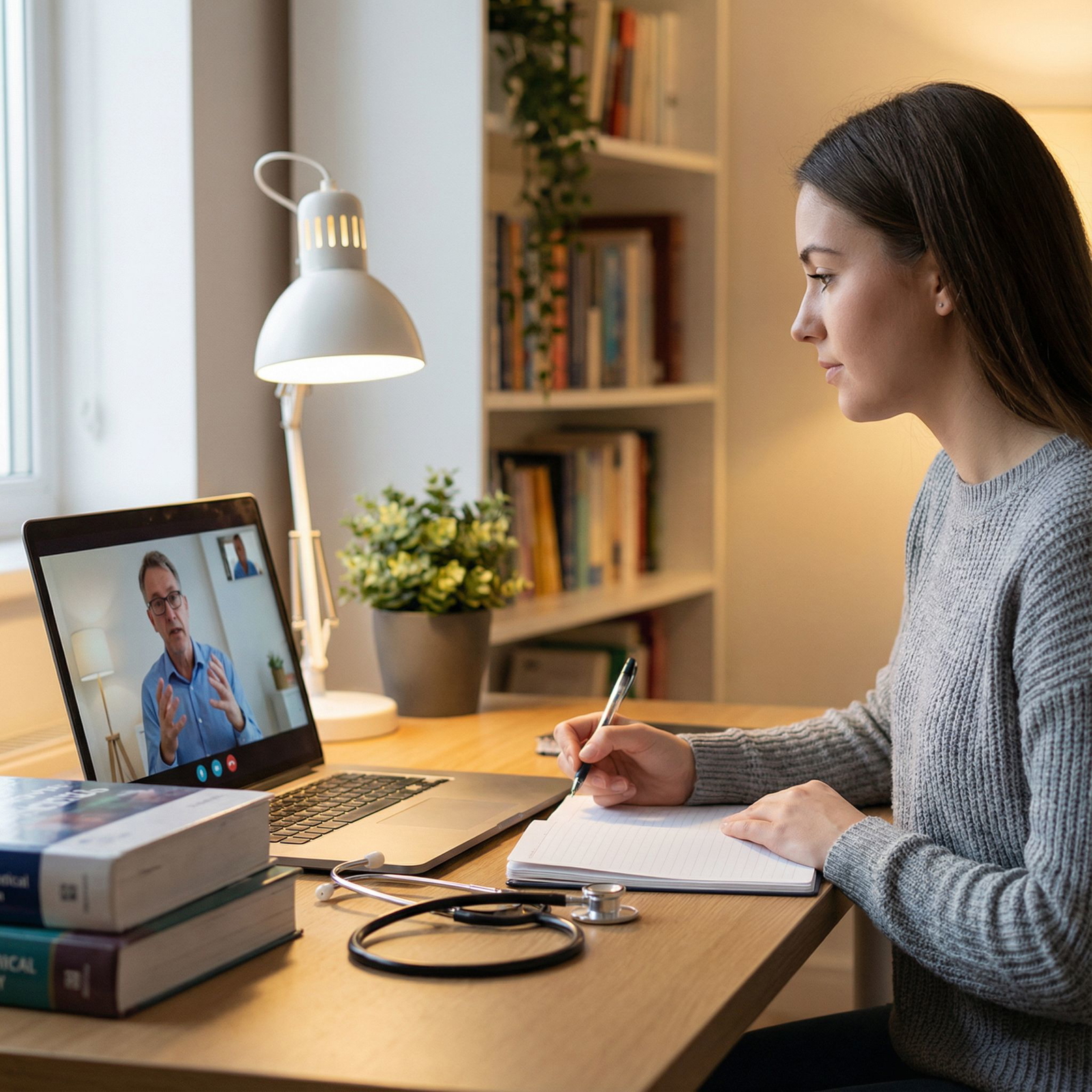
- Conduct multiple mock Virtual Interviews on the actual platform (Zoom, Thalamus, Teams, Webex, etc.).
- Record yourself and review. Notice distracting habits (excessive nodding, looking at yourself, filler words like “um,” “like”).
- Ask a mentor, upper-level resident, or advisor to give candid feedback.
Evidence-based self-talk:
- Write down 5–10 concrete reasons you are prepared (USMLE/COMLEX performance, strong letters, meaningful clinical experiences).
- Before interviews, briefly review this list to remind your brain that you do belong in the room.
Skill reframing:
- Instead of “I’m terrible at interviews,” reframe as “Interviewing is a skill I am actively improving with practice.”
- This growth mindset reduces anxiety and supports more confident performance.
Reduce uncertainty:
- Know the schedule, technology platform, and program format in advance.
- Uncertainty feeds anxiety; clarity calms it.
The aim is to ensure your thoughts, preparation, and behavior are aligned so your genuine strengths can surface naturally during the interview.
3. Social Penetration Theory: Building Real Connection Through a Screen
Social Penetration Theory describes how relationships develop from superficial to deeper levels through progressive self-disclosure. In residency interviews, this is essential: programs are not just evaluating your CV—they are asking, “Who are you as a person and future colleague?”
In a virtual format, there’s a temptation to hide behind a polished script and only talk about achievements. But if you stay too surface-level, you risk appearing distant, rehearsed, or generic.
Balancing Professionalism and Authenticity
You want to strategically reveal enough about your values, motivations, and experiences to feel human and memorable—while still being appropriate for a professional, high-stakes context.
Consider weaving in:
Personal motivations:
- Why did you choose medicine—and this specialty specifically?
- Was there a patient, mentor, or family experience that shaped your path?
Vulnerabilities and growth:
- Briefly share a challenge you faced (academic difficulty, burnout, personal setback) and what you learned.
- Focus on insight, resilience, and what changed in your approach.
Values and working style:
- How do you function on a team?
- What do you value in feedback and mentorship?
- What kind of learning environment brings out your best?
An example of appropriate, deeper self-disclosure:
“During my third-year medicine clerkship, I struggled with time management and felt overwhelmed caring for a high patient load. After feedback from my senior, I started creating structured pre-rounding checklists and debriefing challenging cases with residents. That experience taught me the importance of seeking feedback early and building systems to stay organized under pressure—skills I’ll bring into residency.”
This level of openness fosters rapport, enhances trust, and gives interviewers a vivid sense of who you are.
High-Yield Strategies to Impress in Virtual Residency Interviews
1. Leverage Technology Wisely and Proactively
Psychologically, visible tech glitches or obvious unfamiliarity with platforms can subconsciously signal disorganization or lack of preparation—even if that’s not true. You can’t control everything, but you can control your readiness.
Pre-Interview Tech Checklist
Internet:
- Use a wired connection if possible, or sit close to your router.
- Ask others in your home to minimize streaming/gaming during your interview time.
Device and platform:
- Update your device and software before interview week.
- Install and test Zoom/Teams/Webex/Thalamus with a friend.
- Disable intrusive notifications (email, messaging, pop-ups) that could appear on screen.
Backup plan:
- Keep your phone charged and nearby with the platform app installed.
- Save the program coordinator’s email and/or phone in case you drop off.
- Have a brief script ready: “I’m so sorry for the technical issue; thank you for your patience. May I continue where we left off?”
A calm, prepared response to inevitable tech issues actually reflects well on your professionalism and emotional regulation.
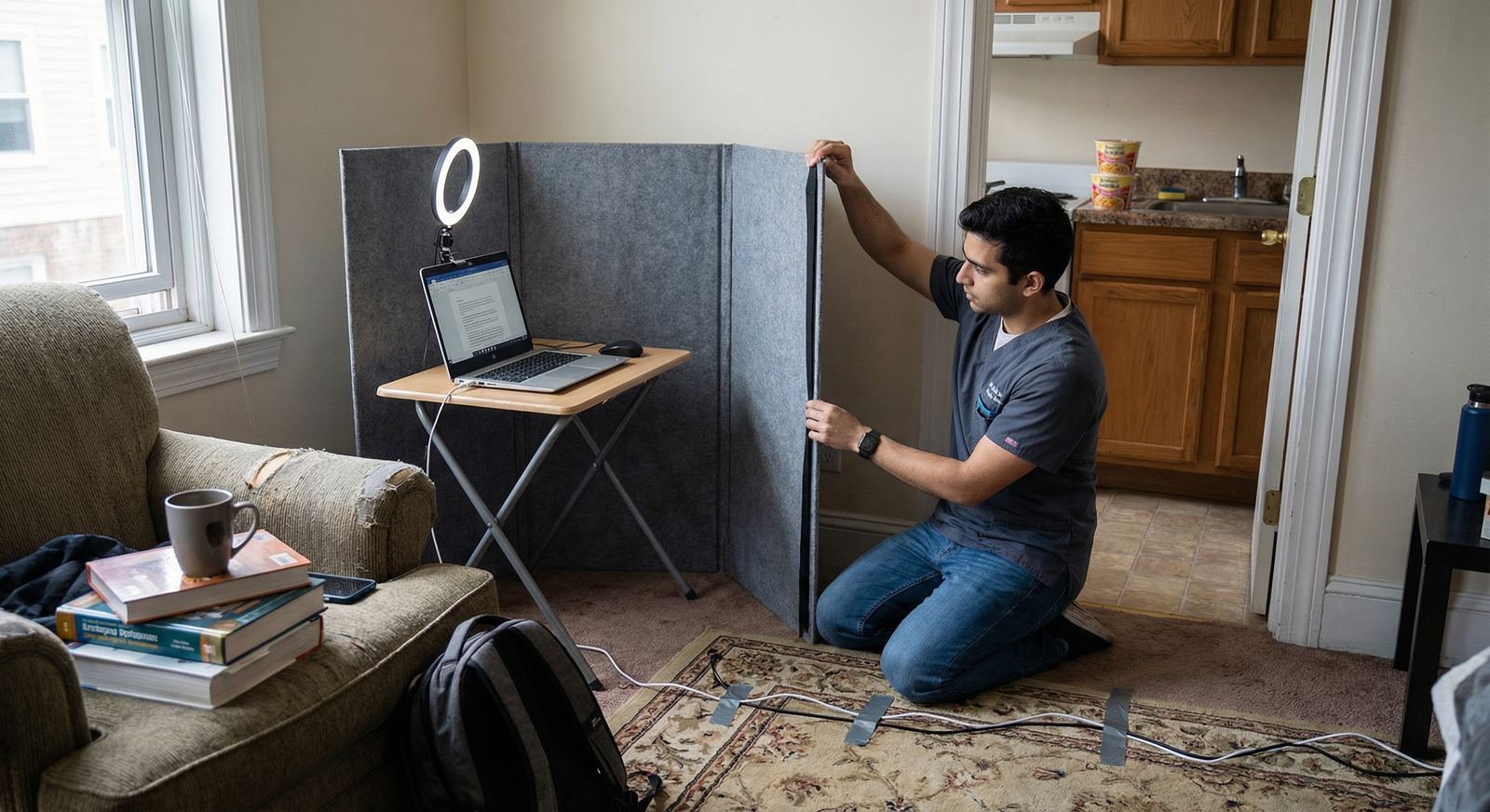
2. Create a Professional, Psychologically Calming Environment
Your physical environment subtly communicates your level of organization and respect for the interview. It also affects your own psychological state.
Designing Your Interview Space
Visual environment:
- Neutral background (plain wall, tidy bookshelf, or virtual background approved by your school if necessary).
- Remove distracting items (laundry, posters, political items).
- Slight touches like a plant or a neatly arranged shelf can make the space feel warm but not busy.
Ergonomics and comfort:
- Use a stable chair; avoid spinning or squeaky chairs.
- Place the camera at eye level (use books or a stand) to avoid the “looking down” effect.
Noise control:
- Inform roommates/family of your schedule.
- Silence your phone and other devices.
- If noise is unavoidable (construction, traffic), use a headset and briefly acknowledge it if needed.
A calm, controlled environment supports your own sense of control and reduces cognitive load, freeing you to focus on conversation and content.
3. Master Non-Verbal Communication on Camera
Non-verbal cues are critical psychology-driven components of communication, even through a webcam. Interviewers use them to infer confidence, engagement, and emotional intelligence.
On-Camera Non-Verbal Best Practices
Eye contact:
- Look at the camera when you’re speaking, not at your own image.
- You can place a small sticky note near your webcam with a smiley face or dot to remind yourself where to look.
Facial expression:
- Maintain a soft, engaged expression—resting face on camera can sometimes appear disinterested or tense.
- Nod occasionally to show active engagement, but avoid excessive bobbing.
Posture and gestures:
- Sit upright but relaxed, with shoulders open.
- Use natural hand gestures within the frame; they can make you appear more energetic and sincere.
- Avoid fidgeting with pens, clicking a mouse repeatedly, or swiveling your chair.
Speaking pace and tone:
- Slightly slower than normal, with clear articulation.
- Vary your tone to avoid monotone delivery, especially toward the end of long interview days when fatigue sets in.
Practicing these skills via recorded mock interviews allows you to see what interviewers will see and adjust accordingly.
4. Manage Anxiety with Evidence-Based Techniques
Even the most prepared applicants experience anxiety. The goal is not to eliminate it, but to harness it. Moderate anxiety can sharpen focus—if you prevent it from becoming overwhelming.
Visualization and Mindfulness Techniques
Guided visualization (5 minutes):
- Close your eyes and mentally rehearse the interview: logging in on time, greeting confidently, answering questions thoughtfully, and ending with a strong closing statement.
- Visualizing success has been shown to improve performance by priming the brain for desired behaviors.
Box breathing (4–4–4–4 method):
- Inhale for 4 seconds → hold for 4 → exhale for 4 → hold for 4.
- Repeat for 3–5 cycles before the interview to decrease sympathetic nervous system activation.
Grounding technique (5–4–3–2–1):
- Name 5 things you can see, 4 you can feel, 3 you can hear, 2 you can smell, 1 you can taste.
- Helpful if you feel yourself dissociating or panicking just before logging in.
Micro-breaks between interviews:
- Stand, stretch, sip water, and step away from the screen for a minute or two.
- Reset your posture and mental focus before each new interviewer.
These techniques align your internal state with the composed, competent image you want to project.
5. Structure Your Answers to Showcase Clinical Reasoning and Maturity
Virtual formats often compress time, making clear, concise structure crucial. Good structure helps interviewers follow your thinking and remember your stories.
Use Behavioral Frameworks (e.g., STAR or CAMP)
For behavioral questions (“Tell me about a time…”), use:
- STAR Method:
- Situation – Brief context
- Task – Your role/responsibility
- Action – What you did
- Result – Outcome and what you learned
Or, for some academic contexts:
- CAMP Method (Context, Action, Motivation, Personal reflection)
Example (STAR) – Handling Conflict on a Team:
“During my surgery rotation (Situation), our team had repeated miscommunications about post-op orders, and a patient’s pain control was delayed (Task). I asked the resident if we could create a shared checklist for daily post-op tasks and communicated with the nursing staff to clarify expectations (Action). Over the next week, we had fewer delays, and the resident shared the checklist with the next team. I learned how proactive communication and simple systems can prevent patient care issues (Result).”
Practice structuring responses to common questions about:
- Handling mistakes or adverse events
- Working in teams
- Dealing with stress and burnout
- Conflicts or ethical dilemmas
- Leadership and teaching experiences
6. Practice Active Listening and Conversational Presence
In Virtual Interviews, it is easy to drift into “performance mode” and forget that this is a two-way human conversation. Active listening is a key element of positive impression management and Psychology-informed communication.
How to Demonstrate Active Listening Online
- Let the interviewer finish the question completely—avoid interrupting, especially with audio lag.
- Briefly paraphrase or acknowledge complex questions:
- “That’s a great question about managing uncertainty in complex cases…”
- Pause for half a second before answering to show you’ve considered the question.
- Ask thoughtful, specific questions about the program that show you’ve done your homework and listened during the information sessions.
Examples of strong, specific questions:
- “You mentioned earlier that interns get early autonomy on night float. How does supervision work during those nights?”
- “How does your program support residents who have an interest in medical education and curriculum design?”
This combination of listening and curiosity creates a reciprocal, engaging interaction—making you more memorable and likable.
Putting It All Together: A Psychology-Informed Interview Day Routine
To integrate these concepts, consider a structured approach for each interview day:
Night before:
- Review program information, your application, and 4–5 key stories (clinical challenge, teamwork, conflict, resilience, leadership).
- Set up equipment, test lighting and sound, charge devices.
- Lay out your interview outfit.
Morning of:
- Light breakfast, hydration.
- 5–10 minutes of visualization and breathing exercises.
- Quick tech check and environmental scan (background, noise, camera position).
Before each individual session:
- Re-center with 1–2 cycles of box breathing.
- Mentally review your core message: “What 2–3 things do I want this interviewer to remember about me?”
During interviews:
- Focus on connection, not perfection.
- Use structured answers and maintain non-verbal engagement.
- Ask program-specific, sincere questions.
After the day ends:
- Take brief notes about your impressions, culture fit, and what you liked or didn’t like.
- Avoid ruminating over small perceived mistakes—everyone has a few.
By approaching Virtual Interviews with this psychology-informed structure, you convert a potentially stressful experience into a controlled, intentional performance of your best self.
FAQ: Virtual Residency Interviews, Psychology, and Making a Strong Impression
1. How should I dress for a virtual residency interview?
Dress exactly as you would for an in-person interview:
- Wear formal, professional attire (suit jacket, tie or equivalent, professional blouse or dress).
- Choose solid or subtle patterns; avoid overly bright or busy designs that can distract on camera.
- Make sure your appearance is polished—groomed hair, minimal jewelry, and tidy overall look.
Even though you’re at home, dressing fully (not just the top half) helps your mindset and posture, reinforcing the psychological impression of professionalism.
2. What should I do if I experience technical issues during the interview?
Technical glitches happen, and interviewers know this. Your response is what matters:
- Stay calm and composed.
- Try to quickly resolve the issue (reconnect internet, rejoin the meeting, switch to phone audio if needed).
- Acknowledge briefly and professionally:
- “I apologize for the interruption; thank you for your patience. I believe the issue is resolved now.”
- If you’re disconnected and can’t rejoin immediately:
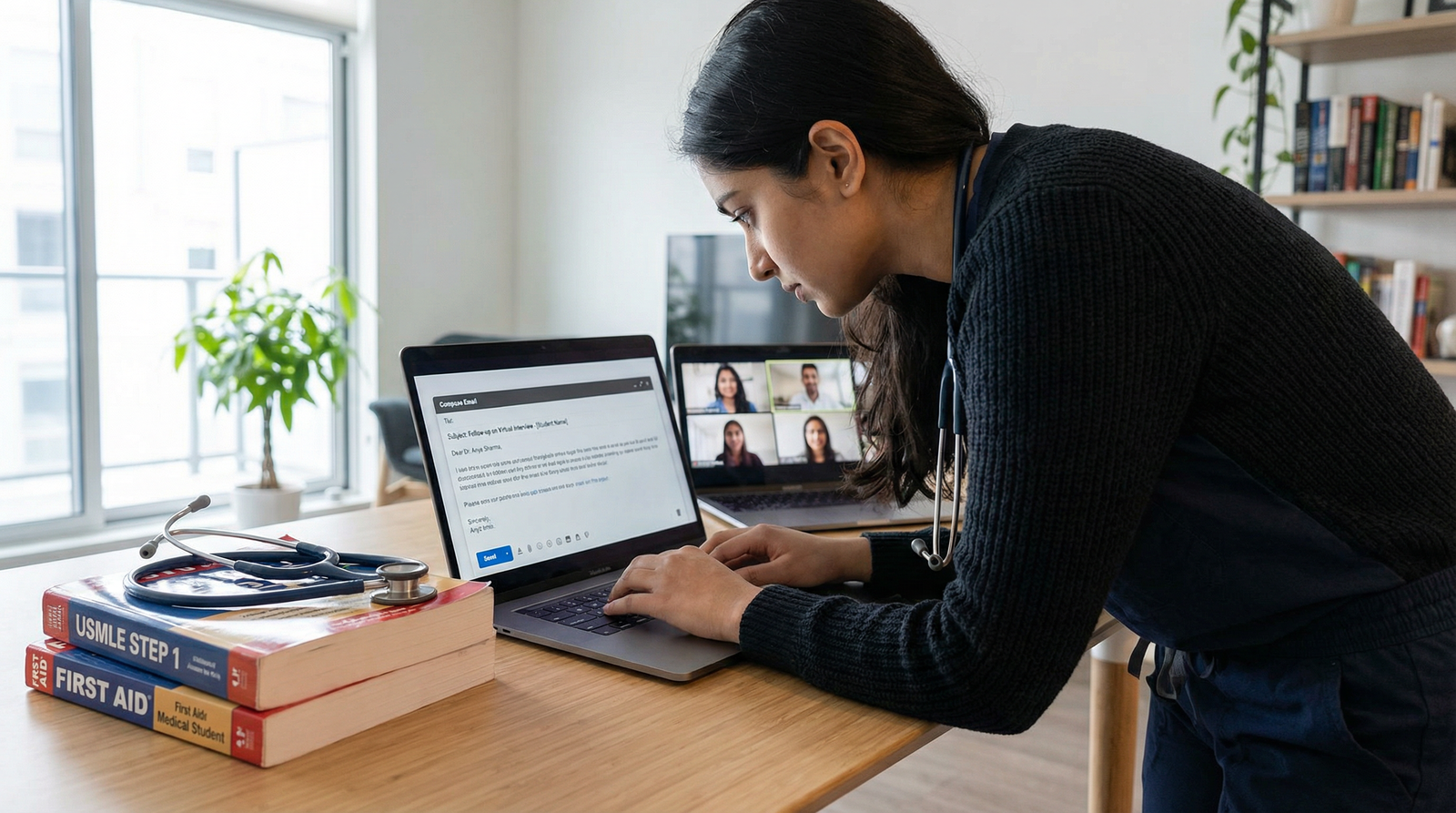
- Email or call the program coordinator with a concise explanation and request to reconnect or reschedule the segment.
Handling issues calmly demonstrates emotional regulation and professionalism—key traits programs look for in residents.
3. How can I make sure my background and environment are appropriate?
Aim for a clean, neutral, and minimally distracting environment:
- Backdrop: Plain wall, bookshelf, or tidy office-like area. Remove clutter, posters, or anything potentially controversial.
- Lighting: Face your light source (window, lamp) rather than having it behind you.
- Noise: Close doors, silence devices, and inform housemates of your schedule.
- Virtual backgrounds: If you must use one, choose a simple, professional option and test it to ensure your image does not blur or glitch.
Ask a friend or mentor to join a test call and provide honest feedback on how your environment appears.
4. Is it acceptable to take notes or refer to notes during a virtual interview?
Yes, but with moderation:
- Short notes are fine: A few bullet points with key talking points, questions for the program, or reminders (e.g., “look at camera,” “smile,” “mention QI project”) can be helpful.
- Avoid reading verbatim: Looking down frequently or reading from a script breaks eye contact and can feel inauthentic.
- Use them as prompts, not a script: Glance occasionally, then return your attention to the camera and interviewer.
If taking notes about what the interviewer says, do it briefly and explain if needed: “I might jot down a couple of points so I remember them later, if that’s okay.”
5. What types of questions should I prepare for my virtual residency interviews?
Prepare for both standard and program-specific questions:
Common core questions:
- “Tell me about yourself.”
- “Why this specialty?”
- “Why our program?”
- “Tell me about a time you faced a challenge/conflict and how you handled it.”
- “Describe a mistake you made and what you learned.”
- “How do you handle stress or burnout?”
Program-focused questions:
- “What distinguishes your program from others in the region?”
- “How is feedback delivered, and how often?”
- “What support is available for residents interested in research, QI, or medical education?”
- “How does the program promote wellness and work–life balance?”
Develop 8–10 core stories from your clinical, academic, and personal experiences that you can adapt to answer various questions using structured frameworks (e.g., STAR). This preparation not only improves your answers but also reduces anxiety and cognitive dissonance.
By integrating these psychological principles—Impression Management, Cognitive Dissonance reduction, and Social Penetration Theory—into your approach to Virtual Interviews, you transform the screen from a barrier into a tool. With deliberate preparation, authentic communication, and thoughtful self-presentation, you can stand out as a capable, reflective, and residency-ready physician in any virtual room you enter.