
The biggest lie about virtual residency interviews is that programs “just want to get to know you.” They don’t. They’re scoring you on a hidden checklist while smiling at you on Zoom.
Let me walk you through what’s actually happening on the other side of that screen.
Program directors, faculty, and chief residents are sitting there with structured rubrics—some formal, some scribbled on a template they’ve been using for five years. They’re quietly assigning numbers to your “eye contact,” “technical reliability,” “professionalism,” “fit,” and “communication” while you stress about whether your bookshelf looks academic enough.
You think you’re having a conversation.
They’re building a score that decides whether you ever step foot in that hospital.
What PDs Actually Score During Virtual Interviews
Most applicants obsess about their answers. PDs are often scoring your delivery more than your content. I’ve literally watched faculty write “great story, poor presence” and give a 2/5.
Here’s what typically happens behind the scenes.
Before interview season, the program coordinator emails everyone a standardized rubric. It’s usually a 1–5 or 1–7 scale across multiple domains. These domains are not random. They come from three pressures:
- GME office requiring “objective” criteria to protect against bias and lawsuits
- Faculty complaints from prior years (“We keep ranking people who are awkward in front of patients”)
- Whatever went wrong with their last bad resident (“We’re adding ‘professionalism’ to the rubric this year”)
Most programs will not show you this rubric. But they use it religiously—especially in virtual interviews, where they feel they need “something objective” to compensate for the lack of in-person contact.
The usual buckets:
- Communication skills
- Professionalism and reliability
- Technical setup and “virtual readiness”
- Motivation and fit for program
- Maturity and insight / self-awareness
- Overall global rating (“Would you want this person on your team?”)
Some places add “interpersonal warmth” or “team compatibility.” They rarely call it that in writing, but they talk about it that way in ranking meetings.
| Domain | Common Scale (1–5) |
|---|---|
| Communication Skills | 1–5 |
| Professionalism | 1–5 |
| Technical Setup/Reliability | 1–5 |
| Fit/Motivation for Program | 1–5 |
| Maturity/Self-Awareness | 1–5 |
| Overall Global Rating | 1–5 |
Nobody tells you that you can absolutely bomb one of these domains and still be ranked… or that a mediocre performance in all of them gets you quietly buried in the bottom third.
The First 90 Seconds: Where Half Your Score Is Decided
The first 90 seconds of a virtual interview carry more weight than anyone will admit.
Faculty will deny this. But watch them in a real interview day: within a minute they’re already writing: “strong presence,” “low energy,” “awkward.” Those first impressions anchor every subsequent score.
What they’re subconsciously scoring right away:
- How you show up on camera
- How your voice sounds
- Whether you look like you actually want to be there
- Whether your tech setup screams “I took this seriously” or “I rolled out of bed”
And yes, there is often an explicit rubric line for this—coded as “Professionalism” or “Communication.”
Here’s what programs are really seeing:
You log on. If you’re:
- Slightly late? You start at a deficit. They may have a literal checkbox for “on time vs late.”
- Fumbling with audio? Someone mentally dings you for “unprepared.”
- Looking off to the side because your camera is off-center? They write “poor eye contact” or “distracted.”
- Sitting in a dark room with a messy bed behind you? “Questionable judgment.” I’ve seen that phrase written more times than I can count.
I’ve watched an attending at a competitive IM program in the Midwest say, before an applicant even finished saying hello: “This is a 2 on professionalism. Look at that background.”
You think it’s trivial because “it’s just virtual.” They think it’s predictive of how you’ll show up to 6 am rounds.
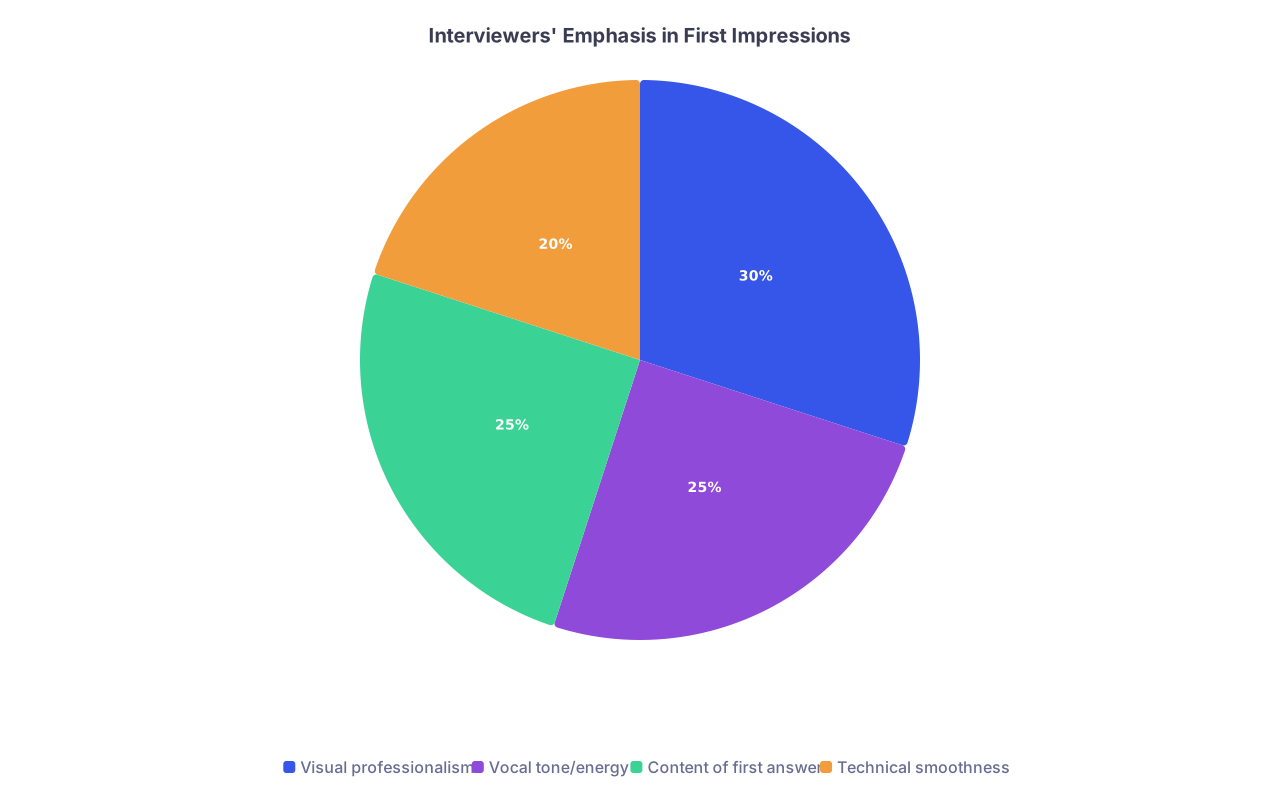
| Category | Value |
|---|---|
| Visual professionalism | 30 |
| Vocal tone/energy | 25 |
| Content of first answer | 25 |
| Technical smoothness | 20 |
The Hidden “Tech & Environment” Score You Didn’t Know Existed
Programs will never write “lighting” or “camera angle” on their official rubric. But they absolutely judge it.
Here’s the unspoken hierarchy of virtual setup quality as PDs experience it:
Top tier:
Neutral background. Good lighting. Camera at eye level. Clear audio. You’re framed mid-chest up. No backlighting. Strong internet. No notifications pinging. They forget it’s virtual within 30 seconds. These people get 4s and 5s on professionalism by default.
Middle tier:
Slightly dark. Slight echo. Camera a bit low so they’re looking down at your nostrils. Clean enough but obviously a dorm or shared space. Internet hiccups once. They’ll tolerate it, but you’ve burned through some goodwill.
Bottom tier:
Backlit window so your face is in shadow. Headphones half broken. You keep asking “Can you hear me okay?” Your roommate slams a door behind you. Someone’s microwave beeps. You freeze twice and have to reconnect. These people get “concerns about reliability” in their notes. I’ve seen it knock an otherwise strong candidate below the rank cutoff.
Here’s how that often maps onto their formal rubric, even if they don’t admit it’s about tech:
- A 5 in professionalism: “Showed up fully prepared, excellent communication, no issues.”
- A 3: “Minor tech issues; overall acceptable but not polished.”
- A 1–2: “Significant technical or professionalism concerns; may struggle with telehealth or virtual conferences.”
Programs extrapolate: if you can’t run a stable Zoom for your own future on Match Day, how are you going to manage telemedicine with patients?
How They Score “Communication” (It’s Not About Big Words)
Most rubrics have some version of “Communication skills: 1–5.”
Applicants think that means “sound smart” or “include all the details.” That’s wrong. Faculty are scoring:
- Can I follow your story without effort?
- Do you answer the question I asked or go off on tangents?
- Do you speak like a colleague, or like you’re defending an oral exam?
- Would a patient understand you?
Things that quietly tank your score here:
You ramble. Your answers hit minute three with no clear point, and an interviewer glances at the clock. I’ve watched evaluators write, “Long-winded, could be difficult on rounds.”
You answer everything like it’s Step 1 SAQ. Overly formal, stiff, academic language. No warmth. No normal-person phrasing. Faculty call it “robotic” more than you think.
You give 1-sentence answers. If they have to drag content out of you, they’ll mark you down as “poor communicator” or “limited insight.”
You use filler phrases constantly: “Like… you know… um… yeah so…” Some people get absolutely shredded for this in committee; others don’t care. But if they’re already borderline on you, this becomes another reason to drop your rank.
On the flip side, what gets 4s and 5s:
You answer concisely, then stop talking. You let them ask follow-ups. You’re human—your voice has inflection—but you’re not performing. You sound like a resident giving a focused but readable presentation.
One PD I know literally told his faculty: “If you’d trust them to explain bad news to your family member, that’s a 5 in communication. If you’d be nervous, that’s a 2–3.”
The “Professionalism” Rubric Is Stricter Than You Think
You’ll see “Professionalism” or “Reliability” on almost every rubric. It’s the trash bin where all their minor annoyances go.
This includes:
- Being late to the Zoom room
- Appearing disheveled (hair, clothes, background chaos)
- Being overly casual or overly familiar
- Checking your phone on camera (yes, people do this)
- Eating during the interview (also happens more than you’d believe)
- Talking negatively about other programs, residents, or your medical school
- Sharing too much personal drama unprompted
I’ve seen a faculty member put a hard 1/5 for professionalism just because the applicant’s cat kept walking across the keyboard and they didn’t remove it. Was that fair? Debatable. Did it happen? Absolutely.
Programs are paranoid about professionalism because they’ve all been burned at least once—late notes, rude to nurses, disappearing interns. So that rubric line carries disproportionate weight.
If you get a 2 or below in professionalism from more than one interviewer, you’re usually done. Even if your Step scores are gold.
The Invisible “Fit” Score: Where Your Rank Really Lives
This is the slipperiest and most powerful category: “Fit for program” or “Overall impression.”
On paper, this is supposed to be about alignment of interests: academics vs community, research vs clinical, location, patient population. In practice, it’s, “Do I want this person on my team at 2 am?”
Everyone pretends this is objective. It’s not. It’s vibes with a thin layer of structure.
During file review, they’ll see: geographic ties, specialty choice reasoning, academic interests. That biases them before they meet you. During the interview, they’re watching:
- Do you seem genuinely interested in this program, or are you reciting a generic script?
- Do you understand what our program actually is? (Tertiary referral center vs safety net vs community-heavy)
- Would you get along with our residents?
- Do you seem like you’ll be happy here or immediately try to transfer?
A high “fit” score often sounds like: “Good energy, down-to-earth, residents will like them.” I’ve heard that exact sentence used as justification to rank someone in the top 5 despite mid-tier metrics.
A low “fit” score might be: “Seems great, but wants heavy research—may not thrive here.” Or, more brutally, “Odd affect, not sure how they’d mesh with our culture.”
Remember: with virtual interviews, everyone is some version of polished on paper. Fit becomes the tiebreaker across a sea of similar scores.
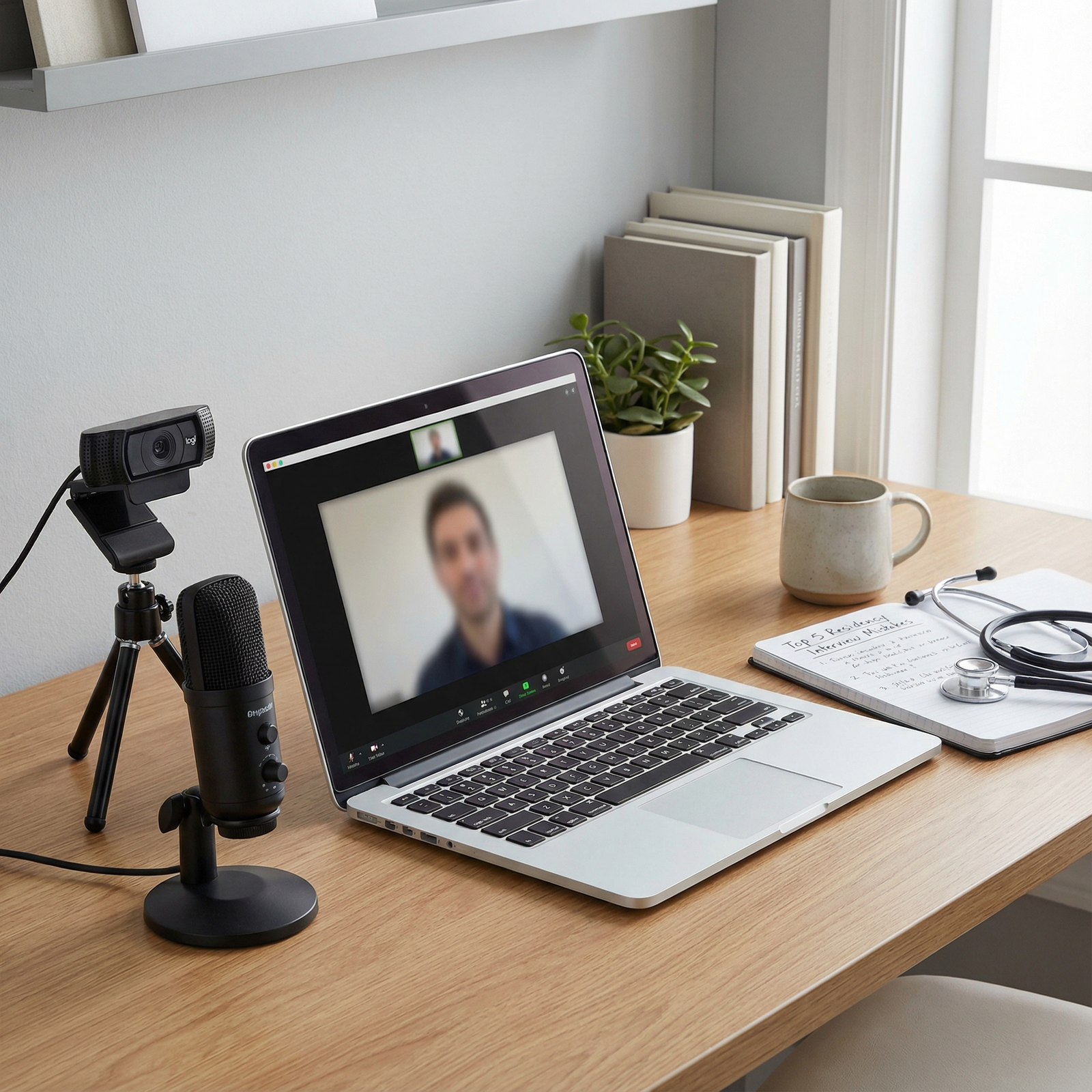
The Rubrics You Don’t See: Faculty vs Chief vs PD
Here’s a secret nobody tells you: not everyone in the same program uses the rubric the same way.
- PDs often anchor on big risks and big wins. They give extreme scores.
- Faculty sometimes barely fill in the rubric and then rely on their gut in rank meetings.
- Chiefs are often the harshest on “work ethic” and “team player” impressions.
Some programs give different weight to different interviewers’ rubrics. A PD’s scores may be weighted 2x compared to a random faculty member. They will not disclose that to you.
There’s another layer: some faculty have pet criteria that unofficially alter your score.
Examples I’ve seen:
- A trauma surgeon who automatically dings anyone with weak volume in their voice: “Can’t run a code.”
- A peds attending who is hypersensitive to warmth and facial expression: “Will parents trust them?”
- An academic IM PD laser-focused on evidence of scholarly thinking in your answers: “Do they think like an investigator?”
All of that gets stuffed back into the standard rubric boxes. You’ll see “3 in communication,” but what they meant was “too quiet for a chaotic ICU.”
Red Flags That Trigger Automatic Downgrades
Some things cause the entire rubric to tilt against you. If you hit any of these during a virtual interview, your numbers change—even if the rest of your performance is decent.
Common virtual red flags:
- Blaming others excessively when discussing challenges
- Being vague or evasive about failures, leaves of absence, or red flags in your file
- Poor insight into your own weaknesses (“I just work too hard” type nonsense)
- Speaking negatively about previous programs, faculty, or co-residents
- Inconsistent stories across interviews (yes, they compare notes)
- Extreme lack of energy or flat affect that raises concern for burnout or disinterest
When these show up, here’s what actually happens:
Faculty go back to their rubric and shave a point off of multiple domains. Communication drops from 4 to 3. Professionalism from 4 to 3. Fit from 3 to 2. Your composite score quietly sinks below the rank line.
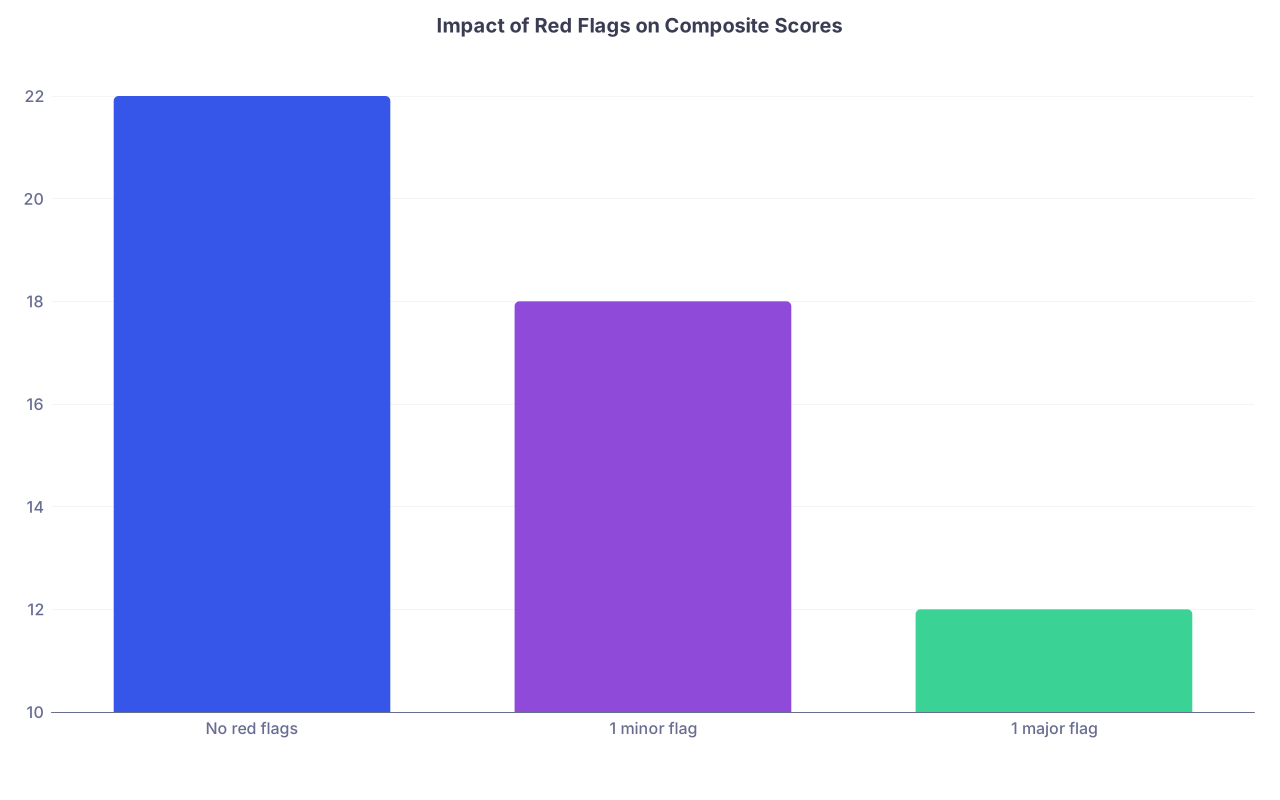
| Category | Value |
|---|---|
| No red flags | 22 |
| 1 minor flag | 18 |
| 1 major flag | 12 |
(Think of 25 as a perfect 5 in five domains. One major red flag can easily cost you 8–10 points.)
How Scores Actually Turn into a Rank List
The part nobody explains to applicants is the translation from individual rubrics to the final rank list. Here’s how it usually works in real life.
Step 1: Everyone submits their scored rubrics. Some systems are electronic (like Interview Broker-style forms). Others are literally Google Forms or Excel sheets.
Step 2: Coordinator or APD compiles an average score per applicant. You get a composite—say, 4.2/5 or 19/25.
Step 3: They sort applicants by composite score. That gives them a “starting list.”
Step 4: Rank meeting happens. This is where the rubrics are “guiding” but not dictating. Programs almost always shift people up or down based on discussion.
What moves people?
- Personal anecdotes: “I loved this person, great conversation about X.”
- Concerns: “Multiple people commented on weird affect.”
- Strategic needs: “We need someone strongly interested in research / underserved care / staying local.”
- Red flags: “I know they scored well, but I’m uneasy about that professionalism issue.”
You’d be surprised how often someone with a slightly lower composite score ends up ranked higher because two influential people went to bat for them. Or the reverse: high scores, but one PD comment like “Something off; hesitant to rank high” pushes them down 10–15 spots.
Virtual interviews amplify this because nobody has that in-person “gut feeling” from socials or hospital tours. So any strong impression—good or bad—from the call gets extra weight.

| Step | Description |
|---|---|
| Step 1 | Virtual Interviews |
| Step 2 | Faculty Complete Rubrics |
| Step 3 | Coordinator Compiles Composite Scores |
| Step 4 | Initial Sorted List by Score |
| Step 5 | Rank Meeting Discussion |
| Step 6 | Adjust for Fit & Red Flags |
| Step 7 | Final Rank Order List |
How to Game the Rubric Without Sounding Fake
You cannot control everything. Some interviewer will just not vibe with you. Fine. Your job is to make sure the structured parts of the rubric are quietly working in your favor.
Here’s how someone who understands these rubrics behaves in a virtual interview:
They treat the first 90 seconds like an OSCE station.
Camera on before the interviewer arrives. Room quiet. Lighting solid. They’re sitting up, not slouched. As soon as the interviewer appears: clear greeting, smile, eye-to-camera, “Thank you for taking the time to meet with me today.” That’s a 4–5 in professionalism before they’ve answered a single content question.
They answer like they’re presenting to an attending who’s already behind on notes.
Brief, structured, with a point. For behavioral questions, they actually use a framework (STAR, whatever) without announcing it. They end with a takeaway. Faculty love this: “very organized thinker,” which translates into high communication scores.
They show they know the program specifically.
They reference two or three program-specific things—rotation structure, patient population, research focus—and tie them to their own goals. Rubric bucket “fit/motivation” gets filled in automatically.
They manage tech like it’s part of the exam.
Backup device charged. Phone on silent but reachable in case the connection drops. Email open in case the program sends an emergency link. That way, even if disaster strikes, they recover smoothly. Interviewers mark it as “handled issues professionally” instead of “unprepared.”
They’re human.
Programs are starved for normal, decent, non-grandiose humans. You don’t need to be a TED speaker. You just need to sound like someone who can sit in a workroom at 3 am without making everything worse. That’s the real hidden rubric.
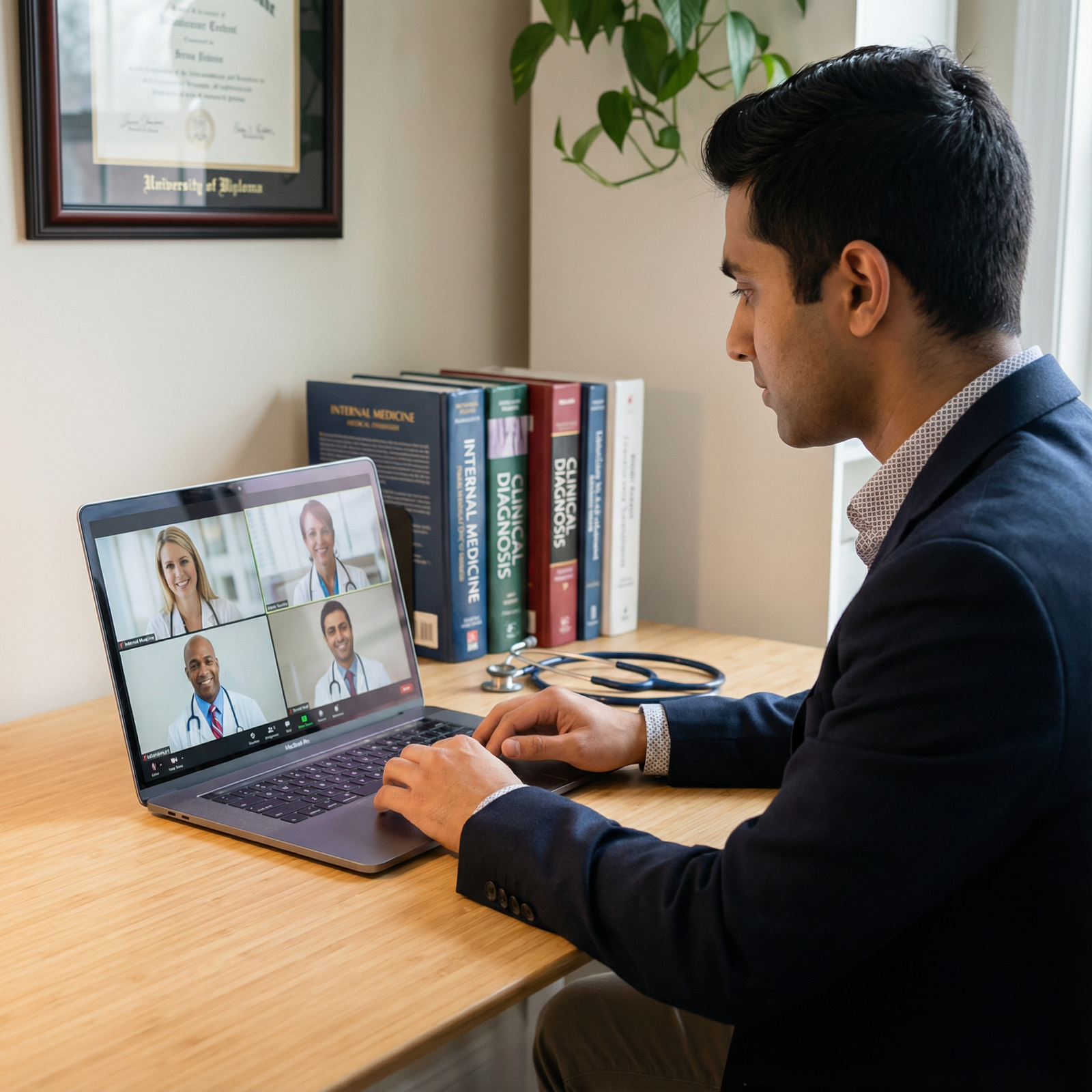
What Really Sticks in Their Heads After You Log Off
By the time a PD has done 40+ virtual interviews, they’re not remembering your Step score. They’re remembering very specific, very human details—and those memories color your rubric.
Comments I’ve heard in rank meetings:
- “That’s the one with the really thoughtful story about their patient on dialysis.”
- “She had the best answer about dealing with conflict on the team.”
- “He was the guy in the dark room where we couldn’t really see his face.”
- “That’s the applicant who trashed their home program’s administration. I’m worried.”
- “Remember, she had the dog barking the whole time? I’m still annoyed thinking about it.”
Those impressions tend to retroactively justify the numbers on the rubric. The scores feel “objective,” but they’re just quantifying those gut reactions.
So your real goal in a virtual interview is simple: control as many of those memorable elements as you can.
If they’re going to remember you for something, make it your clarity, presence, and how easy it was to talk with you—not the chaos of your surroundings or the fact that your answer to “Why this program?” was clearly copy-pasted from every other place.
If you strip away the smiling and the “we’re just excited to meet you” language, the unspoken virtual interview rubric PDs use boils down to three core questions:
- Do you show up like a professional adult who can be trusted with patients, colleagues, and a pager at 2 am?
- Can you communicate clearly, efficiently, and like a real human being—not a test-taker or a robot?
- Do you seem like you’ll actually fit and thrive in this program’s culture, with these residents, in this environment?
Everything—your lighting, your tone, your stories, your background, your internet connection—feeds those three questions. Answer them well, and the numbers fall into place.