
The answers that kill your rank are rarely the ones you think are risky. It’s the safe, polished behavioral answers that quietly tell the committee: “Do not put this person near our residents.”
Let me pull back the curtain on how this actually works behind closed doors.
Programs do not remember your Step score in the rank meeting. They remember the one sentence you said that made everyone glance at each other. The way you framed a conflict. The way you dodged ownership. The way you sounded just a bit… difficult.
This is the stuff no one tells you. Your dean will talk about “being yourself.” Your classmates will obsess over “strong examples.” Meanwhile, on the other side of the table, faculty are giving you softballs and watching how you handle pressure, feedback, power dynamics, and blame.
They’re not testing your storytelling. They’re testing: “Will this person blow up our call room culture?”
Let me show you the exact behavioral answers that quietly sink your rank, and what program directors are actually hearing between the lines.
What Program Directors Really Listen For
Most applicants think behavioral questions are about content: “Tell me about a time you had a conflict,” “Tell me about a mistake you made,” “Tell me about a difficult team member.”
What they’re really about is pattern recognition.
Attendings and PDs are scanning for five things:
- Do you take ownership?
- Do you throw people under the bus?
- Do you show insight and growth?
- Are you emotionally regulated when talking about stress?
- Are you going to be a headache on a busy service?
They don’t care if your story is about an M2 small group or an ICU rotation. They care how you talk about people and problems.
Here’s the behind-the-scenes translation most applicants never hear.
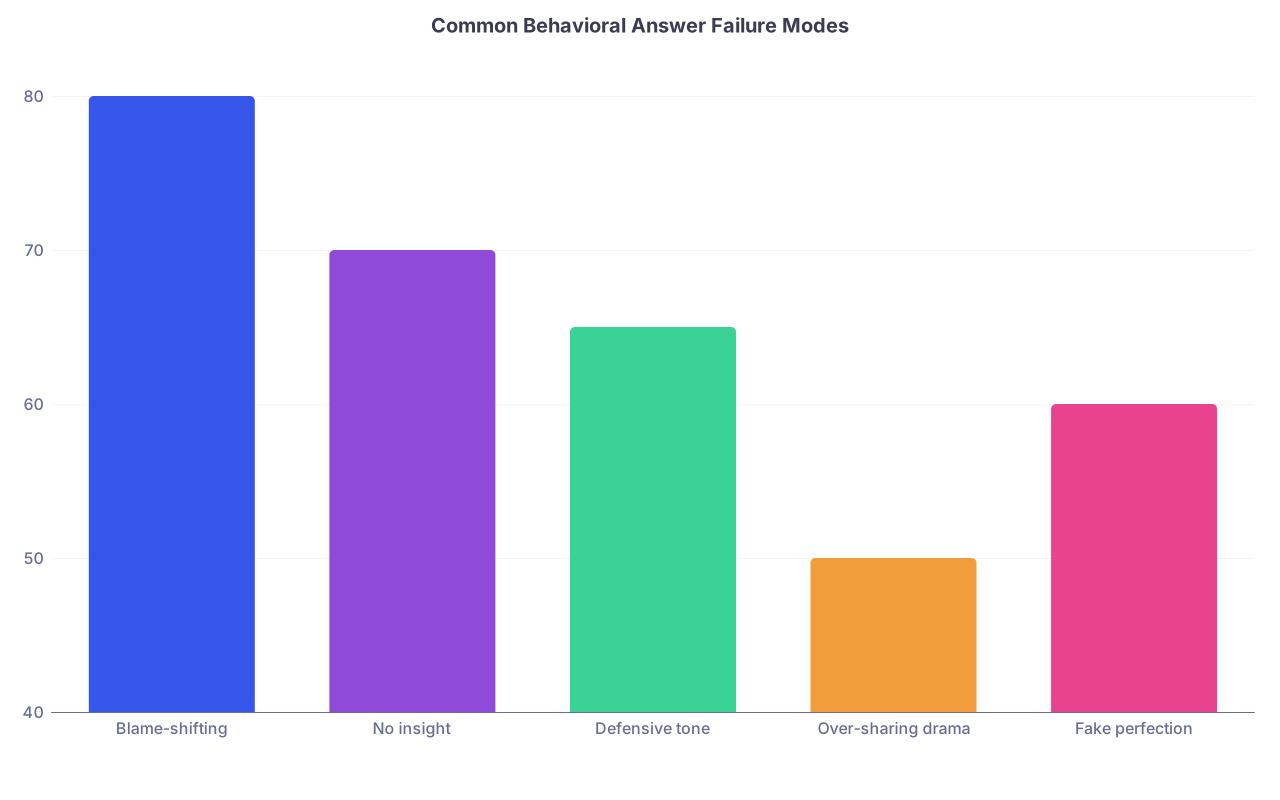
| Category | Value |
|---|---|
| Blame-shifting | 80 |
| No insight | 70 |
| Defensive tone | 65 |
| Over-sharing drama | 50 |
| Fake perfection | 60 |
Red Flag Pattern #1: The “It Was Everyone Else’s Fault” Answer
This is the most common rank-killer, and most applicants do not even realize they’re doing it.
You get asked:
“Tell me about a time you had a conflict with a team member.”
or
“Tell me about a difficult colleague and how you handled it.”
The red flag answer sounds like this:
“On my medicine rotation, the intern was really disorganized and kind of lazy. They’d disappear, wouldn’t follow up on tasks, and I ended up doing a lot of their scut. I tried my best, but they just didn’t listen. In the end, the attending saw what was going on.”
You think you’re showing that you worked hard and were perceptive.
They hear: “This student openly trashes colleagues and escalates quickly.”
What actually happens in the room later:
- The chief says: “Did you hear how freely they called their intern lazy?”
- A PD: “If they talk like that about colleagues in interview, what are they like on the wards?”
- Someone else: “That’s the kind of person who writes three-page complaint emails at 2 am.”
Your rank quietly drops.
The safer structure is simple: conflict, shared contribution, concrete action, growth. No character assassination.
Example of a non–red flag version of the same situation:
“On one of my early medicine rotations, I felt that communication within our team was slipping. Tasks weren’t always clearly assigned, and a couple of things almost fell through. At first I was frustrated and found myself silently resentful. I realized that was not productive, so I started checking back at the end of rounds, clarifying who was doing what, and offering to send a quick summary in the group text. It helped us catch a few misses, and I also learned that my intern was overwhelmed with new responsibilities. Since then I try to assume confusion before assuming bad intent.”
Notice the difference. Same scenario, different mindset. No one gets labeled lazy. You own your initial frustration. You show maturity.
Behind the scenes, that gets you comments like:
“Good insight,” “Not reactive,” “Understands systems vs blaming people.”
Those comments push you up the list.
Red Flag Pattern #2: The “I Never Really Failed” Answer
You’re asked:
“Tell me about a time you made a mistake.”
or
“Tell me about a time you failed and what you learned.”
The worst answer is not about some dramatic disaster.
The worst answer is: basically nothing.
“Honestly I can’t think of a major mistake. I’m very detail-oriented. I always double check my work, so I haven’t had any significant failures in medical school.”
That answer is pure poison.
Here’s what goes through the room:
- “So they either lack insight or they’re lying.”
- “Has never reflected meaningfully.”
- “Will hide errors as a resident because they can’t tolerate being wrong.”
Residents will tell you this bluntly: we don’t want interns who think they’ve never screwed up. We want interns who are safe when they inevitably do screw up.
A strong — and non–red flag — failure answer has three things:
- A real, specific example (not ‘I wish I had started studying earlier’).
- Clear ownership without dramatics.
- Concrete changes you made afterward.
Bad example that dings your rank:
“I guess one time I missed a lab result, but in the end nothing bad happened and the team was fine with it.”
That’s a dodge. No emotional honesty, no credible growth.
Safer version:
“On my surgery clerkship, I missed an elevated potassium on a pre-op patient. It was in the chart, but I had tunnel vision on the imaging. The resident caught it during their own review. The patient was fine, but it forced me to confront that my mental checklist wasn’t complete. That week I built a simple pre-op checklist I used on every patient — including labs, vitals, anticoagulation status. I still use checklist templates now, especially on busy days, because my memory is not as reliable as I’d like when I’m juggling multiple patients.”
Now you sound like someone who can handle the one thing PDs lose sleep over: near misses. You’re not perfect, you’re safer.
Red Flag Pattern #3: Throwing Nurses, Staff, or Patients Under the Bus
There’s a nuclear red flag almost everyone underestimates: badmouthing “non-physician” team members.
I’ve watched it happen. Candidate looks great on paper. Then they answer:
“A difficult situation was when a nurse kept paging me about things that didn’t really matter. She was overreacting and it slowed everyone down.”
In that moment, they’re done. People won’t say it to your face, but in the faculty debrief:
- “No way I’m putting that person on my service.”
- “They’re going to clash with every experienced nurse on the unit.”
- “We have enough arrogant residents already.”
If your story makes nurses, techs, or staff the villain, you just quietly buried your own rank.
Even if you’re right about what happened, you cannot present it like that. The interview is an empathy test.
Here’s how to talk about a real tension with nursing without salting the earth:
“On a medicine rotation, there was a patient whose nurse was paging frequently about minor changes that felt non-critical to me at the time. I realized I was feeling irritated and that my tone might come off as dismissive. I took a step back, went to the bedside, and talked with her about what she was seeing. It turned out she’d taken care of this patient for several days and noticed a pattern before objective changes appeared. That recalibrated me. Now when I get frequent pages from a particular nurse, I assume they’re seeing something real and try to understand their concern before deciding how urgent it is.”
See the difference? You show irritation without contempt. You end with respect for the nurse’s expertise. That’s what program directors want.
Red Flag Pattern #4: Oversharing Drama and Emotional Volatility
Yes, programs want to see that you’re human. No, they do not want a front row seat to your unresolved trauma.
Behavioral questions about stress, burnout, or conflict are not an invitation to unload raw emotion. They’re testing: can this person function under pressure without melting down or exploding?
Red flag version:
“Honestly, third year broke me. I cried almost every night on surgery. The residents were brutal, and there were days I just wanted to quit medicine entirely. I still get anxious thinking about it.”
You think you’re being vulnerable.
They hear: “Emotionally unstable under pressure.”
Or:
“I had a major conflict with an attending who humiliated me in front of the team. I still feel angry about it. I don’t think I’ll ever get over how badly they treated me.”
Behind closed doors, comments sound like:
- “Still very activated by that story.”
- “Might struggle with difficult feedback.”
- “Seems to carry grudges.”
You don’t need to be a robot. But you must sound like someone who has processed the event and is stable now.
Healthier — and rank-safe — way to describe a rough period:
“My surgery clerkship was the most challenging part of third year. The hours, the learning curve, and the communication style on that service pushed me past what I thought I could handle. At the time, I coped poorly — mostly just grinding and not taking care of myself. When it was over, I actually met with a mentor and a counselor to unpack what had happened. I learned how much better I function with protected sleep, short daily exercise, and actually asking residents for specific feedback instead of guessing. Since then, my subsequent rotations have felt intense but manageable, and I have a clearer plan for how I’ll protect my functioning during residency.”
You’re not hiding the struggle. You’re showing that you came out the other side with tools, not scars you’re still picking at.
Red Flag Pattern #5: The Fake, Polished, Non-Answer
Programs hate inauthentic, consultant-speak answers more than they hate imperfection.
You know the script:
“My biggest weakness is that I care too much.”
“My greatest failure was that I worked too hard and didn’t set boundaries.”
“I had a conflict but through my excellent communication, everything was fully resolved and everyone was happy.”
Faculty can smell this a mile away. It reads as rehearsed, coached, and evasive.
What they say later:
- “I have no idea who this person actually is.”
- “Not sure how they react when things don’t get tied up neatly.”
- “Feels like a PR answer.”
Here’s the unpleasant truth: it’s safer to share a real, slightly uncomfortable example than a perfectly polished fake one. As long as you show growth and insight, real beats slick.
Compare these:
Polished, empty:
“I sometimes take on too much because I care a lot about my patients. But I’ve learned to balance things better over time.”
Real, but safe:
“I have a tendency to over-explain and over-document because I’m afraid of missing things. On busy services that can actually slow down the team. On my last rotation, my senior pointed it out bluntly. I started asking, ‘What is the minimum necessary note that communicates what the next person actually needs?’ I’m still working on that, but I’ve gotten faster and more focused, especially on straightforward patients.”
The second answer gives them something to trust: self-awareness, willingness to be corrected, and an actual plan.
How Rank Meetings Actually Talk About You
You need to understand what gets written on the board when your name comes up.
No one is listing your Step score, your AOA status, or your research titles line by line. They’ve all read that already. What they react to are a few quick, emotional impressions.
Something like this:
- “Great storyteller, but blamed everyone else in their conflict answer.”
- “Owned a medication error and had a good process for preventing it in the future.”
- “Threw a nurse under the bus. That’s a no from me.”
- “Very raw about burnout; I’m worried about resilience.”
Sometimes it’s literally one sentence that people remember, tied to a behavioral question. That sentence becomes your fate.
| Answer Pattern | Typical Committee Reaction |
|---|---|
| Blames others for conflict | "Resident risk, drop them down" |
| Owns mistake + shows growth | "Safe, mature, bump them up" |
| Trashes nurses/staff | "Hard no, do not rank high" |
| Overly polished, no specifics | "Can't read them, neutral/soft" |
| Shows struggle + processed it | "Human but resilient, safe pick" |
And yes, these quick reactions absolutely move your number on that list.
Red Flag Pattern #6: Argue, Defend, Justify
There’s a specific behavioral trap that sinks borderline candidates: getting defensive when pressed.
Some interviewers will gently challenge your answer on purpose. Not to be cruel. To see what you do when someone pushes back.
Example:
You: tell a story about a conflict with a resident.
Interviewer: “Do you think you might have been part of the problem there?”
Two possible paths:
Red flag response:
“Honestly, I don’t think so. I was doing what I was supposed to. The resident was just unfair.”
Outcome: “Rigid, lacks insight, will argue on rounds.”
Safer, rank-protecting response:
“At the time, I mostly felt wronged. Looking back, I can see a few ways I contributed. I didn’t clarify expectations early, and I let resentment build instead of asking for feedback. I can’t control how they spoke to me, but I can control how transparent I am about what I’m struggling with.”
When you get challenged, they’re not evaluating the event anymore. They’re evaluating your ego. Can you hold your ground without being brittle? Can you acknowledge blind spots without collapsing?
If you get into back-and-forth justifications, you’re done.
How to Rebuild a Dangerous Story into a Safe One
Let’s take a common landmine: failing an exam or clerkship.
Raw version that harms you:
“I failed my surgery shelf because the rotation was horribly disorganized and there wasn’t enough teaching. I wasn’t the only one. It felt really unfair.”
That’s a guaranteed rank drop.
Let’s rebuild it:
- Start with ownership.
- Add context without blaming.
- Explain what you did differently later.
Safe version:
“I failed my surgery shelf. I underestimated how different the exam style would be from the day-to-day clinical work, and I didn’t start questions early enough. The rotation also had less structured teaching than I was used to, and I leaned too much on hoping I’d ‘pick it up’ on the wards. When I got the result, I met with our dean and with a classmate who had done well. I doubled my UWorld volume, started weekly group review, and took practice exams earlier. I passed the retake and have not had issues with subsequent shelves, but more importantly I now front-load my studying on any new rotation.”
Now, in the rank meeting, they say:
- “Owned the fail, no excuses.”
- “Has a system now.”
- “I’m not worried.”
Same event, completely different trajectory.

| Step | Description |
|---|---|
| Step 1 | Raw risky event |
| Step 2 | Initial emotional reaction |
| Step 3 | Filter out blame and character attacks |
| Step 4 | Identify your actual contribution |
| Step 5 | Describe concrete actions you took |
| Step 6 | End with how you operate differently now |
Use that flow for any story that makes you cringe a bit. Those are actually your best material, if handled correctly.
The Subtle Tone Cues That Make or Break You
One more behind-the-scenes secret: committees are hypersensitive to tone in behavioral answers. Not just what you say.
Red flags in tone:
- Sarcasm when talking about patients or staff.
- Smugness when you describe being “more committed” than others.
- Bitterness when you recount unfairness.
- Tight, clipped answers when discussing feedback you did not like.
I’ve seen candidates with good content in their answers tank themselves purely on tone. They describe a valid conflict but with so much edge that everyone in the room immediately pictures them on a call night… and shudders.
You don’t need to act fake-sunshine. But you must sound like someone who’s capable of being collaborative even when frustrated. If your voice hardens when you say “that attending” or “that nurse,” they catch it. They write it down.
What You Should Actually Practice
If you’re going to spend time preparing, stop memorizing perfect scripts and start doing this instead:
- Pick 6–8 real stories: one conflict, one mistake, one stressful period, one team success, one difficult feedback, one leadership example, one time you advocated for a patient, one time you changed your mind.
- For each, write the ugly version first — what actually happened, how you really felt.
- Then shape it using three questions:
- Where am I blaming instead of owning?
- Where am I making someone else the villain?
- What did I actually change afterward?
Practice saying them out loud with another human who will tell you, “You sound bitter there,” or “That comes off as self-righteous.”
You’re not polishing for perfection. You’re sanding off the red flags.
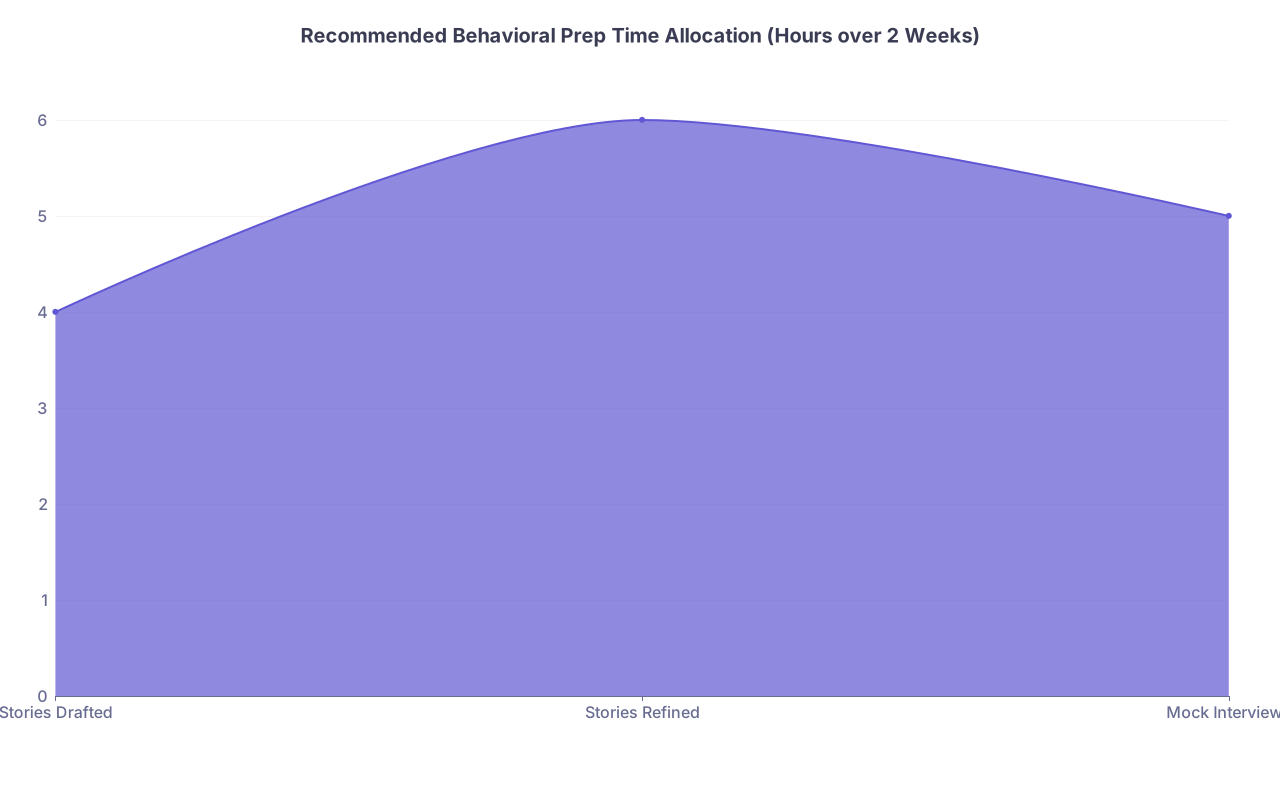
| Category | Value |
|---|---|
| Stories Drafted | 4 |
| Stories Refined | 6 |
| Mock Interviews | 5 |
FAQ (Exactly 4 Questions)
1. Is it ever okay to mention a truly bad attending, resident, or nurse in a behavioral answer?
Yes, but sparingly and without character judgment. You can describe problematic behaviors (“communication was harsh and public”) as part of context. The danger is when you label people (“toxic,” “lazy,” “unprofessional”) or make them the central villain. If the listener walks away more angry at the person in your story than focused on your growth, you’ve gone too far.
2. How honest should I be about mental health struggles or burnout?
Be honest, but show that you’re on the other side of it and have a functioning plan. “I was burned out, sought help, changed specific habits, and have been stable since” is acceptable. “I’m still really struggling and not sure how I’ll handle residency” will tank your rank, even if people empathize. They’re hiring you into a demanding job; they need to believe you’re currently safe and supported.
3. Is it bad if I use the same story for multiple behavioral questions?
Not inherently. Many strong applicants have a handful of rich experiences that can flex into different questions. The mistake is forcing one story to answer everything or sounding like you’re reading off a script. If you reuse a story, shift the angle: focus on conflict in one answer, on systems improvement in another, on feedback in a third. Committees care about the pattern, not the exact story count.
4. What if I already had a bad behavioral answer at an interview — is that program lost?
Not necessarily. One off answer rarely kills you alone; it’s the pattern that matters. If you feel you really misstepped (e.g., overtly badmouthed someone), you can partially repair it in later interviews at that program (with residents, other faculty) by demonstrating more maturity and ownership in similar conversations. But practically, your best move is to learn fast and not repeat the same mistake at other programs. Over a whole season, consistent, healthy behavioral responses will outweigh one clumsy answer.
Years from now, you won’t remember the exact words you used in your conflict answer. You’ll remember whether you learned to tell the truth about yourself in a way that made people actually want you on their team. That’s what they’re really listening for.