
The most dangerous mistake early attendings make is drifting into their first job instead of aiming at it.
You’re not “seeing what happens after fellowship.” You’re on a 24‑month clock where every 3–4 months, certain doors open and others quietly close. If you treat this like a passive process, you’ll end up in the wrong city, wrong role, or locked into a contract you hate.
Here’s the month‑by‑month, then week‑by‑week, roadmap from fellowship match to your first faculty job.
Big Picture: Your 24‑Month Arc
First, zoom out. This is the typical academic‑track sequence if you matched into a 1–3 year fellowship.
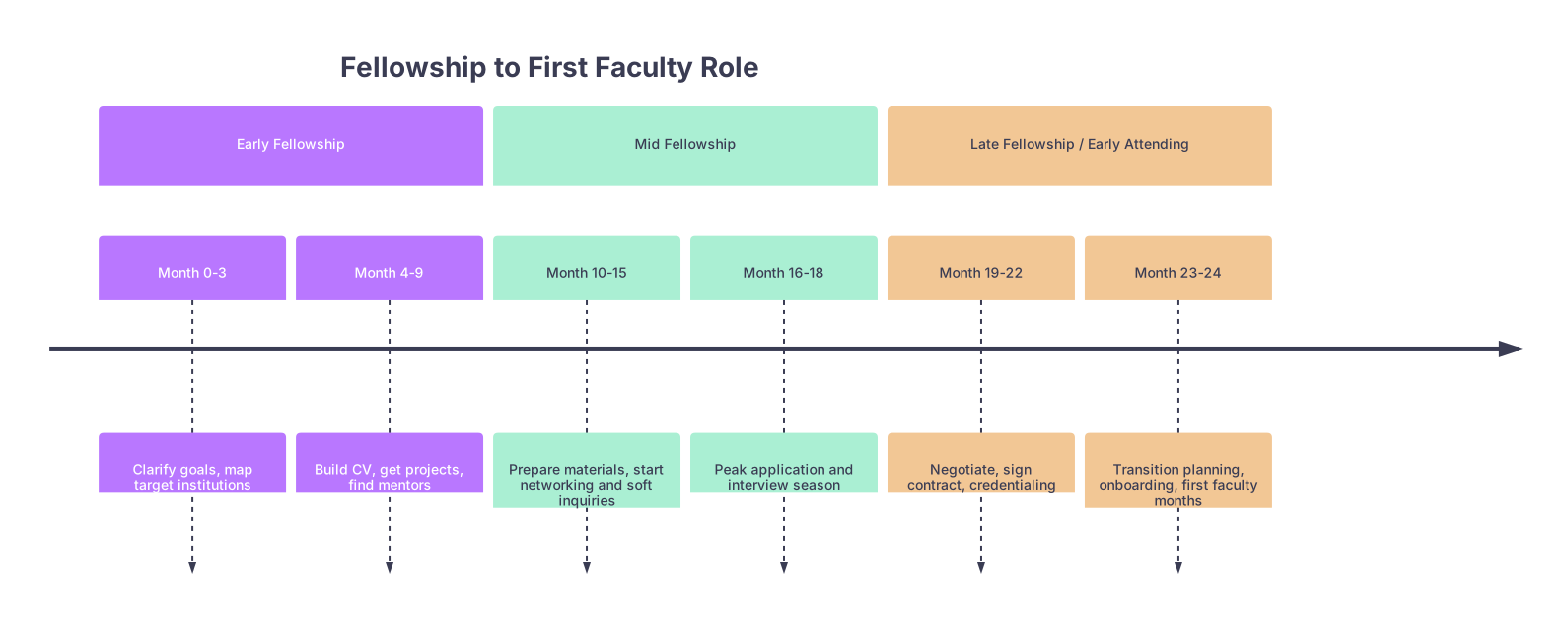
| Period | Event |
|---|---|
| Early Fellowship - Month 0-3 | Clarify goals, map target institutions |
| Early Fellowship - Month 4-9 | Build CV, get projects, find mentors |
| Mid Fellowship - Month 10-15 | Prepare materials, start networking and soft inquiries |
| Mid Fellowship - Month 16-18 | Peak application and interview season |
| Late Fellowship / Early Attending - Month 19-22 | Negotiate, sign contract, credentialing |
| Late Fellowship / Early Attending - Month 23-24 | Transition planning, onboarding, first faculty months |
At any point in this timeline, you should know:
- What your target job looks like (FTE, clinical mix, research/teaching time).
- Where you’re most competitive.
- What needs to be on your CV by month 16.
If you cannot answer those in under 60 seconds, you’re behind. Not fatally. But behind.
Months 0–3: Right After Fellowship Match – Set the Target
At this point you should define the endgame before fellowship even starts. Most fellows skip this. They “see how it goes.” Those are the ones panic‑applying to random jobs in month 18.
Weeks 0–4 (Post‑Match / Pre‑Fellowship)
You should:
- Decide your default career lane (for now):
- Academic clinician‑researcher
- Clinician‑educator
- Primarily clinical with academic title
- Hospital‑employed community job with some teaching
You can pivot later, but you need a default so you can plan your CV.
Rough geographic targeting
- Rank: “Must‑have”, “Nice‑to‑have”, “Never”.
- Be brutally honest about family/partner constraints, visas, school systems.
Draft a “Future Job” one‑pager
- Clinical: inpatient vs outpatient %, call expectations, procedures.
- Academic: research % time, teaching roles, leadership goals.
- Lifestyle: nights/weekends, commute, salary range you’ll accept vs reject.
This becomes your filter when recruiters start spamming you in 6–9 months.
Weeks 5–12 (Early Fellowship Onboarding)
Now you’re in the building. At this point you should map the ecosystem.
Do this in the first 2–3 months:
- Identify:
- 2–3 potential long‑term mentors (research, clinical, career).
- 1 “sponsor” (person with power who can say your name in the right rooms).
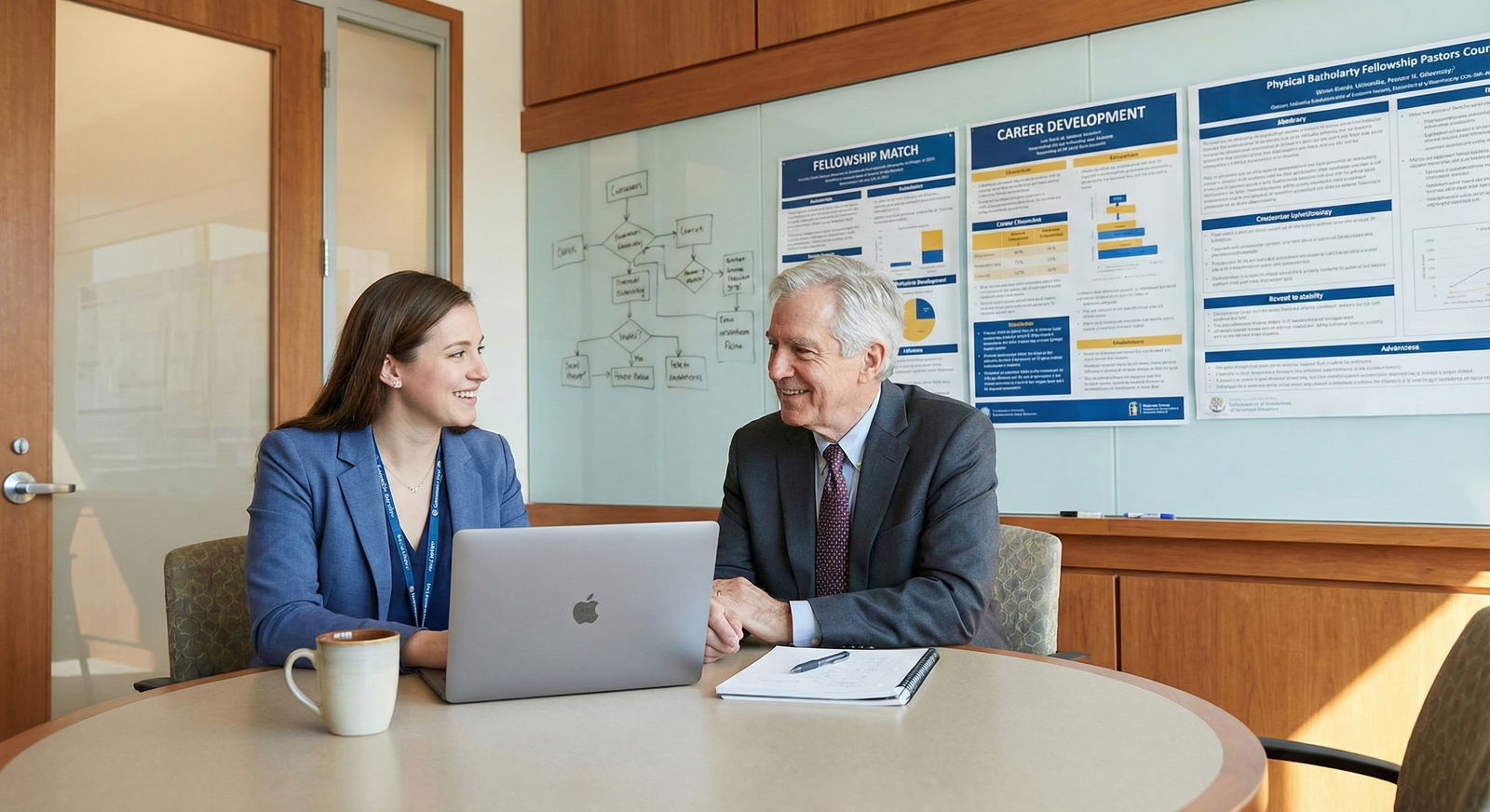
- Schedule brief intro meetings:
- “I’m a new fellow, long‑term I’m aiming for an academic clinician‑educator role with 20–30% teaching. What do people here need on their CV by graduation to get a job like that?”
You’re not asking for a job. You’re asking for the scoring rubric.
Create a simple document (literally a Google Doc) with:
- Target institutions (5–10 realistic, 3–5 aspirational).
- What they seem to value:
- NIH track record?
- Teaching awards?
- Clinical productivity monsters?
- Gaps between you and typical new faculty there.
You’re building your 18‑month “to do before applications” list.
Months 4–9: Build a Hire‑able CV
By now you’ve survived orientation and the first months of call. This is where people either intentionally build a CV… or let the fellowship buffet choose for them.
At this point you should anchor 2–3 signature activities that scream “I belong on faculty.”
Months 4–6: Lock in Projects and Roles
Ask yourself: “If someone read my CV in 18 months, what would they say I do?”
Options that actually move the needle:
- For clinician‑researchers
- 1–2 first‑author manuscripts in progress (not abstract graveyards).
- Join a funded project where you can get a middle authorship quickly.
- For clinician‑educators
- Regular teaching commitment: morning report, small groups, skills labs.
- A defined education project: new curriculum, simulation development, assessment tool.
Anything that doesn’t lead to a line on your CV with your name at the front or bolded responsibility → deprioritize.
| Activity Type | High-Yield Example | Low-Yield Example |
|---|---|---|
| Research | First-author original research | Unfinished retrospective chart review |
| Education | Designed new resident teaching module | Gave 1 noon conference |
| Leadership | Fellow rep on program committee | Attended lots of meetings silently |
| Clinical | Procedural niche with documentation | Extra random clinics without purpose |
Months 7–9: Start Quiet Networking
Not “I need a job.” That’s for later. Right now you’re doing relationship reconnaissance.
By month 9 you should:
- Present at least one thing:
- Local grand rounds, regional meeting, or national poster.
- Ask mentors to:
- Introduce you by email to 2–3 people at your target institutions.
- Highlight you in local committees/meetings as “interested in staying on” if that’s a real option.
You’re planting seeds. When you email in month 14, you’re not a stranger.
Months 10–15: Preparing for the Market
This is where the clock speeds up. By one year into fellowship (or 9 months from graduation) you should be prepping materials and quietly signaling interest.
Month 10–12: Build Your Application Packet
At this point you should have a near‑final core packet:
CV – Academic style, not residency style.
- Ordered: Education → Training → Certifications → Appointments → Grants → Publications → Presentations → Teaching → Leadership.
- No fluff: no “Interests: running, reading, travel.” You’re not applying to med school.
Research or Teaching Statement (1–2 pages)
- Research track → “Past work, current focus, 3–5 year plan.”
- Educator track → “Teaching philosophy, concrete experiences, future goals.”
- Don’t write a memoir. Write a plan.
Cover letter template
- One main template with:
- First paragraph: who you are and what you’re seeking (specific).
- Middle: 2–3 tailored paragraphs you’ll swap for each institution.
- Final: availability timeline and contact info.
- One main template with:
Rough job talk outline (for academic heavy jobs)
- Title
- 3–4 sections
- 1–2 key figures/experiences you can show.
This feels early. It isn’t. When a posting appears in month 15, you do not want to be writing your first CV from scratch.
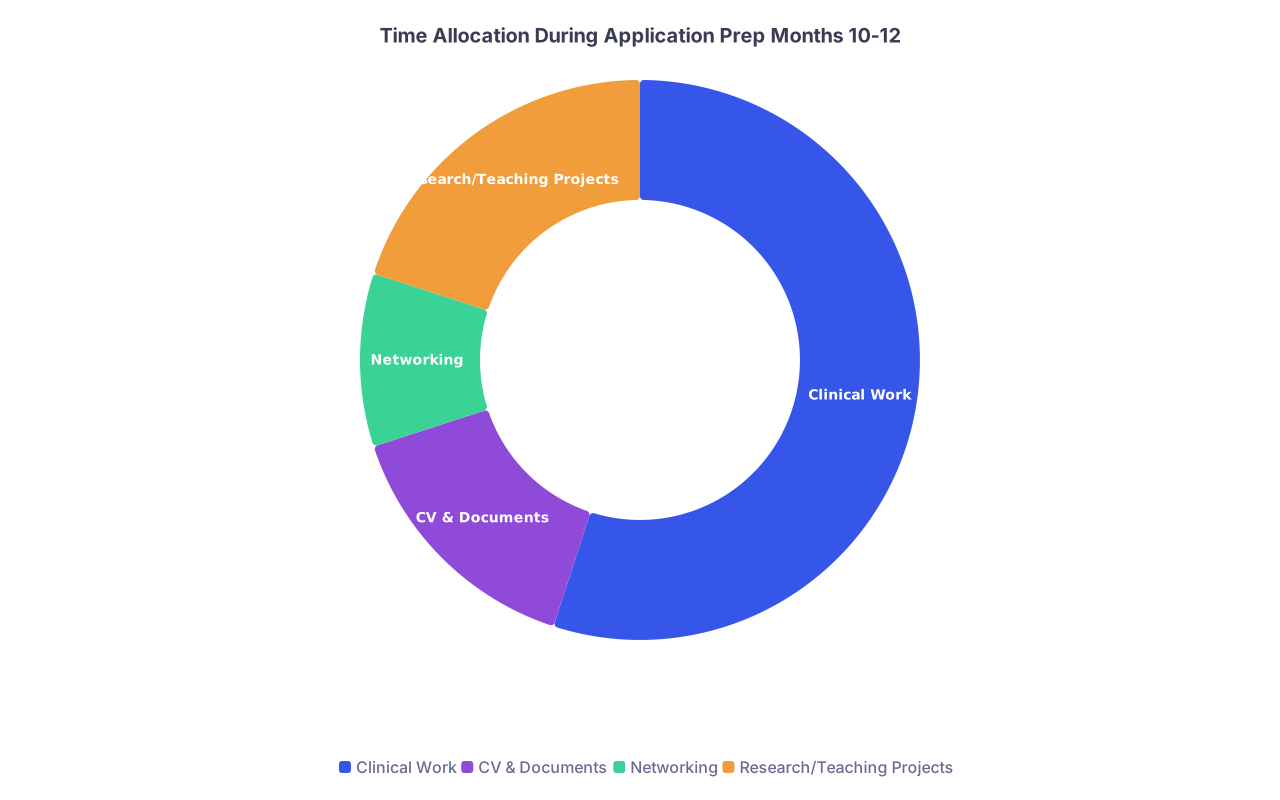
| Category | Value |
|---|---|
| Clinical Work | 55 |
| CV & Documents | 15 |
| Networking | 10 |
| Research/Teaching Projects | 20 |
Month 13–15: Soft Market Testing
Now you shift from “building” to “probing.”
At this point you should:
- Send exploratory emails to:
- Division chiefs at target institutions.
- People you met at conferences who said “let me know when you’re on the market.”
Typical email structure:
- 2–3 sentences: who you are, fellowship, graduation timing.
- 2 sentences: your focus (e.g., “advanced heart failure with an interest in outcomes research and teaching fellows”).
- 1–2 sentences: “I’d love to learn if there might be opportunities or gaps in your division I could help fill when I finish.”
You’re asking for a conversation, not a job. That’s a very different energy.
Also:
- Ask your program leadership frankly: “Are there serious chances to stay here? If so, what would that FTE look like?”
- If the answer is vague, treat it as a “no” and plan accordingly.
Months 16–18: Peak Application and Interview Season
This is the sprint. For many hospital‑based subspecialties, jobs post 6–12 months before start dates. If you want to start July 1, assume core hiring happens between September–January before that.
At this point you should be actively applying, interviewing, and sorting options.
Month 16: Formal Applications Go Out
Timeline of a typical 4‑week “application push”:
Week 1
- Scan:
- Academic job boards (NEJM, specialty societies).
- Institution websites.
- Target hospitals’ careers pages you already flagged.
- Create a spreadsheet:
- Institution, division chief, posting link, FTE type, date applied, contact, status.
- Scan:
Week 2–3
- Submit:
- 5–15 serious applications (depending on competitiveness of field and your flexibility).
- Customize each cover letter.
- Let mentors know where you applied; ask them to email their contacts before or right after you apply.
- Submit:
Week 4
- Track:
- Who acknowledged receipt.
- Who’s gone silent.
- Send gentle nudges where appropriate.
- Track:
You’re not waiting “to see what comes in.” You’re steering.
Month 17–18: Interviews and Second Looks
This window can be chaotic. You’re juggling nights on service, research, and trips across the country.
At this point you should:
Aim for clarity after each interview day:
- Immediately afterward, write:
- Pros/cons.
- Gut feeling.
- Red flags: vague about protected time, evasive about turnover, “we’re all like family here” (often code for overwork).
- Immediately afterward, write:
Ask pointed questions during interviews:
- “How many new faculty hired in the last 5 years are still here?”
- “What percentage of my time will be clinically scheduled in year 1 vs year 3?”
- “What does success look like for someone hired into this role after 1 year?”

- Separate the job from the city.
- People fall in love with the idea of a city and ignore a terrible job structure.
- I’ve watched fellows accept a 90% clinical, no‑protected‑time job because “we love the hiking here” and spend the next 3 years miserable.
If you’re getting no interviews by the end of month 18:
- Re‑check:
- Are you overly narrow on geography?
- Are your letters actually sent?
- Does your CV scream “unfinished fellow” instead of “ready faculty”?
- Ask one honest mentor to review a full packet and give blunt feedback.
Months 19–21: Negotiations, Contracts, and Credentialing
By now you usually have 1–3 serious options. This is where people get burned because they’re tired and just want it done.
At this point you should slow down and negotiate like this is a 3–5 year decision (because it is).
Month 19–20: Clarify the Deal (Before Signing)
Core details to pin down in writing:
- FTE breakdown:
- Clinical % and specific sites.
- Research/teaching/administrative %.
- Schedule expectations:
- Clinics per week.
- Inpatient weeks/year.
- Nights/weekends/call structure.
- Protected time:
- How much, for how long (is it guaranteed for 1 vs 3 years?).
- Tied to what deliverables (grants, RVUs, teaching load).
| Area | What You Want Clarified |
|---|---|
| Clinical Load | Clinics/week, inpatient weeks/year |
| Call | Frequency, in-house vs home, pay |
| Protected Time | % protected, duration, expectations |
| Salary | Base, bonuses, raises, timeframe |
| Support | MA/APP support, admin help, office |
Ask for:
- Clear promotion criteria.
- Start‑up support if research track (stat support, coordinator time, seed funding).
- Formal mentorship expectations (is there a committee, or are you on your own?).
If you feel silence or hand‑waving when you ask concrete questions, that’s data.
Month 20–21: Credentialing and Onboarding Logistics
Once you sign, a different timeline starts: getting you legally allowed to work.
At this point you should:
- Immediately:
- Start paperwork for:
- State license (if new).
- Hospital privileges.
- DEA registration for new state.
- Expect:
- 3–6+ months for full credentialing in some systems.
- Start paperwork for:
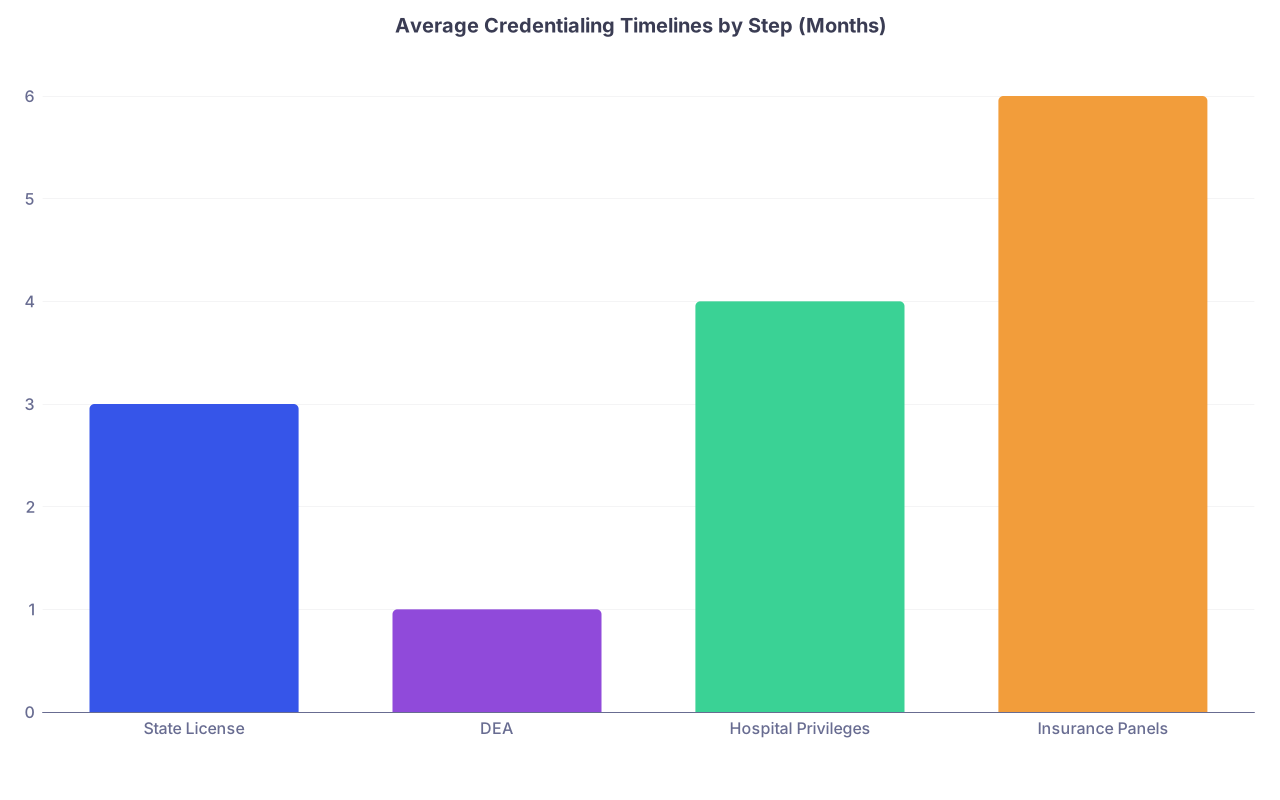
| Category | Value |
|---|---|
| State License | 3 |
| DEA | 1 |
| Hospital Privileges | 4 |
| Insurance Panels | 6 |
- Clarify:
- Exact start date.
- Orientation dates.
- Whether there’s overlap with your fellowship end.
You do not want to finish fellowship, move, and then sit unfunded for 2 months because credentialing wasn’t started on time.
Months 22–24: Transitioning from Fellow to Faculty
This is the identity shift. One month you’re “the fellow.” Next month your note is the final word.
At this point you should stage your transition so you don’t drown in the first 6 months.
Month 22–23: Winding Down Fellowship, Setting Up the Next Role
Before you leave fellowship:
Finish and hand off projects:
- Anything with your name on it should have:
- Clear next steps.
- Clarified authorship.
- Don’t vanish and then get surprised when you disappear from the manuscript.
- Anything with your name on it should have:
Collect what you’ll need for promotion and future grants:
- Teaching evaluations.
- Final CV sign‑off from your PD or mentor.
- Copies of important letters/emails praising your work (these matter later).
Have explicit exit conversations:
- With your main mentors:
- “Long‑term, I’m aiming for X. Can I keep you as a reference and occasional sanity check?”
- With division leadership if there’s any chance of returning in the future.
- With your main mentors:
Also, plan your personal logistics:
- Move timeline (overlap with job start by at least 1–2 weeks if possible).
- Childcare/school if relevant.
- Licensure activation date vs actual clinical start.
Month 24 and Early Faculty Months: Surviving the First 90 Days
You’re technically out of the 24‑month plan now, but how you enter matters.
In the first 30 days as faculty, you should:
- Meet:
- Division chief with a clear 1‑year goal sheet.
- Assigned mentor(s) and ask:
- “What do successful first‑year faculty avoid doing?”
- Understand:
- How RVUs are tracked (even in academics, they matter).
- What committees or tasks you can safely say no to in year 1.

And protect time aggressively:
- Don’t volunteer for every committee.
- Say yes to:
- High‑visibility teaching that fits your lane.
- Projects led by people who get things finished.
- Say no to:
- Endless, unstructured quality committees.
- “We just need a warm body” roles.
You’re not just surviving; you’re setting the tone for your whole early career.
If You’re Off‑Cycle or Behind
Not everyone has a clean 24‑month runway. Maybe you matched late, changed fellowship paths, or realized you hate research halfway through.
Condensed plan if you’re 12 months from graduation or less:
- Month 0–1: Clarify lane and geography, brutal honesty.
- Month 1–2: Rapid CV cleanup and project triage (kill low‑yield stuff).
- Month 2–4: Intense networking push (emails, conferences, mentor leverage).
- Month 4–7: Application blitz + interviews.
- Month 7–9: Negotiate + sign.
- Month 9–12: Credentialing + transition.
Tight. Doable. But you’ll need to drop extra side projects and be intentional daily.
Three Things to Remember
- Treat your first faculty job as a multi‑year strategic decision, not a last‑minute scramble. Your 24‑month clock started the day you matched fellowship.
- Every 3–4 month block has a specific focus: build CV, then network, then apply, then negotiate, then transition. If you’re doing all of them at once, you’re doing it wrong.
- Protected time, mentorship, and clear expectations matter more than city glamour or marginal salary differences. You can’t buy back burned‑out years.