
The biggest mistake young physicians make is thinking partnership prep starts in “partner track” year. It doesn’t. It starts your first month as an employed doc.
You’re either building toward partnership every quarter… or you’re quietly disqualifying yourself.
This is the year‑by‑year, then quarter‑by‑quarter, then month‑by‑month guide to what you should actually be doing in Years 1–3 as an employed physician if you want a real shot at partnership—not just a polite “we’ll revisit next year.”
Big Picture: The Three-Year Arc
At this point, you should stop thinking like an employee and start thinking like a future owner. That’s the mental switch most people never make.
Years 1–3 break down like this:
Year 1 – Prove you’re safe and scalable
- Clinically solid
- Easy to work with
- Growing volume without chaos
Year 2 – Prove you’re profitable and invested
- Reliable producer
- Understands how money flows
- Acts like a “we” person, not a “me” person
Year 3 – Prove you’re a partner, not just a high RVU generator
- Trusted in decision-making
- Visible in leadership and operations
- Ready for the financial and lifestyle realities of ownership
We’ll walk this chronologically, but park this in your head: partnership is a long audition. You’re being watched from day one—even if nobody says that out loud.
Before Day 1: The Pre-Employment Checklist
If you’re reading this before you start the job, you’re already ahead.
At this point (2–3 months before starting), you should:
Clarify the partnership path in writing
- Ask explicitly:
- Standard time to partnership?
- Is it time-based, performance-based, or both?
- Any historical “exceptions” where people were delayed or never offered?
- Get:
- Required RVUs or collections, if used
- Expected call participation
- Any required leadership/admin work
- Ask explicitly:
Understand the buy-in
- Is it:
- Flat buy‑in (e.g., $200–400k over X years)?
- Equity valuation (based on collections, assets, accounts receivable)?
- Ask:
- Historical buy‑ins for partners in last 5 years
- How it’s financed (payroll deduction, bank loan, both)
- Is it:
Request basic practice performance data
- Prior 2–3 years:
- Average collections per FTE physician
- Average wRVUs per FTE
- Payer mix
- No-show rate
- You’re not doing a full audit—just getting a feel for what “normal” looks like.
- Prior 2–3 years:
If you’re already in the job and didn’t do this, do it now. It’s not “too late”; it’s just less comfortable to ask. Ask anyway.
Year 1: Prove You’re Safe, Reliable, and Worth Investing In
Your first year is not about being a superstar. It’s about being obviously partnership‑eligible material.
Months 0–3: Learn the System Like It’s a Second Specialty
At this point you should forget about “negotiating partnership” and focus on three things: clinical safety, workflow, and relationships.
Clinical & workflow goals (Months 0–3):
- Know the EHR cold:
- Build templates and smart phrases
- Learn how charges, orders, and documentation link to billing
- Master local practice patterns:
- When your group admits vs consults
- How they handle borderline cases (I’ve seen more partnership paths derailed by “he over-admits everything” than low RVUs)
- Clarify coverage expectations:
- Call structure
- Weekend/holiday expectations
- Cross-coverage norms
Relationship goals (Months 0–3):
- Identify:
- Your unofficial mentor (usually a mid-career partner who actually likes teaching)
- The politically influential partner (not always the president)
- The practice manager/administrator who actually runs the building
- Ask each of them explicitly:
- “What does a slam‑dunk partner candidate look like here?”
- “What gets people quietly black‑listed from partnership consideration?”
Write the answers down. They’ll be more honest than any HR slide deck.
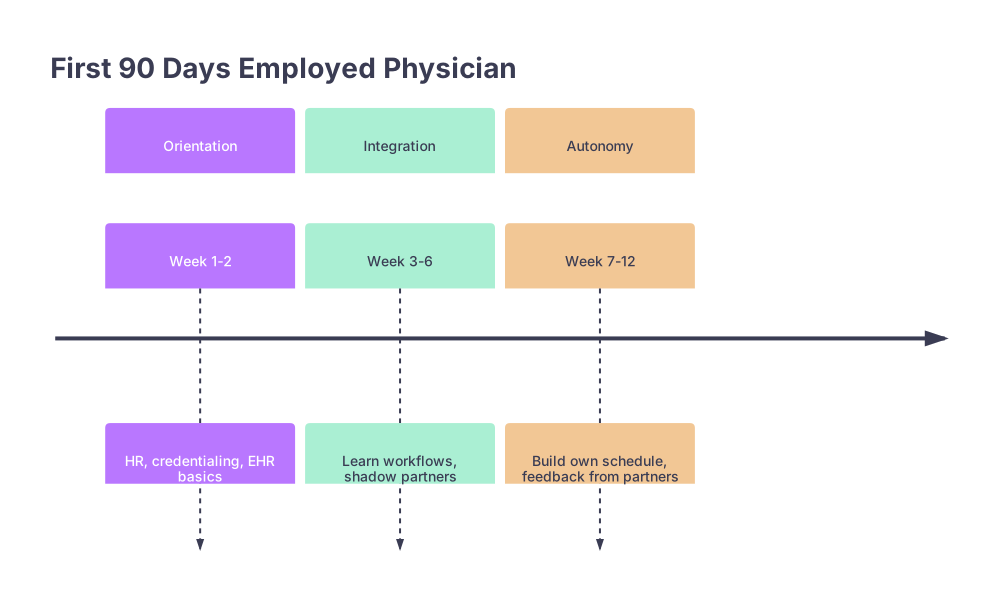
| Period | Event |
|---|---|
| Orientation - Week 1-2 | HR, credentialing, EHR basics |
| Integration - Week 3-6 | Learn workflows, shadow partners |
| Autonomy - Week 7-12 | Build own schedule, feedback from partners |
Months 4–6: Show You Can Grow a Panel Without Burning the Staff
Now your job is to scale up volume without making everyone’s life miserable.
At this point you should:
- Track your own numbers monthly
- Clinic visits / cases
- wRVUs or encounters
- New vs follow‑up mix
- Meet with your clinic manager
- “Where are my bottlenecks?”
- “What do patients complain about with me?”
- “What does front desk say about my schedule?”
You’re not trying to be perfect. You’re trying to be coachable and improving.
Months 7–12: Become “The Person We Can Trust on a Busy Day”
This is when partners start to categorize you mentally: “safe to leave alone” vs “needs monitoring.”
Operationally, at this point you should:
- Take full call according to the group norm
- Handle typical volumes without constantly asking for “light days”
- Rarely cancel clinic or OR without a serious reason
Behaviorally, you should:
- Show up to every partner meeting you’re invited to
- Speak 10% of the time, listen 90% of the time
- Ask business questions:
- “How do we decide which insurances to contract with?”
- “How do we track profitability of new service lines?”
End of Year 1, you want people to say:
- “Clinically solid.”
- “Patients like them.”
- “Doesn’t create drama.”
- “Seems interested in how the practice actually runs.”
If you don’t know your own Year 1 numbers (panel size, RVUs, collections), that’s a red flag. Fix that before Year 2.
Year 2: Prove You’re Profitable and Thinking Like an Owner
Year 2 is the money year. This is when your productivity and financial literacy need to catch up with your clinical comfort.
Q1 (Months 13–15): Get Your Hands On Real Data
At this point you should request a formal review of your Year 1 performance.
Ask for:
- Total wRVUs and collections
- Payer mix (commercial vs Medicare vs Medicaid vs self‑pay)
- No‑show/cancellation rate
- Overhead allocation (even if approximate)
Then compare yourself to others.
| Metric | You (Year 1) | Group Average |
|---|---|---|
| wRVUs | 5,200 | 7,000 |
| Collections | $950,000 | $1,200,000 |
| Payer Mix - Commercial | 45% | 50% |
| No-Show Rate | 9% | 7% |
| Overhead % | 60% | 58% |
If nobody ever brings you these numbers, that’s not a good sign about the practice’s sophistication, but it’s common. Ask anyway:
“Can I get a summary of my productivity and financial performance relative to expectations? I want to make sure I’m on track for partnership.”
That’s a mature, owner‑minded question. Partners notice that.
Q2–Q3 (Months 16–21): Optimize Your Practice Like It’s Your Future Business
Once you’ve got numbers, you’re now adjusting. Not blindly grinding.
At this point you should:
- Tune your schedule
- Adjust template to:
- Add new patient slots where demand is high
- Cluster procedures
- Protect a small block for urgent add‑ons (this makes referring docs love you)
- Adjust template to:
- Shore up clinical efficiency
- Reduce charting backlog to zero
- Standardize common visit types (e.g., HTN follow‑up, post‑op checks) with smart phrases
- Identify 1–2 revenue‑positive initiatives
- Examples:
- Adding in‑office procedures you’re trained for but underused
- Improving pre‑visit planning to reduce no‑shows and increase completed workups
- Starting a niche clinic half‑day (e.g., headache clinic in neurology, valve clinic in cardiology)
- Examples:
You’re not just “doing more work.” You’re showing you can design a practice that makes money and serves patients well.
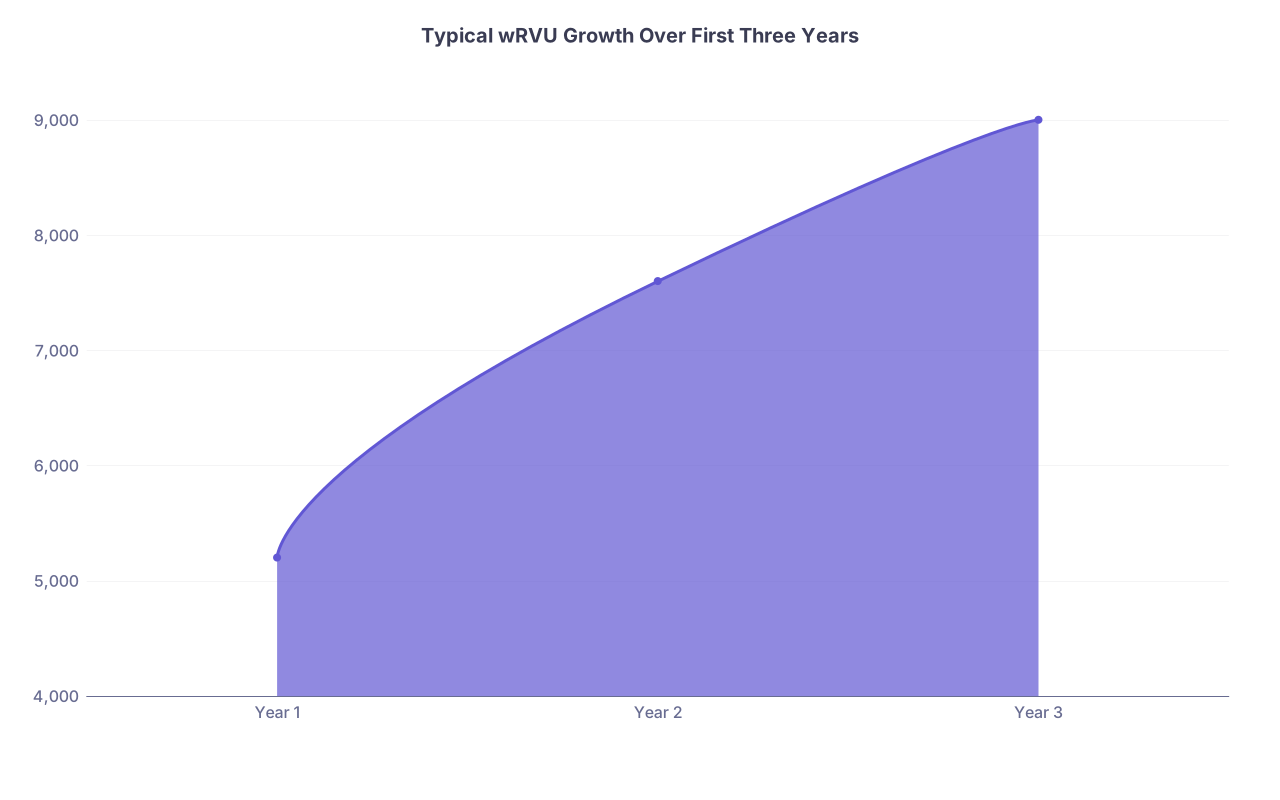
| Category | Value |
|---|---|
| Year 1 | 5200 |
| Year 2 | 7600 |
| Year 3 | 9000 |
Q4 (Months 22–24): Become Part of the Practice’s Strategic Fabric
Now it’s time to step out of your individual lane.
By the end of Year 2, at this point you should:
- Be on at least one committee or workgroup that matters:
- Quality committee
- Operations group
- EHR optimization
- Service line development
- Have contributed at least one concrete improvement:
- Standardized a process
- Helped fix a referral pathway
- Improved discharge communication with PCPs
- Have a documented conversation with leadership about partnership timing:
- “Based on my performance and contribution so far, am I on track for the standard partnership timeline here? What else would you want to see from me in Year 3?”
If that conversation is dodged, vague, or “we don’t usually discuss that,” that’s data. I’ve seen people waste 5–7 years waiting for a partnership that was never really available.
Year 3: Prove You’re Already Functioning as a Partner
Year 3 is less about numbers and more about trust and alignment. You’re answering one question for the group: will adding this person to the table make our lives better or harder?
Q1 (Months 25–27): Close Any Performance Gaps
At this point you should know, specifically, if you have any obvious gaps:
- Productivity significantly below partner level?
- Chronic patient complaints?
- Repeated issues with documentation or coding?
- Pattern of being difficult on call or with staff?
Fix these with urgency. Not “I’ll work on it.” Aggressively:
- Ask a senior partner to review a week of your notes and coding
- Sit with the billing team and ask where you’re leaving money on the table or creating denials
- Get honest 360 feedback from:
- Nurses
- Front desk
- Advanced practice providers you work with
This is unglamorous, but it’s what differentiates “good clinician” from “actual partner material.”
Q2 (Months 28–30): Act Like You Already Own Part of the Place
No, don’t start bossing people around. But your posture should clearly shift from employee to co‑steward.
At this point you should:
- Talk in we language:
- “We should think about how we handle after‑hours calls.”
- “What do we want our growth strategy to be in the next 3–5 years?”
- Show budget awareness:
- Be mindful of ordering patterns (not defensive, just aware)
- Bring ideas to optimize cost without compromising care
- Take responsibility for unpleasant but necessary work:
- Take your fair share of undesirable call or late clinics
- Step in during staffing shortages
- Volunteer to help onboard the next new hire
This is where staff start saying, “Honestly, they already feel like a partner.”

Q3 (Months 31–33): Have the Direct Partnership Conversation
If nobody has formally raised partnership with you by now, you need to raise it.
At this point you should schedule a dedicated meeting with:
- Practice president / managing partner
- Or the partner who initially recruited you
- Possibly the practice administrator
Go in prepared with:
- Your 3‑year summary:
- Productivity trends (wRVUs/collections)
- Quality metrics if applicable
- Contributions to committees/initiatives
- A clear, calm request:
- “I’d like to discuss my transition to partner. What is the timeline and process from your perspective?”
Push for specifics:
- Target date for partnership vote or decision
- Criteria still needed (if any)
- Expected buy‑in and structure
- Any probationary or trial periods
If you get squishy, noncommittal answers like:
- “We’ll see how the next year goes”
- “We don’t really have a formal process”
- “It’s more of a ‘feel’ thing”
…then you’re not on a real track. You’re on an indefinite employment plan. That may be fine, but that’s a different career path. Do not confuse the two.
Q4 (Months 34–36): Prepare for the Financial and Lifestyle Shift
Assume things move forward. Partnership isn’t just a title. It’s a financial and psychological commitment.
At this point you should:
Model the money
- With your financial planner or accountant:
- Compare current W‑2 comp to projected partner K‑1 income
- Understand variability year to year
- Plan for buy‑in:
- Monthly deduction vs lump sum
- Tax implications
- With your financial planner or accountant:
Understand liability and risk
- Ask:
- Any personal guarantees on leases/loans?
- Malpractice tail coverage responsibilities?
- What happens if a partner wants out?
- Ask:
Check your life alignment
- Partnership usually means:
- More influence, more money (long term)
- Less flexibility in the short term
- More meetings, more responsibility
- Make sure:
- Your family is on board
- You’re not already burned out
- You actually want to help run a business, not just practice medicine
- Partnership usually means:
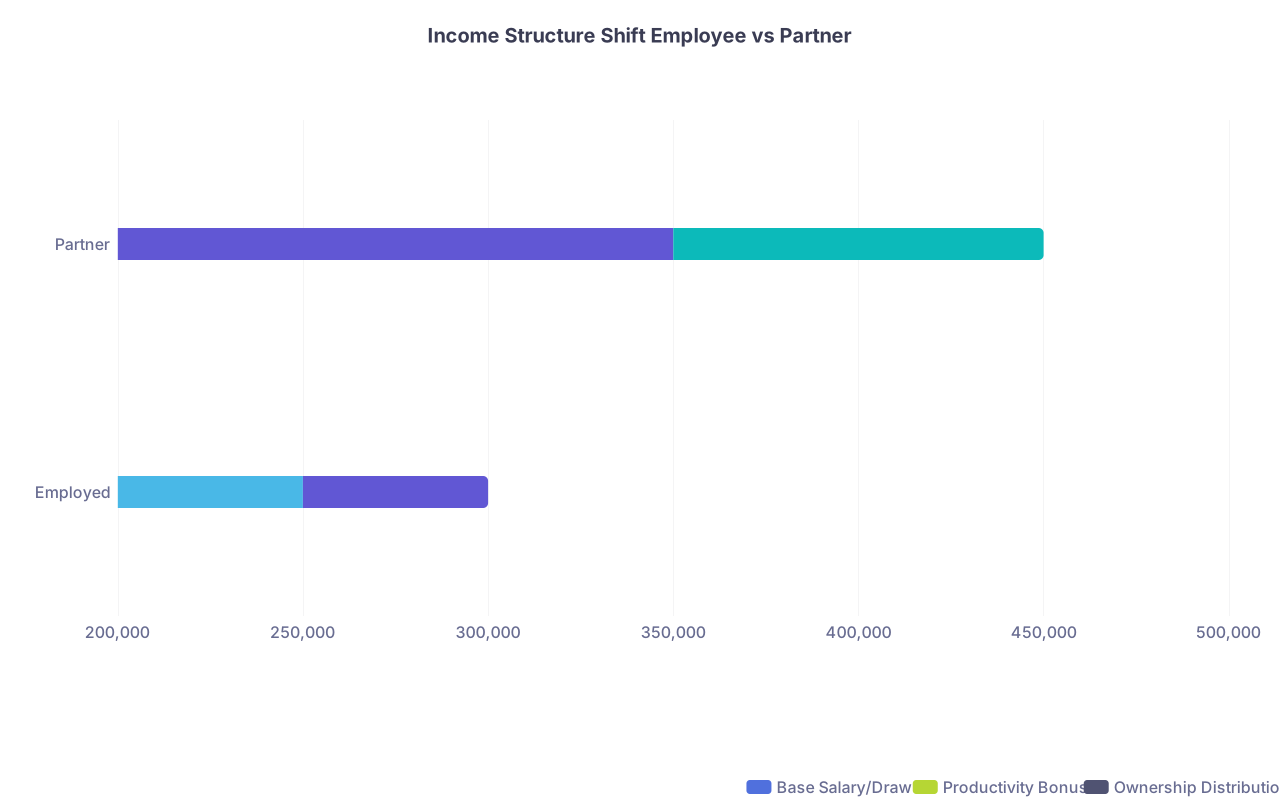
| Category | Base Salary/Draw | Productivity Bonus | Ownership Distribution |
|---|---|---|---|
| Employed | 250000 | 50000 | 0 |
| Partner | 200000 | 150000 | 100000 |
If by month 36 you still have no clear partnership path and no defined next steps, you’re not “almost there.” You’re parked. Time to consider whether staying makes sense.
Parallel Tracks: What To Build Each Year Outside the Clinic
While all of this is happening, there are three parallel threads that matter for partnership odds.
Reputation Timeline
- Year 1: Be “nice, safe, and available”
- Return calls promptly
- Be friendly to staff
- Do not gossip. Ever.
- Year 2: Be “the reliable go‑to”
- Referring docs know you’ll see their patients quickly
- Hospitalists know you’re reasonable and responsive
- Year 3: Be “the person whose name calms people down”
- When your name comes up in a partner meeting, people nod, not cringe
Skills Timeline
- Year 1: Clinical + system navigation
- Year 2: Basic business literacy
- Read a profit and loss statement
- Understand how overhead is allocated
- Year 3: Leadership basics
- Run a meeting without wasting everyone’s time
- Give feedback that doesn’t blow up relationships

Exit Option Timeline (yes, even while aiming for partnership)
Smart people always keep an exit card in the back pocket. Not because they want to leave, but because it changes how they negotiate.
- By end of Year 1
- Keep your CV updated
- Maintain relationships with former faculty, mentors
- By end of Year 2
- Have a clear sense of your market value:
- Informal recruiter conversations
- At least a sense of competing offers in your region
- Have a clear sense of your market value:
- By end of Year 3
- Know your line in the sand:
- “If partnership is not offered by X date or on Y terms, I will explore other options.”
- Know your line in the sand:
When you know you have options, you negotiate like a future partner, not a desperate employee.
Quick Reality Checkpoints by Timeline
Use this as a mini self‑audit.
| Time Point | At This Point You Should… |
|---|---|
| End of Month 3 | Know workflows, basic metrics, and key influencers |
| End of Month 12 | Have stable volume, good feedback, no red flags |
| End of Year 2 | Know your numbers and be on at least one committee |
| Month 30 | Have had at least one explicit partnership talk |
| Month 36 | Have clear partnership plan or clear reason to move |

The Bottom Line
If you want partnership, you cannot coast your first three years and “turn it on” later. It doesn’t work like that.
Keep three things in focus:
- Every quarter is part of your partnership interview. People are watching how you treat staff, how you handle call, and whether you care about the business.
- Know your numbers and your timeline. If you can’t recite your basic productivity and have no clear partnership path by Year 3, you’re guessing, not planning.
- Act like a partner before you’re a partner. Think like an owner, solve problems beyond your own schedule, and step into responsibility early. The title should feel like a confirmation, not a surprise.