
The way most physicians are told to build a career is backwards for people like you. If you hate clinic but love teaching, you should not be “squeezing in” education around a full clinical load. You should be redesigning your job so teaching is the main event.
You are not broken for disliking clinic-heavy work. You are misaligned.
Here is the step-by-step pivot into academic medicine when you know you are an educator at heart.
Step 1: Get Completely Honest About What You Want
Before you chase any “academic job”, you need clarity. Vague goals get you vague, miserable positions.
Define your ideal work week
Forget job postings for a moment. Build your own template.
- How many half-days of clinic can you tolerate without burning out?
- How many hours per week do you want to be:
- Teaching at the bedside
- Precepting residents/med students
- Giving didactics / small groups
- Working on curriculum
- Doing educational research / scholarship
- How much protected time do you actually need to not feel constantly behind?
Be concrete. For example:
- 3 half-days clinic
- 3 half-days precepting or inpatient teaching
- 1 full day protected (curriculum + scholarship)
That is an academic job. It exists. But you only find it if you know you are looking for this, not just “less clinic.”
Decide what you mean by “academic medicine”
“Academic” is not one thing. There are at least four different animals:
| Track Type | Clinic Load | Teaching Role | Scholarship Expectation |
|---|---|---|---|
| Clinician-Educator | Moderate | High | Moderate (education) |
| Clinician-Scholar | Moderate | Moderate | High (research) |
| Hospitalist-Teacher | Blocked | High inpatient | Low–Moderate |
| Community Affiliate | High | Low–Moderate | Low |
If you love teaching and dislike clinic, you are usually aiming for:
- Clinician-educator track
- Hospitalist-focused or preceptor-heavy roles
- Or a medical education leadership path (clerkship director, program leadership) long-term
Once you know which version of academic medicine you want, you can stop wasting time on jobs that were never going to fit.
Step 2: Translate “I Like Teaching” Into Marketable Skills
Academic departments do not hire people merely because they “like teaching.” They hire people who can fill specific educational needs.
You need to turn your general love of teaching into specific, visible skills and experiences.
Inventory what you already do
Make a simple list:
- Didactics you have given (titles, audience, how often)
- Small groups you have facilitated
- Bedside teaching you have done (rounds, procedures, teaching scripts)
- Simulation sessions you have led or assisted with
- Feedback or evaluation tools you have used (mini-CEX, OSCEs, milestone assessments)
- Any involvement with:
- Resident or student orientation
- Recruitment and interviews
- Curriculum review committees
- Wellness or mentorship programs
Write them down as bullets. This becomes the skeleton of your education portfolio and eventually your CV “Teaching” section.
Build three essential teaching products
You need tangible outputs you can show or describe in detail in an interview. Aim for at least:
One polished didactic session
- Clear objectives
- Slides or handout
- Pre/post questions or audience response questions
- Collected evaluations with data
One small-group or case-based session
- Case vignettes
- Facilitator guide
- Designed for discussion, not just mini-lectures
One teaching innovation or resource
- Example: A structured feedback form for bedside teaching
- Or a “one-page teaching script” on a core topic
- Or a simple asynchronous module with questions
These are your proof-of-work. I have watched weak interviewers turn an entire room in their favor because they could walk through a single well-designed session with obvious thought behind it.
Step 3: Reduce Your Clinical Pain Before You Fully Pivot
If you are already drowning in clinic, you will not have the energy to pivot. Step 3 is about creating space.
You do not need to quit your job tomorrow. You need a 6–12 month bridge.
Levers you can pull inside your current role
Pick 2–3 of these that feel feasible:
Add formal teaching to your current job
- Offer to:
- Precept students one half-day a week
- Take a resident on your service
- Give a recurring noon conference
- Say this explicitly to your leadership:
“I would like to build an academic clinician-educator career. Could we formalize a half-day per week where I precept or teach, even if that means slightly fewer clinic sessions?”
- Offer to:
Trade some clinic for teaching
- Some practices will happily offload teaching time to you if it helps with recruitment or prestige.
- Example script:
“If I take 1–2 medical students consistently and manage the schedule around them, can we reduce my clinic sessions by one half-day without changing my compensation drastically?”
Shift to more teaching-friendly clinical roles
- Outpatient-heavy to:
- Hospitalist with residents
- Inpatient consult service with frequent teaching
- Many hospitalist groups are short-staffed and will take someone who wants to teach; this is often the best on-ramp into academic hospitals.
- Outpatient-heavy to:
Step 4: Get Formal Training – But Be Strategic
You do not need a full master’s in medical education to pivot. But you probably need something more than “I like to teach.”
Choose one structured education credential
Good options:
Residents / fellows / early attendings:
- Teaching certificate programs
- “Residents as Teachers” or “Faculty Development” series
- Institutional Academy of Medical Educators membership
Mid-career / serious pivot:
- Certificate in Health Professions Education
- One-year longitudinal clinician-educator development program
- MS/MEHP (only if your institution values it for promotion or salary)
The goal is simple:
- Learn the basics of:
- Adult learning theory
- Feedback models
- Assessment
- Curriculum design
- Collect a line on your CV that signals: “I take education seriously and speak your language.”
Focus on what hiring committees actually care about
They care that you can:
- Design objectives and sessions that meet accreditation requirements
- Give constructive feedback and document performance
- Contribute to curriculum revision or program evaluation
- Produce at least modest educational scholarship (posters, workshops, short articles)
If a program or degree does not move you toward those four, it is optional. Not essential.
Step 5: Build an Education-Focused CV and Teaching Portfolio
Your current CV is probably “clinician CV with a scattering of lectures.” That will not cut it.
You need a document that screams: “This person is an educator.”
Rebuild your CV structure
Reorder your sections. Front-load education.
Suggested order:
- Education and Training
- Academic Appointments
- Teaching Experience
- Lectures and conferences
- Small-group / course roles
- Bedside / clinical teaching roles
- Curriculum and Program Development
- Educational Leadership Roles (even small ones)
- Scholarship
- Education-related first
- Then clinical research
- Clinical Experience
For each teaching entry, include:
- Role
- Audience (MS3, PGY-1, etc.)
- Frequency (monthly, block schedule)
- Years
Example:
- “Small Group Facilitator, MS2 Cardiology Block, 3 sessions per year, 2022–present”
Build a simple teaching portfolio
Does not need to be glossy. A 5–10 page PDF or folder is enough.
Include:
- Teaching philosophy (1 page, concrete, not poetic fluff)
- Sample session objectives and materials (slides, handouts)
- Summary of teaching evaluations (with a brief interpretation)
- Description of one curriculum or process you helped improve
- List of educational activities with brief bullet-point outcomes
You will not always send the full portfolio. But being able to say, “I have a teaching portfolio I can share,” changes how people hear you.
Step 6: Understand How Academic Money and Time Actually Work
You hate clinic partly because the RVU treadmill is soul-crushing. Academic jobs do not magically erase that; they rearrange the pressure. You need to see the trade-offs clearly.
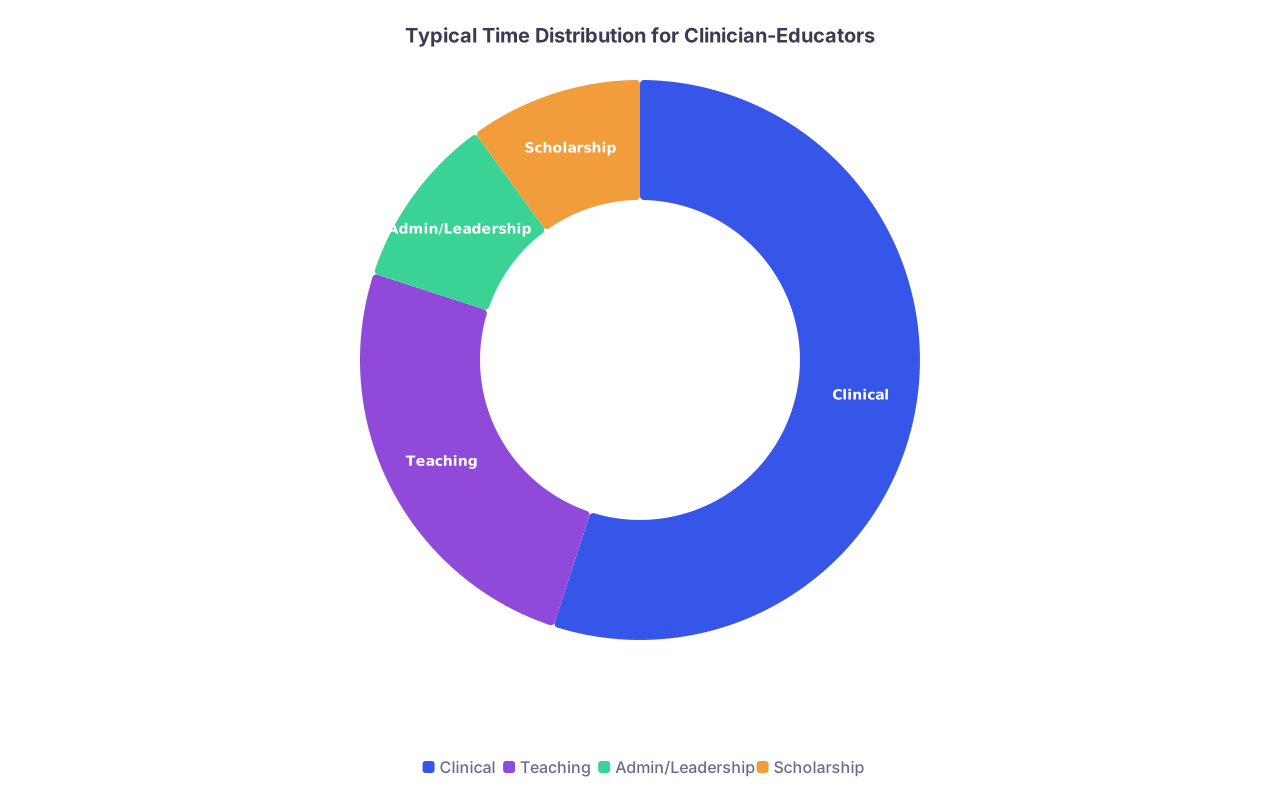
Typical time allocation for academic clinician-educators
| Category | Value |
|---|---|
| Clinical | 55 |
| Teaching | 25 |
| Admin/Leadership | 10 |
| Scholarship | 10 |
Real talk:
- Pure “teaching only” jobs are rare and usually badly paid or unstable.
- Most clinician-educator roles:
- 50–70% clinical
- 20–30% teaching
- 10–20% admin/scholarship
Your job is to push those numbers toward your preference and make sure they are written into your contract.
Compensation reality check
On average:
- You will make less in academic medicine than in pure private practice or RVU-heavy jobs.
- You will often gain:
- More schedule flexibility
- More vacation/CME
- More intangible meaning (if you actually like teaching)
- Less sales pressure
Do not go in blind. Know your floor.
Decide:
- Minimum salary you can accept
- Minimum protected time you require (realistically, not aspirationally)
- Non-negotiables: e.g., “At least 0.2 FTE formally protected for teaching/education.”
If you do not define this, they will define it for you. And you will drift right back into hating your day.
Step 7: Target the Right Institutions and Roles
Not all “academic centers” treat educators the same. Some worship RVUs and sprinkle “teaching” on top for branding.
You are looking for education-friendly ecosystems.
Red flags and green flags
| Signal Type | Green Flag Example | Red Flag Example |
|---|---|---|
| Protected Time | Written into contracts, tracked | “Sure, we value teaching” with no specifics |
| Promotion | Clear educator track and criteria | Only RVU and RCT papers matter |
| Leadership | Vice chair for education, educator awards | Only research chair, no education presence |
| Culture | Regular teaching dev workshops | “Just squeeze in learners when you can” |
| Evaluations | Robust learner eval systems | No formal feedback, teaching invisible |
When evaluating postings, look for these words in job ads:
- “Clinician-educator track”
- “Protected time for education”
- “Residency / medical student teaching emphasis”
- “Clerkship director,” “Associate program director,” “Block leader,” “Course director”
These are roles where your teaching love is an asset, not a side hobby.
Use a deliberate search strategy
Your top three sources:
People you already know
- Former chiefs, program directors, clerkship directors
- Script:
“I am looking for a clinician-educator role with substantial teaching and 0.2–0.3 FTE protected time for education. Do you know departments that genuinely support that kind of work?”
Academic medicine networks
- AAIM, SGIM, SHM, APDIM, specialty-specific educator sections
- Education listservs are full of “we are hiring a clinician-educator” emails.
Institutional job sites – filtered ruthlessly
- Skip generic “BC/BE in X, outpatient clinic” postings
- Focus on positions inside:
- Medical schools
- Large teaching hospitals
- VA medical centers with residency programs
Step 8: Network Like an Educator, Not Like a Job Hunter
If you only show up when you need a job, you look desperate. You want to show up as someone already acting like faculty.
Simple networking plan (3–6 months)
Join at least one education-focused group
- Example: SGIM Education Committee, specialty “Education” SIG
- Actually attend virtual meetings. Speak once or twice. Volunteer for a small task.
Present something – anything – education-related
- Local/departmental:
- Education grand rounds
- Resident/fellow conference on teaching skills
- Regional/national:
- Workshop proposal at your specialty conference
- Short “innovation in education” poster
- Local/departmental:
Ask for three informational calls with real clinician-educators
- You ask:
- “What does your week actually look like?”
- “How is teaching recognized and protected?”
- “If I wanted a job like yours, what should I be doing this year?”
- You ask:
You are not begging for jobs. You are asking for blueprints.
Step 9: Interview Like a Future Education Leader
Most candidates walk into academic interviews acting like generic clinicians. You are not generic.
You aim to walk out as “the person who will make our teaching better.”
Prepare a tight narrative
You need a clear 2–3 sentence story that connects the dots:
- Example:
- “During residency I realized that the best part of my day was teaching the interns and students. I have since formalized that with a teaching certificate, small-group facilitation roles, and a recurring ICU didactic series. I am looking for a formal clinician-educator position where I can grow into roles like clerkship or program leadership.”
No apologies for hating clinic-heavy work. You are naming your strength.
Bring specific ideas, not vague enthusiasm
When they ask, “How would you contribute to our educational mission?” you should answer with detail:
- “I would like to:
- Take ownership of a recurring small-group series on X
- Standardize our feedback process on the inpatient service using Y model
- Develop a short virtual module on Z for off-service residents”
You are not promising deliverables on day one. You are demonstrating that you think like someone who builds programs, not just participates.
Ask the right questions
You must leave with clarity about whether they walk their talk.
Ask:
- “How is faculty teaching time protected and measured?”
- “How are teaching contributions considered in promotion and compensation decisions?”
- “Can you give an example of an educator here who has advanced in the last 3–5 years, and what that path looked like?”
- “What percentage of my FTE would be explicitly non-clinical, and how will that be documented?”
If they cannot answer clearly, believe that. That is your preview.
Step 10: Negotiate Like Someone Whose Teaching Has Value
If you accept vague verbal promises, you will wake up back on the clinic hamster wheel.
You are negotiating for time, not just salary.
What to negotiate explicitly
Clinical FTE
- “Is this 0.7 clinical / 0.3 academic? How is that defined on paper?”
Protected education time
- “Of the 0.3 non-clinical FTE, how many hours per week are protected for education vs admin?”
- Ask that your education roles be written:
- “0.1 FTE – Associate Clerkship Director”
- “0.1 FTE – Residency core teaching faculty”
RVU expectations for teaching
- “How are teaching activities accounted for in productivity expectations?”
- Some places adjust RVU targets downward for heavy educators. If they do not, you will be doing two jobs.
Support for educational development and scholarship
- CME funds that can be used for education conferences
- Access to education research support (statisticians, IRB help, etc.)
- Option for future leadership roles (clear path, not vague “maybe eventually” talk)
Get these in your offer letter. Friendly speeches from chairs do not survive budget meetings.
Step 11: Make the First 12–18 Months Count
Once you land the job, your pivot is not over. Those first months make or break your trajectory.
Protect your teaching time aggressively
Common trap: “Can you just add one more half-day of clinic for a few months?” That “few months” never ends.
You can be polite and firm:
- “I can help with coverage occasionally, but my contract includes 0.3 FTE for education roles, and those commitments are already fully scheduled.”
You are not being difficult. You are defending the work they said they wanted.
Build three things in year one
A signature teaching activity
- Something people associate with you:
- A high-yield resident bootcamp
- A recurring skills workshop
- A revamped M&M focused on learning, not humiliation
- Something people associate with you:
One piece of educational scholarship
- Turn your signature activity into:
- A poster
- A workshop at a national meeting
- A short write-up in a teaching journal
- Turn your signature activity into:
A local reputation
- Be the person who:
- Shows up prepared
- Gives clean, on-time feedback
- Returns emails
- This sounds basic. But I have seen this alone move people into leadership positions faster than any degree.
- Be the person who:
Step 12: Plan Your Long-Term Academic Path (So You Do Not Stall)
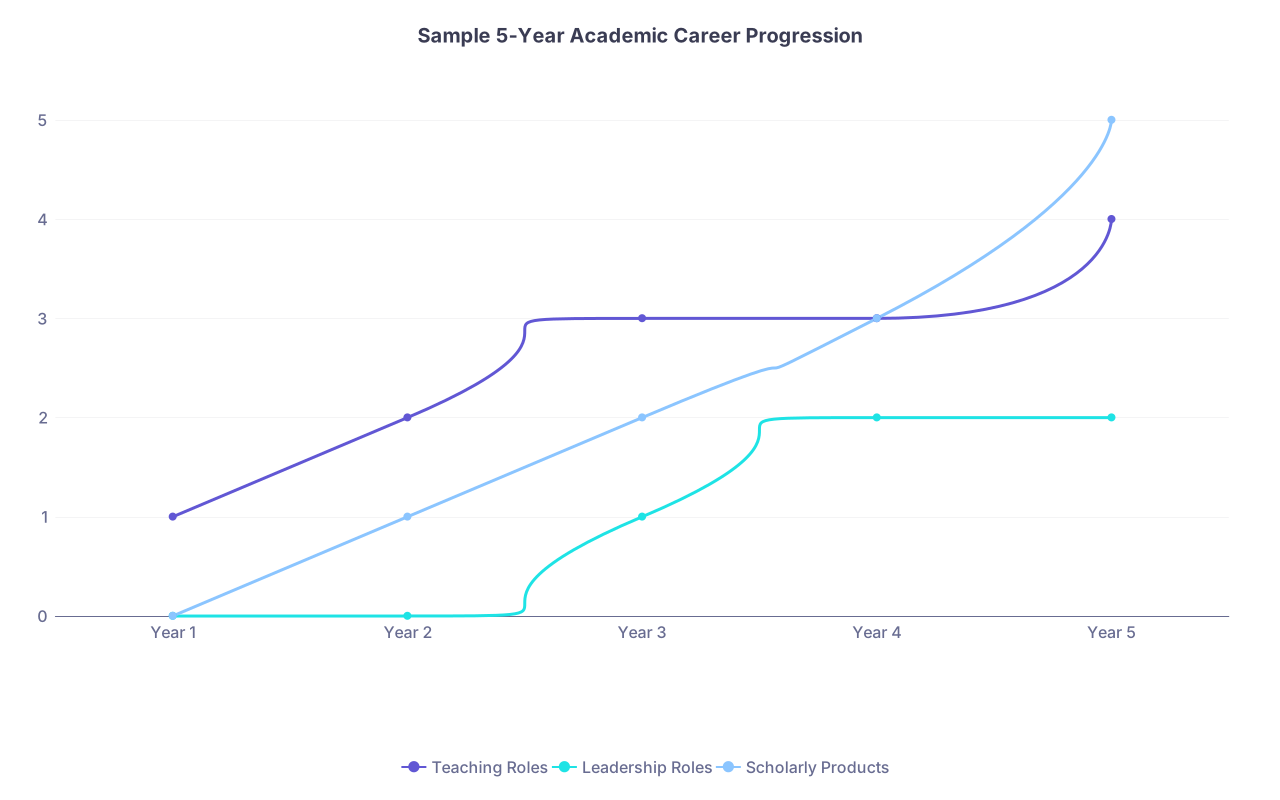
Academic medicine can also trap you: lots of teaching, little advancement, perpetual “assistant professor.” If you want this as a career, not just an escape hatch from clinic, plan where you are going.
| Category | Teaching Roles | Leadership Roles | Scholarly Products |
|---|---|---|---|
| Year 1 | 1 | 0 | 0 |
| Year 2 | 2 | 0 | 1 |
| Year 3 | 3 | 1 | 2 |
| Year 4 | 3 | 2 | 3 |
| Year 5 | 4 | 2 | 5 |
Choose a destination title
In 5–7 years, do you want to be:
- Clerkship director
- Associate residency program director
- Director of simulation
- Vice chair for education
- Director of undergraduate medical education in your department
Pick one. Aim your efforts that way.
Then work backward:
- What competencies do those people have?
- What committees are they on?
- What kind of scholarship did they produce to get promoted?
Ask them directly. Most will tell you exactly how they got there, including the mistakes.
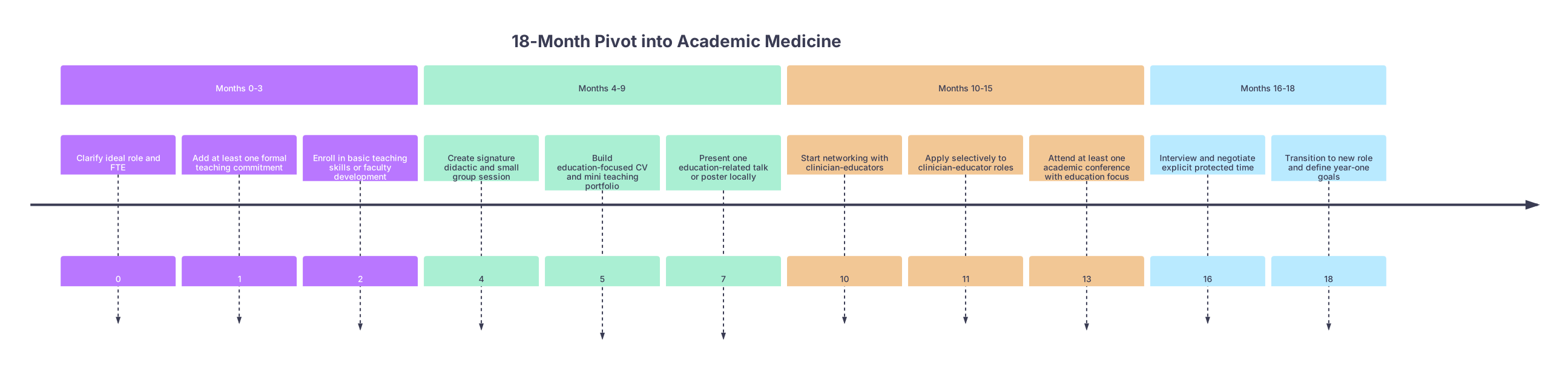
Example Pivot Timeline (12–24 Months)
To make this concrete, here is what a realistic pivot can look like.
| Period | Event |
|---|---|
| Months 0-3 - Clarify ideal role and FTE | 0 |
| Months 0-3 - Add at least one formal teaching commitment | 1 |
| Months 0-3 - Enroll in basic teaching skills or faculty development | 2 |
| Months 4-9 - Create signature didactic and small group session | 4 |
| Months 4-9 - Build education-focused CV and mini teaching portfolio | 5 |
| Months 4-9 - Present one education-related talk or poster locally | 7 |
| Months 10-15 - Start networking with clinician-educators | 10 |
| Months 10-15 - Apply selectively to clinician-educator roles | 11 |
| Months 10-15 - Attend at least one academic conference with education focus | 13 |
| Months 16-18 - Interview and negotiate explicit protected time | 16 |
| Months 16-18 - Transition to new role and define year-one goals | 18 |
You will notice something: you do not need to wait 5 years. With focused effort, 12–24 months is a very reasonable pivot horizon.
A Quick Word on Burnout and Identity
I have seen many physicians in your shoes say:
“I guess I am just not cut out for medicine because I hate clinic.”
No. You are not cut out for that version of medicine.
Academic medicine, especially clinician-educator roles, is still medicine. You still take care of patients. But you also:
- Shape how the next generation practices
- Build systems so others can do better work
- Get paid, at least in part, to think about teaching – the thing you actually enjoy
This is not an indulgence. It is a legitimate, necessary path in the profession.
What You Should Do Today
Do one concrete thing right now that moves you from “I hate clinic” to “I am building an educator career.”
Open a blank document and write three short lists:
- Your ideal weekly schedule – number of clinic sessions, teaching time, protected time.
- Your current teaching activities – everything, even small things.
- Three people you will email this week – one mentor, one educator, one potential contact at an academic center.
Then send one email before the day ends:
“I am serious about pivoting into an academic clinician-educator role over the next 1–2 years. Could we schedule 20 minutes to talk about how best to position myself?”
That single email is the first real step out of a clinic life you hate and into an academic career that actually fits who you are.