
The worst career mistake new attendings make is locking into the wrong market too fast. A one-year, deliberate locums strategy is how you avoid that trap.
You just finished residency or fellowship. You are burnt, broke, and recruiters are waving “$400k+” and “$50k sign-on” emails in your inbox every morning. The pressure to sign something—anything—is intense.
Slow down. You can use a structured 12‑month locums plan to:
- Test 3–5 markets for real (not brochure) lifestyle and work conditions
- Collect hard data on pay, call, volume, and culture
- Build leverage for your eventual permanent contract
Here is how to do it step by step, without blowing up your finances or burning out.
Step 1: Define What You Are Actually Testing
Most physicians say they want “good work–life balance and decent pay.” That means nothing. If you are using locums to test markets, you need measurable criteria.
Build a short, brutal checklist
Sit down for 30 minutes and define your “must haves” and “hard nos.” On paper. Not in your head.
Examples:
Clinical/work factors
- Max shifts per month you are willing to do
- Max clinic days per week
- Acceptable call structure (in-house vs home, frequency)
- Acceptable patient volume (e.g., ED: 1.8 patients/hour max; Primary Care: 18/day max; Hospitalist: 16 encounters/day max)
- Required support (NP/PA coverage, residents, anesthesia availability, ICU backup, specialty coverage)
Lifestyle factors
- City size range (rural, mid-sized, major metro)
- Commute time ceiling (e.g., under 30 minutes one-way)
- Airport proximity (how far you are willing to drive)
- School quality if you have or plan kids
- Outdoor / cultural / religious community needs
Financial factors
- Minimum hourly rate or daily rate
- Required travel/lodging coverage
- Malpractice coverage type (claims-made vs occurrence; tail coverage who pays)
- Loan repayment or bonus potential in permanent roles
Write 10–15 concrete items that matter most. Rank order them.
You are going to score each locums site and market against this list. That is how this becomes a strategy, not random gig work.
Step 2: Pick 3–5 Target Markets (Not 25)
If everything is an option, nothing is a plan. You are not “open to anywhere in the U.S.” You are picking 3–5 target regions to test over 12 months.
Use filters that actually matter
Here is how I’ve seen physicians narrow it down effectively:
Start with personal anchors
- Family within 3–4 hours’ drive or 1 direct flight
- States you would never live in (politics, climate, whatever—be honest)
- Licenses you already have or can get quickly
Check job density and pay by region
Look for areas with:- Multiple health systems (competition = better offers)
- Multiple private groups or independent practices if that is your interest
- Reasonable pay-to-cost-of-living ratio
Make a short list of 3–5 “test markets”
Examples:- Pacific Northwest
- Texas triangle (Dallas–Houston–Austin–San Antonio)
- Upper Midwest (MN/WI/IA)
- Southeast (NC/SC/GA)
- Mountain West (CO/UT/ID)
Your one-year plan is to deliberately work in these markets, not just chase the highest random rate this week.
| Market | Primary States | Reason to Test |
|---|---|---|
| Pacific Northwest | WA, OR | Outdoor lifestyle |
| Texas Triangle | TX | High pay, no state tax |
| Carolinas | NC, SC | Family nearby |
| Upper Midwest | MN, WI | Strong health systems |
Step 3: Get Licenses and Credentialing Moving Early
The locums year fails if paperwork drags. Licenses and privileging will kill your timeline if you are sloppy.
License smart, not everywhere
Prioritize:
- Compact states if you have an IMLC‑eligible state of residence (for EM, Hospitalist, Anesthesia, etc., this is huge)
- States with 8–12 week licensing times while credentialing happens in parallel
- Target-market states only—do not waste time on Alaska if you know you will never live there
Negotiate with agencies:
- They pay initial license fees in target states
- They manage paperwork and follow-ups
- They commit in writing to submitting you to specific opportunities once license is active
Build a rolling credentialing pipeline
You want overlapping work, not dead months. That means:
- As soon as you accept Assignment A, start credentialing for Assignment B in a different market
- Keep a live spreadsheet: facility, status (applied, references received, committee date, start date), and main contact at each hospital
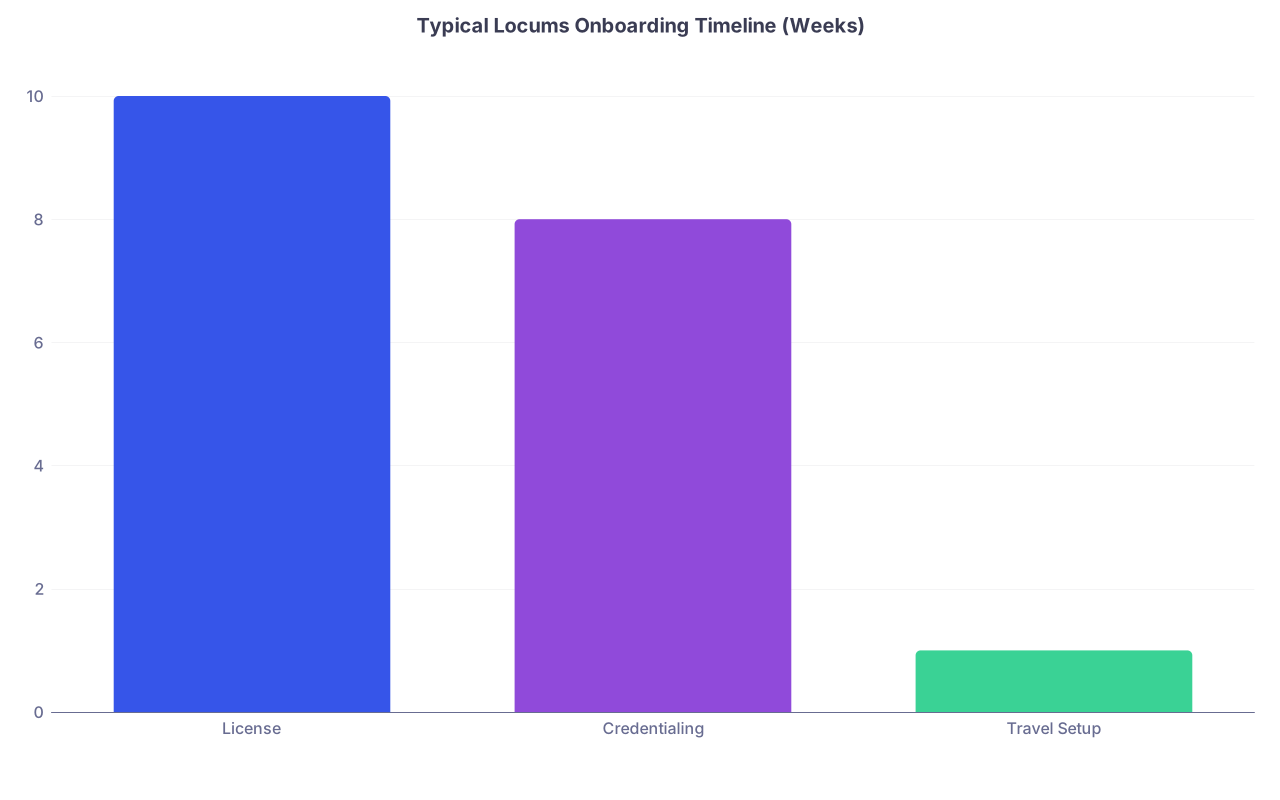
| Category | Value |
|---|---|
| License | 10 |
| Credentialing | 8 |
| Travel Setup | 1 |
If you are serious about a 1‑year test, you should be simultaneously in some phase of credentialing at 3–6 sites at any given time. Yes, it is tedious. Do it anyway.
Step 4: Design the Actual 12‑Month Locums Plan
Treat this like a residency schedule, not like random freelance work.
Build a rough year blueprint
Here is a common pattern that works:
- Quarter 1 – Market 1 (e.g., Pacific Northwest)
- Quarter 2 – Market 2 (e.g., Texas)
- Quarter 3 – Market 3 (e.g., Carolinas)
- Quarter 4 – Return to top 1–2 markets from earlier in the year for confirmatory assignments
You are not committing down to the day yet. You are mapping “I want to experience winter in this place” or “I want to see what summer volume is like.”
Decide your work intensity
You control how aggressive this year is. Common models:
Max-pay year
- 20–22 shifts/month Hospitalist/EM
- 5–6 days/week clinic for outpatient
- Minimal time off, stack assignments back-to-back
- Goal: Pay down loans, stack cash while sampling markets
Balanced test year
- 14–16 shifts/month or 4 clinic days/week
- 1 week off every 6–8 weeks to travel home or rest
- Goal: Gather data without frying your brain
Light exploration year
- 10–12 shifts/month, more gaps between assignments
- Lower income, more time for interviews, exploring cities
- Goal: Lifestyle clarity first, finances second
Be honest with yourself. If you barely survived 80‑hour resident weeks, a 22‑shift locums schedule in a new city every month is a great way to hate medicine.
Step 5: Work With Agencies Without Getting Used By Them
Locums agencies are not career coaches. They are sales organizations. Some reps are excellent; some are barely reading your CV.
Here is how you use them without becoming dependent on them.
Pick 2–3 agencies, not 10
- One large national player (CompHealth, Weatherby, Jackson & Coker, LocumTenens.com, etc.)
- One or two regionally strong or boutique firms
Tell each exactly what your 12‑month plan is:
- Which markets
- Which months you are available
- Minimum rate
- Dealbreakers (no solo coverage, no 24‑hour in-house call, etc.)
Force alignment with your strategy
Ask specific questions:
- “What percentage of your opportunities in [state] convert to permanent?”
- “Which systems in [region] use locums regularly but also hire full-time?”
- “What is your actual average rate for [specialty] in [state] in the last 6 months?”
Then verify. Ask colleagues. Compare offers from multiple agencies for the same region.
Keep control by:
- Never saying “I am open to anywhere.”
- Pushing back on “this is what we have right now” if it does not match your target markets
- Asking for direct introductions to medical directors when you are interested in future permanent roles
Step 6: Evaluate Each Assignment Like a Field Study
This is where most physicians screw up. They do locums, but they do not measure anything. They go by vague vibes and a few anecdotes.
Treat each assignment like a structured site visit and market test.
Use a simple scoring sheet
For each assignment and city, rate 1–5 (or 1–10) on:
Work environment
- Staffing ratios
- Support staff competence
- EMR usability
- Call burden vs what was promised
- Patient mix and acuity
- Team culture (nurses, APPs, other physicians)
System behavior
- How administration treats physicians
- Responsiveness to safety concerns
- How they handle throughput / bed shortages
- Are they actually trying to recruit permanent staff or just running on perma-locums?
City/lifestyle
- Commute, housing, daily living friction
- Overall vibe—do you feel at home or counting days until you leave?
- Spouse/partner feedback if they visit
- Cost of living shock (grocery, housing, childcare if applicable)
You do not need a fancy app. A Google Sheet or Notion page works.

| Category | Value |
|---|---|
| Pacific NW | 8.5 |
| Texas | 7 |
| Carolinas | 9 |
| Upper Midwest | 6.5 |
Watch for specific red flags
These are markets or systems I would avoid locking into based on what I have seen:
- Chronic use of 50–70% locums coverage on core services
- Constant schedule changes or added shifts after you arrive
- “Shadow admin” culture—secret decisions, retaliatory behavior
- Unclear RVU accounting, opaque compensation structure
- Non-compete clauses sneaking into locums paperwork (hard no)
If you see these on a short-term assignment, good. You just saved yourself from a 3‑year mistake.
Step 7: Protect Your Finances During the Locums Year
Locums can be financially fantastic or a mess. Depends on how you handle the basics.
Know your real hourly rate
Your “$250/hour” is not really $250/hour. You must factor:
- Unpaid travel days
- Gaps between assignments
- Self-employment tax (if 1099)
- Health insurance costs
- Retirement contributions you have to initiate
Approximate your true rate:
Tally all hours tied to the work:
- Clinical hours
- Required meetings
- Travel days (door-to-door)
Annualize income, then divide by total work-related hours.
You might find that:
- A “lower paying” gig with paid travel, consistent schedule, and minimal downtime is financially better than a flashy high-rate assignment that leaves you with 3–4 unpaid dead weeks.
Nail the 1099 fundamentals
If you are working as an independent contractor:
- Open a separate business checking account
- Set aside 30–35% of gross pay for taxes in a high-yield savings
- Consider an S‑Corp if income is high enough and you have a CPA who knows physicians
- Open and fund a Solo 401(k) or SEP‑IRA
You can absolutely come out of this year with:
- Massive loan reduction
- A meaningful emergency fund
- Evidence-based clarity on where you actually want to live
Or you can end with confusion and a big IRS bill. Your call.
Step 8: Use Locums Access to Inform Permanent Job Negotiations
The entire point of this 1‑year strategy is to negotiate your eventual permanent position from a position of knowledge and leverage.
Convert good locums sites into real options
When you find a system or group you like:
Say it out loud to the local leaders
- “I am using this year to test markets. Your group is at the top of my list so far.”
Ask targeted questions
- “If I wanted to explore a permanent role in the next 6–12 months, what would that process look like here?”
- “What have you done for other locums who transitioned to full-time?”
Keep showing up
- Try to return for a second or third stint in that market later in the year
- Work with the same team, same hospital when possible
Your second assignment is often when they start to see you as “potential colleague” instead of “temporary help.”
Compare offers across markets with real context
When permanent offers start coming in, you are not guessing. You know:
- How many patients that group actually expects you to see
- How honest they were with prior locums about schedule and call
- How the EMR feels day-to-day
- How the city feels in different seasons
That changes the negotiation.
| Market | Base + Bonus | Shifts/Month | Call Type | Your Market Score |
|---|---|---|---|---|
| Texas | $420k | 18 | Home Q3 | 7/10 |
| Carolinas | $380k | 16 | Home Q4 | 9/10 |
| Pac NW | $360k | 15 | No Call | 8.5/10 |
Suddenly “lower paying” offers can be clearly better when you factor in sane volume, better culture, and a city you actually like living in.
Step 9: Guard Against the Two Biggest Failure Modes
I have watched this play out repeatedly. Locums test-years go wrong in two predictable ways.
Failure mode 1: You drift and never decide
Symptoms:
- No clear timeline
- No defined market list
- You say yes to whatever pays more this month
- Three years later you are still bouncing around with no home base
Fix:
- At the start of the year, commit in writing: “I will choose a permanent home base by [date 12–18 months from now].”
- Schedule time every quarter to review your scores and update your ranking of markets.
- By month 9–10, start serious permanent job conversations in your top 2 markets.
You can still keep some locums in your long-term mix. The point is to pick a home field.
Failure mode 2: You burn out harder than residency
Symptoms:
- You agree to every shift because “it is only for a year”
- You hop time zones constantly, never really unpacking
- You live out of hotels and airports and eat like a resident
Fix:
- Cap travel intensity: ideally stick to 1–2 time zones, limit red-eye flights, avoid constant back-and-forth cross-country
- Upgrade housing: extended‑stay with a kitchen, or short-term rentals, not just whatever motel the agency finds
- Build routines: same workout app, similar grocery list, weekly call with family or friends
You cannot evaluate markets rationally if you are exhausted and miserable at baseline.

Step 10: A Concrete 12‑Month Locums Strategy You Can Copy
Let me put this all together into something you can actually use.
Example: New Hospitalist, Wants Mid-Sized City, Good Outdoors Access
Priorities
- Fair schedule (14–16 shifts/month)
- Avoid toxic culture, perma-locums staffing
- Prefer Western or Southeastern U.S.
- Wants chance to buy a house and settle within 2 years
Markets chosen
- Pacific Northwest (WA/OR)
- Colorado/Utah
- North Carolina/South Carolina
Plan
Months 1–3:
- WA locums hospital, 7‑on/7‑off, community hospital
- Use off-weeks to explore nearby city options, interview realtors, talk to local docs socially
Months 4–6:
- CO assignment, similar schedule
- Compare housing, schools, spouse job options if relevant
Months 7–9:
- NC or SC assignment
- Check coastal vs inland options
Months 10–12:
- Return to top 1–2 markets from earlier: maybe back to WA and NC
- Start formal permanent job interviews at 2–3 systems you already worked in or nearby groups that you now understand in context
Throughout the year:
- Maintain a scoring sheet for each place
- Track net monthly income and hours
- Talk to 1–2 permanent docs at each site about how they feel about the system after 3–5 years
By month 12 you are not “guessing” between job offers. You have lived versions of those lives.
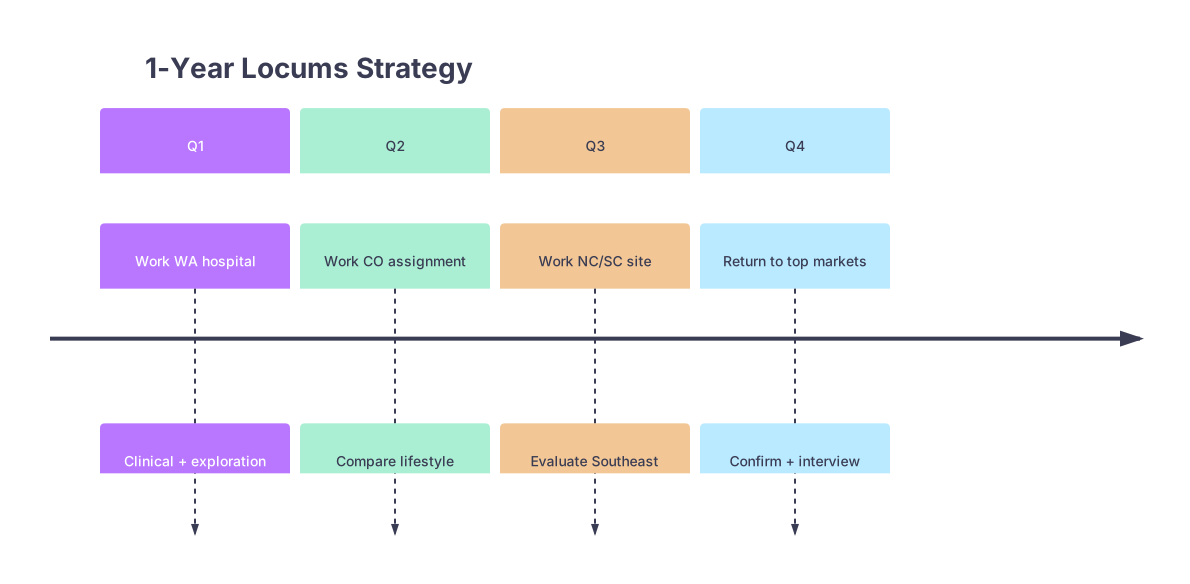
| Period | Event |
|---|---|
| Q1 - Work WA hospital | Clinical + exploration |
| Q2 - Work CO assignment | Compare lifestyle |
| Q3 - Work NC/SC site | Evaluate Southeast |
| Q4 - Return to top markets | Confirm + interview |
Tools That Make This Strategy Actually Work
You do not need tech overload, but you need some infrastructure.
A simple spreadsheet (Google Sheets, Excel) tracking:
- Assignments (dates, location, rate, agency, contact)
- Market scores
- Net income and effective hourly rate
Cloud storage (Drive/Dropbox) for:
- Credentialing packets
- Licenses and certificates
- Contracts and amendments
Calendar discipline:
- Block time each month to review the plan
- Block 1–2 weeks per quarter for rest or focused interviews
A decent CPA who understands 1099 physician income. Do not improvise this.

When You Should Not Use a 1‑Year Locums Strategy
This play is powerful, but it is not for everyone. Skip it—or modify heavily—if:
- You have significant family obligations that make travel miserable
- You already know the exact city you want and have strong connections there
- You do not tolerate uncertainty well and will panic without a fixed paycheck
- You are unwilling to handle basic business tasks (taxes, contracts, tracking)
In those cases, you can still use short locums stints to validate a single market before signing, rather than a full-blown 12‑month circuit.

The Core Takeaways
- A 1‑year locums strategy is not about floating aimlessly. It is a structured way to test 3–5 markets with real data before you lock in.
- Treat each assignment like a field study—score the work, the system, and the city against your personal checklist.
- Use what you learn to negotiate permanent roles from a position of strength, not desperation.