
The myth about faculty hiring is simple: people think it’s about CVs and publications. It isn’t. Chairs hire colleagues they can trust to solve their problems.
Once you understand that, the whole game changes.
I’ve sat in those closed-door meetings. I’ve watched chairs flip through applications, skim for 30 seconds, then either circle a name or put a line through it so hard the paper curls. And it often has nothing to do with the “objective” metrics you obsess over.
You want an academic job after residency or fellowship? Let me walk you through what actually drives those decisions—what department chairs and division chiefs say when you are not in the room.
The Chair’s Real Agenda (That Nobody Tells You About)
Before you worry about what you want in a job, understand what the chair wants when they hire you. Because that’s the filter every single part of your application goes through.
At any decent-sized department, a chair is juggling:
- Clinical revenue targets and coverage gaps
- RVU dashboards and angry emails from finance
- A dean pushing for higher research rankings
- Senior faculty threatening to leave
- Residents complaining about teaching quality
- Patients complaining about access and wait times
Into that storm walks…you. A new attending. Unproven. Expensive. Potentially high-risk.
So the chair’s unspoken questions are:
- Will this person make my life easier or harder?
- Can I put them in front of patients, trainees, and the dean without babysitting?
- Will they generate more value (clinical, academic, political) than they cost?
- Are they going to blow up my inbox with drama?
You think they’re asking, “Is this candidate smart and accomplished?” That’s assumed. Everyone they’re interviewing is smart and accomplished. The real question is: “Can I safely bet a five- to seven-year institutional investment on this person?”
Everything I’m about to tell you plugs into that calculus.
The Four Currencies Chairs Care About
Strip away the fluff and there are four currencies that actually matter to most chairs when hiring new faculty: clinical productivity, academic upside, reputation/behavioral risk, and fit within internal politics.
Yes, “politics” is in that list on purpose.
| Priority Area | What Chairs Actually Look At |
|---|---|
| Clinical | Reliability, RVUs, niche services |
| Academic | Trajectory, funding potential |
| Teaching | Resident feedback, bandwidth |
| Politics/Culture | Drama risk, loyalty, alliances |
1. Clinical: Will You Cover the Service and Not Melt Down?
In most departments, clinical revenue is paying the bills. Full stop. Chairs don’t say this on interview day, but behind closed doors, it’s blunt:
“We need another body in clinic by July.”
“We’re getting hammered on inpatient coverage.”
“If we do not hire someone in GI, we lose that service line.”
So they’re looking at:
Can you carry a full attending load quickly?
If your fellowship was very niche, or your training was light on bread-and-butter work, some chairs get nervous. They want to know: can this person staff the general service, not just their pet procedure?
Reliability signal.
Letters, prior program calls, off-the-record comments. Chairs absolutely pick up the phone and ask your PD or fellowship director, “Are they solid? Any professionalism issues? Would you rehire them?” One whiff of “slow, disorganized, needs a lot of support” and you’re off the list.
Clinical niche value.
Can you bring in something they do not currently have? Advanced endoscopy, complex cardio-onc, gender-affirming surgery, high-risk OB, whatever. If you fill a gap that protects or grows a revenue stream, you instantly become more interesting.
Maturity with patients and families.
This rarely shows up on paper, but it shows up in reference calls. Chairs have long memories for the colleague who escalates everything, triggers complaints, or can’t manage upset families.
If a chair can picture you on the schedule without anxiety, you’ve cleared the first gate.
2. Academic Upside: Are You a Bet Worth Making?
Let me be direct: most chairs cannot afford many “pure” researchers anymore. But they can fight for candidates with clear upside. Upside means: if I invest in this person now, do I get a future division chief, program director, or funded PI?
They don’t just look at what you’ve done. They look for signs that your trajectory is accelerating.
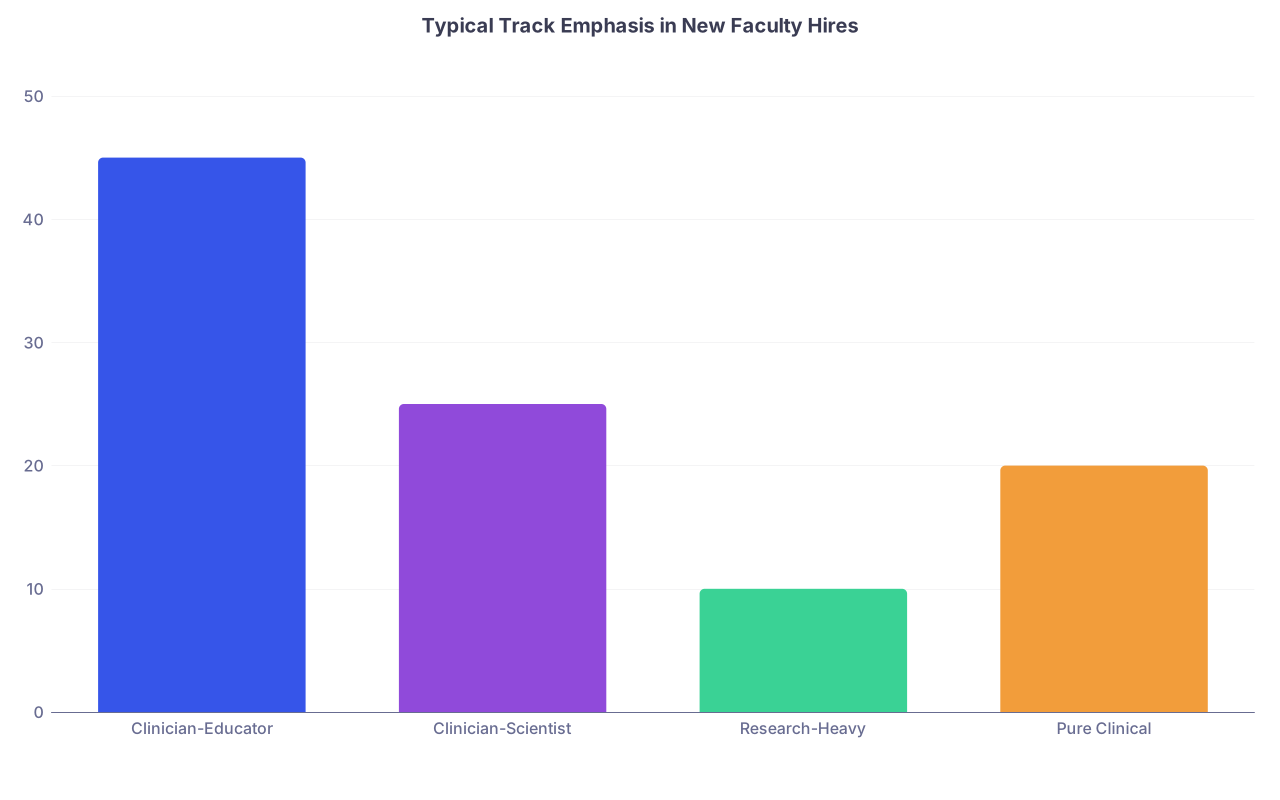
| Category | Value |
|---|---|
| Clinician-Educator | 45 |
| Clinician-Scientist | 25 |
| Research-Heavy | 10 |
| Pure Clinical | 20 |
For clinician-educator or clinical scholar roles, they look for:
- A coherent story of your education/quality/scholarship interests (not random scattered stuff)
- Concrete outputs: curricula built, OSCE redesigns, QI projects, publications on education or systems work
- Signals that residents and students actually like working with you
The private comment I’ve heard from chairs more than once:
“If I hire them, can I plug them into the residency program, and will the PD be happy or miserable?”
For research-leaning or “protected time” roles, they get even more ruthless:
- Did you drive a project, or are you the 5th name on 7 multi-author papers?
- Any first-author work? Any grant-writing experience at all, even K or F applications?
- Can senior faculty vouch that you actually understand methods and not just your little corner?
The mistake applicants make is parroting “I want to do research” without showing evidence they can survive in that world. Chairs have a graveyard of failed “promising” hires who burned protected time on nothing.
They’re watching for:
- Specific, narrow questions you care about
- A realistic sense of what your first 2–3 years will look like
- Awareness of funding pathways and mentorship needs
If you talk like someone who expects the institution to hand you a fully formed research enterprise, you get mentally tagged as naive and high-maintenance.
3. Reputation and Risk: Are You Going to Be a Problem?
Here’s the part people underestimate: chairs are terrified of hiring behavioral risk. It is harder to fire a faculty member than to hire one. Once you’re in, you’re in. The amount of paperwork, HR pain, and political blowback to remove someone is immense. So they screen heavily for red flags.
They scrutinize:
Professionalism history.
Anything that hints at repeated lateness, disappearing on service, shouting in the OR, inappropriate messages, social media disasters. If your PD or fellowship director ever had to document you, assume it may come up, at least obliquely.
How you treat staff.
During the visit, the chair will ask their administrator, the clinic manager, even the fellowship coordinator, “How were they?” I’ve seen an excellent CV torpedoed because the candidate was clipped and dismissive to front desk staff. The chair said, “If they act like that on a visit, imagine them when they’re tired and behind in clinic.”
Emotional steadiness.
They’re looking for colleagues who don’t destabilize the environment. Do you come across as brittle, defensive, constantly wronged by prior institutions? Every story you tell about a “crazy” program director or a “toxic” co-fellow is being logged against you.
Trainability and humility.
Can you take feedback, or are you already “above” it? One chair I know (big-name IM department) has a litmus test: if a candidate can’t acknowledge any area for growth without spinning it into a humblebrag, they’re out.
Bottom line: they would rather hire a slightly less accomplished but obviously stable, collegial person than a superstar who might explode the culture.
Politics and Power: Where You Fit in the Internal Game
Nobody writes this in the job description, but it drives more hiring decisions than you think.
Departments are factions: divisions with competing priorities, senior faculty with pet projects, long-simmering turf battles. A new hire is a card the chair can play in that game.

When they look at you, they’re asking:
- Do you strengthen a division chief they want to empower—or undercut one they’re trying to contain?
- Are you bringing in outside loyalties (e.g., heavily aligned with another institution, mentor, or rival division)?
- Will you be a future ally or a wild variable in committee rooms?
That plays out in a few quiet ways:
Internal vs external candidates.
If you trained there, the chair already has an informal file on you. All your rotations, all the whispers. That can be great or lethal. External candidates are cleaner slates—but also unknown quantities who might not fit the local style.
Loyalty signals.
They’re listening carefully to where else you’re interviewing and how you talk about it. Do you sound like someone passing through on your way to “somewhere better”? Or like someone who could realistically commit to building something locally?
Threat vs complement.
If your research overlaps too directly with a politically powerful senior researcher, some chairs will quietly avoid the conflict by not hiring you. Not fair. Very real. On the flip side, if you’re the missing piece in a strategic cluster they want to build, they’ll bend rules to get you.
You can’t control all of this. But you should be aware it’s happening so you stop interpreting every rejection as a reflection of your worth. Sometimes you were simply not the right card in that internal game.
How Chairs Actually Read Your CV and Letters
Most applicants think the chair is reading every line of their CV. They are not. They scan it like this:
- Where did you train? Any big names that speak for themselves?
- Are your publications consistent with your stated interests—or random noise?
- Any glaring gaps or weird transitions that need explanation?
- Do your letters confirm the story you told in your cover letter and interview?
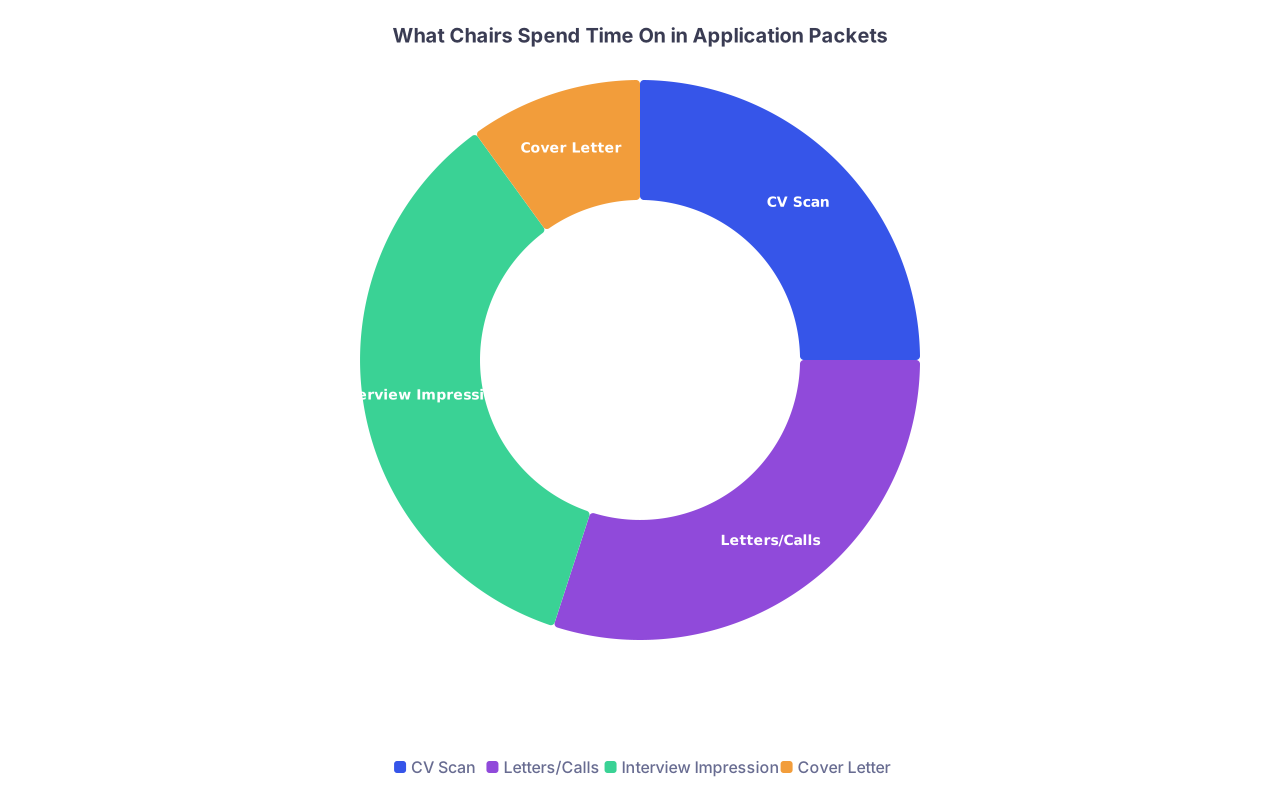
| Category | Value |
|---|---|
| CV Scan | 25 |
| Letters/Calls | 30 |
| Interview Impression | 35 |
| Cover Letter | 10 |
Training pedigree.
Yes, it still matters. But not the way you think. A big-name institution won’t save a weak impression. However, if you come from a smaller or lesser-known program and have clear, strong letters from respected people, that impresses chairs more than you’d expect. It signals grind and initiative.
Publications.
Chairs are pattern-recognizers. They look for coherence. If your CV shows 2 case reports in PGY2, a random cardiology paper as a PGY3, a med ed poster in fellowship, and then you tell them you’re passionate about population health research, it doesn’t track.
They’d rather see:
- A small cluster of related work, even if not high-impact
- Clear roles: first or second author somewhere, not always #7
Letters and backchannel calls.
Let me be blunt: the call matters more than the letter. Boilerplate letters all sound the same. But when the chair dials your PD or mentor and hears, “If I had a spot, I’d hire them myself,” that moves mountains. Conversely, a slightly hesitant tone—“They’re very bright, but…”—will kill you.
You want your references prepped to answer three things crisply:
- Are you reliable clinically?
- Are you good to work with (including with staff)?
- Do you have real potential in the area you’re claiming (education, QI, research)?
Letters that dance around those points are a red flag.
Interview Day: What They’re Actually Testing
Interview day is not a personality contest. It’s a live simulation: “What will it be like having this person in our department for 10+ years?”
Here’s what’s really getting judged.

| Step | Description |
|---|---|
| Step 1 | Application Reviewed |
| Step 2 | Hold or Reject |
| Step 3 | Interview Invite |
| Step 4 | Clinical Hire Only |
| Step 5 | Strategic Hire |
| Step 6 | Offer or Alternate |
| Step 7 | Clinical Need Met |
| Step 8 | Behavioral Fit |
| Step 9 | Academic Upside |
Consistency with your written story.
If your cover letter says you’re passionate about medical education, but you can’t clearly articulate what you’ve done or what you want to build, it rings hollow. Chairs can smell “I wrote what I thought they wanted to hear” from a mile away.
How you handle uncertainty and pushback.
In faculty interviews, you will get some version of:
- “That sounds ambitious—how would you do that here with limited resources?”
- “We tried something similar and it didn’t work. What’s different about your approach?”
They’re not always arguing. They’re stress-testing you. Can you absorb that without becoming defensive or crumbling? Can you acknowledge institutional realities while still showing initiative?
Your questions.
This is one of the biggest tells. Applicants who ask only lifestyle questions (“What’s the call schedule?” “How many weeks of vacation?”) before they ask about faculty development, mentorship, promotion expectations, or program direction get categorized as “job, not career” candidates. Not always a dealbreaker, but it changes how the chair views your trajectory.
On the other side, some people try too hard to seem “serious” and ask only grand strategic questions, with zero curiosity about how they’ll actually function day to day. That reads as disconnected from reality.
Social sensing.
Dinner with faculty, meeting with residents, hallway chats—all of that is intel gathering. If residents later tell the chair, “They seemed annoyed when we brought up work-life stuff,” or staff say, “They didn’t look up from their phone in the lounge,” that will get mentioned in the debrief.
How to Position Yourself Before You Ever Apply
You cannot change who you are three weeks before the interview. But you can spend the last 12–24 months of residency or fellowship making yourself the kind of candidate chairs are subconsciously looking for.
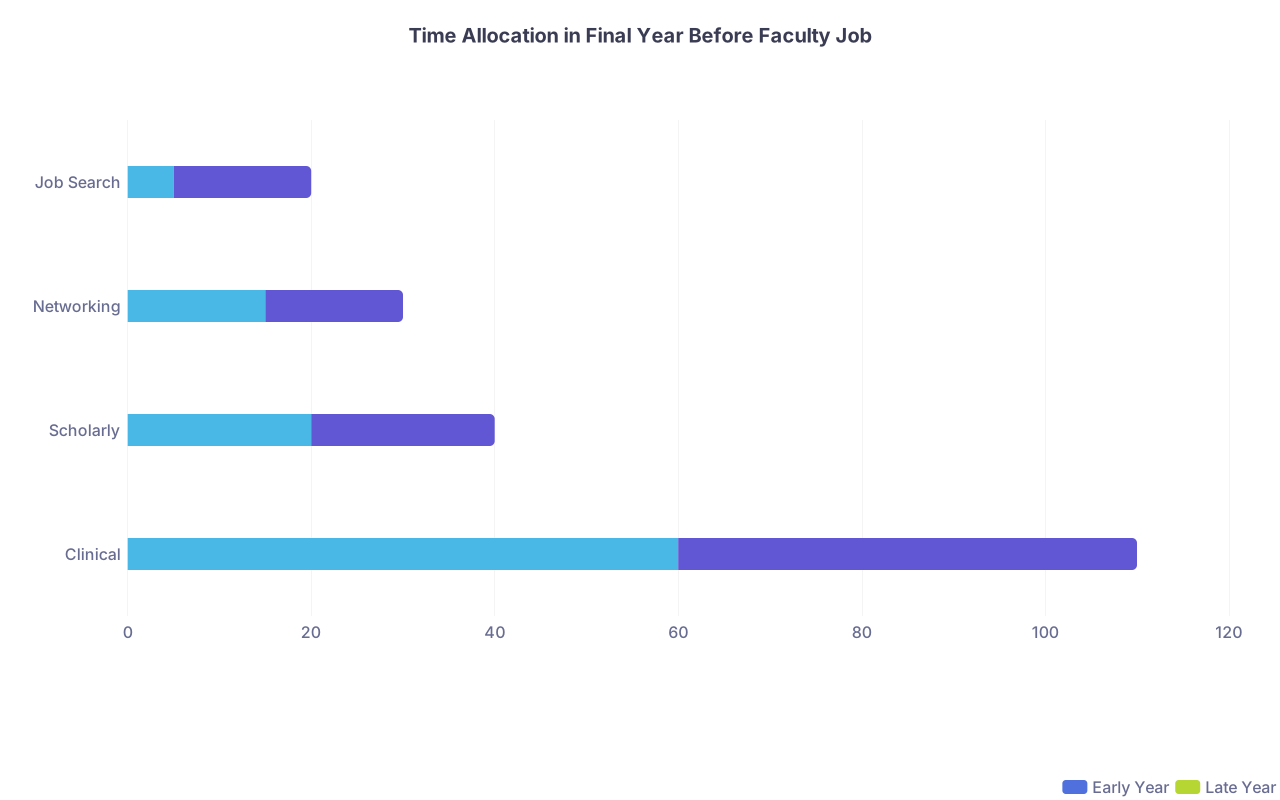
| Category | Early Year | Late Year |
|---|---|---|
| Clinical | 60 | 50 |
| Scholarly | 20 | 20 |
| Networking | 15 | 15 |
| Job Search | 5 | 15 |
Here’s what the people who get early, strong offers usually have in common:
They pick a lane early enough to show traction.
Not at PGY5 of a 5-year program. Earlier. You do not need to lock in your entire career, but you should have:
- A clear theme: med ed, quality/safety, clinical niche, or a research question
- A handful of related projects, not scattered one-offs you forget after the poster session
They cultivate trusted advocates.
Not just famous names. People who know your work, your reliability, your judgment. Ideally at least one of them has the kind of reputation that makes a chair listen. These are the people who will get called—and who will pitch you directly when they hear about openings.
They build a reputation with staff and trainees.
You’d be surprised how far it goes when a program coordinator or chief resident says, “If we could keep one graduating fellow, it would be them.” Chairs hear that stuff. They trust it more than your own self-description.
They act like junior faculty before they have the title.
They run their clinics like an attending. They show up prepared to teaching sessions. They follow through on project deadlines without hand-holding. They can have hard conversations without drama.
Those behaviors create the one thing chairs are actually starved for: trust.
Three Things That Quietly Kill Offers
Let me end the main section with the hidden landmines. These are patterns I’ve seen knock people out of the running over and over.

1. Entitlement Out of Proportion to Value
New grads asking about:
- Massive protected time with no track record
- Leadership roles they are not ready for (“associate program director” on day one)
- Guaranteed quick promotion timelines
Chairs don’t hate ambition. They hate entitlement. If your asks don’t match your demonstrated value, you look out of touch and risky.
2. Incoherent Story
Someone who:
- Went from basic science → QI → med ed posters → narrative medicine writing
- Then says they want to be a funded outcomes researcher
It’s not that this path is impossible. But if you can’t string those experiences into a clear throughline that explains what you actually want to do in your first 3–5 years, you look unfocused. Chairs are allergic to unfocused.
3. Sloppy or Inconsistent Communication
Last-minute cancellations. Delayed replies to emails from the chair’s office. Spelling errors in materials you had weeks to prepare. These are tiny signals that you are not quite ready to operate at the level they need.
One department I know rescinded interest in a strong candidate because scheduling emails turned into a mess of “sorry, missed this,” and double-booked Zooms. The chair said, “If they can’t keep this straight when they’re trying to impress us, what happens when they’re buried in patients and admin?”
FAQs
How much do my publications actually matter for a mostly clinical job?
They matter less than you think—unless you’re using them to support a specific niche or educator identity. For a pure clinician hire, a chair would rather see strong clinical evaluations, zero professionalism issues, and evidence that you work well in a team than five middle-author PubMed entries. A couple of coherent, related projects are enough to show you’re thoughtful and capable of some scholarly work. Beyond that, it’s diminishing returns for most clinical slots.
Is it a bad idea to be honest about wanting work-life balance?
No, but there’s a smart way and a dumb way to say it. If your first question is “How light can my call be?” you come off as checked out. If instead you ask, “How do your successful junior faculty structure their time? What’s realistic for clinical load and scholarly work here?” that signals you’re serious about designing a sustainable, productive career. Chairs respect people who want longevity; they just don’t want to hire someone who already sounds burned out before day one.
Should I tell them about other offers or programs I’m interviewing with?
You should not bluff, and you should not overshare. If a chair asks directly, it’s fine to say, “I’m also in conversations with a few programs that have strong X and Y, but this department is particularly appealing because of Z.” You’re signaling you’re competitive without turning it into an auction. What you do not do is try to play hardball as a brand-new grad—posturing usually backfires. The moment a chair feels you’re using them as leverage with no real interest, their enthusiasm disappears.
Remember: chairs are not hiring your CV. They’re hiring your future behavior in their ecosystem. Show them that you can reliably carry the clinical load, that your academic or educational trajectory is real (not performative), and that you’re the kind of colleague they won’t regret sitting next to in faculty meetings for the next decade. If you can do that, you’re already ahead of most of your competition.