
You do not have a “burnout problem.” You have a systems problem built around RVUs that was never designed for a human being.
Here is the fix: you can turn an abusive, RVU-heavy job into a sustainable practice in 90 days—without blowing up your income or reputation—if you treat it like a restructuring project, not a vague wellness goal.
This is not about yoga, gratitude journals, or “being more efficient.”
This is about:
- Reducing non-RVU work that steals your time.
- Increasing RVU yield per hour you are already working.
- Building hard boundaries that your group, scheduler, and staff actually respect.
And doing it stepwise, in three 30-day blocks.
Step 0: Define the Problem Like a Consultant, Not a Martyr
Before you “fix” anything, you need a brutal, quantitative baseline. No feelings. No stories. Just data.
For the next 7 days, you collect three things:
Time log (15-minute blocks)
From arrival to leaving the building and any at-home work:- Direct patient care
- In-room documentation
- Charting after hours
- Inbox / refills / portal messages
- Phone calls
- Meetings / admin
- “Hallway consults” / interruptions
- Pure downtime (if any)
RVU and volume snapshot
- RVUs per day (or per week if that is how your system tracks).
- Number of visits / procedures per day.
- No-show rate.
- Distribution: new vs return, high vs low paying codes.
Pain points list Keep a running note on your phone:
- “4 refill requests for same patient, same med, same week.”
- “Saw 4 complex patients double booked into 15-min slots.”
- “30 minutes signing forms that generate zero RVUs.”
You are looking for repeat patterns. Not one-off bad days.
If you want to be organized about it, use a very simple table for one “typical” week:
| Metric | Value (Example) |
|---|---|
| Avg RVUs per day | 28 |
| Patient visits per day | 24 |
| Scheduled clinic hours | 8 |
| After-hours charting | 2.5 hours |
| Inbox time per day | 60 minutes |
Already feeling defensive about these numbers? Good. That means they are accurate.
The 90-Day Framework
We are going to restructure in three chunks:
- Days 1–30 – Triage and Stop the Bleeding
Quick wins, boundaries, and removing the dumbest work. - Days 31–60 – Redesign the Clinic Day
Template, staffing, documentation, and message workflows. - Days 61–90 – Optimize RVU Yield and Protect the System
Higher-yield work, smarter coding, and hard-wiring the changes.
Expect resistance. Schedulers, administrators, even some partners will push back. They are protecting the system that has been fed by your overwork.
You are protecting your career.
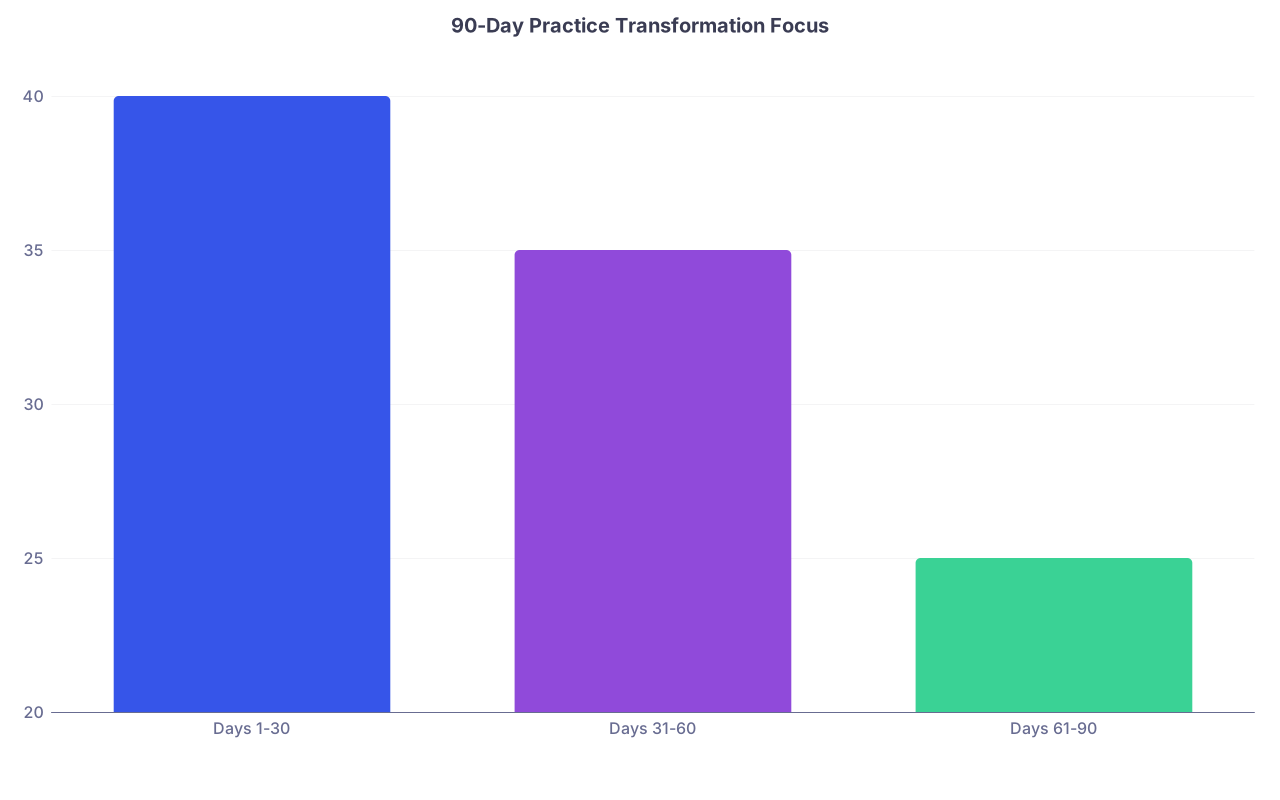
| Category | Value |
|---|---|
| Days 1-30 | 40 |
| Days 31-60 | 35 |
| Days 61-90 | 25 |
Days 1–30: Triage – Cut the Bleeding Work First
Goal: Reduce unpaid / low-value work by at least 20% without touching your RVU output.
You do three things in the first month: change policies, change communication, change your schedule inputs.
1. Rewrite the “Rules of Engagement” for Your Practice
You need explicit policies. If you do not set them, the EMR and front desk will.
Draft a simple one-page “practice policy” for your staff and scheduler. Not for patients. For the people who feed your inbox and schedule.
Include:
- Refills
- 90-day supplies with refills when safe
- No refills for patients not seen in X months (you choose—often 6–12)
- No refills via portal message when next visit is due—schedule visit instead
- Messages
- Medical questions that require clinical judgment → converted to visit (telehealth or in-person)
- No curbside “can you just ask the doctor” triage by front desk for complex issues
- Turnaround time expectation: routine 48–72 business hours; urgent → nurse triage
- Forms and letters
- FMLA, disability, long forms → scheduled form visit (in-person or virtual)
- Short letters (work excuse, simple school note) handled using pre-approved templates by staff
- Labs / imaging
- Results that change management → scheduled follow-up (often telehealth) unless minor.
You then meet with your lead MA / nurse and your scheduler. 30 minutes. No longer.
Script it plainly:
“Here is how I will be working going forward. My job is direct patient care and medical decision-making. I am drowning in inbox and unscheduled work that is unsafe and unsustainable. These are our new rules, and I need your help enforcing them. When in doubt, schedule the patient.”
Then you send a short email version to your clinic manager and CC whoever needs to bless it. You are not asking permission. You are documenting expectations.

2. Implement a Strict Inbox Protocol
The inbox is where RVUs go to die.
Set two fixed times per day for inbox:
Example: 11:30–12:00 and 4:30–5:00. That is it. No more “snacking” on messages between patients.
Then:
Triage rules with staff
- Staff handles:
- Appointment logistics
- Simple med clarification (e.g., pharmacy change)
- Printing and sending pre-written letters / templates
- Nurse handles:
- Symptom triage with protocols
- Basic education using standard scripts
- You only handle:
- Issues that truly require medical decision making
- Cases where protocol escalates to MD / DO
- Staff handles:
Use templates like weapons
Any message you answer more than twice → create a template:- Lab results: “Stable, no change in medication. Recheck in 6 months.”
- Blood pressure logs: “Your readings show…” with three standard variants.
- Post-op / follow-up instructions.
Your rule:
If it needs more than 2–3 minutes of thought or documentation, it should probably become a billable visit. Train staff to say, “Dr. X reviews this more thoroughly during a visit—let us schedule you.”
3. Clamp Down on Schedule Chaos
You cannot fix RVU pain while your schedule is a free-for-all.
In Days 1–30, you do not overhaul the template. You simply stop the worst abuse:
- No more:
- Triple booking unless you explicitly approve it that day.
- “Squeeze-in” visits during your blocked admin time.
- Random add-ons for chronic, non-urgent issues that could have been scheduled previously.
Send a direct instruction to scheduling:
“Starting Monday, please stop double-booking my schedule without checking with me first. I will have specific times we can use for same-day needs. I will let you know those slots daily.”
Then create a daily huddle (5 minutes, at the start of the day):
- Review:
- Same-day slots
- High-risk / complex patients
- Telehealth conversion candidates for non-urgent follow up.
Five minutes here saves you 45 minutes of chaos later.
4. Protect One Admin Block per Week
You are not going to get two half-days right now. Start with one 2–3 hour block per week during business hours. Not nights. Not Saturdays.
Purpose of that block:
- Finish charts.
- Clean up remaining inbox.
- Review labs / imaging that are backlogged.
Tell your manager:
“With my current workload and RVU targets, I need a short weekly admin block to keep charts current and maintain patient safety. I am starting with Wednesday 1–3 pm as dedicated admin time.”
If they push back, say the truth:
“Right now, I am doing this work off the clock at night. That is not sustainable and increases the risk of errors.”
Deliverables by Day 30
By the end of the first month you should have:
- A written clinic policy for refills, messages, forms.
- Two fixed inbox times per day.
- Scheduler and staff briefed; daily huddles started.
- One weekly admin block protected.
- Time log repeated for 1 week to compare.
You are aiming for at least:
- 30–50% reduction in after-hours charting time.
- Slight or no decrease in RVUs (maybe even a small increase because you are converting more to visits).
Days 31–60: Redesign the Clinic Day Around Sustainable RVUs
Now that you are not bleeding time everywhere, we rebuild the machine.
Goal: Same or higher RVUs with fewer hours and lower cognitive load.
1. Redesign Your Schedule Template Intelligently
You need a template that matches your case mix and RVU targets, not the generic scheduler default.
Ask for a printout of 30 recent clinic days:
- Number of patients.
- Visit type (new, follow-up, procedure, acute).
- RVUs per visit where visible.
From that, design a template that:
- Front-loads complex work when you are fresh.
- Batches similar visit types together.
- Reserves realistic time for documentation.
Example for an 8-hour day in primary care seeing complex adults:
- 8:00–10:00
- 3 × 40-min “complex / chronic” slots
- 2 × 20-min routine follow-ups
- 10:00–12:00
- 4 × 20-min slots (mix of follow-up / acute)
- 1:00–3:00
- 2 × 40-min new consults
- 2 × 20-min follow-ups
- 3:00–4:30
- Same-day / acute slots (4 × 20 min)
- 15 min buffers mid-morning and mid-afternoon.
Orthopedics? Cardiology? Hospitalist? Adjust the block lengths but preserve the logic:
High-value, complex, predictable blocks. Acute and chaos later in the day.
The key: fewer appointment types.
Every extra type (“15-min med check,” “30-min chronic,” “45-min annual,” etc.) increases scheduling errors.
Stick to 2–3 core visit types and let your staff know exactly what belongs in each.

| Step | Description |
|---|---|
| Step 1 | Existing chaotic template |
| Step 2 | Analyze 30 days data |
| Step 3 | Define 2 to 3 visit types |
| Step 4 | Block complex visits early |
| Step 5 | Reserve same day slots late |
| Step 6 | Add admin buffer blocks |
| Step 7 | Implement new template for 4 weeks |
2. Build a Reliability Contract with Your MA / Nurse
A good MA can give you back 1–2 hours per day. A bad one will sink any RVU plan.
Sit down with your primary MA/nurse and define exact expectations:
- Pre-visit
- Pre-charting: reason for visit confirmed, meds reconciled, health maintenance flagged.
- Rooming: vitals, chief complaint in patient words, relevant screening tools completed.
- In-room
- Scribe-style assistance if allowed:
- Enter HPI structure from your verbal or quick outline.
- Update problem list.
- Queue up orders you most likely will place.
- Scribe-style assistance if allowed:
- Post-visit
- Print/fax orders.
- Close loops on routine instructions.
- Queue standard follow-up message templates.
You return the favor by:
- Running on time as much as possible.
- Giving real-time feedback:
“When you ask them specifically about side effects before I enter, I can cut my visit time by 3–4 minutes.”
Create 3–5 “standard visit workflows”:
- Diabetes follow-up.
- Hypertension tune-up.
- Post-op wound check.
- New consult for X.
Write them on a single sheet. Tape them to their workstation.

3. Fix Documentation the Right Way (Not Just “Type Faster”)
Your documentation burden is partly self-inflicted. Most physicians over-write.
Three rules for the next month:
Use macros and templates aggressively
- For common visit types, create a skeleton:
- Subjective: brief structured headings.
- Objective: auto-insert normal exam, edit what is abnormal.
- Assessment/Plan: bullet out common plans with placeholders.
- Avoid paragraphs. Use concise bullet structure.
- For common visit types, create a skeleton:
Document in the room whenever possible
- Your new default: 80–90% of the note is done before you stand up.
- You can say to a patient:
“I am going to type while we talk so I do not forget anything important.”
- The patients are used to this. They would rather have you home on time than writing poetry about their ROS.
Set a hard “chart closed” rule
- Aim: 90% of charts closed by end of clinic day.
- Use your admin block and small in-day buffers to finish the rest.
- No backlog > 10 charts at 24 hours.
If you have voice recognition, use it—but script your language. No rambling dictations. Short, stock phrases.
4. Ruthlessly Convert “Shadow Work” to Billable Work
You are already doing clinical thinking. You just are not billing for half of it.
Common examples you convert in this 31–60 day window:
- Complex message threads → turn into:
- Same-day virtual visit
- Short follow-up slot
- Large abnormal lab panels → scheduled lab review visit.
- Medication changes for chronic issues → visit, not message.
When a patient calls with: “I have three different issues and I just want to ask Dr. X quickly,” your staff says:
“Those sound important and cannot be safely handled by message. Dr. X sets aside time specifically to review these kinds of concerns during visits. Let us get you on the schedule.”
You are not being greedy. You are aligning clinical work with documentation, liability, and reimbursement.
Deliverables by Day 60
By the end of this phase, you should have:
- A redesigned schedule template live for at least 3–4 weeks.
- Standard workflows for at least 3 common visit types.
- A cooperative MA/nurse who knows your patterns.
- Macros/templates in your EMR for your most common visits and messages.
- Charts mostly closed same day, <30 minutes of after-hours charting on average.
RVUs should be stable or trending up because:
- You reduced invisible work.
- You increased visit-based problem solving.
Days 61–90: Optimize RVU Yield and Lock In Your System
Now we refine. You are working closer to sane hours. Charts are lighter. The inbox is less feral. Time to:
- Increase RVU per hour.
- Protect what you built from slow erosion.
- Align your role with what you actually want long term.
1. Audit Your RVU Mix and Code Like a Professional, Not a Resident
You cannot talk about RVU “burden” without confronting your coding.
Get a simple 3–6 month report by CPT or E/M level and RVUs per encounter.
You are looking for:
- Under-coding: excessive level 3s where your documentation supports 4s or 5s.
- Missed procedure codes you routinely perform.
- Chronic care management, prolonged services, telehealth codes your system actually pays for.
Sit down with:
- A coding specialist or
- A senior partner who consistently hits targets without working insane hours.
Tell them:
“I want to make sure my documentation matches the work I am actually doing. Can we review 10–15 recent notes together?”
Then:
- Adjust your templates to support accurate higher-level coding when justified.
- Identify at least 2–3 codes you are underusing (e.g., prolonged visit add-on, joint injections, counseling codes, device interrogations).
Your target: modest increase in average RVU per visit without changing the number of patients. Even a 0.2–0.3 RVU increase per visit compounded over your year is huge.
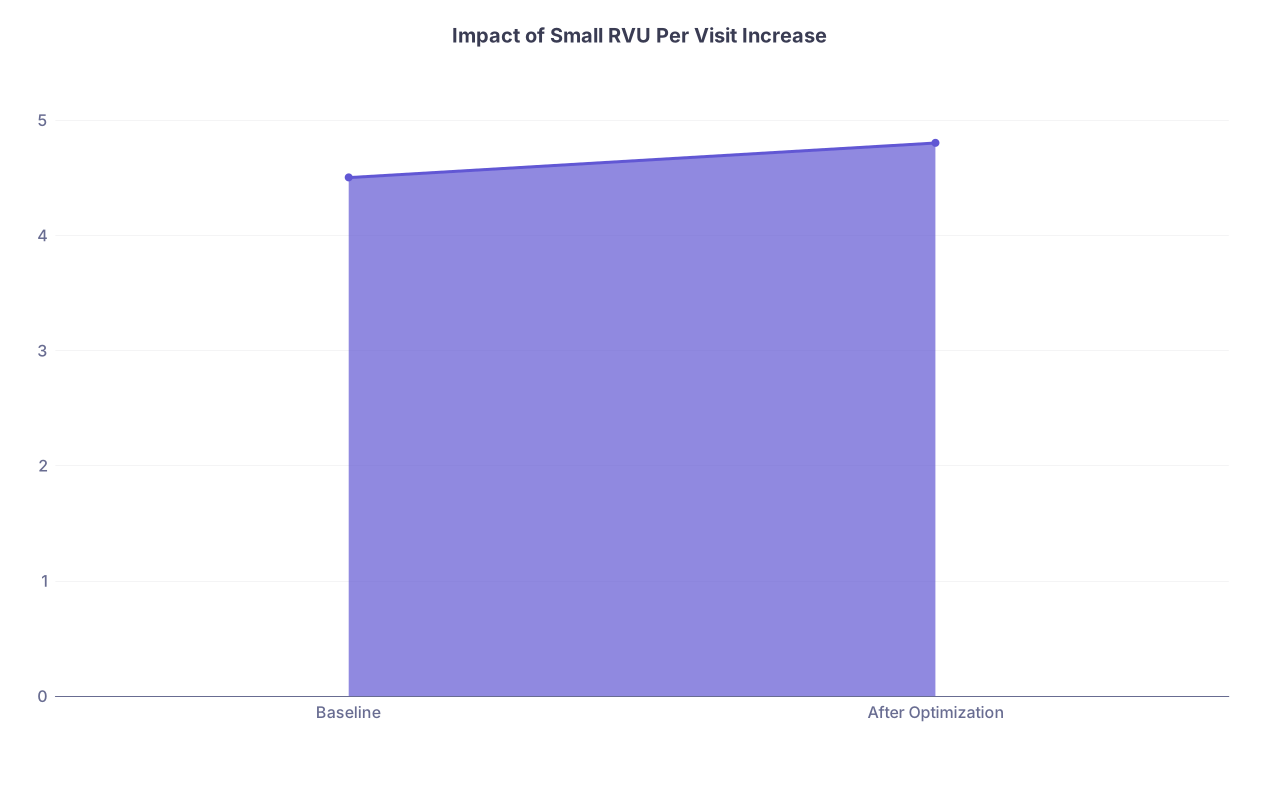
| Category | Value |
|---|---|
| Baseline | 4.5 |
| After Optimization | 4.8 |
2. Shift Your Case Mix Slightly in Your Favor
You do not need to blow up your job to make it more sustainable. Small shifts in what you see can change your day dramatically.
Ways to tilt your mix:
Direct schedulers to book your “sweet spot”
- If you like procedures: encourage front desk and referring providers to send those to you.
- If you tolerate complex chronic patients better than “quick sick visits”: build your template and referral language around that.
Say no—strategically
- You are allowed to tell your scheduler:
“I am not the right person for chronic pain management without clear diagnoses. These should be directed to X clinic.”
- Or:
“I cannot safely manage five active problems in a 20-minute slot. If they have a list, they need a 40-minute complex visit.”
- You are allowed to tell your scheduler:
Formalize one or two niche areas
- Example: In IM, you might become the “diabetes + obesity” person.
- In ortho, maybe shoulder or hand.
- In cards, arrhythmias vs general prevention.
Niche focus lets you:
- See more similar problems (more efficient).
- Build more powerful templates.
- Often code higher legitimately due to complexity.
3. Build Structural Boundaries and Put Them in Writing
Your 90-day transformation will die slowly if your boundaries stay verbal.
You lock them in three ways:
Clinic policy document v2
- Revise what you started at Day 1 based on what worked.
- Include:
- Visit types and rules.
- Refill procedures.
- Inbox expectations.
- Standard follow-up pathways (“after hospitalization, schedule within X days,” etc.)
Formal schedule template
- Your scheduler receives a written description:
- Number of total slots.
- Which times are reserved for:
- New/complex
- Procedures
- Same-day / acute
- Admin blocks
- Make clear: “These should not be modified except by me.”
- Your scheduler receives a written description:
Communication to leadership Short email to your medical director/manager:
“Over the last 3 months I have standardized my workflows to maintain RVU productivity while improving patient safety and reducing after-hours work. This includes a defined schedule template, structured use of telehealth, and consistent policies for messaging and refills. My RVU output has remained at X/day with substantially fewer after-hours charting hours. I plan to maintain these structures going forward.”
Translation: The experiment is successful; this is now the baseline.
| Metric | Before 90 Days | After 90 Days |
|---|---|---|
| Avg RVUs per day | 28 | 29–31 |
| Patient visits per day | 24 | 20–22 |
| After-hours charting | 2–3 hours | 0–30 minutes |
| Inbox time during clinic day | 90+ minutes | 30–45 minutes |
| Weekly admin time (protected) | 0 | 2–3 hours |

4. Decide If the Job Is Salvageable Long-Term
The last part is uncomfortable but necessary.
Sometimes the problem is not just workflow. It is the job itself. The leadership. The RVU targets. The culture.
By Day 90, you should know:
- With your new system:
- Are you hitting target RVUs (or close)?
- Are you home at a humane hour most days?
- Do you feel less dread on Sunday night?
If you are doing all of the above—clear boundaries, optimized template, better coding—and you still:
- Need to work 60+ hours a week to hit target, or
- Are punished for refusing unsafe schedule practices, or
- See your admin blocks and templates constantly disrespected,
then your next step is not “be more efficient.”
Your next step is an exit strategy.
That might mean:
- Moving to a similar role in a better-run system.
- Transitioning to a lower-RVU, higher-salary mix (e.g., academic, specialty clinic, part-time plus locums).
- Negotiating a new contract that acknowledges your actual contribution beyond raw RVUs (supervision, teaching, leadership).
But you do that from a place of power: you now have 90 days of documented changes, metrics, and proof that you can run a highly efficient practice. That is attractive to other employers and very hard for your current one to dismiss.

| Step | Description |
|---|---|
| Step 1 | 90 days completed |
| Step 2 | Maintain new system |
| Step 3 | Negotiate formal changes |
| Step 4 | Plan exit to new role |
| Step 5 | RVU target met with sustainable hours |
| Step 6 | Leadership willing to adjust targets or support |
What To Do Monday Morning
If you read this and feel overwhelmed, here is the stripped-down starting sequence for your very next clinic week:
Print one week of your schedule and yesterday’s inbox.
Highlight everything that did not need to land on your plate personally.Draft a one-page staff policy for refills, messages, and forms.
Basic, not perfect. You can refine later.Schedule a 20-minute huddle with your MA/nurse and scheduler tomorrow morning.
Present the new rules. Ask for their ideas.Pick two fixed inbox times and put them on your calendar as appointments with yourself.
Treat them like real visits.Block a 2–3 hour admin period next week.
Mid-week, mid-day. Then defend it like your license depends on it.
Start there. Do not wait for perfect. The system as it is now is not protecting you.
The Bottom Line
Three points and we are done:
You cannot “self-care” your way out of a broken RVU system.
You fix it with structure: clinic policies, templates, staff workflows, and hard scheduling boundaries.In 90 days you can usually maintain or increase RVUs while cutting hours.
The levers are: killing unpaid work, billing for the thinking you already do, and redesigning your day around high-yield, predictable work.If after 90 days of serious restructuring the job is still unsustainable, the job is the problem.
Not you. At that point your best move is a strategic exit, not more sacrifice.
You are not stuck. But you cannot keep practicing like an intern with an RVU quota strapped to their back.