
The biggest networking mistakes after residency don’t just slow your career down. They quietly close doors you never even see.
You survived intern year. You made it through senior calls and boards. Now you think the job market is about résumés and interview skills. That’s only half true. The other half—often the decisive half—is networking. And post-residency physicians routinely screw this up in predictable, painful ways.
I’ve watched excellent clinicians stall at mediocre jobs for 5–10 years because of a few avoidable networking habits. Not lack of talent. Not lack of opportunity. Just bad approach.
Let’s walk through the landmines so you do not step on them.
Mistake #1: Treating Networking Like a One-Time Job Hunt Tool
Most doctors only wake up to “networking” when they need something: a job, a reference, an intro to a group. That’s backwards.
The pattern looks like this:
- PGY-3/4: You’re too busy. You tell yourself, “I’ll network when I’m closer to finishing.”
- Final year: Panic. You start cold emailing chairs, old attendings, and random LinkedIn strangers.
- Attending year 1–3: You disappear again… until you want to change jobs or negotiate a raise.
That on/off pattern screams transactional. People feel it immediately, especially in medicine where circles are small and memories are long.
The better mental model: networking as maintenance, not a fire extinguisher.
A few warning signs you’re making this mistake:
- You only reach out to people when you need something.
- You cannot name more than 3 attendings or alumni you’ve spoken to in the last 6 months.
- You “plan” to start networking 3–4 months before graduation. (Too late for most good opportunities.)
What to do instead:
- Set a low bar: one networking touch per week. A short email, a coffee, a check-in text to a prior attending. That’s it.
- Start in PGY-1 or PGY-2 and never fully stop, even after you land a job.
- When you don’t need anything, reach out to ask about their work, their challenges, or to send a relevant article or resident they might want to meet.
People are far more willing to help the physician who’s been around, visible, and interested all along—rather than the one who shows up out of nowhere in March saying, “Hey, I’m graduating in June, any jobs?”
Mistake #2: Confusing “Being Known” With “Being Respected”
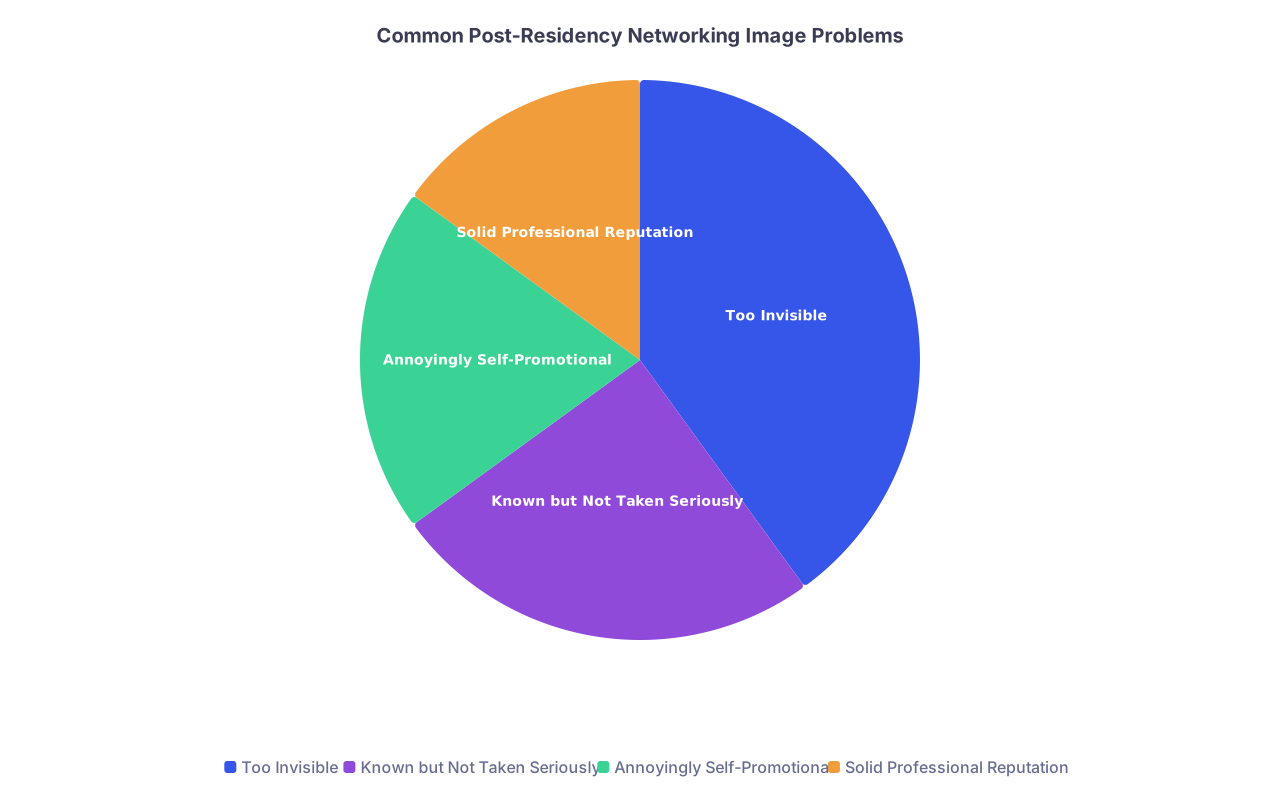
| Category | Value |
|---|---|
| Too Invisible | 40 |
| Known but Not Taken Seriously | 25 |
| Annoyingly Self-Promotional | 20 |
| Solid Professional Reputation | 15 |
A lot of residents think: “Everyone knows me at my program. I’m fine.” No, you’re not. Being known is not the same as being known for the right things.
I’ve seen this play out in faculty meetings:
- “Oh yeah, I remember her. Smart but chronically late.”
- “He’s nice, but not sure I’d send him one of my complex patients.”
- “Great with patients, but I don’t think he likes feedback.”
That’s the “reputation file” people consult when deciding who to recommend, hire, or invite onto projects. You are networking every time you show up to a shift, hand over a patient, or answer a page. Most people ignore this silent network until it bites them.
Two big sub-mistakes here:
Thinking social popularity = professional reputation
Being funny or well-liked socially does not guarantee anyone wants to stake their name on you.Being “low drama” but invisible
No one is mad at you. They just never think of you when there’s a new opening.
Corrective moves:
- Assume every attending you work with might be asked about you later. Because they will be.
- Decide what 2–3 adjectives you want people to use about you professionally (e.g., “reliable,” “teachable,” “calm in chaos”) and then consciously behave in ways that reinforce those.
- Ask a trusted senior resident or attending directly: “If someone asked you what I’m like as a physician, what would you say?” Then shut up and listen.
Do not leave your professional reputation to chance. That’s your core networking asset.
Mistake #3: Only Networking Vertically (and Ignoring Peers)
If your networking strategy is “talk to the department chair,” you’re already behind.
Here’s the quiet reality: a huge proportion of real-world job leads come from peers, not big-name attendings.
The mistake: residents obsess over impressing the program director and big academic names while largely ignoring:
- Co-residents in other specialties
- Fellows rotating through
- APPs and nurses who know where people really work and why they left
- Alumni a few years ahead who remember exactly what you’re going through
Later, they’re shocked when someone they barely noticed becomes the associate medical director of a large group, or the lead physician at a private practice that’s now hiring.
Your classmates are tomorrow’s hiring physicians, medical directors, startup founders, and hospital leaders. If you only cultivate relationships upward, you’re building a top-heavy, fragile network.
What to do instead:
- When you rotate with another service, learn 1–2 people’s long-term plans and keep track of them. A short, “Hey, how’s things at [new hospital]?” email each year is enough.
- Don’t be dismissive of people going to “non-prestigious” jobs. Those often become leadership positions faster.
- Treat nurses, NPs, PAs, and pharmacists the same way you’d treat the chair—peers talk, and they often know about openings before physicians.
The doors that open 3–5 years out are often controlled by the peers you either engaged with—or ignored—during training.
Mistake #4: Being Transactional, Needy, or Vague in Your Ask
You’ve seen this email:
“Hi Dr. Smith, hope you’re well. I’m graduating this year and was wondering if you know of any openings in your area. Any help would be greatly appreciated. Thanks!”
Vague. Generic. Demanding without meaning to be.
The three-layer problem:
No specificity
“Any job, anywhere” forces the other person to do all the thinking. Most won’t.No context
They don’t know whether you’re competitive, what you bring, or what you actually want.One-sided
There’s no sense you’re interested in their world, only in extracting help.
Instead, your approach should be:
- Specific
- Easy to respond to
- Respectful of their time
- Low-pressure
Better version:
“Dr. Smith, I’ve admired how you built your community-focused cardiology group. I’m finishing my fellowship at X this June and looking for a non-academic, outpatient-heavy role in [Region]. If you have 15–20 minutes in the next few weeks, I’d value your advice on how to evaluate private groups and whether you see any practices that match those goals. If not, even one or two names to research would be incredibly helpful.”
You’re asking for advice, not a job. You’re clear on what you want. You show you’ve done your homework. You give them multiple ways to help, some of which cost almost nothing.
Another mistake: sending a single message and then either:
- Badgering them every few days, or
- Disappearing in embarrassment
Right cadence: one polite follow-up 7–10 days later. If nothing, move on. Keep them on your “touch once or twice a year” list for future, but don’t keep pounding.
Mistake #5: Ignoring Digital Presence (or Letting It Rot)
Residency trains you to think your CV is the main document. On the job market, your search results are often the first “document” people see.
I’ve sat next to leaders scrolling:
- LinkedIn profiles
- Old conference bios
- Random social media posts
- PubMed and Doximity pages
…while deciding whether to call a candidate.
Here are the common digital mistakes:
- No LinkedIn or a bare-bones skeleton: “Resident at X Hospital.” No photo, no summary, no story.
- Outdated info: Still says PGY-2 when you’re an attending in another city.
- Unprofessional or polarizing content on public accounts that colleagues can easily find.
- Email addresses that scream “student” or “temporary” (e.g., old university email that’s about to deactivate).
You don’t need a “personal brand.” You need basic digital hygiene.
Minimum setup:
- Professional email you’ll keep long term (firstname.lastname@…).
- A clean, up-to-date LinkedIn with:
- A professional headshot (not a selfie in scrubs).
- A 2–3 sentence summary of who you are and what you’re looking for.
- Accurate current role and location.
- Consistent name across platforms so people can find you.
Do not post angry rants about your program, colleagues, or health system politics under your real name. That’s the kind of thing that gets screenshotted into text threads with the words: “Is this the same person who applied here?”
Mistake #6: Only Talking to People Who Look/Think Exactly Like You
This one is subtle but lethal. A lot of physicians unconsciously build echo-chamber networks:
- Same specialty
- Same gender/race
- Same training style (big academic, same institution, etc.)
- Same views on medicine (burnout, politics, the “right” kind of job)
The result: you get narrow, biased advice and a warped view of what’s possible.
You’ll hear:
- “Nobody leaves academics.” (Plenty do.)
- “Private practice is dead.” (Not everywhere.)
- “You can’t negotiate that.” (Sometimes you can.)
The actual job market is much wider and messier than what you see inside one silo.
To fix this:
- Intentionally add a few “outlier” people to your network:
- Someone who left clinical medicine.
- Someone in a totally different practice model (cash-pay, concierge, telehealth, rural).
- Someone 10–20 years ahead of you.
- Ask them: “What do people at my stage usually misunderstand about this path?”
You want to see the full chessboard, not just your little corner.
Mistake #7: Burning Bridges Quietly (You Think They’ll Never Know)

Residents rarely slam doors loudly. They close them with:
- Ghosted emails to attendings who wrote them glowing letters.
- Last-minute cancellations on shadowing, interviews, or meetings with no real apology.
- Leaving jobs or rotations with sloppy handoffs and “not my problem” attitudes.
- Venting about colleagues or programs to the wrong ears.
You tell yourself, “They’re busy, they won’t remember.” They do. Or their admin does. Or the colleague you complained to does.
Medicine is brutally small. Attendings move. Recruiters talk. Your name comes up in rooms you will never enter. The question is whether the story attached to your name is “solid, professional, would work with again” or “good clinically, but…”.
Here’s how to avoid quiet bridge-burning:
- If you can’t make a meeting/interview, cancel early, apologize once, and offer to reschedule. Don’t over-explain, just respect their time.
- When leaving a job, be excruciatingly thorough with your last month: clean charts, thoughtful handoffs, gracious goodbye emails.
- Don’t trash your old program publicly, even if it was toxic. Save the full truth for close friends and your therapist, not LinkedIn or casual colleagues.
A mediocre job can be temporary. A reputation for being flaky or bitter can stick for a decade.
Mistake #8: Treating Recruiters Like Either Trash or Saviors
Physician recruiters—internal hospital recruiters and external firms—play a bigger role than most trainees realize. Many residents make one of two opposite mistakes:
- They ignore recruiters entirely, assuming “real” jobs only come through faculty.
- They treat recruiters like career therapists and personal agents.
Both approaches backfire.
Reality check:
- Good recruiters can surface jobs you’d never see, especially in community and multi-site groups.
- They are not your advocate. They are paid by the employer to fill a role.
- They remember who shows up prepared, who wastes their time, and who lies.
Common screwups:
- Taking every call with no clarity on what you want, then ghosting half of them.
- Telling each recruiter a different story (“I want pure outpatient,” “I want academics,” “I’ll go anywhere,” “only this city”) which eventually jumps out as incoherent.
- Badmouthing other recruiters or prior employers to them.
Better approach:
- Before you engage, write down: geography limits, inpatient/outpatient preferences, academic vs community, dealbreakers (e.g., call frequency).
- Share a consistent version of that with every recruiter.
- Use them for information gathering: “How are groups in this region handling RVUs?” “What’s the realistic income range for someone like me?”
- Treat them like professionals whose time matters, even if you say no.
You want to be on their “easy to work with, honest, organized” list. Those are the names they think of when stealth opportunities show up.
Mistake #9: Showing Up Unprepared to “Informational” Meetings

| Step | Description |
|---|---|
| Step 1 | Get Intro to Physician Leader |
| Step 2 | Agree to Coffee Chat |
| Step 3 | Ask Vague Questions |
| Step 4 | Make Weak Impression |
| Step 5 | No Follow Up Opportunities |
| Step 6 | Ask Specific Questions |
| Step 7 | Show Clear Interests |
| Step 8 | Future Job or Referral |
| Step 9 | Prepare? |
You finally get what you asked for: a 20–30 minute chat with someone established. And then you show up with… nothing.
I’ve watched this. The junior physician arrives at the café, sits down, and says, “So… tell me about your career.” That’s a lazy question. It forces the other person to improvise a TED Talk.
This screams three things:
- You didn’t research me.
- You don’t quite know what you want.
- You’re hoping I’ll do the hard thinking for you.
Busy people don’t build opportunities around that.
Do not walk into an informational chat without:
- Googling the person. Knowing their role, background, and at least one thing you can ask about specifically.
- 3–5 focused questions ready. Examples:
- “What do new hires commonly misunderstand about this practice model?”
- “If you were finishing residency now in my shoes, what would you look for or avoid?”
- “What would make someone stand out as a great fit for your group?”
- A 1–2 sentence version of what you think you want. Even if you’re still figuring it out: “I’m leaning toward outpatient-focused general IM in [Region], probably non-academic, with a stable group.”
That lets them give you tailored, useful advice—and potentially think of specific roles or people to connect you with.
And then, afterwards: send a short thank-you. Same day if possible. Mention one concrete insight you got. That tiny act is how you convert a one-off conversation into an ongoing ally.
Mistake #10: Underestimating Time Horizons
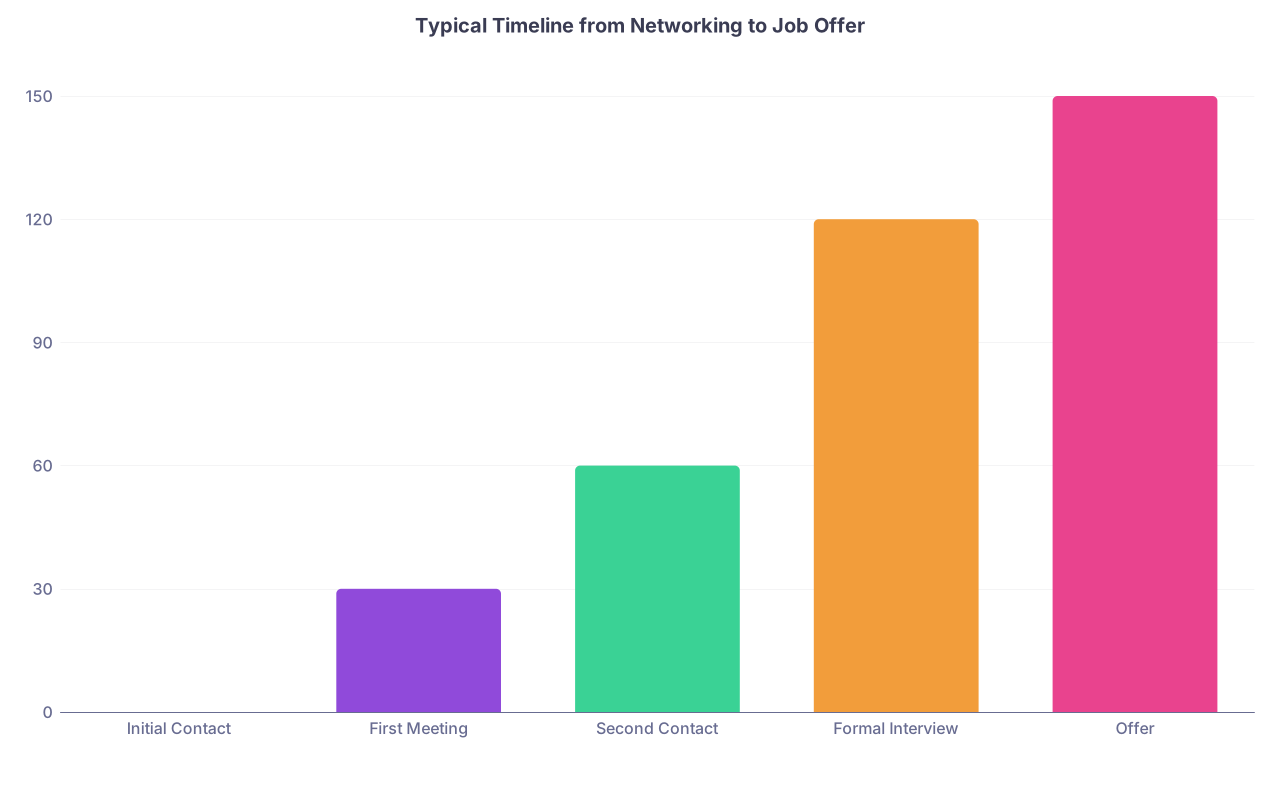
| Category | Value |
|---|---|
| Initial Contact | 0 |
| First Meeting | 30 |
| Second Contact | 60 |
| Formal Interview | 120 |
| Offer | 150 |
The job you want rarely appears overnight. It usually comes from seeds planted 6–18 months earlier.
Common timing mistakes:
- Starting to network after ERAS ends or after you sign your first attending contract.
- Expecting that one or two coffee meetings will instantly turn into offers.
- Panicking when nothing happens in the first month and deciding “networking doesn’t work.”
Think like this instead:
- That alum you email as a PGY-2 might loop back with a job lead 3 years later.
- The community doc you meet at a conference might remember you when their group expands a year from now.
- The first job you take out of residency might be a stepping stone whose main value is exposing you to people and systems that lead to the better fit.
Networking is not DoorDash. It’s gardening.
Practically, that means:
- Start relationship-building 12–18 months before graduation and keep going steadily.
- Don’t measure success only by immediate offers. Measure by:
- How many thoughtful conversations you had.
- How many people now know what you’re looking for.
- How many people you could email tomorrow without it being weird.
Impatience kills more networking benefit than introversion ever will.
Quick Comparison: Doors That Open vs Doors That Close
| Behavior Type | Long-Term Effect |
|---|---|
| Regular, low-pressure check-ins | Opens future job and project opportunities |
| Only contacting people when you need a job | Closes willingness to help |
| Specific, respectful asks | Builds reputation as serious and focused |
| Vague, needy requests | Creates avoidance and silence |
| Professional, updated online presence | Encourages interview invitations |
| Sloppy or inflammatory digital trail | Blocks you before you even know it |
FAQs
1. What if I’m introverted and hate “networking events”?
Then stop going to them. Seriously. Forced mingling in a hotel ballroom with bad coffee is optional.
Do not confuse “networking” with “awkward events.” You can build an excellent network by:
- Sending one thoughtful email a week.
- Asking to grab coffee with a visiting speaker you genuinely found interesting.
- Setting up 20-minute Zoom chats with alumni in your field.
Introverts often make better networkers long-term because they go deeper with fewer people. That’s fine. Just don’t use introversion as an excuse to do nothing.
2. How many people do I actually need in my “network” post-residency?
Less than you think, but they must be the right ones.
If you have:
- 3–5 attendings or senior physicians who know your work well and would recommend you.
- 5–10 peers across different institutions or regions you can reach out to honestly.
- 2–3 mentors or near-peers (1–7 years ahead) you check in with a couple times a year.
…you’re in a stronger position than someone with 500 random LinkedIn connections and no real advocates. Depth beats breadth.
3. I already made some of these mistakes. Is it too late to fix my reputation?
It’s rarely “too late,” but it is harder if you’ve burned bridges or ghosted people. Fix it by:
- Owning what you can: a simple, non-dramatic email like, “I dropped the ball on staying in touch after you helped me with X. I appreciated your time more than I expressed then.”
- Starting fresh behaviors now: professional online presence, thoughtful outreach, better preparation for conversations.
- Focusing on the next year of interactions. A consistent pattern of reliable behavior, even if late, often overwrites earlier ambivalence.
The worst mistake is deciding your past errors mean you might as well give up. That’s how people stay stuck in jobs they hate.
Open your calendar right now and block 20 minutes this week to email one former attending and one peer from another program—with a specific, respectful note. That’s your first move away from closed doors and toward a career where people think of you when it matters.