
It is July 5. You just walked out of your last residency shift. No more ACGME duty hour logs. No more “run this by the attending.”
You have a diploma, a training certificate, and… no permanent job. Maybe by choice. Maybe your dream job starts next July. Maybe the market in your specialty is ugly this year. Either way, you are staring at 6–12 months and thinking:
“I’ll do locums as a bridge year.”
Good plan. If you do it on time and in order. If you do not, you will be sitting in your apartment in October with a shiny CV and zero active state licenses, while recruiters keep asking, “Any chance you can work in North Dakota?”
Here is the timeline I would follow from “I just finished residency” to “I am walking into my first locums shift and getting paid.”
Big Picture: 12-Month Locums Bridge Year Timeline
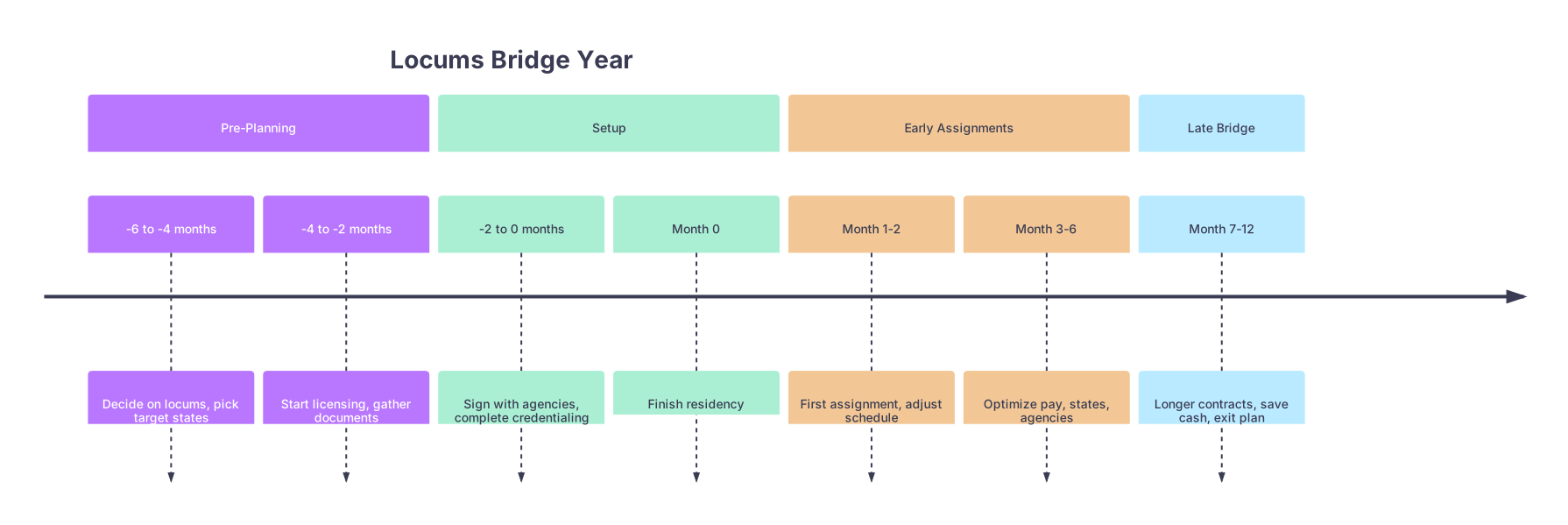
| Period | Event |
|---|---|
| Pre-Planning - -6 to -4 months | Decide on locums, pick target states |
| Pre-Planning - -4 to -2 months | Start licensing, gather documents |
| Setup - -2 to 0 months | Sign with agencies, complete credentialing |
| Setup - Month 0 | Finish residency |
| Early Assignments - Month 1-2 | First assignment, adjust schedule |
| Early Assignments - Month 3-6 | Optimize pay, states, agencies |
| Late Bridge - Month 7-12 | Longer contracts, save cash, exit plan |
You do not need a full year of prep. But you absolutely should not start this at “Month 0.” The paperwork drag is brutal.
4–6 Months Before Graduation: Decide and Commit
At this point you should:
- Decide that locums will be your primary income after residency.
- Pick 2–3 target states.
- Start your licensing and document hunt.
Step 1: Get Clear On Why You Are Doing This
You are not “keeping your options open.” That mindset kills timelines. Pick the main reason:
- Waiting for a fellowship or job that starts next year.
- Want higher pay for a year to crush loans.
- Want schedule control or geographic flexibility.
- Burned out and need time to test different practice settings.
Your reason will dictate:
- How many states you should license in.
- Whether you accept low-paying “foot-in-the-door” gigs.
- How aggressive you are about back-to-back assignments.
Step 2: Choose Your Core States (Do This Now)
You want 2–3 states where you will realistically work in the first 6–9 months.
Consider:
- Where you actually are willing to live for 1–3 months at a time.
- Licensing time and difficulty.
- Whether you are IMLC-eligible (Interstate Medical Licensure Compact).
| Option Set | Pros | Cons |
|---|---|---|
| WA + ID + MT | Good pay, IMLC states | Travel, winter weather |
| TX + OK + NM | High volume, varied settings | Some non-IMLC, politics |
| PA + NJ + NY | Dense jobs, train access | Higher cost, slow licensing |
If you are IMLC-eligible, your life is easier. If not, you prioritize states with:
- Reasonable licensing timelines (8–12 weeks, not 9+ months).
- Hospitals that use locums heavily (midwest, mountain west, some southern states).
3–4 Months Before Graduation: Start Licensing And Pick Agencies
This is the grunt work zone. At this point you should:
- Start at least one state license application (ideally two).
- Contact 2–3 major locums agencies.
- Build a “locums file” with every document anyone will ever ask for.
Step 1: Gather Your Paper Trail (One Week If You Focus)
Set up a dedicated folder (cloud + physical) with:
- Medical school diploma and transcript.
- Residency contract and certificate (or letter of expected completion).
- USMLE / COMLEX score reports.
- Updated CV with no date gaps.
- Copies of:
- Driver’s license
- Passport
- DEA, if you already have one
- Immunizations, TB testing, COVID documentation.
- BLS/ACLS/PALS/ATLS depending on specialty.
If you do this once, you avoid redoing it for every agency, every hospital, every state.
Step 2: Start State Licensing Applications
Do not wait. This is the longest bottleneck.
- Pick your top 1–2 states and begin the application.
- Use your future locums agencies to help with tracking, but assume:
- You must fill out the detailed sections yourself.
- You must chase down slow verifications (old jobs, schools, other states).
If you are using IMLC:
- Start your compact “Letter of Qualification” process.
- Once approved, you can add states faster (still not instant, but faster).
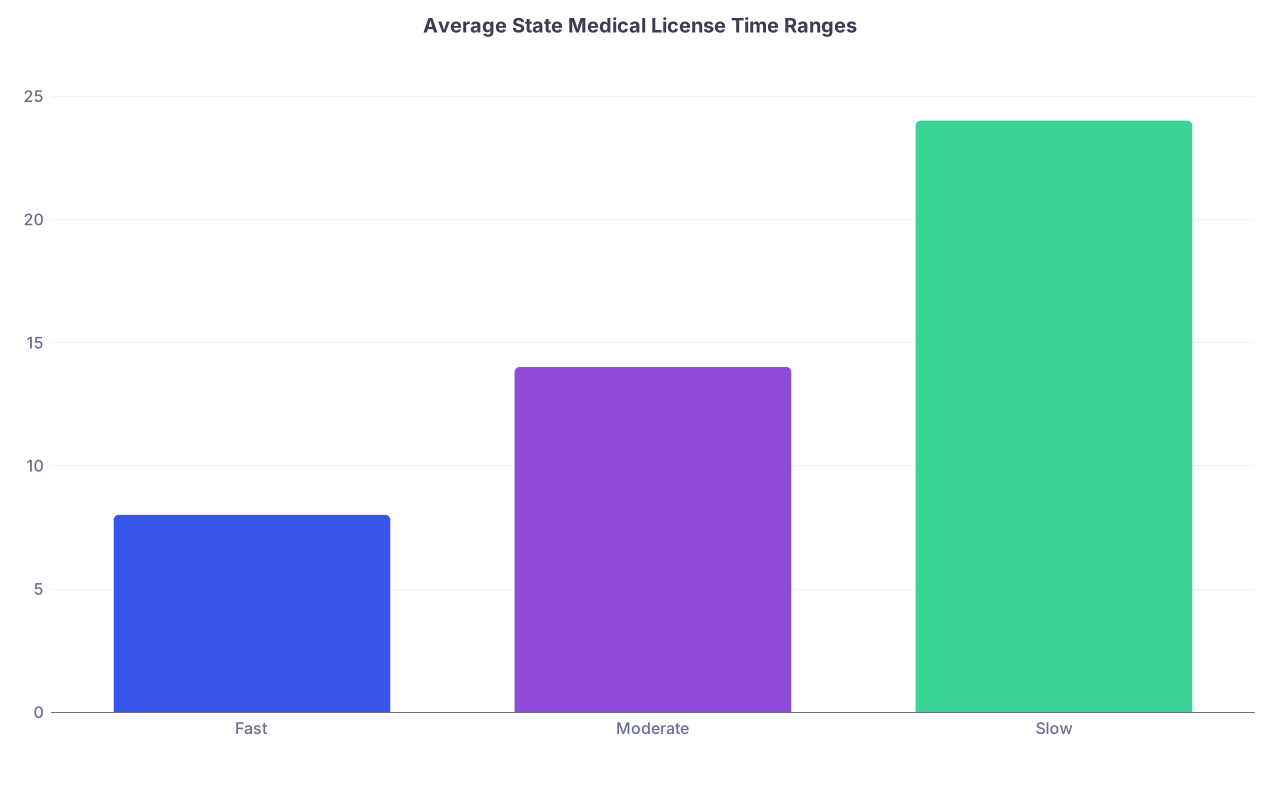
| Category | Value |
|---|---|
| Fast | 8 |
| Moderate | 14 |
| Slow | 24 |
(Values are in weeks. I have personally seen “slow” hit 40+ weeks. You do not want to depend on those states for income in Month 1.)
Step 3: Talk To Agencies (But Do Not Sign Exclusivity)
Pick 2–3 well-known agencies: CompHealth, Weatherby, LocumTenens.com, Staff Care, etc. At this point you should:
- Have a brief intake call:
- Your specialty, procedures, comfort zones.
- Where you are willing to go.
- When you are available after residency.
- Explicitly say: “I do not want an exclusivity contract.”
Do not:
- Let an agency talk you into a state license that you have zero interest in, just because “we have a ton of jobs there.”
- Sign anything that says you cannot work with other agencies or directly with a hospital.
1–2 Months Before Graduation: Position Yourself For Fast Credentialing
Now you are still a resident, but you are close. At this point you should:
- Finalize at least one state license application.
- Get your references and verification ducks in a row.
- Start pre-screening actual jobs with agencies.
Step 1: Clean Your CV And References
Polish your CV to:
- Clearly show training dates (month/year to month/year).
- List procedures, volumes, and settings (ICU time, call frequency).
- Mention any leadership roles (chief resident, committee work).
Pick 3–5 references who:
- Will actually answer the phone.
- Know your work within the last 1–2 years.
- Can comment on your clinical judgment and reliability (attendings, PD, APD).
Give them a heads-up: “You will get calls from hospitals for credentialing in the next 2–4 months. I am planning a locums year.”
Step 2: Tell Agencies Your “Real” Availability
Be concrete:
- “Residency ends June 30. I can start a first assignment no earlier than July 15.”
- “I prefer 7-on/7-off hospitalist blocks.”
- “I will not do solo ED coverage as a new grad” (or, if you will, say so).
Agencies will start floating specific jobs to you now. Do not commit until:
- You have a realistic timeline on state license approval.
- You know your credentialing window (usually 60–90 days from complete file).
Graduation Month (Month 0): Lock In Your First Assignment
You are now an attending on paper. Income still zero. This is the crossover month. At this point you should:
- Have at least one state license in progress, ideally close to approval.
- Be under active credentialing for one concrete assignment.
- Be setting up your personal life and finances for mobile work.
Step 1: Pick Your First Assignment (2–4 Weeks Before Start)
Criteria for a good first locums job as a new grad:
- Setting matches your training:
- New hospitalist? Do not start in a 15-bed solo coverage critical access hospital.
- EM? Avoid low-volume EDs with no backup if you are anxious about high-acuity solo calls.
- Reasonable orientation:
- 1–3 days of shadowing or overlapping shifts.
- Clear expectations on:
- Average census or volume.
- Night coverage expectations.
- Admitting / consult responsibilities.
- Procedures required or optional.
You do not need the highest pay for the first assignment. You need something safe, supported, and not insane.
Step 2: Know The Numbers (Pay, Expenses, Net)
For that first contract, run actual math:
- Daily / hourly rate.
- Housing:
- Provided vs stipend vs on-your-own.
- Travel:
- Flights vs driving reimbursement.
- Malpractice:
- Claims-made vs occurrence.
- Tail responsibility.
| Item | Amount |
|---|---|
| Daily rate | $1,900 |
| 7-day block gross | $13,300 |
| Travel (flight + car) | -$600 (reimbursed) |
| Housing (hotel week) | -$900 (stipend) |
| Net before taxes | ~$12,000 |
You will typically work as an independent contractor (1099). That means:
- No benefits.
- No taxes withheld.
- You really should talk to an accountant before Month 2.
2 Weeks Before First Shift: Logistics And Last-Minute Paperwork
At this point you should:
- Have your license, DEA (or facility DEA usage), and credentialing confirmed.
- Book travel and housing.
- Prepare clinically and practically.
Step 1: Confirm Every Administrative Box Is Checked
Double check with:
- Agency recruiter.
- Hospital medical staff office.
You want written confirmation that:
- You are approved for privileges.
- Your start date and schedule are set.
- Malpractice coverage is active that day.
If one piece is missing (e.g., DEA address not updated, background check pending), push hard to resolve it now, not at 10 p.m. the night before travel.
Step 2: Set Up Banking And Taxes Basics
Bare minimum before you start collecting checks:
- Open a separate checking account for “locums income.”
- Track:
- Travel.
- Lodging.
- Licensing fees.
- Board fees.
- CME.
- Arrange quarterly tax estimates with an accountant by Month 3 at the latest.
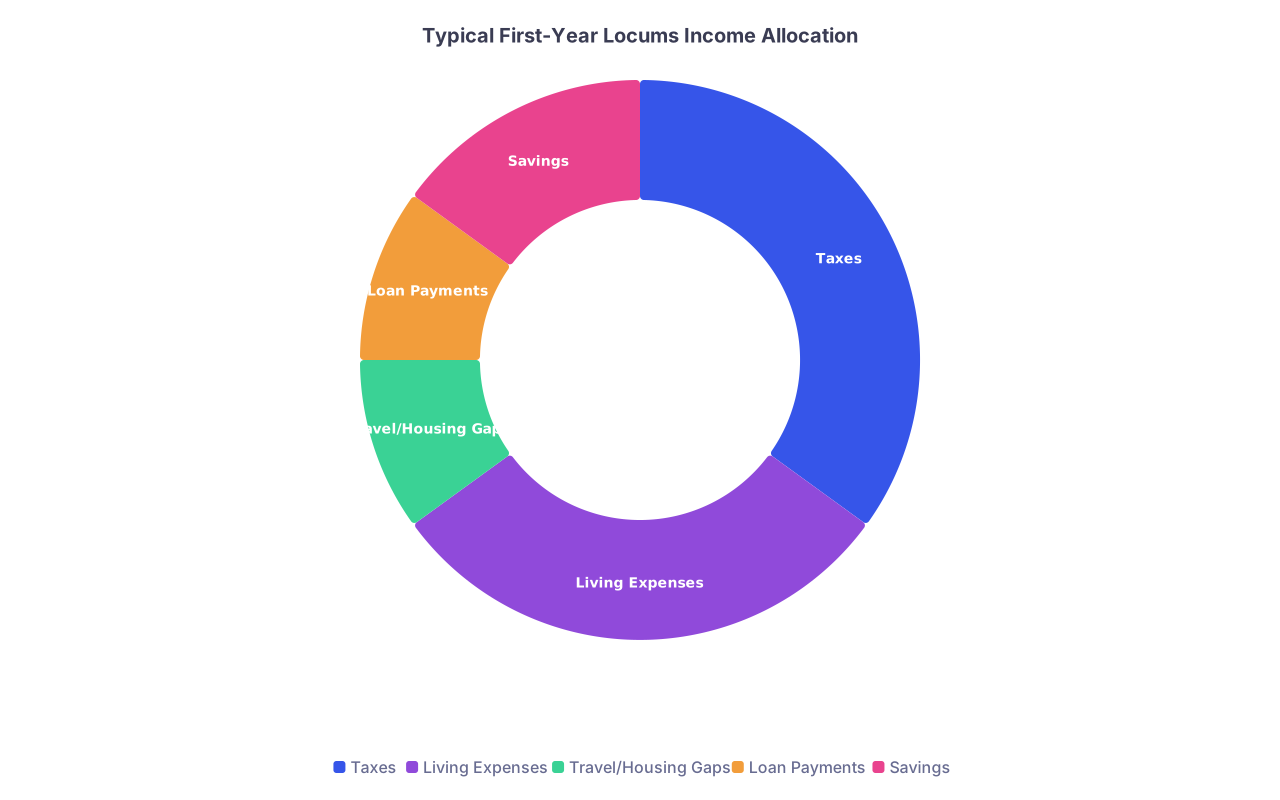
| Category | Value |
|---|---|
| Taxes | 35 |
| Living Expenses | 30 |
| Travel/Housing Gaps | 10 |
| Loan Payments | 10 |
| Savings | 15 |
Those percentages are rough, but if you are not planning for 30–40% going to taxes, you are setting yourself up for a very unpleasant April.
Step 3: Clinical Prep For The Specific Site
Ask for:
- Order set examples.
- Common protocols (sepsis, stroke, ACS).
- Local consultants and transfer patterns.
- Night backup details.
Review:
- Local antibiogram if they have it.
- Any specific documentation system quirks (EPIC templates, Dragon, etc.).
This is not board studying. It is “how does this hospital actually function.”
First Month On Assignment: Learn Fast, Protect Your Name
You made it. You are on site. The first month is about speed-learning the system and not being sloppy. At this point you should:
- Treat the first 3–5 shifts as paid orientation, mentally.
- Overcommunicate with nurses, consultants, and local docs.
- Immediately adjust anything in the contract that is not being honored.
Day 1–3: Orientation And Survival
Focus on:
- EHR navigation: admission, discharge, orders, messages.
- Who your allies are:
- Charge nurses.
- Case management.
- Night coverage (if you are days).
- “Oh, by the way” rules:
- Which patients must go to ICU.
- Who manages certain services (e.g., all GI bleeds go to Hospitalist vs GI call).
You are not there to impress. You are there to be safe and consistent.
Day 4–14: Volume And Flow
Now you start to see your true workload.
Watch for:
- Census / volume that far exceeds what was promised. Example:
- Promised: 16–18 encounters.
- Reality: 24+ daily with cross-cover on 40 more.
- Unsafe call structures.
- No backup for procedures you are not trained to do.
If reality is significantly off from the contract, you:
- Document specifics (dates, numbers, who was on).
- Loop in your recruiter with concrete examples.
- Make a decision whether you will extend or not. You do not need to decide mid-contract, but log data now.

Months 2–3: Optimize Your Schedule And Rate
Once you have one assignment under your belt, you have leverage. At this point you should:
- Decide if you want to extend where you are or move on.
- Reassess your pay relative to market.
- Add a second state license if needed.
Step 1: Decide On Extensions Early
Hospitals hate last-minute gaps. If you are doing well, they will ask you:
- “Can you come back next month?”
- “Can you do the holidays?”
You decide:
- Does this setting match your skills and risk tolerance?
- Is the volume tolerable?
- Is the pay fair for what you are doing?
If yes:
- Negotiate small bumps in rate for:
- Nights.
- Holidays.
- Extra shifts.
If no:
- Give clear end dates to your recruiter.
- Have them line up alternates before your current gig ends so you do not go 4–6 weeks unpaid.
Step 2: Evaluate Market Pay After Actual Data
Your first rate may have been a bit low. That is fine. But do not stay low out of habit.
Use:
- Other agencies’ offers for similar settings.
- Word-of-mouth from other locums on site.
- Public job boards for ballpark figures.
| Setting | New Grad Reasonable | Strong With Experience |
|---|---|---|
| Rural critical access solo | $2,200–$2,600 | $2,600–$3,200 |
| Mid-size community, group team | $1,800–$2,100 | $2,100–$2,400 |
| Academic-affiliated, teaching | $1,600–$1,900 | $1,900–$2,200 |
If you are at the low end with high workload and minimal support, you either push the rate up or leave.
Step 3: Add Another License (Strategic, Not Random)
You now know more about:
- What kind of hospitals you like.
- How often you want to travel.
- Whether you care about certain regions (mountain states vs coasts).
Pick your next state license:
- Ideally contiguous or close to your current state.
- Known to use locums heavily.
- With better pay potential than your current baseline.
Months 4–6: Build A Sustainable Locums Rhythm
By now, the novelty has worn off. You are either burning out or hitting a nice stride. At this point you should:
- Standardize your work/rest pattern.
- Get your financial house in real order.
- Start thinking about what comes after the bridge year.
Step 1: Lock A Pattern (Do Not Wing It Month To Month)
Common patterns:
- 7-on/7-off, staying in one core hospital for 3–6 months.
- 14-on/14-off, home base elsewhere.
- 5-shift clusters with travel home in between.
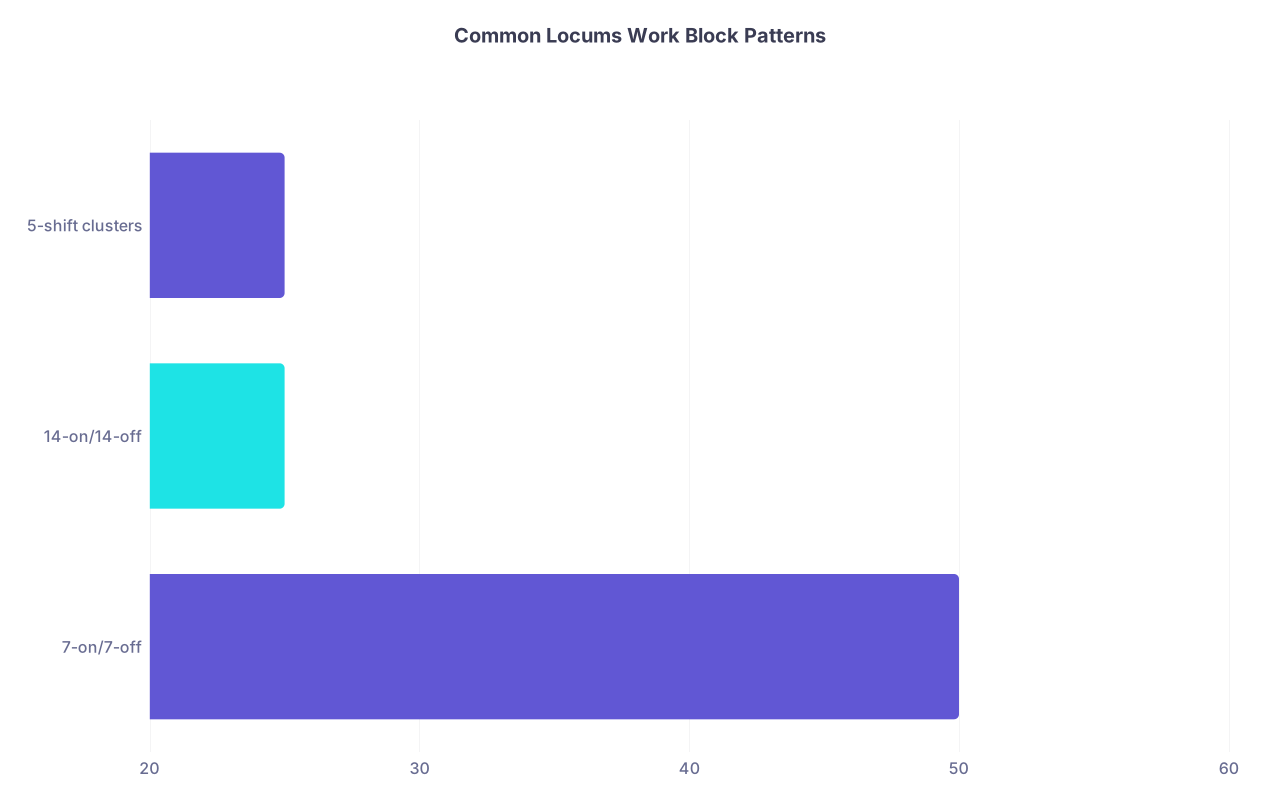
| Category | Value |
|---|---|
| 7-on/7-off | 50 |
| 14-on/14-off | 25 |
| 5-shift clusters | 25 |
(Percentages are approximate usage patterns I have seen among hospitalist locums.)
Whatever you pick, keep:
- At least one week completely off every 4–6 weeks if you are grinding hard.
- A simple rule: no back-to-back redeyes, no same-day travel + first night shift if you can avoid it.
Step 2: Fix The Money Side Properly
By Month 4–6:
- You should have:
- An accountant or tax pro on board.
- Quarterly tax payments set up.
- A system for receipts and expenses (apps, spreadsheet, whatever you will actually use).
- You should be aiming for:
- 3–6 months of living expenses in cash by the end of the year.
- Clear monthly loan payments or aggressive payoff if that is your goal.
This is where locums shines as a bridge year. Done right, you can:
- Pay down a brutal amount of high-interest debt.
- Build a cushion so you are not desperate when you negotiate your permanent job.

Step 3: Clarify Your Next Step (Fellowship, Permanent Job, Longer Locums)
You cannot drift forever. Around Month 6, ask:
- Am I applying to fellowship? If yes, build study / application time into your blocks.
- Am I going to take a permanent job next year?
- If yes, start watching jobs now, not three months before start dates.
- Or am I planning multi-year locums?
- If yes, you want more licenses, better agency relationships, and potentially your own direct contracts.
Months 7–12: Advanced Locums And Exit Strategy
By this stage, locums is either:
- Working well, and you are thinking, “I could keep doing this.”
- Or doing its job as a bridge, and you are preparing to leave.
At this point you should:
- Decide whether to renew key contracts.
- Prune low-value agencies and states.
- Set an end date for the “bridge year” that matches your next step.
Step 1: Consolidate What Works
Look at:
- Which hospitals treat you well, staff you safely, and pay you on time.
- Which agencies communicate clearly and do not play games.
- Which states are annoying to maintain (expensive, slow, little work payoff).
Then:
- Extend or lock in 3–6 month blocks at your best sites if you want.
- Cut agencies that send garbage offers or constantly lowball you.
- Let unhelpful licenses expire if cost > benefit.
Step 2: Line Up Your Next Job Early
If your goal was always a:
- Permanent job starting next July.
- Fellowship spot.
- Academic role.
Start serious applications 6–9 months before you want to start.
You want:
- No 3–4-month income gap while “things process.”
- Smooth transition from last locums block to first permanent paycheck.
Coordinate:
- End your final locums commitment at least 2–4 weeks before the permanent job starts.
- Use that window for:
- Moving.
- Onboarding.
- Actual rest.

Final 2–4 Weeks Of The Bridge Year: Close Out Cleanly
This part gets ignored. Then people get burned a year later with random bills or credentialing nightmares. At this point you should:
- Confirm all documentation and logs are up to date.
- Request letters and contacts from places you liked.
- Close the financial and legal loop.
Checklist:
- Download / save:
- Final schedules.
- Any productivity or evaluation reports.
- Request:
- Letters of reference from medical directors you impressed.
- Permanent contact info for colleagues who may be references later.
- Confirm:
- All malpractice coverage and tail arrangements are correct.
- No outstanding reimbursements or unpaid invoices with agencies.
You want to be able to credential at a new job in 2–3 years without hunting down half a dozen random offices.
Key Takeaways
- Start early: Serious prep for a locums bridge year begins 3–6 months before graduation. Licensing and credentialing are the slow choke points.
- Sequence matters: Pick states → start licenses → align agencies → lock your first assignment → then worry about rate optimization and schedule finesse.
- Treat it like a real bridge: Use the year to gain experience, protect your name clinically, and hit clear financial and career targets—then step off intentionally, not because you ran out of time or options.