
It’s Wednesday, 4:30 p.m. You just got called into a “quick meeting.” The practice you joined two years ago is “restructuring.” Or the private equity group behind your group just pulled funding. Or the hospital is closing your service line.
Translation: your job is gone or about to be gone. You’re numb, you’re doing mental math on your loans, and your inbox still has messages from patients you’re supposed to see next week.
Here’s what you do next. Not in theory. In sequence.
Step 1: Stabilize Your Immediate Risk (First 24–72 Hours)
You are not job-hunting yet. You’re putting out fires.
1. Get the facts in writing
Verbal “we’ll take care of you” means nothing. Ask for:
- Termination letter with:
- Last working day
- Pay end date
- Whether you’re being paid out for unused PTO
- Any severance details and conditions
- Status of:
- Health insurance (end date, COBRA availability)
- Retirement contributions/vesting
- Malpractice coverage (tail or occurrence)
- Non-compete and restrictive covenants:
- Radius
- Duration
- Any waiver options given the closure or layoff
If they resist putting it in writing, take detailed notes immediately after the meeting and email HR/leadership: “Per our conversation today, my understanding is…” You’re documenting.
2. Malpractice and tail
I’ve seen more physicians burned here than anywhere else.
Ask bluntly: “Who is paying for my tail coverage, and when will it be bound?”
If:
- You had occurrence coverage → you’re probably fine.
- You had claims-made coverage → you need tail.
Do not assume your contract’s original promise still stands if the employer is going bankrupt or being dissolved. Get confirmation from:
- The practice/hospital in writing
- The broker/insurer if possible
If they won’t cover it and your contract was vague or you’re in a gray zone, you may be on the hook. Call a physician employment attorney before you sign anything waiving rights. It’s cheaper than permanent career damage.
3. Health insurance + cash runway
You need to know how long you can survive without income.
- When does your coverage actually end? Often end of the month, not last working day.
- Price out COBRA vs marketplace plan (Healthcare.gov) for a 3–6 month gap.
- Sit down and do a ruthless budget:
- Fixed: rent/mortgage, loans, childcare, insurance, car.
- Variable you can cut this week: dining out, subscriptions, conferences, travel.
You’re buying time. Every $500 you cut now is one less week of pressure later.
Step 2: Protect Your License, Reputation, and Patients (First Week)
Fast reemployment is easier when you don’t have a licensing mess or angry patients burning you on Google.
1. Chart closure and outstanding work
Before you mentally check out, log into the EMR and look at:
- Open charts
- Unsigned notes
- Pending lab/imaging results
- Critical follow-ups
Do a rapid triage:
- Anything that could cause patient harm if you vanish? Handle now.
- Clean up enough that if a future credentialing committee reviews your work, it doesn’t look like you abandoned ship.
You’re not volunteering for free labor forever. You’re protecting yourself from:
- Complaints
- Board issues
- Bad references
2. Patient communication
You might not control how patients are notified. But you can:
- Ask what message is going out and when.
- Make sure it is not phrased as “Dr. X is leaving the community” when you’re actually being terminated. Neutral is fine; misleading is not.
Do NOT mass-email patients personally without explicit legal/organizational permission. That’s how you accidentally violate HIPAA and sabotage your next job.
What you can do safely:
- Update your professional LinkedIn with “Former [Practice]” and neutral language.
- Prepare a simple script if patients contact you directly:
- “The practice is restructuring, and my last day is X. You can continue care with [group] or, when I know my next role, I’ll share that information.”
Step 3: Understand Your Exit Leverage (Before Signing Anything)
You will probably be hit with paperwork: separation agreement, severance terms, maybe a release of claims. Do not rush.
1. Do you need a lawyer?
If any of these are true, yes:
- There’s a non-compete, and you want to stay in the same city.
- Tail coverage is unclear, or they’re trying to push it onto you.
- There’s a big severance that requires you to waive claims, speak positively only, or accept a “mutual non-disparagement” clause.
- The practice is being sold/merged and nobody seems to know what happens to your contract.
A good physician employment attorney in your state pays for themselves. You’re not the first doctor they’ve seen in this mess.
2. Non-compete realism
Here’s the ugly reality:
- Some states have banned or restricted physician non-competes (e.g., California, Massachusetts hospital-employed physicians in some systems, some states for primary care).
- Others enforce them aggressively.
You need three things:
- Exact radius (is it 5 miles as-the-crow-flies or by driving radius?)
- Exact duration
- Scope (all practice, specific hospitals, specific specialty?)
Then you decide:
- Can you reasonably commute outside that radius?
- Is there any chance they’ll waive it for you? Group closures sometimes push employers to be more flexible so they don’t look evil.
Do not just assume “they’d never enforce it.” I’ve seen systems send nasty letters to block physicians from joining competitors, even when they’re the ones doing the layoffs.
Step 4: Rapid Job Search Strategy – First 2 Weeks
Now we pivot from defense to offense. The goal: shortest financially tolerable gap before you’re earning again, without boxing yourself into a terrible long-term fit.
You build a two-track plan:
- Track A: Fast income (locums, temp coverage, telehealth, per diem)
- Track B: Long-term role (employment, partnership track, academic, or stable locums)
1. Update your materials in 1–2 days, not 2 weeks
You don’t need perfection. You need “good enough to send.”
- CV: clean, reverse-chronological, 2–4 pages.
- Employment dates, locations, FTE %, roles.
- Licenses and DEA.
- Board status.
- One core cover email template you can adapt:
- 3 sentences: who you are, why you’re available, what you’re looking for, when you can start.
No one cares about your med school clubs at this point. Emphasize clinical experience, volumes, specific procedures, leadership roles.
2. Decide your immediate income options
Here’s what “fast” realistically looks like:
| Option | Typical Start Time | Pros | Cons |
|---|---|---|---|
| Locums (in-state) | 2–6 weeks | Good pay, quick contracts | Credentialing delays, travel |
| Hospitalist PRN | 4–8 weeks | Often need coverage ASAP | Credentialing still needed |
| Telehealth | 2–8 weeks | Remote, flexible | Lower pay, variable volume |
| Urgent care PRN | 3–8 weeks | High need, simple scope | Nights/weekends, lower autonomy |
If you already have:
- Unrestricted state license
- Active DEA
- Clean background
You’re very employable. Credentialing is the choke point, not demand.
Apply in parallel:
- 2–3 locums agencies (not 10; you’ll drown in calls)
- Major telehealth companies in your specialty (if applicable)
- Local hospital medical staff offices for PRN or “we need a warm body” roles
Step 5: Networking That Actually Moves the Needle (Week 1–3)
Most doctors “network” by posting something vague on LinkedIn and then hoping. You can do better.
1. Who to contact directly
In this order:
Former attendings / fellowship directors
“I’ve been laid off due to practice closure. I’m looking for immediate locums/PRN and a stable long-term role in [region]. Do you know of any groups or chiefs of service I should talk to?”Former co-residents / fellows already working in systems near you
They know:- Which services are understaffed.
- Which chairs will squeeze you.
- Where the culture is toxic.
Hospital leadership you’ve worked with (CMO, service line directors)
They often know of:- Unposted openings.
- Coverage needs.
- Contract groups about to expand.
2. What to say
Keep it blunt and professional:
- One sentence: what happened (neutral, non-whiny)
- One sentence: what you want
- One sentence: your timeline and flexibility
Example:
“Our GI group lost its contract with the hospital, and my position was eliminated. I’m board-certified in GI, comfortable with high-volume endoscopy, and available within 4 weeks. I’d love to talk if you know any groups in [city/region] looking for coverage or a permanent hire.”
No rants about administration. No legal drama details. That can come later in trusted one-on-ones.
Step 6: Using Locums and Temp Work Strategically
Locums is often the fastest bridge, but you can also trap yourself in a grind if you’re not thoughtful.
1. How to choose locums offers
You don’t accept the first one that calls. Filter fast:
- Location: Can you get there easily (flight availability, driving distance)?
- Schedule: Block shifts vs random weekends?
- Scope: Within your comfort zone? Any procedures you don’t do?
- Support: Is there backup? Night coverage? Reasonable census?
Ask the recruiter directly:
- Why is this site using locums?
- How many locums are there now?
- Has anyone left early? Why?
Red flags:
- Every answer is “because of growth” but they’ve had locums there for 3+ years.
- They dodge questions about volumes or support staff.
- They press you to decide after a 5-minute call.
2. Timing: how fast can you actually start?
Credentialing reality check:

| Category | Value |
|---|---|
| Locums hospital | 30 |
| Telehealth only | 21 |
| Community clinic | 45 |
| Large academic center | 60 |
These are medians, not guarantees. Translation:
- Have 2–3 irons in the fire, not just one “perfect” locums gig.
- Expect a 1–2 month gap even if everyone is moving fast.
Make sure your cash runway and insurance cover that.
Step 7: Parallel Process Your “Real” Next Job
You’re going to be tempted to grab the first full-time offer just to feel safe. That’s how people end up doing this again in two years.
While you set up short-term work, quietly build your long-term path.
1. Get clear on non-negotiables
You just lived through what you don’t want: instability, surprise closure, bait-and-switch.
Decide:
- What’s non-negotiable? (Location near family, schedule, academic vs community)
- What’s flexible for 1–3 years if needed to reset financially?
Even a “bridge job” should not:
- Violate your ethical boundaries.
- Destroy your mental health.
- Make it impossible to leave (brutal non-compete plus low pay).
2. Deep-dive on employer stability
Ask questions you maybe didn’t last time:
- Who actually employs the physicians? Hospital, foundation, PE-backed group, independent group?
- How long has this group had the hospital contract?
- Have they lost any major contracts in the last 5 years?
- What happened to physicians when that occurred?
Look at:
- Public-facing financial news (hospital system bond ratings, bankruptcy rumors).
- How long physicians stay there on average (LinkedIn is useful here).
Step 8: Non-Clinical or Adjacent Work – Emergency Options
Some people hit this point and realize they’re done with full-time clinical. Or they need something flexible while sorting out family or relocation.
You’re not going to become a six-figure pharma consultant in 3 weeks. But you do have a few faster options:
- Chart review / utilization review (if you have board certification and some experience)
- Telemedicine-only roles (urgent care, psych, some primary care)
- Clinical content writing or question-writing for boards (low pay, but can fill gaps)
- Medical directorships for SNFs/rehab (varies by region, often word-of-mouth)
These rarely match your old full-time income, but they can stabilize you enough to be picky about your next full clinical role.
Step 9: Mindset and Reputation Management
You’re in crisis mode, and people say dumb things in crisis. Don’t.
1. Control your story
You will get asked in interviews: “Why did you leave your last position?”
Your answer needs to be:
- Short
- Neutral
- Boring
Example templates:
- “The practice lost its hospital contract, and the group closed. It affected multiple physicians, not just me.”
- “The organization restructured the service line and eliminated my position. It wasn’t performance-related, but it pushed me to be more intentional about finding a long-term fit.”
If they push: “You’re welcome to contact my former chief for more detail; we parted on good terms.”
2. Don’t torch your old employer publicly
Even if they deserve it. Especially if they deserve it.
Why:
- Credentialing committees talk.
- Chiefs move between systems.
- Burned-bridge stories follow you.
If there were genuine legal or ethical violations, talk to an attorney or the appropriate board. Not Twitter. Not Facebook physician groups with 60,000 people and a screenshot culture.
Step 10: Timeline: What to Do When
Here’s the rough sequence I’d use if I were in your shoes.
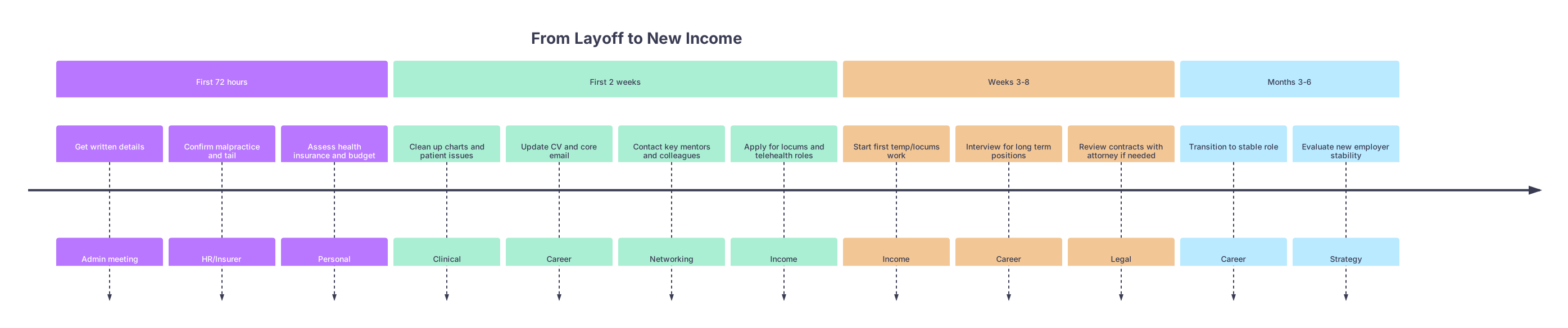
| Period | Event |
|---|---|
| First 72 hours - Get written details | Admin meeting |
| First 72 hours - Confirm malpractice and tail | HR/Insurer |
| First 72 hours - Assess health insurance and budget | Personal |
| First 2 weeks - Clean up charts and patient issues | Clinical |
| First 2 weeks - Update CV and core email | Career |
| First 2 weeks - Contact key mentors and colleagues | Networking |
| First 2 weeks - Apply for locums and telehealth roles | Income |
| Weeks 3-8 - Start first temp/locums work | Income |
| Weeks 3-8 - Interview for long term positions | Career |
| Weeks 3-8 - Review contracts with attorney if needed | Legal |
| Months 3-6 - Transition to stable role | Career |
| Months 3-6 - Evaluate new employer stability | Strategy |
Quick Reality Check: How Long Does Reemployment Actually Take?
This is what I’ve seen repeatedly:
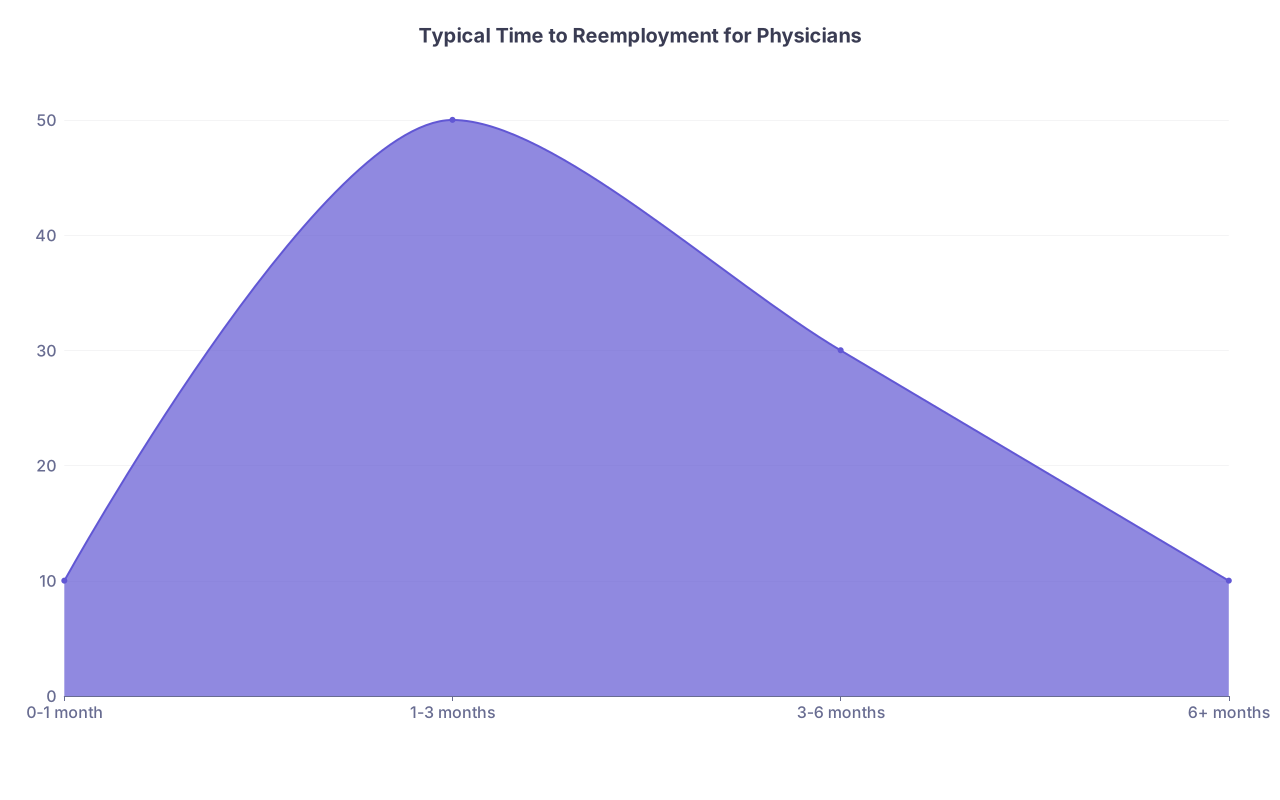
| Category | Value |
|---|---|
| 0-1 month | 10 |
| 1-3 months | 50 |
| 3-6 months | 30 |
| 6+ months | 10 |
Most physicians land some paying role within 1–3 months if they’re active and flexible. Full “dream job” alignment can take longer. Your job is to shorten the no-income period without compromising your long-term trajectory.
FAQs
1. Should I ever take a big pay cut just to get back to work quickly?
Sometimes yes, but only if it’s tactical. If a job:
- Respects your license,
- Has no insane non-compete,
- Gives you stable hours,
then a temporary pay cut can be smart to avoid draining savings or delaying loan payments. Just don’t convince yourself it’s permanent if it clearly doesn’t meet your long-term goals. Treat it as a 1–2 year bridge and keep quietly looking.
2. What if my non-compete blocks every good job in my city?
You’ve got a few angles:
- Ask for a negotiated waiver or reduction in radius/duration as part of your separation, especially if the closure/layoff wasn’t your fault.
- Look just outside the radius and see if commuting or partial-remote work is livable short term.
- Consider an interim year of locums in other regions while the non-compete clock runs out.
- In some states, a good lawyer can challenge or narrow an overbroad non-compete. Do not guess—get local legal advice.
3. How honest should I be in interviews about what happened?
Honest but controlled. Stick to factual, non-emotional statements:
- “My group lost the hospital contract.”
- “The clinic closed due to financial issues.” Avoid editorializing:
- “The administrators were incompetent.”
- “The PE firm gutted us.”
Program directors and chiefs can detect bitterness from across the table. You want to sound resilient and pragmatic, not vengeful.
4. Is now the time to switch specialties or go fully non-clinical?
Probably not as an immediate crisis move. Switching specialties or leaving clinical medicine entirely is a major multi-year pivot and often comes with pay cuts and retraining. If you were already halfway out the door mentally, this might be the wake-up call to start planning that transition. But in the first 3–6 months post-layoff, your primary goals are: stabilize income, protect your license/reputation, and get yourself into a position where you can make big career decisions from strength, not panic.
Key points:
- Secure your downside first: malpractice, insurance, non-compete, and a realistic cash runway.
- Run a two-track strategy: fast income (locums/PRN/telehealth) plus deliberate search for a stable long-term role.
- Control your story and your emotions publicly; protect your reputation so this becomes a plot twist in your career, not a permanent stain.