
The wrong residency will break you faster than a “less prestigious” name ever will.
You should prioritize resident camaraderie over pure academic reputation most of the time—especially if the “top” program has red flags in culture, burnout, or support. Prestige is a tiebreaker. Fit and people are foundation.
Let me walk you through how to make that call without blowing your career or your sanity.
The Core Truth: You’re Not a Robot, You’re a Human in a Pressure Cooker
Residency isn’t college. It’s not even med school. It’s:
- 60–80 hour weeks (sometimes more, even if they pretend otherwise)
- High stakes, constant evaluations
- Sleep deprivation, emotional load, and real patient deaths
- Learning curves that feel like being shoved off a cliff
In that setting, who you’re suffering with matters more than the name on the letterhead.
I’ve seen this too many times:
- Resident at a “top 10” program, crying in the stairwell at 2 a.m., saying, “I can’t go to my chiefs; they’ll tell me to toughen up.”
- Resident at a “mid-tier” community program, saying, “Yeah it’s busy, but my co-residents covered my shifts when my dad got sick. I’d choose them again in a heartbeat.”
Here’s the brutally honest rule:
A strong team in an average-name program beats a toxic culture in a big-name department 9 times out of 10.
But no, it’s not that simple. So let’s break this into a decision framework instead of vibes.
What “Resident Camaraderie” Actually Means (vs Fake Nice on Interview Day)
Programs know you’re looking for “good culture.” They’ll parade smiling residents in branded fleeces and pizza nights. That’s not camaraderie. That’s marketing.
Real resident camaraderie looks like:
- Residents genuinely hanging out when they’re not forced to (pre-rounds breakfast, post-call brunch, board game nights).
- Seniors who step in before you drown, not after you fail.
- Chiefs and attendings who treat residents like colleagues in training, not disposable labor.
- People openly talking about mental health, boundaries, and saying no—without fear.
Signs it’s real (pay attention on interview day and second looks):
- PGY-2s and PGY-3s joke with each other comfortably, not stiff and overly formal.
- Someone casually says, “Oh yeah, when my car died / kid got sick / I got COVID, people swapped with me immediately.”
- Residents don’t all have the exact same scripted answer to “What’s the best part of your program?” If it sounds rehearsed, it probably is.
Red flags that “we’re a family” is actually code for “we ignore boundaries”:
- They brag about “no complainers here” or “everyone just gets the work done without fuss.”
- Residents seem scared to criticize anything with faculty in the room.
- Offhand comments like “you just figure it out” or “the interns sink or swim.”
If the sense you get is: “I’d be scared to admit I’m struggling here,” that’s a huge problem, no matter how famous the department chair is.
What Academic Reputation Actually Buys You (and What It Doesn’t)
Now let’s be fair. Academic reputation isn’t useless. It can absolutely matter—especially if you’re aiming for a competitive fellowship or a specific niche.
Here’s where academic “name” helps:
- Applying to super competitive fellowships (derm, GI, cards, heme/onc, ortho, surgical subspecialties).
- Wanting a research-heavy career, big grants, major trials.
- Targeting specific geographic or elite institutions that respect their own “club.”
But even here, the nuance:
- Most fellowships care about you: letters, performance, reputation in your specialty, not just the brand of your residency.
- A strong resident from a solid regional program with great mentorship will often beat a mediocre resident from a “top 5” place.
- Toxic big-name places can tank your confidence, your letters, and your productivity.
Let’s be concrete.
| Factor | Strong Camaraderie Program | Big-Name Prestige Program |
|---|---|---|
| Daily happiness | High | Variable |
| Burnout risk | Lower | Often higher |
| Fellowship doors | Good, if supported | Strong, especially top-tier |
| Mentorship quality | Often strong, personalized | Can be excellent or absent |
| Research opportunities | Variable | Usually abundant |
If you want to do:
- Primary care, hospitalist, general peds, general IM, EM, psych, FM: Camaraderie and support should be heavily weighted. Name matters less than you think.
- Ultra competitive fellowships (e.g., GI, cards, heme/onc, neurosurg subs): Reputation matters more—but not enough to justify a program that will crush you.
A Practical Framework: How to Decide Between Camaraderie and Reputation
Let’s say you’ve got two real offers:
- Program A: Big-name, lots of NIH funding, people match into top fellowships, but residents look exhausted and vaguely miserable.
- Program B: Solid but not famous, clearly happy residents, strong teaching, but fellowship matches are more regional.
Here’s how to weigh them.
Step 1: Clarify your actual career goals (not your ego’s goals)
Be honest with yourself:
- Do you truly want an academic career with grants, papers, and a big fellowship? Or do you just feel like you “should”?
- Are you okay being in training environments a bit longer if it means more prestige, or do you want to be a competent, happy attending sooner?
If your dream is:
- “I want to be a well-trained, respected community internist/hospitalist/EM doc”: Strong culture and good clinical volume > big name.
- “I want cards at a top academic center or transplant surgery”: Reputation, case mix, and research become more important—but again, not at the expense of complete misery.
Step 2: Evaluate “functional” camaraderie, not just social
This isn’t about how fun people are at happy hour. Ask:
- Who teaches you at 2 a.m. when you’re stuck?
- Do seniors and attendings show up in crises?
- Do residents cover each other or throw each other under the bus?
On interview day or second looks, literally ask:
- “Can you tell me about a time the program supported a resident going through something difficult?”
- “When people struggle—academically or personally—what actually happens?”
- “What’s the response if an intern is overwhelmed on a shift? Who steps in?”
If the answers are vague, canned, or avoidance-heavy, that’s a data point.
Step 3: Look at outcomes beyond the brochure
For reputation vs. support, look at:
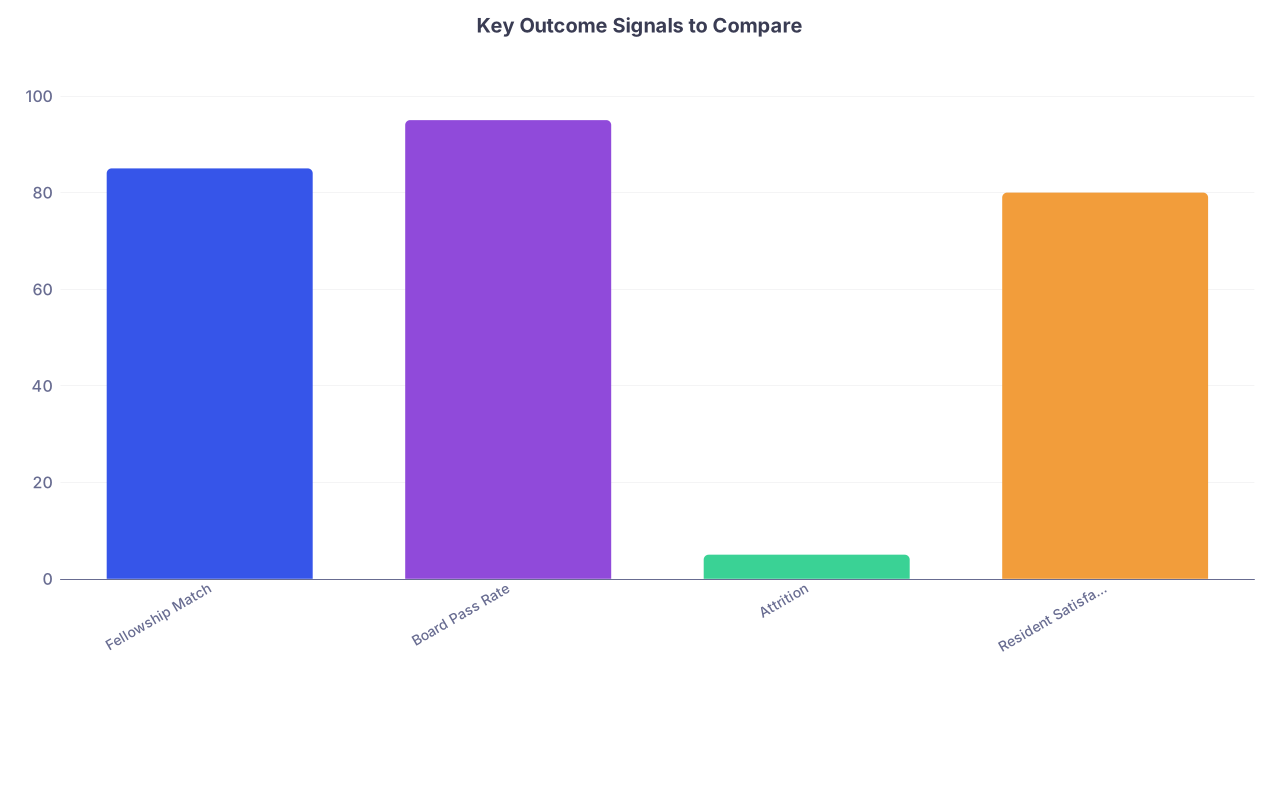
| Category | Value |
|---|---|
| Fellowship Match | 85 |
| Board Pass Rate | 95 |
| Attrition | 5 |
| Resident Satisfaction | 80 |
Not literal numbers, but these are the buckets you should ask about:
- Fellowship match list (not just the top 3 they brag about—ask for the whole list).
- Board pass rates (if they stumble on this, be suspicious).
- Attrition: “How many residents have left in the past 5 years, and why?”
- Resident survey results (some programs will share ACGME survey trends generally).
A mid-tier program with:
- Excellent board pass rates
- Stable residents (minimal attrition)
- Strong fellowship matches regionally
…combined with clear camaraderie is a very good training environment.
How to Actually Read Culture on Interview Day
You can’t get everything in one day, but you can pick up more than you think—if you ask the right questions and watch the right dynamics.
Here’s a simple process.

| Step | Description |
|---|---|
| Step 1 | Pre-interview research |
| Step 2 | Resident-only session |
| Step 3 | Ask hard questions |
| Step 4 | Culture red flag |
| Step 5 | Observe resident interactions |
| Step 6 | Culture likely strong |
| Step 7 | Deprioritize program |
| Step 8 | Residents candid? |
| Step 9 | Do you feel safe here |
Questions to ask residents when faculty aren’t around:
- “What’s something you wish you could change about this program?”
- “How does the program respond when rotations are clearly unsafe or too heavy?”
- “What happens if you have a conflict with an attending?”
- “Do you feel like you can say no to extra shifts or ‘voluntold’ tasks?”
Watch for:
- Residents interrupting each other comfortably (good).
- Residents dodging questions and giving each other side-eye (bad).
- Only chiefs talking, interns staying quiet and tense (bad sign).
If you leave thinking, “These are my people,” that’s not fluff. That’s a serious data point.
When Prestige Should Override Camaraderie (Rare, but It Happens)
There are a few narrow cases where I’d say: yeah, you may need the name, even if the culture is only “okay,” not amazing.
Examples:
- You’re dead set on a unicorn fellowship: peds neurosurg, interventional cards at a top 5 program, transplant hepatology, etc.
- The only programs with your desired niche (e.g., global surgery tracks, specific research institute) are big-name places with tougher cultures, but not obviously malignant.
- You’re extremely resilient, have a strong support system outside work, and you know yourself well enough to tolerate a colder environment in exchange for career leverage.
Even then, I’d draw a hard line:
- If you hear consistent reports of bullying, retaliation, constant PD churn → walk away.
- If your gut says, “I’d be alone here,” believe it.
You can recover from not matching into the fanciest fellowship.
It’s a lot harder to recover from complete burnout, depression, or leaving residency entirely because your program was miserable.
How to Rank Programs When You’re Torn
You’re probably here because you have some version of this problem on your rank list. Two or three programs you can’t decide between.
Here’s a simple ranking filter:
Eliminate truly toxic programs, no matter the name.
Any hint of systemic abuse, lack of support, or dangerous workloads → drop them down or off your list.Cluster programs into tiers for you:
- Tier 1: I can see myself happy and supported here; training is solid.
- Tier 2: I’d probably survive and do fine, but I have doubts.
- Tier 3: This would be a mistake unless I have no other option.
Within Tier 1, then look at:
- Career alignment (fellowship, geography, niche interests).
- Academic opportunities.
- Family/partner/location realities.
Use reputation only as a tiebreaker within programs that already feel psychologically safe.
If you’re stuck between:
- Famous program, “meh” culture but not abusive, and
- Mid-tier program with great culture and good training
And your career goals aren’t hyper-specialized?
I’d tell you to rank the great-culture mid-tier higher. Almost every time.
Visual: People vs Name at Different Training Phases
Just to hammer home how this shifts over time:
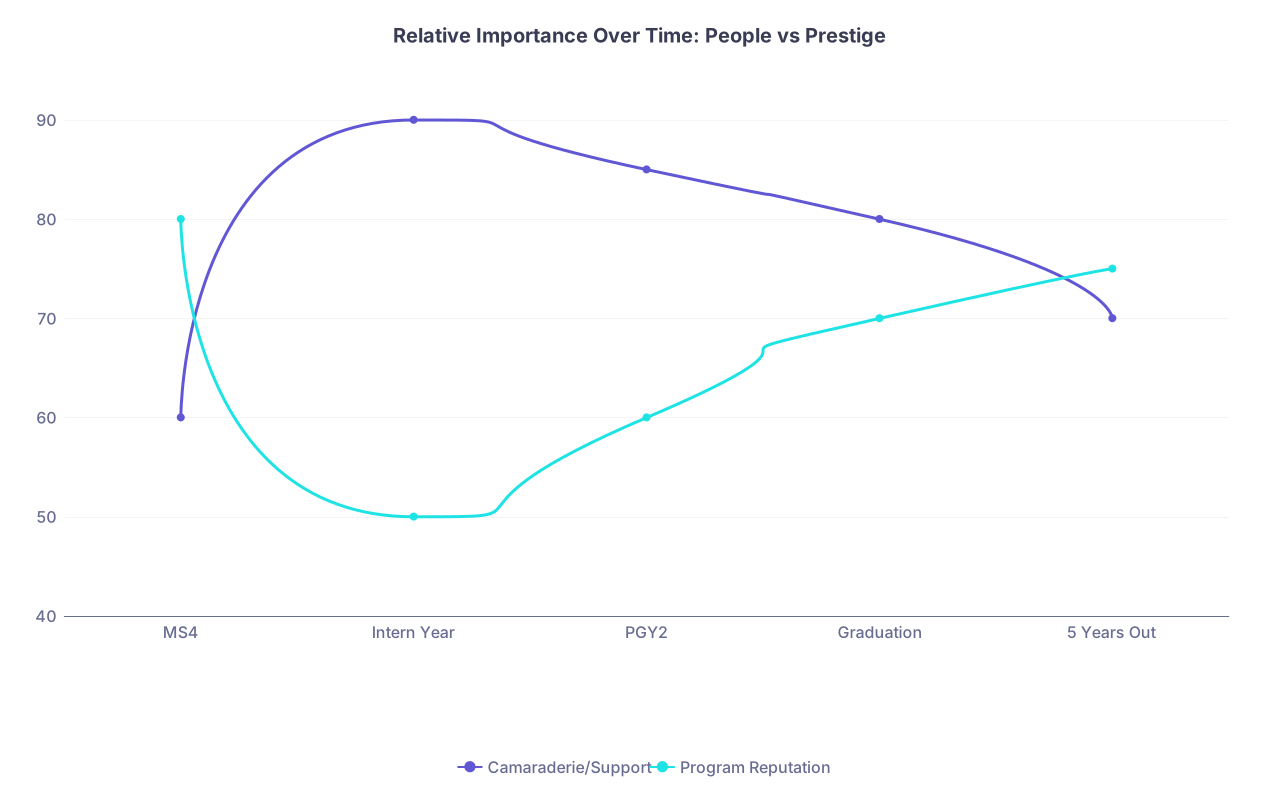
| Category | Camaraderie/Support | Program Reputation |
|---|---|---|
| MS4 | 60 | 80 |
| Intern Year | 90 | 50 |
| PGY2 | 85 | 60 |
| Graduation | 80 | 70 |
| 5 Years Out | 70 | 75 |
- As a student, you overvalue reputation.
- As an intern, you desperately need people.
- Years later, reputation matters again—but your emotional and physical health are already shaped by what happened in residency.
A Few Myths You Should Stop Believing

Myth: “If I don’t go to a top program, I’ll never match into a good fellowship.”
Reality: Strong letters, strong performance, and one or two solid research projects often matter more than the absolute rank of your program.
Myth: “Camaraderie just means partying; I’m here to work.”
Reality: It means having people who have your back when patients are crashing, notes are piling up, and you haven’t eaten in 10 hours.
Myth: “I’ll just suck it up for 3–7 years, then my life starts.”
Reality: Those 3–7 years shape your confidence, your habits, your mental health, and your professional identity. They’re not disposable.
Quick Checklist: What to Prioritize for Most Applicants
If you’re applying to:
- Internal Medicine (general, maybe fellowship)
- Pediatrics
- Family Medicine
- Psychiatry
- Emergency Medicine
- OB/GYN (generalist)
Then your priority order should usually be:
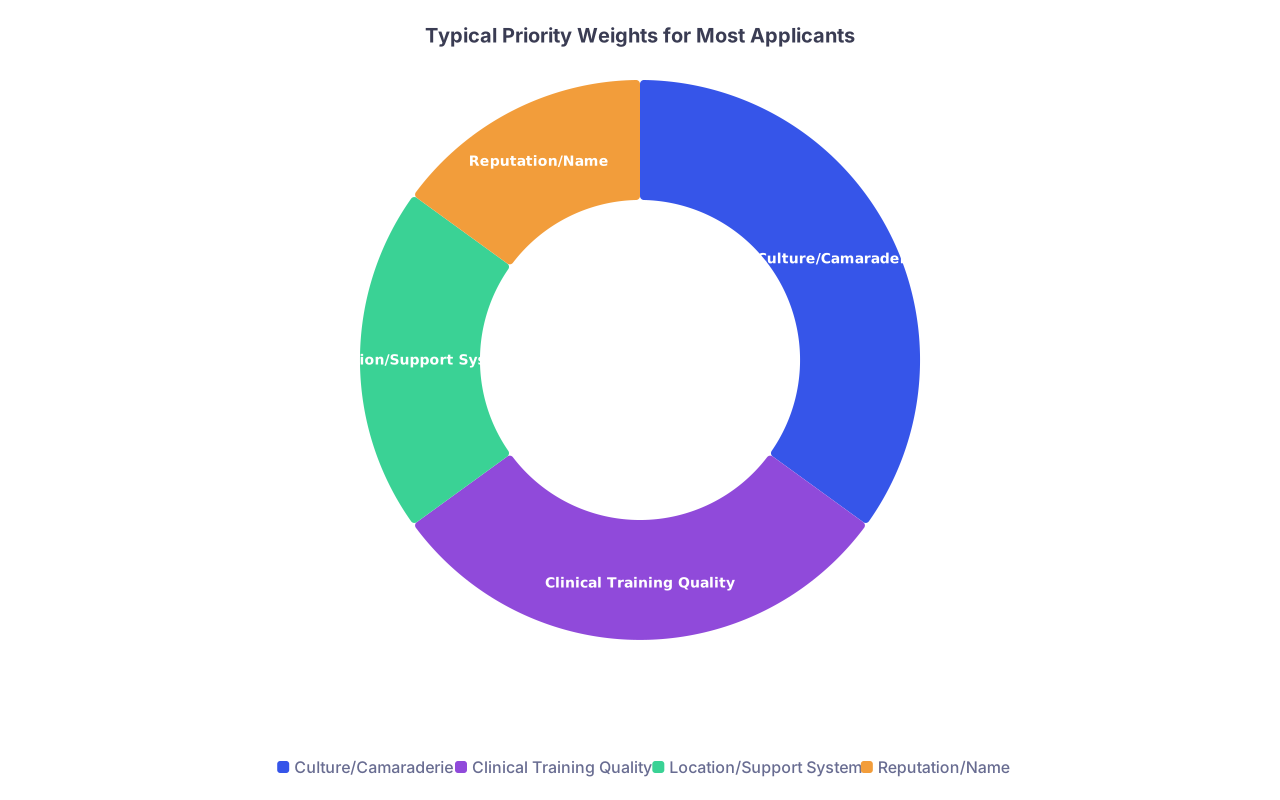
| Category | Value |
|---|---|
| Culture/Camaraderie | 35 |
| Clinical Training Quality | 30 |
| Location/Support System | 20 |
| Reputation/Name | 15 |
If you’re in:
- Neurosurgery, Ortho, ENT, Plastics, IR, CT Surgery
- Or laser-focused on a big-name academic fellowship track
Then reputation gains weight, but I’d still keep culture and support at at least equal importance. A harsh but functional culture can be survivable. A malignant one is not.
FAQ: Resident Camaraderie vs Academic Reputation

1. Will choosing a less prestigious program hurt my chances at fellowship?
It can narrow some doors, but it doesn’t slam them. If you:
- Crush your clinical work
- Build strong relationships for letters
- Seek out research or QI projects
- Present at conferences
You can absolutely match into solid—and sometimes top—fellowships from a non-elite residency. Programs care a lot about your trajectory and reputation as a resident, not just your program’s brand.
2. How can I tell if “camaraderie” is genuine or just a sales pitch?
Watch how residents talk to each other when faculty aren’t around. You want:
- Teasing and warmth, not stiff politeness
- Honesty when you ask, “What’s the hardest part of this place?”
- Real examples of support: covered shifts, backed up in conflicts, help with sick leave
If everyone smiles but won’t give you a single “here’s something that’s tough,” that’s suspicious.
3. Does program reputation matter if I want to do primary care or hospitalist work?
Not much. Your life as a hospitalist or primary care doc will depend more on:
- How well trained and confident you are
- Your communication skills and professionalism
- Where you want to live and work
A program that makes you competent, resilient, and reasonably happy is far more valuable than a big name that leaves you burnt out and doubting yourself.
4. What if the residents seem happy, but fellowship matches are weak?
Then you ask: why?
- Newer program? That can improve over time.
- Residents not fellowship-focused? Then outcomes may underrepresent program potential.
- Lack of research or mentorship in your area? That’s more concerning.
If you’re fellowship-bound, you’d want at least a few recent grads in decent fellowships and attendings who’ve successfully mentored people there.
5. Are there objective tools to compare culture between programs?
No perfect tool, but you can:
- Ask about ACGME resident survey themes (they might not give scores but will hint).
- Talk to recent grads or off-cycle residents via alumni or your med school advisors.
- Check for patterns online (consistent negative themes from multiple people carry more weight than one anonymous rant).
Use these as clues, not gospel.
6. How do I factor in location versus camaraderie and reputation?
Location matters because your support system matters. If you have:
- A partner, kids, or family in a given city, that support plus a solid (not perfect) program can beat moving across the country for a marginally better name.
- If you’re solo and flexible, then culture and training quality should outweigh geography.
Location is rarely more important than culture, but it can amplify or buffer it.
7. So bottom line—should I prioritize camaraderie over academic reputation?
Yes—as long as the program’s clinical training is solid and not obviously weak. Between:
- A big-name, cold, borderline-toxic environment, and
- A mid-tier but supportive, well-run place
You should almost always choose the second. Your future self, five years out, will care more about how residency shaped your skills and sanity than what line went on your CV.
Open your rank list right now and mark each program green, yellow, or red for “Would I feel safe and supported with these residents when things go bad?” If any “red” programs are still high just because of prestige, move them down today.