
It’s late. You’ve got four program websites open, three interview invites pending, and a rank list draft that basically looks like “????”. Every program says the same thing: “supportive learning environment,” “strong teaching culture,” “resident-focused education.”
You know damn well that phrase can either mean real teaching… or two noon conferences and a “feedback” email once a year.
Let’s cut through the marketing. Here’s how you tell a genuinely strong teaching environment from a superficial one — before you commit the next 3–7 years of your life.
Big Picture: What “Strong Teaching” Actually Looks Like
A strong teaching environment does three things consistently:
- Makes you better, faster – your clinical instincts, decisions, and efficiency improve month to month.
- Gives you structured, predictable teaching, not random pearls when people feel like it.
- Holds attendings and residents accountable for teaching and feedback, not just lip service.
Superficial teaching environments talk a lot, check boxes for accreditation, and lean hard on “you’ll learn by doing” to excuse the fact that no one actually teaches.
Here’s the key mindset shift:
You’re not judging how nice the program sounds. You’re judging how it will shape you on a random Tuesday night on call, when things are busy and people are tired.
Red Flag vs Green Flag: Core Features of the Teaching Culture
I’ll walk through specific elements you can evaluate. If you remember nothing else, pay attention to these six:
- How teaching shows up on rounds
- How feedback actually happens
- Who really runs the service
- How protected your learning time is
- What they do with struggling residents
- How they treat questions and uncertainty
We’ll turn this into a simple decision framework in a minute.
1. Rounds and Daily Work: Is Teaching Built-In or Add-On?
You’ll spend most of residency in the flow of clinical work. If teaching isn’t embedded there, it’s background noise.
Strong teaching environments on rounds look like this:
- The attending sets expectations: “I want residents presenting succinctly. We’ll pause after each patient for 2-minute teaching and at the end for a 5-minute ‘chalk talk’.”
- Senior residents teach too: “Intern, walk me through your approach to new hyponatremia.” They’re clearly expected to.
- You hear structure: “What’s your problem representation?” “Let’s build a differential by category.” “What’s the next best test and why?”
- People stop to explain decisions: not just “we’re giving Lasix,” but “we’re giving Lasix because…”
Superficial environments:
- Rounds are basically task lists: “Did you order the CT? Call the consult? Discharge ready?”
- Teaching is random, often when things are slow: “Any questions?” (Everyone is tired. No one asks.)
- Senior residents are in constant crisis mode; there’s no bandwidth to teach.
- Attendings default to “good job” and move on.
On interview day, don’t just ask “How are rounds structured?” Everyone has a rehearsed answer. Ask:
- “On a typical busy ward day, how many minutes of actual teaching do you get?”
- “Who teaches you more day-to-day, seniors or attendings?”
- “When is the last time an attending stopped rounds to break down a decision you didn’t understand?”
You’re listening for concrete examples, not vibes.
2. Feedback: Real, Frequent, Sometimes Uncomfortable
If you never feel a little uncomfortable from feedback, you’re probably not getting real teaching.
In strong teaching environments:
- Feedback is specific and timely: “Your presentations are thorough but a bit long; tomorrow, try leading with 1–2 sentence problem reps.”
- It’s normalized, not punitive: everyone expects feedback every month or every rotation.
- There are systems, not just “come to me if you have concerns.” Mid-rotation check-ins actually happen.
- Residents can name recent feedback they got, word-for-word.
Superficial environments:
- Evaluations happen in MedHub/New Innovations. You never see them. Or they all say “meets expectations.”
- “We give lots of feedback!” translates to one vague comment at the end of a rotation.
- Feedback mostly shows up when something goes wrong or ACGME is watching.
- Residents can’t recall the last time someone gave them actionable feedback that changed what they did the next day.
Ask residents:
- “When was the last time someone gave you feedback that stung a little but helped you?”
- “Do attendings actually sit down mid-rotation and say what you’re doing well and what to work on?”
- “If someone is struggling, what happens? How early do people catch it?”
If the responses are vague or residents laugh it off? That’s data.
3. Who Really Runs the Service: Education vs Service Creep
Your job isn’t to be “cheap labor” with a name badge. But some programs are moving dangerously close.
In strong teaching environments:
- Seniors are clearly team leaders + educators, not just admin beasts.
- There’s a cap on patient loads that’s enforced, not theoretical.
- There’s enough ancillary support (pharmacy, case management, phlebotomy, etc.) so residents are mostly doing doctor work, not everything work.
- Attendings or chiefs actively shield residents when things get unsafe.
In superficial environments:
- Residents carry so many patients they literally have no cognitive space for teaching.
- “We cap at 10–12” actually means “unless we’re really busy, which is always.”
- Seniors are putting out fires all day; attendings are “available” but never present.
- The unofficial vibe is: “Education is nice. Throughput is required.”
Here’s a quick comparison snapshot:
| Factor | Strong Teaching Program | Superficial Program |
|---|---|---|
| Census caps | Enforced, residents back it | “Soft caps,” lots of exceptions |
| Senior resident role | Leader + teacher | Task manager + pager buffer |
| Attending presence | Predictable, engaged | Sporadic, “call if needed” |
| Ancillary support | Reliable | Constant workarounds |
If residents keep saying “it depends on the day” about everything, that usually means the system runs close to the edge most of the time.
4. Conferences and Protected Time: Lip Service vs Real Protection
Noon conference on the website doesn’t mean squat. Every program has it. The question is: can you actually go?
In strong teaching environments:
- Protected time is real. Seniors/attendings actively push you to go. Pagers are covered in a predictable system.
- Conferences feel high-yield, interactive, and resident-level. Cases, boards-style questions, management debates.
- Grand Rounds isn’t just research flex; there’s consistent clinical education.
- Residents can list 3–5 conferences they actually value: morning report, M&M, subspecialty series, simulation.
Superficial environments:
- “We protect your time” but residents: “We make it maybe 50% of the time, depending on how slammed we are.”
- Conferences are mostly passive PowerPoints; half the room is charting.
- M&M is political theater, not honest learning.
- Simulation happens “once a year” and usually gets cancelled.
Ask residents, separately from faculty:
- “How often do you actually get to go to noon conference?”
- “Which teaching conference would you be sad to miss?”
- “Does anyone get annoyed if you leave the floor for conference?”
If people glance at each other or dodge the question, assume protection is weak.
Here’s how conference usefulness often breaks down in reality:
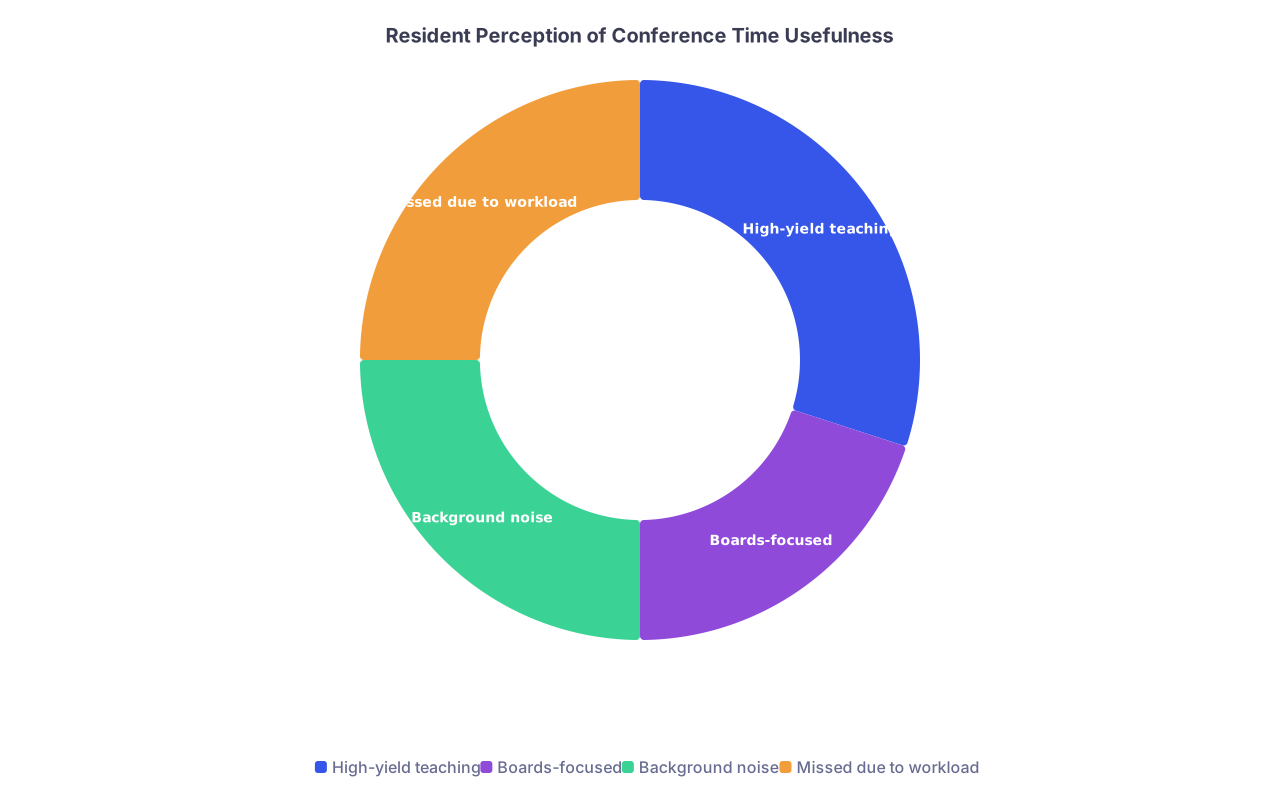
| Category | Value |
|---|---|
| High-yield teaching | 30 |
| Boards-focused | 20 |
| Background noise | 25 |
| Missed due to workload | 25 |
You want a program trending toward the first two slices, not the last two.
5. How They Handle Struggling Residents (This Tells You Everything)
The way a program treats its weakest resident is exactly how it will treat you when you’re tired, burned out, or behind.
Strong teaching environments:
- Have clear remediation plans: extra supervision, targeted coaching, simulation, written goals.
- Catch issues early because people actually give feedback and monitor progress.
- Separate support from punishment. You can need help without being labeled “problem resident.”
- Chiefs, PDs, and attendings can describe concrete success stories.
Superficial environments:
- “We support everyone” but can’t explain how.
- Struggling residents get whispered about but not truly coached.
- The main interventions are: scolding, probation, or passive-aggressive evaluations.
- Culture says “sink or swim” in nicer words.
Ask directly (to PD and residents):
- “Tell me about a resident who struggled and is now successful. What did you all do to help them get there?”
- “How safe do you feel admitting you’re behind in a skill or domain?”
If they can’t tell you a real story, be cautious.
6. Question Culture: Curiosity Encouraged or Quiet Compliance?
This one’s simple but powerful.
In strong teaching environments:
- It’s normal to say “I don’t know” out loud.
- Attendings model vulnerability: “I’m not sure; let’s look that up.”
- Interns ask “why” without everyone rolling their eyes.
- Mistakes are analyzed for learning, not blamed and buried.
In superficial environments:
- Everyone is low-key terrified of looking dumb.
- Teaching is top-down: attendings talk, residents nod.
- Residents memorize “the way we do it here” without understanding.
- Questions are tolerated, not welcomed.
Watch the body language when someone asks a question on interview day or during morning report. Do people lean in or shut down?
Decision Framework: How to Judge a Program’s Teaching Environment
Here’s a concrete way to make this less hand-wavy.

| Step | Description |
|---|---|
| Step 1 | Start - Considering Program |
| Step 2 | Probably superficial |
| Step 3 | Strong teaching environment |
| Step 4 | Residents trust teaching? |
| Step 5 | Protected teaching time real? |
| Step 6 | Feedback specific and regular? |
| Step 7 | Reasonable service load? |
| Step 8 | Support for strugglers? |
If you can answer “yes” to most of those from what you see and hear (not just what’s on the website), it’s probably a place that will grow you.
Concrete Questions You Should Ask (And What Good Answers Sound Like)
Stop asking, “Is teaching important here?” Everyone will say yes. Instead, use targeted, behavior-focused questions.
Ask residents:
- “Walk me through a typical ward day. Where does teaching actually happen?”
- “What was the best teaching moment you had in the last month?”
- “How often do you get specific feedback on your notes/presentations/clinical reasoning?”
- “What’s one thing you’d change about the teaching culture if you could?”
- “How do you hold faculty accountable for teaching?”
- “How do you know if residents are actually progressing year to year?”
- “What concrete changes have you made in the last 2 years based on resident feedback about education?”
Good programs will have immediate, specific answers. Bad ones will give you platitudes.
Use Data – But Interpret It Correctly
Some programs actually track educational data. That’s not fluff; used right, it’s helpful.
You might see:
- In-training exam averages
- Board pass rates
- Conference attendance
- Procedure numbers
Just remember: impressively high metrics can come from a strong teaching culture… or from self-selected residents who grind independently while the system coasts. Look for alignment between numbers and narrative.
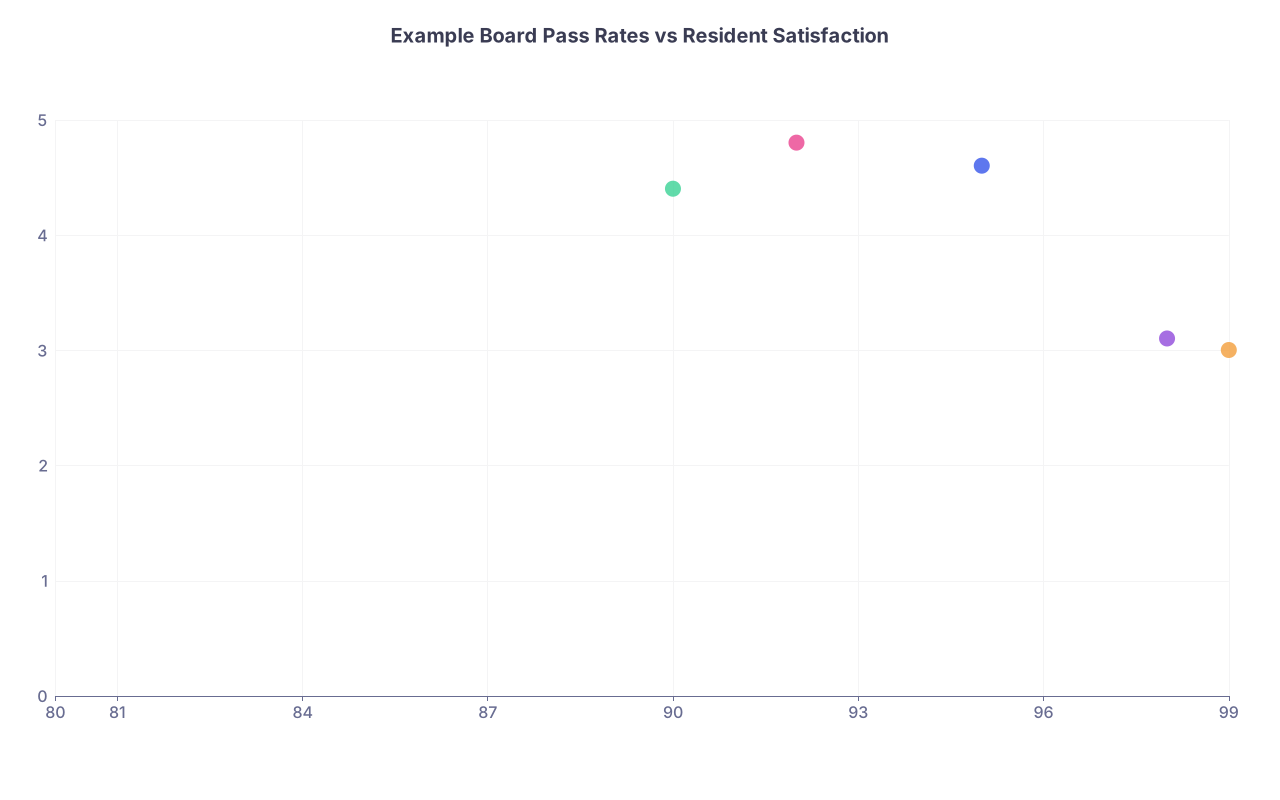
| Category | Value |
|---|---|
| Program A | 95,4.6 |
| Program B | 98,3.1 |
| Program C | 90,4.4 |
| Program D | 99,3 |
| Program E | 92,4.8 |
The sweet spot: high pass rates and high resident satisfaction with teaching. If pass rates are great but residents sound miserable and unsupported, you’ll get through… but at a cost.
Watch the Hidden Curriculum on Interview Day
A few subtle things I always tell applicants to watch for:
- Do attendings know residents’ names, interests, and goals?
- Are residents willing to criticize aspects of the program in front of each other?
- Does anyone mention burnout, wellness, or leaving early when you talk informally?
- Do people talk with some pride about how much better they are now than as interns?
Take mental notes during your day. Your gut is often right when the red flags pile up.
Quick Teaching Environment Checklist
When you get home, score each program 1–5 on these:
| Domain | 1 (Weak) | 5 (Strong) |
|---|---|---|
| Bedside/rounds teaching | ||
| Quality of feedback | ||
| Protected time honored | ||
| Service vs education balance | ||
| Support for strugglers | ||
| Question-friendly culture |
Write down 1–2 concrete examples from interview day for each. If you can’t recall anything specific, that’s its own answer.
To see how this might differ across programs you interview at, map your scores:
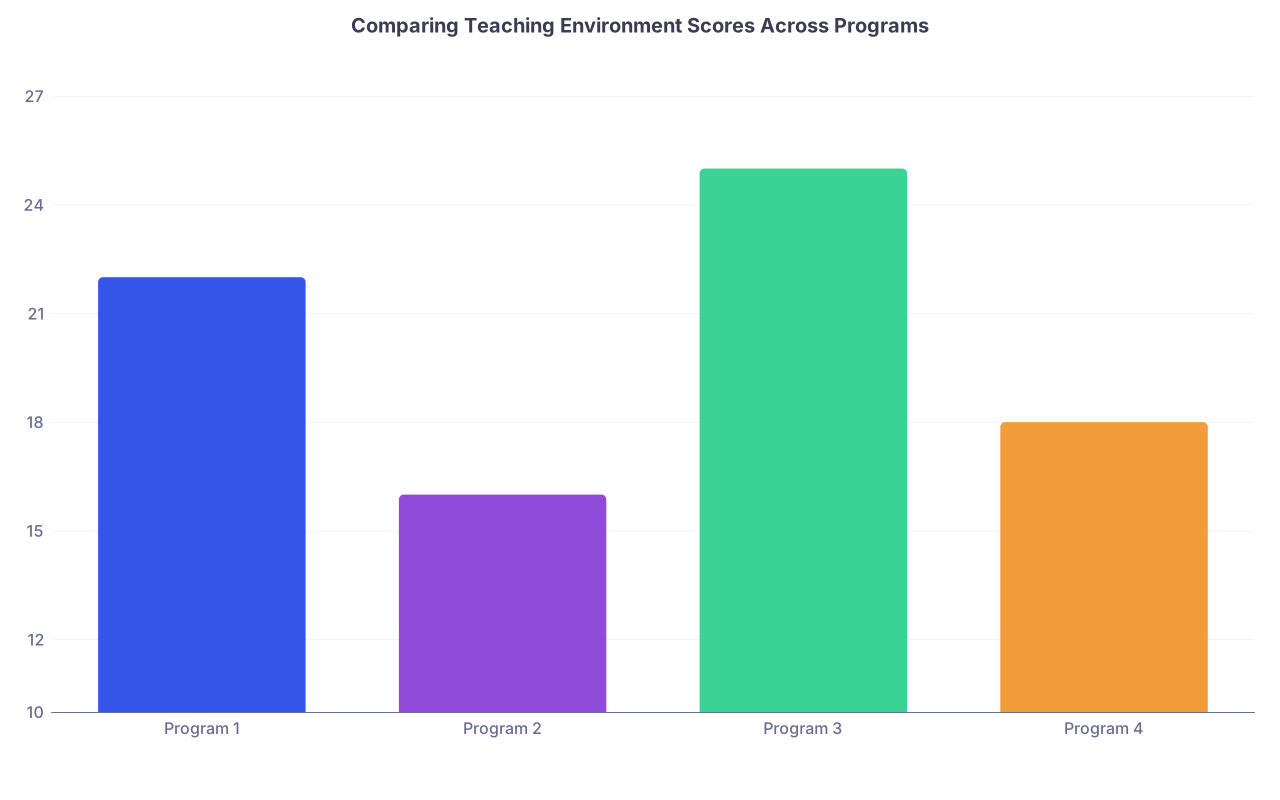
| Category | Value |
|---|---|
| Program 1 | 22 |
| Program 2 | 16 |
| Program 3 | 25 |
| Program 4 | 18 |
You’re not looking for perfection. You’re looking for direction: a culture that’s clearly trying, improving, and actually backing up what it says.
One More Thing People Forget: Fit With Your Learning Style
You matter here too.
Some programs are:
- Very structured, protocol-driven, heavy on morning report and chalk talks.
- Others are more informal, heavy on case-based hallway teaching.
- Some lean research/academia, others are clinically intense with less didactic time.
A strong teaching environment for one person can feel suffocating or too loose for another. So ask yourself honestly:
- Do I learn best by structured didactics or by doing with good backup?
- Do I want heavy feedback or more independence?
- Do I want attendings deeply involved or more senior-led autonomy?
Try to match your style to the program’s reality, not their brochure.
FAQ: Strong vs Superficial Teaching Environments
1. Are community programs worse for teaching than university programs?
Not automatically. I’ve seen community programs with phenomenal bedside teaching and tight-knit mentorship, and big-name university programs where residents are invisible behind fellows and endless consults. What matters more is:
- How much direct attending-resident interaction you get
- Whether residents are too buried in service to think
- If there’s a conscious structure to teaching and feedback
You can absolutely get elite training at a community program with a strong teaching culture.
2. If residents seem happy but say they’re “always busy,” is that a red flag?
It depends what “busy” means. Busy seeing patients, thinking, and getting coached is fine. Busy doing scut, chasing paperwork, and constantly drowning is a red flag. On interview day, push for specifics:
- “Busy how? What falls off when you’re busy?”
- “Do you still get teaching on those days, or does it vanish?”
If teaching is the first thing sacrificed, that’s a problem.
3. How many conferences per week should a good program have?
Raw number matters less than protected, high-yield time. A solid internal medicine program might have:
- Morning report 3–5x/week
- Noon conference 3–5x/week
- Weekly M&M or Grand Rounds
- Some simulation or procedure teaching
If residents don’t actually attend or find them useful, 10 conferences a week don’t mean much. I’d rather see 3–4 consistently excellent, well-attended sessions than 8 mediocre ones you can’t go to.
4. What if a program has great reputation but residents sound lukewarm on teaching?
Believe the residents. Reputation lags reality by years. Programs can coast on their name while culture quietly erodes. If residents repeatedly say things like “You learn a ton… but mostly by surviving,” that’s code for weak formal teaching and support. You might still rank it high, but at least be honest with yourself about what you’re signing up for.
5. How much should teaching environment matter vs location, prestige, or fellowship prospects?
If your goal is to become an excellent, confident physician and not hate your life in the process, teaching environment is near the top of the list. Prestige and location help on the margins; a strong teaching culture shapes your day-to-day reality and long-term competence. I’d personally take a slightly less “prestigious” name with a clearly strong teaching culture over a big brand with superficial education.
6. What’s one “tell” that a program’s teaching is genuinely strong?
When residents can tell you, unprompted and in detail, how much better they are now than when they started — with specific teaching moments, mentors, and changes they’ve made because of feedback. If multiple residents across PGY levels light up when describing how they’ve grown, you’ve probably found a place that actually teaches.
Today, pick one program you’re considering and do this:
Open a blank note and write down everything concrete you remember about how they teach — rounds, feedback, conferences, support. If you realize you mostly remember nice people and a pretty hospital, but almost nothing about education, dig deeper before you move that program up your rank list.