
The worst programs loudly brag about “resident autonomy” and then don’t let interns order Tylenol without attending approval.
Let’s cut through that nonsense.
If you want to know how much real responsibility and independence you’ll have, you do not ask, “How’s the autonomy here?” Everyone will say “great.” That question is useless.
You ask specific, concrete, uncomfortable questions that force people to describe what actually happens: who writes orders, who talks to patients, who makes decisions at 2 a.m., who gets blamed when things go wrong.
Here’s the exact playbook.
The Core Principle: Ask About Behavior, Not Philosophy
Autonomy is not a mission statement. It’s:
- Who writes the orders
- Who calls the consults
- Who talks to families
- Who runs the codes
- Who staffs overnight
You’re trying to surface stories and workflows, not opinions.
Any time you hear:
- “We have a great balance of autonomy and supervision”
- “You can get as much autonomy as you want”
- “It really depends on the attending”
…you have your answer: they haven’t thought this through, or they don’t want to say the quiet part out loud.
You want people to describe specific patterns like:
- “Interns write all the orders. Attendings co-sign some, but we put them in.”
- “Night float admits independently and then calls the attending to staff.”
- “Senior runs the code until the attending arrives, and usually keeps running it.”
Let’s break this into domains and give you questions that actually work.
Autonomy on the Wards: Orders, Notes, and Daily Decisions
This is your day-to-day life. If you don’t ask good questions here, you’ll regret it halfway through PGY-1.
Questions that reveal real inpatient autonomy
Use these with residents:
“Walk me through a typical new admission on wards. Who actually does what?”
You’re listening for:- Does the resident or attending see the patient first?
- Who writes the H&P?
- Who generates the initial orders?
Red flag answers:
- “The hospitalists usually see the patient first and put in starter orders.”
- “We sometimes just ‘cosign’ what the NP or PA already ordered.”
“Who usually places the admission and daily orders?”
Good sign:- “Interns or juniors place all orders. Attendings may suggest changes, but we enter them.”
Bad sign:
- “The attending usually puts in the big management orders.”
- “The NP team handles most of the orders; we just write notes.”
“If the plan changes during the day (patient decompensates, new labs), who decides and enters changes?”
You want:- “We adjust, then update the attending.”
- “We call if it’s big (ICU transfer, thrombolytics), but day-to-day we drive the plan.”
“Are notes more of a documentation formality or do you feel they reflect your independent assessment and plan?”
Good:- “Our notes are our assessment. Attendings add an attestation but rarely rewrite everything.”
Sketchy:
- “We write notes mainly to document what the attending already said on rounds.”
“On rounds, who typically presents and who speaks directly to the patient?”
Autonomy smells like:- Residents lead the conversation.
- Attendings chime in but don’t dominate every interaction.
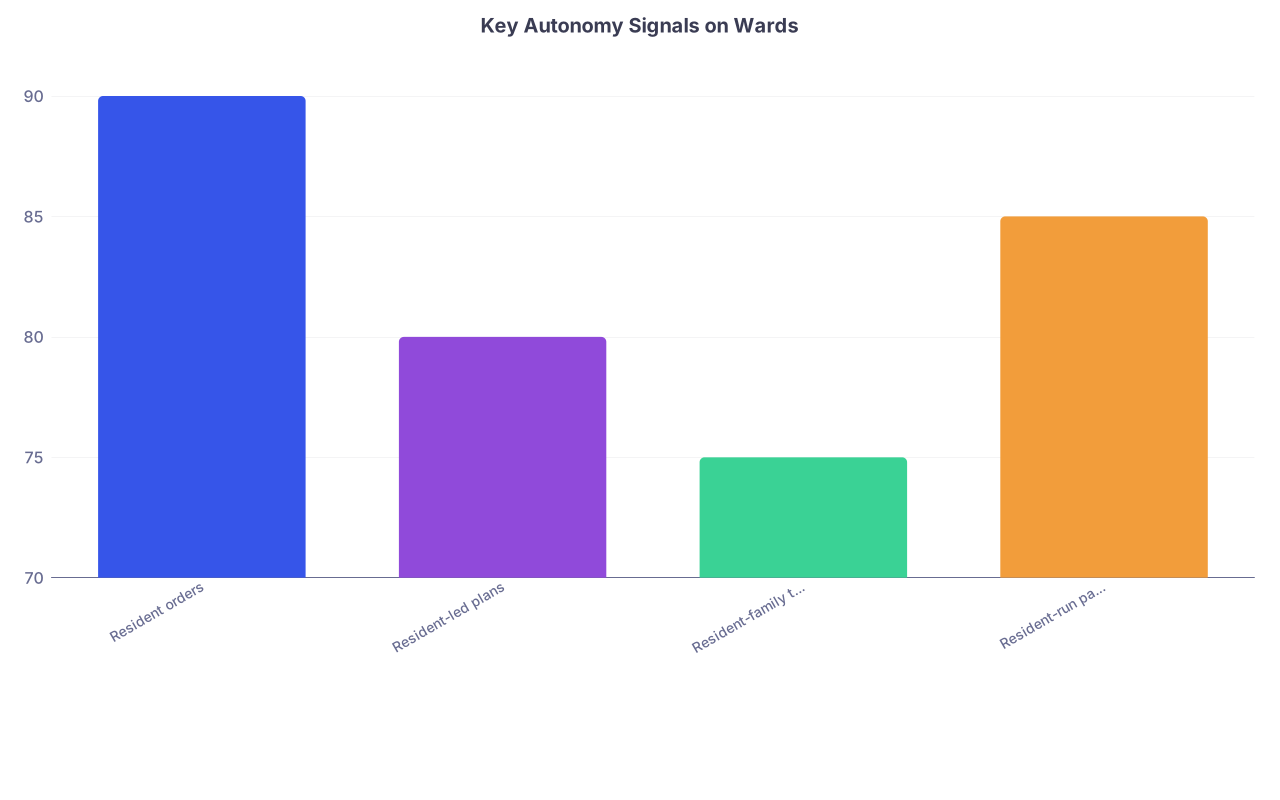
| Category | Value |
|---|---|
| Resident orders | 90 |
| Resident-led plans | 80 |
| Resident-family talks | 75 |
| Resident-run pages | 85 |
Interpretation: You want programs where residents — not attendings or APPs — do most of these things.
Nights and Cross-Cover: Where True Autonomy Lives (or Dies)
If you want to find where a program hides its culture, look at nights.
Questions for night float and call structure
Ask residents, not faculty:
“At 2 a.m., if a patient is hypotensive, what do you actually do before calling the attending?”
Good:- “We assess, give a bolus, adjust meds, call rapid if needed, then update the attending.”
- Shows trust and real responsibility.
Bad:
- “We call the attending before doing much.”
- “We usually page the hospitalist and they handle it.”
“Who admits patients overnight and who writes the admitting orders?”
Autonomy:- “Night float admits and writes all orders. We staff by phone or in the morning.”
No autonomy:
- “The nocturnist writes most of the orders; we help with notes.”
“Do you ever have in-house attendings at night? If so, how does that change your role?”
Good setup:- “Yes, but they mostly supervise. We still write orders and run the initial workup.”
Concerning:
- “They see every patient first and tell us what to do.”
“What’s the scariest night you’ve had, and how much freedom did you have to act?”
You want an honest story where:- The resident made decisions.
- Had backup when needed.
- Wasn’t micromanaged.
If you can’t get one concrete story, that’s its own answer.
ICU and Codes: Supervision vs Training Wheels
Programs love to say “you’ll be well supported in the ICU.” Translation is wildly variable.
Questions for ICU autonomy
“Who runs the code before the attending arrives?”
Green flag:- “Senior or ICU resident runs it. Attending supports, but we lead.”
Red flag:
- “The attending takes over immediately and directs everything.”
“When you want to intubate or place a central line, how often do residents actually get to do it vs CRNAs/NPs/attendings?”
Look for:- Specific numbers (“I did ~40 lines PGY-2”).
- Not vague “plenty of opportunities.”
“If an ICU patient is deteriorating, can you start pressors or BiPAP before staffing?”
Good:- “Yes, within reason. We’re expected to act, then loop in the attending quickly.”
Over-controlled:
- “We need attending approval for almost every escalation step.”
“Are there procedures that you technically ‘can’ do but in practice are mostly done by others?”
You want honesty like:- “We fight RT for some airways, but most lines are ours.”

Clinics and Continuity: Real Ownership vs. Drive-by Medicine
Clinic is where you learn to think like the patient’s doctor, not the team’s short-term consultant.
Questions for outpatient autonomy
“In continuity clinic, who makes the final management decisions on routine issues?”
Good:- “We see the patient, make a plan, then staff. Attendings almost always go with our plan unless it’s off.”
Weak:
- “Attendings usually tell us exactly what to order and prescribe.”
“How much time do you get per patient, and do you actually use it independently?”
You want:- Enough time that you’re doing real thinking, not just following templates.
“Do you ever tell a patient ‘I’m your doctor’ and feel like that’s true?”
Watch their face. That answer is more in the expression than the words.
Good programs: residents clearly feel ownership.“Do you have your own patient panel? Do they try to schedule back with you specifically?”
If yes, and residents seem proud about it—that’s real outpatient autonomy.
Interactions with APPs and Hospitalists: The Silent Autonomy Killers
APPs and hospitalists can be incredible colleagues…or they can be your replacement.
You need to know which one you’re signing up for.
Questions that expose this dynamic
“How are responsibilities divided between residents and NPs/PAs on the inpatient teams?”
Good:- “We co-manage but residents admit and round on their own patients. APPs have their own panel.”
Bad:
- “APPs usually cover the stable patients and do most of the orders; we help with admits and discharges.”
“Have you ever lost procedures or patient encounters to APPs?”
Honest:- “Sometimes, but seniors usually get priority for procedures and complex patients.”
“Who talks to consultants and makes the initial plan based on recommendations?”
Autonomy:- “We call consults and decide how to incorporate recs.”
No autonomy:
- “APPs or attendings usually talk to them; we get told the final plan.”
| Signal | Interpretation |
|---|---|
| APPs write most orders | Resident autonomy low |
| Separate resident/APP patient lists | Potentially good balance |
| APPs do most procedures | Procedural autonomy limited |
| APPs run family meetings | Resident ownership limited |
Feedback Culture: How Autonomy Grows or Gets Punished
Autonomy isn’t “do whatever you want.” It’s “you act like a doctor and get real feedback.”
Questions to test this
“Tell me about a time you made a significant independent decision and it didn’t go perfectly. How was that handled?”
You’re looking for:- They were supported, not humiliated.
- They were expected to make decisions.
“When you disagree with an attending about a plan, what actually happens?”
Autonomy-friendly:- “We talk it out. Sometimes they win, sometimes we do. It’s respectful.”
Fear-based:
- “We usually just do what they say to avoid conflict.”
“How often do attendings let you try your plan, even if they’d do something slightly different?”
That’s real autonomy: controlled room to be the doctor.
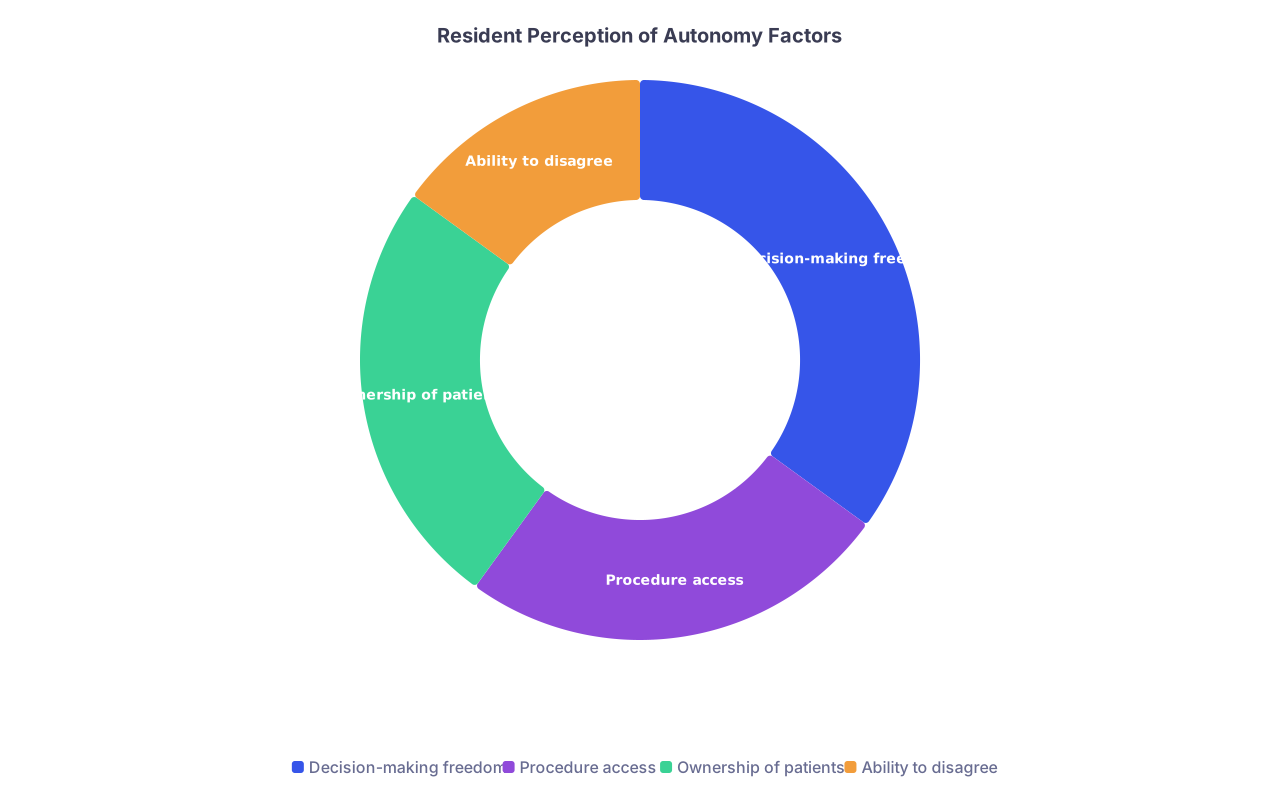
| Category | Value |
|---|---|
| Decision-making freedom | 35 |
| Procedure access | 25 |
| Ownership of patients | 25 |
| Ability to disagree | 15 |
How to Ask These Questions Without Sounding Like a Problem
You don’t want to come off as reckless. You want to come off as someone who actually wants to learn to be an independent physician.
A simple frame works:
Start with safety:
“I care a lot about being well supervised but also really want to grow into independent practice. Can I ask you a few concrete questions about how that works here?”Then go into specific, behavioral questions like the ones above.
And always, always:
- Ask residents privately, away from faculty.
- Compare what interns say vs seniors vs faculty.
- Watch body language—eye rolls, pauses, glances at each other tell you more than the words.

| Step | Description |
|---|---|
| Step 1 | Ask specific scenario questions |
| Step 2 | Program likely scripted |
| Step 3 | Probe nights and ICU |
| Step 4 | Low autonomy |
| Step 5 | Good autonomy |
| Step 6 | Answers concrete? |
| Step 7 | Residents lead decisions? |
Quick Checklist: If You Hear These, Be Careful
If during the day you repeatedly hear:
- “It depends on the attending.”
- “We’re very well supervised; you’ll never feel alone.”
- “We have a lot of APP support, so residents don’t get overwhelmed.”
- “Our attendings put in most of the orders to streamline things.”
Translate that as: low autonomy, potentially weak training.
If instead you hear:
- “You’re the primary doctor for your patients.”
- “We expect you to have a plan before you call.”
- “You’ll be busy, but you’ll leave here very independent.”
Now you’re closer. Then pin them down with the questions above.
FAQ: Resident Autonomy During Interviews
1. Is more autonomy always better, or can it go too far?
Yes, autonomy can absolutely go too far. If residents are truly alone with no backup, that’s not training, that’s malpractice. You want a place where you’re pushed to think and act like the doctor, but there’s always a reachable attending who actually responds and teaches. If you hear residents brag about “never calling attendings,” that’s not brave, that’s dumb.
2. How do I tell the difference between good supervision and micromanagement?
Ask, “When do you have to call your attending?” If the answer is “ICU transfers, codes, major new diagnoses, or high-risk changes like thrombolytics,” that’s reasonable supervision. If they say, “For pretty much any change in meds or any new plan,” that’s micromanagement. Also ask for examples of times the resident’s plan was used—even when the attending would’ve done it differently.
3. What’s one question that gives the most information in the least time?
This one: “At 2 a.m., who is actually responsible for making decisions for a crashing patient?” If the resident says, “Me, with an attending available for backup,” that’s real autonomy. If they say, “The hospitalist or in-house attending usually takes over,” or they hesitate, you’ve learned a lot.
4. How much should interns expect in terms of autonomy vs seniors?
Interns should still be making plans and writing orders. Good programs let interns think, act, and present plans, but the senior is there to refine and protect them. By PGY-3 (or equivalent), you should be functionally acting like an attending for many scenarios—with structured backup. If seniors still feel like scribes or order-entry techs, that’s bad.
5. Can rank lists really change based on autonomy, or is it secondary to location and prestige?
If you care about being a competent, confident attending, autonomy should be near the top of your list, right up there with location and fellowship matches. Prestige without real responsibility gives you a nice CV and shaky hands as an attending. Plenty of mid-tier programs train stronger clinicians than some big-name, over-supervised places. I’ve seen that play out many times.
6. What if residents give conflicting answers about autonomy?
That’s actually useful. If interns say, “We’re tightly supervised,” and seniors say, “We get a lot of freedom now,” that might just reflect normal progression. But if some residents say, “We do everything,” and others say, “We don’t get to do much,” ask, “What explains the difference?” If the answer is “attending-dependent” or “service-dependent,” be cautious. Inconsistent culture usually means you’re rolling the dice.
Bottom line:
- Don’t ask “How’s the autonomy?” Ask “Who does what in this exact scenario?”
- Nights, ICU, consults, and orders tell you more than any brochure.
- You’re training to be an independent physician—pick the place that actually lets you practice being one, with smart guardrails instead of training wheels forever.