Introduction: Robotics at the Heart of Modern Rehabilitation
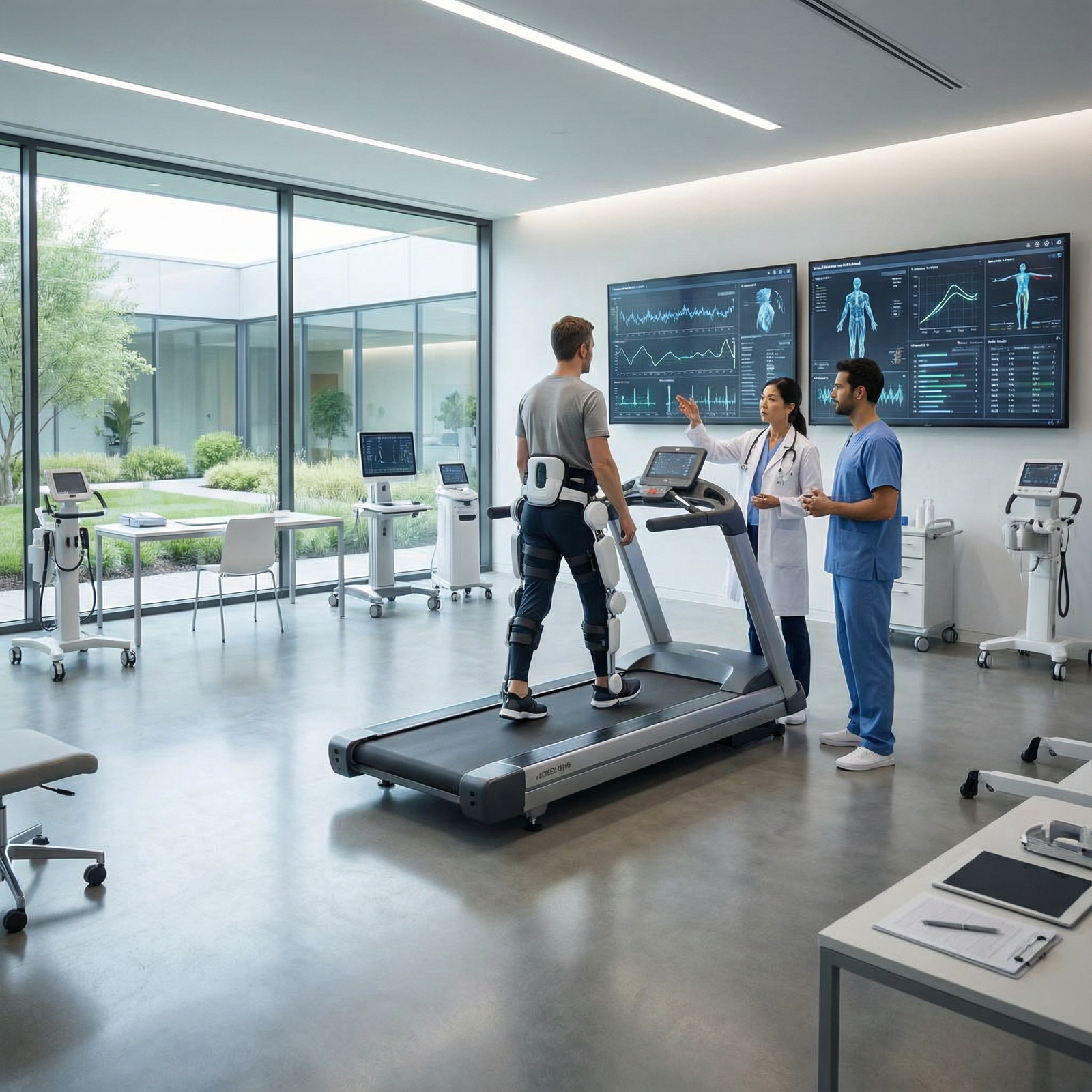
Rehabilitation medicine is rapidly evolving from a largely manual, therapist-driven discipline into a highly data-informed, technology-augmented field. Among the most transformative innovations is the use of robotics in rehabilitation, which is reshaping how clinicians deliver care, how patients engage with therapy, and how quickly and completely they recover.
By combining robotics, healthcare technology, and principles of neuroplasticity and motor learning, modern rehabilitation now offers:
- More precise, repetitive, and task-specific training
- Objective measurement of progress
- Highly personalized therapy programs
- The ability to extend care beyond the hospital through telehealth and home-based devices
For medical students, residents, and allied health professionals, understanding robotic rehabilitation is no longer optional—it is increasingly central to the future of healthcare and to optimizing patient recovery.
This article explores:
- What robotics in rehabilitation actually entails
- Key device types and clinical applications across patient populations
- The benefits and limitations of robotic rehabilitation
- How tele-rehabilitation and remote monitoring are expanding access
- Future directions and what they mean for your clinical practice
What Is Robotics in Rehabilitation?
Defining Robotic Rehabilitation
Robotic rehabilitation refers to the use of robotic systems to support, augment, or deliver therapeutic exercises and functional training to patients with physical or neurological impairments. These devices can:
- Assist or resist patient movements
- Guide limbs through desired movement patterns
- Provide real-time feedback and performance metrics
- Adapt therapy intensity and difficulty based on patient performance
Robotic systems are now used in:
- Inpatient rehabilitation units and acute care hospitals
- Outpatient physical and occupational therapy clinics
- Sports medicine centers
- Home environments via portable or wearable devices and tele-rehabilitation platforms
Core Categories of Robotic Rehabilitation Devices
While the technology is diverse, most devices fall into a few major categories:
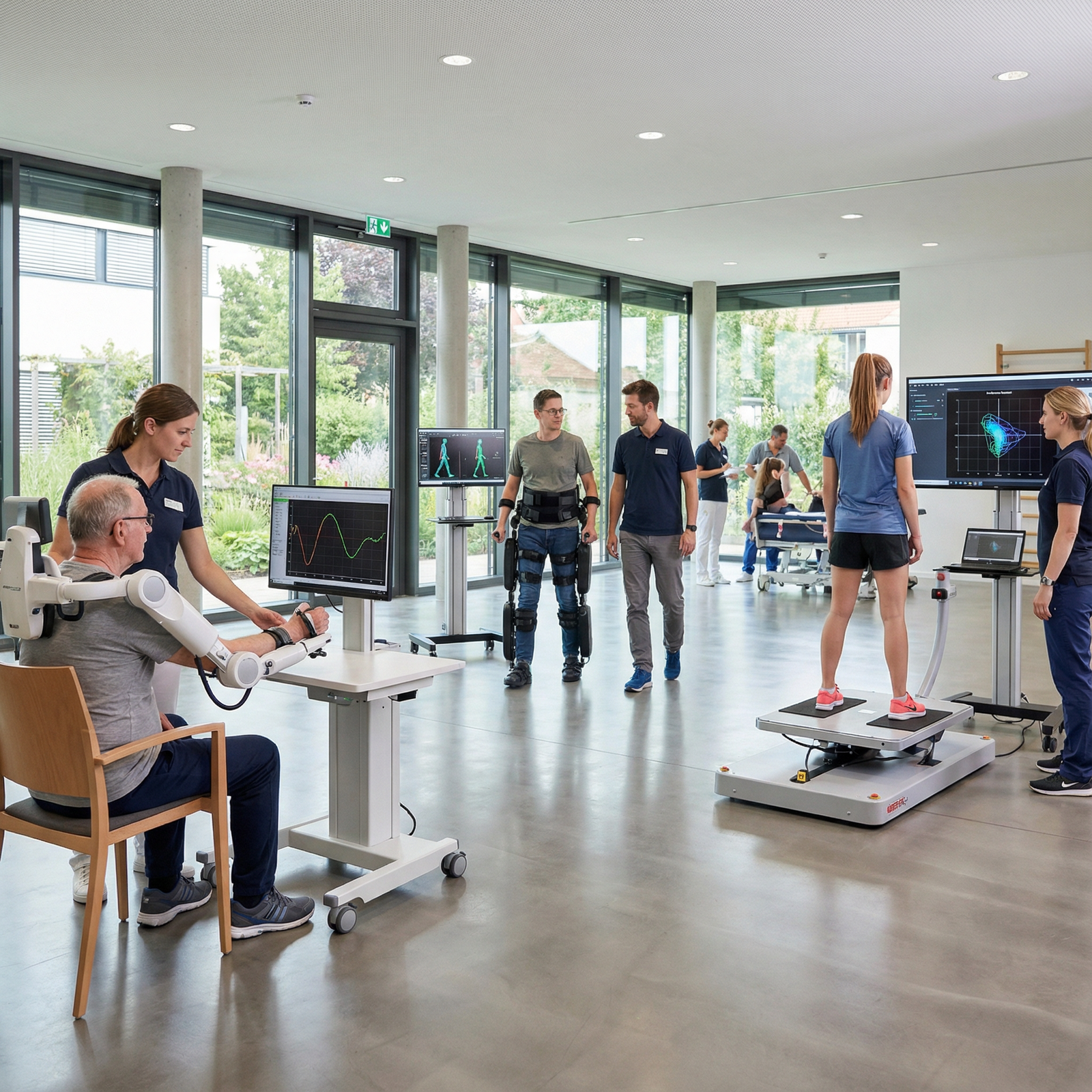
Exoskeletons (Wearable Robotics)
- External, powered frameworks worn over the body or limb
- Used for gait training, sit-to-stand practice, balance, and endurance
- Common in spinal cord injury, stroke, multiple sclerosis, and post-ICU weakness
Robotic Upper-Limb Systems and Robotic Arms
- Support shoulder, elbow, wrist, and hand movements
- Used for post-stroke hemiparesis, traumatic brain injury, brachial plexus injuries, and orthopedic upper-limb conditions
- May be end-effector platforms (patient holds a robot-controlled handle) or exoskeleton-type arm supports
Robotic Treadmills and Gait Trainers
- Body-weight-supported treadmills with robotic assistance controlling leg movements
- Enable early mobilization of patients who cannot yet walk independently
- Often integrated with virtual reality environments for task-specific training
Robotic Balance and Core-Training Platforms
- Move in multiple directions to challenge balance and trunk control
- Used across geriatrics, vestibular rehab, stroke, and sports performance
Tele-rehabilitation Robots and Remote-Controlled Systems
- Allow clinicians to remotely supervise exercises via telehealth
- Include home-based devices that transmit performance data back to the clinic
- Increasingly integrated with AI-driven exercise coaching and safety monitoring
These technologies represent not just “gadgets” but a new paradigm of data-rich, individualized, and scalable rehabilitation.
Major Clinical Applications of Robotics in Rehabilitation
1. Neurological Rehabilitation: Harnessing Neuroplasticity
Neurologic patients have been among the earliest and most robust beneficiaries of robotic rehabilitation.
Stroke Rehabilitation
After stroke, intensive repetitive task-specific practice is crucial to drive neuroplasticity. Robotics are ideal for delivering this high-dose training.
Lower-limb exoskeletons and robotic gait trainers
- Provide highly repetitive, symmetrical gait cycles
- Allow early verticalization and stepping even in severely impaired patients
- Support variable body-weight unloading, speed adjustments, and kinematic guidance
- Help normalize gait patterns and improve endurance
Robotic arm and hand devices
- Assist reaching, grasping, and fine motor tasks
- Permit graded assistance—from full support to resistance as strength returns
- Often incorporate virtual tasks (e.g., reaching to virtual targets, manipulating objects) to enhance engagement
Evidence suggests that robotic devices, when combined with standard therapy, can:
- Improve gait speed and walking independence
- Increase upper-limb function and activities of daily living (ADL) performance
- Provide more therapy repetitions per session than human therapists alone can safely deliver
Spinal Cord Injury (SCI)
In SCI, robotic devices help compensate for lost function while supporting neurorehabilitation:
Powered exoskeletons allow:
- Overground walking for individuals with incomplete or even some complete injuries
- Reduced secondary complications: osteoporosis, pressure ulcers, cardiovascular deconditioning
- Psychological benefits: improved mood, reduced sense of dependence
Robotic gait trainers are used in the early phase to standardize stepping practice and support partial body weight.
Robotic therapy does not “cure” SCI but can significantly improve:
- Functional independence
- Exercise capacity
- Community engagement and quality of life
Traumatic Brain Injury (TBI) and Other Neurologic Conditions
Robotics also have growing roles in:
- TBI rehabilitation (for both gait and upper limb)
- Parkinson’s disease (gait training and freezing management)
- Cerebral palsy (gait and upper-limb function in children)
- Multiple sclerosis and other demyelinating diseases
For trainees, familiarity with device indications, contraindications (e.g., unstable fractures, uncontrolled autonomic dysreflexia), and safety protocols is increasingly essential.
2. Orthopedic and Post-Surgical Rehabilitation
Robotics are also transforming orthopedic rehabilitation, particularly after surgery or trauma.
Joint Replacement (Hip, Knee, Shoulder)
Post–total joint arthroplasty, early mobilization and range-of-motion exercises are crucial. Robotic and computer-assisted devices can:
- Guide joints through controlled arcs of motion
- Provide adjustable resistance and support
- Track symmetry, speed, and movement quality
- Reduce therapist strain during repetitive mobilization
Some centers now integrate robotic prehabilitation tools preoperatively to optimize strength and function, which can improve postoperative outcomes.
Ligament and Tendon Repair, Fractures
For injuries such as ACL reconstruction or rotator cuff repair:
- Robotic devices can safely grade loading and movement range to protect healing tissue
- Isokinetic robotic systems measure torque and power precisely, aiding return-to-play decisions
- Fine-tuned progression reduces the risk of over- or under-loading recovering tissues
Objective data from robotic systems can support more precise and defensible return-to-work or return-to-sport decisions.
3. Sports and Performance Rehabilitation
Elite athletes and high-performance clinics have rapidly adopted robotics and healthcare technology for both rehab and performance enhancement.
Key uses include:
Motion analysis and robotic feedback
- High-resolution sensors quantify kinematics and kinetics
- Real-time feedback helps correct faulty patterns (e.g., valgus collapse, asymmetry)
Robotic resistance and isokinetic training
- Provides constant load or speed across full range of motion
- Enables targeted strengthening with precise dosage
Robotic balance and perturbation platforms
- Simulate game-like instability and reactive demands
- Used in concussion rehab and lower-limb injury prevention
For example, a soccer player rehabbing from an ACL reconstruction might:
- Use a robotic knee device to measure strength asymmetry
- Train on a robotic treadmill with variable incline and perturbations
- Complete reactive balance training on a robotic platform integrated with visual-cognitive tasks
This granular functional data supports safe yet efficient return-to-play timelines.
4. Geriatric and Chronic Disease Rehabilitation
Robotics also play a role in aging populations and chronic disease management:
- Fall prevention programs using robotic balance platforms and gait trainers
- Sarcopenia management with robot-guided resistance exercises
- Cardiopulmonary rehabilitation using robotic treadmills with controlled workloads
In frail or multimorbid patients, robotic assistance can:
- Reduce fall risk during therapy
- Allow higher repetition volumes than manual therapy alone
- Provide sensitive measurements that detect early decline or improvement
Key Benefits of Integrating Robotics into Rehabilitation
1. True Individualization and Data-Driven Therapy
Robotic systems allow highly personalized rehabilitation:
- Adjustable assistance/resistance, speed, range of motion, and difficulty
- Real-time biomechanical and performance data (e.g., force curves, gait symmetry, movement smoothness)
- Automatic logging of every repetition, set, and parameter change
For clinicians, this means:
- Ability to fine-tune therapy based on objective data
- Better documentation for insurers and outcome tracking
- More accurate prognostication and goal setting
For patients, it means:
- Therapy that adapts to their performance—not one-size-fits-all
- Clear visualizations of progress, which can be highly motivating
2. Acceleration of Patient Recovery Processes
Robotics inherently support the principles of high-intensity, task-specific, repetitive practice, which is critical in neuro and musculoskeletal rehabilitation.
Impacts on patient recovery include:
- Earlier mobilization (e.g., supported walking in the ICU or acute stroke unit)
- Increased therapy dosage without overwhelming clinicians
- More precise repetition of correct movement patterns, reinforcing healthy motor programs
Studies in stroke and SCI populations have shown that patients receiving robotic-assisted therapy, particularly when combined with conventional therapy, often achieve:
- Faster improvements in gait speed and endurance
- Better upper-limb function
- Higher independence in ADLs
For residents, the key takeaway is that robotics are not magic; they are powerful tools that enable delivering the type and volume of therapy that evidence already tells us is effective.
3. Enhanced Patient Engagement and Motivation
Modern systems often integrate elements of gamification and virtual reality, such as:
- Interactive games requiring reaching, stepping, or balance control
- Virtual environments that simulate real-world tasks (crossing a street, climbing stairs)
- Performance scoring, levels, and challenges
These features can:
- Transform tedious exercises into engaging tasks
- Improve adherence to home programs when used with tele-rehabilitation platforms
- Be especially helpful for pediatric patients and those with long-course or repetitive therapy needs
4. Improved Efficiency and Therapist Safety
Robotics also benefit the rehabilitation team:
- Robots handle strenuous, repetitive tasks such as body-weight support, limb lifting, and high-repetition joint mobilization
- Clinicians can simultaneously monitor multiple patients in robotic systems in some settings
- Reduced physical strain lowers risk of occupational injuries among therapists
This can allow therapists to:
- Focus more on clinical reasoning, patient education, and advanced interventions
- Spend more time on cognitive, emotional, and behavioral components of rehab
Ultimately, this may help address workforce shortages and increase the scalability of high-quality rehabilitation services.
Challenges, Limitations, and Ethical Considerations
Despite clear promise, robotic rehabilitation also presents real-world challenges.
1. Cost, Access, and Health Equity
High initial investment and maintenance costs can:
- Limit deployment to large tertiary centers
- Exacerbate disparities between urban and rural settings or high- and low-resource systems
Insurance coverage and reimbursement for robotic-assisted therapy may be inconsistent, complicating program sustainability.
For future clinicians and leaders, key questions include:
- How can we ensure equitable access to advanced healthcare technology?
- Which patient populations benefit most, and how do we prioritize use?
- How can cost-effectiveness be demonstrated to payers and policymakers?
2. Training and Workflow Integration
Effective use of robotic systems requires:
- Dedicated training programs for therapists and physicians
- Protocols integrating robotics with conventional therapy
- Ongoing competency assessment and device calibration
Poorly implemented robotics can:
- Disrupt workflow
- Lead to underuse or misuse of expensive equipment
- Create safety risks if staff are inadequately trained
Residency and fellowship curricula are increasingly incorporating exposure to robotic systems and their evidence base.
3. Patient Acceptance and Expectations
Some patients may:
- Feel intimidated or fearful of large robotic devices
- Worry that robots will “replace” human care
- Have unrealistic expectations of rapid cure or full recovery
It is crucial to:
- Clearly explain the role of robotics as a tool within a broader therapeutic relationship
- Emphasize safety features and the presence of human supervision
- Align expectations by discussing realistic goals and evidence-based outcomes
4. Technical and Clinical Limitations
Robotics still have limitations:
- Not all functional tasks can be easily replicated robotically
- Some devices primarily target impairment (e.g., strength, range) but not participation-level outcomes
- Malfunction or downtime can disrupt treatment plans
Ethical considerations also arise around:
- Data privacy and security, especially with cloud-based telehealth integration
- Algorithmic bias if AI-driven systems are trained on non-representative populations
- Informed consent regarding data use and device limitations
The Future of Robotic Rehabilitation and Healthcare Technology
1. Smarter, More Adaptive Robotics Using AI and Machine Learning
Emerging systems are increasingly leveraging artificial intelligence and machine learning to:
- Automatically adjust assistance and resistance based on real-time performance
- Predict optimal exercise difficulty to maximize motor learning
- Flag early signs of fatigue or safety risk
- Personalize programs based on large datasets of similar patients
These developments may allow devices to act as “intelligent co-therapists,” augmenting—not replacing—human clinical judgment.
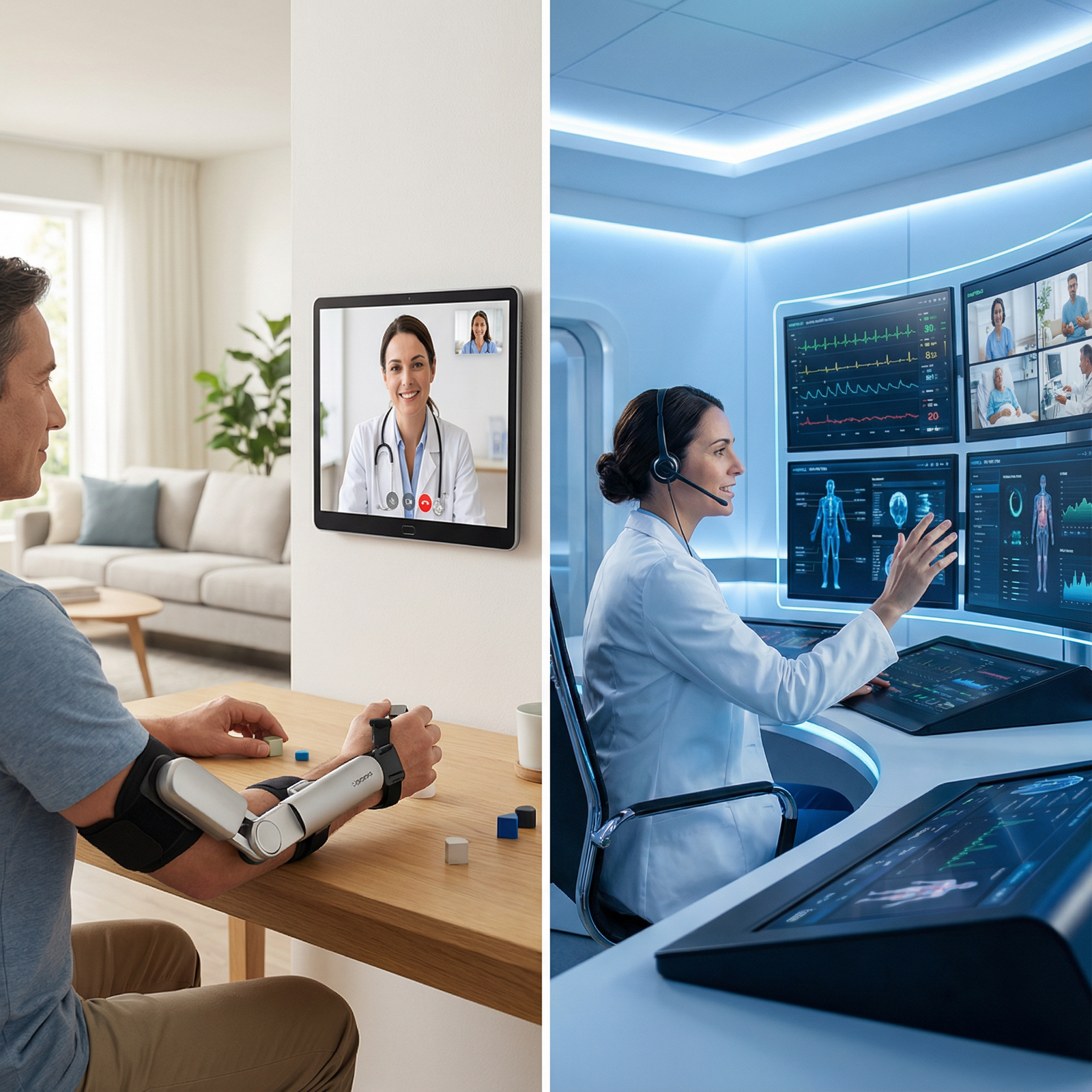
2. Seamless Integration with Telehealth and Home-Based Care
The expansion of telehealth during and after the COVID-19 pandemic has accelerated interest in remote rehabilitation:
- Compact, portable robotic devices are being designed for home use (e.g., hand exoskeletons, ankle trainers, soft exosuits).
- Data from home sessions can be transmitted securely to clinicians, who can adjust programs remotely.
- Telepresence robots and remote-controlled cameras enable therapists to supervise form and safety.
This model can:
- Extend access to patients in rural or underserved areas
- Support continued rehabilitation after discharge from inpatient or outpatient settings
- Facilitate hybrid models combining in-person and remote sessions
3. Soft Robotics and Wearable Technologies
Next-generation soft robotics uses compliant, lightweight materials:
- More comfortable and less intimidating than rigid exoskeletons
- Safer in case of collision or unexpected movements
- Easier to integrate into clothing (e.g., soft robotic gloves, sleeves, or suits)
These devices may allow near-normal movement while providing subtle assistance or resistance—blending seamlessly into daily life rather than being confined to the clinic.
4. Ecosystems of Connected Devices and Data
Robotic rehabilitation will increasingly be part of broader digital ecosystems that include:
- Wearable sensors and smartwatches
- Home-based balance and gait assessment tools
- Electronic health records and patient-reported outcome platforms
For clinicians, this could mean:
- Continuous, longitudinal insight into function outside the clinic
- Early detection of decline or risk (e.g., fall risk, disease exacerbation)
- More holistic and proactive management of chronic conditions
For healthcare systems, robotic rehab will be central to strategies that move from episodic care to continuous, value-based future-of-healthcare models.
Frequently Asked Questions (FAQ)
1. Which patients are the best candidates for robotic rehabilitation?
Robotic rehabilitation can benefit a wide range of patients, but those who often derive the most value include:
- Individuals with neurologic conditions such as stroke, spinal cord injury, traumatic brain injury, Parkinson’s disease, or cerebral palsy
- Patients recovering from orthopedic surgeries (joint replacement, ligament repairs, fractures)
- Athletes requiring precise, performance-oriented rehab
- Older adults at high risk of falls or with mobility limitations
Candidacy decisions must also consider:
- Medical stability (e.g., cardiovascular status, bone integrity)
- Cognitive ability to participate and follow instructions
- Body size and device-specific constraints
2. Are robotic rehabilitation devices safe?
Yes, when used correctly and with appropriate patient selection, robotic rehab devices are generally very safe. They typically include:
- Emergency stop buttons accessible to both clinician and patient
- Pre-set movement limits and torque thresholds
- Real-time monitoring of forces, positions, and vital signs (in some systems)
- Safety harnesses and body-weight support for gait training
Adverse events are rare and usually minor (e.g., skin irritation, transient discomfort), but clinicians must be vigilant for:
- Orthostatic hypotension, especially early after neurologic injury
- Autonomic dysreflexia in high-level SCI
- Joint or soft-tissue strain if parameters are progressed too quickly
3. Does robotic rehabilitation replace traditional physical and occupational therapy?
No. Robotics are best understood as adjuncts that enhance—not replace—traditional therapy.
- Robots excel at delivering high-repetition, standardized, measurable movement training.
- Human therapists remain essential for:
- Clinical decision-making and individualized goal setting
- Manual techniques, environmental modifications, and ADL training
- Addressing cognition, communication, mood, and caregiver education
The most effective programs integrate robotic sessions within a comprehensive, multidisciplinary rehabilitation plan.
4. How does robotic rehabilitation compare to conventional therapy in terms of outcomes?
Evidence varies by condition and device, but overall trends suggest that:
- Robotic therapy plus conventional therapy is often superior to conventional therapy alone in improving certain outcomes (e.g., gait speed, upper-limb function) in neurologic populations.
- Robotic systems increase therapy intensity and repeatability, which is strongly associated with better functional gains in neurorehabilitation.
- In orthopedic and sports rehab, robotics enhance objective assessment and precision loading, supporting safer and potentially quicker return to activity.
That said, outcomes depend heavily on program quality, patient engagement, and appropriate timing and dosing of interventions.
5. What skills should trainees develop to work effectively with robotic rehabilitation systems?
For medical students, residents, and early-career clinicians interested in this field, valuable skills include:
- Understanding indications, contraindications, and clinical evidence for major device types
- Interpreting robotic-generated data (force curves, gait parameters, movement quality metrics)
- Integrating robotic interventions with conventional therapy, pharmacologic management, and broader care plans
- Communicating effectively with patients about expectations, safety, and goals
- Appreciating ethical, economic, and health-equity implications of advanced healthcare technology
Pursuing electives in rehabilitation medicine, biomedical engineering collaborations, or research in robotics and patient recovery can be particularly useful.
Robotics in rehabilitation is no longer a futuristic concept—it is an expanding reality in modern clinical practice. For the next generation of clinicians, fluency in these technologies will be central to delivering high-quality, efficient, and patient-centered care in the future of medicine.