The Best Residency Programs for IMGs: Policies That Really Matter
Navigating the U.S. residency application landscape can feel overwhelming for International Medical Graduates (IMGs). Beyond exam scores and personal statements, there’s a crucial layer that often determines your day-to-day experience: program policies.
Some Residency Programs are structured to actively support IMGs through clear Visa Sponsorship, strong Mentorship, and genuine Diversity and Inclusion efforts. Others simply list “IMGs welcome” without meaningful infrastructure behind it.
This guide breaks down the key policies that matter most for IMGs and highlights U.S. residency programs frequently recognized for being more IMG-friendly. Use it as a framework to critically evaluate any program—not just the ones listed here.
Understanding the IMG Residency Landscape in the U.S.
Before evaluating specific policies, it’s important to understand the broader context in which IMGs apply and train in the U.S.
The Role of IMGs in the U.S. Healthcare System
IMGs are not a small subgroup; they are central to the U.S. physician workforce. They:
- Represent a substantial percentage of practicing physicians in many specialties, particularly in internal medicine, family medicine, psychiatry, and underserved areas.
- Often work in rural, safety-net, and high-need communities, improving access to care.
- Contribute to linguistic, cultural, and clinical diversity, enriching training environments and patient care.
Despite this, IMGs frequently face structural barriers that U.S. Medical Graduates (USMGs) do not. Program policies can either reduce or amplify those barriers.
Core Challenges Faced by IMGs
Understanding common challenges will help you evaluate whether a program is truly IMG-friendly.
1. Visa Sponsorship and Immigration Complexity
For many IMGs, Visa Sponsorship is the first and most decisive filter:
J-1 Visa (ECFMG-sponsored)
- Most common for residency and fellowship.
- Requires return to home country for two years after training unless a waiver is obtained.
- Many programs sponsor J-1 but not H-1B.
H-1B Visa (Employer-sponsored)
- Dual intent (can lead directly to green card pathways).
- Requires USMLE Step 3 passed before H-1B petition.
- Not all programs have the legal/administrative capacity or willingness to sponsor this.
Programs that clearly state their Visa Sponsorship policies (and actively work with GME offices and legal teams) dramatically simplify the process for IMGs.
2. Cultural, Communication, and System Differences
Even highly qualified IMGs may need time to adjust to:
- U.S. communication norms (SBAR handoffs, shared decision-making, documentation style).
- Different team hierarchies, nursing roles, and interprofessional collaboration.
- Expectations around autonomy, escalation of care, and documentation for billing.
Programs that invest in orientation, mentorship, and simulation help IMGs close this adaptation gap faster and more safely.
3. Recognition of International Credentials
Not all international medical schools are perceived the same way by program leadership. IMGs may face:
- Bias based on school name or region.
- Misunderstanding of the rigor of their training.
- Overemphasis on standardized test scores to “compensate” for unfamiliar schools.
Programs with thoughtful Diversity and Inclusion agendas are more likely to evaluate international applicants holistically, recognizing the value of varied training backgrounds.
Policies That Truly Matter for IMGs: What to Look For
When researching programs, do not stop at “IMGs accepted.” Instead, evaluate these concrete policy areas.
1. Visa Sponsorship Policy: The Non-Negotiable Foundation
If you require sponsorship, this is your first screening criterion.
Key questions to ask or confirm:
- Does the program sponsor J-1, H-1B, or both?
- Are there minimum score or Step 3 requirements for H-1B?
- How many IMGs on H-1B are currently in the program?
- Is there a dedicated GME/immigration office that supports residents?
Examples of Programs with Supportive Visa Sponsorship
While policies can evolve, several institutions have historically demonstrated structured support for IMGs through Visa Sponsorship:
University of Michigan
- Actively supports J-1 Visas and coordinates efficiently with ECFMG.
- Well-organized GME office that guides residents through documentation and timelines.
Boston University
- Known for offering both J-1 and H-1B sponsorship in several departments.
- Clear communication about visa options and institutional resources for international residents.
When exploring any program, confirm the current year’s visa policy directly on the GME or department website and, if possible, by emailing the program coordinator.
Practical Tips for IMGs
- Create a spreadsheet of target programs with columns for Visa Sponsorship type, Step 3 requirement, and contact person.
- Reach out to current or recent IMGs in the program (via alumni networks, LinkedIn, or IMG forums) to confirm real-world experiences with visa processes.
- Prioritize programs whose websites explicitly mention IMGs and visa sponsorship, not just generic statements.
2. Orientation, Onboarding, and Mentorship Programs for IMGs
Once you match, your success and well-being will depend heavily on how you’re integrated into the system.

Why Structured Orientation Matters
Robust orientation is more than HR paperwork. High-quality programs provide:
- Clinical orientation to U.S. documentation, order entry, EMR systems, and call schedules.
- Cultural orientation to communication norms, expectations in patient interactions, and interprofessional teamwork.
- Assessment and feedback early in training to identify learning needs and support remediation when necessary.
Mentorship: A Critical Support System
Well-structured Mentorship is particularly important for IMGs who may lack local networks:
- Assigned faculty mentors available for career advice, evaluation interpretation, and advocacy.
- Near-peer mentors (senior residents, especially other IMGs) who can help with daily survival tips, exam planning, and cultural adaptation.
- Opportunities to join academic tracks, research groups, or interest groups to expand professional networks.
Programs Noted for Strong Orientation and Mentorship
Yale University
- Provides comprehensive orientation for all new residents, including system workflows, communication norms, and professionalism expectations.
- IMGs benefit from structured support that addresses both clinical and social integration.
New York University (NYU)
- Offers formal mentorship matching, frequently pairing IMGs with experienced faculty or senior residents.
- Many departments encourage early goal-setting meetings and regular check-ins to monitor progress and well-being.
How to Evaluate a Program’s Mentorship Structure
When researching programs:
- Look for dedicated “mentorship,” “coaching,” or “professional development” sections on the program website.
- Ask on interview day:
- “Are mentors assigned or self-selected?”
- “Is there a formal mentorship curriculum or just informal support?”
- “Do IMGs have dedicated support or affinity groups?”
- Ask current residents how often they actually meet their mentors and how helpful those meetings are.
3. Diversity and Inclusion Policies: More Than a Buzzword
For IMGs, genuine Diversity and Inclusion efforts significantly affect belonging, advancement, and psychological safety.
What Real Diversity and Inclusion Looks Like
An inclusive residency program will show:
- Visible representation of IMGs and international faculty in leadership, chief roles, and committees.
- Dedicated DEI offices or leaders, with initiatives that include IMGs and international backgrounds—not only U.S.-defined racial/ethnic categories.
- Training on implicit bias, cultural humility, and inclusive care.
- Support for visiting scholars, international collaborations, and global health initiatives.
Programs with Strong Diversity and Inclusion Commitment
Harvard Medical School–affiliated programs
- Historically emphasize diversity in training programs, recruiting residents from a wide range of educational and cultural backgrounds.
- Institutional commitment to equity and inclusion, often with structured DEI committees and initiatives.
Stanford University
- Known for a diverse resident body across many departments.
- Offers workshops on communication, leadership, and inclusive care that benefit IMGs adapting to new cultural environments.
When evaluating Diversity and Inclusion, don’t just rely on stated values on a website. Look at resident photos, leadership bios, and program statistics to see whether IMGs are truly represented.
4. Academic, Research, and Community Engagement Opportunities
For many IMGs, residency is not only a path to board certification—it’s also the foundation for future careers in academia, research, global health, or leadership.
Why Academic and Community Opportunities Matter
Strong programs offer IMGs:
- Access to research mentors and ongoing projects (clinical, translational, quality improvement).
- Protected time or structured pathways for scholarly activity.
- Opportunities to serve diverse and underserved patient populations, building experience valued in both academic and community careers.
These experiences can be crucial if you plan to:
- Apply for competitive fellowships.
- Build an academic CV with publications, presentations, and leadership roles.
- Pursue public health, policy, or global health work.
Programs Highlighted for Academic and Community Focus
Cleveland Clinic
- Combines rigorous clinical training with extensive opportunities for clinical and translational research.
- IMGs often participate in quality improvement projects, research consortia, and community health initiatives.
University of California, San Francisco (UCSF)
- Strong institutional emphasis on research, advocacy, and community health.
- IMGs find opportunities for projects in health equity, underserved care, and academic scholarship tied to Diversity and Inclusion.
When reviewing programs, look for:
- Publication expectations or track records from residents.
- Availability of research mentors open to working with IMGs.
- Community partnerships with safety-net hospitals, FQHCs, or public health systems.
5. Resident Wellness, Counseling, and Support Systems
Residency is demanding for everyone, but IMGs often face added stressors: immigration uncertainty, distance from family, financial strain, and cultural adaptation. Programs that invest in wellness directly protect resident performance and long-term resilience.
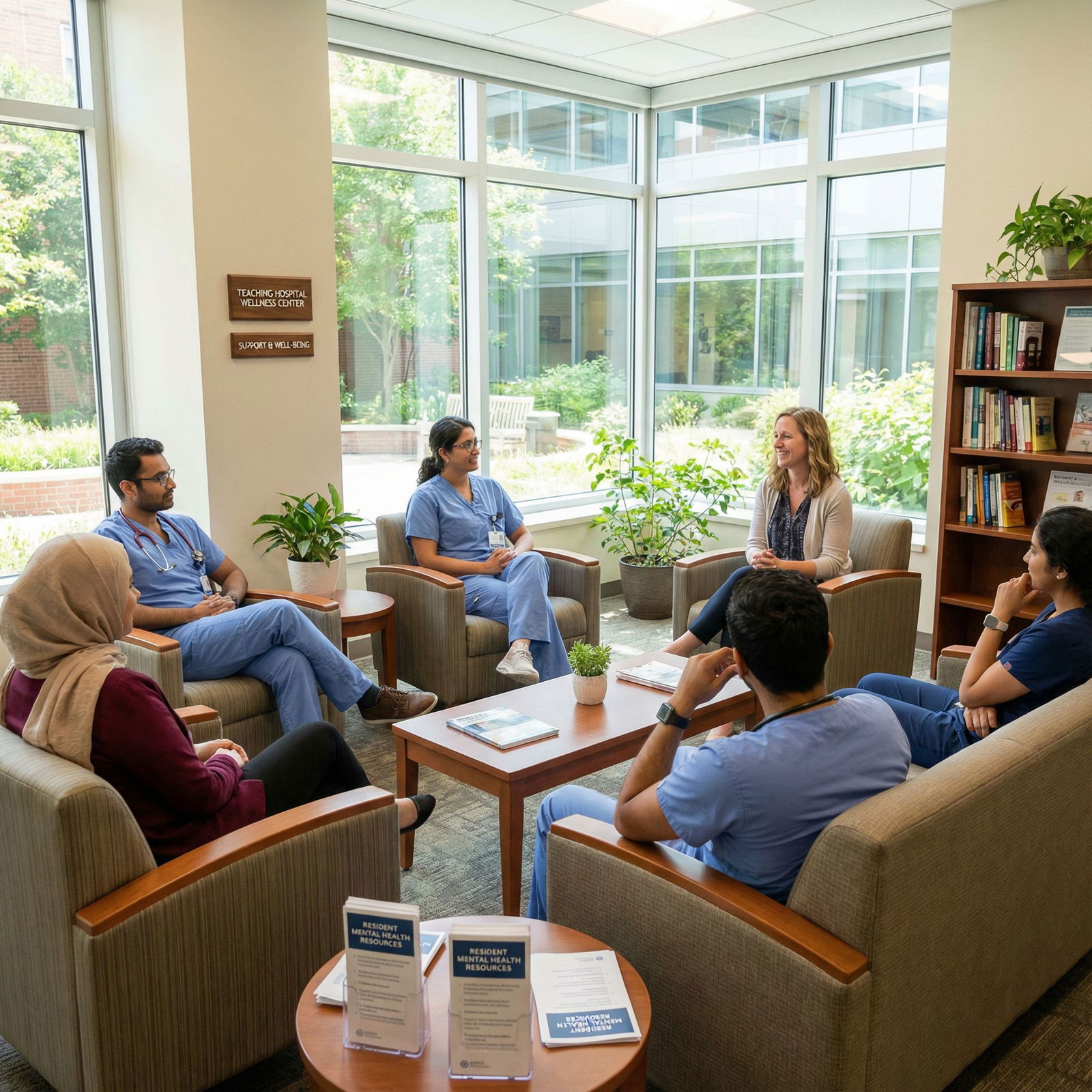
Elements of a Strong Support and Wellness Infrastructure
Look for programs that provide:
- Confidential counseling services for residents, ideally free and easily accessible.
- Formal wellness curricula: sessions on burnout prevention, coping strategies, financial literacy, and time management.
- Peer support groups where residents (including IMGs) can discuss shared experiences.
- Thoughtful scheduling policies that align with ACGME duty hour standards and prioritize rest.
Programs Known for Resident Wellness Support
University of California, Los Angeles (UCLA)
- Offers robust mental health and counseling services for residents.
- Promotes a culture that normalizes help-seeking behavior and self-care.
Mount Sinai
- Provides multiple layers of support: counseling, peer groups, wellness events, and faculty champions for resident well-being.
- IMGs often benefit from the combination of formal services and informal supportive culture.
To assess this during interviews, ask:
- “How does the program support residents during difficult rotations?”
- “Is there dedicated wellness time or programming?”
- “How are burnout and mental health concerns addressed and destigmatized?”
Spotlight: Programs Frequently Recognized as IMG-Friendly
While no list is complete and policies change over time, the following programs are often cited for having IMG-friendly structures, including Visa Sponsorship, Mentorship, Diversity and Inclusion, and Wellness.
1. Cleveland Clinic
- Visa Support: Historically supports both J-1 and H-1B (confirm by specialty).
- Mentorship: Strong formal and informal mentorship culture with many IMGs in leadership and faculty roles.
- Research and Academics: Extensive opportunities in clinical research, QI, and advanced sub-specialty exposure.
- Community Engagement: Involvement with diverse patient populations across multiple sites.
2. University of California, Los Angeles (UCLA)
- Diversity and Inclusion: Strong institutional focus on recruiting diverse trainees and addressing health equity.
- Wellness and Counseling: Comprehensive mental health, wellness, and resilience resources for residents.
- Academic Support: Opportunities for scholarly work, teaching, and leadership roles.
3. Boston University
- Visa Flexibility: Frequently sponsors J-1 and H-1B (program-dependent; verify details).
- Community Engagement: Strong ties to safety-net hospitals and public health initiatives in Boston.
- IMG Integration: Historically includes a meaningful number of IMGs in several residency programs.
4. University of Michigan
- Orientation and Integration: Excellent onboarding, including EMR training, communication workshops, and systems-based practice.
- Cultural Integration: Institutional emphasis on Diversity and Inclusion and supporting trainees from varied backgrounds.
- Research Infrastructure: Broad opportunities across clinical and translational research.
5. New York University (NYU)
- Mentorship Match: Formal mentor assignment with frequent check-ins, often tailored to IMG needs.
- Diversity in Trainees: Large and diverse resident class with substantial IMG representation.
- Urban Clinical Exposure: High-acuity cases, underserved populations, and varied pathology.
6. Stanford University
- Inclusive Culture: Encourages collaboration, innovation, and academic curiosity in a diverse environment.
- Community Programs: Engagement with underrepresented and vulnerable groups, global and community health initiatives.
- Career Development: Strong support for fellowship placement, research, and leadership training.
7. University of California, San Francisco (UCSF)
- Research and Advocacy: Emphasis on evidence-based medicine, quality improvement, and advocacy—valuable for IMGs pursuing academic careers.
- Structured Support: Robust GME infrastructure and multiple affinity and interest groups.
- IMG Networks: Presence of international residents and fellows who can serve as role models and mentors.
Use this list as a starting point, not a final destination. The same evaluation framework—Visa Sponsorship, Mentorship, Diversity and Inclusion, Academic Opportunities, and Wellness—can and should be applied to any residency program you are considering.
Practical Strategy: How IMGs Can Identify Friendly Residency Programs
To go beyond reputation and marketing, consider the following approach:
Step 1: Define Your Non-Negotiables
- Visa type (J-1 vs H-1B, Step 3 availability/timing).
- Specialty preferences and career goals (fellowship vs community practice).
- Geographic constraints (family, cost of living, climate).
Step 2: Use Data and Official Sources
- FREIDA, program websites, and ECFMG resources to confirm Visa Sponsorship.
- Look at resident rosters and alumni lists: How many current residents are IMGs? Where did they train?
Step 3: Leverage Networks and Mentorship
- Reach out to alumni from your medical school in U.S. residency programs.
- Use professional networks, IMG associations, and social platforms to connect with residents.
- Ask targeted questions about real-world experiences, not just official policy.
Step 4: Ask the Right Questions on Interview Day
Focus on concrete examples, such as:
- “Can you share how the program supports new IMGs during their first months?”
- “How many current residents are on H-1B? How has that process gone?”
- “What wellness or support structures do residents use most often?”
- “Can you describe a mentorship success story involving an IMG resident?”
FAQs: Residency Programs and Policies for IMGs
1. How do I find out if a residency program is truly IMG-friendly?
Look beyond the statement “IMGs accepted.” Check:
- Whether IMGs are currently in the program (resident profiles on websites).
- Visa Sponsorship details (J-1 vs H-1B) on GME or program pages.
- Presence of formal mentorship, wellness resources, and Diversity and Inclusion initiatives.
- Feedback from current or recent IMGs through alumni networks or professional platforms.
2. What type of visa is better for IMGs: J-1 or H-1B?
It depends on your situation:
- J-1
- More widely available for residency.
- Requires a two-year home-country return or waiver afterward.
- H-1B
- Often preferred if you aim to stay in the U.S. long-term and transition more directly to permanent residency.
- Requires USMLE Step 3 and a sponsoring employer.
Choose based on your long-term immigration goals, home-country obligations, and the options available in your specialty.
3. How important is Mentorship for IMGs during residency?
Mentorship is crucial. It helps IMGs:
- Understand expectations and evaluation systems.
- Plan fellowship or career trajectories.
- Navigate cultural and communication challenges.
- Access research, leadership, and academic opportunities.
Programs with structured Mentorship and coaching systems typically see better IMG adaptation and success.
4. Can I transfer residency programs if I’m unhappy with the support or policies?
Transfers are possible but difficult:
- You need a receiving program with an open position and a supportive letter from your current program.
- Visa considerations can further complicate transfer.
- It is usually better to carefully select programs upfront based on policies, culture, and support systems.
If you’re struggling, start by using internal supports (mentors, program leadership, wellness offices) to address issues before considering transfer.
5. What can I do during medical school or before applying to strengthen my chances at IMG-friendly programs?
Consider the following:
- Aim for strong USMLE scores (where still applicable) and solid clinical evaluations.
- Seek U.S. clinical experience (USCE)—observerships, externships, or electives.
- Engage in research or quality improvement projects, especially with U.S.-based mentors if possible.
- Build professional relationships that lead to strong letters of recommendation.
- Develop your communication skills, including documentation, presentations, and patient interactions in English.
Residency policies—Visa Sponsorship, Mentorship, Diversity and Inclusion, academic opportunities, and wellness—can dramatically shape your experience as an IMG. By understanding and actively evaluating these dimensions, you can target residency programs where you will not only match, but also thrive and grow into the physician you aspire to become.