Understanding H-1B Sponsorship for Caribbean IMGs in Interventional Radiology
Interventional Radiology (IR) is one of the most competitive and rapidly evolving specialties in the United States. For a Caribbean IMG—especially graduates of schools like SGU, AUC, Ross, Saba, and others—securing an interventional radiology residency with H-1B visa sponsorship is challenging but not impossible. Success requires a deep understanding of the visa landscape, smart school and program selection, and a deliberate, multi-year strategy.
This guide breaks down how H-1B sponsorship works in the IR context, what Caribbean medical school residency applicants need to prioritize, and how to build a realistic path from diagnostic radiology (DR) to interventional radiology while managing visa constraints.
1. H-1B Basics for Caribbean IMGs Targeting IR
1.1 What is the H-1B for Residency and Fellowship?
The H-1B is a temporary work visa for “specialty occupations,” which includes physicians in accredited residency and fellowship programs. For a Caribbean IMG in interventional radiology, H-1B can be used in two key phases:
- Diagnostic Radiology Residency (PGY‑2–PGY‑5)
- Interventional Radiology training
- Either as an integrated IR/DR residency (PGY‑2–PGY‑6)
- Or as an independent IR fellowship after diagnostic radiology
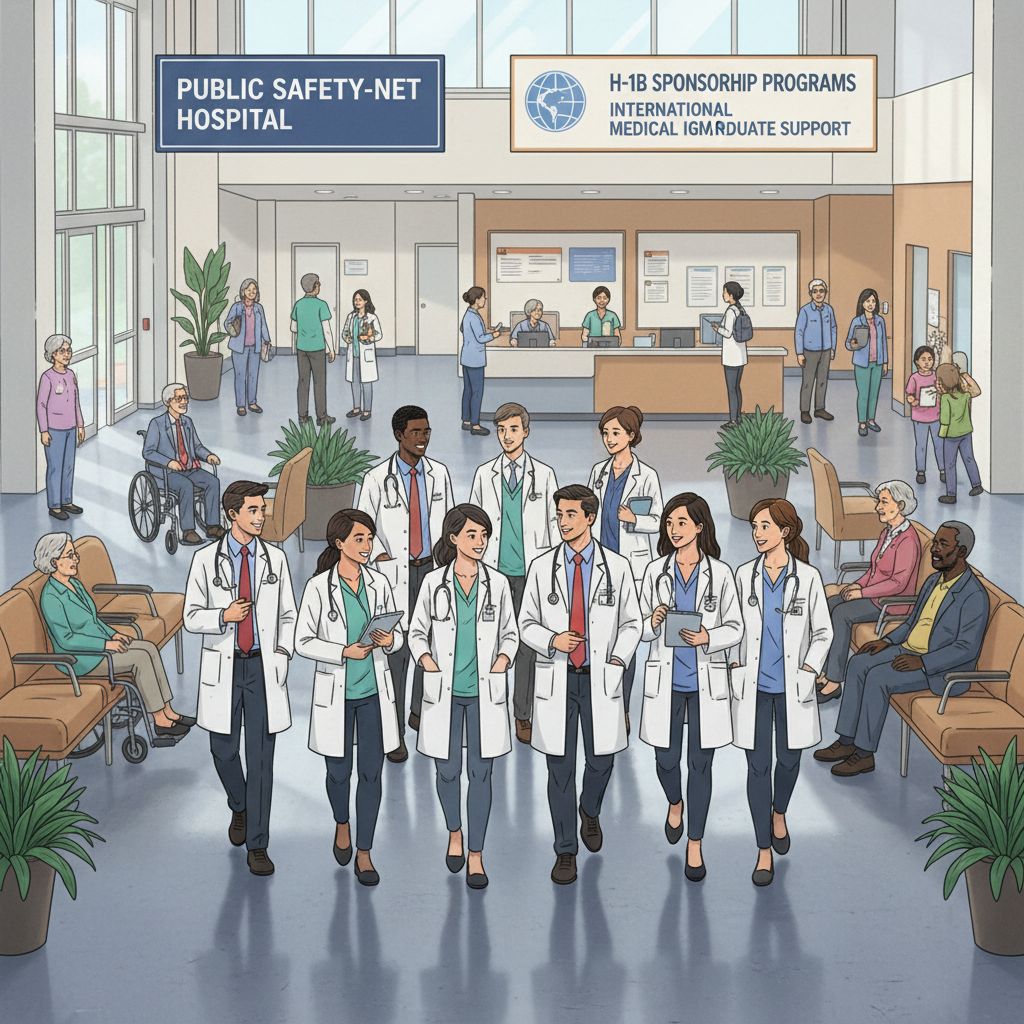
Not all programs support H-1B, and IR is notoriously selective. You must proactively identify H-1B residency programs and build your application profile around them.
1.2 H-1B vs J-1 for Caribbean IMGs
Most IMGs in US GME training are on J-1 visas via the ECFMG. However, many Caribbean IMGs in interventional radiology want H-1B because:
- No two-year home-country requirement (unlike J-1)
- Easier pathway to employment after training (can transition to hospital or private practice H-1B)
- Quicker route to permanent residency (green card) if an employer sponsors you
Key trade-offs:
- Fewer programs offer H-1B, especially in competitive fields like IR
- Stricter exam requirements (must have USMLE Step 3 passed before H-1B filing)
- Institutional policies may restrict H-1B to certain specialties or limit numbers
For a Caribbean medical school residency pathway in radiology or IR, you must decide early whether your long-term goal (staying in the US, subspecialty practice, academic career) justifies the extra complexity of targeting H-1B sponsoring programs.
1.3 H-1B Cap-Subject vs Cap-Exempt for Residency
Most residency/fellowship positions fall under H-1B cap-exempt status, meaning they are not limited by the annual national H-1B quota because:
- The hospital or institution is non-profit and affiliated with a university, or
- The program is part of a non-profit research or educational organization
Key points for Caribbean IMGs:
- Cap-exempt H-1B: Used for most university-based residency programs
- Cap-subject H-1B: More relevant later, when you join private practice or a non-teaching hospital
Why this matters:
- If you train in a cap-exempt setting, you can continue to renew your H-1B there without worrying about the national lottery.
- Transitioning to a private practice IR job later usually means entering the H-1B cap-subject pool, which may require careful timing.
When reviewing H-1B sponsor lists or speaking with program coordinators, ask specifically whether the hospital is H-1B cap-exempt and how that impacts long-term planning.
2. The Interventional Radiology Training Pathway for Caribbean IMGs
2.1 IR/DR Integrated Residency vs Independent IR Fellowship
The interventional radiology training structure offers two main routes:
Integrated IR/DR Residency (6 years total, PGY‑1–PGY‑6)
- Combines diagnostic and interventional radiology in one track
- Requires matching directly into IR/DR from medical school
- Very competitive for Caribbean medical school residency applicants
Independent IR Residency (previously IR fellowship)
- Requires completion of a 4-year Diagnostic Radiology residency first
- Then 2 additional years in IR (PGY‑6–PGY‑7 or PGY‑5–PGY‑6 depending on system)
- For most Caribbean IMGs, this pathway is more realistic:
- First match into DR (with or without a strong IR focus)
- Then apply for IR training later
Visa implications:
- You may need separate H-1B petitions for:
- DR residency
- IR residency (independent track)
- Ensure your immigration strategy anticipates both steps.
2.2 Realistic Expectations as a Caribbean IMG
IR is often considered on par with competitive fields like dermatology or plastic surgery in terms of selectivity. For a Caribbean IMG:
- Matching directly into integrated IR/DR on an H-1B is rare
- More realistic sequence:
- Strong performance at a reputable Caribbean school (e.g., SGU, AUC, Ross, etc.)
- Match into an H-1B-friendly diagnostic radiology residency
- Build an IR-focused portfolio during DR:
- IR electives, research, presentations, electives at IR-heavy centers
- Apply for independent IR residency with continued H-1B sponsorship
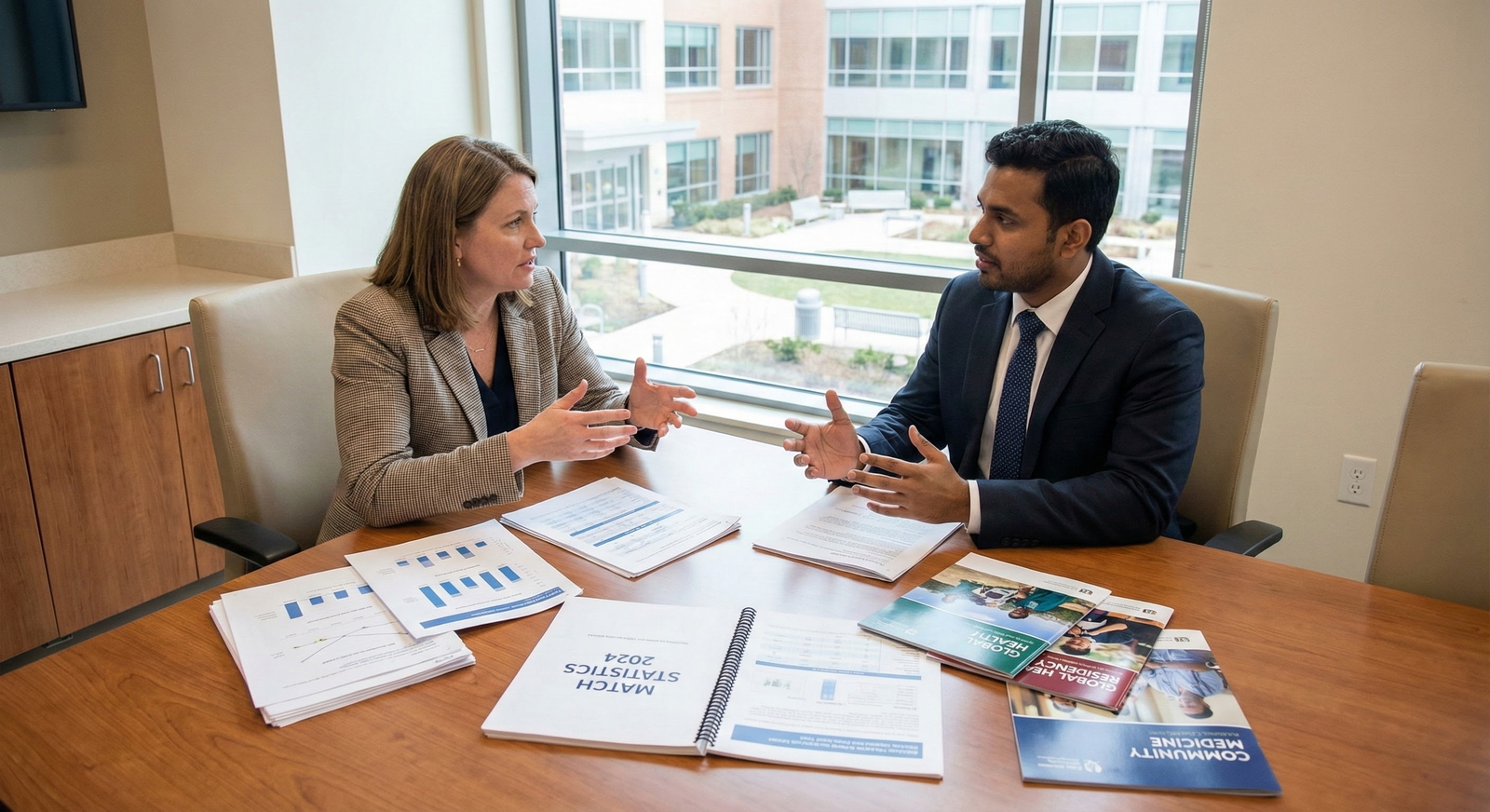
Tracking SGU residency match data and similar Caribbean medical school match reports can help you identify which radiology programs are historically open to IMGs, and from there, which might support H-1B.
3. Identifying H-1B-Sponsoring Programs for IR-Interested IMGs
3.1 Reading Between the Lines in Program Descriptions
Many GME websites use vague language about visas. Common phrases:
- “We accept J-1 and H-1B visas” → Good sign; confirm details with program
- “We typically sponsor J-1 visas only” → H-1B is unlikely, but occasionally negotiable
- “We do not sponsor visas” → Move on, unless you’re a US citizen/green card holder
Action steps for a Caribbean IMG:
Create a spreadsheet of:
- Diagnostic Radiology residencies
- IR/DR programs (even if a stretch)
- Independent IR residencies
For each, document:
- Visa policy stated on the website
- Past residents who were IMGs (check resident bios, LinkedIn, Doximity)
- Whether they explicitly mention H-1B
- Presence of Caribbean graduates (e.g., SGU, Ross, AUC)
Reach out politely and concisely:
- Ask: “Do you currently sponsor H-1B visas for residency? If so, is Step 3 required before ranking?”
- Save responses to build your own H-1B sponsor list customized for IR/DR.
3.2 Where to Find H-1B-Friendly DR and IR Programs
While there is no official, static H-1B sponsor list for residency, you can triangulate:
- ERAS / FREIDA: Check visa types accepted
- Program websites: Look for GME Office or International Trainee pages
- Residency forums and IMG communities:
- Reddit (r/IMGreddit, r/medicalschool)
- USMLE/IMG Facebook groups
- Alumni networks from your Caribbean school:
- SGU residency match lists often show patterns:
- Which DR programs took SGU grads
- Whether any IR/DR or IR fellowships involved SGU alumni
- Use this as a starting point, then verify H-1B policies
- SGU residency match lists often show patterns:
Programs more likely to sponsor H-1B:
- Large academic centers, especially in:
- Northeast (New York, New Jersey, Massachusetts, Pennsylvania)
- Midwest (Ohio, Michigan, Illinois)
- Texas and some West Coast centers
- Institutions with a history of hiring IMGs and robust GME infrastructure
- Hospitals with explicit statements about being H-1B cap-exempt
3.3 Red Flags and Common Pitfalls
For a Caribbean IMG targeting IR with H-1B:
Red Flag #1: “We may consider H-1B on a case-by-case basis.”
- This often means “almost always J-1”
- Clarify how many H-1Bs they’ve actually sponsored in the last 5 years
Red Flag #2: No explicit mention of H-1B anywhere
- Could still sponsor, but you must verify early
- Don’t waste large numbers of applications on totally unknown policies in a competitive field
Red Flag #3: J-1 only for IR
- Some programs may sponsor H-1B for core residencies but only J‑1 for IR fellowships
- This creates a break in your training visa strategy
Ask specifically:
“Do you sponsor H-1B visas for both diagnostic radiology residency and subsequent interventional radiology training (integrated or independent)?”
4. Building a Competitive IR Application as a Caribbean IMG on H-1B
4.1 Academic and Exam Strategy
For H-1B eligibility, USMLE Step 3 is central. Most H-1B residency programs require:
- Step 1: Preferably high (even as pass/fail, strong performance matters)
- Step 2 CK: Competitive score, especially for IR/DR
- Step 3: Passed before:
- ERAS rank list deadline, or
- Contract signing / visa processing
As a Caribbean IMG:
- Plan to take Step 3 early, ideally:
- During your final clinical year, or
- In the months between graduation and the start of residency
- For IR/DR or DR applications:
- Strong Step 2 + Step 3 can help offset Caribbean graduate bias
- Shows readiness for H-1B complexities
4.2 Clinical Experience and Letters of Recommendation
For a Caribbean medical school residency in radiology or IR, US clinical experience at teaching hospitals is essential.
Prioritize:
- Electives or sub-internships in radiology/IR at US academic centers
- Exposure to:
- Reading rooms
- IR angio suites
- Multidisciplinary tumor boards or vascular conferences
For letters of recommendation:
- Aim for 3–4 strong letters, at least:
- One from an interventional radiologist
- One from a diagnostic radiologist
- One from a core clerkship (e.g., internal medicine or surgery)
Extra boost:
- If you can rotate at a program known to be H-1B friendly, this:
- Provides direct evaluation by potential sponsors
- Helps overcome doubts about Caribbean graduates
- May serve as a tiebreaker during IR match discussions
4.3 Research and Scholarly Work in IR
IR is a technology-driven, innovation-heavy specialty. Caribbean IMGs need to demonstrate:
Research productivity:
- Case reports, retrospective studies, QI projects in IR or DR
- Presentations at regional or national meetings (e.g., SIR, RSNA)
Focused interest in IR:
- Participation in IR interest groups (SIR medical student section)
- Mentorship by IR faculty
- Participation in IR call, procedures, or case discussions
Programs sponsoring H-1B often justify the extra effort when a candidate clearly brings academic value and long-term potential, especially in an advanced field like interventional radiology.

5. Visa Strategy Across the IR Training Timeline
5.1 Planning the Timeline from Caribbean School to IR Attending
A sample pathway for a Caribbean IMG aiming for H-1B sponsorship in IR could look like:
Year 3–4 of Caribbean medical school
- Complete core rotations (medicine, surgery, etc.)
- Plan US electives in radiology and IR
- Prepare for/complete Step 2 CK
- Start prelim research exposure in IR/DR
Final year of medical school
- IR/DR-focused electives in US teaching hospitals
- Take Step 3 early if possible
- Target H-1B-friendly diagnostic radiology programs on ERAS
- Use SGU residency match and similar Caribbean match data to guide choices
PGY‑1 (Transitional Year or Preliminary Medicine/Surgery)
- If H-1B is used from PGY‑1:
- Ensure institution is H-1B cap-exempt
- Continue research, network with radiologists, secure new letters
- If H-1B is used from PGY‑1:
PGY‑2–PGY‑5 (Diagnostic Radiology)
- Strengthen IR exposure, research, and procedural skills
- Apply to independent IR programs with clear visa policies
- Confirm whether IR program will extend or transfer H-1B
IR Training & Beyond
- Maintain H-1B status throughout residency and IR
- As you near completion:
- Look for H-1B cap-exempt academic IR jobs OR
- Plan a cap-subject H-1B with private practice (entering the lottery)
5.2 H-1B Extension, Portability, and Cap-Exempt Nuances
Important visa mechanics:
Duration: H-1B is generally allowed for up to 6 years in total
- Residency + fellowship can approach this limit
- Academic institutions can sometimes extend beyond 6 years in certain green card-pending cases
Portability: You can change employers (e.g., from DR residency to IR residency) if:
- The new employer files a new H-1B petition
- There is no significant gap in employment
Cap-Exempt vs Cap-Subject:
- Residency and fellowship jobs at academic hospitals → usually cap-exempt
- Later private practice IR job → often cap-subject, requiring:
- Entry into the annual April H-1B lottery, or
- Careful coordination if moving from an academic to private role
As a Caribbean IMG, discuss these long-term issues with:
- Your program’s GME office
- An immigration attorney experienced with physician visas
- IR faculty mentors who were previously IMGs
6. Practical Tips and Common Scenarios for Caribbean IMGs
6.1 Scenario 1: SGU Graduate Targeting IR with H-1B
You are an SGU student finishing clinicals and want IR:
Use SGU residency match data to identify DR and IR/DR programs that have:
- Accepted SGU graduates in radiology
- A track record of IMG support
Cross-check those programs against:
- Their GME visa policies (H-1B vs J-1)
- Information from alumni and current residents
Apply broadly to:
- 70–100+ DR programs (if feasible), weighted toward:
- Academic centers
- H-1B-friendly states and cities
- Programs that historically match Caribbean IMGs
- 70–100+ DR programs (if feasible), weighted toward:
Have a parallel plan:
- If IR/DR integrated is too competitive, focus on landing DR first
- Then build your IR portfolio once in residency
6.2 Scenario 2: Already in DR on J-1, Want IR with H-1B for Fellowship
If you’re already in a J-1 diagnostic radiology residency but want to switch to H-1B for IR:
- This is usually not straightforward.
- USCIS and ECFMG see J-1 as your training visa; changing midstream to H-1B can be difficult.
- Typically, once you commit to a J-1 path, all your GME training remains J‑1, and you later must address the two-year home requirement or obtain a J-1 waiver job (which is often H‑1B).
If you’re very early in DR (e.g., PGY‑1, not yet on J‑1), speak with an immigration lawyer before finalizing your visa choice.
6.3 Scenario 3: Considering J-1 Now, H-1B Later for Practice
Some Caribbean IMGs decide:
- Use J‑1 for DR and IR (more programs available, easier to match)
- Then secure a J‑1 waiver IR job in an underserved area (often on H‑1B), such as:
- Rural hospitals needing interventional skills
- Safety-net or critical access hospitals
Pros:
- More training options (you’re not limited to H‑1B residency programs)
- IR jobs in underserved regions can be highly sought-after and offer broad procedural exposure
Cons:
- Must fulfill 3-year J‑1 waiver service
- Some waiver positions may not be in your ideal geographic or practice setting
For many Caribbean IMGs, this hybrid approach (J‑1 for training, H‑1B for waiver job) is more realistic than H‑1B from day one but depends on your long-term goals.
FAQs: H-1B Sponsorship for Caribbean IMGs in Interventional Radiology
1. Is it realistic to match directly into an IR/DR integrated residency on an H-1B as a Caribbean IMG?
It is possible but uncommon. Integrated IR/DR is highly competitive, and many programs prioritize US MD/DO applicants. As a Caribbean IMG, your more realistic route is to:
- First match into diagnostic radiology (ideally at a program open to IMGs and H‑1B)
- Then pursue independent IR residency after you have proven yourself in DR, built IR research, and formed strong mentorship relationships.
2. Do all H-1B residency programs require USMLE Step 3 before ranking?
Not all, but most H‑1B-sponsoring programs effectively do, because:
- Step 3 is required for filing the H‑1B petition
- Programs want certainty that your visa can be processed in time for July 1 start
Plan to take Step 3 before ERAS applications or at least before rank list deadlines, especially if your short list is dominated by H‑1B residency programs.
3. Where can I find an official H-1B sponsor list for residency programs?
There is no single official H‑1B sponsor list for residency and fellowship. Instead, you should:
- Use FREIDA, ERAS, and program websites to check visa policies
- Build your own list based on:
- Email responses from programs
- Alumni from your Caribbean school (e.g., SGU residency match data)
- Online IMG communities and forums
This takes effort, but it results in a tailored, accurate H‑1B residency “map” for IR/DR.
4. If I train entirely in cap-exempt H-1B positions (DR + IR), will I have trouble moving to private practice IR later?
You won’t have “trouble,” but you will likely need to enter the cap-subject H‑1B system when moving to a private practice or non-teaching hospital. Options include:
- Securing a private practice job that will enter you in the annual H‑1B lottery
- First working at another cap-exempt academic center (for more time, experience, and possibly green card sponsorship)
- Strategically timing your job change and immigration process with an experienced attorney
The key is to understand early that “cap-exempt” during training doesn’t permanently shield you from the general H‑1B cap once you move to non-academic IR practice.
For a Caribbean IMG with IR ambitions, an H-1B-based pathway is demanding but achievable with deliberate planning, strong performance, and careful targeting of H‑1B residency programs. Build your clinical, academic, and visa strategies in parallel—and start early.