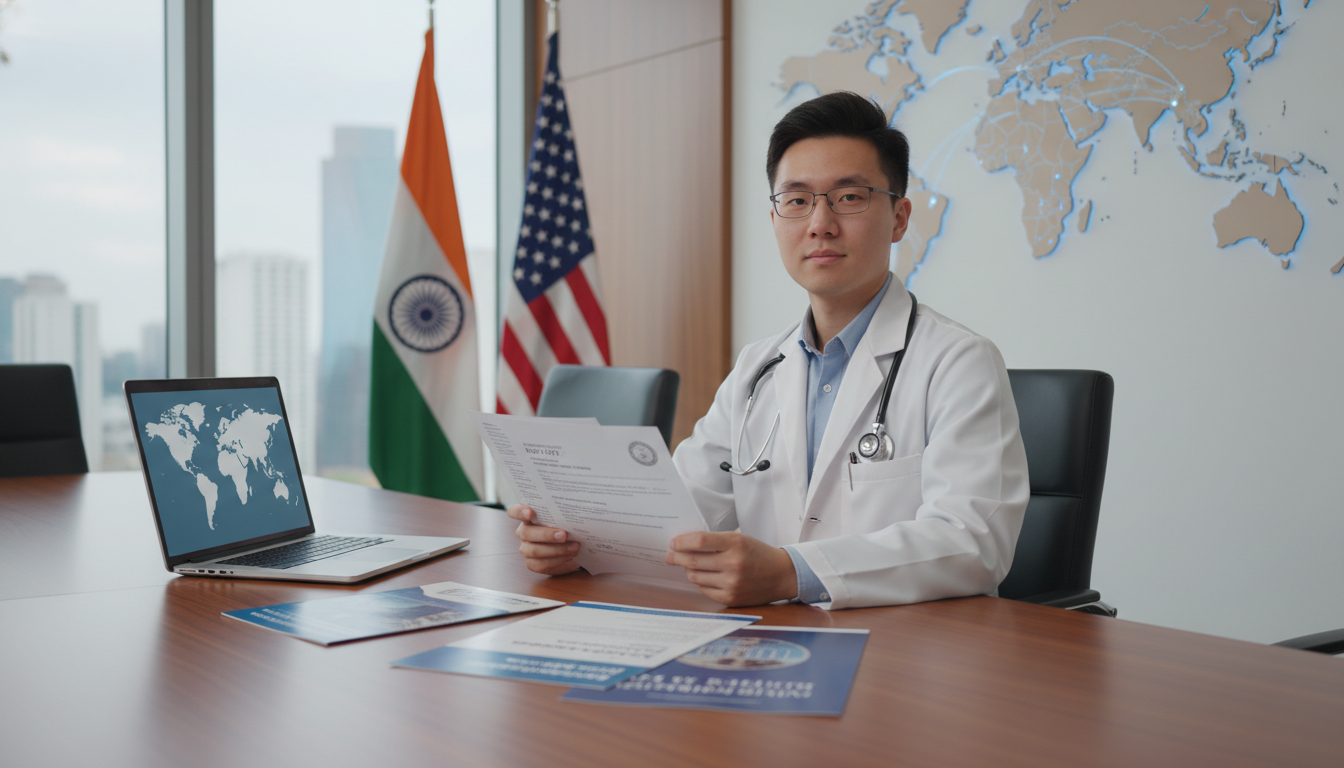
Understanding H‑1B Sponsorship for Caribbean IMGs in Urology
For a Caribbean international medical graduate (IMG) aiming for urology, H‑1B sponsorship is one of the most strategically important—and misunderstood—pieces of the residency puzzle. Urology is a highly competitive, early‑match specialty with a heavy emphasis on academic credentials, letters, and research. Layered on top of that, visa issues can significantly influence which programs will seriously consider your application.
This article breaks down how H‑1B residency programs work in urology, how Caribbean graduates (including SGU, Ross, AUC, etc.) can position themselves, what to know about the H‑1B sponsor list and H‑1B cap‑exempt institutions, and how to maximize your chances of an urology match as a visa‑requiring IMG.
We will focus on:
- How H‑1B works in the residency context
- The realities for Caribbean IMGs in the Caribbean medical school residency landscape
- Program types that are more likely to sponsor H‑1B
- Practical steps for building a program list and networking strategy
- A timeline and checklist tailored for SGU and other Caribbean graduates
H‑1B Basics for Urology Residency Applicants
Before targeting H‑1B sponsorship programs, you need a working understanding of how this visa fits into graduate medical education.
What is the H‑1B for Residents?
The H‑1B is a temporary worker visa in a “specialty occupation” that requires at least a bachelor’s degree (medicine clearly qualifies). In residency:
- You are the employee and the residency program (hospital or sponsoring institution) is the employer.
- The program must petition for your H‑1B, pay required fees, and meet wage and regulatory requirements.
- H‑1B is often preferred by applicants who want:
- A smoother path to future fellowship or academic positions
- To avoid the J‑1 two‑year home residency requirement
- More flexibility in certain employment decisions after training
However, it is more work and more cost for the program than a J‑1, so many urology programs default to J‑1 only.
H‑1B vs J‑1 for Caribbean IMGs in Urology
J‑1 visa (ECFMG‑sponsored):
- Most common visa for IMGs in residency.
- Less institutional cost and legal work.
- Comes with a two‑year home‑country physical presence requirement, which you must fulfill or waive before certain US immigration benefits.
- Urology fellowships (and many urology jobs) are accustomed to J‑1 graduates.
H‑1B visa:
- No two‑year home residence requirement.
- Time on H‑1B during residency may count toward later green card strategies in some pathways.
- Requires USMLE Step 3 passed before the petition is filed (in practice, before starting residency).
- Employer must pay at least the prevailing wage for residents (easily met but must be documented).
- Filing and legal costs are higher.
For a Caribbean IMG planning a long‑term career in the US, particularly in urology private practice or academic urology, H‑1B can be attractive. But it also narrows your list to the subset of programs willing and able to sponsor it.
Cap‑Subject vs H‑1B Cap‑Exempt
All H‑1B visas are not equal:
Cap‑subject H‑1B
- Most private employers.
- Subject to a yearly numerical cap with a lottery.
- In residency, this is much less common.
H‑1B cap‑exempt
- Employers that are either:
- Non‑profit institutions of higher education,
- Non‑profit organizations affiliated with institutions of higher education, or
- Non‑profit/governmental research organizations.
- Most university‑based residency programs fall here.
- No cap and no lottery; H‑1B can be filed any time of year.
- Employers that are either:
Most academic urology residencies are H‑1B cap‑exempt because they’re tied to medical schools or university hospitals. This is good news: if they’re willing to sponsor H‑1B at all, they can typically do so without worrying about the cap or lottery.
The Landscape: Caribbean Medical School Graduates and the Urology Match
Understanding where you stand as a Caribbean IMG is critical before you decide how narrow or broad your H‑1B target list can be.
Competitiveness of the Urology Match
The urology match (through the AUA/SAU rather than NRMP Main Match) is among the most competitive specialties, characterized by:
- High average USMLE scores among matched applicants
- Heavy emphasis on research productivity, often including first‑author publications
- Strong preference for home institution or visiting sub‑internships
- Importance of mentor advocacy from known academic urologists
For an IMG—especially a Caribbean medical school residency applicant—this is an uphill battle, but not impossible with the right strategy and profile.
Caribbean IMGs: How They’re Viewed
Caribbean schools (e.g., SGU, Ross, AUC, Saba) vary in reputation, but they are all generally considered off‑shore US‑style schools. For urology:
- Most program directors have few or no prior Caribbean IMG residents in urology, making them cautious.
- Some programs have a track record of SGU residency match outcomes in other specialties and may be slowly opening up to well‑qualified SGU or other Caribbean candidates in competitive fields.
- Your profile is often compared against:
- Top US allopathic graduates
- US MD/DO students with dedicated urology research years
- Highly accomplished non‑US IMGs often with strong research portfolios
Because of this, every disadvantage compounds: being IMG + Caribbean + H‑1B‑requiring can be a triple filter unless you offset it with exceptional accomplishments.
Balancing Ambition and Reality
If you insist on:
- Urology
- H‑1B sponsorship only
- No preliminary or backup specialties
…you are choosing a very narrow and high‑risk path.
Many Caribbean IMGs:
- Apply broadly to urology but are flexible regarding visa (accepting J‑1).
- Or pursue a strong categorical residency in a more attainable specialty first (e.g., general surgery, internal medicine), then leverage research and networking to enter urology at a later stage (e.g., PGY‑2 transfer, fellowship in andrology/oncology, etc.).
Your decision about H‑1B vs J‑1 must be aligned with how much risk you are willing to take on not matching at all.

Identifying H‑1B‑Friendly Urology Programs (and What “Friendly” Really Means)
There is no official, static “H‑1B sponsor list” for urology programs, and policies can change year to year. Instead, you need a systematic approach.
1. Understanding Institutional Patterns
Generally more likely to consider H‑1B:
- Large academic medical centers (university‑based)
- Institutions with a history of research‑oriented IMGs in other surgical specialties
- Places with in‑house legal teams experienced in immigration
Generally less likely:
- Small community programs
- Newly accredited urology programs
- Institutions that publicly state “J‑1 only”
However, past behavior is the best predictor. Your research should focus on:
- Whether current or recent urology residents are IMGs with H‑1B
- Whether the institution sponsors H‑1B in other residency programs (e.g., internal medicine, surgery, radiology)
2. Using Public Data and Program Websites
Actionable steps to build your personal “H‑1B sponsor list”:
Start with ACGME and ERAS data
- Identify all ACGME‑accredited urology programs.
- Review each program’s website for visa policies (look under “Residency / Application / International Medical Graduates”).
Look for explicit visa statements
Wording you might see:- “We sponsor J‑1 only.” → Exclude for H‑1B.
- “We sponsor J‑1 and will consider H‑1B on a case‑by‑case basis.” → Keep on list.
- “We sponsor both J‑1 and H‑1B.” → High‑priority target.
Check GME/Institutional GME pages
Sometimes the program page is vague, but the institution’s GME office specifies:- Types of visas they sponsor for any residency.
- Whether H‑1B is reserved for fellows or only certain specialties.
Scan resident biographies
- Look for residents who graduated from non‑US medical schools.
- Check if their LinkedIn or personal pages indicate they are on H‑1B.
- Even one prior IMG on H‑1B is a helpful signal.
3. Directly Contacting Programs
For the urology match, timing and tact matter. You don’t want your first line to be “Do you sponsor H‑1B?” but you need clarity before finalizing your list.
Ideal approach:
First, build a reasonable connection:
- Attend a program’s virtual open house.
- Meet faculty or residents at AUA/SAU or virtual events.
- Do a sub‑internship or observership if possible.
Then, email the program coordinator (cc the program director only when appropriate) with a concise, professional question, for example:
I am a graduating medical student from St. George’s University interested in applying to your urology residency. I require visa sponsorship to train in the US and would like to confirm whether your institution is able to sponsor H‑1B visas for incoming residents, or if you accept only J‑1 visas.
Thank you for your time and guidance.
You’re not demanding sponsorship; you’re clarifying policy. Some programs will respond:
- “We cannot sponsor H‑1B for residency.” → Remove from H‑1B‑only list.
- “We have sponsored H‑1B in exceptional cases.” → Consider applying if your profile is strong.
- “We sponsor H‑1B for residents who have passed USMLE Step 3.” → Very relevant for you.
4. Considering H‑1B for PGY‑2 or Later Entry
A few candidates pursue:
- A preliminary year in surgery or a transitional year on J‑1 or H‑1B.
- Then secure a PGY‑2 spot in urology (rare but exists).
Some programs more readily sponsor H‑1B for PGY‑2+ residents than for interns, because:
- The timeline allows more flexibility.
- They can be more selective based on proven performance.
If you’re open to a non‑categorical path, this can slightly broaden your options.
Building a Competitive Urology Application as a Caribbean IMG Seeking H‑1B
To overcome the triple filter (IMG + Caribbean + H‑1B), your application must stand out. Think of your profile as a portfolio of risk‑reducers for the program.
1. USMLE Scores and Step 3 Strategy
- Aim for USMLE Step 1 and Step 2 CK well above the average for matched urology applicants.
- Plan your USMLE Step 3 strategically:
- H‑1B requires Step 3 passed before the H‑1B petition is filed (practically, before residency start date).
- Some H‑1B‑friendly programs will only even consider IMG applicants if Step 3 is already passed at the time of ranking.
Practical advice:
- If you are early in training (M3/M4), map out a Step 3 study plan to complete the exam during your final year or gap year, especially if committed to H‑1B.
- If you are at SGU (or another large Caribbean school), connect with alumni who successfully secured H‑1B in any specialty to understand timing and preparation.
2. Research and Academic Productivity in Urology
Research is often the single biggest leverage point for Caribbean IMGs in competitive fields.
Aim for:
- Multiple PubMed‑indexed urology publications, especially as first or co‑first author.
- Presentations at urology meetings (AUA, SUO, SUFU, etc.).
- Involvement in ongoing clinical or translational projects that faculty can talk about in letters.
Actionable steps:
- Seek out academic urology departments in the US that:
- Have a history of working with IMGs on H‑1B or J‑1.
- Offer 1–2 year research fellowships or unpaid research positions.
- Use this time to:
- Build a strong publication record.
- Establish relationships with known faculty who can advocate for you.
- Learn the culture of US academic medicine.
Programs more open to H‑1B often are academically oriented; they respond positively to clear evidence that you’ll contribute to their scholarly mission.
3. Clinical Experience and Sub‑Internships
For urology, US clinical experience (USCE) at your target institutions can be make‑or‑break:
- Aim to do at least one urology sub‑internship at a program that:
- Is large and academic.
- Is either H‑1B‑friendly or at least open to IMGs.
- Use the sub‑I to:
- Demonstrate work ethic, clinical skills, and professionalism.
- Earn strong letters from urology faculty.
- Ask subtle, informed questions about the program’s historical approach to IMGs and visas.
Programs are much more likely to go through H‑1B sponsorship complexity for a candidate they have seen work full‑time on their service.
4. Letters of Recommendation and Advocacy
You will need:
- 3–4 letters, with at least two from academic urologists.
- Ideally, one letter from:
- A well‑known urology researcher or chair.
- A faculty member at a potential H‑1B‑sponsoring program.
Ask your letter writers to explicitly address:
- Your ability to function at the level of a US MD in a competitive surgical field.
- Your research contributions.
- Your professionalism, resilience, and “fit” for academic urology.
Letter writers who are accustomed to advocating for international candidates can sometimes help nudge a program toward accepting H‑1B sponsorship in your case.

Strategy and Timeline: From Caribbean School to Urology H‑1B Match
Bringing all the pieces together, here is a practical framework.
M2–M3 (or Early in the Process)
- Clarify your risk tolerance:
- Are you committed to urology even if it means accepting a J‑1?
- Or is H‑1B non‑negotiable, even if it drastically limits your odds?
- Excel academically and aim for high USMLE scores.
- Start networking with urology faculty (home country, US observerships, Caribbean‑to‑US alumni).
Dedicated Urology/Research Year (Optional but Powerful)
If possible, take a year for:
- A research fellowship in a US urology department.
- Attending AUA, SUO, or other urology meetings.
- Building connections with potential future letter writers and advocates.
- Clarifying which institutions are realistically H‑1B residency programs.
Final Year of Medical School
- Sit for USMLE Step 3 if you’re aiming at H‑1B‑friendly programs that prefer/require it before ranking.
- Complete urology sub‑I’s (ideally at institutions with known H‑1B sponsorship for any residency level).
- Start building your personal H‑1B sponsor list:
- Color‑code programs based on confirmed policies:
- Green: Explicitly sponsor H‑1B for residents.
- Yellow: Case‑by‑case or unclear, but institution sponsors H‑1B elsewhere.
- Red: J‑1 only or no visa sponsorship.
- Color‑code programs based on confirmed policies:
Application Season (AUA/SAU Urology Match)
ERAS application:
- Highlight research and academic achievements prominently.
- In your personal statement, be honest about being an IMG but emphasize strengths and fit for academic urology.
- Do not make the visa a focal point of the statement; address it separately and professionally when asked.
Program communication:
- If you did a sub‑I or research there, politely remind them of that connection.
- Once interviews start:
- If asked, be transparent about needing H‑1B and having Step 3 already passed (if true).
- After interview, you or a mentor can inquire discretely about H‑1B feasibility.
Parallel Planning and Backup Options
Given the risk, Caribbean IMGs often:
- Apply broadly to preliminary surgery or categorical IM as a backup in the NRMP main match.
- Stay open to J‑1 at programs that are otherwise an excellent fit, especially if:
- You have strong ties to the program.
- You’re early in your immigration journey and can still work toward waiver/green card later via other mechanisms.
Being strategic does not mean giving up on your goals; it means maximizing the number of pathways to reach them.
FAQs: H‑1B Sponsorship Programs for Caribbean IMGs in Urology
1. Is it realistic for a Caribbean IMG to match urology with H‑1B sponsorship?
It is possible but uncommon. You are competing in one of the most selective specialties while also requiring a less common visa category. To make this realistic, you generally need:
- Very strong USMLE scores
- Significant urology research (often 1+ dedicated year)
- Excellent letters from academic urologists
- US clinical performance at target institutions
Even then, some programs will rule you out purely because of visa complexity. Many successful Caribbean IMGs in urology either accept a J‑1 or pursue a staged path (other residency first, then move into urology pathways later).
2. Where can I find an official H‑1B sponsor list for urology residency programs?
There is no official, up‑to‑date public list specific to urology. You must build your own by:
- Reviewing program and institutional GME websites for visa policies
- Looking at current and past residents to see if IMGs with H‑1B are present
- Emailing program coordinators to clarify if they can sponsor H‑1B for residents
Some commercial databases and forums claim to list H‑1B residency programs, but they are often incomplete or outdated. Use them as a starting point, not a final authority.
3. Do I need to pass USMLE Step 3 before matching to get H‑1B for residency?
Legally, to obtain an H‑1B for a residency position, you must have passed USMLE Step 3 before the H‑1B petition is approved. In practice:
- Many programs require Step 3 before they will rank you if you need H‑1B.
- A few may match you on the condition that you pass Step 3 quickly so the petition can be filed in time.
As a Caribbean IMG targeting H‑1B, it is safest to plan on having Step 3 passed before interview season, especially for highly structured specialties like urology.
4. Is H‑1B always better than J‑1 for Caribbean IMGs in urology?
Not always. H‑1B has clear advantages (no two‑year home requirement, often better long‑term immigration flexibility), but:
- It dramatically narrows the list of programs that will consider you.
- It may delay or complicate your start date or contract if the petition is slow.
- Some fellowships and employers are perfectly comfortable with former J‑1 holders who have obtained waivers.
If your top priority is simply matching into urology in the US, you may decide that accepting a J‑1 at a high‑quality program you love is preferable to not matching while holding out for H‑1B.
For a Caribbean IMG with urology ambitions, H‑1B visa strategy is not an isolated decision—it intersects with your research plan, exam timing, networking, and risk tolerance. Approach it systematically, stay flexible where you can, and lean heavily on mentorship from faculty and alumni who have navigated this path before you.