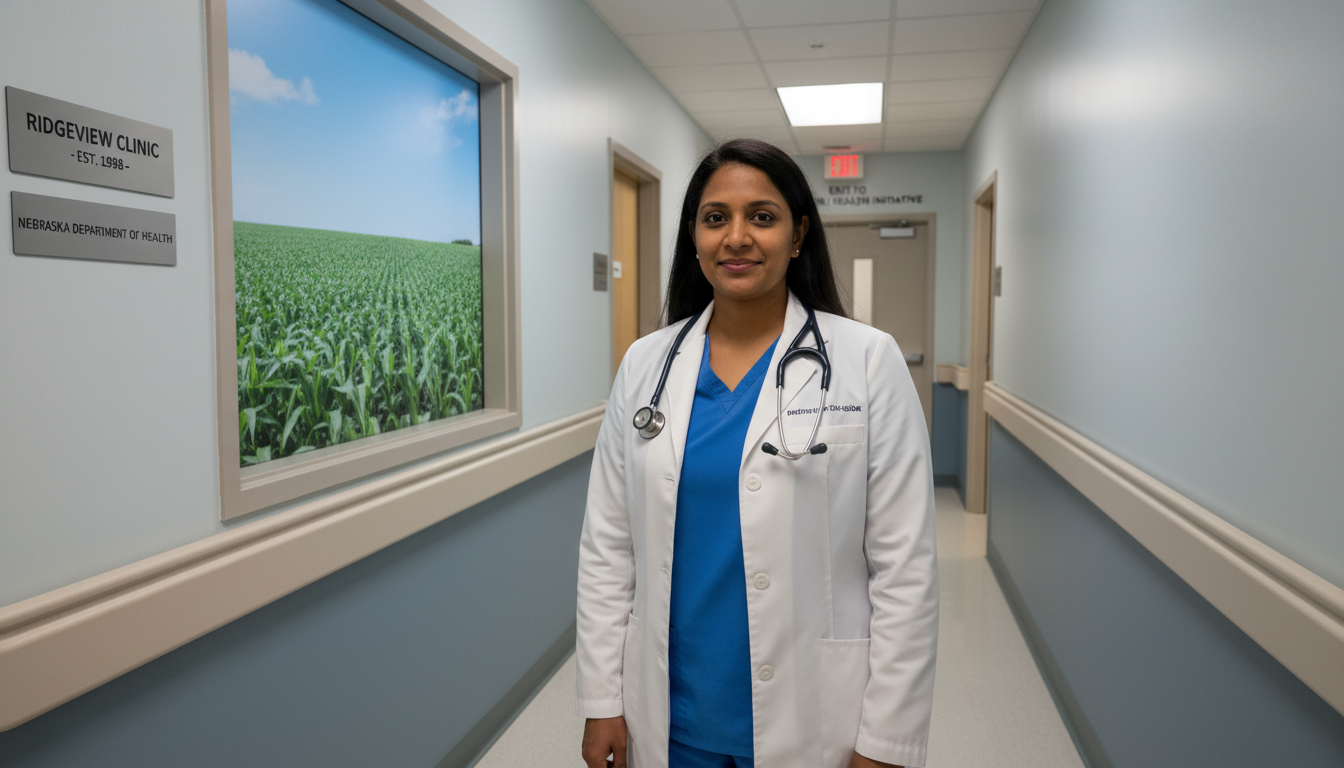
Understanding H-1B Sponsorship for IMGs in Denver
International Medical Graduates (IMGs) looking to train in the United States often hear that “H-1B is difficult” or “only a few programs sponsor.” In reality, Denver and the broader Colorado region offer a small but meaningful set of options for H-1B residency programs—especially for well-prepared IMGs who understand the process, timelines, and local landscape.
This IMG residency guide focuses specifically on H-1B Sponsorship Programs for International Medical Graduates in Denver, how they differ from J-1 sponsorship, and what you can realistically do to maximize your chances of securing a Colorado residency position with H-1B sponsorship.
We will cover:
- Core H-1B basics for IMGs
- The Denver and Colorado GME ecosystem
- Which specialties and program types are more likely to sponsor
- How to assess whether a program might sponsor H-1B (even if it doesn’t say so clearly)
- Strategic steps to strengthen your application
- Common pitfalls and FAQs
1. H-1B Basics for IMGs: What You Need to Know
Before examining Denver residency programs specifically, you need a clear understanding of how the H-1B system works for physicians.
1.1 What is the H-1B Visa in the Medical Training Context?
The H-1B is a temporary, employment-based visa for “specialty occupations” that require at least a bachelor’s degree or equivalent in a specific field. For IMGs entering residency or fellowship, the “degree” is your MD or equivalent medical degree, typically with:
- ECFMG certification
- Appropriate USMLE Step exams completed
- A valid state training license or eligibility for a Colorado training license
For residency GME, H-1B is used in two main contexts:
Cap-Subject H-1B
- Tied to the national annual H-1B lottery (cap of 65,000 regular + 20,000 advanced degree).
- Most hospitals avoid this route for residents because it’s unpredictable and has strict filing windows.
H-1B Cap-Exempt
- Not subject to the lottery.
- Typically used by:
- Nonprofit organizations related/affiliated with a higher education institution
- Higher education institutions themselves (e.g., university hospitals)
- Certain research institutions
- Most academic medical centers (including several in Colorado) are H-1B cap-exempt, which is crucial for residency training.
Many Denver-area residency sponsors fall under the cap-exempt category, making H-1B sponsorship more feasible than you might expect.
1.2 H-1B vs J-1 for Denver IMGs
Most IMGs still train on J-1 visas sponsored by ECFMG. Compared to J-1, H-1B offers both advantages and limitations:
Advantages of H-1B:
- No J-1 two-year home residency requirement
- Easier to transition to long-term employment in the U.S. after residency
- More straightforward path to permanent residency (green card) in many cases
- Some state loan repayment and underserved-area incentives may be easier to navigate
Challenges of H-1B:
- Many residency programs are unfamiliar or cautious about sponsoring
- More paperwork and legal cost for the hospital
- Requires full completion of USMLE Steps 1, 2 CK, and Step 3 before H-1B filing (some institutions insist on Step 3 even if state licensing rules don’t)
- Strict wage and labor condition requirements
- Some hospitals have institutional policies favoring J-1 sponsorship only
For a Colorado residency, especially in Denver, understanding whether your target program is J-1 preferred or H-1B-friendly is critical. Each institution in Denver can have its own internal visa policy.

2. The Denver and Colorado GME Landscape for IMGs
Denver is home to a growing healthcare and medical education hub, anchored by major academic centers and community-based hospitals. For an international medical graduate, where and how these institutions sponsor visas is central to your planning.
2.1 Major Residency Hubs in Denver and Colorado
While specific policies can change year-to-year, the main players in the Colorado residency landscape that matter for IMGs include:
University of Colorado School of Medicine / UCHealth System (Aurora/Denver metro)
- Large academic center with multiple residency programs (Internal Medicine, Pediatrics, Surgery, Anesthesiology, etc.).
- As an academic institution, it typically operates as H-1B cap-exempt.
- Some departments are open to H-1B for strong IMG applicants, others prefer J-1 only.
Denver Health Medical Center
- Safety-net hospital and Level I trauma center.
- Affiliated with University of Colorado.
- Historically J-1 friendly and selective about H-1B.
- Visa policy can vary by department (for example, Internal Medicine vs. Emergency Medicine vs. Surgery).
VA Eastern Colorado Health Care System (Rocky Mountain Regional VA Medical Center)
- VA sites are federal, often employing residents through university sponsorship.
- H-1B sponsorship may go through affiliated university programs.
Community-based hospitals in the Denver metro and wider Colorado area
- Examples include hospitals within large systems (e.g., HealthONE/HCA, SCL Health/Intermountain, etc.).
- Visa sponsorship policies are often system-wide—if the corporate GME decision is “J-1 only,” individual programs cannot override this.
2.2 Specialties with Relative Openness to H-1B in Denver
Patterns can shift, but across U.S. academic centers, the following tend to be more open to H-1B sponsorship (including in Denver):
- Internal Medicine
- Pediatrics
- Pathology
- Neurology
- Psychiatry
- Some Subspecialty Fellowships (after residency)
Specialties that are often more restrictive for IMGs and H-1B include:
- Dermatology
- Plastic Surgery
- Orthopedic Surgery
- Otolaryngology (ENT)
- Neurosurgery
- Radiation Oncology
In Denver’s competitive environment, Internal Medicine and Pediatrics at academic centers are often your best initial targets as an IMG planning for H-1B.
3. How to Identify H-1B-Friendly Residency Programs in Denver
There is no official, complete H-1B sponsor list exclusively for Denver residency programs. However, you can build a practical list of target programs by combining several information sources and strategies.
3.1 Use FREIDA and Program Websites Strategically
Start with FREIDA (AMA residency database) and each program’s own website.
What to look for:
Visa policy stated clearly
- “We sponsor J-1 and H-1B visas” is ideal.
- “We sponsor J-1 only” means you should not rely on H-1B there.
- No mention: requires direct contact.
Affiliation with a university/higher education institution
- If the sponsoring hospital is clearly affiliated with the University of Colorado or another accredited university, it is more likely to be H-1B cap-exempt.
- University-affiliated = higher chance of having an H-1B pathway for the right candidate.
Words like ‘cap-exempt’, ‘employment-based visa’, or ‘H-1B sponsorship considered’
- These are strong signs of openness.
If the Denver program website is unclear but part of a large academic system, you can send a short, professional email to the program coordinator.
Sample email you might send:
Subject: Inquiry Regarding H-1B Sponsorship for IMGs
Dear [Program Coordinator Name],
My name is [Your Name], an international medical graduate planning to apply to your [Specialty] residency program in the upcoming ERAS cycle. I am ECFMG certified and plan to complete USMLE Step 3 before the start of residency.
I am writing to ask if your program currently sponsors H-1B visas for eligible international medical graduates, or if you only sponsor J-1 visas.
I greatly appreciate any guidance you can offer so that I can plan my application strategy appropriately.
Sincerely,
[Your Name, Medical School, Graduation Year]
Keep it brief and professional; program staff are busy, and a concise question increases your chances of a timely response.
3.2 Look for Patterns Within Systems
Many Denver-area hospitals are part of larger systems that have consistent visa policies across all programs:
- If a HealthONE/HCA Internal Medicine program in one state sponsors H-1B, there is a reasonable chance the Colorado branch may be open to discussing it (but you must confirm).
- Conversely, if an entire system declares “J-1 only”, this likely applies to Denver as well.
Document your findings in a simple spreadsheet:
| Program Name | City/State | Visa Policy Stated | H-1B Mention | Notes/Email Response |
|---|
Over time, this becomes your personal IMG residency guide to Denver and other cities.
3.3 Networking with Current Residents
Current and recent residents at Denver programs are often your best source of real, up-to-date information:
- Ask if they know IMGs currently on H-1B at their institution.
- Ask whether the institution is H-1B cap-exempt and if multiple residents have been sponsored in recent years.
- Ask if there are specific departments or program directors more open to H-1B.
You can connect with Denver residents through:
- LinkedIn (search “[Program name] resident” or “University of Colorado Internal Medicine resident”)
- Specialty-specific IMG networks and Telegram/WhatsApp groups
- Alumni from your medical school who matched in Colorado
Always be respectful of their time; concise, direct questions (1–2 messages) work best.

4. Requirements and Timelines for H-1B Residency Sponsorship
Even if you identify a Denver program that is H-1B-friendly, you must be ready with the correct credentials and at the right time.
4.1 Academic and Exam Requirements
Most H-1B residency programs, including in Denver, require:
ECFMG Certification
- Completed by the time of starting residency (preferably earlier).
- Requires USMLE Step 1, Step 2 CK, and English language proficiency (if applicable).
USMLE Step 3 (Very Important for H-1B)
- Many institutions require Step 3 passed before H-1B petition filing.
- Practically, you should aim to pass Step 3 no later than January–February before your July 1 start date.
- This allows enough time for H-1B petition preparation and USCIS processing.
Strong Academic Profile
- Competitive USMLE scores (especially in competitive specialties).
- Substantial U.S. clinical experience (USCE) in the specialty you are applying for.
- Strong letters of recommendation from U.S. physicians.
Because H-1B requires more institutional investment, many Denver programs will only sponsor for exceptional candidates, even if they are technically open to H-1B.
4.2 Employment and Licensing Requirements in Colorado
For an H-1B residency position in Colorado, the institution must demonstrate:
- Legitimate job offer as a PGY-1/PGY-2/PGY-3 resident or fellow.
- Prevailing wage compliance: They must pay at or above the Department of Labor prevailing wage for the position.
- A valid Colorado training license or eligibility:
- Requirements are set by the Colorado Medical Board.
- This typically includes verification of medical education, exams, and ECFMG certification.
As an IMG, you should review Colorado licensing rules early in your application planning to ensure you meet them by the time the program files your H-1B.
4.3 H-1B Timeline for Residency in Denver
For a July 1 residency start date, a typical timeline looks like this:
June–September (Year before Match):
- Prepare for and submit ERAS applications.
- Note programs that are H-1B-friendly or cap-exempt.
October–January:
- Attend interviews.
- Ask carefully framed visa questions during or after interviews (see Section 5).
- Plan USMLE Step 3 scheduling if not yet taken.
January–February:
- Aim to have USMLE Step 3 passed before mid-February.
- Programs start internal discussions on which visa to sponsor for each matched candidate.
March (Match Day):
- If you match into a Denver program willing to sponsor H-1B and you have Step 3 done, they can start preparing your petition.
- You complete documents for the institution’s GME office and legal counsel.
April–May:
- Institution files H-1B petition (often premium processing for speed, if allowed and funded).
- You may be asked for additional documents or signatures.
May–June:
- Once approved, you attend visa stamping (if outside U.S.) or change of status (if already in the U.S. in another status).
- Prepare to relocate and start orientation in late June/early July.
If Step 3 is delayed or if there are paperwork complications, some programs may default you to J-1 even if they are H-1B-capable, unless they have made a prior commitment.
5. Practical Strategies to Maximize Your H-1B Chances in Denver
Even in H-1B-friendly, cap-exempt institutions, you must present yourself as a low-risk, high-value candidate. The following strategies are especially important for Denver programs.
5.1 Build a Targeted Application List
Given limited time and resources, focus on:
Denver and Colorado academic centers that are:
- University-based
- Historically open to IMGs
- Clear about considering H-1B
Community-based programs open to IMGs
- Even if they primarily sponsor J-1, a few may consider H-1B for exceptional candidates.
Backup programs nationwide
- While Denver might be your goal, incorporate other H-1B sponsor institutions across the U.S. to increase your overall match chances.
Organize your list into tiers:
- Tier 1 – Known H-1B-friendly (cap-exempt) programs
- Tier 2 – Programs that sponsor J-1 and “may consider H-1B”
- Tier 3 – J-1 only programs (for backup if you’re open to J-1)
5.2 Communicate Your Visa Plan Clearly (But Tactfully)
During interviews with Denver residency programs:
- Do not lead with “I need H-1B” as your first or main topic.
- Focus instead on:
- Your fit for the program
- Commitment to practicing in Colorado or underserved areas
- Your clinical strengths and adaptability
When it’s appropriate (often near the end of the interview or during Q&A), you can say:
“As an international medical graduate, I’m currently ECFMG certified and plan to complete USMLE Step 3 before residency. I am open to J-1, but I would like to explore H-1B sponsorship if possible, especially because I am hoping to continue my career in the U.S. after training.”
This signals:
- You understand the process.
- You are not rigidly demanding H-1B only.
- You are clinically focused and future-oriented.
If a program is clear that they are J-1 only, accept the information graciously—arguing will not help and can harm your candidacy.
5.3 Demonstrate Long-Term Commitment to Colorado
Programs in Denver often value residents who plan to:
- Remain in Colorado or the Mountain West region
- Serve in underserved or rural areas after graduation
- Build a long-term relationship with the healthcare community
You can highlight:
- Personal or family ties to Colorado or nearby states
- Experiences in similar environments (e.g., rural rotations, safety-net hospitals)
- Interest in staying at the same institution for fellowship or faculty roles
This can make the extra effort of H-1B sponsorship feel worthwhile to the program leadership.
5.4 Use the H-1B Cap-Exempt Advantage Wisely
Academic Denver programs that qualify as H-1B cap-exempt offer an important advantage:
- You can later move from a cap-exempt institution to a cap-subject employer (e.g., private practice) via a new H-1B filed during the regular H-1B lottery, or
- You can transition to another cap-exempt employer (e.g., another university hospital, nonprofit clinic) without lottery constraints.
This flexibility is attractive to many IMGs. When appropriate, you can mention that you understand cap-exempt vs. cap-subject distinctions and are planning a long-term trajectory that aligns with academic or nonprofit practice.
6. Common Challenges and How to Overcome Them
Even well-prepared IMGs applying to Denver residency programs may face obstacles. Being proactive can make the difference.
6.1 Step 3 Timing Problems
Challenge:
You complete Step 3 too late (e.g., March or April), and the program hesitates to wait for H-1B processing.
Solutions:
- Schedule Step 3 as early as realistically possible (ideally by December or January).
- Communicate your timeline clearly to programs that express H-1B openness.
- If Step 3 results are delayed, be flexible: consider starting on J-1, then later exploring an H-1B for fellowship or employment.
6.2 Mixed or Confusing Visa Policies
Challenge:
A Denver program’s website conflicts with what residents say, or visa policies change from year to year.
Solutions:
- Always confirm through official channels (program coordinator or GME office).
- Ask for clarification in writing if possible (an email reply is ideal).
- Prepare backup options in other states in case policy shifts.
6.3 Limited H-1B Slots per Year
Some institutions informally limit themselves to a small number of H-1B residents per year due to cost or administrative constraints.
What this means for you:
- Your application must stand out academically and clinically.
- Early Step 3, strong letters, and a clear match with the program’s mission help.
- If you sense they only have 1–2 H-1B spots, rank order carefully and balance your list.
FAQs: H-1B Sponsorship Programs for IMGs in Denver
1. Are there many H-1B residency programs in Denver specifically for IMGs?
Not “many,” but there are meaningful opportunities. The main H-1B cap-exempt sponsors are academic centers such as the University of Colorado–affiliated programs and some large teaching hospitals. The exact number of Denver residency programs sponsoring H-1B changes over time, and policies vary by specialty, so you must confirm each year via program websites, FREIDA, and direct communication.
2. Do I absolutely need USMLE Step 3 to get H-1B sponsorship in Denver?
In practice, yes. Most Denver-area H-1B residency sponsors require Step 3 passed before they file the H-1B petition. Some institutions may technically be able to apply without Step 3 at the state license level, but legal and institutional policies almost always insist on Step 3 for H-1B residents. Aim to pass Step 3 by January or early February before your July 1 start.
3. Are Denver H-1B residency programs H-1B cap exempt?
Most academic Denver programs affiliated with universities or nonprofit teaching hospitals are H-1B cap-exempt, meaning they are not limited by the annual H-1B lottery. This is an advantage for IMGs, as it provides more predictability. However, if you later want to work in a private practice or non–cap-exempt employer, that new employer may need to file a cap-subject H-1B petition (often through the regular lottery).
4. How can I find an updated H-1B sponsor list for Denver residency programs?
There is no official, Denver-only H-1B sponsor list. To build your own:
- Use FREIDA and each program’s website to see if they explicitly mention H-1B.
- Email program coordinators with a short, professional inquiry.
- Network with current or recent residents in Denver to confirm real-world practice.
- Track responses in a spreadsheet to create a personal IMG residency guide for Denver and Colorado.
Always remember that visa policies can change yearly, so re-verify each application season, even for programs known historically to sponsor H-1B.
By understanding the H-1B framework, the specific dynamics of Denver residency programs, and how to position yourself as a strong, low-risk IMG candidate, you significantly improve your chances of securing a Colorado residency with H-1B sponsorship—and creating a stable foundation for your long-term medical career in the United States.