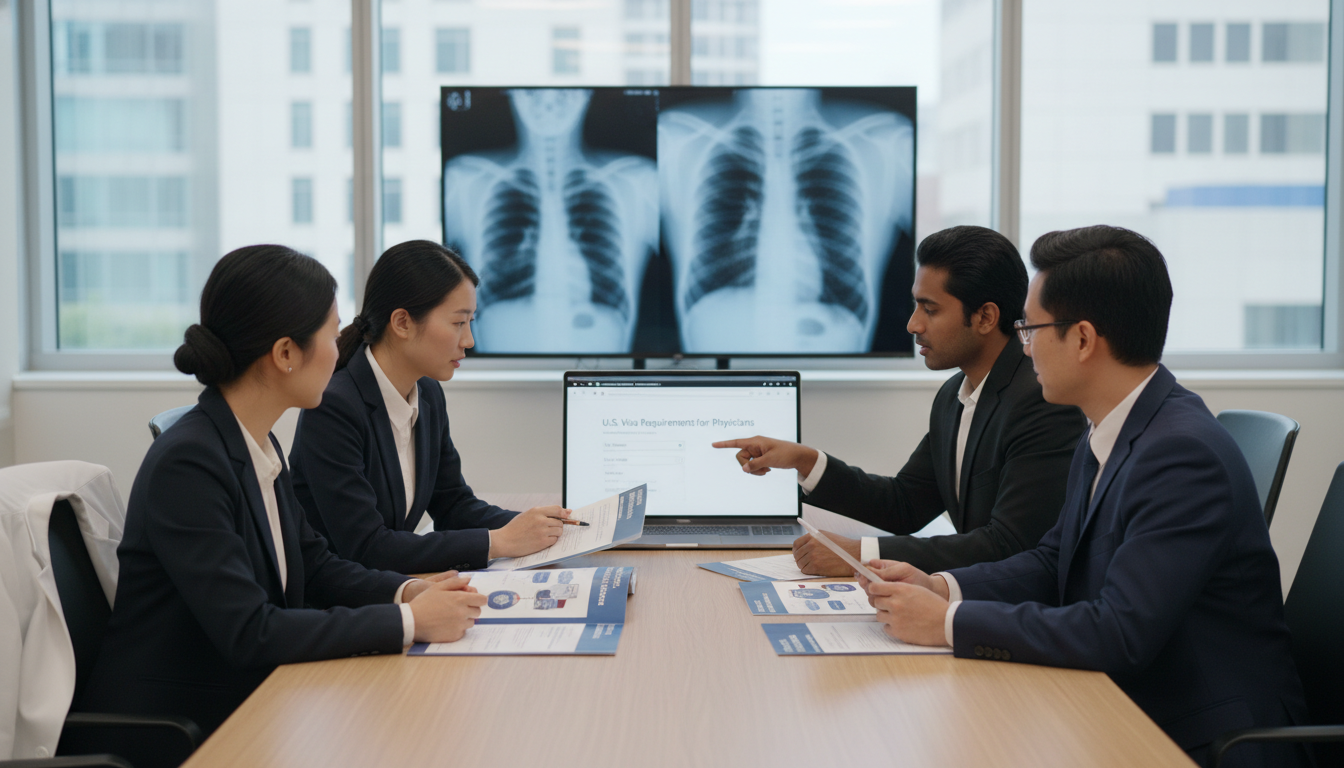
Understanding H‑1B Sponsorship in Diagnostic Radiology for IMGs
For an international medical graduate (IMG) aiming for diagnostic radiology, understanding H‑1B sponsorship is critical. Radiology is competitive, and visa strategy can influence where you match, how quickly you get licensed, and your long‑term career options in the U.S. healthcare system.
This IMG residency guide focuses specifically on H‑1B residency programs in diagnostic radiology—how they work, what they require, and how to maximize your chances of matching at programs willing to sponsor an H‑1B.
We will cover:
- How H‑1B works for residency and fellowship
- The real differences between J‑1 and H‑1B for radiology
- Typical characteristics of H‑1B‑friendly diagnostic radiology programs
- USMLE, ECFMG, and licensing requirements specific to H‑1B
- Building a program‑specific H‑1B sponsor list and evaluating programs
- Application, interview, and ranking strategies tailored to IMGs
H‑1B vs J‑1 for Diagnostic Radiology: What IMGs Need to Know
The two main visa paths
Most IMGs in U.S. residency are sponsored on:
- J‑1 (ECFMG‑sponsored physician visa)
- H‑1B (employment‑based specialty occupation visa)
For diagnostic radiology, both are used, but H‑1B is more selective and program‑dependent.
J‑1 basics for radiology:
- Sponsored by ECFMG, not the individual institution
- No USMLE Step 3 required to start residency
- Requires a 2‑year home country physical presence after training (unless you obtain a waiver)
- Popular and easier for institutions administratively
- Widely accepted in diagnostic radiology residency programs
H‑1B basics for residency:
- Sponsored directly by the residency program / institution
- Requires:
- USMLE Step 1, 2 CK, and 3 passed before H‑1B filing
- Unrestricted ECFMG certification
- Valid state eligibility for a training license
- Dual‑intent visa (more favorable for future permanent residency/green card)
- No 2‑year home‑country return requirement
- Often used strategically by IMGs who plan long‑term U.S. practice without waiver constraints
Why H‑1B is particularly attractive in diagnostic radiology
Radiology is a high‑demand specialty with strong long‑term earning and employment prospects. For many IMGs, an H‑1B pathway offers:
Cleaner route to long‑term U.S. practice
Without a J‑1 home‑country requirement or waiver limitations, you can:- Take jobs in large academic centers or urban groups
- Pursue highly subspecialized fellowships
- Transition more smoothly to employer‑sponsored green cards
Fewer geographic constraints after training
Many J‑1 waivers tie you to underserved areas or specific locations. H‑1B avoids that additional layer of restriction, which is important in a field where subspecialty and practice setting matter.Stronger bargaining position for post‑training employment
Radiology groups are often more familiar with H‑1B physicians and sponsorship processes, making transitions from residency to fellowship and then to attending roles smoother if you begin on H‑1B.
Limitations and risks of H‑1B for radiology residents
However, H‑1B is not automatically “better” for every IMG radiologist. You must consider:
Limited sponsoring programs
Many radiology programs accept J‑1 only. The H‑1B sponsor list for diagnostic radiology is shorter than for internal medicine or pediatrics.Step 3 deadline pressure
You must pass USMLE Step 3 early enough for the program to file H‑1B petitions before residency begins. This is a significant additional burden during the match cycle.Institutional and legal costs
Some institutions refuse H‑1B sponsorship because of:- Legal fees and HR workload
- Prevailing wage and labor condition issues
- Policy that all residents are on J‑1
Time‑limited visa
H‑1B is typically capped at 6 years (with some extension exceptions). Long training paths (e.g., DR + lengthy fellowships) require careful planning, especially if you don’t secure green card sponsorship early.
Practical takeaway:
For many IMGs in diagnostic radiology, aiming for H‑1B is worthwhile—but only if you are realistic about the limited number of H‑1B residency programs and you start planning early (Step 3, documentation, program targeting).
Key Requirements for H‑1B in Diagnostic Radiology
1. USMLE and ECFMG requirements
To be eligible for an H‑1B residency position in diagnostic radiology, you should plan to have:
USMLE Step 1 – passed
USMLE Step 2 CK – passed
USMLE Step 3 – passed before H‑1B petition filing
- Many programs want Step 3 result before rank list or shortly after Match
- Some institutions have strict internal deadlines (e.g., by January/February of the Match year)
ECFMG certification – completed (including OET or its current equivalent as required by ECFMG at your time of application)
Actionable advice:
If you are an IMG targeting H‑1B diagnostic radiology:
- Try to complete Step 3 by September–December of the application cycle at the latest.
- Mention “Step 3 planned/completed” prominently in your ERAS CV and personal statement.
- In your emails to programs with H‑1B options, clearly state your Step 3 status.
2. State licensing and training license eligibility
H‑1B petitions often require proof that you qualify for a state training license (or its equivalent), which may include:
- Verified medical degree and transcripts
- Postgraduate training certificates (if any)
- Background checks and fingerprinting
- English language proficiency (already covered by ECFMG for most states)
Each program is tied to a specific state licensing board. Some states require:
- Minimum months/years of postgraduate training (if you are already trained abroad)
- Specific documentation from your medical school
This can be a bottleneck if you start the process late.
Actionable advice:
- As soon as you receive interviews at H‑1B‑friendly radiology programs, check that state’s licensing board requirements and begin collecting documents.
- Ask the program coordinator directly:
“Are there any specific state licensing steps I should start early as an IMG on an H‑1B track?”
3. Cap‑exempt vs cap‑subject H‑1B in residency
Most university‑based radiology programs and some large teaching hospitals qualify as H‑1B cap exempt, meaning:
- They can file H‑1B petitions at any time of year
- They are not subject to the annual federal H‑1B numerical lottery
This is a huge advantage for IMGs:
- Your acceptance to a cap‑exempt program typically means you have a secured H‑1B for the duration of residency (assuming proper renewal and compliance).
- You don’t compete in the general H‑1B lottery as many non‑medical professionals do.
Important nuance:
- Your residency may be under H‑1B cap exempt status, but if you later move to a private practice group or a non‑exempt employer, that move may require a cap‑subject H‑1B (and potentially the lottery) unless you change to another cap‑exempt employer or secure permanent residency.
Understanding this distinction is vital to long‑term planning in radiology.
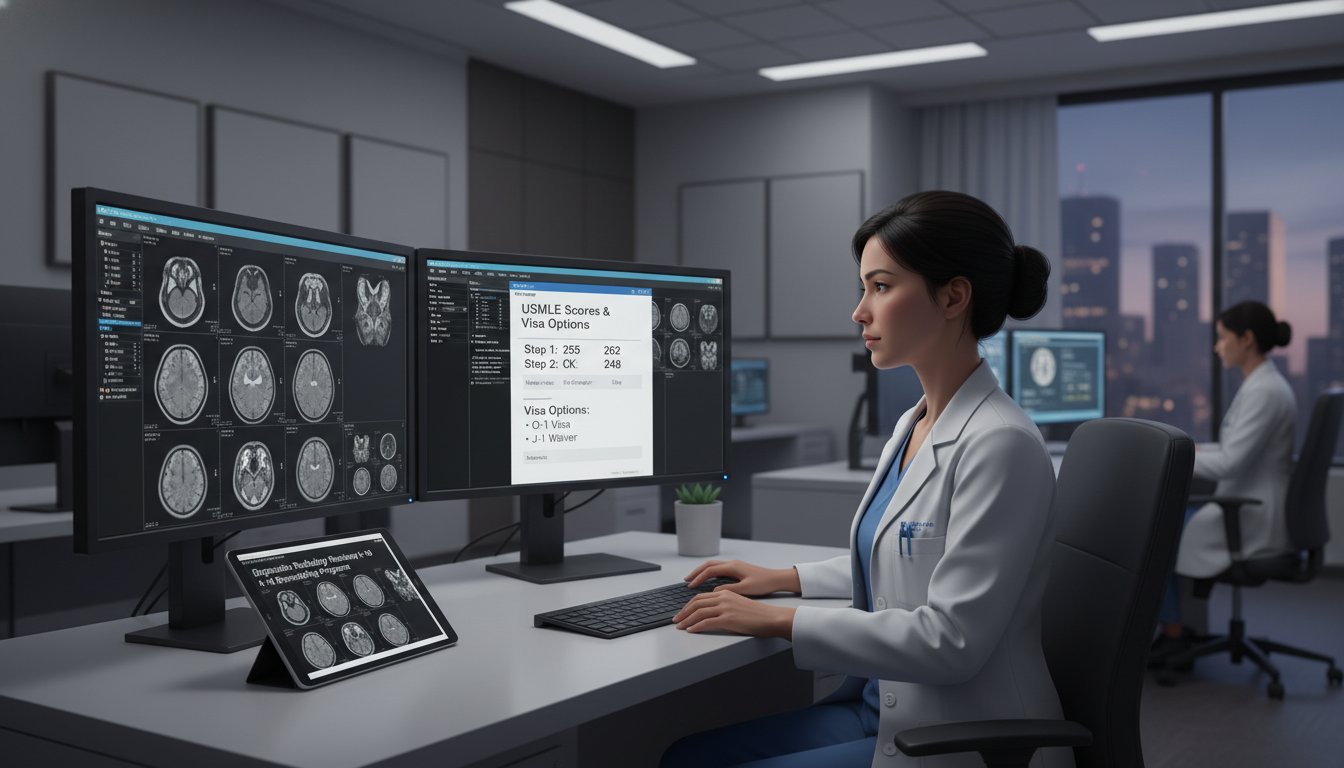
Characteristics of H‑1B‑Friendly Diagnostic Radiology Programs
Where H‑1B sponsorship is most commonly found
While there is no official, definitive H‑1B sponsor list for radiology residency, patterns emerge:
Large academic centers and university hospitals
These institutions often:- Have established HR and legal departments
- Are familiar with cap‑exempt H‑1B processing
- Regularly sponsor foreign‑trained researchers and faculty
Institutions with strong IMG representation
Programs that have historically matched a significant number of IMGs (particularly in internal medicine, neurology, pathology, and radiology) tend to be more open and experienced with H‑1B.Programs in states with IMG‑friendly licensing boards
States with clearer pathways for IMGs and established GME ecosystems are more likely to host H‑1B residency programs.Hospitals tied to medical schools with global partnerships
Universities that have collaborative ties with foreign medical schools may be more supportive of IMGs and their visa needs.
Common program policies
In diagnostic radiology, program policies on visas typically fall into one of these categories:
J‑1 only
- Will not sponsor H‑1B under any circumstances
- Often clearly stated on program website and in FREIDA
- Majority of DR programs may fall here
J‑1 preferred, limited H‑1B
- Officially prefer J‑1 due to ease and cost
- May consider H‑1B for highly qualified candidates who:
- Already have Step 3 completed
- Have strong academic CVs, research, or U.S. experience
- Are an excellent fit for the program
J‑1 and H‑1B equally accepted
- Programs explicitly state they consider both visa types
- Often the best targets for IMGs who are aiming for H‑1B
- Typically academic centers with extensive IMG experience
H‑1B only (rare)
- Very unusual in radiology residency
- Occasionally a program might discourage J‑1 due to institutional policy, though that’s less typical in DR than in some other specialties.
Actionable advice:
When creating your personal H‑1B sponsor list for radiology residency:
- Use FREIDA, program websites, and direct email to identify:
- “J‑1 only”
- “J‑1 and H‑1B”
- Programs that are vague or silent (these require direct clarification)
- Maintain a spreadsheet with:
- Visa policies
- Step 3 expectations
- Historical IMG match patterns
Update this after each email or call with program coordinators.
Example: How an IMG might prioritize programs
Suppose you are an IMG with:
- Step 1: Pass
- Step 2 CK: Strong score
- Step 3: Already passed
- 6 months of U.S. radiology observerships
- Strong research in neuroradiology
You might:
Category A (Highest priority):
Programs explicitly stating “We sponsor both J‑1 and H‑1B visas” and have previously matched IMGs.Category B:
Programs stating “We typically sponsor J‑1 but may consider H‑1B for exceptional candidates” (you would emphasize Step 3 completion and research in your communications).Category C:
Programs silent or vague on visas (you email them early in the season).Category D (Lowest priority):
Programs explicitly stating “J‑1 only.”
This strategic targeting can save you application fees and help you focus energy on programs that truly align with your H‑1B residency goals.
Building Your Radiology H‑1B Sponsor List and Application Strategy
Step 1: Research programs systematically
Use multiple data sources:
FREIDA (AMA)
- Filter for diagnostic radiology programs
- Check the “Visa Sponsorship” section for each program
- Note whether they mention H‑1B or just J‑1
Program websites
- Go to “Prospective Residents,” “Eligibility,” or “FAQ” sections
- Look for wording like:
- “We sponsor J‑1 and H‑1B visas”
- “We accept J‑1 only”
- “We accept ECFMG‑certified IMGs and will consider H‑1B on a case‑by‑case basis”
Email communication
If a program’s visa policy is unclear, send a concise email to the program coordinator:- Introduce yourself in 1–2 lines
- State that you are an IMG applying in diagnostic radiology
- Briefly note that you have or will soon have Step 3
- Ask: “Does your program sponsor H‑1B visas for incoming diagnostic radiology residents?”
Keep a record of each response for your personal H‑1B sponsor list.
Word of mouth and alumni
- Ask senior IMGs in your home institution or networks
- Check with residents you meet at conferences or observerships
- Use professional networking sites to see where H‑1B radiology residents currently train
Step 2: Tailor your ERAS profile to highlight H‑1B readiness
To signal to H‑1B‑friendly programs that you are an ideal candidate:
- USMLE Section:
- Clearly list Step 3 with date and score as soon as available
- Personal statement:
- Briefly clarify your interest in long‑term U.S. radiology practice
- Mention that you have completed Step 3 (no need to discuss visa details in depth)
- CV:
- Emphasize U.S. clinical experiences in radiology
- Highlight any exposure to U.S. health systems, research, or quality improvement projects
Step 3: Strategic application volume
Diagnostic radiology is competitive, and the number of H‑1B residency programs is limited. IMGs should:
- Apply to a broad range of radiology programs, even if some are J‑1 only (if you are open to J‑1)
- If you must secure H‑1B only (e.g., due to personal or legal reasons), be prepared to:
- Apply to a large number of H‑1B‑friendly programs
- Consider backup specialties with more H‑1B options (e.g., internal medicine) if you cannot risk being unmatched
Balanced strategy example:
- 60–80 radiology programs total
- 20–30 with explicit H‑1B support
- 20–30 that are unclear or mixed
- Some J‑1‑only programs if you are open to both visas
- Plus an internal medicine backup list with strong H‑1B track records (if necessary for your personal risk tolerance).

Maximizing Interview and Match Success at H‑1B Radiology Programs
How to discuss H‑1B during interviews
Many IMGs are unsure whether to bring up visas during interviews. For diagnostic radiology, the key is timing and tone:
Before interviews:
- Clarify basic policies via email with the coordinator.
- Do not make the interview purely about visas.
During interviews:
- Focus on clinical interests, research, and your fit with the program.
- If the program already states they sponsor H‑1B, you can mention:
- “I’ve completed Step 3 and am prepared for H‑1B sponsorship from the start of residency.”
- If the policy is unclear, you might ask later in the day or in a more informal Q&A session:
- “For IMGs, what visa sponsorship options are typically available at your institution?”
After ranking lists:
- If you haven’t yet confirmed H‑1B possibility at a program you love, send a polite follow‑up to the coordinator.
Show that you are administratively “low risk”
Programs sponsoring H‑1B look for residents who will not create avoidable administrative problems. You can reassure them by:
- Having complete and organized documentation:
- Passport
- Medical school diploma and transcripts
- ECFMG certificate
- USMLE score reports
- Demonstrating you understand the basics (they don’t have to educate you from scratch)
- Passing Step 3 early and clearly documenting it
Ranking strategy for IMGs targeting H‑1B
When making your rank list, consider:
Visa certainty vs. program prestige
- A moderately ranked program with a clear, consistent H‑1B policy may be better for you than a prestigious program that is ambiguous or reluctant about H‑1B.
Long‑term goals
- If you plan to stay in the U.S. long‑term, an H‑1B‑supportive environment during residency can make future transitions to fellowship and practice smoother.
Openness to J‑1
- If you are open to J‑1, you can rank excellent programs regardless of visa type, but keep in mind the home‑country requirement and need for a waiver later.
Example:
You receive interviews at:
- Program X: Mid‑tier university, explicitly H‑1B supportive, historically several IMG radiology residents each year.
- Program Y: Top‑tier academic program, states “J‑1 only.”
- Program Z: Well‑regarded, states “J‑1 preferred, H‑1B considered for exceptional candidates with Step 3.”
If H‑1B is essential to your long‑term plan, Program X might deserve a higher rank than Y, and Program Z would depend on any signals you receive during the interview (enthusiasm about your application, verbal indication they’d consider H‑1B for you).
Long‑Term Planning: Fellowship, Cap‑Exempt Status, and Employment
H‑1B during fellowship in radiology
Most diagnostic radiology residents pursue fellowship (body, neuro, MSK, IR, etc.). For IMGs on H‑1B:
If fellowship is at a cap‑exempt academic center:
- You can often transfer H‑1B cap‑exempt status relatively smoothly.
- Coordination between GME offices is crucial; start the visa conversation early in PGY‑4.
If fellowship is at a private or non‑exempt institution:
- You may need a cap‑subject H‑1B, which often means participating in the general H‑1B lottery.
- Some fellows secure a different status (e.g., O‑1 for extraordinary ability) depending on their achievements.
Transition from residency to attending radiologist
For a diagnostic radiologist on H‑1B:
- Academic positions at universities often remain cap exempt (easier continuation).
- Private practice jobs are often cap subject unless:
- They are affiliated with a teaching hospital
- They qualify under specialized exemptions
Long‑term, many radiologists transition from H‑1B to permanent residency (green card) via:
- Employer‑sponsored PERM and I‑140
- Sometimes NIW (National Interest Waiver) or EB‑1 categories, depending on research and national impact
Planning ahead during residency and fellowship—building a strong academic and clinical CV—can make these pathways more realistic.
FAQs: H‑1B Sponsorship for IMGs in Diagnostic Radiology
1. Do I absolutely need H‑1B to have a successful radiology career in the U.S.?
No. Many successful radiologists trained on J‑1 visas and later obtained J‑1 waivers followed by permanent residency. However, H‑1B can simplify long‑term planning by avoiding the 2‑year home‑country requirement and some waiver‑related geographic restrictions. It is one favorable path, not the only one.
2. When should I take USMLE Step 3 if I want to be competitive for H‑1B radiology programs?
Ideally, complete Step 3 before or early in the ERAS cycle in which you apply—commonly by September to December of that year. Some H‑1B‑friendly programs may consider you with Step 3 scheduled, but they typically must have an official pass result before filing the H‑1B petition, often several months before residency starts.
3. How can I tell if a radiology residency is truly H‑1B‑friendly?
Look for:
- Clear website wording: “We sponsor J‑1 and H‑1B visas.”
- Confirmation from the program coordinator via email.
- Evidence of current or recent H‑1B residents (ask residents during interview day).
- An institutional track record of sponsoring H‑1B across multiple departments, not just radiology.
4. Are all H‑1B residency programs cap exempt?
Most university‑based and major teaching hospitals are H‑1B cap exempt, which is advantageous because they can sponsor you without going through the lottery. However, not every training site or affiliated hospital is necessarily cap exempt. Always confirm with the GME office how your H‑1B will be classified and what that implies for future transitions to fellowship or private practice.
By understanding the landscape of H‑1B residency programs in diagnostic radiology, planning USMLE and documentation timelines carefully, and targeting genuinely H‑1B‑friendly institutions, IMGs can build a realistic and successful path to matching in this highly sought‑after specialty and establishing a long‑term radiology career in the United States.