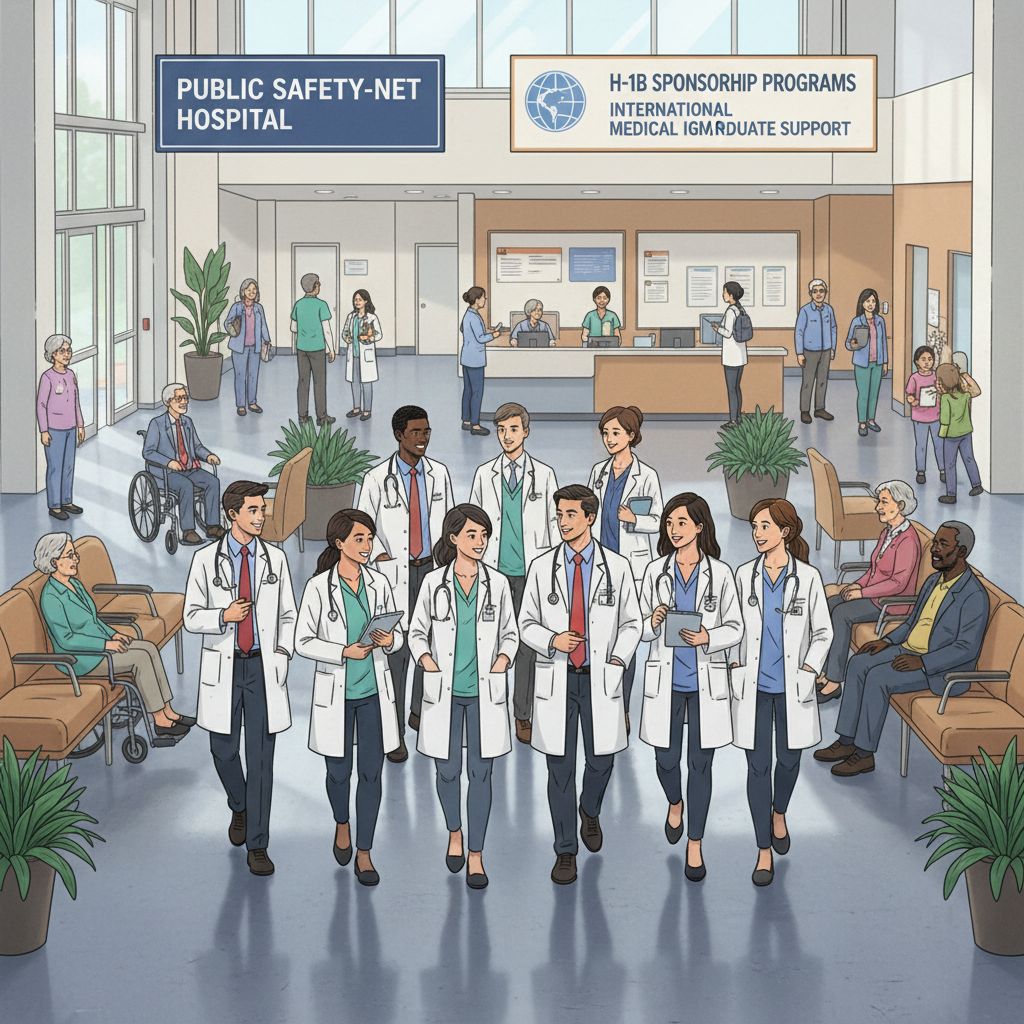
Understanding H‑1B Sponsorship in Mississippi Delta Residency Programs
When international medical graduates (IMGs) look for U.S. training, the conversation almost always starts with visas. For many, especially those who prefer not to commit to a J‑1 home return requirement, the H‑1B becomes the most attractive option. The Mississippi Delta residency landscape is relatively small but strategically important for IMGs who want a deep south residency with strong clinical exposure and potential H‑1B sponsorship.
This article focuses on H‑1B sponsorship programs for residency in the Mississippi Delta region, what “H‑1B‑friendly” really means, how the H‑1B cap exempt rules apply to hospitals and universities here, and how to strategically target these programs as an IMG applicant.
We’ll use “Mississippi Delta residency” broadly to include ACGME programs in the Mississippi Delta counties (stretching roughly from northwest Mississippi down along the Mississippi River) and nearby hubs that recruit heavily from and serve the Delta population (e.g., Jackson, Memphis-area programs that cover the northern Delta).
1. Visa Basics for IMGs: Why H‑1B Matters in the Deep South
Before you focus on the H‑1B sponsor list or individual programs, it helps to clarify your visa options and why H‑1B is particularly valued.
1.1 Common visa pathways for residency
For IMGs entering U.S. residency, the two main non‑immigrant visa options are:
J‑1 (ECFMG‑sponsored)
- Most common visa for IMGs in residency
- Usually requires a 2‑year home country physical presence after training, unless you secure a waiver (e.g., Conrad 30, VA, ARC)
- Not dual intent (immigrant intent is more constrained)
- Simpler for most residency programs administratively
H‑1B (employer‑sponsored)
- Employment visa tied to a specific institution
- Requires you to have passed USMLE Step 3 before filing
- Allows dual intent, which can facilitate later permanent residency
- No automatic home return requirement after training
- More complex and expensive for the institution: legal fees, prevailing wage rules, and compliance
1.2 Why some IMGs prioritize H‑1B
Many IMGs seeking Mississippi Delta residency programs prefer H‑1B for several reasons:
- They do not want to be locked into a J‑1 home‑country return or J‑1 waiver job in a different area.
- They intend to pursue fellowships or academic careers where J‑1 waiver pathways are less predictable.
- They are already in the U.S. on another status (e.g., F‑1) and want a more direct route to employment and possibly a green card.
- They plan to work in underserved deep south regions long‑term, but want more control over how and where.
Understanding this context will help you interpret why some Mississippi Delta hospitals go through the extra effort to offer H‑1B visa sponsorship.
2. Key Concepts: H‑1B Cap Exempt Status and Teaching Hospitals
A core concept in your search is whether a program is H‑1B cap exempt, because this determines how difficult it is for a hospital to sponsor you.
2.1 The H‑1B cap and why it matters
- The standard H‑1B category is subject to an annual numerical cap (currently 65,000 regular + 20,000 U.S. master’s degree).
- Most private employers must enter the H‑1B lottery in March/April.
- If you are subject to the cap and not selected, you cannot start your job on H‑1B that year.
Residency programs in hospitals typically cannot tolerate this uncertainty, so they strongly prefer to be cap exempt.
2.2 What is H‑1B cap exempt?
Certain employers are exempt from the H‑1B annual numerical cap if they are:
- Institutions of higher education (universities and some colleges)
- Nonprofit entities affiliated with institutions of higher education (often teaching hospitals)
- Nonprofit research organizations or governmental research organizations
Many academic medical centers and university‑affiliated hospitals in the Mississippi Delta region fall into these categories. When a hospital or program is H‑1B cap exempt:
- They do not enter the lottery.
- They can file an H‑1B petition any time of year.
- Starting dates can align smoothly with the residency year (e.g., July 1).
2.3 How this plays out in Mississippi Delta residency programs
In the Mississippi Delta context:
- Programs affiliated with universities (e.g., University of Mississippi Medical Center in Jackson, and academic satellites that serve Delta communities) are often cap exempt.
- Some community programs partner with academic centers for their ACGME sponsorship, which may also grant them cap‑exempt status.
When you research H‑1B residency programs in the Mississippi Delta, always check:
- Is the ACGME sponsoring institution a university or university‑affiliated teaching hospital?
- Is the hospital a nonprofit with a formal academic affiliation?
- Has the program explicitly stated that it is H‑1B cap exempt?
This cap‑exempt status is a major reason many IMGs specifically seek deep south residency programs associated with universities.

3. Mapping the Mississippi Delta Residency Landscape for H‑1B
The Mississippi Delta is a medically underserved region with high needs in primary care, internal medicine, psychiatry, and more. This context actually increases the incentive for hospitals and institutions to be visa‑friendly, including H‑1B support.
Note: Specific institutional policies can change year to year. Always confirm directly with programs.
3.1 Types of programs you’ll encounter
In and around the Mississippi Delta region, you’ll find:
University‑based programs
- Typically located in larger cities that serve the Delta population.
- More likely to be H‑1B cap exempt.
- Often have multiple specialties: internal medicine, pediatrics, general surgery, psychiatry, etc.
Community‑based programs affiliated with universities
- Located in smaller cities or towns within the Delta or adjacent counties.
- Heavy clinical exposure to rural and underserved communities.
- Affiliation may confer H‑1B cap exemption, depending on the legal structure.
Community hospital programs without strong academic affiliation
- May be newer ACGME programs.
- Sometimes more hesitant to sponsor H‑1Bs, but can be J‑1–friendly.
- H‑1B may be possible on a case‑by‑case basis if hospital leadership is supportive and willing to handle the administrative burden.
3.2 What “H‑1B‑friendly” means (and doesn’t mean)
Many applicants search for an H‑1B sponsor list or “H‑1B residency programs” as if there is a static, definitive catalog. In reality:
H‑1B‑friendly usually means:
- The program has sponsored H‑1B residents recently.
- They explicitly allow H‑1B sponsorship in their policies.
- They understand the immigration process and have an institutional structure for it.
It does not always mean:
- They will sponsor H‑1Bs every year, regardless of budget or GME office decisions.
- They will sponsor across all specialties in that institution.
- They will sponsor candidates with borderline academic profiles.
In the Mississippi Delta residency context, you should interpret “H‑1B‑friendly” as: historically open and structurally able to sponsor, but still subject to annual review, funding, and institutional priorities.
3.3 Where H‑1B is more common in the Delta region
Historically, H‑1B sponsorship in deep south residency programs is more common in:
- Internal Medicine
- Family Medicine
- Pediatrics
- Psychiatry
Surgical fields, OB/GYN, and some subspecialties may be more restrictive:
- Higher procedural risk and malpractice considerations.
- Longer training time, more emphasis on continuity and long‑term retention.
- Some institutions restrict H‑1B in procedure‑heavy fields.
When building your target list for a Mississippi Delta residency, start with primary care and core specialties, then confirm program‑specific H‑1B policies.
4. How to Identify H‑1B Sponsorship Programs in the Mississippi Delta
While there is no official U.S. government H‑1B sponsor list specifically for residencies, there are effective strategies to find and verify H‑1B‑friendly programs in the Delta.
4.1 Step‑by‑step research approach
Use ACGME and FRIEDA as starting points
- Locate programs in Mississippi and bordering regions that care for Delta populations.
- Filter by IMG friendliness (percentage of IMGs, interview data) and by visa statements if available.
Check program websites carefully
Look for explicit statements such as:- “We sponsor J‑1 and H‑1B visas for eligible applicants.”
- “We only sponsor J‑1 visas.”
- “We currently do not sponsor visas.”
Pay attention to:
- USMLE Step 3 requirement for H‑1B sponsorship (almost universal).
- Score thresholds and attempt limits (often higher for H‑1B than for J‑1 candidates).
Email the program coordinator or GME office
Use a concise, professional email. Example:Dear [Coordinator Name],
I am an international medical graduate planning to apply to your [Specialty] Residency Program this season. I am particularly interested in training in the Mississippi Delta region and would like to clarify your current visa policy.
Could you please confirm whether your program sponsors H‑1B visas for residents, and if so, whether there are any additional requirements (e.g., USMLE Step 3 by the time of ranking, specific timelines)?
Thank you very much for your time and assistance.
Sincerely,
[Your Full Name], [Medical School], [Graduation Year]Network with current or recent residents
- Use LinkedIn, alumni networks, and social media groups for IMGs in the deep south.
- Ask specifically:
- “Were there any H‑1B residents in your program in the last 3–5 years?”
- “Did the program mention reasons they sometimes decline H‑1B?”
Review institutional immigration offices or HR pages
In cap‑exempt institutions, the university’s international office often states:- Whether they sponsor H‑1B for house staff.
- General policies for physicians and trainees.
4.2 Interpreting vague or cautious responses
Programs may respond with phrases like:
- “We sponsor H‑1B on a limited basis.”
- “H‑1B sponsorship is reviewed case‑by‑case.”
- “We prefer J‑1 but have sponsored H‑1B in the past.”
In Mississippi Delta residency programs, this often means:
- They are structurally able to sponsor (cap exempt or associated with a cap‑exempt institution).
- They may reserve H‑1B for:
- exceptional candidates (very strong scores, strong research background).
- Candidates who already have Step 3 and are ready to file early.
- Budget, legal fees, and administrative efforts may limit the number of H‑1Bs per year.
If you receive a vague answer, consider:
- Strengthening your application to be clearly above average (Step scores, clinical experience).
- Applying with J‑1 as a back‑up if you are open to it.
- Applying broadly to multiple deep south residency programs, not just one or two.
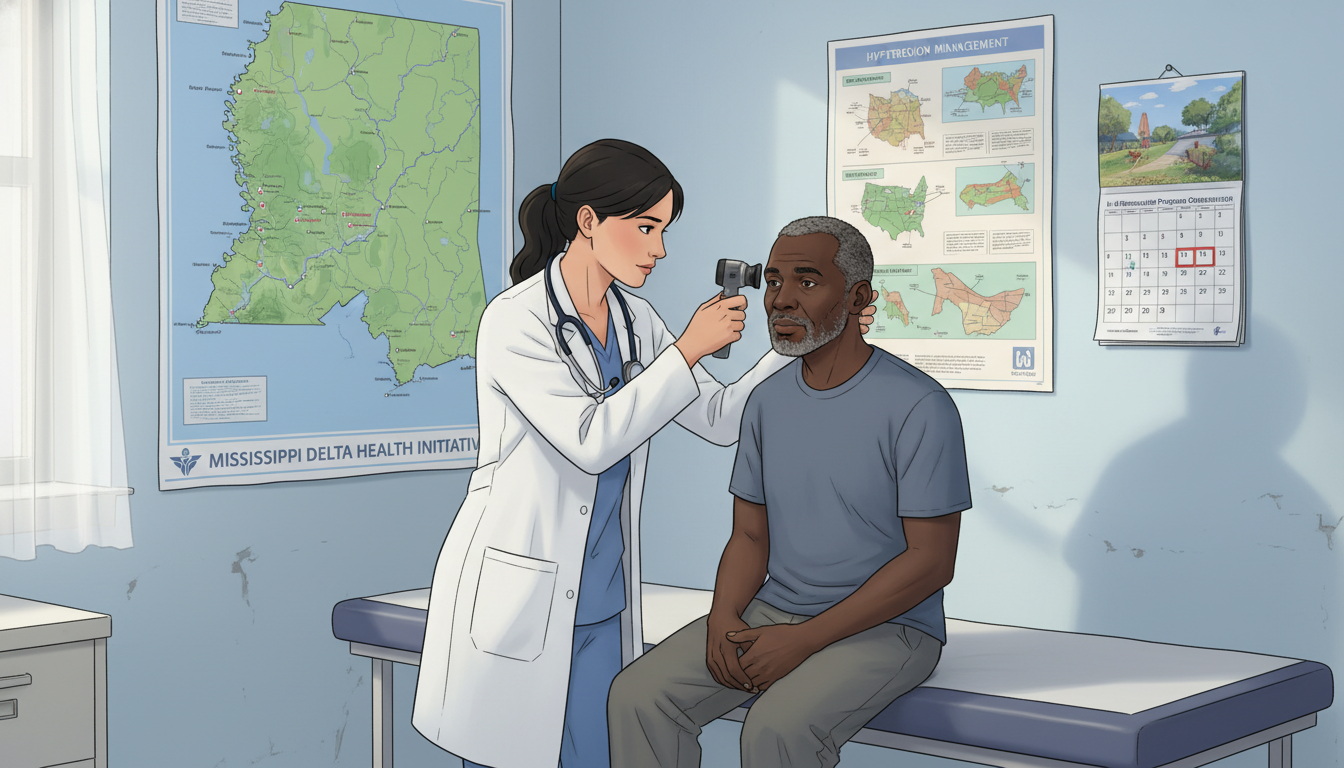
5. Strengthening Your Application for H‑1B Residency in the Mississippi Delta
Because H‑1B sponsorship requires more work on the institution’s side, they often apply stricter filters for H‑1B candidates than for J‑1 candidates. You must show the program that you are worth the additional investment.
5.1 Core academic requirements
Typical expectations (these vary, but are common trends):
USMLE Step 1 and Step 2 CK:
- Competitive scores (often > 230–235) help a lot for H‑1B, especially at university‑affiliated programs.
- No or minimal attempts; multiple attempts may be a disadvantage.
USMLE Step 3:
- Must be passed before H‑1B petition filing.
- For practical purposes, many Mississippi Delta programs require Step 3 before ranking or at least before contract issuance.
Actionable advice:
- Plan to take Step 3 early, ideally by late fall/early winter of the application cycle.
- If you cannot complete Step 3, you should be open to J‑1 or recognize that your H‑1B residency options will be limited.
5.2 U.S. clinical experience and regional fit
Deep south residency programs—especially those serving the Mississippi Delta—frequently emphasize:
- Hands‑on U.S. clinical experience (USCE) in:
- Internal Medicine
- Family Medicine
- Emergency Medicine
- Pediatrics
- Understanding of rural health issues, health disparities, and social determinants of health.
To demonstrate fit:
- Seek rotations or observerships in southern states if possible.
- Display understanding of:
- High prevalence of chronic disease (diabetes, hypertension).
- Socioeconomic challenges, limited access to care.
- Cultural elements of the deep south (faith communities, rural lifestyles).
Mention explicitly in your personal statement:
- Why you are drawn to a Mississippi Delta residency.
- Any experience working with:
- Underserved or rural populations.
- Low‑resource health systems.
5.3 Tailoring your documents for H‑1B‑friendly programs
Personal statement:
- Highlight:
- Clear career goals in U.S. clinical medicine.
- Interest in long‑term service in underserved areas (which aligns with Delta priorities).
- Serious intent to comply with all visa rules and institutional policies.
CV:
- Emphasize:
- USCE and any southern U.S. exposure.
- Research or quality improvement projects related to:
- Rural health
- Health disparities
- Chronic disease management
- Leadership roles that show reliability and professionalism.
Letters of Recommendation:
- Try to obtain at least two letters from U.S. attendings.
- Ideally, one letter should:
- Reference your ability to navigate a multicultural, underserved environment.
- Speak to your reliability, professionalism, and communication skills, which reassure programs considering H‑1B sponsorship.
5.4 Communicating visa preferences strategically
In ERAS and interviews:
- Be honest but flexible:
- If you strongly prefer H‑1B but could accept J‑1, say so clearly.
- If you will only accept H‑1B, be prepared for a smaller pool of interviews.
During interviews at Mississippi Delta residency programs:
- Briefly emphasize:
- You understand H‑1B requires Step 3 and additional institutional efforts.
- You are prepared and already working on the required steps.
- You anticipate long‑term practice in the U.S. (often an advantage from the program’s perspective).
6. Practical Scenarios and Strategic Planning
To tie this together, consider a few practical scenarios IMGs often face when targeting H‑1B residency programs in the Mississippi Delta.
6.1 Scenario 1: Strong applicant, Step 3 complete
Profile:
- Step 1: pass (or 240+ if scored)
- Step 2 CK: 245–255
- Step 3: passed before September
- 6–12 months of USCE, including one rotation in a southern state
- Clear interest in underserved care
Strategy:
- Apply broadly across Mississippi, Arkansas Delta, Louisiana, Tennessee (programs that serve Delta populations).
- Clearly indicate:
- Willingness to train in rural or semi‑rural settings.
- Preference for H‑1B, but willingness to discuss institutional policies.
- Proactively email:
- GME offices at university‑affiliated hospitals for H‑1B policy clarification.
- Likely outcome:
- Competitive for H‑1B‑friendly internal medicine and family medicine programs.
6.2 Scenario 2: Average scores, no Step 3 yet
Profile:
- Step 1: pass (borderline)
- Step 2 CK: 225–230
- No Step 3 at the time of application
- Some U.S. observerships, but limited hands‑on experience
Strategy:
- Recognize that H‑1B sponsorship will be significantly harder.
- Decide early:
- Are you open to J‑1? If yes, target J‑1‑friendly Delta programs first, and treat H‑1B as a bonus.
- If you strongly want H‑1B:
- Prioritize taking Step 3 as soon as eligible.
- Apply to a mix of:
- H‑1B‑friendly programs (where you may be a borderline candidate).
- J‑1 programs in the Mississippi Delta to maximize match chances.
- Likely outcome:
- More realistic to match on a J‑1 visa; a pure H‑1B strategy would be risky.
6.3 Scenario 3: Already in H‑1B status (non‑medical job or research)
Profile:
- Currently in the U.S. on cap‑subject H‑1B (e.g., IT job or research position).
- Wants to transition into residency in a cap‑exempt residency program.
Key points:
- Moving from a cap‑subject H‑1B to a cap‑exempt H‑1B residency is often feasible without lottery issues.
- The Mississippi Delta’s university‑affiliated, cap‑exempt programs may be especially attractive.
Strategy:
- Target cap‑exempt institutions in the deep south.
- Emphasize:
- Existing H‑1B status.
- Willingness to handle some immigration logistics yourself (under legal guidance).
- Clarify with programs and immigration counsel how your H‑1B transfer would work.
FAQ: H‑1B Sponsorship Programs for Residency in the Mississippi Delta
1. Are most Mississippi Delta residency programs H‑1B cap exempt?
Many, but not all, of the larger residency programs connected to universities or nonprofit teaching hospitals are H‑1B cap exempt. Smaller community hospitals may or may not have cap‑exempt status. You must confirm each program’s specific situation through their website, GME office, or immigration department.
2. Can I match into a Mississippi Delta residency on J‑1 and later switch to H‑1B for fellowship?
Yes, it is possible in some situations, but if you are on an ECFMG‑sponsored J‑1 visa for residency, you’ll usually need to address the 2‑year home country requirement first (through actual return or a waiver) before you can change status to H‑1B for later employment or training. Planning ahead with an immigration attorney is important if you intend a long‑term U.S. career.
3. Is it realistic to aim only for H‑1B in the Mississippi Delta as an IMG?
It depends on your profile:
- High scores, strong USCE, Step 3 completed: A focused H‑1B strategy in deep south residency programs can be realistic, especially in internal medicine and family medicine.
- Average scores, no Step 3: An “H‑1B‑only” strategy is risky. You’ll likely need to be open to J‑1 positions, even in Mississippi Delta residency programs.
Many IMGs apply to a mix of H‑1B‑friendly and J‑1‑friendly programs to maximize match chances.
4. Where can I find an official H‑1B sponsor list for Mississippi Delta residency programs?
There is no single official list published by the government or ACGME specifically for H‑1B residency sponsors. Most applicants build their own H‑1B sponsor list by:
- Searching ACGME and FRIEDA for Delta and deep south residency programs.
- Reading each program’s visa policy on its website.
- Emailing program coordinators for current information.
- Talking with current or former residents.
Because policies can change from year to year, direct confirmation with each program is essential.
Targeting H‑1B residency programs in the Mississippi Delta requires a clear understanding of cap‑exempt rules, strong exam performance (especially Step 3), and a demonstrated commitment to underserved care in the deep south. If you approach this strategically—researching carefully, communicating professionally, and strengthening your profile—you can align your career goals with the opportunities that this high‑need, high‑impact region offers.