Understanding H-1B Sponsorship for Non-US Citizen IMGs in Diagnostic Radiology
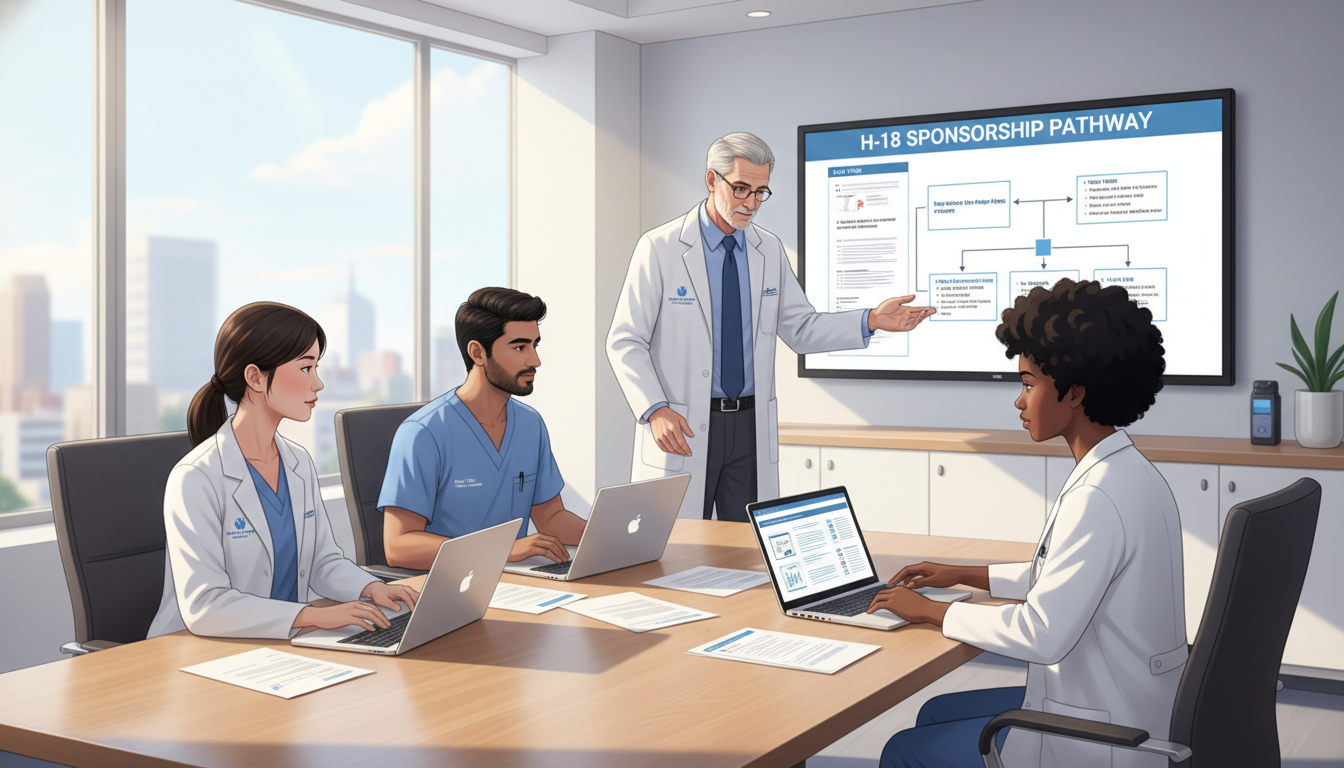
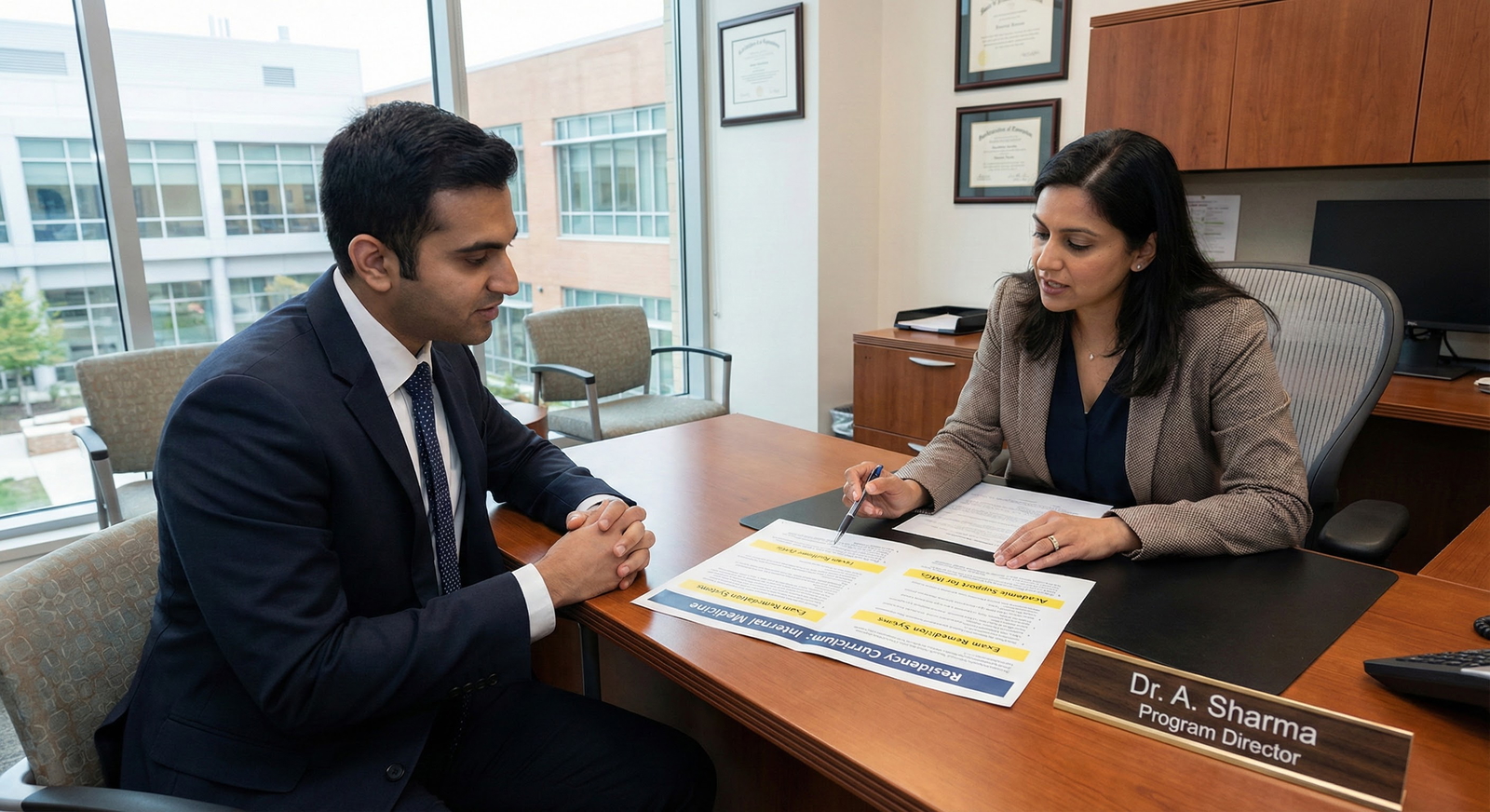
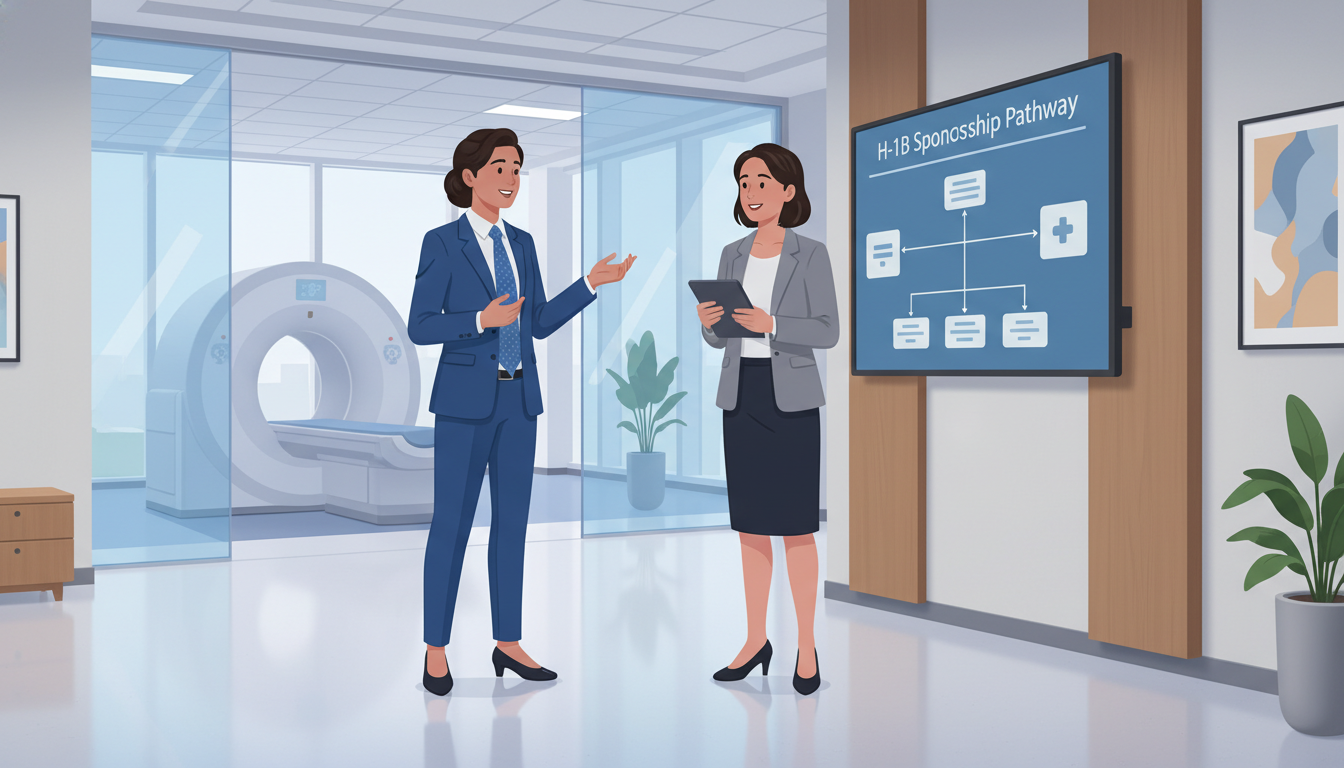
For a non-US citizen IMG aiming for diagnostic radiology, understanding H-1B residency programs is just as critical as understanding board scores and research. Radiology is highly competitive, and visa issues can become a decisive factor in whether you match or not. This article walks through how H-1B sponsorship works, what makes diagnostic radiology unique, and how a foreign national medical graduate can strategically pursue programs that support H-1B visas.
We will focus on practical, application-level advice tailored to diagnostic radiology and highlight how to identify and approach H-1B–friendly programs, including those that are H-1B cap exempt.
H-1B vs J-1 for Diagnostic Radiology: Choosing the Right Path
Before building an H-1B strategy, you need to know whether H-1B is actually the better choice for your situation.
Key Differences: H-1B vs J-1
J-1 (ECFMG-sponsored):
- Most common visa for IMGs in residency
- Sponsored by ECFMG, not your program
- Requires a 2-year home-country physical presence after training (unless you obtain a waiver)
- Easier for programs administratively; well-established process
- Typically suitable if:
- You are open to serving in underserved/waiver jobs after training, or
- You plan to return home after residency/fellowship
H-1B (Employer-sponsored):
- Dual-intent visa (you can pursue permanent residency without violating status)
- No 2-year home-country requirement
- Sponsored directly by the residency program/institution
- Requires USMLE Step 3 passed before petition filing
- Institutional legal and filing fees can be higher (and some institutions won’t cover them)
- Typically preferred if:
- You aim for a long-term US career without the constraint of a J-1 waiver requirement
- You want to keep options open for academic posts or private practice soon after training
Why Many Diagnostic Radiology Applicants Prefer H-1B
Diagnostic radiology is a field where the post-residency job market, subspecialty fellowships, and academic track opportunities are central considerations. A non-US citizen IMG may favor H-1B because:
- Streamlined transition to work: You can move into employment or fellowship without needing to first complete a J-1 waiver job in a specific underserved area.
- Flexibility for academic careers: Academic centers are often H-1B cap exempt, making transitions easier.
- Permanent residency (green card) planning: Dual intent allows employer-sponsored green card processes to begin sooner in some cases.
That said, many excellent radiology programs only sponsor J-1, and insisting exclusively on H-1B can drastically shrink your interview pool. The most common strategy is: apply broadly, remain open to both, and then prioritize H-1B residency programs where possible.
Core Requirements for H-1B Sponsorship in Diagnostic Radiology
To be a strong candidate for H-1B sponsorship, you must meet both USCIS legal requirements and institutional/program requirements.
Legal Framework for H-1B in Residency
For graduate medical education (GME), H-1B is granted for “physician in training” positions. Important points:
Specialty qualification: You must meet the usual residency prerequisites (degree, licensing exams).
Maximum duration: Up to six years total in H-1B status (including all previous H-1B time in the US).
- A standard diagnostic radiology pathway is 1 year of clinical base (such as internal medicine prelim or transitional year) + 4 years of DR (R1–R4) = 5 years total.
- If you plan a fellowship also on H-1B, you must carefully plan to stay under the six-year cap, unless you transition to other status (e.g., green card process that allows time extension).
Prevailing wage requirement: Program must pay at least the prevailing wage as determined by the Department of Labor.
Nonimmigrant intent vs. dual intent: H-1B allows dual intent, so green card pursuit doesn’t jeopardize your status.
For residency positions at most academic institutions, the program or parent institution is H-1B cap exempt, meaning they can sponsor your H-1B without going through the national lottery, as long as you remain employed by that cap-exempt entity.
H-1B Cap Exempt vs Cap Subject Programs
Understanding “cap exempt” is critical:
H-1B cap-exempt institutions:
- Typically universities, university-affiliated hospitals, and nonprofit research organizations
- Can file H-1B any time of year
- No participation in the annual H-1B lottery
- Almost all large academic diagnostic radiology departments fall here
H-1B cap-subject employers:
- Private practices, non-academic hospitals, corporate employers
- Only certain windows each year to file
- Subject to H-1B lottery
- You may encounter these more at the job level after training, rather than at the residency level
Most diagnostic radiology residency programs are based in academic centers and thus H-1B cap exempt. For a foreign national medical graduate, this is a major advantage: once you secure an H-1B for residency at such an institution, your immigration path for residency itself is not limited by the lottery.
Common Program Requirements for H-1B Sponsorship
While each program differs, some typical conditions for H-1B sponsorship in radiology:
USMLE Step 3:
- Many programs require Step 3 passed before ranking you, or at least before they can file the H-1B petition.
- Because H-1B petitions for a July start often need to be filed in March–April, you should aim to have Step 3 done by January of the match year at the latest.
- Some institutions will not consider H-1B at all without Step 3 already passed at the time of interview.
ECFMG Certification:
- Must be fully ECFMG certified before the residency start date.
- Certification timing can affect how early an institution is willing to start paperwork.
State Licensing Requirements:
- Some states require passing Step 3 for a full license, others may permit training licenses without Step 3.
- However, H-1B for residency generally still requires Step 3, even in states where a training license doesn’t.
Institutional Financial Policy:
- Programs have different policies on who pays for attorney fees and USCIS filing fees.
- Some institutions fully cover these; others might expect you to pay some or all costs.
- Ask about this explicitly if H-1B is critical to you.
Actionable Tip:
As a non-US citizen IMG targeting H-1B residency programs in diagnostic radiology, schedule Step 3 as early as realistic (often during or shortly after your clinical electives or observerships, or during your internship year if you are already in the US) to align with H-1B requirements.
Identifying H-1B–Friendly Diagnostic Radiology Programs
There is no single official H-1B sponsor list for radiology residencies, but you can systematically identify H-1B residency programs and assess their attitudes toward non-US citizens.
Where to Start Your Research
Use a combination of tools:
FREIDA (AMA Residency & Fellowship Database)
- Filter for diagnostic radiology programs.
- Some entries specifically mention visa policies (H-1B, J-1, both, or none).
- This information is not always up to date, so verify directly with programs.
Program Websites (GME + Department pages)
- Check the GME office website for institutional visa policy.
- Then check the diagnostic radiology residency program site for any specialty-specific notes.
- Some explicitly state:
- “We sponsor J-1 and H-1B visas”
- “We sponsor only J-1 visas”
- “No visa sponsorship available”
NRMP and Historical Match Data
- Not explicit on visa type, but you can sometimes infer policies from the nationality/visa status of current residents.
- Many programs list resident bios; you can identify IMGs and international paths.
Networking and Alumni
- Reach out to current or recent residents (particularly IMGs) via:
- Program resident pages
- Alumni from your medical school who matched into radiology
- Ask directly: Did the program sponsor your H-1B? How supportive were they?
- Reach out to current or recent residents (particularly IMGs) via:
ECFMG & Institutional GME Offices
- Some GME offices have PDF policy statements listing visa options across specialties.
- If unclear, contact the GME office by email.
Reading Between the Lines: Signals of H-1B Friendliness
Programs rarely post a complete H-1B sponsor list, but you can look for:
Explicit mention of H-1B:
“We accept J-1 and will consider H-1B for exceptional candidates who have passed USMLE Step 3.”Large IMG presence:
Programs with several non-US citizen IMG radiology residents are more likely to understand and support visa processes.University/academic affiliation:
University hospitals and major academic health centers are more frequently H-1B cap exempt and experienced in handling H-1B for residency.Institutional statement vs. program reality:
Sometimes the GME office says “We can sponsor H-1B,” but the radiology department decides not to due to costs or internal policies. Clarify at the program level.
Actionable Strategy Example:
- Create a spreadsheet listing all diagnostic radiology residency programs of interest.
- Add columns:
- Visa types mentioned on website
- H-1B status (confirmed / possible / J-1 only / unknown)
- Step 3 requirement
- Last updated (month/year you checked)
- During interview season, refine this list based on conversations with residents and coordinators.
This becomes your personalized, up-to-date H-1B sponsor list for diagnostic radiology.

Application Strategy: Maximizing Your Chances as a Non-US Citizen IMG
Diagnostic radiology is a moderately to highly competitive specialty, and visa sponsorship adds another layer. You must approach the process strategically.
1. Decide Early How Strongly You Will Prioritize H-1B
Ask yourself:
- Is avoiding the J-1 home-country requirement absolutely critical?
- Are you willing to:
- Apply to fewer programs overall in exchange for higher chance of H-1B?
- Or apply broadly (H-1B + J-1) and decide later?
For many non-US citizen IMG applicants, a balanced strategy is:
- Apply widely to all programs that:
- Accept IMGs
- Offer either H-1B or J-1
- Prioritize interviews at programs known to sponsor H-1B
- Rank list decision:
- Put H-1B–friendly programs higher if reputation and training quality are comparable.
2. Timing: USMLE Step 3 and Application Year
For an H-1B-centered plan:
- Take Step 3 before or during the ERAS application season if possible.
- Include your Step 3 score on ERAS as soon as it is available.
- Mention in your personal statement or at interview if you:
- Already passed Step 3, or
- Are registered and scheduled to take it on a specific date soon.
This reassures programs that you won’t delay their H-1B petition.
3. Tailoring Communication to Programs
When you contact programs or interview, frame H-1B discussions carefully:
- Do not lead with visa demands in your initial contact. Establish your qualifications and interest in the program first.
- Once in conversation (e.g., with coordinator or at interview), you can say:
- “I am a non-US citizen IMG and will require visa sponsorship. I have passed Step 3 and would be very interested if your institution can support H-1B.”
- Avoid sounding inflexible or transactional. Make it clear:
- You are open to understanding their policies.
- You recognize the administrative effort they undertake.
4. Building a Competitive Radiology Profile as an IMG
Visa issues aside, you still must overcome the inherent competitiveness of radiology:
- Step 2 CK: Aim for a strong score; diagnostic radiology applicants often cluster in higher score ranges.
- Clinical U.S. experience:
- Seek radiology electives or observerships in US academic centers.
- Strong letters from US radiologists are especially valuable.
- Research:
- Radiology research, imaging projects, or quality improvement relevant to imaging.
- Abstracts, posters, and publications help you stand out among IMGs.
- Demonstrated commitment to radiology:
- Radiology interest groups, teaching, case conferences.
- Mention specific modalities or subspecialties that attract you (e.g., neuroradiology, MSK, IR) while remaining open-minded.
5. Balancing Categorical vs Advanced Positions
Most diagnostic radiology programs are advanced (PGY-2 entry), requiring a separate PGY-1 year (transitional or preliminary). For H-1B strategy:
- You must consider:
- Visa sponsorship for your PGY-1 position
- Then visa sponsorship for radiology PGY-2–PGY-5
If your PGY-1 is on J-1 and radiology on H-1B, or vice versa, there will be an additional visa switch. That is legally possible but administratively more complex.
Ideal scenario for simplicity:
- Both your intern year and radiology residency are at the same H-1B cap-exempt institution that sponsors H-1B (e.g., prelim medicine plus DR at a university hospital).
- If that’s not possible, ensure that each program you match into is visa-friendly and coordinate timing of transitions carefully.
The H-1B Petition Process: What to Expect as an Applicant
Most of the legal work is handled by the institution’s attorney, but knowing the structure helps you stay ahead of deadlines.
Typical Timeline for a July 1 Start
- September–February: Interviews and ranking.
- March (Match Month):
- After Match Day, programs confirm details and start gathering paperwork.
- March–April:
- GME office and attorneys file the H-1B petition (Form I-129) once they have:
- Contract/offer letter
- Proof of passed Step 3
- ECFMG certification
- Credential evaluations and state training license/permit steps as required
- GME office and attorneys file the H-1B petition (Form I-129) once they have:
- April–June:
- USCIS processes the petition.
- With premium processing, approval can come within 15 calendar days.
- For consular processing, you then schedule a visa interview if you are outside the US.
Your Role in the Process
You must:
- Provide documentation quickly:
- Passport, medical diploma, translations if needed.
- ECFMG certificate, USMLE transcripts.
- Complete any state licensing/training permit applications.
- Communicate your travel/immigration history honestly (previous visas, overstays, etc.).
- If abroad, secure a visa appointment at a US consulate as soon as your petition is approved.
Common Pitfalls and How to Avoid Them
Delays in Step 3 → H-1B petition cannot be filed on time
→ Solution: Prioritize Step 3 early. If truly impossible, discuss J-1 as backup with the program.Misaligned expectations: Program thought you were fine with J-1; you assumed H-1B
→ Solution: Clarify visa preferences and program capabilities in writing after the interview.Inadequate document preparation: Missing diplomas, incomplete translations
→ Solution: Prepare a scanned, verified package of all credentials before Match Day.Last-minute consular appointment issues: Few appointments during peak seasons
→ Solution: Once you get I-797 approval, schedule your visa interview immediately and monitor for earlier slots.

Long-Term Planning: Beyond Residency on H-1B
For a foreign national medical graduate, thinking beyond residency is part of choosing between J-1 and H-1B.
Fellowship Training on H-1B
Many diagnostic radiology graduates go on to fellowships (e.g., neuroradiology, body imaging, IR, MSK). On H-1B:
- Each fellowship employer must either:
- File a new H-1B petition (if a different institution), or
- Extend/amend your H-1B (if same employer).
- Most academic radiology fellowships are also H-1B cap exempt.
- You must keep total H-1B time under 6 years, unless:
- You have started a green card process that permits H-1B extensions beyond 6 years (e.g., I-140 approved in EB-2/EB-3 categories).
Transition to Attending-Level Positions
Post-fellowship options:
Academic jobs:
- Often at H-1B cap-exempt institutions.
- Easier continuity from residency/fellowship, particularly if staying within the same university system.
- Many academic centers are familiar with sponsoring green cards for radiologists.
Private practice / community jobs:
- Usually H-1B cap-subject employers.
- You may need to enter the H-1B lottery (if you are not already counted toward the cap from a previous cap-subject H-1B).
- Job offers might be conditional on winning the lottery.
Considering Permanent Residency Pathways
While on H-1B (especially in academic environments):
- Employers may be willing to file an employment-based immigrant petition (EB-2 or EB-3).
- Timing is key—start early in your fellowship or late residency if possible, given country-specific backlogs (e.g., India, China).
Staying on H-1B for residency can give you a more direct progression to permanent residency than J-1 + waiver + H-1B sequence, but this must be evaluated against your personal circumstances and country of origin.
Frequently Asked Questions (FAQ)
1. As a non-US citizen IMG, should I only apply to H-1B residency programs for diagnostic radiology?
Restricting yourself only to H-1B residency programs can significantly reduce your match chances, especially in a competitive specialty like diagnostic radiology. A more balanced approach is to:
- Apply to programs that are IMG-friendly and open to either J-1 or H-1B.
- Prioritize H-1B–sponsoring programs when building your rank list.
- Keep J-1 as an option unless you have a strong, specific reason to avoid it (e.g., you cannot realistically complete a J-1 waiver later).
2. Do all academic radiology residency programs sponsor H-1B because they are H-1B cap exempt?
No. Being H-1B cap exempt means the institution is allowed to file H-1B petitions free from the lottery, but it does not mean every program chooses to sponsor H-1B. Some radiology programs:
- Sponsor both J-1 and H-1B.
- Sponsor only J-1 (even though the institution could do H-1B).
- Have shifting policies over time due to cost or administrative workload.
You must confirm visa policies with each specific program, not just rely on institutional cap-exempt status.
3. Is USMLE Step 3 absolutely mandatory for H-1B in diagnostic radiology residency?
Practically, yes. For GME H-1B petitions, Step 3 is essentially a universal requirement. Some licensing jurisdictions and institutions might have small variations, but:
- Most programs will not file an H-1B petition without Step 3 passed.
- To be taken seriously as an H-1B candidate, especially in a competitive field like diagnostic radiology, your best strategy is to complete Step 3 before or early in the application cycle.
4. Can I switch from J-1 to H-1B during or after diagnostic radiology residency?
Switching from J-1 to H-1B is challenging due to the J-1 two-year home-country rule:
- If you are subject to the 2-year home residence requirement, you must either:
- Fulfill it by physically being in your home country for 2 years, or
- Obtain a J-1 waiver (e.g., hardship, persecution, or Conrad 30 for certain specialties/locations).
- Only after the requirement is fulfilled or waived can you typically change to H-1B status.
So it is not impossible, but it is not a straightforward or guaranteed path. This is why many foreign national medical graduates who want long-term US careers carefully consider H-1B from the beginning.
By understanding how H-1B residency programs work, what “H-1B cap exempt” really means, and how to identify and approach H-1B–friendly diagnostic radiology programs, a non-US citizen IMG can build a realistic, strategic pathway to matching and ultimately practicing radiology in the United States.