Understanding H-1B Sponsorship in Orthopedic Surgery Residency
For international medical graduates (IMGs) aiming for an orthopedic surgery residency in the United States, visa strategy is almost as important as USMLE scores and letters of recommendation. Orthopedic surgery is among the most competitive specialties, and adding the complexity of immigration policy can feel overwhelming. However, a growing number of H-1B residency programs in orthopedics provide viable pathways for highly qualified IMGs.
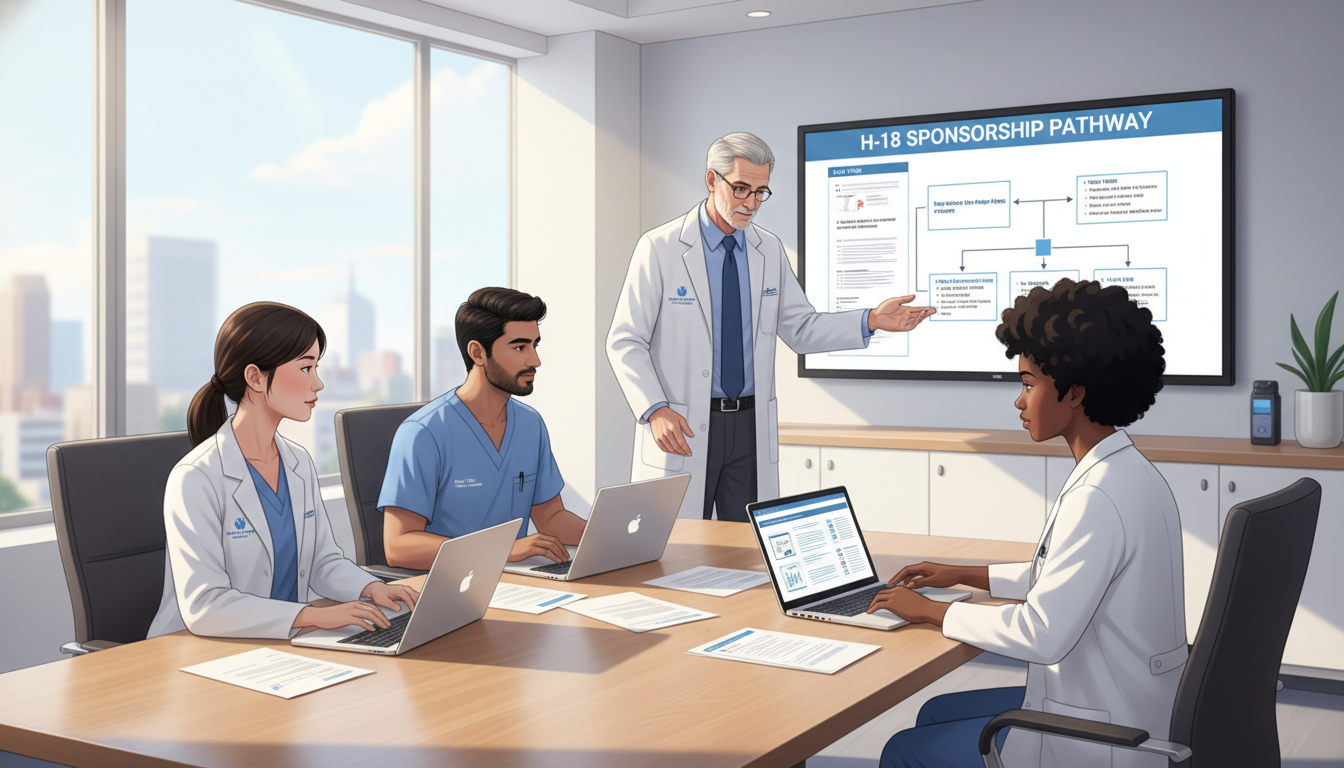
This guide breaks down how H-1B sponsorship works in orthopedic surgery, what “H-1B cap exempt” really means, how to use an H-1B sponsor list strategically, and how to maximize your chances of an ortho match as an IMG.
We will focus on:
- How the H-1B fits into orthopedic surgery training and early career
- Differences between H-1B and J-1 for ortho applicants
- Identifying H-1B-friendly orthopedic surgery residency programs
- Practical application strategies and red flags
- Long-term planning beyond residency, including fellowship and early practice
Throughout, remember that visa policies and institutional practices can change quickly. Always verify details directly with programs and, when needed, consult a qualified immigration attorney.
The H-1B Visa in the Orthopedic Surgery Training Pathway
What is the H-1B for physicians?
The H-1B is a temporary, employment-based visa designed for specialty occupations requiring at least a bachelor’s degree, but for physicians this typically means completion of medical school plus any required licensing exams. In the context of orthopedic surgery residency:
- Your employer: The residency program or its sponsoring institution (often a university or large hospital).
- Your role: Graduate Medical Education (GME) trainee—resident or fellow—classified as a professional employee for visa purposes.
- Your status: Tied to your specific position, salary, and institution.
H-1B basics relevant to orthopedic surgery residents
Key features you need to understand:
- Degree requirement: You must have an MD, DO, or the foreign equivalent, and typically an ECFMG certificate if you are an IMG.
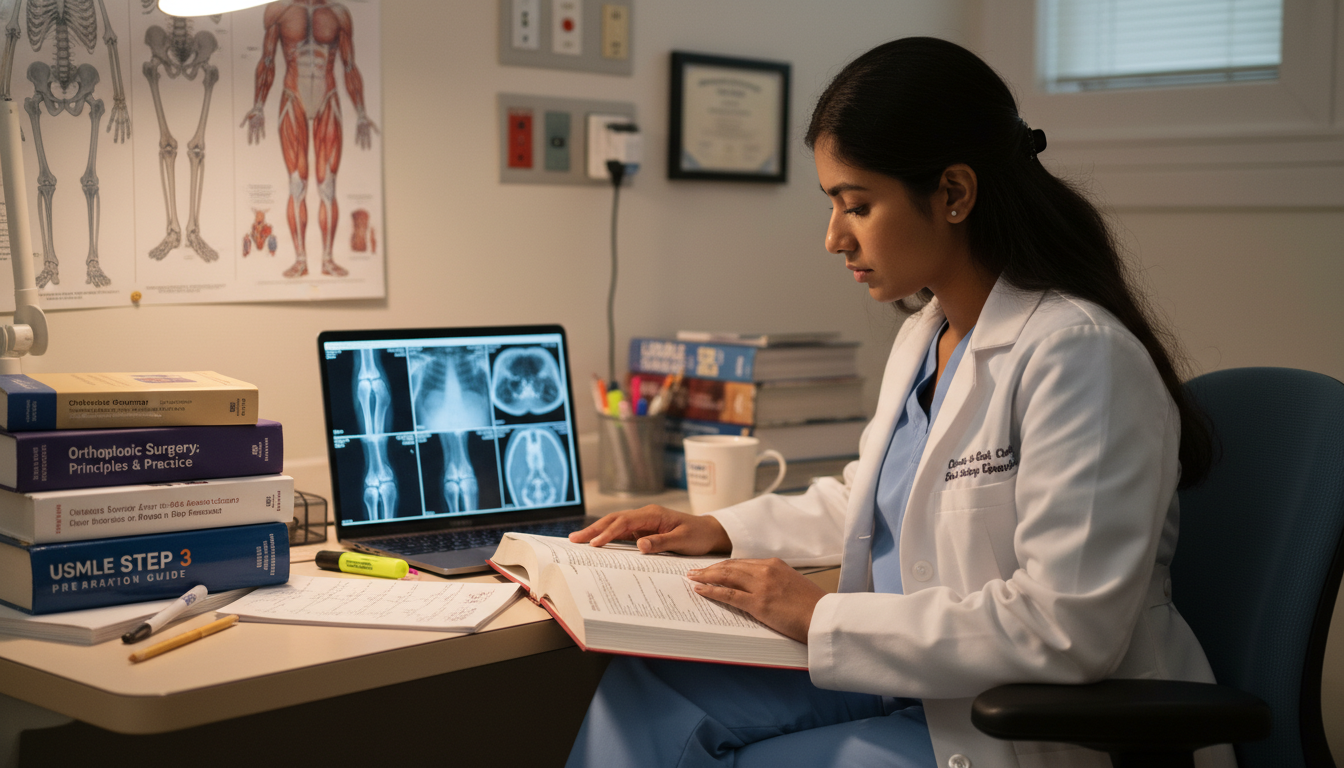
- USMLE requirement: Most H-1B residency programs require:
- USMLE Step 1 and Step 2 CK passed
- Step 3 completed before they can file your H-1B petition (many require it before ranking you)
- Licensing requirement: You must be eligible for at least a temporary/graduate medical license in the state where the program is located.
For orthopedic surgery, which is a five-year program (PGY-1 to PGY-5), you must also think about the H-1B six-year maximum.
H-1B time limits and residency duration
The standard H-1B has a maximum initial duration of three years, renewable to a total of six years. For orthopedic surgery residency:
- Year 1–3: Typically covered by the initial H-1B approval.
- Year 4–5: Covered by an extension (your institution must file this).
- Fellowship (e.g., sports, spine, trauma, joints): Can still be feasible within the six-year window if you plan early, but may need:
- Time recaptured from periods spent outside the US, or
- An immigration strategy that includes early initiation of a green card process (in some situations).
Practically, most orthopedic residency programs with H-1B sponsorship pathways are familiar with the six-year limit and plan visas for the full training period. However, always confirm explicitly that they will sponsor you through all years of residency, not just the initial three years.
H-1B vs J-1 in Orthopedic Surgery: Strategic Considerations
Most IMGs in US residency training are sponsored on J-1 visas through the ECFMG. However, orthopedic surgery applicants often strongly prefer H-1B if they qualify. Understanding why will help you decide whether to pursue programs that offer H-1B.
Advantages of H-1B for ortho applicants
No J-1 two-year home residency requirement
- J-1 sponsorship typically comes with a two-year home country physical presence requirement after completing training, unless you secure a waiver (often via service in an underserved area).
- H-1B has no such requirement, giving you more flexibility for:
- Orthopedic fellowships
- Academic positions
- Employment with private groups immediately after residency
Better continuity for orthopedic subspecialty fellowships
- Many orthopedic fellowships also sponsor H-1B.
- Transitioning from H-1B to H-1B (residency → fellowship → employment) can be smoother than navigating J-1 waivers and changes of status.
Pathway to long-term employment
- Employers often prefer candidates already in H-1B status because:
- They understand the process.
- They can sometimes use cap-exempt history or prior approvals efficiently.
- Being on H-1B in residency can make post-training recruitment materially easier.
- Employers often prefer candidates already in H-1B status because:
Spouse employment flexibility (H-4 EAD, in some cases)
- Spouses on H-4 (dependent visas) may become eligible for employment authorization (EAD) if you are on a green card track and reach certain stages (e.g., approved I-140), which is that much easier to initiate when you are already in H-1B status.
Disadvantages and challenges of H-1B for ortho applicants
Higher program burden
- H-1B sponsorship is more administratively complex and costly for institutions than J-1 sponsorship.
- Many orthopedic surgery residency programs simply default to J-1 and do not sponsor H-1B.
USMLE Step 3 requirement
- For H-1B, many programs require Step 3 at the time of application or by ranking.
- This is a major hurdle, especially if you are applying from abroad or still in medical school.
Limited number of true H-1B residency programs
- Compared to internal medicine or pediatrics, orthopedics has fewer programs willing to sponsor H-1B.
- Being too selective about only H-1B-sponsoring programs may sharply reduce your chances of matching at all.
Six-year limit and extended training
- Orthopedic training is long; if you add research years or multiple fellowships, you may run into the six-year cap unless you:
- “Recapture” out-of-US time
- Transition to another status (e.g., O-1)
- Start a green card process early
- Orthopedic training is long; if you add research years or multiple fellowships, you may run into the six-year cap unless you:
Who should prioritize H-1B for orthopedic surgery?
Pursuing H-1B makes particular sense for applicants who:
- Are strongly committed to staying in the US long-term and want maximal flexibility for fellowship and early career.
- Can realistically complete USMLE Step 3 before the match cycle.
- Are willing to apply broadly, including outside the most famous academic ortho programs.
- Have strong metrics for a competitive specialty (high USMLE scores, significant US clinical experience, strong research, solid letters).
If you cannot take Step 3 before applications, you may need a dual strategy: apply broadly to J-1-accepting programs while selectively targeting a smaller set of H-1B residency programs that permit Step 3 during the cycle.
H-1B Cap-Exempt Orthopedic Surgery Programs: Why They Matter
What does “H-1B cap exempt” mean?
The standard H-1B program is subject to an annual numerical cap:
- 65,000 regular H-1B visas
- 20,000 additional visas for US master’s or higher degrees
These are awarded via a lottery system, usually in March, and start in October of the same year. This system is a poor fit for residency timelines.
However, many teaching hospitals and universities are H-1B cap exempt, meaning they are not subject to the annual cap or the lottery. This is crucial for orthopedic surgery residents.
Cap-exempt entities typically include:
- Non-profit institutions of higher education (universities)
- Non-profit entities affiliated with such institutions (academic medical centers)
- Certain government or non-profit research organizations
Why H-1B cap-exempt status is ideal for residency
For orthopedic surgery residency, cap exemption provides several advantages:
- No lottery risk: Your visa is not subject to random selection; if your application is approvable, it will be adjudicated on its merits.
- Flexible timing: Petitions can be filed and start dates set according to GME needs (e.g., July 1), not constrained by the October 1 start of cap-subject H-1Bs.
- More predictable match-to-start transition: Programs can better guarantee that you will have valid work authorization in time to begin PGY-1.
Most major academic orthopedic residency programs in the US are based at universities or university-affiliated hospitals, which are typically H-1B cap exempt. That means if they choose to sponsor H-1B, they usually do so under cap-exempt rules.
Moving from cap-exempt to cap-subject positions (after residency)
A critical detail for long-term planning:
- If you train in a cap-exempt H-1B residency program, you are not counted against the H-1B cap.
- Later, if you take a job with a private orthopedic group or non-university hospital that is not cap exempt, you may need to:
- Enter the H-1B lottery and secure a cap-subject H-1B, or
- Move to another visa/status (e.g., O-1, green card via employer sponsorship).
Some post-residency jobs are themselves cap exempt (e.g., faculty positions at university hospitals or jobs in certain non-profit or underserved settings), allowing a direct H-1B transfer without the lottery.
Strategically, this means:
- If you want maximum flexibility in private practice immediately after training, discuss long-term plans with an immigration lawyer early in residency.
- If you want an academic career, staying in cap-exempt institutions (residency → fellowship → faculty) can be a very stable pathway.

Finding H-1B-Friendly Orthopedic Surgery Residency Programs
There is no single official, static H-1B sponsor list for orthopedic surgery residency programs, and sponsorship policies change over time. However, you can systematically identify programs that historically support H-1B residents.
Step 1: Use public databases and past resident rosters
Program websites
- Check the current and past resident pages.
- Look for:
- International-sounding names
- Medical schools outside the US/Canada
- This is not proof of H-1B, since many IMGs may be on J-1, but it is a positive indicator that the program is open to IMGs.
NRMP and FREIDA
- FREIDA often lists whether a program “Accepts IMGs” and occasionally notes sponsorship types.
- Cross-reference this with program websites.
State licensing boards
- Some boards list permit holders and visa types (more work, but can yield valuable evidence of H-1B sponsorship).
Step 2: Directly confirm H-1B sponsorship policies
Once you identify potential H-1B residency programs in orthopedics:
- Email the program coordinator or GME office with targeted questions:
- “Does your orthopedic surgery residency program currently sponsor H-1B visas for residents?”
- “If yes, do you require USMLE Step 3 to be completed before ranking or before the start of residency?”
- “Does the institution sponsor H-1B for the full five-year duration of training?”
- Check GME or institutional international office websites:
- Some universities list their general stance: “We sponsor J-1 and H-1B visas for qualified residents/fellows.”
Be aware that a program may:
- Accept IMGs only on J-1.
- Be open to H-1B case-by-case, often depending on:
- Applicant strength
- Institutional legal capacity
- Funding concerns
Step 3: Build your own functional H-1B sponsor list
For orthopedic surgery specifically, consider organizing your findings into a personal spreadsheet:
- Columns might include:
- Program name
- City/state
- University affiliation (suggests H-1B cap exempt)
- Visa types historically sponsored (J-1, H-1B)
- Step 3 requirement timing
- Recent IMGs in residency
- Last verified date of policy (via email/website)
- Notes (e.g., “H-1B only for exceptionally strong applicants”)
Over time, this becomes your customized H-1B sponsor list, tailored to ortho match prospects. Share and cross-check with colleagues, but verify directly with programs each cycle.
Typical H-1B requirements in ortho programs
Patterns commonly seen among orthopedic H-1B residency programs:
- Mandatory ECFMG certification before H-1B petition filing.
- USMLE Step 3:
- Often required before rank list deadline.
- Sometimes accepted if completed by April–May before July 1 start.
- No major issues with prior visa status (e.g., maintenance of F-1, J-1, or other statuses).
- Strong preference for:
- US or Canadian clinical experience in orthopedics
- Research productivity (especially for academic programs)
- Exceptional board scores and interview performance
Red flags and caution signs
When reviewing programs:
- Vague language like “We consider visas on a case-by-case basis” without clear examples can mean:
- They rarely or never sponsor H-1B.
- They have internal limits that only a few candidates meet.
- Statements like “We accept IMGs” without any explicit mention of visa sponsorship often imply J-1 only.
- If a program expresses uncertainty or reluctance about H-1B when you ask, interpret that as low probability.
Given that orthopedic surgery is extremely competitive, balance your ideal (H-1B sponsorship) with the practical reality of matching. Many IMGs choose to accept a J-1 in a strong ortho program rather than risk no match while insisting on H-1B only.
Application Strategy: Maximizing Your Ortho Match Chances with H-1B in Mind
Timing your exams and documentation
To be seriously considered by H-1B-friendly orthopedic programs, plan your timeline carefully:
USMLE Step 1 and Step 2 CK
- Aim for high scores; ortho is one of the most score-sensitive specialties.
- Complete these early enough to:
- Obtain ECFMG certification
- Demonstrate full eligibility by application time
USMLE Step 3
- Target completion before September of the match year if possible.
- If not feasible, at least before rank list deadline, but confirm with each program whether they accept this timeline.
- Take into account:
- Prometric availability
- Possible delays in score reporting
ECFMG certification
- Must be ready in time for both:
- ERAS application
- H-1B petition filing (later in the cycle)
- Must be ready in time for both:
Crafting a program list for ortho + H-1B
Build your application list in tiers:
Tier 1: Known H-1B sponsors (cap exempt)
- Academic orthopedic surgery residency programs that have clearly sponsored H-1B residents recently.
- Strong focus of your H-1B strategy.
Tier 2: Possibly H-1B-friendly programs
- Programs that accept IMGs and are cap exempt but have unclear visa policies.
- Still worth applying, especially if your profile is strong.
Tier 3: J-1-only but IMG-friendly programs
- High-quality ortho programs where you would be happy to train, even on J-1.
- These significantly increase your chance of matching if H-1B options are limited.
Tier 4: Backup specialties or research positions
- If ortho match seems unlikely, consider a parallel plan (e.g., one-year research in orthopedics, preliminary surgery, or another surgical field), where you can strengthen your portfolio for a future cycle. Visa status in such positions (including H-1B) requires separate consideration.
How to present your visa needs during interviews
Handling the visa question effectively is crucial:
- Be clear and honest:
- “I am eligible for ECFMG certification and will complete USMLE Step 3 by [date]. I am seeking programs that can sponsor H-1B.”
- Show you understand their burden:
- Acknowledge that you know H-1B is more complex and express appreciation for institutions that support IMGs in this way.
- Emphasize your long-term commitment:
- Many ortho departments invest heavily in residents and appreciate applicants who see themselves in long-term academic or clinical roles in the US.
Avoid:
- Pressuring the program early in the interview about H-1B specifics.
- Giving the impression that your primary criterion is the visa, not the quality of surgical training.
Instead, gather information politely and follow up with the program coordinator after interviews if needed.
Example scenario: Strong IMG targeting H-1B ortho
- Graduate of a well-known international medical school
- USMLE Step 1 and Step 2 CK well above the average for ortho
- 1–2 years of orthopedic research in the US with publications
- Strong letters from US orthopedic attendings
- Step 3 completed by August before application
This candidate can:
- Apply to a broad list of ortho programs, including many that might sponsor H-1B.
- Emphasize research, academic goals, and long-term commitment to US orthopedic surgery.
- Have realistic expectations of being competitively considered by multiple H-1B-friendly programs, especially those that traditionally match IMGs.
Long-Term Planning: From H-1B Residency to Orthopedic Career
Fellowship on H-1B
Most orthopedic subspecialty fellowships in academic centers are also cap exempt. For H-1B ortho residents:
- Transitioning to fellowship on H-1B is commonly feasible if:
- You have remaining H-1B time within the six-year limit, or
- You recapture time spent outside the US during residency.
- Clarify fellowship visa policies early in residency (PGY-2 or PGY-3) if possible.
Moving into practice after training
Key pathways for H-1B residents after ortho residency and fellowship:
Academic positions (cap exempt)
- Continuation of H-1B in university or affiliated hospitals is often straightforward.
- Can provide a stable bridge to employment-based green card sponsorship (EB-2/EB-1, depending on profile).
Private practice (potentially cap subject)
- Many private orthopedic groups are not cap exempt.
- If they have never sponsored H-1B before, they must:
- Register you in the H-1B lottery (if you are not already counted under the cap).
- Time the process so you can start work on October 1.
- It is often helpful if:
- You have established a strong reputation as a fellow/resident.
- The group is willing to engage experienced immigration counsel.
Alternative statuses (O-1, green card)
- For highly accomplished orthopedic surgeons (research, leadership, national/international recognition), O-1 (Extraordinary Ability) status or direct EB-1 green card petitions may be possible.
- This requires planning and documentation of achievements; your H-1B years in residency and fellowship can help build that record.
Avoiding common pitfalls
- Waiting too long to think beyond residency:
- Start discussing long-term immigration strategy by PGY-2–PGY-3.
- Assuming cap-exempt training automatically solves everything:
- Cap exemption is an advantage, but post-training jobs may be cap subject.
- Not documenting out-of-country time:
- Keep records of your international travel; this can matter if you later need to recapture days to extend H-1B time.
Working with an immigration attorney—ideally one familiar with physicians and academic medical centers—is highly recommended at the transition points between residency, fellowship, and permanent employment.
FAQs: H-1B Sponsorship in Orthopedic Surgery
1. Can I match into orthopedic surgery residency on an H-1B visa without USMLE Step 3?
It is uncommon. Most H-1B residency programs in orthopedics require Step 3 to be completed before they can file your petition, and many will not rank you unless you have already passed Step 3. A few may allow you to complete Step 3 between interviews and the rank list deadline, but this must be confirmed individually. Plan to take Step 3 early if H-1B is your priority.
2. Are all academic orthopedic surgery programs H-1B cap exempt?
Most university-based or university-affiliated academic centers are H-1B cap exempt, but you cannot assume this universally. Some institutions have complicated corporate structures or rely on separate entities for GME. Always verify with the GME office or institutional international office. Even if they are cap exempt, they may still choose to sponsor only J-1 visas for residents.
3. Is it easier to get H-1B in orthopedic surgery compared to other specialties?
No. Orthopedic surgery is one of the most competitive specialties for all applicants, and fewer programs are willing to take on the administrative complexity of H-1B. In less competitive fields, there may be more flexibility for IMGs seeking H-1B. You should view H-1B sponsorship in ortho as an additional challenge layered on top of an already demanding match.
4. If I start orthopedic residency on a J-1, can I switch to H-1B later in the same program?
In most cases, no. Once you are in a US residency on J-1 sponsored by ECFMG, switching to H-1B within the same training program is rare and discouraged by policy. The J-1 carries a two-year home residency requirement unless you later secure a waiver. If H-1B is important to you, you should aim to start residency on H-1B rather than expecting to change later.
By understanding how H-1B sponsorship intersects with orthopedic surgery training, identifying cap-exempt institutions that support IMGs, and planning your exam and application strategy carefully, you can significantly improve your chances of securing an ortho match that supports your long-term career and immigration goals.