Understanding H‑1B Sponsorship in Plastic Surgery Residency
For international medical graduates (IMGs) targeting plastic surgery residency in the United States, visa sponsorship is as critical as board scores and research output. Plastic surgery is among the most competitive specialties, and only a subset of programs are willing or able to sponsor H‑1B visas. Knowing which programs sponsor, how the process works, and what you can do to improve your chances can make the difference between matching and going unmatched.
This guide focuses on H‑1B sponsorship programs in plastic surgery, with practical strategies tailored to the integrated plastics match, plus considerations for independent/combined pathways. You’ll also learn how to interpret program policies, navigate H‑1B cap‑exempt rules, and build your own H‑1B sponsor list as an IMG applicant.
1. Basics of H‑1B for Plastic Surgery Residency
1.1 What is the H‑1B Visa in the Residency Context?
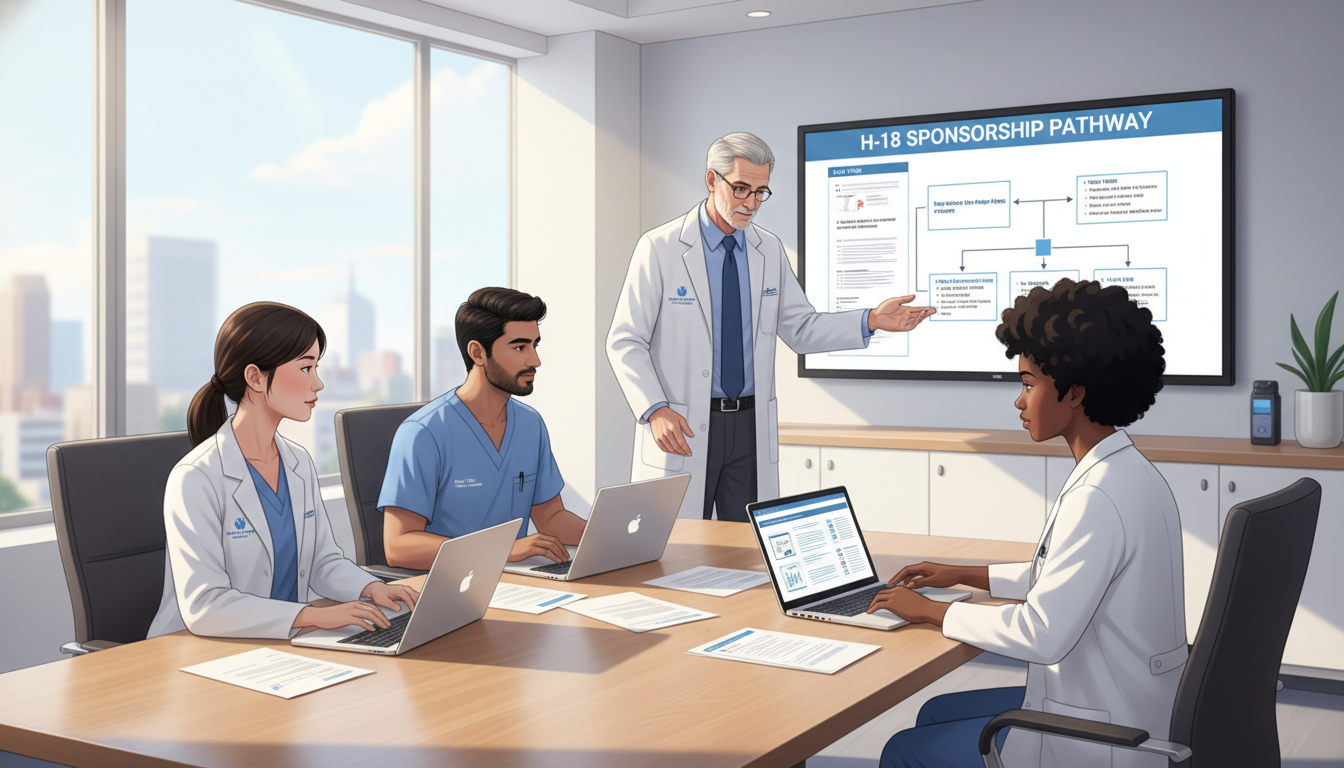
The H‑1B is a temporary specialty occupation visa that allows U.S. institutions to employ foreign professionals. In graduate medical education (GME):
- Employer: The residency program’s sponsoring institution (e.g., university hospital)
- Beneficiary: You, the IMG resident/clinical fellow
- Role: “Physician” in a training position (or attending after residency)
Unlike the J‑1 (Educational Commission for Foreign Medical Graduates–sponsored) visa, H‑1B is:
- Employer-specific – tied to a particular institution and position
- Time-limited – up to 6 years total (rare training‑related extensions exist)
- Often preferred by IMGs planning eventual U.S. permanent residency, as it avoids the standard J‑1 two‑year home country requirement
1.2 Why Plastic Surgery Programs Are Cautious About H‑1B
Plastic surgery residency, especially the integrated plastic surgery residency, is:
- Highly competitive with very few positions nationwide
- Lengthy – integrated track is usually 6 years (PGY1–PGY6)
- Procedurally intense – substantial investment in faculty time, operative resources, and didactics
Programs may hesitate to offer H‑1B because of:
Administrative complexity
- Institutional legal review, Department of Labor filings, USCIS petitions
- Additional costs (often several thousand dollars per resident)
Duration concerns
- H‑1B total time limit is typically 6 years
- Some residents may need extensions for research years, remediation, or additional fellowship training
Licensing requirements
- In many states, H‑1B residents require a full, unrestricted license, not merely training licensure
- This typically demands USMLE Step 3 before filing the petition
For a plastic surgery program, taking an H‑1B IMG requires confidence that:
- You passed Step 3 early
- You can obtain a full license in the program’s state
- You’re likely to complete 6 years of integrated plastics on time
2. H‑1B vs J‑1 in Plastic Surgery: Pros, Cons, and Strategic Choices
2.1 Key Differences in Plastic Surgery Training
J‑1 Visa (ECFMG Sponsored)
- Most common IMG route into U.S. residency
- Requires return to home country for 2 years after training (unless you get a waiver)
- Programs handle relatively less paperwork; they simply accept J‑1 sponsorship
- Widely accepted across surgical specialties, including plastic surgery residency
H‑1B Visa
- Dual intent (dual pathway to potential green card) – more attractive if you aim to settle in the U.S.
- No automatic two‑year home country rule
- Requires USMLE Step 3 passed before petition
- Often requires full state license, which can be tricky for IMGs in certain states
- Not all programs can or will sponsor it
2.2 Which is Better for Plastic Surgery?
From a career perspective:
H‑1B is preferable if you:
- Intend to stay and practice in the U.S. long term
- Want to pursue competitive fellowships and early faculty positions without the J‑1 waiver constraint
J‑1 may be more realistic if you:
- Are earlier in your exam timeline and haven’t completed Step 3
- Are applying widely to many programs that mostly sponsor J‑1
- Can accept the need for a J‑1 waiver job (often in underserved areas) after training
In integrated plastic surgery, because positions are so limited, some IMGs opt not to restrict themselves only to H‑1B residency programs and remain open to J‑1 offers. Your choice will balance immigration strategy vs match probability.
3. How H‑1B Works Specifically for Plastic Surgery Residency
3.1 Integrated Plastic Surgery vs Independent Pathway
Integrated Plastic Surgery Residency (PGY1–6)
- Single match into a 6‑year program that covers general surgery and plastics training
- For H‑1B:
- Time limit (6 years) aligns tightly with full program length
- Most institutions will not want to risk needing extensions
- Only a minority of integrated plastics programs are willing to sponsor H‑1B
Independent/Combined Plastic Surgery (Post‑General Surgery)
- You complete 5 years of general surgery, then match into 3‑year plastic surgery training
- For H‑1B:
- Some IMGs are already on H‑1B from general surgery residency
- Transition to an academic plastic surgery fellowship or residency slot may remain H‑1B cap‑exempt if under the same or another eligible institution
- Fewer total years left, but often you’re already licensed and more established, which can reassure programs
3.2 H‑1B Cap‑Exempt Status: Critical for Residency
Most residency H‑1Bs are H‑1B cap‑exempt:
- The standard H‑1B system has an annual cap (65,000 + 20,000 advanced degree cap), selected via lottery
- However, universities, university‑affiliated hospitals, and certain nonprofit research institutions can sponsor H‑1Bs outside this cap
For plastic surgery residency:
- If your program is based in a university hospital or major academic center, it’s often H‑1B cap‑exempt
- This means:
- No lottery
- H‑1B can be filed at any time of the year
- You aren’t counted toward the regular H‑1B cap while at that institution
This is a key reason many IMGs target academic plastic surgery programs with a clear record of sponsoring H‑1B visas for residents and fellows.
4. Building Your Plastic Surgery H‑1B Sponsor List
Because there’s no official, always‑accurate government list of H‑1B residency programs in plastic surgery, you’ll have to build your own H‑1B sponsor list. This can be done systematically.

4.1 Step 1: Start with the Official Program List
Use:
- FREIDA (AMA Residency & Fellowship Database)
- ACGME program search
- SF Match / ERAS / NRMP lists (depending on integrated vs independent pathway)
- Professional society directories (e.g., ASPS/ACAPS program lists)
Create a spreadsheet with:
- Program name
- Institution / hospital system
- City and state
- Program type: Integrated, Independent, or both
- Notes column (for visa and other info)
4.2 Step 2: Check Program Websites Carefully
For each plastic surgery residency program:
Visit the GME office page or the program’s “FAQ / International Applicant” section
Look for language such as:
- “We sponsor J‑1 visas only”
- “We can sponsor J‑1 and H‑1B visas”
- “We do not sponsor visas”
- “US citizenship or permanent residency required”
Note their stated policy:
- Clearly H‑1B–friendly: explicitly mentions H‑1B sponsorship
- Possibly H‑1B–friendly: mentions “case‑by‑case” or indirect language (“we follow institutional GME policies”)
- H‑1B‑unfriendly: “J‑1 only” or “no visa sponsorship”
Add this to your spreadsheet as “website‑stated visa policy.”
4.3 Step 3: Cross‑Check with Institutional GME Policy
Sometimes the plastic surgery website is vague, but the institutional GME office has a clear stance.
- Search “[Institution Name] GME H‑1B” or “[Institution] international medical graduate visa policy”
- Look for PDFs or pages titled:
- “GME Visa Policy”
- “Policy on Residents Requiring Visa Sponsorship”
If the GME office states that H‑1B is allowed for residency, then:
- The plastic surgery program may be able to accept H‑1B even if not explicitly advertised
- Often, program directors rely on this central policy; they may be cautious but not absolutely opposed
Mark such institutions as “Institution H‑1B possible.”
4.4 Step 4: Seek Real‑World Confirmation
For programs you are strongly interested in:
Email the program coordinator or administrator
Introduce yourself briefly (not a full CV)
Ask a clear, respectful question such as:
“I am an international medical graduate planning to apply to your integrated plastic surgery residency program. Could you please let me know whether your program sponsors H‑1B visas for residents, or if J‑1 sponsorship is preferred? I understand that policies can change and would be grateful for your current guidance as I plan my application strategy.”
Look at current residents/fellows:
- Check program websites and LinkedIn for residents who graduated from non‑U.S. schools
- If you can, politely reach out (e.g., via email or LinkedIn) to ask:
- What visa they are on
- How supportive the program is regarding H‑1B
Use IMG‑focused communities:
- Online forums, Telegram/WhatsApp groups, and IMG websites sometimes share running lists of H‑1B residency programs with user reports
- Treat these as pointers, not absolute truth—verify directly with the program
4.5 Step 5: Prioritize and Group Programs
Once you have data, segment your list:
Tier 1: Confirmed H‑1B sponsors for plastic surgery
- Programs or institutions that explicitly say “H‑1B supported” or you’ve confirmed via GME office
Tier 2: Possible H‑1B sponsors
- Institutions with H‑1B policies but plastic surgery program unsure or “case‑by‑case”
Tier 3: J‑1 only / no visa
- Programs that specifically exclude H‑1B
As an IMG targeting the integrated plastics match, you might:
- Apply to all Tier 1 and Tier 2 programs
- Decide individually whether to include Tier 3 programs if you are willing to accept J‑1
5. Application Strategy for H‑1B‑Seeking IMGs in Plastic Surgery
Because plastic surgery is an ultra‑competitive match, H‑1B aspirations must be paired with a very strong application and good timing.

5.1 Essential Requirements for H‑1B–Friendly Consideration
Most H‑1B‑sponsoring plastic surgery programs will expect:
- USMLE Step 1 and Step 2 CK – high scores, often well above average
- USMLE Step 3 passed early – ideally before you submit ERAS, or at least before rank list certification
- Some institutions simply do not file H‑1B petitions without Step 3
- ECFMG certification completed by the time of rank list or start date
- Strong research portfolio in plastic surgery
- PubMed‑indexed publications, presentations, or significant lab/clinical research
Actionable advice:
- Plan Step 3 1–1.5 years before your intended Match cycle if possible.
- If still in medical school abroad, consider a research year in the U.S. to:
- Gain publications
- Obtain U.S. letters of recommendation (LORs)
- Build institutional connections at a known H‑1B cap‑exempt academic center
5.2 Tailoring Your Application for H‑1B‑Friendly Programs
When targeting plastic surgery residency programs that might sponsor H‑1B:
- Highlight immigration readiness in your ERAS materials where appropriate, but subtly:
- You don’t need to talk about visas in your personal statement
- You can mention that you have “completed all required USMLE exams including Step 3” in your CV or ERAS experiences
- During interviews (esp. if visa comes up):
- Emphasize that you’re already Step 3‑cleared and prepared to meet licensing requirements
- Show that you’ve researched the program and you’re committed to the full training duration
Example answer if asked about your visa needs:
“I will require visa sponsorship to train in the United States. I have already passed USMLE Step 3 and am prepared to comply with your institution’s licensing and immigration requirements. I’m particularly interested in your program because of its academic environment and strong reconstructive training, and I’m committed to completing the full duration of the integrated plastic surgery residency here if offered the opportunity.”
5.3 Balancing Competitiveness and Visa Constraints
Plastic surgery is one of the least IMG‑friendly specialties overall. When you add the H‑1B requirement, competition becomes even narrower. To maximize your chances:
Apply broadly to:
- All integrated and independent plastic surgery programs open to IMGs
- Related preliminary surgical or categorical general surgery programs at H‑1B‑friendly institutions (fallback plan)
Consider a phased path:
- Step 1: Match into general surgery at an H‑1B‑friendly academic program
- Step 2: Build an exceptional portfolio, then compete for independent plastic surgery or microsurgery fellowships
- Your institution may already be H‑1B cap‑exempt, simplifying continuation
Use your research strategically:
- High‑impact publications in reconstructive microsurgery, craniofacial surgery, or aesthetic surgery can offset visa concerns by making you a “too strong to ignore” candidate
6. Common Pitfalls and How to Avoid Them
6.1 Late Step 3 and Timing Problems
If you take Step 3 too late:
- Programs may be unwilling to consider H‑1B
- Even if they rank you, there might be insufficient time to process the petition before July 1
Plan backward from your intended residency start:
- Assume 4–6 months for:
- Credentialing
- State license processing
- H‑1B petition (including possible RFEs—Requests for Evidence)
6.2 Misinterpreting “Case‑by‑Case” Policies
Many GME offices state they evaluate H‑1B on a case‑by‑case basis:
- This does not guarantee sponsorship
- It means:
- If a candidate is exceptionally strong and the department advocates for them, the institution might approve H‑1B
Your takeaway:
- Don’t assume a “case‑by‑case” program is equivalent to a confirmed H‑1B residency program
- Treat them as possible sponsors and apply if you are otherwise a strong candidate, but maintain backup options
6.3 Ignoring Licensing Requirements
An H‑1B petition for residency often hinges on:
- State rules about full license vs training license
- Number of previous years of postgraduate training
- Verification of your international medical school credentials
Avoid surprises by:
- Checking the state medical board requirements early (before Match)
- Asking GME offices directly if they have previously processed H‑1B residents in that state
6.4 Over‑Restricting Your Program List
If you apply only to a small number of H‑1B‑friendly plastic surgery residency programs, you may severely limit your match chances. Consider:
- Including some J‑1–friendly plastics programs
- Including H‑1B‑friendly general surgery programs as alternate entry points
- Being open to a pathway that ends with independent plastics rather than integrated plastics match only
FAQs: H‑1B Sponsorship in Plastic Surgery Residency
1. Are there integrated plastic surgery residency programs that sponsor H‑1B visas?
Yes, but they are relatively few compared with J‑1‑only programs. Most integrated plastic surgery residencies are at academic centers that could sponsor H‑1B, but only some actually do so on a routine basis. Policies also change over time. You should:
- Build a current H‑1B sponsor list by:
- Reviewing program and GME websites
- Emailing coordinators with targeted questions
- Asking current residents or fellows
- Expect that only a subset of integrated plastic surgery programs will be realistic H‑1B options in any given Match cycle.
2. Do I need USMLE Step 3 to get H‑1B for plastic surgery residency?
In practice, yes in almost all cases. For residency H‑1B petitions:
- Many institutions require Step 3 as a condition for H‑1B filing
- Some also require a full state medical license, which typically demands Step 3
- If you haven’t passed Step 3 before ERAS submission, your H‑1B options drop significantly
If H‑1B is your goal, plan to:
- Take Step 3 before applying to the Match
- Explicitly mention your Step 3 success in your ERAS application and CV.
3. Are H‑1B residency positions exempt from the annual H‑1B cap?
Most plastic surgery residency positions at universities or major teaching hospitals are H‑1B cap‑exempt, meaning:
- They are not subject to the H‑1B lottery
- They can sponsor H‑1B at any time of year
- You do not use up your general H‑1B cap number while in such a position
However, if you later move to a private practice or non‑cap‑exempt employer, you may need to go through the regular H‑1B cap and possibly the lottery at that time.
4. Is it better to accept a J‑1 plastics position now or wait for an H‑1B opportunity later?
There is no universal answer; it depends on your priorities:
Accept J‑1 plastics now if:
- You have a strong offer in a reputable program
- Your primary goal is to complete high‑level plastic surgery training in the U.S.
- You are prepared to pursue a J‑1 waiver job afterward if you want to stay in the U.S.
Aim for H‑1B later (e.g., via general surgery first) if:
- Long‑term U.S. immigration stability (green card, flexibility of practice location) is very important to you
- You are willing to accept the risk of not matching initially in plastics and instead building your profile in a related field before trying again
In a specialty as competitive as plastic surgery, many IMGs choose to secure high‑quality training first (even on J‑1) and address immigration strategy through waivers and later employment pathways.
By understanding how H‑1B cap‑exempt status works, how to build a realistic H‑1B sponsor list, and how to present yourself as a low‑risk, high‑value IMG candidate, you can navigate the complex intersection of plastic surgery residency and U.S. immigration law more confidently. While the number of H‑1B residency programs in plastic surgery is limited, deliberate planning, strong credentials, and targeted applications can open doors to an integrated or independent plastics training pathway in the United States.