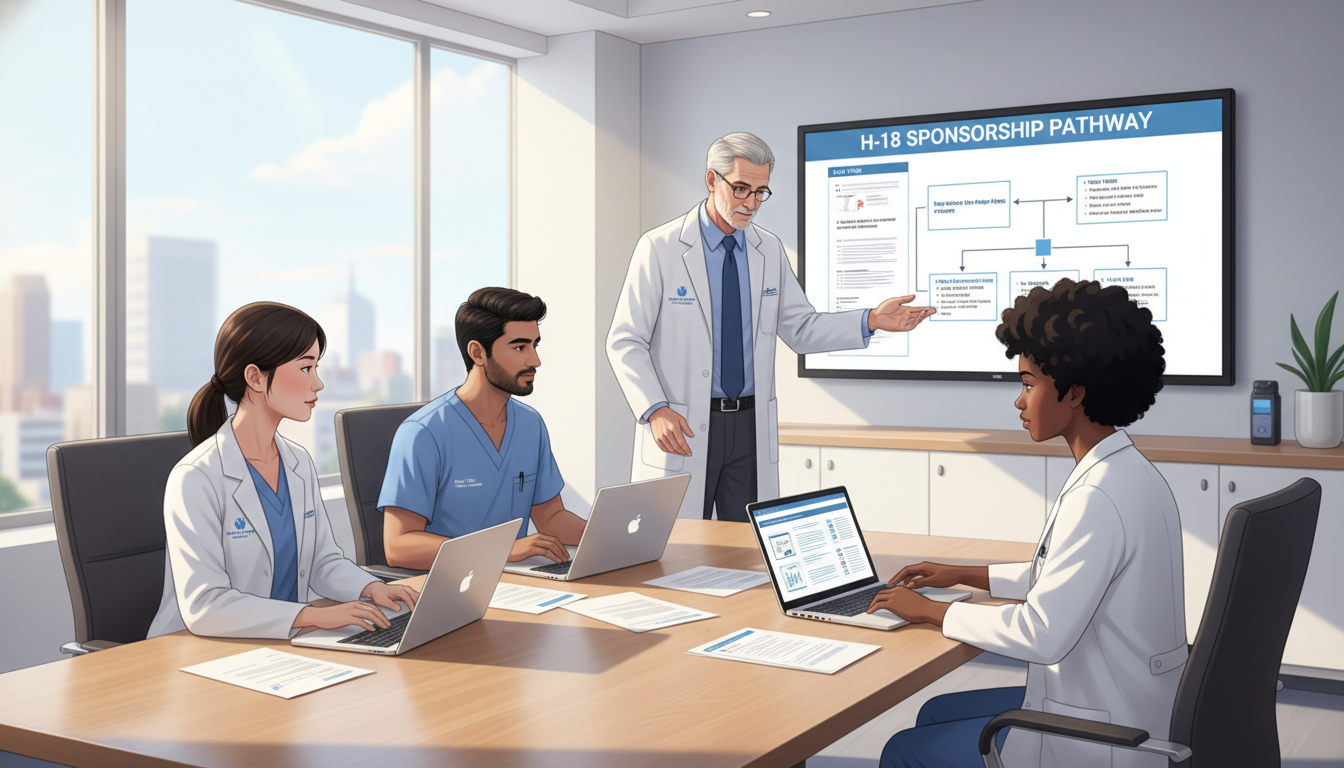
Navigating U.S. residency as an international medical graduate (IMG) is challenging enough; layering immigration strategy on top—especially H‑1B sponsorship—can feel overwhelming. For IMGs aiming to train in the California Central Valley (Fresno, Bakersfield, Modesto, and surrounding areas), understanding which residency programs can sponsor H‑1B visas, how “cap‑exempt” status works, and how to position yourself as a strong applicant is essential.
This guide focuses on H‑1B sponsorship programs for residency programs in the California Central Valley, with practical, applicant‑oriented advice.
Understanding H‑1B for Residency in the Central Valley
Before diving into specific institutions, it helps to clarify some terminology and constraints that drive program policies.
J‑1 vs H‑1B for Residency
Most IMGs train on one of two visas:
J‑1 (ECFMG-sponsored)
- Most common for residency and fellowship.
- Requires a 2‑year home-country return obligation after training unless you obtain a waiver (e.g., Conrad 30, VA, or hardship/persecution waiver).
- Easier for many programs administratively and financially.
H‑1B (employer-sponsored)
- Dual-intent visa (compatible with future green card plans).
- No 2‑year home-return requirement.
- Requires:
- Passed USMLE Step 3 before H‑1B petition filing
- A valid medical license/eligibility in California (PTL or full license, depending on level)
- Demonstration by the program that the wage meets or exceeds the prevailing wage
- More costly and paperwork-heavy for programs.
Because of this, many residencies default to J‑1 sponsorship only. Those that are open to H‑1B visas often restrict them to highly competitive candidates or certain specialties.
What “H‑1B cap‑exempt” Means for Residency
The annual H‑1B lottery (standard “cap‑subject” H‑1B) does not usually apply to residents because most academic medical centers and their affiliates qualify as:
- Cap‑exempt H‑1B employers – Not subject to the annual H‑1B numerical cap if they are:
- Institutions of higher education
- Nonprofit organizations related to or affiliated with an institution of higher education
- Nonprofit or government research organizations
Many Central Valley residency programs are affiliated with the University of California, other universities, or large teaching hospitals, which can qualify them as H‑1B cap exempt. This is a huge advantage:
- No need to enter the H‑1B lottery.
- Petitions can be filed any time of year.
- Less anxiety about “running out” of H‑1B numbers.
That said, cap‑exempt status does not force a program to sponsor H‑1Bs. Each program sets its own internal policy.
Key Takeaways for IMGs
- You should not assume that any Central Valley residency will sponsor H‑1Bs, even if cap‑exempt.
- You must confirm directly with each program’s coordinator or website.
- If H‑1B is critical for you, plan your application list strategically around known H‑1B‑friendly or flexible programs.
Major Central Valley Residency Hubs and H‑1B Landscape
The Central Valley stretches roughly from Bakersfield in the south through Fresno and northward toward Modesto and Stockton. It’s a region with high medical need, large underserved populations, and multiple teaching hospitals that rely on IMGs.
Below is a region‑by‑region overview to help frame your research. Policies change frequently, so use this as a starting structure and then verify directly with each program.
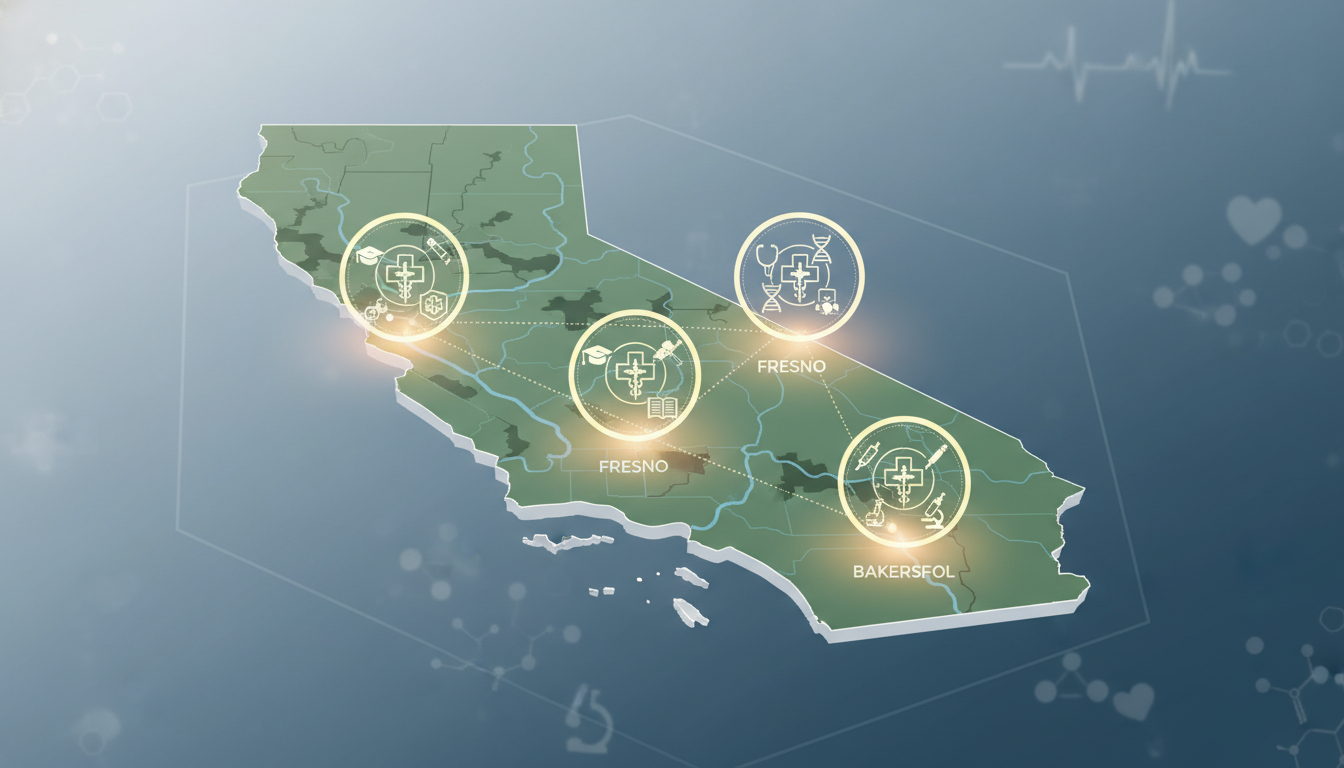
Fresno Residency Ecosystem
Fresno is one of the most significant graduate medical education hubs in the Central Valley.
Key institutional players include:
UCSF Fresno
- A major regional campus of the University of California, San Francisco.
- Hosts multiple ACGME‑accredited residencies: Internal Medicine, Family & Community Medicine, Pediatrics, Emergency Medicine, General Surgery, OB/GYN, Psychiatry, and more.
- UCSF and its affiliates are typically H‑1B cap exempt due to university affiliation.
Community Medical Centers (CMC) – Community Regional Medical Center, Clovis Community, etc.
- CMC is the main clinical partner for UCSF Fresno.
- Large safety‑net hospital with trauma, burn, and high‑acuity services.
- Often employs residents, fellows, and faculty under cap‑exempt H‑1Bs tied to the UCSF affiliation.
H‑1B implications in Fresno:
- Given the university affiliation, many UCSF‑linked programs can sponsor H‑1Bs in principle.
- In practice, policies vary by department and year. Some programs clearly state:
- “We sponsor J‑1 and H‑1B visas”
- “We only sponsor J‑1 visas”
- Or they may say “Visa sponsorship is considered on a case‑by‑case basis.”
Actionable steps for Fresno‑bound applicants:
- Before applying, check each UCSF Fresno residency website for:
- “International Medical Graduate” or “Eligibility” sections
- Specific mention of H‑1B residency programs or H‑1B sponsorship
- If it’s not clear, email the program coordinator with a precise question:
- “For the 2025 Match cycle, does your program sponsor H‑1B visas for categorical residents?”
Because Fresno is such a large hub, building a personal H‑1B sponsor list during your research is smart (more on how to do this below).
Bakersfield and Southern Central Valley
Bakersfield serves as the southern anchor of the Central Valley, with several teaching hospitals and community‑based programs.
Key features:
- A mix of community teaching hospitals and university‑affiliated residencies (through UCLA, Kern Medical, etc.).
- Many programs in this region primarily sponsor J‑1 visas but may maintain limited flexibility for outstanding candidates or specific specialties.
H‑1B sponsorship in Bakersfield is more likely when:
- The residency is formally affiliated with a recognized university.
- The hospital is part of a nonprofit system that maintains academic affiliations (creating a path to H‑1B cap‑exempt filing).
Again, detailed, program‑level confirmation is essential.
Northern Central Valley: Modesto, Stockton, and Surrounding Areas
Cities like Modesto, Stockton, Merced, and surrounding communities have grown their GME presence, often emphasizing community‑based Primary Care (Family Medicine, Internal Medicine) and Psychiatry.
Typical patterns:
- Community hospital–based programs sometimes sponsor only J‑1 due to cost and administrative overhead.
- Programs with strong ties to universities (e.g., UC Davis satellite training sites, or partnerships with medical schools) may have or develop H‑1B options.
Because the Central Valley has extraordinary physician shortage and underserved populations, some programs are motivated to attract IMGs through flexible visa policies. However, written policies may lag behind current practice—talking directly with staff can reveal more.
How to Build Your Own H‑1B Sponsor List for Central Valley Residencies
Unlike formal databases of “IMG‑friendly” programs, there is no official, universally updated H‑1B sponsor list for residency programs in the Central Valley. You must build your own, using multiple data sources.
Step 1: Identify All Target Programs
Start by listing every residency program in the Central Valley that interests you, by specialty. Resources:
- FREIDA (AMA) – Filter by state (California) and then manually identify those in Central Valley cities: Fresno, Bakersfield, Modesto, Stockton, Visalia, Merced, etc.
- ACGME public program search – Identify accredited programs by city.
- Institution websites – UCSF Fresno, Kern Medical, county health systems, and major hospital systems.
Create a spreadsheet with columns like:
- Program name
- City
- Specialty
- Academic affiliation (e.g., UCSF, UCLA)
- Visa policy (stated)
- Confirmed H‑1B? (Y/N)
- Notes and date confirmed
Step 2: Review Each Program’s Website
For each program, look for sections such as:
- “International Medical Graduates”
- “Applicant Information”
- “Eligibility & Requirements”
- “Visa Sponsorship”
You may see phrasing like:
- “We accept J‑1 visas sponsored by ECFMG and H‑1B visas.”
- “We sponsor J‑1 visas only.”
- “We do not sponsor visas; applicants must have permanent residency or citizenship.”
- “We review visa needs on a case‑by‑case basis.”
Record the exact wording in your spreadsheet.
Step 3: Confirm Directly with Program Staff
Because policies can change annually, an email or phone call is critical. When you reach out:
- Write a short, professional email to the program coordinator.
- Identify yourself and your situation:
- “I am an IMG graduating in 2025, planning to apply to your Internal Medicine residency.”
- Ask one clear question:
- “Could you please confirm which visa types your program can sponsor for incoming residents in the upcoming Match cycle (e.g., J‑1, H‑1B, or both)?”
If H‑1B is very important, you can follow up more specifically:
- “If your program sponsors H‑1B visas, is there a minimum USMLE Step 3 requirement or timeline for completion prior to rank list submission?”
Update your spreadsheet with:
- The answer you received
- Name and role of the person who replied
- Date of confirmation
Over time, this becomes your personal, up‑to‑date H‑1B sponsor list for Central Valley residency programs.
Step 4: Cross‑Check Cap‑Exempt Status
To maximize your long‑term immigration options, favor programs that:
- Are affiliated with a university (e.g., UCSF, UCLA, UC Davis).
- Are clearly nonprofit hospitals or county facilities with academic agreements.
This increases the likelihood that:
- You can be sponsored under H‑1B cap‑exempt rules for residency.
- Future fellowship positions may also be cap‑exempt.
- You’ll have flexibility to change employers within the cap‑exempt environment during training years.
Strengthening Your Profile for H‑1B‑Sponsoring Programs
Even when a program is open to H‑1B visas, they are often selective about whom they sponsor, due to cost, legal complexity, and timing. To improve your chances:

1. Prioritize Early USMLE Step 3 Completion
For H‑1B sponsorship, most programs require:
- USMLE Step 3 passed before they file your H‑1B petition, often by:
- The time of signing your contract, or
- A specific internal deadline (commonly spring before the start date).
Strategy:
- Schedule Step 3 as early as feasible once you have ECFMG certification.
- Aim to complete Step 3 before Match rank list submission, so programs can confidently rank you as an H‑1B candidate.
Communicate clearly in your application if:
- You have already passed Step 3 (include in ERAS application and CV).
- Or you are scheduled to take it with a realistic date that meets typical deadlines.
2. Demonstrate Strong Ties to Underserved Populations
The Central Valley is an underserved region with major needs in:
- Primary care (Family Medicine, Internal Medicine, Pediatrics)
- OB/GYN and women’s health
- Behavioral health and Psychiatry
- Emergency and hospitalist medicine
Programs here value residents who:
- Speak Spanish or other locally relevant languages.
- Have prior volunteering or clinical experiences serving low‑income, rural, or migrant communities.
- Express genuine, specific interest in long‑term practice in the Central Valley or similar regions.
Use your personal statement and interviews to:
- Connect your background (rural upbringing, public health interest, community work) with Central Valley demographics.
- Show that you are more likely to stay in the region after training, which many program directors care deeply about.
3. Highlight Academic and Clinical Strengths
Residency programs that take on H‑1B sponsorship often want to ensure you will be a strong performer.
Strengthen:
- USMLE scores, particularly Step 2 CK (and Step 3).
- Clinical experience in the U.S. (hands‑on electives, sub‑internships, observerships).
- Letters of recommendation from U.S. faculty, particularly from similar practice environments (safety‑net hospitals, teaching centers).
- Any research, quality improvement projects, or teaching experience.
This helps offset concerns that a program’s extra effort to secure H‑1B sponsorship may not be “worth it.”
4. Show Immigration Preparedness and Realistic Expectations
Directors worry about candidates who misunderstand visa rules or timelines. Reassure them by:
- Knowing the basics of H‑1B cap‑exempt vs cap‑subject status.
- Being clear that you understand J‑1 vs H‑1B trade‑offs and genuinely prefer H‑1B for reasons you can articulate.
- Having your documents in order (credential evaluations, licensing materials, USMLE transcripts).
You don’t need to sound like an immigration lawyer; just demonstrate that you’ve done your homework and won’t create last‑minute surprises.
H‑1B, J‑1 Waivers, and Long‑Term Career Planning in the Central Valley
Because the Central Valley is a shortage area, it’s a natural region for both:
- Training under H‑1B cap‑exempt status
- Later practicing under J‑1 waiver or H‑1B cap‑exempt employment
Understanding the interplay can guide both your residency choices and long‑term plans.
If You Train on H‑1B
Advantages:
- No 2‑year home country return requirement.
- Easier path to transition to employment‑based permanent residency (green card), especially if you find a shortage‑area employer or cap‑exempt hospital willing to sponsor you.
- Detachment from ECFMG as your visa sponsor (your employer holds the petition).
Limitations:
- Many community employers post‑residency are cap‑subject (private groups, small hospitals). You may need to enter the H‑1B lottery to move to them, unless:
- You remain with a cap‑exempt hospital or academic system, or
- You transition later with a successful cap‑subject H‑1B.
If You Train on J‑1
You’ll likely need to address the 2‑year home‑country requirement through:
A Conrad‑30 J‑1 waiver:
- Many California underserved counties (including Central Valley regions) participate.
- Requires a job commitment for typically 3 years in a Health Professional Shortage Area (HPSA) or Medically Underserved Area (MUA).
Other waivers (VA, hardship, persecution), though these are more specialized.
Many IMGs actually end up returning to practice in the Central Valley after training on J‑1 or H‑1B, because:
- The region offers many waiver‑eligible and cap‑exempt jobs.
- There is strong demand for primary care and specialty physicians.
- Employers are accustomed to working with visa‑dependent physicians.
Strategic Considerations
When choosing between programs that offer H‑1B vs J‑1 only, think beyond just the visa label:
- Does the Central Valley residency offer strong clinical training and support?
- What are the placement outcomes for graduates—do many stay in the region?
- Are there H‑1B cap‑exempt opportunities with the same health system after training?
Sometimes a J‑1‑only program with strong pipeline jobs into waiver positions can be as viable as an H‑1B program, depending on your circumstances. Your long‑term strategy may involve:
- Training on H‑1B in Fresno or another Central Valley city, then:
- Transitioning to a cap‑exempt hospital job in the area, or
- Entering the cap‑subject H‑1B lottery with an employer elsewhere in California or another state.
Practical Application Tips for Central Valley H‑1B Applicants
To consolidate this into an actionable plan:
Start early (12–18 months before Match).
- Build your program list.
- Take Step 3 as early as feasible.
- Begin emailing programs for current visa policies.
Categorize programs by visa flexibility.
- Category A: Explicitly sponsor H‑1B (Central Valley or nearby).
- Category B: J‑1 only (but still potentially worth applying if training is excellent).
- Category C: No visa sponsorship (exclude unless you have another status like green card).
Balance your Central Valley residency list.
- Don’t rely on a single city like Fresno; include Bakersfield, Modesto, Stockton, and smaller-city programs.
- Aim for a mix of university‑affiliated and community programs.
Customize your application materials.
- In your personal statement, mention why the Central Valley specifically appeals to you (rural medicine, migrant health, agricultural communities, etc.).
- In interviews, demonstrate that you can see yourself living and practicing in the region.
Be transparent—but concise—about your visa needs.
- When asked, clearly say: “I am seeking an H‑1B if the program can sponsor; I have completed Step 3 and understand the cap‑exempt process.”
- Don’t overshare complex immigration stories unless necessary; focus on reassuring the program that sponsorship will be manageable.
Consult an immigration attorney early if possible.
- Especially if you have previous U.S. status, prior denials, or complex situations.
- An attorney can clarify timing, documentation, and strategy around cap‑exempt vs cap‑subject options.
FAQs: H‑1B Sponsorship for Central Valley Residency Programs
1. Are all California Central Valley residency programs H‑1B cap‑exempt?
No. Many are cap‑exempt because of university or nonprofit affiliations (e.g., UCSF Fresno and partner hospitals), but not all. Some community hospitals may not qualify as cap‑exempt, or may technically qualify but choose not to sponsor H‑1Bs for residents. You must check each program individually.
2. Does UCSF Fresno sponsor H‑1B visas for residency?
UCSF Fresno is academically affiliated with UCSF and therefore typically has the structural capacity for H‑1B cap‑exempt sponsorship. However, whether an individual Fresno residency (Internal Medicine, EM, Surgery, etc.) will sponsor H‑1Bs in a specific Match cycle depends on departmental policy. Some years and specialties may sponsor H‑1B; others might limit to J‑1. You need to confirm directly with the specific program.
3. Is it harder for IMGs to match into Central Valley residency programs on H‑1B compared to J‑1?
Often yes. Many programs are more comfortable with J‑1 visas because they are standardized and ECFMG‑managed. When H‑1B is available, it may be reserved for particularly strong candidates—especially those with high scores, U.S. clinical experience, Step 3 completed, and clear commitment to underserved populations. Applying with J‑1 flexibility generally makes you eligible for more programs overall.
4. Can I switch from J‑1 to H‑1B during or after Central Valley residency?
Switching from J‑1 to H‑1B usually requires you to resolve the 2‑year home‑country requirement first, typically through a J‑1 waiver. Once you have a waiver and a qualifying employer (cap‑exempt or cap‑subject with an H‑1B number), you can move to H‑1B status. Many IMGs complete residency on J‑1 in the Central Valley, then take a Conrad‑30 waiver job in the same region, often transitioning to H‑1B at that point.
By understanding the H‑1B sponsorship landscape in the California Central Valley, leveraging cap‑exempt opportunities, and preparing a strong, strategically tailored application, you can significantly improve your chances of launching a successful residency—and long‑term career—in this high‑impact region.