Understanding H‑1B Residency Sponsorship in the DMV Region
The DC–Maryland–Virginia (DMV) area is a high‑value target for many international medical graduates (IMGs). It combines strong academic centers, large safety‑net hospitals, and proximity to federal agencies and public health organizations. For IMGs who need visa sponsorship, knowing which DC residency programs and Maryland Virginia residency options support H‑1B is essential.
This article focuses on H‑1B sponsorship pathways for residency programs in the DMV region, how “H‑1B cap exempt” works, realistic expectations, and strategies to improve your chances as an H‑1B–seeking applicant.
Note: Policies change frequently. Always verify details directly with each program’s website or coordinator before you apply.
1. H‑1B Basics for Residency Applicants
1.1. What is the H‑1B for Residency?
The H‑1B is a temporary work visa for specialty occupations that require at least a bachelor’s degree (for physicians, typically an MD/DO or foreign equivalent plus USMLE/ECFMG steps). For residency:
- You are hired as an employee in training at a teaching hospital.
- The hospital (or university) is your H‑1B sponsor.
- You must be ECFMG certified and have passed USMLE Step 3 before H‑1B filing in almost all cases.
- Residency H‑1B is usually granted in 1–3 year increments, up to a 6‑year total (including any prior H‑1B time).
1.2. H‑1B vs J‑1 for IMGs
Most IMGs in US residency are on J‑1 or H‑1B. Key contrasts:
J‑1 (ECFMG sponsored):
- Most common for IMGs.
- Requires two-year home-country physical presence after training (unless you get a waiver like Conrad 30).
- Simpler and cheaper for hospitals.
- ECFMG is the visa sponsor; hospital is host institution.
H‑1B (hospital/university sponsored):
- No automatic two-year home return requirement.
- Allows smoother transition to fellowship, job, and ultimately green card.
- More expensive and administratively complex.
- Requires USMLE Step 3 and state licensure eligibility.
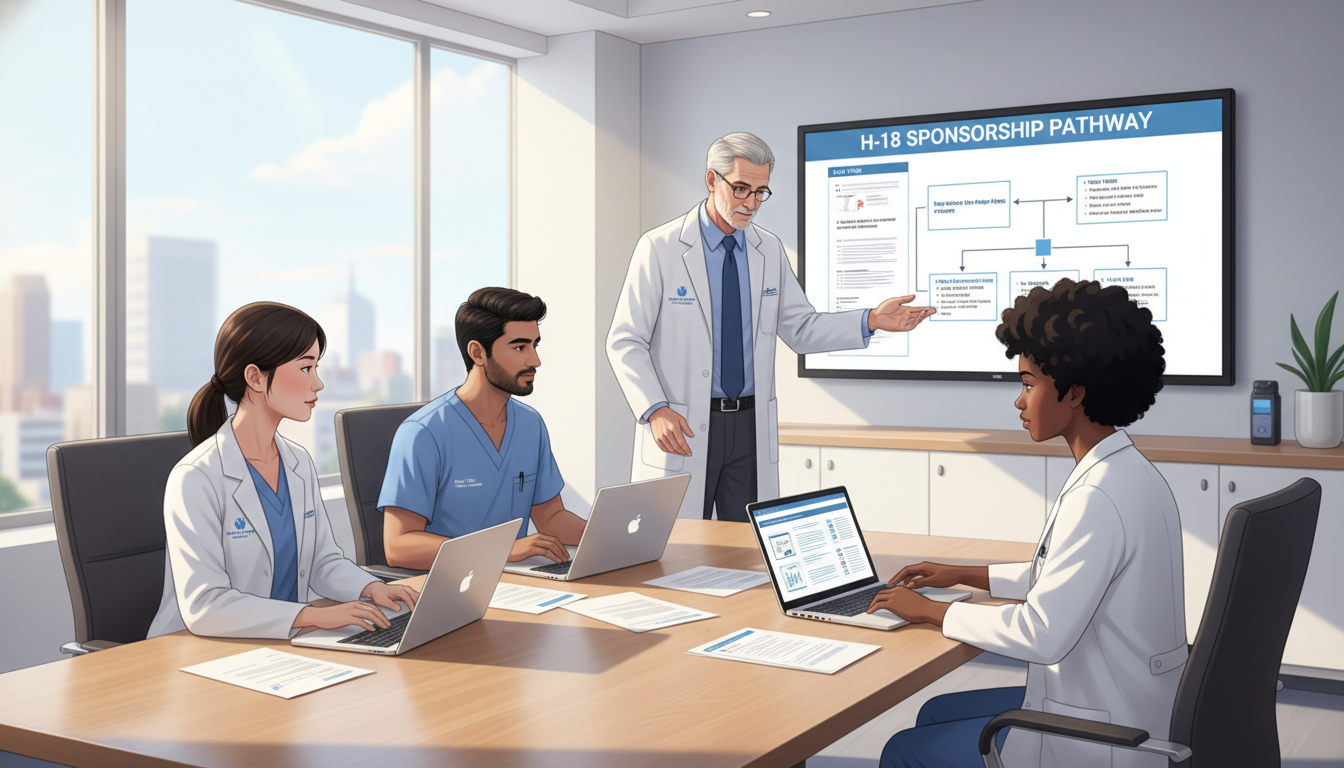
Because of this complexity, many DMVs programs only sponsor J‑1 or sponsor H‑1B very selectively (e.g., for top-ranked candidates, certain specialties, or cap‑exempt roles).
2. Cap‑Exempt vs Cap‑Subject: Why It Matters in the DMV
2.1. The H‑1B Cap and Lottery
Regular H‑1B petitions are subject to an annual numerical limit (“the cap”) and a lottery. This is what most non-medical employers face each spring. If you are cap‑subject, you must be selected in the lottery and can only start work after the federal fiscal year begins (typically October 1).
This is a major problem for residency, which usually starts July 1.
2.2. H‑1B Cap‑Exempt for Teaching Hospitals
Luckily, many residency-sponsoring institutions are H‑1B cap exempt, meaning they can file H‑1B petitions any time of year, without the lottery. You are likely cap‑exempt if your employer is:
- A non-profit institution of higher education (e.g., university)
- A non-profit entity affiliated with an institution of higher education, usually through a formal affiliation agreement (e.g., university teaching hospital)
- A non-profit research organization or government research organization
Many major academic medical centers in DC residency programs and Maryland Virginia residency systems fall into this category.
Implication for you:
Most residency/fellowship programs that offer H‑1B in the DMV are cap‑exempt, which:
- Avoids the H‑1B lottery.
- Allows July 1 start.
- Gives more flexibility for extensions and transitions to fellowship in the same cap‑exempt ecosystem.
2.3. Losing Cap‑Exempt Status Later
After residency or fellowship, if you take a job at a private, for‑profit practice or hospital not affiliated with a university, that job might be cap‑subject.
- If you’ve never held a cap‑subject H‑1B, that employer must enter you into the H‑1B lottery.
- If you had a prior cap‑subject H‑1B in another field or job, you may still be “cap counted” and can transfer without a new lottery.
This is why planning your H‑1B path early—starting in residency—is crucial.
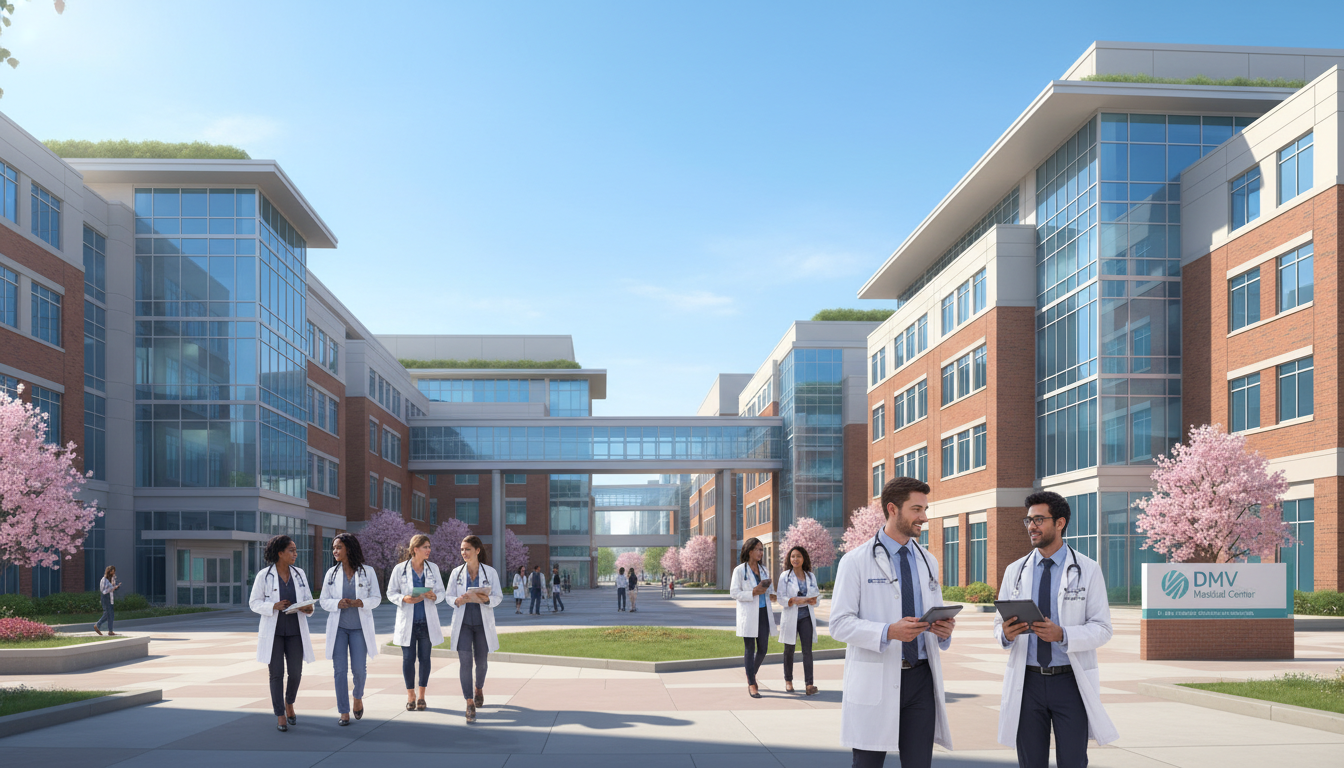
3. H‑1B Sponsorship Landscape in the DMV Region
The DMV region has a mix of large academic centers, community hospitals, and federal institutions. Policies differ not only by system but also by department and year. Below is a policy‑oriented overview (not an official or exhaustive H‑1B sponsor list).
Always re‑check each program’s current policy on J‑1/H‑1B before you rely on it.
3.1. Washington, DC Residency Programs
Some of the major teaching institutions in DC include:
- MedStar Georgetown University Hospital / Georgetown University
- MedStar Washington Hospital Center
- George Washington University Hospital (GWU)
- Children’s National Hospital
- Howard University Hospital
- VA and some federal facilities (rarely directly sponsor H‑1B for residents, often partner with universities)
General trends (subject to change):
- Many university‑based DC residency programs primarily sponsor J‑1, with selective H‑1B sponsorship.
- H‑1B is often reserved for highly competitive candidates with strong scores, research, and prior US clinical experience.
- Programs may say “We accept J‑1 and H‑1B” but in practice sponsor H‑1B for a small minority of matched residents.
Specialties where H‑1B is more commonly seen (not guaranteed):
- Internal Medicine
- Neurology
- Pathology
- Anesthesiology
- Some Surgical subspecialties
Specialties where it may be rare or restricted:
- Primary care–focused community programs
- Smaller DC‑area hospitals without strong university affiliations
- Psychiatry (varies by program)
When researching DC residency programs:
- Look for wording like “We sponsor J‑1 and H‑1B visas” vs “We only accept J‑1 visas.”
- If it’s unclear, email the program coordinator with a direct question about their H‑1B policy for categorical residents.
3.2. Maryland Residency Programs (Academic Centers)
Maryland includes several large academic systems:
- Johns Hopkins Hospital / Johns Hopkins Bayview Medical Center (Baltimore)
- University of Maryland Medical Center (Baltimore)
- Other regional teaching hospitals (e.g., community programs in suburban Maryland)
Academic powerhouses like Hopkins and University of Maryland:
- Are typically H‑1B cap exempt through their university affiliation.
- Historically have sponsored H‑1B in select programs, particularly in research‑heavy or subspecialty training tracks.
- Often have very competitive applicant pools; simply being eligible for H‑1B does not guarantee sponsorship.
Suburban Maryland community programs (e.g., in Silver Spring, Rockville, or other suburbs):
- Often J‑1 focused.
- Some may not sponsor H‑1B at all, due to cost and legal complexity.
- A small number may sponsor for strong candidates or shortage specialties.
When reviewing Maryland Virginia residency programs that lie just outside DC but within commuting distance (Montgomery County, Prince George’s County):
- Be careful not to assume that “near DC” means “H‑1B friendly.” Many are not.
3.3. Virginia Residency Programs (Northern Virginia and Beyond)
Northern Virginia, especially around Arlington, Fairfax, and Alexandria, has:
- University‑affiliated hospitals (e.g., associated with Virginia Commonwealth University, University of Virginia, or other systems).
- Large community teaching systems that may host IMGs.
In Virginia:
- Some university‑associated programs can be H‑1B cap exempt.
- Many community hospitals may choose J‑1 only for cost reasons, especially in primary care–oriented residencies.
- H‑1B may be more common in certain specialties (e.g., Internal Medicine, Neurology, Pathology, some surgical fields) than in Family Medicine or Psychiatry, but this varies by program.
Remember that the DMV region extends down the I‑95 corridor. If you are flexible with geography, expanding your search further into Maryland and Virginia may increase your chance of finding H‑1B residency programs.
4. Building Your Own H‑1B Sponsor List in the DMV
There is no official centralized H‑1B sponsor list for residency programs, especially specific to the DMV. However, you can systematically build a personalized list with current data.
4.1. Step 1 – Start with FREIDA and Official Program Websites
Use AMA FREIDA and NRMP listings:
- Filter by state: District of Columbia, Maryland, Virginia.
- Filter by IMG friendliness if the platform allows (or manually review the proportion of IMGs in current residents).
- Open each program’s website and look for:
- “International Medical Graduates” or “Visa Sponsorship” section.
- Statements like:
- “We sponsor J‑1 and H‑1B visas”
- “We accept J‑1 and H‑1B visas”
- “We only sponsor J‑1 visas”
- “We do not sponsor visas”
Create a spreadsheet with columns:
- Program name
- Specialty
- State (DC/MD/VA)
- Sponsorship policy (J‑1 only / J‑1 and H‑1B / unclear)
- Notes (Step 3 requirement, cap exempt statement, etc.)
4.2. Step 2 – Email Programs with Targeted Questions
Many websites are vague. A short, professional email can clarify:
- State your interest and question concisely.
- Example template:
Subject: Visa Sponsorship Policy – [Program Name] Residency
Dear [Coordinator/Program Director],
I am an international medical graduate planning to apply to the [Specialty] residency at [Hospital/University]. I have ECFMG certification and am working towards USMLE Step 3.
Could you please clarify your current visa sponsorship policy for residents beginning in [Match Year]? Specifically, do you sponsor H‑1B visas for categorical residents, or only J‑1 visas?
Thank you very much for your time.
Sincerely,
[Your Name], MD
Update your spreadsheet with their responses. Over several weeks, this becomes your personal H‑1B sponsor list for the DMV.
4.3. Step 3 – Cross‑Check with Alumni and Current Residents
Leverage:
- LinkedIn – Search for “[Program Name] Internal Medicine Residency H‑1B” or alumni with “Residency at…” who are now on H‑1B status.
- Institution GME pages that list current residents and sometimes their visa status.
- Social media (Twitter/X, Reddit, specialty forums) where residents occasionally discuss visa experience.
If you see multiple recent residents on H‑1B from a particular DMV program, it’s a sign that:
- The program is operationally comfortable with H‑1B.
- It may be IMG‑friendly in practice, not just on paper.

5. Application Strategy for IMGs Seeking H‑1B in the DMV
5.1. Be Realistic About Competitiveness
DMV programs are attractive because of:
- Proximity to Washington, DC and major academic centers.
- Opportunities in research, public health, and policy.
- Desirable urban/suburban living.
Because of this, many DMV programs are highly competitive, especially those offering H‑1B. You should:
- Maintain broad geographic flexibility if your priority is H‑1B visa sponsorship.
- Apply not just to DMV but also to other H‑1B‑friendly regions (Midwest, some Northeast and South programs, etc.).
Having DMV as your only target region for H‑1B is risky.
5.2. Timing: Step 3 and Documentation
For most H‑1B residency petitions, you will need:
- USMLE Step 3 passed before the institution can file your H‑1B.
- ECFMG certification completed.
- State medical license eligibility, often via a training or limited license.
Given the Match schedule:
- Try to take Step 3 before ranking deadlines or soon after Match, so your program can initiate H‑1B paperwork early.
- If you cannot complete Step 3 early, some DMV programs may decline H‑1B and offer only J‑1, even if they theoretically sponsor H‑1B.
Plan your exam schedule around this:
- Take Step 3 as soon as eligibility allows and your preparation is adequate.
- If you are already in the US (e.g., on F‑1 or another status), prioritize Step 3 completion before application season if your goal is H‑1B.
5.3. Tailoring Your Application for H‑1B Programs
For DMV programs that are known or likely to be H‑1B‑friendly:
Emphasize:
- US clinical experience (especially in academic centers).
- Any research, QI projects, or public health work (important in DC and Baltimore).
- Strong letters from US faculty.
- Stability and long‑term career plans in the US healthcare system.
Avoid overemphasizing:
- Purely geographical preference without tying it to career goals (e.g., “I just love DC” is weaker than “I want to engage in health policy/NIH research opportunities in the DMV region”).
If you feel comfortable, you can mention in your personal statement that you plan to pursue H‑1B sponsorship due to long‑term goals and preference to avoid the J‑1 two‑year home requirement—but keep it positive and not demanding.
5.4. Balancing J‑1 and H‑1B Options
Even if your long‑term goal is to avoid the J‑1 home requirement, strategically:
- Apply widely to both J‑1 and H‑1B programs.
- Rank programs by overall quality and fit, not visa category alone.
- If you match into a J‑1 program, you can still:
- Seek a J‑1 waiver later (e.g., Conrad 30 in underserved areas).
- Convert to H‑1B for fellowship or attending jobs after waiver.
A strong J‑1 program in the DMV or elsewhere may be better than a weak H‑1B program with poor training quality.
6. Common Pitfalls and Practical Tips for DMV‑Focused IMGs
6.1. Pitfall: Assuming All University Programs Offer H‑1B
Not all university‑affiliated programs:
- Sponsor H‑1B routinely.
- Are willing to do the paperwork for every acceptable IMG.
Even in a cap‑exempt environment, some departments choose J‑1 only because:
- ECFMG handles much of the administrative burden.
- It avoids Step 3 timing issues.
- It simplifies expansion or last‑minute hiring.
Actionable tip: Before you spend application money, verify H‑1B possibility through websites or emails.
6.2. Pitfall: Waiting Too Late for Step 3
If you delay Step 3 until after Match:
- Programs may be unable to process H‑1B in time for July 1.
- You could be forced into J‑1 even where H‑1B is technically possible.
Actionable tip: If H‑1B is critical and you are otherwise ready, prioritize Step 3 as early as your eligibility and schedule allow.
6.3. Pitfall: Focusing Only on DC Proper
Some applicants view “DC or nothing,” but:
- H‑1B‑friendly opportunities may be slightly outside DC (Baltimore, suburban Maryland, Northern Virginia).
- Commuting from suburbs to DC is common and often more affordable.
Actionable tip: Treat the DMV as a regional ecosystem rather than three isolated states/district. This increases your pool of potential sponsors.
6.4. Pitfall: Ignoring Long‑Term Cap Strategy
If you do residency in a cap‑exempt DMV program and later move to a cap‑subject private employer, that employer may need to win the H‑1B lottery unless you have already been cap‑counted.
Actionable tip:
- Consider doing fellowship in a cap‑subject job (rare) or another cap‑exempt institution.
- Discuss long‑term plans with an immigration attorney early—especially if you foresee moving out of academic settings.
FAQs: H‑1B Sponsorship for DMV Residency Programs
1. Are most DC/MD/VA residency programs H‑1B friendly?
No. Many DMV residency programs accept J‑1 only or sponsor H‑1B very selectively. Large academic centers in DC and Baltimore are often cap‑exempt and may sponsor H‑1B, but typically for a limited number of highly qualified candidates. You should verify each individual program’s policy.
2. Do I need USMLE Step 3 before applying to H‑1B residency programs?
You usually don’t need Step 3 at the time of ERAS application, but you will almost always need it:
- Before the H‑1B petition can be filed.
- Often by a program‑defined deadline after Match.
To keep H‑1B viable, aim to complete Step 3 before or soon after ranking. If you wait until late spring, H‑1B processing for a July 1 start may be impossible.
3. If my DMV residency is H‑1B cap‑exempt, will my future jobs also be cap‑exempt?
Not necessarily. Cap‑exempt status is tied to the employer, not you. If you later work for a for‑profit private practice or non‑university hospital, that job may be cap‑subject and require a successful H‑1B lottery, unless you were previously counted under the cap in another role. Academic, university‑affiliated, or non‑profit research organizations often remain cap‑exempt.
4. How many DMV programs should I apply to if I only want H‑1B?
Relying only on DMV H‑1B programs is risky, because:
- The absolute number of true H‑1B‑friendly slots is limited.
- Applicant competition is intense.
Even if you prioritize the DMV, include H‑1B‑friendly programs across multiple US regions and consider applying to strong J‑1 programs as well. Think of H‑1B as a preference, not a strict condition, unless your circumstances absolutely require it.
H‑1B residency sponsorship in the DMV region is possible but competitive and policy‑dependent. By understanding H‑1B cap exempt rules, researching each DC residency program and Maryland Virginia residency option carefully, and timing your Step 3 and application strategy, you can significantly improve your chances of securing training in this high‑opportunity region. Always pair your research with updated information from program websites and, when possible, guidance from an immigration attorney experienced in physician visas.