
Understanding H-1B Sponsorship for Caribbean IMGs in the Research Triangle
For many Caribbean medical graduates aiming to train in the United States, securing an H-1B residency position can feel like navigating a maze. This is especially true if you’re targeting competitive academic hubs like North Carolina’s Research Triangle (Raleigh–Durham–Chapel Hill). The good news: several programs in this region have historically sponsored H-1B visas for residents and fellows, and there are strategies you can use to improve your chances.
This guide is written specifically for a Caribbean IMG—especially those from schools like St. George’s University (SGU), Ross, AUC, Saba, etc.—who is interested in residency training in the Research Triangle and wants to understand H-1B sponsorship programs, policies, and practical steps.
We’ll cover:
- How H-1B residency sponsorship works
- Research Triangle residency landscape for IMGs
- Program-by-program H-1B friendliness (Duke, UNC, WakeMed, etc.)
- How to present your Caribbean medical school background (including SGU residency match strengths)
- Strategic application tips and an H-1B sponsor list mindset
- Common questions IMGs ask about J-1 vs H-1B and cap-exempt issues
H-1B Basics for Caribbean IMGs: What You Need to Know
H-1B Residency Programs: Core Concepts
H-1B is a U.S. work visa for specialty occupations, including physicians in residency/fellowship training. For a Caribbean IMG targeting H-1B residency programs, several key points are crucial:
Sponsoring Entity
- The residency program’s institution (usually a university or health system) is your H-1B sponsor.
- You cannot obtain an H-1B for residency independently; the program must agree to file the petition.
Cap-Exempt vs Cap-Subject
- Many academic medical centers (like Duke and UNC) are H-1B cap exempt because they are non-profit institutions affiliated with universities.
- Cap-exempt means:
- They can file H-1B petitions year-round.
- You’re not counted toward the national H-1B cap lottery.
- This is a major advantage compared with private practice jobs or some community hospitals that may be cap-subject.
Eligibility Requirements (Common Across Programs)
While each hospital has its own specifics, most H-1B residency programs require:- ECFMG certification
- Passing USMLE Step 1, Step 2 CK (and often Step 3 before H-1B filing)
- A valid medical degree from a recognized school
- State licensure eligibility (often training license requirements vary by state)
For North Carolina, passing USMLE Step 3 before H-1B filing is frequently expected, especially at large academic centers.
Duration and Extensions
- H-1B is typically granted in increments up to 3 years, renewable up to a total of 6 years.
- Cap-exempt H-1Bs can sometimes be extended beyond 6 years under certain green card processes, but for residency/fellowship this is rarely an issue (training is usually ≤ 7–8 years total).
Why Caribbean IMGs Often Prefer H-1B Over J-1
Many Caribbean graduates aim for H-1B instead of J-1 because:
- No 2-year home residency requirement (which J-1 has for many IMGs).
- Easier path to remain in the U.S. after residency and transition into an attending job.
- Often simpler to pursue permanent residency (green card) if you remain in an academic/clinical role.
However, H-1B comes with trade-offs:
- Not all programs sponsor H-1B (some are J-1 only).
- Step 3 is often mandatory before residency start—challenging for some students.
- Legal and administrative costs can deter some smaller institutions.
As a Caribbean IMG, you must balance your need for visa sponsorship flexibility with your competitiveness and the availability of H-1B-friendly programs.
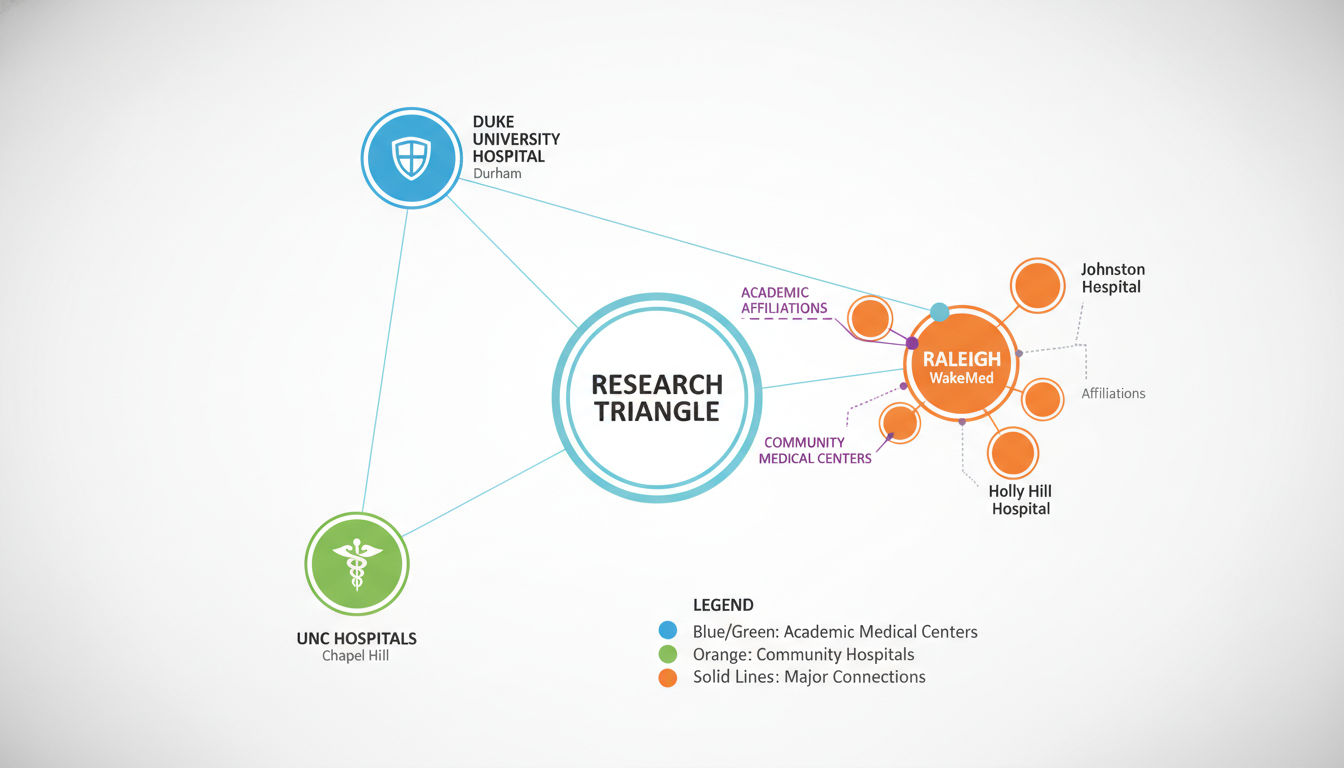
The Research Triangle Landscape: Opportunities for Caribbean IMGs
The Research Triangle—anchored by Durham, Raleigh, and Chapel Hill—is one of the country’s top biomedical clusters. For a Caribbean IMG, it offers a mix of:
- Large academic medical centers (H-1B cap-exempt)
- Community-based programs with variable visa policies
- Strong research ecosystems that can benefit your long-term career
The major players in the region relevant to residency and H-1B sponsorship include:
1. Duke University Health System (Durham)
- Flagship programs: Duke University Hospital, Duke Regional, Duke Raleigh
- Residency programs: Internal Medicine, Pediatrics, Surgery, Anesthesiology, Psychiatry, Neurology, Radiology, and many subspecialties
- Visa policy (typical):
- Historically J-1 friendly across most programs
- Some departments have sponsored H-1B for residents and especially for fellows
- Duke is a cap-exempt institution (non-profit university affiliation)
For a Caribbean IMG, a Duke residency is highly prestigious and competitive. A Duke residency followed by a Duke fellowship is a powerful career trajectory, and H-1B sponsorship is more common at the fellowship level; some residency programs also support it for strong candidates (this may vary year-to-year).
Keywords like “Duke residency” and “North Carolina residency” are often associated with top-tier academic training, so if your profile is strong (solid USMLE scores, research, strong letters), targeting Duke with an H-1B request can be realistic, though not guaranteed.
2. UNC Health / UNC School of Medicine (Chapel Hill)
- Primary site: UNC Hospitals, Chapel Hill
- Residency programs: Internal Medicine, Family Medicine, Pediatrics, Surgery, OB/GYN, Psychiatry, etc.
- Visa policy (typical):
- Historically offers both J-1 and H-1B support in various programs
- Also H-1B cap exempt, as part of a public university system
- Strong record with IMGs in some specialties (e.g., Internal Medicine, Family Medicine, Psychiatry)
UNC is especially appealing for IMGs aiming at primary care or academic medicine. Programs often know how to navigate H-1B sponsorship, and Caribbean graduates with strong CVs (especially those with U.S. clinical experience at UNC or affiliated sites) may be competitive.
3. WakeMed, UNC Rex, and Other Raleigh-Area Programs
Around Raleigh and the broader Research Triangle region, you’ll find:
- WakeMed Health & Hospitals (Raleigh, Cary)
- UNC Rex Healthcare (Raleigh)
- Private and community-based teaching programs, including some newer or smaller residencies
Visa policies here are more variable:
- Some community programs are J-1 only.
- Some offer both J-1 and H-1B, but may prefer J-1 due to cost/complexity.
- Their cap-exempt status depends on the institutional structure and any formal academic affiliation.
In your ERAS research, verify each program’s policy on:
- Caribbean IMG eligibility
- H-1B vs J-1 sponsorship
- USMLE Step 3 requirement timing
Caribbean Medical Schools, SGU Residency Match, and Positioning Yourself
How USC/Caribbean Schools Fit into the Research Triangle
As a Caribbean IMG, your path to a North Carolina residency—whether at Duke, UNC, or regional community programs—depends on:
- Strength and recognition of your school (e.g., SGU, Ross, AUC, Saba)
- USMLE scores and attempts
- U.S. letters of recommendation
- Research or quality improvement projects
- Any ties to North Carolina or the Southeast U.S.
Caribbean graduates from schools with strong track records, such as St. George’s University (SGU), often match into U.S. residencies across the country, including in North Carolina. The SGU residency match outcomes regularly highlight placements into internal medicine, family medicine, pediatrics, and other core specialties at both academic and community institutions.
While published lists rarely focus specifically on the Research Triangle, it is not uncommon to see SGU and other Caribbean graduates matching into:
- UNC Health system programs (e.g., Family Medicine, Internal Medicine)
- Community programs that collaborate with Duke or UNC
- Other North Carolina residency spots, particularly in primary care fields
Addressing Bias and Strengthening Your Application
Some academic programs are cautious about Caribbean graduates due to the variability in training environments and historical concerns about exam performance. To offset this, you should:
Aim for Strong USMLE Performance
- Step 1 (even if pass/fail): ensure strong clinical knowledge to perform well on Step 2 CK.
- Step 2 CK: aim for a score that is clearly above the program’s typical IMG threshold.
- Step 3: try to take and pass before ranking if you’re seriously targeting H-1B residency programs (especially at Duke or UNC).
Obtain Robust U.S. Clinical Experience (USCE)
- Preferably at ACGME-affiliated teaching hospitals in the U.S.
- If possible, schedule electives or sub-internships in the Southeast or within North Carolina.
- Strong letters from U.S. attendings carry weight, especially if they’re from academic institutions.
Demonstrate Academic and Professional Maturity
- Research, QI projects, presentations, teaching experiences, leadership roles.
- These especially matter for academic giants like Duke and UNC.
Craft a Clear, Focused Personal Statement
- Explicitly state your reasoning for pursuing training in the Research Triangle (e.g., interest in academic medicine, research ecosystem, specific patient populations).
- Address your Caribbean medical school background confidently and positively, focusing on resilience, clinical exposure, and outcomes like the SGU residency match if you’re SGU.
Identifying H-1B-Friendly Programs in the Research Triangle
There is no single official “H-1B sponsor list” for residency programs. However, you can construct a functional list and strategy by combining:
Program Websites and GME Offices
- Visit each program’s website (Duke, UNC, WakeMed, UNC Rex, etc.) and carefully read:
- “Eligibility and Requirements” or “International Medical Graduates” sections
- Visa policies (J-1 only vs J-1 and H-1B)
- If unclear, email the GME office or program coordinator with a precise question:
- Example: “Does your [Internal Medicine] residency program sponsor H-1B visas for IMGs who have passed USMLE Step 3 prior to starting residency?”
- Visit each program’s website (Duke, UNC, WakeMed, UNC Rex, etc.) and carefully read:
FREIDA and Official Databases
- The AMA FREIDA database can sometimes note visa types, but this is often incomplete or not updated every year. Use it as a starting point, not your only source.
Current and Former Residents
- Search program pages and LinkedIn for current or former residents on H-1B.
- Check if any are Caribbean IMGs (often noted in bios or LinkedIn profiles).
- Reach out politely asking for high-level insights into visa friendliness.
Past Match Lists from Caribbean Schools
- SGU, Ross, and other Caribbean schools often publish match lists.
- Look for:
- “Duke University Hospital – Internal Medicine”
- “UNC Hospitals – Family Medicine”
- “WakeMed – Transitional Year,” etc.
- These demonstrate that Caribbean IMGs have matched there, even if not all were on H-1B visas.
Typical H-1B Expectations by Institution
While specific policies can change, the general patterns in the Research Triangle are:
Duke residency:
- Cap-exempt institution.
- Often J-1 first, but some programs may consider H-1B for elite applicants who:
- Have USMLE Step 3 passed
- Fit institutional priorities (research, diversity, sub-specialty interest)
UNC residency:
- Cap-exempt institution.
- More widely known to sponsor H-1B for certain programs and strong candidates.
- Stronger options in primary care and some specialties for Caribbean IMGs.
Raleigh-area community programs (WakeMed, UNC Rex, etc.):
- Must confirm individually.
- Some may be open to H-1B but prioritize J-1.
- They may be more receptive if you have:
- Step 3 passed
- Regional ties (e.g., family in North Carolina, prior schooling in the state)
Application Strategy: Maximizing Your H-1B Chances as a Caribbean IMG
1. Decide Early: H-1B vs J-1 Tolerance
Ask yourself:
- Is H-1B a preference or a requirement?
- Would you be comfortable accepting a J-1 spot at an excellent program (e.g., Duke Residency) if H-1B isn’t available?
- Are you prepared to deal with the J-1 2-year home requirement or a waiver later?
Your answer shapes your entire ERAS list:
If H-1B is essential:
- Focus your applications on known or likely H-1B residency sponsors.
- Especially prioritize H-1B cap-exempt academic programs like UNC that state they sponsor H-1B.
If H-1B is preferred but not mandatory:
- Apply broadly, including J-1 friendly programs, but make your visa preference clear if asked during interviews.
2. Prioritize Step 3 and Documentation
To capture H-1B opportunities:
- Take USMLE Step 3 as early as feasible, ideally:
- During your final year of med school (for Caribbean students with flexible schedules)
- Or before Match if you’ve taken a research year
- Have your language ready:
- In interviews: “I have passed Step 3 and am fully eligible for H-1B sponsorship should your institution be open to that.”
- On ERAS CV: clearly list Step 3 with date & score.
Some Research Triangle programs will explicitly state:
“We will consider H-1B sponsorship only for applicants who have passed USMLE Step 3 prior to the Match.”
3. Tailor Your ERAS List to the Triangle and the Southeast
If the Research Triangle (and North Carolina residency in general) is your main geographic target:
- Include:
- UNC-associated programs in Chapel Hill and throughout the state
- Duke-associated programs in Durham and Raleigh
- Community programs across North Carolina that are known to take IMGs
- Also apply to similar academic hubs in nearby states (Virginia, South Carolina, Georgia) that may share similar H-1B cap-exempt structures and might be more open to IMGs if the Triangle is highly competitive.
4. Use the Interview to Clarify (Not Negotiate) Visa Policy
When you receive interviews:
- Do not lead with visa questions; first show your genuine interest in the program.
- In later stages of the conversation or via an email to the coordinator, you can ask diplomatically:
- “I’d like to clarify your current approach to visa sponsorship. Are you able to sponsor H-1B visas for international graduates who have passed USMLE Step 3?”
Avoid sounding like your only criterion is visa sponsorship—programs want residents who are committed to their institution and patients.
5. Build a Personal, Not Just Institutional, H-1B Sponsor List
Throughout your research, maintain a private spreadsheet:
- Columns:
- Program name
- City (Durham, Chapel Hill, Raleigh, etc.)
- Specialty
- Visa policy (J-1 only / J-1 & H-1B / unclear)
- Past Caribbean IMGs matched? (Y/N)
- Step 3 requirement for H-1B (Y/N)
- Notes from GME/coord emails or residents
This becomes your personal H-1B sponsor list for the Research Triangle and beyond, updated each cycle.
Long-Term Planning: After Residency in the Research Triangle
If you secure an H-1B residency or fellowship in a cap-exempt institution like Duke or UNC, think ahead:
Future Jobs
- Academic hospitals (often cap-exempt) are more likely to extend/renew your H-1B without a lottery.
- Private practice jobs may require switching to a cap-subject H-1B, meaning you could enter the national lottery.
H-1B Cap-Exempt to Cap-Subject Transition
- If you go from a cap-exempt residency (e.g., Duke residency) to a private job, your new employer may need to win the lottery to hire you.
- Some physicians deliberately remain in university or non-profit roles to avoid lottery risk.
Green Card Pathways
- Some physicians use the stability of cap-exempt H-1B positions to pursue EB-2/EB-1 green card sponsorship.
- Papers, research, teaching, and academic roles at institutions like Duke and UNC can strengthen your profile.
FAQs: H-1B Sponsorship for Caribbean IMGs in the Research Triangle
1. Are Duke residency programs H-1B friendly for Caribbean IMGs?
Duke, as a major academic medical center, is H-1B cap exempt and has sponsored H-1B visas, especially at the fellowship level. Some residency programs may consider H-1B for exceptionally strong applicants with Step 3 passed and strong academic credentials. However, many departments still prefer J-1 for most IMGs. Check each program’s website and email coordinators for the most current policy.
2. Does UNC sponsor H-1B visas for residents?
UNC Hospitals and associated residency programs have historically sponsored both J-1 and H-1B in various departments, particularly for IMGs who already passed USMLE Step 3 and are otherwise highly qualified. Policies vary by specialty and can change, so confirm with individual programs. Because UNC is cap-exempt, they can file H-1B petitions outside the national lottery.
3. As a Caribbean IMG, do I need USMLE Step 3 before applying for H-1B residency programs?
For most H-1B residency sponsorships—especially in North Carolina residency programs at Duke or UNC—USMLE Step 3 is strongly preferred or required before the H-1B petition is filed, often before Match or at least before July 1 start. If your priority is an H-1B position, taking Step 3 early (and passing) significantly strengthens your visa eligibility and application.
4. How realistic is it for a Caribbean IMG (e.g., SGU graduate) to match into an H-1B program in the Research Triangle?
It is realistic but competitive. The SGU residency match and outcomes from other Caribbean schools show that graduates do match into North Carolina and even Triangle-area programs, particularly in primary care and some core specialties. To be competitive for H-1B consideration at places like Duke or UNC, you’ll need:
- Strong Step 2 CK (and ideally Step 3)
- Solid U.S. clinical experience and letters
- A well-crafted narrative showing academic potential and fit
- Realistic expectations: apply broadly within and beyond the Triangle, and consider whether you’re open to J-1 positions at top-tier institutions.
By understanding how H-1B residency programs, cap-exempt institutions, and the specific dynamics of the Research Triangle interact, you can design a realistic and powerful application strategy. As a Caribbean IMG, your path may be more complex, but with early planning, strong exam performance, and targeted outreach, securing H-1B sponsorship in this region is an attainable goal.