Understanding H‑1B Sponsorship for Caribbean IMGs in Family Medicine
For many Caribbean medical school graduates, especially those from schools like SGU, AUC, Ross, Saba, and others, H‑1B sponsorship can feel like the ultimate gatekeeper between successful residency training in the United States and having to leave after years of investment.
As a Caribbean IMG aiming for family medicine residency, understanding H‑1B residency programs, how they work, and how to target them strategically is crucial—especially if J‑1 visa options are limited or not desired.
This guide breaks down what you need to know about H‑1B in the context of family medicine, with a particular focus on Caribbean medical school residency pathways and how to plan your FM match strategy.
J‑1 vs H‑1B: Why H‑1B Matters for Caribbean IMGs
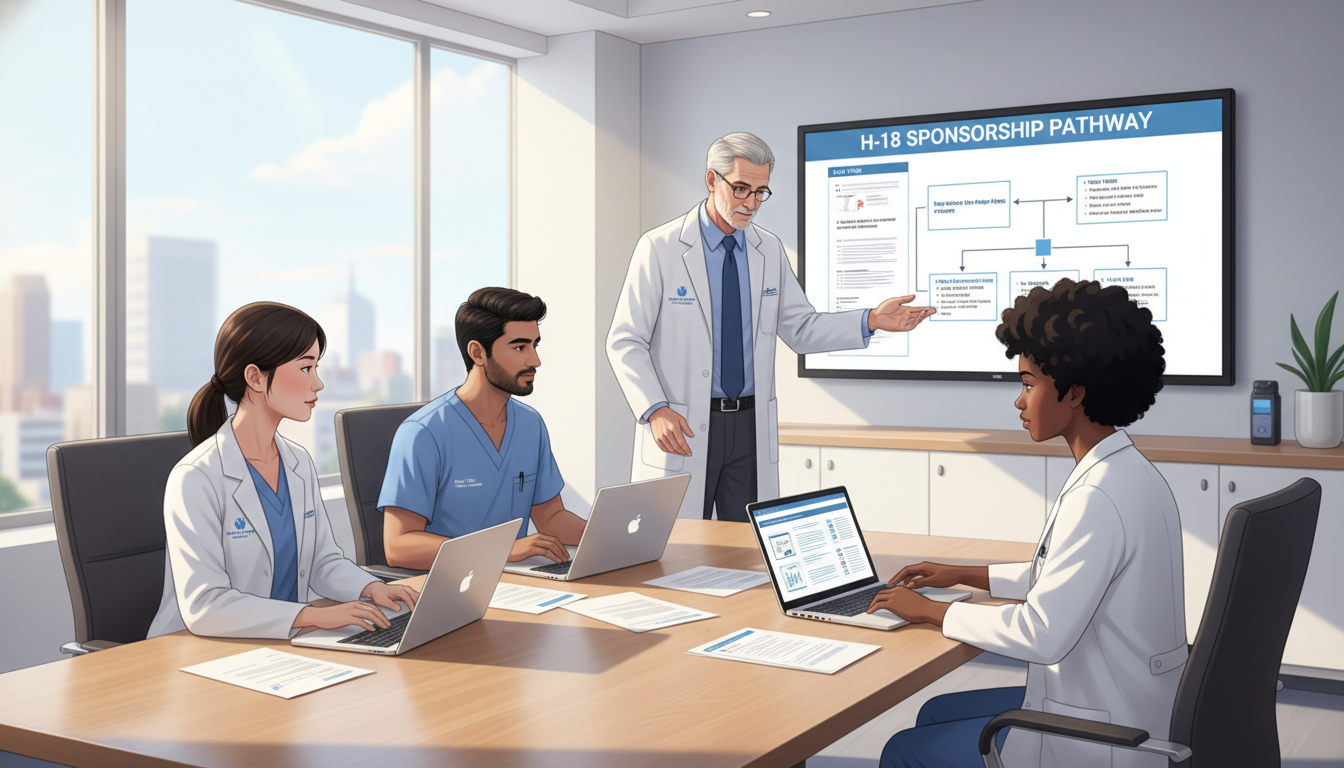
Most IMGs enter residency on a J‑1 visa, but a subset obtain residency training through an H‑1B visa. Understanding the difference helps you decide whether to build an H‑1B‑focused application strategy.
Core Differences
J‑1 (Exchange Visitor – Physician)
- Sponsored by: ECFMG (not the residency program)
- Major drawback: 2‑year home country residence requirement after training, unless you obtain a waiver (often via underserved/shortage-area work)
- Pros:
- Widely used and accepted by many programs
- Often administratively simpler for programs
- Cons:
- Must return home or secure a waiver (e.g., via Conrad 30) before staying long‑term
- Limits direct transition to certain fellowships or jobs without addressing the waiver
H‑1B (Temporary Worker – Specialty Occupation)
- Sponsored by: The residency program/employer
- Pros:
- No 2‑year home return requirement
- Pathway toward long‑term employment and potentially permanent residency (through employer sponsorship) is often more straightforward
- Cleaner transition to post‑residency jobs and fellowships
- Cons:
- Not all programs sponsor H‑1B (fewer than J‑1)
- More complex and costly for programs (legal fees, filing fees)
- Strict exam and licensure requirements before start date
For many Caribbean IMGs, especially those who do not wish to commit to J‑1 waiver obligations later, an H‑1B family medicine residency can be a powerful strategic goal.
Eligibility Requirements for H‑1B in Family Medicine Residency
H‑1B has stricter entry requirements compared to J‑1. You must meet all of these before your residency start date—ideally before your rank list submission.
1. USMLE Requirements
Most H‑1B‑sponsoring family medicine programs require:
- USMLE Step 1 – passed
- USMLE Step 2 CK – passed
- USMLE Step 3 – passed before H‑1B petition filing
Some states and hospitals require Step 3 before they even issue a training license or before Visa processing. Practically, this means:
- Plan to take Step 3 early in your final year or during your transition period (for example, early in the Post‑Match / pre‑residency gap if you graduated).
- If Step 3 is taken after Match Day, ensure you get results before May–June, as many programs file H‑1B petitions in late spring.
2. Educational Credentials
As a Caribbean IMG:
- You must have graduated from an ECFMG‑approved medical school (most established Caribbean schools qualify).
- You must be ECFMG‑certified by the time you start residency (and often by rank list deadline).
If your school is a major Caribbean institution like SGU, AUC, Ross, Saba, or similar, you will likely be familiar with the SGU residency match style advising: they often push early exam completion and US clinical experience, which is extremely helpful for H‑1B targeting.
3. State Medical Licensing Requirements
H‑1B is tied to employment. To be employed as a resident, you typically need at least a training license or limited license from the state:
- Some states require USMLE Step 3 for a training license or full license.
- Others only require Step 1 and Step 2 CK.
Your program’s GME office will guide the process, but you must:
- Be aware of state‑specific requirements early.
- Time your exams to avoid licensing delays that could delay the H‑1B petition.
4. Employer (Program) Sponsorship
You cannot “self‑sponsor” an H‑1B. A US residency program must:
- Offer you a PGY‑1 or PGY‑2 position.
- Agree to pay H‑1B filing and certain mandatory fees.
- Work with their legal/HR or an external immigration attorney to submit the petition.
This means your entire strategy has to focus on programs that explicitly support H‑1B visas for residents.

H‑1B Cap, Cap‑Exempt Programs, and Why It Matters for Family Medicine
Not all H‑1B visas are the same. For residents, H‑1B cap‑exempt status is often the key advantage.
The Regular H‑1B Cap (You Want to Avoid This If Possible)
Typical private employers must enter a lottery (the H‑1B cap) each year:
- Regular cap: 65,000 visas
- US advanced degree cap: 20,000 additional
- Employers must register candidates in March; selection is not guaranteed.
Residency programs usually avoid this lottery by classifying as cap‑exempt.
H‑1B Cap‑Exempt Institutions
Many teaching hospitals and academic medical centers are:
- Non‑profit entities affiliated with a university or
- Governmental or non‑profit research/educational organizations.
These are typically H‑1B cap‑exempt, meaning:
- No lottery.
- H‑1B can be filed any time of year.
- Less risk of not obtaining a visa due to random selection.
For you, this means:
Targeting cap‑exempt H‑1B family medicine programs is safer and more predictable.
How to Recognize Cap‑Exempt Programs
While there is no official “H‑1B cap exempt residency list” publicly provided, you can often infer:
- Programs at large university‑affiliated teaching hospitals (e.g., major academic centers) are usually cap‑exempt.
- Many community programs affiliated with a medical school may also be cap‑exempt.
When researching, program websites or GME offices may state:
- “We are able to sponsor J‑1 and H‑1B visas.”
- Or specify “cap-exempt” or “university-affiliated nonprofit” in institutional descriptions.
If you’re compiling your personal H‑1B sponsor list, prioritize:
- University‑based family medicine residencies
- Large teaching hospitals with multiple residency and fellowship programs
- Institutions that have a track record of H‑1B sponsorship across specialties
Building a Targeted H‑1B Sponsor List for Family Medicine
There is no single, official H‑1B sponsor list for family medicine, and policies change frequently. But you can build your own data‑driven, up‑to‑date list.
Step 1: Use Public Databases and Past Residents
ACGME / FREIDA
- Use AMA FREIDA to view family medicine residency programs.
- Many program entries include a “Visa” section specifying whether they consider J‑1, H‑1B, or both.
Program Websites
- Look for sections titled “International Medical Graduates,” “Visa Sponsorship,” or “Eligibility & Requirements.”
- Phrases to look for:
- “We sponsor J‑1 only.”
- “We sponsor J‑1 and H‑1B visas.”
- “H‑1B considered for exceptional candidates with USMLE Step 3 passed.”
Alumni Data (especially SGU and other Caribbean schools)
- Large Caribbean institutions often publish match lists each year.
- Identify family medicine programs where Caribbean IMGs have matched and later held H‑1B (LinkedIn profiles, alumni networks, or public hospital staff pages can confirm this).
Example approach (hypothetical):
You see that:
- “XYZ University Hospital Family Medicine Residency” has past residents from SGU and AUC.
- A LinkedIn profile shows “H‑1B visa” next to a graduate’s PGY‑2 position at that program. This is a strong sign the program is H‑1B‑friendly.
Step 2: Contact Programs Directly (But Strategically)
If a website is unclear:
- Email the program coordinator or GME office well before ERAS season.
- Keep it concise and professional:
Dear [Coordinator Name],
I am an international medical graduate from [Caribbean medical school], planning to apply to your Family Medicine residency program this cycle. I will have ECFMG certification and USMLE Step 3 completed before residency start.
Could you please confirm whether your program currently sponsors H‑1B visas for incoming residents?
Thank you for your time and assistance.
Sincerely,
[Your Name]
Avoid asking right before interviews or in ways that suggest you are only interested in the visa. Show genuine program interest first, or at least be professional and neutral.
Step 3: Cross‑Check with State Rules and GME Policies
Even if a program sponsors H‑1B:
- Some states may limit H‑1B use for residents.
- Some hospital systems have changed policies due to cost or legal constraints.
Whenever possible:
- Ask if the policy is current for this cycle.
- Clarify any requirements (e.g., “Step 3 must be passed before rank list submission”).

Application Strategy: Maximizing H‑1B Chances in the FM Match
Targeting H‑1B is not just about listing programs. You must align your application profile, timing, and communications to make H‑1B sponsorship an easy decision for a program.
1. Academic and Exam Profile
Given the extra cost and effort of H‑1B, programs may be slightly more selective with such candidates. To strengthen your profile:
- Aim for solid USMLE scores, especially on Step 2 CK.
- If Step 1 is Pass/Fail, emphasize:
- Step 2 CK performance
- Strong clinical evaluations and US letters
- Consistent academic history
For H‑1B‑friendly family medicine residency programs, you don’t necessarily need extremely high scores, but:
- Below‑average scores + visa sponsorship request can be a tougher sell.
- Try to be at or above the program’s historical average where possible.
2. Timing of Step 3
For Caribbean IMGs, Step 3 timing is a critical strategic factor if you want H‑1B:
- Take Step 3 before or early in the ERAS season (ideally by December–January of application year, latest by February/March if possible).
- List Step 3 as “Completed” or “Scheduled” on ERAS with an estimated score release date.
- Programs that require Step 3 for H‑1B often filter applications based on this.
If you are still early in training at a Caribbean school:
- Consider using a light elective period or early post‑graduation months to prepare for and take Step 3, especially if you are sure about the H‑1B path.
3. US Clinical Experience (USCE)
Family medicine is very patient‑interaction heavy and deeply rooted in the US healthcare system. To stand out:
- Obtain hands‑on US clinical rotations, preferably in:
- Family Medicine
- Internal Medicine
- Outpatient primary care settings
- When possible, rotate in programs that:
- Sponsor or have historically sponsored H‑1B.
- Have experience with Caribbean IMGs.
A strong letter saying, “This candidate functions at the level of a US senior medical student or above, and we believe they will excel in our residency system” can help offset visa concerns.
4. ERAS and Personal Statement Strategy
When applying:
- You do not need to declare “I only want H‑1B” in your personal statement.
- Instead, emphasize:
- Your dedication to long‑term primary care in the US.
- Interest in working with underserved populations (matches family medicine mission, also aligns with many cap‑exempt institutions).
- Continuity of care and community engagement.
During interviews, if the subject of visa sponsorship comes up:
- Be honest but composed.
- Show awareness of requirements:
- Mention that you “have Step 3 completed” or “will have it completed well before residency start.”
- Express flexibility and strong commitment to the program, not just the visa.
5. Balancing H‑1B Programs with J‑1 Programs
A pure H‑1B‑only strategy is risky. Many Caribbean IMGs succeed by:
- Applying to a core list of H‑1B‑sponsoring family medicine programs (your customized H‑1B sponsor list).
- Also applying to J‑1‑friendly programs that are IMGs‑supportive and strong in training.
This gives you:
- A realistic shot at matching in FM (which is relatively IMG‑friendly overall).
- A chance at H‑1B, but not at the cost of going unmatched.
Common Pitfalls and How Caribbean IMGs Can Avoid Them
Pitfall 1: Late Step 3
If you take Step 3 after Match Day and your result is delayed:
- The program may not be able to file the H‑1B petition in time.
- You could be forced to switch to a J‑1 visa (if the program sponsors J‑1) or lose the position.
Action:
Plan Step 3 timing backward from July 1. Ideally, sit the exam by January–February with scores in hand by March–April.
Pitfall 2: Assuming Past Sponsorship Guarantees Current Sponsorship
Policies change. A program that sponsored H‑1B last year might not continue this year.
Action:
Verify each cycle:
- Check website updates.
- Politely confirm with the coordinator/GME office when in doubt.
Pitfall 3: Weak Communication About Visa Status
If you avoid mentioning visa needs until very late:
- Program may feel blindsided.
- They might not have time or budget to process H‑1B.
If you push visa talk too early:
- It can overshadow your clinical strengths.
Action:
Use a balanced approach:
- In your ERAS application, list your citizenship and visa status accurately.
- If invited to interview, be prepared to answer visa questions clearly and confidently.
- If it does not come up, you may send a post‑interview update/letter of interest to your top H‑1B‑sponsoring programs, briefly reiterating that you:
- Have Step 3 completed (or a clear timeline).
- Are fully prepared to fulfill any necessary licensing steps.
Pitfall 4: Over‑narrow Geographic Focus
H‑1B‑friendly family medicine programs are spread across the US. Limiting yourself to a single coastal city or state may drastically reduce your options.
Action:
Be geographically flexible, especially with:
- Midwest
- South
- Certain Northeast and West regions where academic/community hybrid programs sponsor H‑1B and are open to IMGs.
Practical Example: A Caribbean IMG Targeting H‑1B Family Medicine
Profile:
- Graduate of SGU (or similar Caribbean medical school)
- USMLE Step 1: Pass
- USMLE Step 2 CK: 232
- USMLE Step 3: Scheduled for November
- 3 months of USCE in family medicine/internal medicine
- Strong letters from US faculty at community‑based university‑affiliated hospitals
Strategy:
Before ERAS opens:
- Confirm Step 3 test date and study plan.
- Use FREIDA + program websites to generate a list of:
- ~30–40 family medicine programs explicitly mentioning H‑1B.
- ~40–60 family medicine programs that accept J‑1 and are IMG‑friendly.
September–October:
- Submit ERAS applications early.
- Highlight early Step 3 scheduling in ERAS entries.
November–January:
- Attend interviews; when asked, clearly indicate:
- “I am planning to obtain H‑1B if the program supports it; Step 3 is already completed/soon to be completed.”
- After Step 3 score arrives, update programs (especially H‑1B‑sponsoring ones) with:
- Score
- Confirmation that you meet licensure and visa prerequisites.
- Attend interviews; when asked, clearly indicate:
February–March:
- Rank a mix of:
- Top H‑1B‑sponsoring programs where you had positive interviews.
- Strong J‑1 programs as backup to maximize match probability.
- Rank a mix of:
By following this plan, the candidate:
- Maintains high chances of matching into family medicine residency.
- Keeps realistic pathways to an H‑1B family medicine residency at cap‑exempt programs.
- Avoids over‑reliance on any single visa outcome.
FAQs: H‑1B Sponsorship for Caribbean IMGs in Family Medicine
1. Is it realistic for a Caribbean IMG to get H‑1B sponsorship in family medicine?
Yes. Among primary care fields, family medicine is relatively open to IMGs, including Caribbean graduates, and many FM programs at university‑affiliated hospitals are H‑1B cap‑exempt. However, it is competitive in the sense that:
- Not all programs sponsor H‑1B.
- You usually must have Step 3 completed, solid USMLE scores, and strong US clinical experience.
Building an informed H‑1B sponsor list and presenting a well‑prepared application is essential.
2. Do I absolutely need USMLE Step 3 for an H‑1B family medicine residency?
In almost all cases, yes. For H‑1B, most states and institutions require Step 3 before the visa can be approved. Some programs may:
- Interview you before Step 3 is done.
- Make the offer contingent on passing Step 3 before a certain deadline.
For Caribbean IMGs, planning Step 3 early is one of the most important steps in an H‑1B‑focused strategy.
3. Are all university‑based family medicine programs H‑1B cap‑exempt?
Most university‑based programs are cap‑exempt, but not all universities or affiliates sponsor H‑1B for residents. Cap‑exempt status is related to:
- The institution’s non‑profit and educational designation.
- Formal affiliation with a university or research institution.
Even if a program is cap‑exempt, they might still choose not to offer H‑1B to residents. Always verify current policies through program websites or direct communication.
4. If I match on a J‑1, can I later convert to H‑1B during residency?
This is difficult and often not feasible:
- J‑1 visas for physicians come with a home residence requirement that must be addressed (waiver or return home) before switching to H‑1B.
- Some rare transitions may occur via J‑1 waiver jobs after residency, then H‑1B sponsorship from the employer, but not typically during residency.
If your priority is to avoid the J‑1 two‑year home requirement, you should pursue H‑1B from the start, not rely on conversion later.
By understanding the structure of H‑1B residency programs, recognizing the advantages of H‑1B cap‑exempt institutions, and crafting a realistic application plan, Caribbean IMGs can significantly improve their odds of securing an H‑1B‑sponsored family medicine residency in the United States.