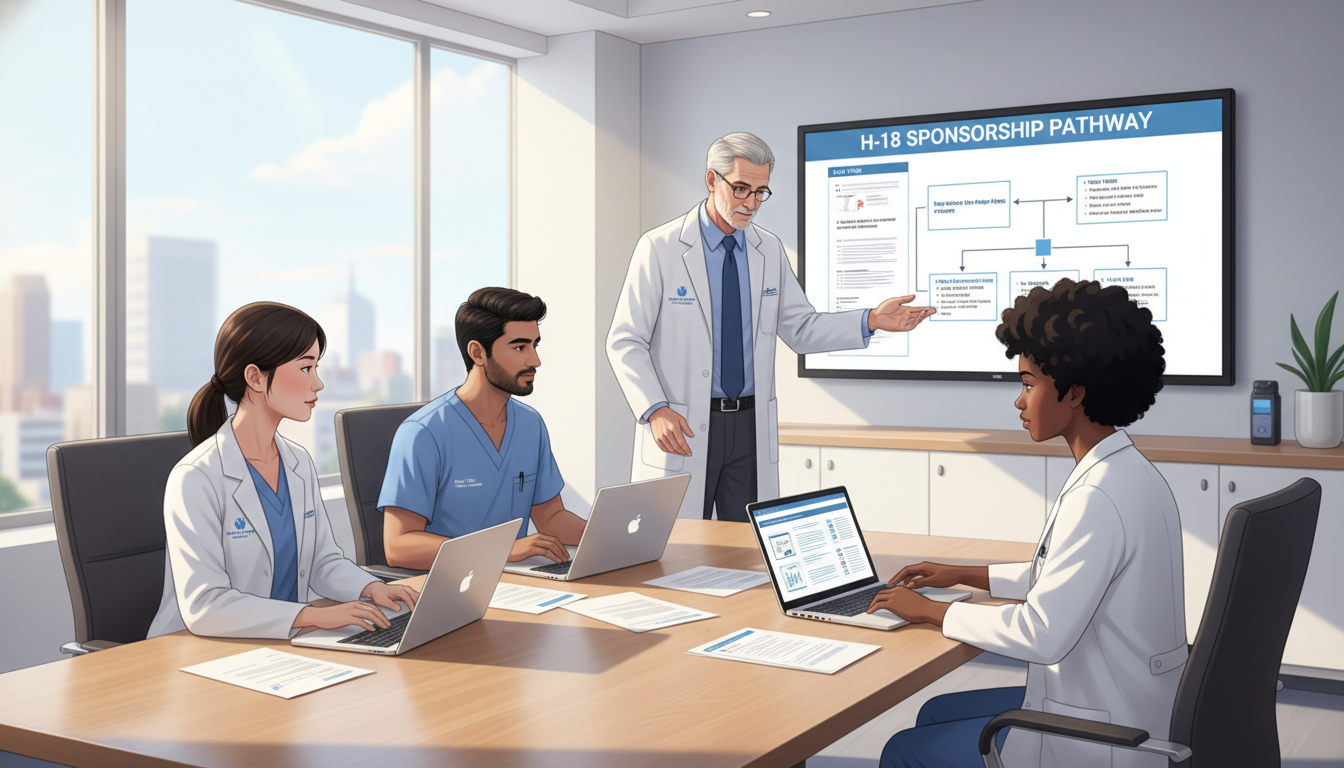
Understanding the Landscape: H-1B Sponsorship for Caribbean IMGs in PM&R
For a Caribbean medical school graduate aiming for a Physical Medicine & Rehabilitation (PM&R) residency in the United States, visa strategy is as important as USMLE scores and letters of recommendation. Many residency programs default to J-1 sponsorship, and only a subset offer H-1B sponsorship—fewer still in smaller specialties like PM&R (physiatry).
This article focuses on helping you, as a Caribbean IMG, understand how to identify and navigate H-1B residency programs in Physical Medicine & Rehabilitation, what makes an H-1B–sponsoring program different, and how to build a strong application strategy aligned with visa needs.
We will weave in considerations specific to Caribbean graduates (including those from large schools like SGU, AUC, Ross, etc.) and provide a practical framework for targeting H-1B-friendly programs while staying realistic about competitiveness and timelines.
J-1 vs H-1B in PM&R: What Caribbean IMGs Need to Know
Before developing a target list, you must clearly understand the differences between J-1 and H-1B visas in the context of residency training.
J-1 Clinical Visa: The Default for Most Programs
Most PM&R residency programs sponsor the J-1 physician visa through the ECFMG. For many IMGs, this is the path of least resistance—programs understand the process well, and approval is common if you are otherwise qualified.
Advantages of J-1:
- Widely accepted; most PM&R programs are J-1 only
- Process is familiar to GME offices and program directors
- No prevailing wage or specialty occupation analysis
- No H-1B cap considerations
Key limitation: The 2-year home-country requirement
After completing training on a J-1, you are generally subject to a two-year home-country physical presence requirement unless you obtain a waiver (e.g., Conrad 30, hardship, persecution). For some Caribbean IMGs, this is manageable; for others—especially those aiming for:
- Early fellowship training (e.g., pain, SCI, brain injury, sports, pediatrics)
- Immediate employment in the US
- Long-term H-1B and green card pathways
—this requirement can be a major barrier.
H-1B in Residency: Why It’s Attractive
The H-1B (temporary worker in a specialty occupation) is a dual-intent visa that better aligns with longer-term US career plans, especially if you anticipate needing:
- Another H-1B for fellowship
- Sponsorship for an employment-based green card
- Avoidance of the J-1 two-year home-country requirement
For a Caribbean medical school residency applicant, an H-1B residency program can be particularly attractive if:
- You have strong USMLE scores and a competitive application
- You are aiming for an academic or subspecialty career in PM&R
- You may have personal or family reasons to avoid returning to your home country after training
Core Requirements for H-1B Residency Sponsorship
Most H-1B–sponsoring PM&R programs require:
USMLE exams passed, including Step 3, before rank list submission or contract signing.
- Many insist on Step 3 pass by early February of the Match year.
- This is a major planning challenge for Caribbean students who often take Step 2 CK late in 4th year.
Valid ECFMG Certification by the beginning of residency (usually by June).
No need for residency visa changes mid-training
- Most programs want to sponsor H-1B from PGY-2 onward (for categorical PM&R programs) or from PGY-3 for advanced programs (after a preliminary year).
No prior J-1 status that creates conflict
- If you have prior J-1 clinical status with a two-year home requirement, H-1B may not be an option until it is waived.
How Common Are H-1B Sponsorship Programs in PM&R?
PM&R is a relatively small specialty compared to Internal Medicine or Family Medicine. Within this small field, H-1B-friendly residency programs form an even smaller subset.
General Patterns Across PM&R Programs
Based on trends and program policies (which can change yearly):
- Many PM&R residencies are J-1 only
- A moderate number are J-1 preferred, but will consider H-1B for exceptional candidates
- A smaller core group are openly H-1B friendly, with clear past H-1B sponsorship history
For Caribbean IMGs, this means:
- You must be very intentional in your program research
- You should not rely solely on a generic “IMG-friendly” label; instead, look for visa policy specifics, especially regarding H-1B
- Flexibility (e.g., willingness to accept J-1 at strong programs) can expand your opportunities
Factors That Predict H-1B Sponsorship in PM&R
While there is no universal list, certain program characteristics often correlate with H-1B residency sponsorship:
Large academic centers and university hospitals
- These often have robust HR and legal teams familiar with H-1B petitions.
- They are more likely to be H-1B cap exempt as non-profit academic or research institutions.
Programs with a history of recruiting IMGs in PM&R
- If current or recent residents list H-1B in their bios, that program likely has a precedent.
Affiliation with major health systems or medical schools
- These systems may already run H-1B petitions for faculty and fellows, making resident H-1Bs logistically easier.
Geographic and workforce needs
- Regions historically reliant on international physicians may be more flexible with H-1B sponsorship.
Why H-1B Cap Exempt Status Matters
Many residency programs are part of H-1B cap exempt entities:
- Nonprofit organizations affiliated with a US college or university
- Institutions of higher education
- Nonprofit research organizations
Cap-exempt status means:
- Your residency H-1B petition is not counted against the national annual H-1B cap.
- Timing is more flexible; you’re not tied to the April lottery cycle.
- It may later give you useful leverage (e.g., transitions between cap-exempt and cap-subject roles).
For a Caribbean IMG aiming for a physiatry match, targeting H-1B cap exempt programs is strategic because they have more flexibility and experience with H-1B and IMG recruitment.
Building a Targeted Program List: Strategy for Caribbean IMGs
To navigate the Caribbean medical school residency landscape in PM&R with an H-1B focus, you need a structured research and application plan.
Step 1: Start From a Broad PM&R Program List
Use official sources and data tools:
- FREIDA (AMA Residency & Fellowship Database)
- ERAS/NRMP program list for PM&R
- Program websites
From this full list, identify:
- Categorical PM&R programs (PGY-1 to PGY-4)
- Advanced PM&R programs (PGY-2/3 to PGY-4), which require a separate preliminary or transitional year
Step 2: Filter for IMG-Friendly and Then H-1B-Friendly
First, narrow to IMG-accepting PM&R programs by looking at:
- Resident rosters: Do recent residents include IMGs?
- Program FAQs: Do they explicitly welcome IMGs or list visa types?
- Match data: Does the program historically list Caribbean or international medical schools?
From those, further filter for H-1B-friendly:
- Look for explicit statements like:
- “We sponsor both J-1 and H-1B visas”
- “H-1B visas considered for highly qualified applicants with USMLE Step 3”
- Scan resident pages and alumni LinkedIn profiles for mentions of H-1B or non-US citizenship.
- Email program coordinators with very focused questions (more on this below).
This is where you’re effectively building your personal H-1B sponsor list in PM&R, tailored to your profile as a Caribbean IMG.
Step 3: Verify Policies Directly (But Do It Professionally)
Policies change frequently. A program that sponsored H-1B for an SGU residency match candidate a few years ago may now be J-1 only due to institutional changes.
When you email programs:
- Keep your message short and focused
- Ask about both IMG eligibility and visa type
- Avoid sounding as if your only interest is visa sponsorship
Sample email:
Dear [Program Coordinator/Program Director],
I am a final-year medical student at [Caribbean school, e.g., St. George’s University] planning to apply to your PM&R residency program in the upcoming ERAS cycle.
I am an international medical graduate and will require visa sponsorship for residency. Could you please let me know:
- Whether your program accepts IMGs from Caribbean medical schools, and
- Which visa types (J-1 and/or H-1B) you are able to sponsor for incoming residents?
Thank you very much for your time and assistance.
Sincerely,
[Your Name], [Expected Graduation Year]
Record responses in a spreadsheet to refine your H-1B sponsor list from “possible” to “confirmed.”
Step 4: Align Your Timeline With Step 3 Requirements
For H-1B-sponsoring programs, USMLE Step 3 timing is critical:
- Many require Step 3 passed before rank list submission (typically February).
- Caribbean students often take Step 2 CK in late 4th year; you must plan backwards.
Practical planning tips:
- Aim to complete Step 2 CK by late summer/early fall of your final year.
- Register for Step 3 early, targeting a test window that gives you score reporting by January.
- Coordinate with your Caribbean school’s administrative requirements and exam eligibility dates.
If your timeline makes Step 3 before February unrealistic, you might:
- Apply more broadly, including J-1-only programs
- Plan to strengthen your profile and apply for H-1B–sponsoring fellowships later
- Target a physiatry match after a gap year used for Step 3 and research
Optimizing Your Application as a Caribbean IMG Seeking H-1B in PM&R
Because H-1B sponsorship adds administrative complexity for programs, they are more likely to extend it to stronger applicants. Your goal is to present yourself as a high-value, low-risk candidate who justifies that extra work.
Strengthen Core Metrics and Credentials
USMLE Scores
- Aim for above-average Step 1 and Step 2 CK relative to PM&R match norms.
- A solid Step 3 score strengthens your case for H-1B and reassures programs about your exam readiness.
Clinical Experience in PM&R
- US-based PM&R electives/sub-internships are especially important for Caribbean IMGs.
- Showcase hands-on exposure to inpatient rehab, consult services, and outpatient clinics.
Letters of Recommendation
- At least two strong letters from US physiatrists, ideally from academic or residency programs.
- One letter from a supervisor familiar with your work ethic, communication skills, and teamwork.
ECFMG Certification
- Ensure there are no delays in your ECFMG certification process (transcripts, verifications, etc.).
- Programs are more comfortable sponsoring H-1B if your credentialing is smooth and predictable.
Emphasize Your Fit for PM&R (Beyond Metrics)
Program directors in PM&R care deeply about:
- Interpersonal skills and communication
- Empathy and patient-centered care
- Teamwork with therapists, nurses, psychologists, and case managers
- Longitudinal care mindsets
In your personal statement and interviews:
- Explain how your Caribbean training shaped your interest in rehabilitation (e.g., managing stroke patients with limited resources, exposure to disability in under-resourced settings).
- Highlight any involvement in neurorehab, musculoskeletal medicine, sports, pain, or disability advocacy.
- Emphasize continuity of care and interprofessional collaboration.
Addressing the Visa Factor Strategically
You should neither hide nor overemphasize your need for H-1B:
- Be honest and straightforward when asked about visa needs.
- If Step 3 is completed, mention it clearly in your ERAS application and CV.
- If a program is known to be H-1B friendly, you can mention in your communication:
- That you have passed Step 3 and are prepared to proceed with H-1B sponsorship if they support it.
However:
- Avoid sounding like you are applying only for visa reasons; demonstrate that the educational value and clinical environment of the program are your primary motivators.
- Where possible, show some flexibility (e.g., J-1 is acceptable at certain high-priority programs), unless you truly cannot accept J-1.
Special Considerations: SGU and Other Caribbean Schools in the Physiatry Match
Large Caribbean schools such as SGU, Ross, AUC, Saba, and others have historically placed graduates into PM&R. Understanding their patterns can help you frame your expectations.
SGU Residency Match and PM&R
- SGU residency match data often lists PM&R placements, sometimes including those who matched into programs that are historically open to IMGs and occasionally to H-1B.
- If you are an SGU student, leverage your school’s Office of Career Guidance to identify:
- PM&R programs where SGU alumni matched in recent years
- Whether any alumni obtained H-1B sponsorship at those programs
- Alumni networking is powerful: direct insight from someone who successfully navigated a physiatry match as a Caribbean IMG is more valuable than generic online lists.
Using Alumni Networks for H-1B Intelligence
Whether from SGU or another Caribbean medical school:
- Search LinkedIn for “Physical Medicine and Rehabilitation resident” plus your school’s name.
- Look for alumni listing non-US citizenship or H-1B status.
- Reach out professionally to ask:
- How they approached visa discussions with their program
- Whether the program sponsors H-1B and under what conditions
- Any advice they have for Caribbean IMGs in PM&R
Keep your message respectful and concise; many alumni are willing to help if approached professionally.
Long-Term Strategy: Beyond Residency – Fellowship and Employment on H-1B
When evaluating H-1B-friendly residency programs, think beyond the Match. Your H-1B strategy should support your long-term PM&R career.
Fellowship Considerations
Many PM&R residents pursue fellowships in:
- Pain Medicine
- Sports Medicine
- Brain Injury
- Spinal Cord Injury
- Pediatric Rehabilitation
- Neuromuscular Medicine
For a Caribbean IMG on H-1B:
- Investigate whether target fellowships are H-1B cap exempt (university-based) or cap-subject (private groups/hospitals).
- Your residency H-1B might be with a cap-exempt employer; moving to a cap-subject fellowship may require entry into the national H-1B lottery.
- Some fellowships are J-1 only; consider how that would interact with your long-term plans.
Employment and Green Card Strategy
The H-1B in residency can set up a smoother path to:
- Employer-sponsored green card (EB-2 or EB-3) during or after early attending years
- Continuity in H-1B status from residency → fellowship → attending job
When evaluating your H-1B residency programs, it’s reasonable (especially at interviews) to ask in a general way:
- Whether former residents have remained in the US on H-1B
- How the institution supports transitions from training to early faculty or local practice
You do not need detailed immigration strategy discussion at the interview stage, but demonstrating that you understand the big picture shows maturity and foresight.
Frequently Asked Questions (FAQ)
1. Is it realistic for a Caribbean IMG in PM&R to obtain an H-1B-sponsored residency?
Yes, it is possible but more competitive and logistically demanding than J-1. You must:
- Target H-1B-friendly PM&R programs intentionally
- Complete Step 3 early enough
- Present strong USMLE scores, clinical performance, and PM&R-specific experience
- Accept that your application pool will be smaller than if you were open to J-1
Many Caribbean IMGs prioritize getting into PM&R first (often via J-1) and then navigate J-1 waiver jobs later. If H-1B is a strong priority, you must build your application and timeline around it.
2. How can I find a reliable H-1B sponsor list for PM&R residency programs?
There is no official, comprehensive H-1B sponsor list specifically for PM&R residencies. Instead, you should:
- Use FREIDA and program websites to check stated visa policies
- Email program coordinators to confirm whether they sponsor H-1B
- Review resident biographies and alumni information for hints of H-1B sponsorship
- Leverage Caribbean school alumni networks to confirm up-to-date practices
Compile your own list in a spreadsheet and update it each cycle, since program policies can change.
3. If I cannot complete Step 3 before the Match, should I still apply to H-1B programs?
You can, but expectations must be realistic:
- Many programs will not consider H-1B without Step 3 results by their internal deadline.
- A few might allow H-1B petitions later (e.g., for a PGY-2 transfer) or be more flexible.
- If Step 3 timing is tight, it is wise to:
- Apply to a mix of H-1B-capable and J-1 programs
- Consider J-1 in PM&R now and H-1B-based strategies for fellowship or employment later
4. Does going to a big Caribbean school like SGU improve my chances of an H-1B PM&R match?
Being at a larger Caribbean school (e.g., SGU, AUC, Ross) often helps because:
- These schools have established clinical affiliations in the US
- Program directors are familiar with their curricula and grading systems
- There is a track record of IMGs from these schools matching into PM&R, sometimes with H-1B
However, H-1B sponsorship ultimately depends on:
- Program policy and institutional capacity
- Your individual competitiveness (scores, letters, clinical performance, Step 3 timing)
Your school can open doors and provide networks, but your individual profile and planning are decisive.
For a Caribbean IMG pursuing Physical Medicine & Rehabilitation, the intersection of visa strategy and residency match planning is complex but navigable. If H-1B is your priority, structure your entire application—exam timing, program list, networking, and communication—around that goal while preserving enough flexibility to secure a strong PM&R training position in the United States.