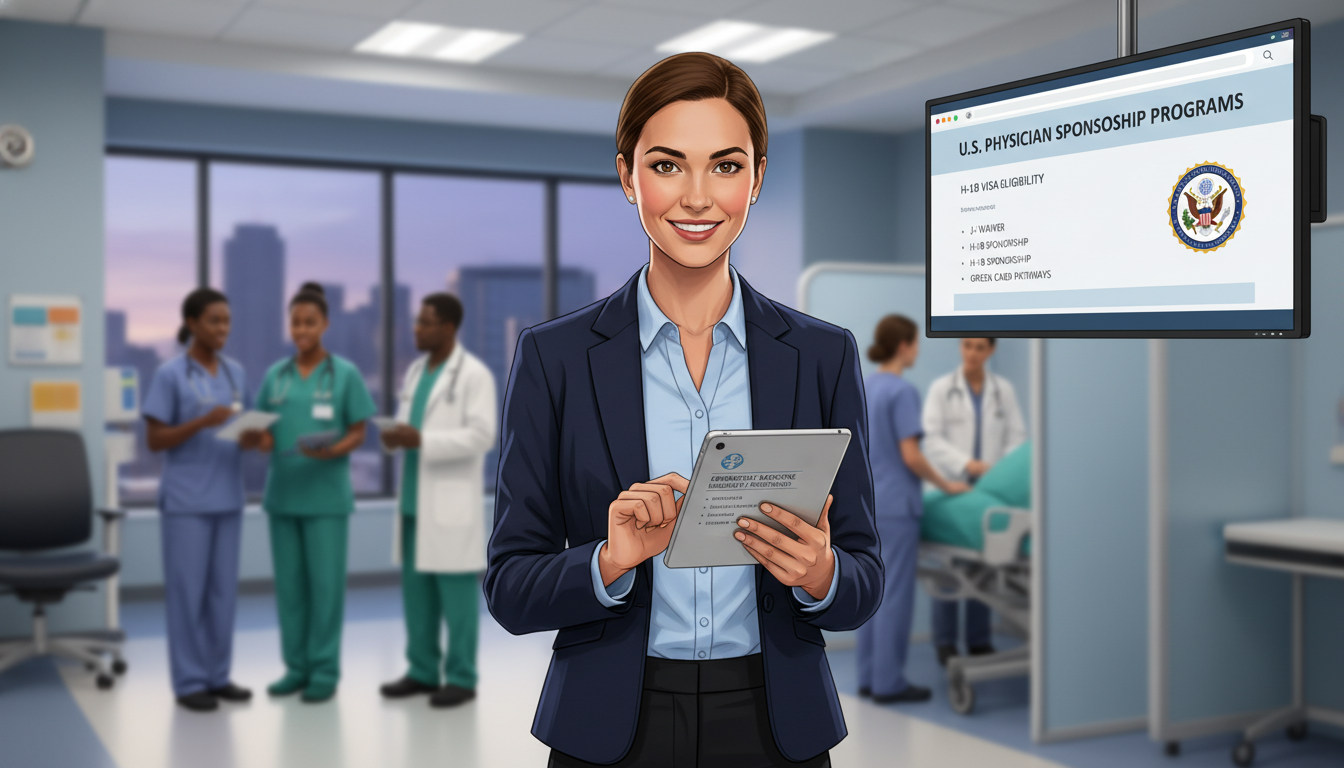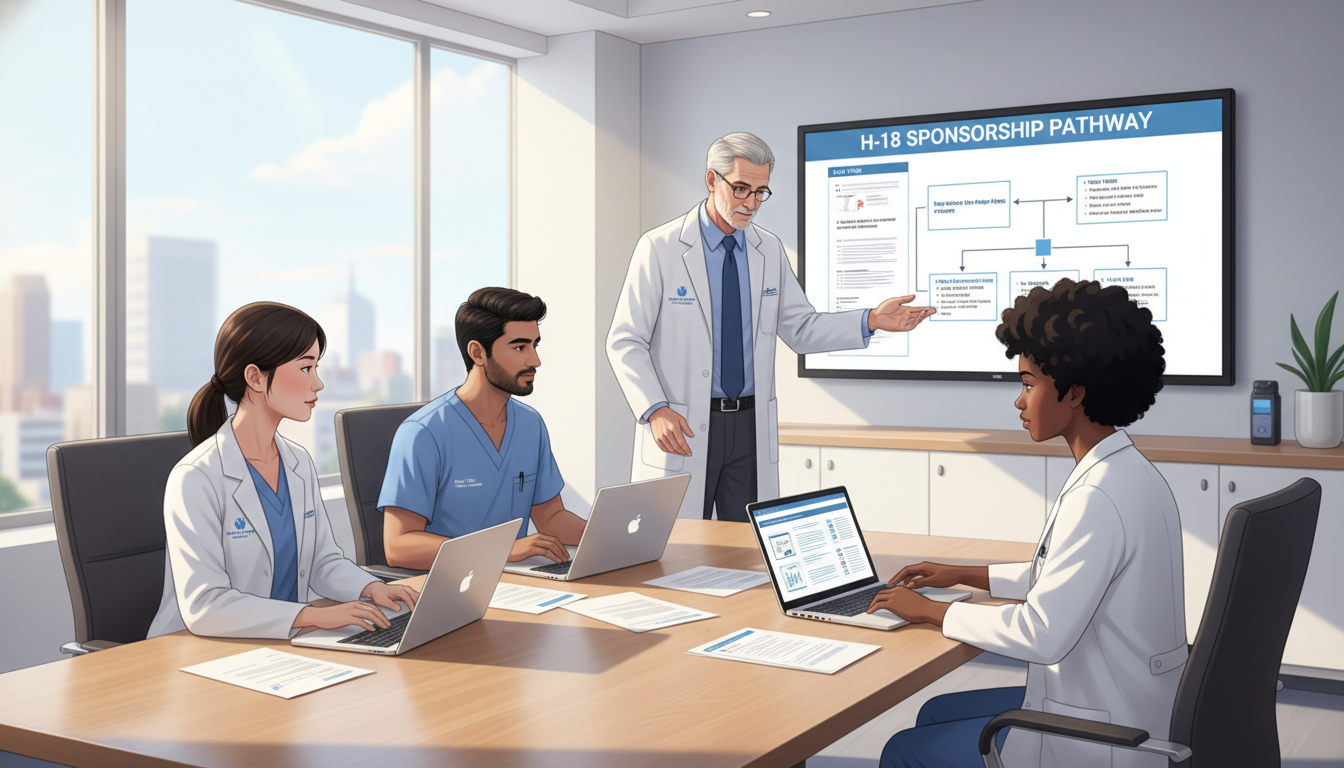
Understanding H-1B Sponsorship for Caribbean IMGs in Kaiser Permanente Programs
Caribbean international medical graduates (IMGs) often look to large, reputable systems like Kaiser Permanente for residency training—and with good reason. Kaiser programs are known for strong clinical training, integrated care models, and good fellowship placement. But for non‑US citizens, the key question is: Can I train at a Kaiser residency on an H‑1B visa, and how do I position myself to get there?
This article explains how H-1B sponsorship programs work for Caribbean IMGs interested in Kaiser Permanente residency programs, how this differs from J‑1 sponsorship, and what practical steps you can take to maximize your chances of matching. While policies change over time and vary by site, the principles below will help you navigate the process strategically.
1. Visa Basics for Caribbean IMGs: Where H‑1B Fits In
Before focusing on Kaiser Permanente programs specifically, it’s essential to understand the visa landscape for Caribbean graduates applying to US residencies.
1.1 Common visa options for residency
For most Caribbean IMGs, there are three main categories:
J‑1 (ECFMG-sponsored)
- Most common visa for IMGs in US residency
- Sponsored by ECFMG, not by the individual program
- Requires returning to your home country (or last country of permanent residence) for 2 years after training unless you obtain a waiver (e.g., underserved area service)
- Easier for programs to process; many prefer J‑1 only
H‑1B (temporary worker, specialty occupation)
- Employer-sponsored (the residency program is the “employer”)
- Often preferred by candidates who want more direct control of their career, especially for later fellowship or job opportunities
- Typically needs USMLE Step 3 passed before filing
- More administrative and financial burden for the program, so fewer programs support it
Other (green card, EAD, TN, etc.)
- Less common in the typical Caribbean medical school residency applicant pool
- Usually simpler if you already hold a status that allows work without additional sponsorship
For Caribbean IMGs coming from schools such as St. George’s University (SGU), Ross, AUC, or Saba, the J‑1 is the default path—but there are H‑1B residency programs that sponsor selected residents, and some of these exist in systems like Kaiser Permanente.
1.2 Why some Caribbean IMGs prefer H‑1B over J‑1
Reasons H‑1B may be attractive include:
- Avoiding the two-year home-residency requirement attached to J‑1 visas
- Increased flexibility for:
- Fellowship applications
- Early moonlighting (subject to state and program policy)
- Transition into attending roles after residency
- Smoother pathway toward permanent residency (green card), depending on employer
However, not every program offers H‑1B, and within a system like Kaiser Permanente, policy can vary by region and program—for example, Kaiser Permanente Northern California vs Southern California vs Mid‑Atlantic or Northwest.

2. Kaiser Permanente Residency Landscape for Caribbean IMGs
Kaiser Permanente is unique as an integrated health system with its own GME (Graduate Medical Education) infrastructure. Understanding where and how Kaiser offers residencies is key for Caribbean IMGs exploring H‑1B options.
2.1 Major Kaiser Permanente residency hubs
Kaiser Permanente sponsors or co-sponsors GME programs in several regions, including:
- California
- Kaiser Permanente Northern California (KPNC) – e.g., San Francisco, Oakland, Santa Clara, etc.
- Kaiser Permanente Southern California (KPSC) – e.g., Los Angeles, San Diego, Fontana, etc.
- Pacific Northwest
- Kaiser Permanente Northwest (Portland, Oregon area)
- Mid-Atlantic States
- Kaiser Permanente programs in the Washington, DC / Maryland / Virginia region
- Other collaborations
- Some Kaiser facilities partner with university-based programs (e.g., UCSF, UCLA, Loma Linda, OHSU, etc.)
Kaiser programs or Kaiser-affiliated tracks may be categorical programs (e.g., Internal Medicine, Family Medicine, Pediatrics, Psychiatry) or affiliated rotations within university-based residencies.
2.2 Are Kaiser Permanente residency programs “IMG-friendly”?
While Kaiser programs often have a reputation for selecting strong candidates and may skew toward US graduates, they do accept Caribbean IMGs, especially those with:
- Solid USMLE scores
- Strong performance at reputable Caribbean schools (e.g., SGU, Ross, AUC)
- Significant US clinical experience, ideally in integrated or managed-care settings
- Evidence of professionalism, communication skills, and cultural competence
In recent years, match lists from schools like SGU have included graduates matching into Kaiser residency programs in internal medicine, family medicine, psychiatry, and other fields. When you review an SGU residency match list or similar from your school, look for “Kaiser Permanente” or “KP” in California, Oregon, or the Mid-Atlantic to see concrete examples.
2.3 Visa policies: J‑1 versus H‑1B in Kaiser programs
Most Kaiser programs:
- Accept J‑1 visa applicants relatively routinely, subject to institutional caps
- Have more restrictive policies for H‑1B sponsorship, often due to:
- System-wide HR policies
- Cost of legal/filing fees
- Administrative complexity
- Need for consistency across sites
Some Kaiser programs may not sponsor H‑1B at all, while others may only sponsor in limited situations or for selected specialties. Because policies are dynamic, always:
- Check each program’s official GME or residency website
- Look under “Eligibility & Visa Information” or “International Medical Graduates”
- Email the program coordinator/administrator with clear, specific questions about H‑1B
3. How H‑1B Residency Sponsorship Works (and Why It’s Harder to Get)
Understanding the mechanics of H‑1B sponsorship will help you ask the right questions and time your application process correctly.
3.1 H‑1B basics for residency training
Key H‑1B rules that affect residency:
- Job must be a specialty occupation – residency meets this requirement
- USMLE Step 3 typically must be completed before filing H‑1B petition
- Some state medical boards require Step 3 for institutional or training licensure
- Many residency programs requiring H‑1B insist you pass Step 3 before ranking you
- Employer (residency program or sponsoring institution) must:
- File Labor Condition Application (LCA)
- Submit H‑1B petition (Form I-129) to USCIS
- Pay required filing and legal fees (often several thousand dollars)
3.2 Cap-subject vs. H‑1B cap-exempt residency programs
When researching H‑1B residency programs, you’ll see references to H‑1B cap-exempt institutions:
- Cap-exempt: Typically universities, non-profit hospitals affiliated with universities, and certain research institutions
- Not limited by the annual H‑1B quota
- Can file H‑1B petitions any time of year
- Cap-subject: Most private employers (including some community hospitals and systems)
- Limited to the annual H‑1B lottery (regular season)
- Might not be ideal for residency due to timing and uncertainty
Kaiser Permanente facilities sometimes partner with university affiliates that may be cap-exempt, especially when the academic sponsor (e.g., a university hospital) technically employs the resident, even if much of the training occurs at Kaiser sites.
Action point: When you explore individual Kaiser programs, clarify whether:
- The employer of record is a university (often cap-exempt) or Kaiser itself
- The program has historically sponsored H‑1B visas and whether those were cap-exempt
This can affect how secure your visa path is through residency and possibly into fellowship.
3.3 Why programs limit H‑1B sponsorship
Programs (including some Kaiser residencies) may restrict H‑1B sponsorship because:
- Cost: Filing and legal fees add up, especially for multiple residents
- Administrative burden: HR and legal teams must track compliance, renewals, etc.
- Equity concerns: Programs may not want to appear to “favor” candidates with Step 3 done early over others, particularly when Step 3 is not required for J‑1
- Long-term planning: H‑1B has duration limits (typically 6 years total), so longer combined training tracks (residency + fellowship) require more foresight
Knowing these constraints helps you avoid taking it personally when a program refuses H‑1B and supports your realistic targeting of programs that clearly commit to H‑1B sponsorship.

4. Targeting Kaiser Programs That May Support H‑1B Sponsorship
Because policies differ across locations and evolve, the goal is not memorizing a fixed H‑1B sponsor list, but learning how to systematically identify and evaluate Kaiser residency programs that might be H‑1B-friendly for Caribbean IMGs.
4.1 Building a personal “H‑1B sponsor list” focused on Kaiser
Use a structured research process:
- Start with specialties and locations
- Decide your primary specialty interests (e.g., Internal Medicine, Family Medicine, Psychiatry)
- Map them to Kaiser residency sites (Northern California, Southern California, Northwest, Mid‑Atlantic)
- Visit each program’s official website
- Look for an “International Medical Graduates” or “Eligibility & Requirements” section
- Specifically search for:
- “H-1B”
- “Visa sponsorship”
- “J-1”
- Extract and categorize policies
- Programs that explicitly state “H‑1B not sponsored” → mark as J‑1-only
- Programs that state “J‑1 only” or “We sponsor J‑1 visas” without mention of H‑1B → assume no H‑1B unless clarified
- Programs that say “We may sponsor J‑1 and H‑1B visas” → flag as potential H‑1B options
- Email program coordinators
- Write a concise email including:
- Your status as a Caribbean IMG
- Your planned timeline for USMLE Step 3
- A direct question:
“Does your program sponsor H‑1B visas for residency trainees, or are you J‑1 only?”
- Save replies and build your Kaiser‑specific H‑1B sponsor list for the application season
- Write a concise email including:
4.2 Using alumni networks (e.g., SGU residency match data)
If you’re at a Caribbean school with robust placement—such as SGU—use official and unofficial match data:
- Review SGU residency match lists and highlight:
- Kaiser Permanente programs where alumni have matched
- Whether any of them are known to be on H‑1B
- Reach out through:
- School alumni networks
- WhatsApp or Facebook specialty groups
- Ask recent graduates:
- What visa they’re on
- Whether H‑1B is supported in their program
- Any unwritten rules (e.g., “They say they support H‑1B but only rarely do so”)
This ground-level information is more current and nuanced than static online lists.
4.3 Timing USMLE Step 3 for H‑1B eligibility
For H‑1B residency sponsorship at Kaiser or elsewhere, timing Step 3 is critical:
- Aim to pass Step 3 before rank lists are due (February of the match cycle)
- For Caribbean IMGs, this may mean:
- Taking Step 3 during your final clinical year if allowed and feasible
- Or in the gap between graduation and match if your school’s timeline permits
- If you are already an intern or PGY‑1 on a J‑1, and later want to switch to H‑1B (e.g., for fellowship or transfer), plan your Step 3 as early as allowed by your state’s licensing rules
Programs that consider H‑1B often require Step 3 as a non-negotiable prerequisite; without it, they may default you to J‑1 even if they like your application.
5. Application Strategy for Caribbean IMGs Targeting Kaiser H‑1B Programs
Once you understand the general environment, you need a practical application strategy tailored to your Caribbean background and H‑1B goals.
5.1 Balancing ambition and realism
When constructing your ERAS list:
- Include a core group of Kaiser programs that:
- Have a track record with IMGs
- Have not excluded H‑1B in written or email communication
- Add non‑Kaiser H‑1B‑friendly programs (e.g., certain university hospitals, IMG‑friendly community programs known for H‑1B sponsorship)
- Maintain a safety layer of J‑1‑only programs to protect against over-concentration on H‑1B
Think in tiers:
- High aspiration: Competitive Kaiser sites in major metro areas
- Balanced targets: Kaiser and non‑Kaiser teaching hospitals that have taken Caribbean IMGs
- Safety: Community teaching programs with a longer history of Caribbean IMG matches, even if they’re J‑1 only
This mix ensures that your focus on H‑1B residency programs does not jeopardize your overall chances of matching.
5.2 Highlighting fit with Kaiser’s integrated care model
Kaiser emphasizes:
- Team-based, integrated care
- Population health and data-driven quality improvement
- Preventive medicine and cost-effective practice
In your ERAS application, personal statement, and interviews:
- Emphasize experiences in:
- Primary care or continuity clinics
- Quality improvement projects
- EHR‑driven workflow and care coordination
- For Caribbean IMGs with rotations through US hospitals:
- Highlight any rotations at Kaiser sites or similar integrated systems
- Describe how this shaped your understanding of health-system-level care
Matching Kaiser’s values is often more important than the visa type; if you present as a strong mission-fit, a program is more likely to consider the extra effort of H‑1B sponsorship.
5.3 Addressing H‑1B openly but strategically
During the application season:
- ERAS application:
- Answer visa status questions honestly
- If there’s a “will need visa sponsorship” field, check it
- Interviews:
- Be prepared for questions like:
“What is your visa status, and what are your expectations?” - Suggested response structure:
- Briefly clarify you are a Caribbean IMG needing visa sponsorship
- Acknowledge that you understand many programs prefer J‑1
- Indicate that you are open to either J‑1 or H‑1B if that’s true, or
- If you strongly prefer H‑1B, explain why (e.g., long-term US practice plans, concerns about the J‑1 home-residency requirement) in a calm, non-demanding tone
- Be prepared for questions like:
Avoid sounding as though you are choosing a program only for H‑1B sponsorship. Instead, frame it as a practical necessity balanced with genuine interest in the program’s educational environment.
6. Long-Term Planning: Beyond Residency in Kaiser and the US
If your long-term goal is to remain in the US for fellowship and eventual attending practice, your visa strategy at the residency level is only the first step.
6.1 Considering J‑1 with a waiver vs direct H‑1B
Two broad paths for Caribbean IMGs:
- Start on J‑1, pursue a J‑1 waiver job after training
- Common route: J‑1 residency → J‑1 fellowship → underserved area job (e.g., rural or inner-city) with waiver
- Feasible even if your residency is at a Kaiser program that doesn’t sponsor H‑1B
- Start on H‑1B from residency onward
- Potentially smoother transition to H‑1B fellowship and later attending roles
- Important to coordinate with H‑1B cap-exempt institutions for training to avoid lottery risk
Kaiser’s role in your career may be:
- Primary residency site (J‑1 or H‑1B)
- Fellowship site (often through affiliated universities)
- Attending job after training (separate visa assessment)
6.2 Moving from training to attending within Kaiser
If you aim to become a Kaiser Permanente attending:
- Understand that attending-level H‑1B sponsorship is a separate process
- Some Kaiser regions sponsor H‑1B for attending physicians
- Others may prefer candidates already holding green cards or unrestricted work authorization
- After training:
- You’ll need new H‑1B petitions (or employment-based green card process)
- Immigration counsel (often provided by the employer) will evaluate your status and remaining H‑1B time
Building a strong track record within Kaiser during residency (or fellowship) can increase your chances of being offered a role that includes appropriate visa sponsorship.
6.3 Documenting your path as a Caribbean IMG
As you progress:
- Keep organized records of:
- USMLE transcripts
- ECFMG certification
- Visa approval notices (I‑797), DS-2019 forms (if J‑1), and I‑94s
- Employment contracts and training verification letters
- Maintain a timeline of your lawful presence and work authorization
- This is extremely helpful when transitioning between programs, applying for waivers, or seeking permanent residency
For Caribbean IMGs, having multiple training moves (e.g., preliminary year → categorical spot, or residency → fellowship → job) is common; documentation prevents confusion and delays in future immigration processes.
FAQ: H‑1B Sponsorship Programs for Caribbean IMGs in Kaiser Permanente Residencies
1. Do Kaiser Permanente residency programs sponsor H‑1B visas for Caribbean IMGs?
Some Kaiser-affiliated programs do sponsor H‑1B, but not all, and policies can differ by region and specialty. Many Kaiser residencies are J‑1 focused and may explicitly state “J‑1 only.” Your best approach is:
- Check each program’s website for visa language
- Email the program coordinator to confirm
- Use alumni networks (e.g., from your Caribbean medical school) to verify recent experiences
2. Is it realistic to expect an H‑1B from a Kaiser residency program as a Caribbean IMG?
It is possible but competitive. You improve your chances if you:
- Attend a well-recognized Caribbean medical school (e.g., SGU, Ross, AUC)
- Score well on USMLEs and complete Step 3 early
- Demonstrate strong clinical evaluations and US clinical experience
- Clearly fit Kaiser’s integrated, team-based care culture
However, you should still include J‑1‑only and non‑Kaiser programs in your ERAS list to avoid over‑reliance on H‑1B options.
3. Do I need to have USMLE Step 3 done before applying for H‑1B residency sponsorship?
For most H‑1B residency programs, including potential Kaiser sponsors, yes—you typically need a passed Step 3 before the H‑1B petition is filed and often before ranking. Some programs may review your application without Step 3 in hand but will require proof of passing before finalizing sponsorship. Plan your exam timeline with this in mind.
4. How can I find a reliable H‑1B sponsor list for residencies, especially Kaiser programs?
There is no single, permanent, official H‑1B sponsor list for residencies because policies change. Instead, build your own list by:
- Reviewing each program’s published visa policy
- Contacting coordinators directly
- Checking match outcomes (e.g., SGU residency match lists) and contacting recent graduates
- Prioritizing programs at H‑1B cap-exempt institutions (universities, non-profit teaching hospitals), which often have a longer history of H‑1B sponsorship
For Kaiser programs, confirm whether the employer of record is Kaiser or a university partner, as this can influence cap-exempt status and sponsorship practices.
By combining targeted research, early Step 3 completion, and a balanced program list, Caribbean IMGs can position themselves competitively for H‑1B sponsorship programs within Kaiser Permanente and beyond—while still maximizing their overall chances of a successful residency match in the United States.