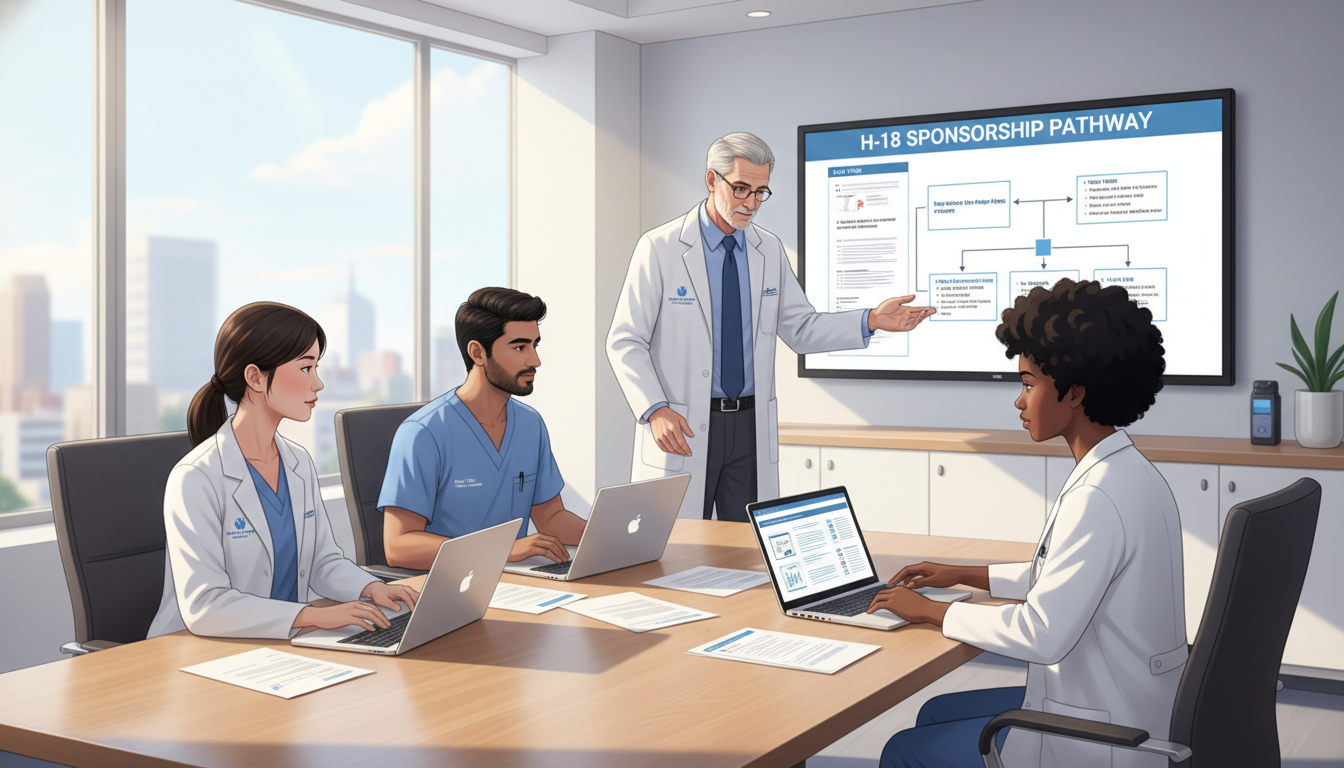
Understanding H-1B Sponsorship for Caribbean IMGs in Medicine-Psychiatry
For a Caribbean medical school graduate aiming for a Medicine-Psychiatry (Med-Psych) residency in the United States, visa strategy is as important as board scores and letters of recommendation. Many Caribbean IMGs default to J-1 sponsorship, but H-1B residency programs can offer a more direct path to long-term practice and easier transition to a green card.
This article focuses specifically on H-1B sponsorship pathways for Caribbean IMGs targeting Medicine-Psychiatry combined programs, with practical guidance on how to identify programs, optimize your application, and realistically assess your chances—especially if you trained at a Caribbean medical school like SGU, AUC, Ross, Saba, etc.
We will also naturally touch on related keywords and issues including:
- Caribbean medical school residency outcomes and how they affect H-1B chances
- SGU residency match and its relevance to H-1B sponsorship
- The structure and competitiveness of med psych residency (medicine psychiatry combined)
- Navigating H-1B residency programs, H-1B sponsor list concepts, and H-1B cap exempt options
J-1 vs H-1B: Why the Visa Type Matters for Caribbean IMGs
Before diving into specific program behavior, it’s critical to understand what you are actually asking programs to do when you say: “I’m seeking H-1B sponsorship.”
Core Differences Between J-1 and H-1B for Residency
J-1 Visa (ECFMG-sponsored):
- Most common visa type for IMGs in residency.
- Sponsored by ECFMG, not the residency program directly.
- Requires home-country 2-year return after training (unless you get a waiver like Conrad 30, VA, or federal programs).
- Generally easier for programs administratively—less legal risk and cost.
H-1B Visa (Employer-sponsored):
- Employment visa sponsored directly by the residency or hospital system.
- Typically no 2-year home return requirement.
- Allows dual intent (nonimmigrant but compatible with future green card process).
- Must meet USMLE Step 3 and state licensure eligibility requirements before H-1B petition filing.
- Higher cost, more paperwork, and usually attorney involvement for the institution.
For a Caribbean IMG who wants to stay long term in the US, the H-1B route can be extremely attractive, but residency programs must be willing and able to sponsor it.
Why Many Programs Prefer J-1 Over H-1B
Even highly IMG-friendly programs often default to J-1 sponsorship. Reasons include:
- Administrative simplicity: ECFMG handles much of the process for J-1.
- Cost: H-1B petitions cost the institution legal and filing fees.
- Timing: H-1B requires confirmed Step 3 and licensure eligibility, which complicates the schedule.
- Institutional policy: Some teaching hospitals or universities have blanket policies limiting H-1B usage at the trainee level.
This is why your research must center on identifying actual H-1B residency programs within Medicine-Psychiatry and closely related fields (Internal Medicine, Psychiatry) that openly sponsor H-1B for IMGs.
Medicine-Psychiatry Combined Programs and Visa Sponsorship Realities
Medicine-Psychiatry residencies (also called med psych residency or medicine psychiatry combined programs) are relatively few in number compared to categorical Internal Medicine or Psychiatry. That makes each program’s visa stance extremely important.
Structure of Med-Psych Residency
Key features relevant to H-1B considerations:
- Typically 5-year combined programs integrating ABIM (Internal Medicine) and ABPN (Psychiatry) requirements.
- Residents complete rotations in both medicine and psychiatry with a combined board eligibility outcome.
- Often based at large academic medical centers, some of which are more likely to have experience with H-1B sponsorship.
Because they are longer and more specialized:
- Programs want trainees who are committed to completing the full 5-year curriculum.
- Visa stability (like H-1B) is often attractive for the resident but may feel more complex to the institution.
How Caribbean Training Affects H-1B Chances in Med-Psych
As a Caribbean IMG (e.g., SGU, Ross, AUC, Saba):
Advantages:
- Caribbean medical schools are heavily oriented toward US-style clinical training and USMLE preparation.
- Some schools (like SGU) have established track records in US residency placement, including Internal Medicine and Psychiatry.
- Program directors are generally familiar with Caribbean medical school residency outcomes and know which schools have stronger reputations.
Challenges:
- Med-Psych is small; competition per spot can be intense.
- H-1B sponsorship adds another barrier—some programs simply do not consider it.
- You must be perceived as “low risk” and “worth the extra effort” (strong academic record, Step scores, clinical performance).
In practice, Caribbean IMGs typically secure more H-1B positions in categorical Internal Medicine or Psychiatry than in combined medicine-psychiatry programs, but the combined route is not impossible if you approach it strategically.
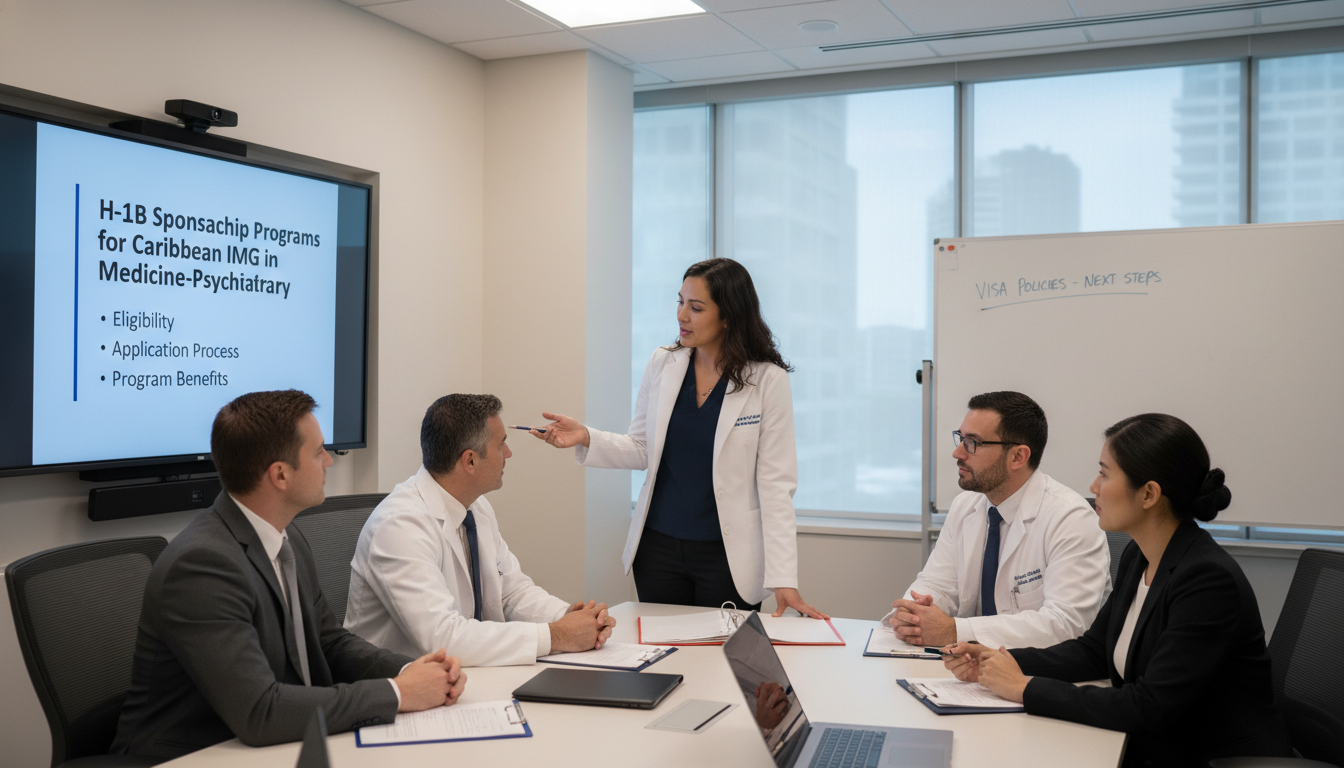
Finding and Evaluating H-1B-Friendly Medicine-Psychiatry and Related Programs
There is no single official “H-1B sponsor list” for residency programs. Instead, you must piece together information from multiple sources and think strategically about both combined and categorical options.
1. Use the AMA FREIDA and Program Websites Carefully
Start with:
- FREIDA (AMA Residency & Fellowship Database)
Filter by:- Specialty: Internal Medicine/Psychiatry (combined)
- Plus: Internal Medicine and Psychiatry separately (for categorical backups)
Some programs will specify:
- “Sponsorship: J-1 only”
- “J-1 and H-1B considered”
- Or remain silent (you’ll need to verify directly).
Then visit each program’s website. Look for:
- A dedicated “International Medical Graduate” or “Visa Sponsorship” section.
- Phrases like:
- “We sponsor J-1 and H-1B visas for qualified applicants”
- “We are able to sponsor H-1B for residents who have passed USMLE Step 3”
- “We do not sponsor H-1B visas for residency positions”
Capture this in a personal spreadsheet:
- Program name
- Specialty (Med-Psych, IM, Psych)
- Stated visa policy
- Notes (Caribbean IMG-friendly, alumni stories, etc.)
2. Recognize H-1B Cap Exempt Institutions
Many residency programs are inherently H-1B cap exempt because they are:
- University-affiliated teaching hospitals
- Non-profit or government institutions associated with higher education
This matters because:
- H-1B cap exempt positions can be obtained at any time in the year.
- They are not subject to the annual H-1B lottery.
- This gives more flexibility for start dates and repeated sponsorship (e.g., for fellowship later).
When researching, look for:
- University name (e.g., “University of ___ Medical Center”)
- VA hospitals
- County or state hospitals with academic affiliation
Most Med-Psych programs are based at such academic centers, which is favorable for H-1B sponsorship probability if institutional policy allows.
3. Learn from SGU Residency Match Lists and Similar Data
If you’re from a well-known Caribbean school like SGU that publishes an SGU residency match list annually, you can mine it for:
- Medicine-Psychiatry matches
- Internal Medicine + Psychiatry matches
- Known H-1B-friendly sites where SGU grads have previously matched on H-1B visas
Even when the list doesn’t explicitly show visa type, you can:
- Identify programs with multiple Caribbean IMGs over several years—those are more likely to be open to IMGs and, sometimes, to H-1B.
- Cross-reference those programs with online reports or alumni anecdotes on visa sponsorship (e.g., Reddit, specialty forums, LinkedIn).
If your school does not publish detailed match data, talk to:
- Your dean’s office or career services
- Recent graduates who matched into Internal Medicine, Psychiatry, or Med-Psych in the US
- Alumni networks or unofficial social media groups
4. Ask Programs Directly—But Time It Well
Emailing every program in July asking, “Do you sponsor H-1B?” is often counterproductive. Instead:
Best timing:
- After you get an interview invitation.
- Or late in the interview (if it feels appropriate) or in a follow-up email.
Sample respectful email wording:
Dear Dr. [Program Director],
Thank you very much for the opportunity to interview with your Medicine-Psychiatry program. As an international graduate from a Caribbean medical school, I am exploring visa options and preparing for USMLE Step 3.
Could you please let me know whether your institution is able to sponsor H-1B visas for incoming residents who have completed Step 3 and meet state licensure requirements? I remain fully open to J-1 sponsorship if that aligns more closely with your program’s policies.
Thank you again for your time and consideration.
Sincerely,
[Your Name], MD
This approach:
- Signals professionalism and flexibility.
- Makes it clear you understand Step 3 and licensure requirements.
- Does not sound like you are “demanding” H-1B.
Strengthening Your Application for H-1B-Supportive Med-Psych Programs
To justify the additional effort and cost of H-1B sponsorship, programs want candidates who stand out clinically and academically. As a Caribbean IMG targeting medicine psychiatry combined training, you need to demonstrate strength across both fields.
1. Prioritize USMLE Performance and Step 3 Timing
For H-1B, Step 3 is non-negotiable. Most programs that sponsor H-1B require a passed Step 3 before ranking or before submitting the H-1B petition.
Strategies:
- Take Step 3 during your final clinical year or immediately after graduation.
- Aim to sit for Step 3 early enough that you can list “Step 3 Scheduled” on your ERAS application, then update the result as soon as it’s available.
- Strong Step 1/Step 2 CK scores remain important, especially for combined medicine-psychiatry programs that value high clinical reasoning skills.
If you’re from a Caribbean medical school with solid exam prep infrastructure (like SGU or similar), leverage those resources aggressively for Step 3.
2. Build a Med-Psych Profile in Your Experiences
Medicine-Psychiatry programs are looking for people who legitimately want dual training, not those who see it as a “back-up plan.”
Enhance your profile with:
Rotations:
- US-based Internal Medicine and Psychiatry electives or sub-internships.
- Combined or consult-liaison experiences (e.g., psychiatry consults on medical wards).
Research/Scholarly Work:
- Projects on integrated care (e.g., management of depression in diabetes clinics).
- Studies on serious mental illness and physical comorbidities.
Personal Statement:
- Clearly articulate why you are drawn to medicine psychiatry combined training.
- Explain how your Caribbean medical education exposed you to complex patients requiring both medical and psychiatric care (e.g., substance use disorders, HIV with depression, trauma survivors).
This strategy shows programs you are a good fit for the clinical identity of Med-Psych, making them more willing to go the extra mile with H-1B sponsorship.
3. Secure Letters of Recommendation Aligned with Med-Psych
Aim for at least:
- 1 strong letter from an Internal Medicine attending (preferably from a US clinical rotation).
- 1 strong letter from a Psychiatry attending.
- A third letter from either specialty or a mentor who can speak to your longitudinal performance, professionalism, and maturity.
If possible, ask recommenders to:
- Mention your adaptability as an IMG from a Caribbean school.
- Highlight your ability to function in a complex US academic environment.
- Comment on your reliability and potential to complete a 5-year combined program.
This reassures programs that supporting your H-1B is a safe long-term investment.

Strategic Application Planning: Balancing Combined and Categorical Programs
Because Medicine-Psychiatry positions are limited, Caribbean IMGs aiming for H-1B sponsorship need a tiered application strategy that protects both specialty and visa goals.
1. Apply Broadly: Med-Psych + Internal Medicine + Psychiatry
A realistic portfolio might include:
All available Med-Psych programs
Focus on those with:- Academic centers (likely H-1B cap exempt)
- Historical acceptance of IMGs (you can check resident bios on their websites)
A strong set of categorical Internal Medicine programs
Prefer institutions:- That clearly state H-1B sponsorship on their websites
- With known Caribbean IMG presence
A strong set of categorical Psychiatry programs
Particularly:- University-affiliated, IMGs present in current resident classes
- Explicit or inferred H-1B-friendly policies
This mix respects your interest in medicine psychiatry combined training while giving you three overlapping pathways to secure both a residency and your preferred visa type.
2. Adjust Expectations by Your Profile
Your competitiveness for H-1B-sponsoring Med-Psych programs will depend on:
- USMLE scores (esp. Step 2 CK, Step 3).
- Clinical evaluations and letters from US rotations.
- Red flags (gaps, failures, professionalism issues).
- How well your Caribbean school is perceived, especially in Internal Medicine and Psychiatry.
If your academic profile is:
- High (strong scores, no gaps):
You can more confidently prioritize Med-Psych and be selective with categorical programs. - Moderate:
Apply broadly and consider that H-1B might be more realistically secured through a categorical IM or Psychiatry program rather than combined. - Lower or with red flags:
Be particularly flexible about visa type (remain very open to J-1) and consider starting with J-1 and later seeking a J-1 waiver job that supports a longer-term immigration path.
3. Be Transparent but Flexible About Visa on ERAS
On ERAS, you’ll be asked about visa needs. For many Caribbean IMG applicants:
- Select that you require visa sponsorship.
- In your personal statement or supplemental communications, you may say:
“I am open to either J-1 or H-1B sponsorship and am planning to complete USMLE Step 3 before residency begins.”
This:
- Signals that H-1B is a goal but not an absolute condition.
- Reduces the risk of programs auto-screening you out due to perceived inflexibility.
Practical Tips and Common Pitfalls for Caribbean IMGs Seeking H-1B in Med-Psych
To round out the strategy, here are some concrete “do’s and don’ts” drawn from common experiences among Caribbean medical school graduates.
Do:
Pass Step 3 early.
This is the single most important procedural requirement for H-1B residency programs.Document everything clearly.
Keep PDFs of all exam results, ECFMG certificate, and degree documents organized and easily shareable with GME offices.Network with alumni.
Seek out recent Caribbean IMGs in your target Med-Psych, Internal Medicine, or Psychiatry programs. Ask about:- Whether co-residents are on H-1B
- How the institution handled visas
- Any advice on the program’s culture toward IMGs
Prepare concise visa explanations.
During interviews, be able to briefly explain:- Why you are interested in H-1B
- That you understand J-1 pros/cons
- That you are committed to the program regardless of visa type (if that’s true for you)
Don’t:
Don’t demand H-1B or present it as a condition early.
Many programs will simply move on to the next applicant.Don’t delay Step 3 unnecessarily.
Waiting until after Match to take Step 3 drastically reduces the feasibility of H-1B sponsorship.Don’t rely on outdated online lists.
Visa policies change frequently with institutional leadership and legal risk tolerance; always verify directly with recent information.Don’t underestimate categorical pathways.
If you are unable to secure a Med-Psych spot with H-1B, you may still end up with:- Categorical Internal Medicine H-1B
- Or Psychiatry H-1B
and then later shape your practice to be effectively “medicine-psychiatry combined” through your patient mix, elective choices, fellowships (e.g., consult-liaison), or double-board paths where possible.
FAQs: H-1B Sponsorship for Caribbean IMGs in Medicine-Psychiatry
1. Are there many Medicine-Psychiatry programs that sponsor H-1B for Caribbean IMGs?
The absolute number is small because:
- Med-Psych programs are few to begin with.
- Not all are open to H-1B.
However, some academic med psych residency programs have historically sponsored H-1B for strong candidates (including IMGs). Your best strategy is to:
- Identify all existing Med-Psych programs.
- Check their websites and FREIDA.
- Confirm with current or recent residents.
- Treat specific H-1B-friendly Med-Psych options as high-value but limited targets and build a strong backup plan in IM and Psychiatry.
2. Do I need to complete Step 3 before applying, or just before starting residency?
For H-1B sponsorship, most programs prefer or require Step 3 to be completed before they file the H-1B petition, which often means:
- Before finalizing your contract.
- Sometimes even before they rank you.
Practically, if H-1B is important for you:
- Aim to take Step 3 before or early in the application cycle, so you can report a passing result in ERAS and discuss it confidently during interviews.
- Late Step 3 often pushes programs toward J-1 by default, even if they sometimes sponsor H-1B.
3. How does being from a Caribbean medical school affect my chances compared to other IMGs?
Caribbean medical school graduates occupy a unique middle space:
- Many program directors recognize “big four” Caribbean schools (e.g., SGU, Ross, AUC, Saba) and have matched their students before.
- Some US programs see structured Caribbean education and US clinical rotations as strengths.
- However, Med-Psych spots are few and often attract high-performing applicants from US MD/DO schools and international schools with strong reputations.
Your success is therefore less about the Caribbean label alone and more about:
- Strong USMLE scores (especially Step 2 CK and Step 3).
- Excellent US clinical evaluations and letters in Medicine and Psychiatry.
- Evidence that you understand and are committed to the combined field.
4. If I match on a J-1 instead of H-1B, am I blocked from staying in the US?
Not necessarily, but the path is more structured. As a J-1:
- You are subject to the 2-year home-country physical presence requirement unless you obtain a J-1 waiver.
- Many IMGs use the Conrad 30 program, VA positions, or other federal waivers to work in underserved US areas after residency.
- After completing waiver service, many transition to H-1B or other employment-based green card categories.
So if you match to a Medicine-Psychiatry residency on J-1, you still have a real pathway to long-term US practice, but it will involve:
- Waiver job search
- Possible relocation to an underserved area
- Immigration planning with future employers or immigration counsel
For a Caribbean IMG aspiring to become a dual-trained Medicine-Psychiatry physician in the US, H-1B sponsorship is both a legal mechanism and a strategic advantage. By understanding how programs think about visas, building a strong med psych profile, timing Step 3 well, and diversifying your applications across combined and categorical programs, you can maximize your chances of matching into a residency that supports both your specialty interests and your long-term life plans in the United States.