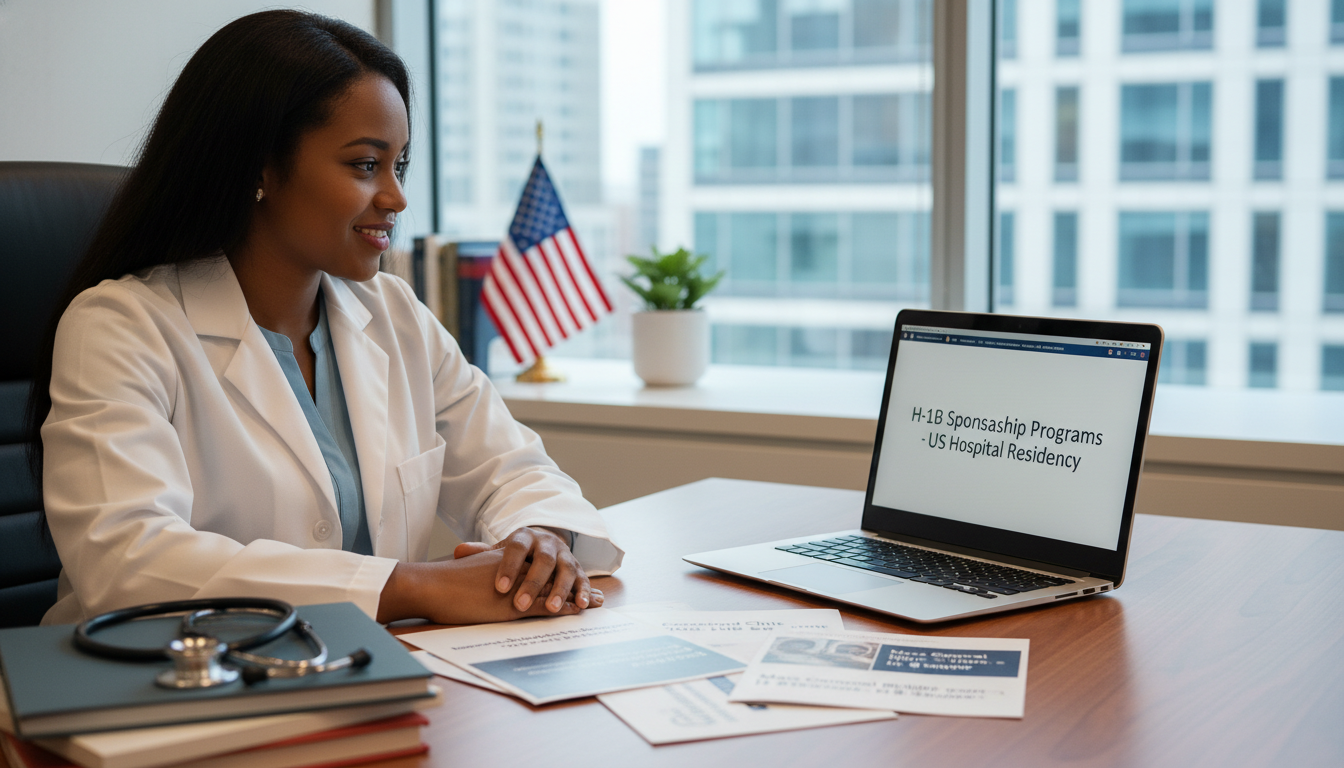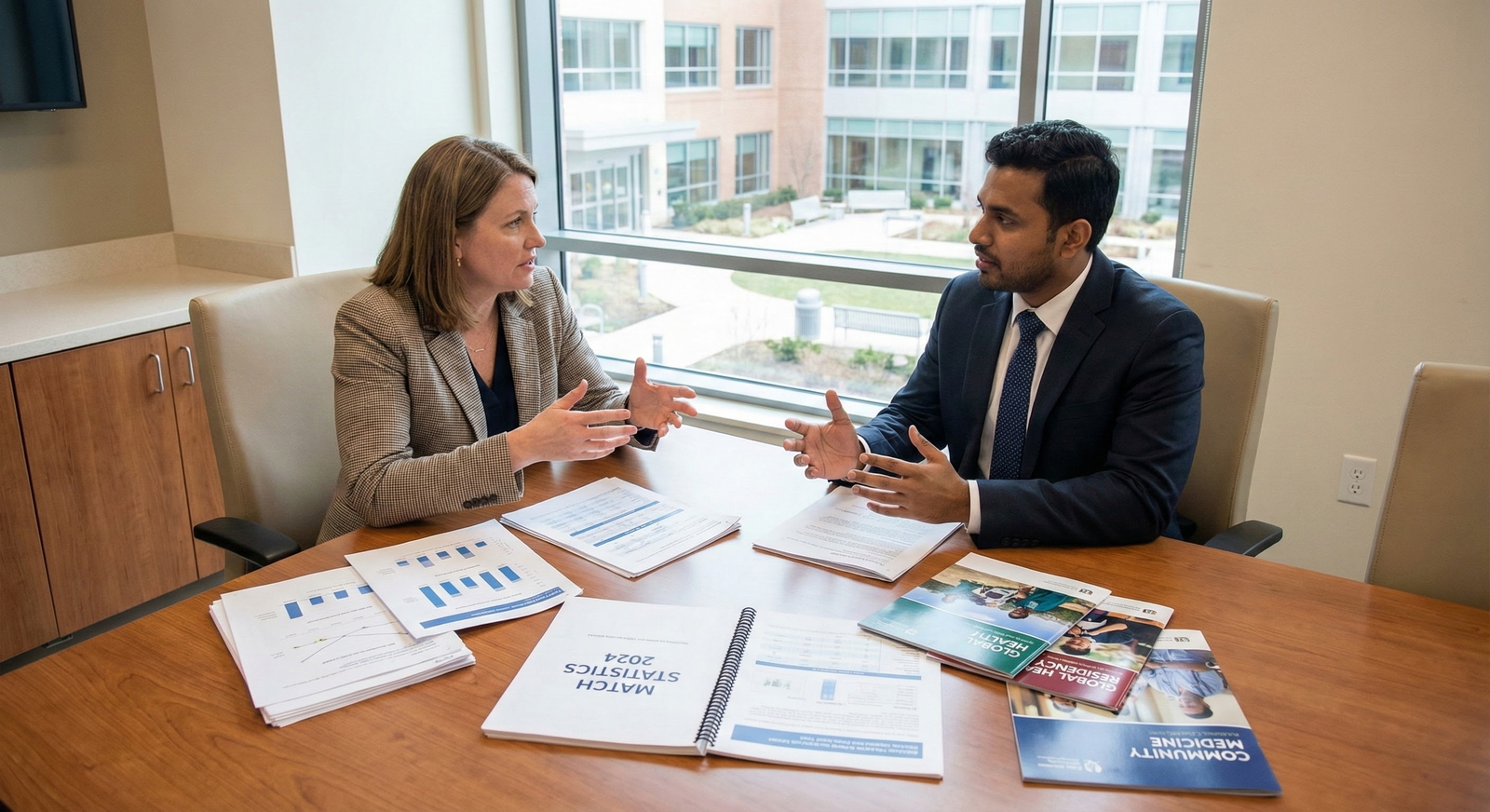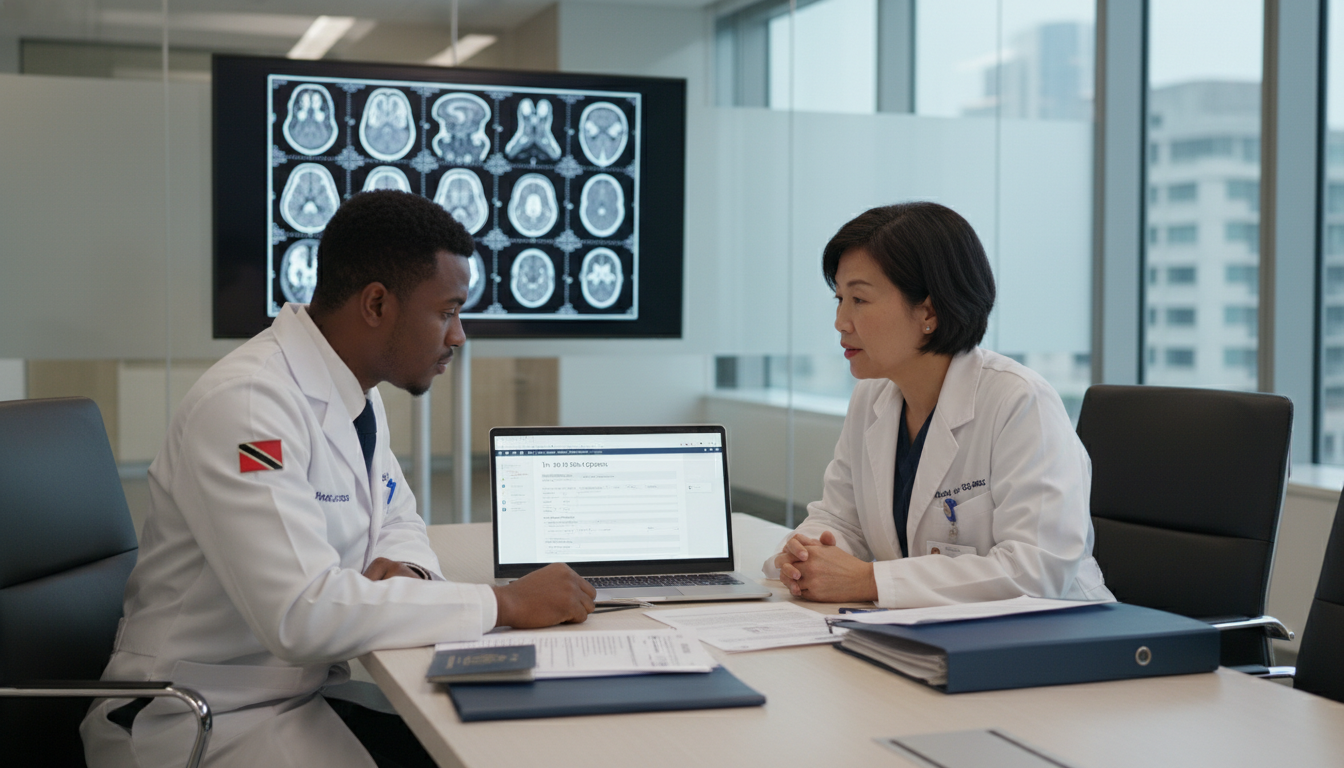
As a Caribbean IMG aiming for neurology residency in the United States, understanding H‑1B sponsorship programs is just as important as knowing your Step scores or clinical grades. For many SGU, AUC, Ross, Saba, and other Caribbean medical school graduates, a well‑planned H‑1B residency strategy can significantly broaden your options beyond J‑1–only programs and help shape your long‑term career in the U.S.
This guide walks you through how H‑1B works in neurology, how to find programs that sponsor, and how to realistically position yourself—especially if you’re coming from a Caribbean medical school and eyeing the neurology match.
Understanding H‑1B Sponsorship in Neurology Residency
H‑1B basics for Caribbean IMGs
The H‑1B is a temporary worker visa for “specialty occupations”, which includes physicians in residency and fellowship. For you as a Caribbean IMG in neurology, there are several key implications:
- Employer‑sponsored: The residency program (often through its hospital or university) files your H‑1B; you cannot self‑petition.
- Specialty‑specific: Your visa is tied to your neurology residency position at a particular institution.
- Dual intent: Unlike J‑1, H‑1B allows “dual intent”—you may later pursue a green card without triggering a mandatory foreign service requirement.
How H‑1B differs from J‑1 for neurology
Most neurology residency programs default to J‑1 sponsorship via ECFMG, but some will also or instead sponsor H‑1B. As a Caribbean IMG, you should weigh the differences:
J‑1 (ECFMG-sponsored exchange visitor):
- Most common for IMGs in neurology.
- Requires a 2‑year home country physical presence after training unless you obtain a J‑1 waiver.
- Relatively standardized process handled largely by ECFMG.
- Often easier administratively for programs, so some will only accept J‑1.
H‑1B (employment-based work visa):
- No automatic 2‑year home return requirement.
- Can transition directly to H‑1B waiver jobs or permanent residency later.
- Requires USMLE Step 3 passed before H‑1B filing (critical for planning).
- More paperwork and legal cost for the sponsoring institution.
- Often limited duration (usually total of 6 years, including residency + fellowship + employment).
For a Caribbean IMG interested in long‑term U.S. practice in neurology—especially subspecialties like epilepsy, neurocritical care, or neuroimmunology—H‑1B can be strategically advantageous because you avoid the J‑1 home-return hurdle.
The “H‑1B cap” and why many neurology residencies are exempt
You’ll often hear about the H‑1B cap: a national annual limit on new H‑1B visas, typically allocated via a lottery. This is critical:
- Many academic neurology residency programs are “H‑1B cap exempt”, because:
- They are universities, or
- They are non‑profit hospitals affiliated with universities, or
- They qualify as nonprofit research organizations.
Being H‑1B cap exempt means:
- They can file an H‑1B for you at any time of year (not just in April).
- They are not subject to the lottery.
- This makes H‑1B sponsorship more feasible for residency than in some private-sector jobs.
When evaluating neurology programs, look specifically for those connected to university hospitals or large teaching centers—these are more likely to be in the H‑1B cap exempt category.
Strategic Planning: H‑1B vs J‑1 as a Caribbean Neurology Applicant
When H‑1B makes the most sense
You are more likely to benefit from and successfully secure H‑1B residency sponsorship if:
- You want to remain long‑term in the U.S. after neurology training.
- You anticipate difficulty or inflexibility with J‑1 waiver jobs in your home country.
- You’re open to pursuing academic neurology or staying within an academic network after training.
- You are on track to complete Step 3 early enough (more on timing below).
For many Caribbean IMGs, your SGU residency match or Caribbean medical school background doesn’t disqualify you from H‑1B; what matters more is your exam performance, clinical evaluations, and timing.
When J‑1 might be more realistic
J‑1 may be the better or only option if:
- Your preferred neurology programs do not sponsor H‑1B.
- You cannot realistically pass USMLE Step 3 before your program’s H‑1B filing deadline (often spring before PGY‑1).
- You need to submit applications broadly and don’t want to limit your options only to H‑1B sponsoring institutions.
- You’re okay with a potential J‑1 waiver route later (e.g., underserved area neurology practice, research roles).
In practice, many Caribbean IMGs apply to both J‑1 and H‑1B–friendly programs, then make a decision based on where they interview and how competitive their offers are.

Visa and Exam Timeline: What Caribbean IMGs Must Get Right
Step 3 timing: the single biggest H‑1B factor
Most neurology residency programs that sponsor H‑1B require:
- USMLE Step 3 passed before they can file your H‑1B petition.
- Some require Step 3 before ranking you; others allow later but before the start date or visa filing.
For a Caribbean IMG:
If you’re still in school (e.g., SGU, AUC, Ross, Saba):
- Plan Step 3 as early in your final year as possible, if your school and state allow.
- Consider elective rotations in states where you can register and sit Step 3 early (e.g., some states allow Step 3 before residency with ECFMG certification).
If you’ve already graduated:
- Map out when you can realistically take and pass Step 3 relative to the match timeline.
- Many programs will want Step 3 results by March–May preceding the July 1 start.
Actionable advice:
Before ERAS opens, send targeted emails to neurology programs you’re interested in, clarifying their Step 3/H‑1B requirements:
“I am a Caribbean IMG applying in neurology and strongly interested in your program. I am aiming for H‑1B sponsorship and plan to take Step 3 by [month/year]. Could you please confirm whether your program sponsors H‑1B visas and if you require Step 3 to be passed before ranking or before the start of residency?”
Document the responses in a spreadsheet. This will become your personalized H‑1B sponsor list.
Matching with H‑1B: how the process works
Typical sequence for a Caribbean IMG securing an H‑1B neurology residency:
ERAS Application (Sept–Oct):
- Indicate your preference/possibility for H‑1B in the Additional Information section or personal statement.
- Apply widely to neurology programs known to have sponsored H‑1B historically (see below for how to find them).
Interviews (Oct–Jan):
- Clarify visa options during or after interviews.
- Communicate clearly that you are flexible but prefer H‑1B if program policy permits.
Rank List & Match (Feb–Mar):
- Rank based on program fit + visa feasibility.
- Remember: some programs will rank you only if your Step 3 timing matches their H‑1B policy.
Post‑match (Mar–Apr):
- If matched to an H‑1B sponsoring program, they will start internal processing.
- You’ll need to submit documents (degree, ECFMG cert, exam scores, CV, passport) promptly.
H‑1B Filing (Spring–Early Summer):
- For H‑1B cap exempt institutions, filing can occur outside the April lottery window.
- Premium processing is often used for timely approval before residency start.
Residency Start (July 1):
- Enter on H‑1B status if approved; some programs may use a short J‑1 or other status if delays occur (less common, institution‑specific).
What if you don’t get Step 3 in time?
If Step 3 is delayed and you matched into an H‑1B-friendly neurology program, several scenarios:
- Some programs switch you to J‑1 if H‑1B is no longer possible.
- Some may delay your start (uncommon in neurology, logistically complex).
- A few will work with you creatively, but you must clarify this early with your program coordinator.
As a Caribbean IMG, you must treat Step 3 timing as mission‑critical if H‑1B is your priority.
Finding Neurology Residency Programs That Sponsor H‑1B
How to build your personal H‑1B sponsor list
There is no perfect, official, constantly up‑to‑date H‑1B sponsor list for neurology residency, but you can construct a strong working list using multiple sources:
FREIDA (AMA Residency Database):
- Filter for neurology programs.
- Many programs indicate whether they accept or sponsor H‑1B.
- Cross‑check, because FREIDA entries are sometimes outdated.
Program Websites:
- Look for “International Medical Graduates,” “Visa Policy,” or “FAQ” sections.
- Wording to look for:
- “We sponsor J‑1 only” → exclude for H‑1B purposes.
- “We sponsor J‑1 and H‑1B” → strong candidate.
- “We consider H‑1B on a case‑by‑case basis” → possible but more competitive.
Current/Recent Residents:
- Use LinkedIn and program webpages to identify neurology residents who are IMGs.
- Look specifically for residents whose profiles mention “H‑1B” or who list non‑U.S. citizenship.
- Politely reach out:
- “Hi Dr. X, I am a Caribbean IMG applying to neurology and interested in your program. Are you aware if the program sponsors H‑1B visas for residents?”
Hospital HR and GME Offices:
- Some residency pages are vague; HR or GME websites often have institution‑wide visa policies.
- If the hospital is part of a large university system, they are more likely H‑1B cap exempt and used to H‑1B processing.
Personal Tracking:
- Maintain an Excel or Google Sheet with columns:
- Program name / city / state
- H‑1B policy (Yes; J‑1 only; Case‑by‑case)
- Step 3 timing requirement
- Historical IMGs (Y/N)
- Notes (email responses, resident feedback)
- Maintain an Excel or Google Sheet with columns:
Over 1–2 application cycles, this becomes a powerful H‑1B neurology resource for you and your peers.
Indicators that a neurology program is H‑1B friendly
You can’t always rely only on “H‑1B: Yes/No” statements. Look for these soft signals as well:
- Large university‑based neurology departments with substantial research activity.
- Programs in cities with high international workforce and long tradition of IMGs.
- Program directors or coordinators who respond comfortably to visa questions and mention past H‑1B residents.
- Historical match lists showing Caribbean medical school residency placements—SGU residency match outcomes, for example, often highlight which institutions commonly take Caribbean grads and may indicate more flexible visa practices.
If a program has never had an IMG or is in a small community hospital setting, they are less likely to be comfortable with H‑1B, though there are exceptions.

Application Strategy for Caribbean IMGs Targeting H‑1B in Neurology
Balancing dream programs with visa realities
As a Caribbean IMG, you likely already know that neurology is moderately competitive. When you overlay visa restrictions, competition increases. A balanced strategy:
Core H‑1B List (15–30 programs):
- University‑based neurology residencies known to sponsor H‑1B.
- Institutions with past Caribbean IMG residents.
- Your top geographic or subspecialty preferences.
Mixed Visa Policy List (20–40 programs):
- Programs that sponsor both J‑1 and H‑1B.
- You apply broadly, remain open to either option, but emphasize your H‑1B preference when appropriate.
J‑1–only Safety Net (10–20 programs):
- Community or mid‑tier university programs that are IMG‑friendly but J‑1‑only.
- These protect you from going unmatched if H‑1B options are too limited.
Total applications in neurology for a Caribbean IMG aiming at H‑1B often fall in the 40–70 program range, depending on your Step scores, clinical grades, and research portfolio.
How to present yourself as an attractive H‑1B candidate
Because H‑1B sponsorship costs the program time and money, you must communicate clear value:
Academic Strength:
- Strong USMLE Step 1/2 and especially Step 3 performance (if already taken).
- Honors in neurology or medicine clerkships.
- Strong letters, especially from U.S. neurologists.
Neurology Commitment:
- Neurology electives in the U.S., ideally inpatient stroke or neurocritical care rotations.
- Research in neuro fields (epilepsy, stroke, neuroimmunology), even if not first‑author.
- A coherent personal statement that explains why neurology and your long‑term goals.
Professionalism and Reliability:
- Programs want assurance that if they file H‑1B, you will not disappear or fail Step 3.
- Communicate clearly, respond promptly to emails, and meet all document deadlines.
Visa Clarity:
- Be honest about your status and preferences:
- If you are currently on F‑1 OPT, B‑1/B‑2, or another status, explain succinctly.
- If you have family or dependents, be prepared for additional H‑1B considerations.
- Do not demand H‑1B; instead, state that you prefer H‑1B but are open to discussion based on institutional policy.
- Be honest about your status and preferences:
Example phrasing in your personal statement or supplementary communication:
“As an international medical graduate from a Caribbean medical school, I am strongly committed to pursuing a career in academic neurology in the United States. I prefer H‑1B sponsorship, as it aligns with my long‑term goal of subspecialty fellowship and continuity in U.S. practice. I have planned my Step 3 accordingly and am prepared to meet any program-specific timeline requirements.”
Handling interviews and discussing H‑1B professionally
Visa discussions can be delicate. Practical tips:
When to bring it up:
- If programs mention visa policy during the interview, respond honestly.
- If not, ask briefly near the end of your day or via a follow‑up email to the coordinator, not as your first question.
How to phrase it:
- “Could you share how your program typically handles visas for international medical graduates?”
- If they say they sponsor J‑1 only:
- “Thank you for clarifying. I understand and appreciate the information.”
- If they say they also sponsor H‑1B:
- “That’s very helpful to know. I prefer H‑1B if possible and am arranging my Step 3 timing to support that.”
What to avoid:
- Do not push aggressively or make H‑1B a condition for ranking the program unless explicitly asked.
- Avoid sounding like visa is your primary interest over patient care and training.
Post‑Residency Planning: H‑1B, Neuro Match, and Beyond
How H‑1B neurology residency affects your fellowship options
If you complete your neurology residency on H‑1B, your neuro match for fellowship (e.g., epilepsy, neuromuscular, neurocritical care, movement disorders) may be easier, because:
- Many neurology fellowships are also in H‑1B cap exempt institutions.
- You may be able to extend or transfer your H‑1B within academic centers.
- You avoid having to navigate J‑1 waiver rules before fellowship.
However, remember:
- H‑1B has a total maximum duration of six years (with certain exceptions).
- Residency (3–4 years) + fellowship (1–2 years) will use up most of your H‑1B time.
- Long‑term planning towards H‑1B waivers, O‑1 visas, or permanent residency should start early in fellowship if you want to stay in the U.S.
H‑1B waiver and cap-exempt career paths in neurology
After training, many H‑1B neurology graduates pursue:
- Academic faculty positions at the same or another H‑1B cap exempt institution (university or nonprofit hospital).
- Research neurologist roles at non‑profit or university‑affiliated research centers.
- In some cases, transition to J‑1 waiver‑like underserved neurology positions using other immigration routes.
Because you are already in a cap‑exempt environment, your transition to post‑training employment is often smoother than the pathway from J‑1 requiring a waiver placement.
Special considerations for Caribbean IMGs
As a Caribbean IMG on H‑1B, be mindful of:
- Backup options: If you cannot secure H‑1B for residency, planning for a J‑1 route plus J‑1 waiver options (e.g., neurologist jobs in underserved or rural regions).
- Licensure timing: Some states require additional years of training or specific pathways for IMGs; align your neurology and fellowship planning with licensure requirements.
- Networking: Maintain strong relationships with mentors—especially those knowledgeable about IMG and visa issues in neurology. They often alert you to opportunities that align with your visa constraints.
FAQs: H‑1B Sponsorship for Caribbean IMGs in Neurology
1. As a Caribbean IMG, is it realistic to match neurology with H‑1B sponsorship?
Yes. Many Caribbean medical school graduates (including SGU residency match alumni) have successfully entered neurology residencies on H‑1B visas, especially at large academic hospitals. It is competitive, but realistic if you have solid scores, early Step 3, and target programs known to sponsor H‑1B.
2. Do all neurology residency programs that sponsor H‑1B require Step 3 before ranking?
No. Policies vary widely. Some require Step 3 before ranking, others only require that you pass before H‑1B filing or residency start. A few insist on Step 3 pre‑interview. Always confirm directly with each program and plan your exam schedule conservatively.
3. Can I start neurology residency on a J‑1 and later switch to H‑1B at the same institution?
Switching from J‑1 to H‑1B during residency is generally uncommon and difficult because the J‑1 exchange visitor program has structured rules and timelines. Some institutions might allow a transition from J‑1 in residency to H‑1B in fellowship or faculty roles, but you should not count on an in‑residency switch as your primary plan.
4. How many neurology programs should I apply to if I’m a Caribbean IMG prioritizing H‑1B?
Most Caribbean IMGs targeting H‑1B neurology apply to 40–70 programs, mixing:
- A core group of clearly H‑1B‑friendly programs,
- Additional programs with flexible or case‑by‑case policies,
- And a J‑1‑only safety net to avoid going unmatched.
Your exact number should reflect your academic profile, Step scores, research, and U.S. clinical experience.
By understanding how H‑1B residency programs, H‑1B cap exempt rules, and neurology training pathways intersect—and by planning Step 3 and applications strategically—you can significantly improve your chances of securing a neurology residency that aligns with both your clinical ambitions and long‑term immigration goals as a Caribbean IMG.