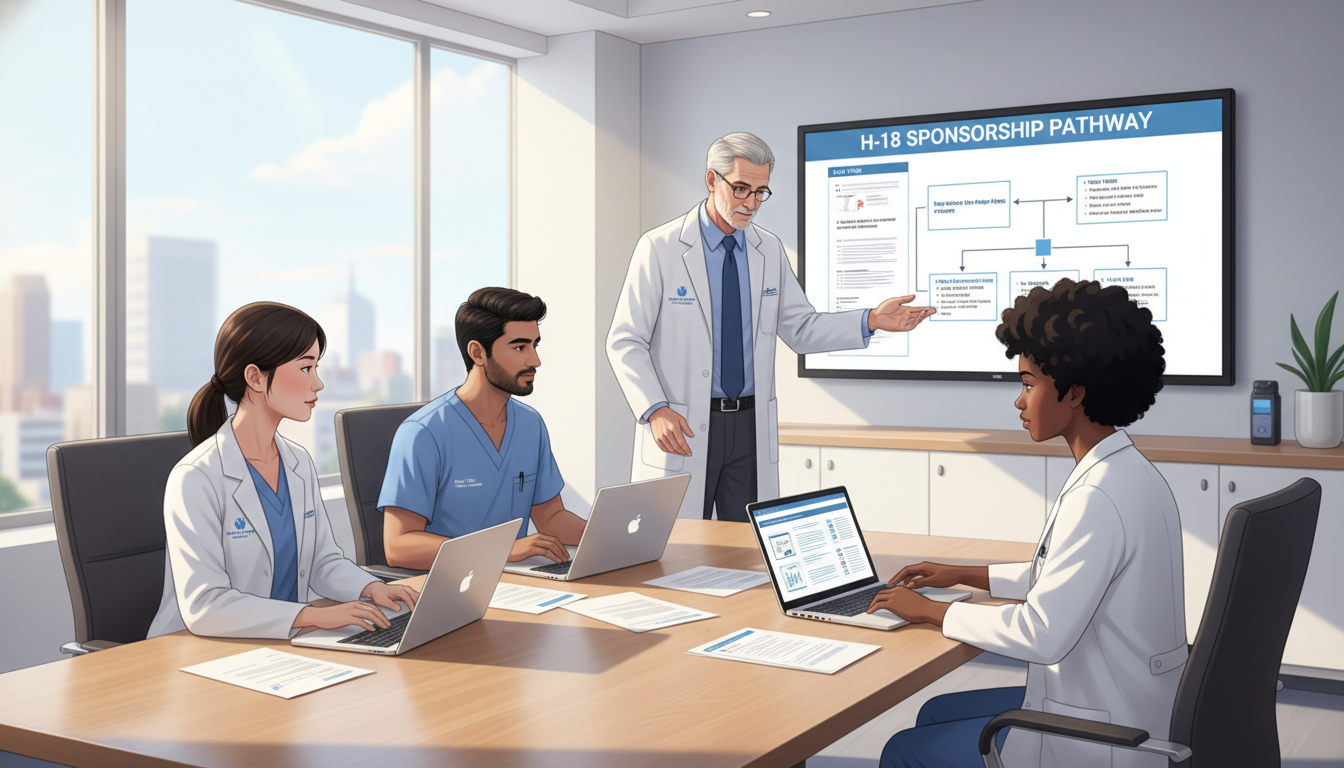
Understanding H‑1B Sponsorship for Caribbean IMGs in Pediatrics–Psychiatry
For a Caribbean IMG interested in Pediatrics-Psychiatry or triple board pathways, H‑1B sponsorship can be a strategic way to build a long-term career in the United States. But the rules, timelines, and program variations are complex—especially when you’re also navigating the Caribbean medical school residency stigma, step score expectations, and specialty-specific competitiveness.
This guide breaks down what you need to know about H‑1B–sponsoring residency programs, how it intersects with pediatric, psychiatry, and triple board training, and how to position yourself as a strong H‑1B candidate coming from a Caribbean medical school.
H‑1B vs J‑1 for Caribbean IMGs: What Really Matters
Core Differences in Simple Terms
J‑1 (ECFMG-sponsored)
- Most common visa for IMGs in residency.
- Sponsored by ECFMG, not by the program’s institution.
- Requires you to return to your home country (or last country of citizenship) for 2 years after training unless you obtain a J‑1 waiver (e.g., via underserved work, Conrad 30, etc.).
- Typically easier for programs administratively.
H‑1B (hospital or university-sponsored)
- An employment visa: you are a worker, not an exchange visitor.
- Requires all USMLE Steps, including Step 3, passed before H‑1B application.
- No automatic 2-year home residency requirement.
- Can be a more direct path to long-term employment and green card sponsorship.
- More complex and costly for programs, so fewer programs offer it.
Why H‑1B Can Be Attractive for Caribbean IMGs
As a Caribbean IMG, you may already be aware of concerns about residency match outcomes and long-term visa stability. An H‑1B residency program can help you:
Avoid the J‑1 home residency requirement
- If returning to your country for two years would severely limit your career or personal plans, H‑1B removes that automatic requirement.
Create a smoother path to attending-level practice
- Employers (hospitals, group practices) are often more accustomed to extending or transferring H‑1Bs and sponsoring green cards for H‑1B physicians.
Leverage high-need fields like Pediatrics and Psychiatry
- Pediatricians and psychiatrists are often in shortage areas.
- After pediatrics-psychiatry or triple board training, you can practice in multiple high-demand domains, making you more attractive to H‑1B or waiver employers later.
Key Tradeoffs to Consider
- USMLE Step 3 timing: You must pass Step 3 before the H‑1B petition is filed, usually by spring before PGY‑1 starts. For Caribbean graduates, this means planning Step 3 ideally before or during the match season.
- Fewer programs: H‑1B residency programs are less common than J‑1-accepting programs. You’ll want to target schools known for H‑1B sponsor lists or with past Caribbean IMG H‑1B residents.
- Specialty competitiveness:
- General pediatrics: moderate competitiveness, IMG-friendly.
- General psychiatry: increasingly competitive, but still accessible for strong Caribbean IMGs.
- Peds psych residency / triple board: very small number of positions nationwide, typically academic, and many prefer or require J‑1; H‑1B options are limited.
How H‑1B Works in Residency: Terms You Must Know
H‑1B Cap, Cap‑Exempt, and Why Hospitals Are Different
Common immigration terms you’ll see when researching H‑1B residency programs:
H‑1B Cap
- Annual limit (currently 65,000 regular + 20,000 US master’s cap) on new H‑1B approvals.
- Uses a lottery when applications exceed the cap.
H‑1B Cap‑Exempt
- Certain employers are exempt from the H‑1B cap and lottery.
- Most academic medical centers are cap‑exempt if they are:
- Non-profit institutions affiliated with a university, or
- Directly part of a higher education institution.
- Residency and fellowship positions are typically in H‑1B cap exempt settings.
- This is good news: you usually don’t go through the lottery during residency.
H‑1B Cap‑Subject
- Private practices, many community hospitals, and some non-university-affiliated employers.
- For your first attending job, you may need:
- To move from cap‑exempt H‑1B to a cap‑subject employer through the lottery, or
- To choose another cap‑exempt employer (e.g., academic center, some FQHCs).
For residency-level training, H‑1B cap exempt status is your friend: it allows relatively more predictable visa approval if the program is willing to sponsor you.
Basic H‑1B Requirements for Residency
Most H‑1B–friendly residency programs will require:
- ECFMG certification (completed before start of residency).
- USMLE Step 1 and Step 2 CK passed (Step 2 CS is discontinued but prior records still count).
- USMLE Step 3 passed before filing H‑1B petition (often by March–April of the match year).
- Full and unrestricted state license or training license eligibility (varies by state).
- Degree equivalence: recognized Caribbean medical school that allows ECFMG certification.
Some states require passing Step 3 before starting residency even on a J‑1, but this is not the majority. However, if you seek H‑1B, assume Step 3 will be a hard requirement.

H‑1B Sponsorship and Pediatrics–Psychiatry Pathways
Pediatrics–Psychiatry training can follow a few main paths. Each has different implications for H‑1B sponsorship and Caribbean IMGs.
1. General Pediatrics Residency (3 Years)
Why it’s important:
Even if your ultimate goal is combined Pediatrics-Psychiatry or triple board, most Caribbean IMGs will have more H‑1B options in straight pediatrics residency than in ultra-small combined programs.
- IMG-friendliness: Pediatrics is relatively IMG-friendly overall. Many programs accept Caribbean medical school graduates.
- H‑1B Opportunities:
- Large university-affiliated children’s hospitals are often H‑1B cap exempt and may help with H‑1B sponsorship.
- Mid-sized university programs sometimes have mixed policies: J‑1 preferred, H‑1B considered case-by-case.
Strategy for a Caribbean IMG:
- Use general pediatrics as a visa and training foundation.
- Later pursue a child psychiatry fellowship or transition into psychiatry after building US experience and visa stability.
2. General Psychiatry (4 Years) with Child/Adolescent Fellowship
Pathway:
- Complete a general psychiatry residency (4 years).
- Add child & adolescent psychiatry fellowship (2 years, sometimes in “fast-track” 3+2 format).
H‑1B Considerations:
- Psychiatry programs are increasingly competitive and more selective with IMGs, especially Caribbean grads.
- Some major academic psychiatry programs do sponsor H‑1Bs, but many prefer J‑1.
Relevance to Pediatrics–Psychiatry:
- While not formally “triple board,” you can build strong pediatric mental health expertise by:
- Training at a psychiatry program with robust child psych rotations.
- Doing electives in pediatric hospitals or integrated behavioral health.
- Pursuing child/adolescent fellowship at an H‑1B-friendly institution.
3. Triple Board Programs (Pediatrics–Psychiatry–Child & Adolescent Psychiatry)
Triple board programs typically follow a 5-year integrated curriculum:
- You become board-eligible in:
- Pediatrics
- General Psychiatry
- Child & Adolescent Psychiatry
Challenges for H‑1B and Caribbean IMGs:
- Very few positions exist nationwide; often 3–5 programs total, each with 2–4 spots.
- Historically, triple board programs are highly competitive and heavily academic.
- Many prefer J‑1 or have limited administrative bandwidth for complex H‑1B petitions.
- As a Caribbean IMG, you must assume:
- Step scores and clinical performance must be exemplary.
- Strong US letters from pediatric and psychiatry rotations are essential.
- You may need to be flexible about visa type if targeting triple board specifically.
Practical Conclusion:
- If triple board is your dream, apply—but don’t make it your only plan.
- Keep H‑1B-friendly general pediatrics or general psychiatry programs as your primary anchor for visa security.
Building a Target List: Finding H‑1B Friendly Programs
There is no universal, official “H‑1B sponsor list” for residencies, and policies change frequently. But you can systematically identify H‑1B residency programs that are more welcoming to Caribbean IMGs in Pediatrics–Psychiatry–related fields.
Step 1: Use Public Information—and Read Carefully
Program websites
- Look for a “Visa Sponsorship” or “For International Medical Graduates” section under:
- Pediatrics residency
- Psychiatry residency
- Triple board or combined programs
- Language to look for:
- “We sponsor J‑1 visas only.” → H‑1B not available.
- “We sponsor J‑1 and H‑1B visas.” → Actively H‑1B–friendly.
- “We consider H‑1B on a case-by-case basis for exceptional candidates.” → Possible, but competitive.
- “US citizenship or permanent residency required.” → Not IMG-friendly.
- Look for a “Visa Sponsorship” or “For International Medical Graduates” section under:
GME Office pages
- Sometimes the hospital’s GME site, not the individual program page, states:
- “The institution sponsors J‑1 and H‑1B visas for qualifying residents and fellows.”
- Sometimes the hospital’s GME site, not the individual program page, states:
Recent residents’ bios
- Scan current and recent residents/fellows.
- If you see alumni from Caribbean medical schools (such as SGU, Ross, AUC, etc.), that’s a positive sign for a Caribbean IMG.
- For SGU residency match reports, if you see graduates in pediatrics or psychiatry at certain universities, you can infer:
- The institutions are comfortable with Caribbean graduates.
- Some may have supported H‑1B at least at the fellowship or attending level.
Step 2: Combine Program Type and Institutional Profile
H‑1B options cluster in:
- Large academic medical centers affiliated with well-known universities.
- Children’s hospitals with robust pediatric training ecosystems.
- Major psychiatry departments with strong research or integrated behavioral health programs.
Programs more likely to offer H‑1B:
- University hospitals with multiple fellowship programs.
- Institutions with a history of hiring IMGs as attendings.
- Hospitals in states familiar with IMG licensing, such as:
- New York, New Jersey, Pennsylvania, Massachusetts
- Michigan, Ohio, Illinois
- Texas (selected universities), Florida (some university hospitals)
- California (more complicated licensing steps, but some institutions still sponsor).
Programs less likely to offer H‑1B:
- Small community programs without university affiliation.
- New or very small psychiatry or pediatrics programs.
- Hospitals in states where IMGs are less common or state licensing is restrictive.
Step 3: Ask Directly—But at the Right Time and in the Right Way
When contacting programs:
Before applying, email the program coordinator or GME office:
- Subject: “Visa Sponsorship Question – Caribbean IMG Applicant (Pediatrics/Psychiatry)”
- Ask:
- Whether they currently sponsor H‑1B for residents.
- Whether H‑1B sponsorship is possible for categorical positions (not just fellows).
- State that you are planning to complete USMLE Step 3 before Match.
During interview season, if invited:
- Reconfirm politely if the program still actively sponsors H‑1B and what they expect (Step 3 deadline, additional rules).
Well-prepared, professional questions about visa policies show maturity and planning—not neediness.

Application Strategy for Caribbean IMGs Seeking H‑1B in Peds–Psych
1. Academic and Exam Strategy: Step Scores and Step 3 Timing
Given the added barrier of H‑1B sponsorship, your profile must be as strong as possible:
- USMLE Step 1 and Step 2 CK:
- Although Step 1 is now pass/fail, programs will still look for:
- Strong Step 2 CK score, ideally above the national mean.
- Clear upward trajectory (e.g., strong clinical scores, improving performance).
- Although Step 1 is now pass/fail, programs will still look for:
- USMLE Step 3:
- Plan to take Step 3 no later than early winter of the application year if possible.
- Many H‑1B residency programs want Step 3 results by February–March to file petitions in time.
- Use your Caribbean medical school’s schedule to your advantage—some SGU residency match advisors and other Caribbean schools explicitly encourage early Step 3 for US-bound students.
- Clerkship performance:
- Aim for Honors in pediatrics, psychiatry, internal medicine, and family medicine rotations.
- Request strong letters from attendings in both pediatrics and psychiatry to show genuine dual interest.
2. Crafting a Coherent Pediatrics–Psychiatry Narrative
Programs—and immigration offices—favor stable, long-term career plans. Your personal statement, CV, and interviews should show:
- A consistent focus on child and adolescent mental health, not random or scattered interests.
- Experiences that connect pediatrics and psychiatry:
- Pediatric rotations where you handled behavioral or developmental concerns.
- Psychiatry rotations or electives involving children/adolescents.
- Volunteering in schools, autism centers, juvenile justice, or community youth programs.
- A clear explanation for:
- Why a dual pediatric–psychiatric skillset is essential to your goals.
- How you intend to serve underserved or high-need populations in the US, which often aligns with institutional missions and, later, J‑1 waiver or underserved work requirements.
3. Program Selection and Application Quantity
As a Caribbean IMG targeting H‑1B, you need both breadth and selectivity:
General Pediatrics:
- Apply broadly to university-affiliated and IMG-friendly community programs.
- Emphasize your interest in pediatric behavioral health, integrated care, and future child psych fellowship.
Psychiatry:
- Identify psychiatry programs that historically accept IMGs and explicitly mention H‑1B.
- Focus on those with child/adolescent psychiatry fellowships or strong pediatric collaboration.
Triple Board / Combined Programs:
- Apply to all that accept IMGs, but view them as reach programs, not your only pathway.
- Show a rock-solid and realistic plan B in your own mind, even if not emphasized in every interview.
Aim for a large but targeted application list (often 60–80+ programs across related specialties) depending on your metrics, with a subset of known or likely H‑1B sponsors as priority.
4. Dealing with Caribbean Medical School Perceptions
Programs sometimes differentiate between:
- Caribbean schools with long-established US match pipelines (e.g., SGU, AUC, Ross, Saba).
- Lesser-known offshore schools with more variable outcomes.
If you are from a well-known Caribbean institution such as SGU:
- Use any SGU residency match data or alumni networks to identify:
- Which pediatrics or psychiatry programs have taken SGU grads recently.
- Whether any of those residents were on H‑1B (you might learn this informally via alumni).
Regardless of school:
- Highlight US clinical experience quality:
- Core rotations at respected teaching hospitals.
- Strong US letters of recommendation from board-certified pediatricians and psychiatrists.
- Emphasize research or quality improvement projects in pediatrics, psychiatry, or child mental health if you have them.
Long-Term Planning: After Residency and Fellowship on H‑1B
Thinking beyond residency will help you choose programs and pathways wisely.
H‑1B During Residency and Fellowship
If you secure an H‑1B–sponsored residency:
- You can often extend or transfer H‑1B for fellowship within the same or another H‑1B cap exempt institution.
- Many child psychiatry fellowships at academic centers are also H‑1B cap exempt.
You must watch the 6-year H‑1B maximum (with complexities if you seek a green card), but because residency + fellowship can exceed 6 years, your institution’s legal team will often structure timing carefully.
Transitioning to Attending Practice
After completing pediatrics, psychiatry, child & adolescent psychiatry, or triple board training, you will face:
- Choice between:
- Academic centers or nonprofit hospitals (usually H‑1B cap exempt).
- Private practices or for-profit systems (usually cap-subject, requiring lottery participation or alternative visas).
- Incorporating underserved or rural practice:
- Even though the J‑1 waiver isn’t your primary issue, H‑1B physicians also frequently work in shortage areas, and those employers are often more experienced in immigration sponsorship.
If you want to avoid H‑1B cap lotteries for your first attending role:
- Look for H‑1B cap exempt employers:
- University hospitals
- Children’s hospitals affiliated with universities
- Some FQHCs or non-profit health systems with formal university ties
Planning these steps now can help you choose a residency at an institution with:
- A strong record of retaining IMGs as fellows and faculty, and
- An immigration office comfortable with long-term physician sponsorship.
Frequently Asked Questions (FAQ)
1. As a Caribbean IMG, is it realistic to get an H‑1B residency in Pediatrics–Psychiatry?
Yes, but it usually requires careful planning and flexibility. Direct H‑1B sponsorship in a pure peds psych residency or triple board slot is rare. However, many Caribbean IMGs successfully obtain H‑1B visas through:
- General pediatrics residencies at academic centers, then child psychiatry or related fellowships.
- General psychiatry residencies that sponsor H‑1B, then child/adolescent fellowships.
- Occasionally, integrated or triple board programs, especially with excellent Step scores and strong US clinical performance.
The more you can demonstrate excellence (especially in Step 2 and Step 3) and a clear child mental health focus, the better your chances.
2. Do I really need Step 3 before applying to H‑1B residency programs?
You can apply without Step 3, but nearly all H‑1B residency programs will require a passing Step 3 score before filing the H‑1B petition—often by late winter or early spring before residency starts. Given the tight timeline:
- Plan to take Step 3 during or right before application season, especially if you are committed to H‑1B.
- Mention in your personal statement or ERAS that Step 3 is scheduled, then update programs once you pass.
Without Step 3, many H‑1B–capable programs will default to offering only J‑1 or may bypass your application altogether for visa reasons.
3. How can I find an up-to-date H‑1B sponsor list for pediatrics and psychiatry programs?
There is no single official, public H‑1B sponsor list for residency programs. To build your own:
- Review program and GME websites for explicit references to H‑1B.
- Contact program coordinators to confirm current policy.
- Talk to recent alumni from your Caribbean medical school and check institutional match lists (e.g., SGU residency match reports) to see where IMGs have gone and whether H‑1B was mentioned.
- Use professional forums and advisors, but always verify directly with programs because policies change frequently.
Think of your “H‑1B sponsor list” as a living document that you update each cycle with confirmed information.
4. If I start on a J‑1, can I switch to H‑1B later during residency?
Switching from J‑1 to H‑1B during residency is generally discouraged and often impractical due to the J‑1 rules and the 2-year home residency requirement. In most cases:
- If you start on a J‑1, you will remain on J‑1 throughout residency and often fellowship.
- After completing the J‑1, you may pursue a J‑1 waiver job, and later H‑1B or other statuses through that waiver employer.
If your long-term plan strongly favors H‑1B, it is better to target H‑1B residency programs from the start rather than assuming you can change mid-training.
By understanding how H‑1B works, planning your exam and application timeline, and strategically targeting pediatrics, psychiatry, and triple board–related programs that are IMG- and visa-friendly, you can significantly improve your chances of building a sustainable US career as a Caribbean IMG in Pediatrics–Psychiatry.