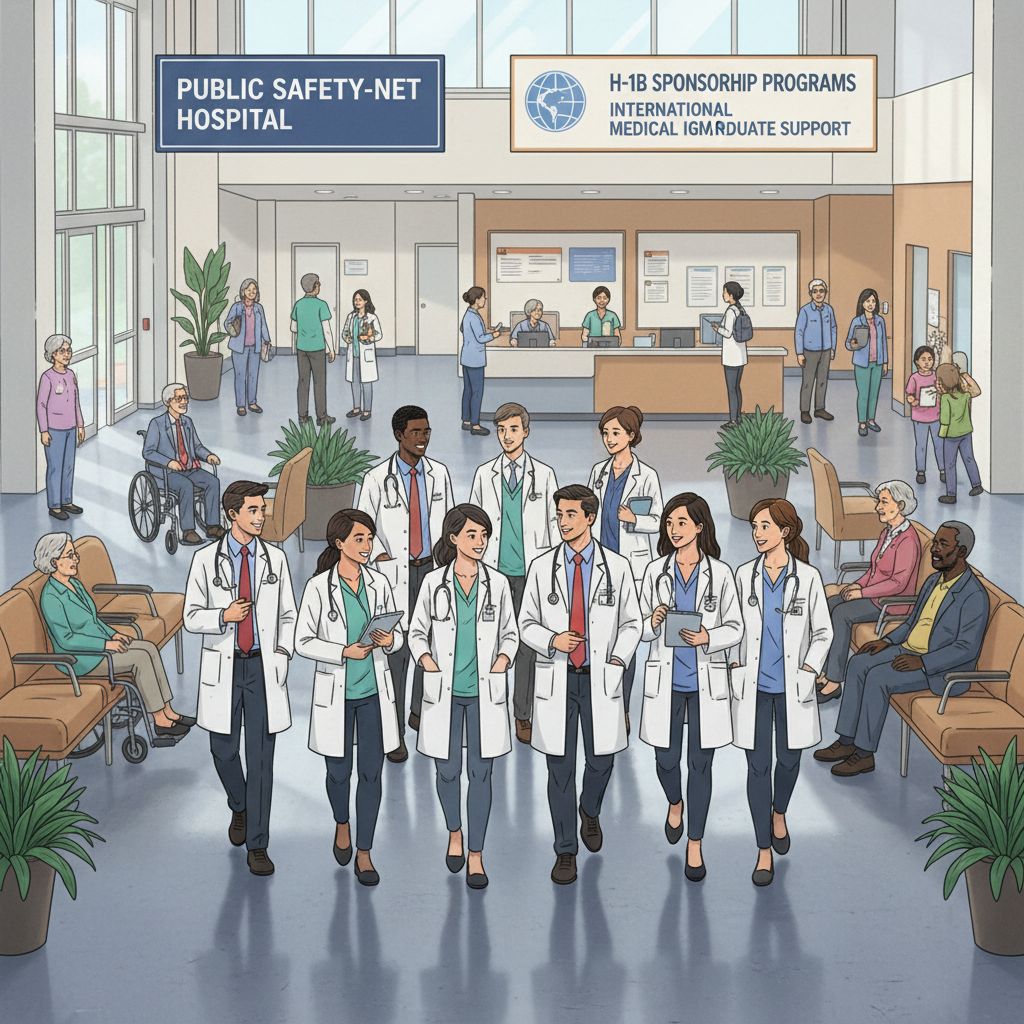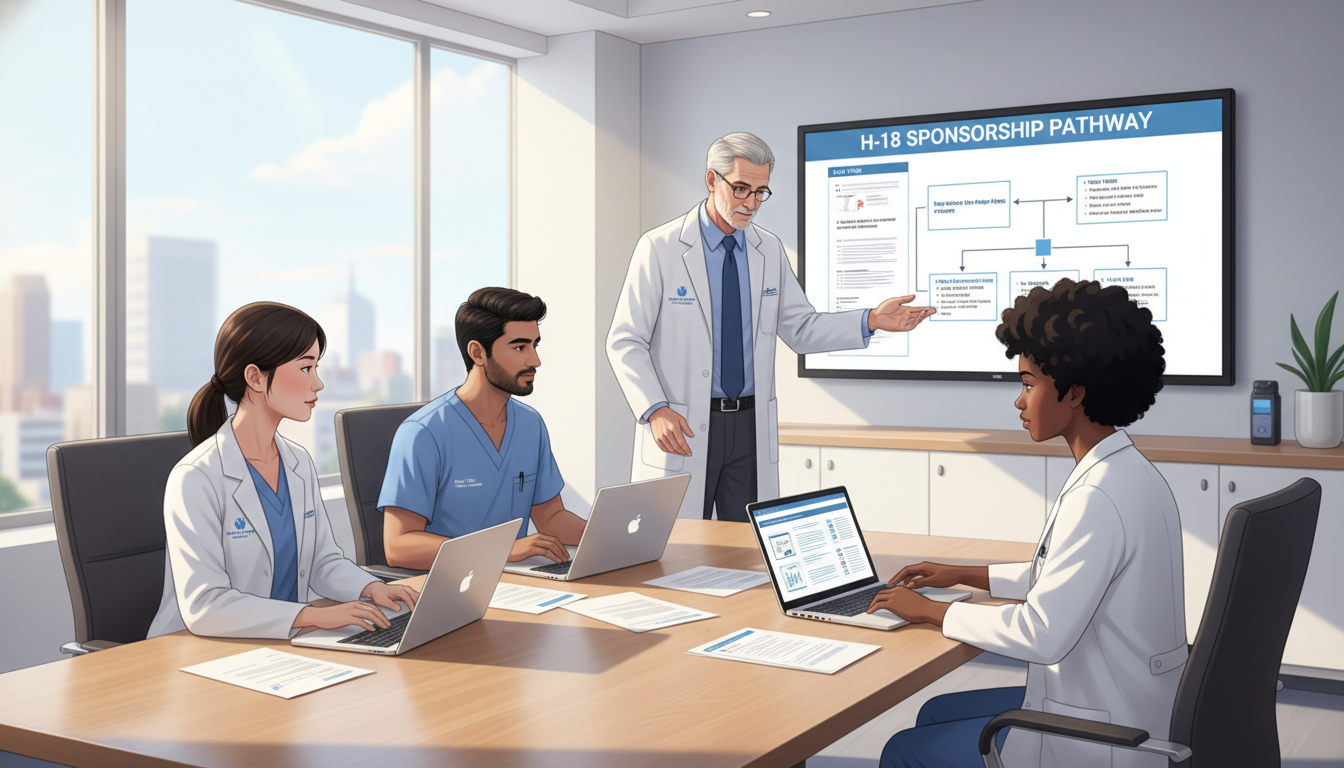
Choosing a residency program as a Caribbean international medical graduate (IMG) is never simple—and it becomes even more complex when you need H-1B visa sponsorship. Philadelphia is a rich training environment with world-class hospitals, a strong Caribbean IMG community, and multiple institutions experienced with H-1B sponsorship. This article explains, in depth, how H-1B sponsorship works for Caribbean IMGs targeting Philadelphia residency programs, which types of programs are more likely to sponsor, and how to position your application strategically.
Understanding H-1B Sponsorship for Residency
Before you focus on specific Philadelphia residency programs, you need a solid understanding of how H-1B sponsorship actually works for residency training.
H-1B vs. J-1 for Caribbean IMGs
Most non–U.S. citizen IMGs train on a J-1 visa sponsored by the Educational Commission for Foreign Medical Graduates (ECFMG). However, many Caribbean IMGs—particularly those with strong USMLE scores and solid clinical performance—pursue H-1B because:
- You avoid the standard J-1 two-year home residency requirement (subject to country- and situation-specific rules)
- You can potentially transition more smoothly into a fellowship or attending position
- Some employers prefer H-1B over J-1 waivers later in your career
Key differences:
J-1 Visa
- Sponsored by ECFMG, not by the residency program itself
- Requires return to home country (or waiver) upon completion of training
- Widely accepted by residency programs (most IMG-friendly programs at least accept J-1)
H-1B Visa
- Employer-sponsored (the residency program or its institution files and pays for petition)
- No automatic two-year home-country requirement
- Requires passing USMLE Step 3 before the H-1B petition is filed
- Programs may be more selective because of cost, paperwork, and compliance requirements
For a Caribbean IMG, especially from schools like St. George’s University (SGU), Ross, AUA, or Saba, H-1B can be a competitive advantage if you meet the higher bar and align with programs that historically sponsor.
Types of H-1B Residency Sponsorship
When exploring Philadelphia residency programs, look for two key H-1B-related features:
H-1B Cap-Exempt Status
Many large academic medical centers are “H-1B cap exempt.” This means:- They can sponsor H-1B visas year-round without being restricted by the annual numerical cap
- They are often categorized as:
- Non-profit institutions affiliated with an institution of higher education, or
- Governmental research organizations
For you, “H-1B cap exempt” often means:
- More predictable sponsorship timelines
- Less competition with the larger national H-1B lottery pool
- Greater institutional experience in handling IMG visas
H-1B Eligible Positions
Not every residency slot is automatically H-1B–eligible. Programs differ in:- Whether they sponsor H-1B at all
- Whether they limit H-1B to certain specialties or tracks
- Whether they only sponsor for categorical vs. advanced positions
When researching, you want to identify:
- Which Philadelphia programs are cap exempt
- Which have historically supported H-1B residency programs
- Whether they explicitly mention “H-1B sponsor list” or “visa sponsorship policies” on their websites
The Philadelphia Landscape: Why It’s Attractive for Caribbean IMGs
Philadelphia is one of the most diverse and medically rich cities in the U.S. For a Caribbean IMG, especially a graduate of a Caribbean medical school residency pipeline like SGU, it offers a combination of training quality and relative IMG-friendliness.
Why Philadelphia Makes Sense for Caribbean IMGs
High Density of Academic Medical Centers
Philadelphia has several major teaching institutions, many of which are affiliated with universities and are typically H-1B cap exempt. These institutions often run or participate in:- Categorical and preliminary Internal Medicine programs
- Family Medicine, Pediatrics, Psychiatry, Surgery, and more
- Subspecialty fellowships that may also continue H-1B sponsorship
Existing Caribbean IMG Presence
Caribbean graduates often match in the region, including:- Graduates of SGU entering SGU residency match outcomes that include Philadelphia programs
- Alumni networks that can provide mentorship, letters, and insight into H-1B-friendly programs
Proximity to East Coast Caribbean Communities
Philadelphia has substantial Caribbean, African, and Latin American communities. As a Caribbean IMG, your background and language skills can be strengths when:- Addressing diverse patient populations
- Demonstrating cultural competence in personal statements and interviews
- Highlighting your ability to serve underserved patients
Quality and Variety of Training Settings
You have access to:- Tertiary and quaternary academic centers (some of which align with top Penn residency programs partners or local academic networks)
- Community hospitals that collaborate with big-name universities
- Veterans Affairs (VA) systems and safety-net hospitals

H-1B Sponsorship in Philadelphia: Institutional Patterns and Practical Realities
Because policies change year to year, you should not rely solely on old online lists. Instead, use institutional patterns and categories to guide you.
Academic Centers and Affiliated Programs
Many large academic centers in and around Philadelphia are:
- H-1B cap exempt due to university affiliation
- Experienced with ECFMG, IMGs, and multiple visa categories
- Clear in communicating whether they support H-1B for residents
While specific policies can evolve, types of programs that often consider H-1B include:
Large University-Affiliated Internal Medicine Programs
These programs frequently have:- A significant IMG presence
- Established legal teams for immigration
- Historic listings on H-1B sponsor list databases (public or FOIA-based)
Major Teaching Hospitals with Academic Ties
Hospitals affiliated with local universities (including the broader Penn residency programs ecosystem and other Philadelphia universities) may:- Sponsor H-1B for highly qualified candidates
- Prefer J-1 but make exceptions for strong applicants
Fellowship Programs
Some fellowships in Internal Medicine subspecialties (Cardiology, GI, Hematology/Oncology) may sponsor H-1B when transitioning from a J-1 or continuing on H-1B from residency. When choosing a Philadelphia residency, consider whether there are local fellowships that also support H-1B to help your long-term planning.
Community Hospitals and Regional Systems
Not all community hospitals in Philadelphia will sponsor H-1B, but some do, especially if:
- They are affiliated with a university or formal teaching network
- They treat a large underserved population and rely heavily on IMGs
- They appear on historical H-1B sponsor lists for physicians
Look for programs that:
- List “ECFMG certification required” and mention both J-1 and H-1B explicitly
- Emphasize diversity, IMG-friendliness, and international graduates on their websites
- Highlight Caribbean medical school residency participation or alumni (e.g., SGU, Ross, etc.)
What to Expect as a Caribbean IMG Seeking H-1B in Philadelphia
Real-world expectations:
Competition Is Higher for H-1B Spots
Even IMG-friendly programs may offer only a limited number of H-1B sponsorship slots. You will likely compete against:- Other IMGs with strong USMLE scores
- U.S. graduates who need H-1B (less common but possible)
Programs May Default to J-1
You may encounter:- Programs that will rank you only if you accept J-1
- Programs that say “we might consider H-1B in exceptional cases”
Policies Are Not Always Public
Some programs do not state visa types explicitly online but still sponsor. This is where targeted outreach becomes critical.
Strategic Approach: How a Caribbean IMG Should Target H-1B-Friendly Philadelphia Programs
Successful Caribbean IMGs aiming for H-1B sponsorship in Philadelphia typically excel in two dimensions: application strength and targeted program strategy.
1. Make Yourself a Strong H-1B Candidate
Philadelphia programs investing in H-1B sponsorship often expect you to exceed their usual IMG thresholds.
Key steps:
a. Aim for Strong USMLE Performance
For H-1B, Step 3 completion is a must; strong scores are an added advantage.
- For Step 1 (pass/fail): Focus on a strong pass and strong clinical evaluations
- For Step 2 CK: Competitive scores are especially important. For IM and related specialties, many H-1B-sponsoring programs will prefer:
- Step 2 CK > 230–240+ (though cutoffs vary and are not absolute)
- Plan to pass Step 3 before:
- Program deadlines to file your H-1B petition
- The start of residency (some institutions require Step 3 before issuing a contract under H-1B)
This timeline is particularly relevant for Caribbean IMGs who may be finishing clerkships or doing post-graduation clinical work in the U.S.
b. Leverage Your Caribbean Medical School Network
If you are from SGU, Ross, AUA, Saba, or similar Caribbean schools, use your institution’s resources:
- Check if your school’s residency match list or SGU residency match reports show:
- Philadelphia programs that have taken graduates with H-1B in prior years
- Ask your dean’s office or residency advising department:
- “Which Philadelphia programs have historically sponsored H-1B for our grads?”
- Connect with alumni currently in:
- Philadelphia residency
- Penn residency programs and other academic affiliates in the city
These alumni can provide first-hand information on:
- Whether their program still sponsors H-1B
- How they framed their visa situation in interviews
- Whether there is a formal or informal H-1B sponsor list within the institution
c. Build a U.S.-Based Clinical and Research Profile
To stand out:
- Complete robust U.S. clinical experience (USCE), ideally:
- Sub-internships or audition rotations in Philadelphia or nearby
- Electives at institutions with H-1B cap exempt status
- Get letters from:
- U.S. attendings who can comment on your clinical reasoning and professionalism
- Engage in:
- Research, quality improvement, or scholarly projects in U.S. hospitals
When programs decide whether to sponsor H-1B, they often look for evidence that you are:
- Likely to pass boards and complete the program
- A good long-term investment for their institution
2. Identify and Prioritize H-1B-Friendly Philadelphia Programs
Instead of applying blindly, adopt a structured approach.
a. Use Multiple Data Sources
Combine:
Program Websites
Look for:- “We sponsor J-1 and H-1B visas” or similar wording
- “Visa sponsorship available; contact program for details”
- Mentions of IMGs and diversity
Doximity / FREIDA / Program Databases
Some list visa policies, but they may be incomplete or outdated.Public H-1B Sponsor List Data
Use:- U.S. Department of Labor databases
- Public FOIA databases that list prior H-1B petitions by employer
- Search for hospital or institution names with “H-1B physician” or “H-1B resident”
If a Philadelphia hospital consistently appears in H-1B filings for physicians, that’s a strong signal.
- Caribbean School Advising Offices
Many Caribbean medical schools maintain informal or internal lists of:- Programs that have taken their graduates on H-1B
- Hospitals that are reliably cap exempt
b. Email Programs Thoughtfully
When in doubt, reach out directly—but do so professionally and briefly.
A sample email structure:
- Introduce yourself:
- Name, Caribbean school, graduation year
- USMLE status (including whether you have passed Step 3 or when you plan to)
- State your interest:
- Why you are particularly interested in their Philadelphia residency (location, population, training model)
- Ask concisely:
- “Could you please confirm whether your program sponsors H-1B visas for residency, or if sponsorship is limited to J-1?”
Attach nothing unless requested. This approach helps you:
- Build a list of programs open to H-1B
- Clarify if policies are changing this cycle
- Demonstrate professionalism prior to application
c. Prioritize Programs in Your Application Strategy
Given ERAS application limits and cost, allocate:
Core Priority List
- Programs that explicitly confirm H-1B sponsorship
- Programs where your Caribbean school has had H-1B residency matches
- Institutions listed as H-1B cap exempt with strong IMG track records
Secondary List
- Programs that:
- Accept IMGs and sponsor J-1 but are vague about H-1B
- Appear on historical H-1B sponsor lists for physicians
- You may rank these lower unless they clarify H-1B acceptance
- Programs that:
Fallback / Safety List
- Programs accepting J-1 with strong Caribbean IMG representation
- In case H-1B options are limited this cycle
As a Caribbean IMG, you must balance ambition and pragmatism. Focusing only on H-1B may drastically narrow your options; including J-1-friendly programs may be necessary depending on your risk tolerance and profile.

H-1B Logistics: Timing, Documentation, and Coordination
Once you match to a Philadelphia program that sponsors H-1B, you enter a time-sensitive, documentation-heavy phase. Planning early as a Caribbean IMG is crucial.
Step 3 Timing and Strategy
For H-1B residency programs:
- You must pass Step 3 before the program files your H-1B petition.
- Some institutions set an internal deadline, often:
- Several months before residency start (e.g., March–April for July start)
- As a Caribbean IMG, ensure:
- You schedule Step 3 with buffer time for score release and possible retake
- You verify state licensure / Step 3 rules for the state of Pennsylvania (or the state where your exam application is processed)
Consider taking Step 3:
- After graduation but before the match cycle, if possible
- During a research year or preliminary training if you are already in the U.S.
Institutional Paperwork
Your Philadelphia residency program’s GME office typically handles:
- H-1B petition (Form I-129)
- Labor Condition Application (LCA)
- Coordination with immigration attorneys and HR
Your role:
- Provide:
- Valid ECFMG certification
- Final medical diploma and transcripts
- Proof of USMLE Steps 1, 2 CK, and 3 completion
- Passport, previous visas/I-94 records, if any
- Respond quickly to:
- Requests for documents or signatures
- Clarifications about your immigration history
H-1B Cap Exempt vs. Cap Subject Transition
As a resident in a university-affiliated Philadelphia hospital, your H-1B is likely cap exempt. Later, if you:
- Move to a private employer or a non–cap-exempt institution
- You may need to enter the H-1B cap lottery unless:
- The new employer is also cap exempt, or
- You switch to another status (e.g., O-1) or obtain a J-1 waiver job
Understanding this helps you make long-term decisions:
- Some graduates stay within academic or cap-exempt systems after residency
- Others pursue fellowship in cap-exempt institutions, then transition to private practice
Practical Tips and Case Examples for Caribbean IMGs
To bring this together, here are practical scenarios tailored to Caribbean IMGs targeting Philadelphia.
Case Example 1: SGU Graduate Aiming for Internal Medicine in Philadelphia
- Graduate of SGU with strong clinical grades
- Step 2 CK: 243
- Planning Step 3 during final year
Strategy:
- Identifies SGU residency match lists showing multiple Philadelphia Internal Medicine programs that have taken SGU grads with H-1B previously
- Emails those programs to confirm current H-1B policies
- Applies broadly to:
- H-1B cap exempt academic centers in Philadelphia
- A mix of J-1 and H-1B programs in neighboring regions (New Jersey, New York)
- Passes Step 3 early and mentions this in personal statement and ERAS CV
- During interviews, clearly articulates:
- Why H-1B is preferred
- Willingness to help the program meet timelines (taking exams early, prompt paperwork)
Case Example 2: Caribbean IMG with Moderate Scores but Strong U.S. Experience
- Graduate of another Caribbean school (e.g., Ross, AUA)
- Step 2 CK: 225
- Solid U.S. rotations, including in Philadelphia hospitals
Strategy:
- Accepts that H-1B sponsorship may be more challenging with moderate scores
- Prioritizes:
- Programs that openly list H-1B sponsorship
- Philadelphia community/teaching hospitals with strong IMG representation
- Keeps J-1 as an option:
- Applies to J-1-friendly Philadelphia programs and broader mid-Atlantic region
- Focuses personal statement on:
- Community service, continuity of care, and commitment to underserved populations
- If matched on J-1, plans ahead for:
- J-1 waiver job in a region that interests them
Case Example 3: Already in the U.S. on Another Status
- Caribbean IMG doing research on an F-1 OPT or J-1 research visa in Philadelphia
- Wants to transition to residency with H-1B
Strategy:
- Uses existing connections at a Philadelphia institution
- Gains strong letters from local attendings
- Confirms whether the current hospital sponsors H-1B for residents
- Coordinates timing so that:
- Research visa ends as H-1B residency begins
- No gaps in employment or legal status
Frequently Asked Questions (FAQ)
1. Is it realistic for a Caribbean IMG to get H-1B sponsorship for residency in Philadelphia?
Yes, it is realistic, but it is competitive. Many Philadelphia institutions are H-1B cap exempt and have experience sponsoring physicians. However, as a Caribbean IMG, you must typically offer:
- Solid USMLE scores (especially Step 2 CK)
- Timely completion of Step 3
- Strong U.S. clinical experience and letters
- A convincing reason for choosing H-1B over J-1
Your best chances are at programs that:
- Explicitly list H-1B sponsorship
- Have a history of matching Caribbean IMGs into H-1B residency programs
2. Do Penn residency programs sponsor H-1B for Caribbean IMGs?
Policies vary by department and change over time. Some academic departments in large university systems, including those associated with Penn residency programs, have historically sponsored H-1B visas for physicians, especially in cap-exempt contexts. However:
- Not every program or specialty at any single institution will necessarily sponsor H-1B
- You should:
- Check each program’s website
- Contact their GME office or program coordinator directly
- Ask your Caribbean medical school’s advising office or alumni for recent experiences
3. How can I find a reliable H-1B sponsor list for Philadelphia residency programs?
There is no single, official, always-up-to-date H-1B sponsor list for residency. Instead:
- Use public databases of H-1B filings to see which Philadelphia hospitals have sponsored physicians in the past
- Check FREIDA, program websites, and GME policies for visa information
- Ask your Caribbean medical school’s career services for internal lists or anecdotal data
- Reach out directly to programs to confirm whether they currently sponsor H-1B
Combining these sources helps you build a practical, cycle-specific H-1B sponsor list tailored to your goals.
4. If I can’t get H-1B, should I accept a J-1 offer in Philadelphia?
For many Caribbean IMGs, the answer is yes—particularly if:
- The residency program is strong and aligns with your long-term career goals
- You are ready to pursue a J-1 waiver job after training
- You prioritize training quality and location over visa type
However, this is a personal decision that depends on:
- Your returning-home obligations and plans
- Your risk tolerance and family considerations
- Your long-term career path (academic vs. community vs. private practice)
It can be valuable to:
- Discuss the decision with immigration counsel
- Seek advice from Caribbean alumni who trained in Philadelphia on J-1 and later navigated waiver options
By understanding how H-1B sponsorship works, researching Philadelphia residency programs strategically, and strengthening your application, you can significantly improve your chances of securing an H-1B-sponsored residency as a Caribbean IMG. Combine institutional research, alumni networking, and early exam planning to create a realistic, high-yield pathway into the Philadelphia training environment.