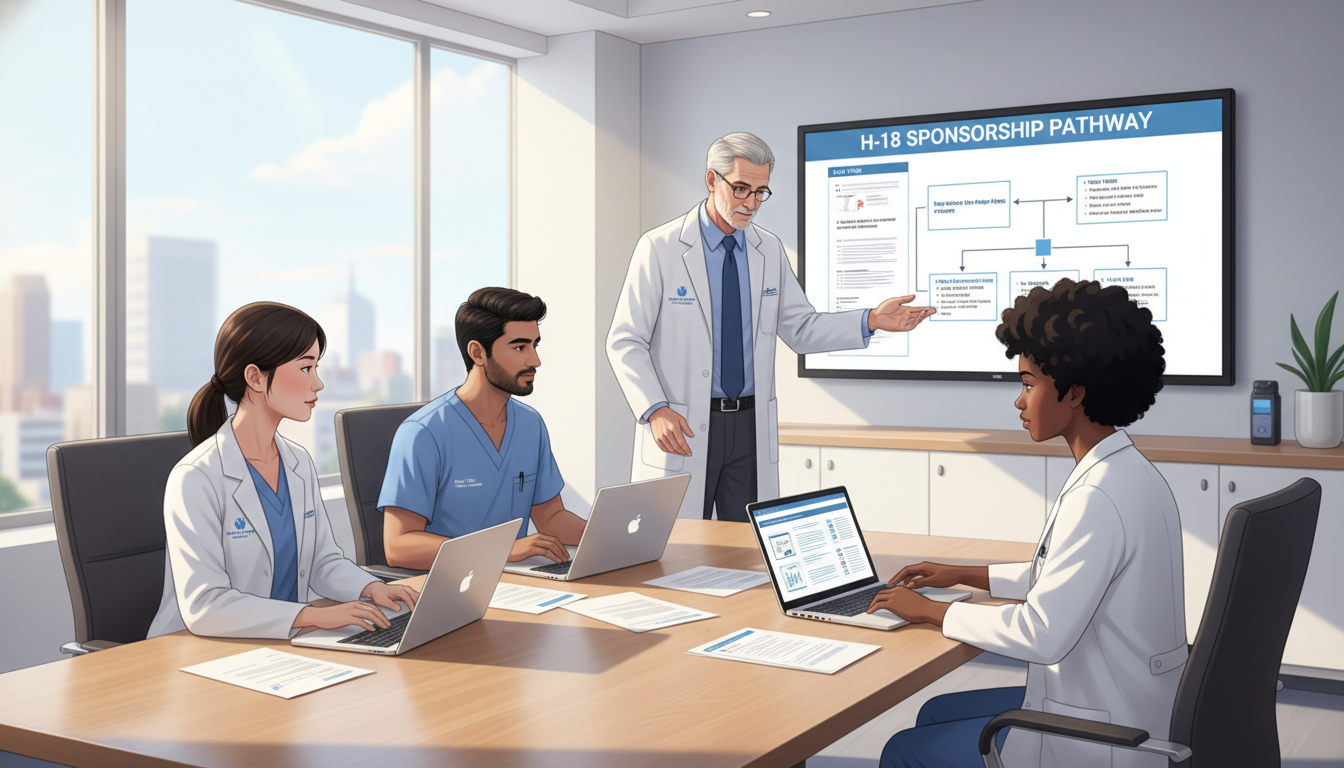
Understanding H‑1B Residency Sponsorship for Caribbean IMGs in Southern California
For many Caribbean medical school graduates, landing a residency in Southern California is the dream: excellent training, diverse patient populations, and the lifestyle of SoCal cities from Los Angeles to San Diego. If you’re a Caribbean IMG, however, the path is more complex—especially if you’re hoping for H‑1B residency programs rather than J‑1.
This article walks through what you need to know about H‑1B sponsorship programs for Caribbean IMGs in Southern California, how to identify residencies with friendly policies for IMGs, and how to practically position yourself for a successful match.
We’ll especially focus on:
- How H‑1B residency sponsorship works (and what H‑1B cap‑exempt means)
- Which types of SoCal programs are more likely to sponsor H‑1B
- How your Caribbean medical school residency track record (e.g., SGU residency match outcomes) affects your chances
- Step‑by‑step strategies and timelines to improve your odds as a Caribbean IMG
1. H‑1B vs J‑1 for Caribbean IMGs: What You Must Understand First
1.1 What is an H‑1B residency program?
The H‑1B is a temporary work visa for “specialty occupations,” which includes physicians in GME training. Key features for residents/fellows:
- Employer‑sponsored (your residency program is the petitioner)
- Dual intent (you may later apply for a green card)
- Renewable typically up to 6 years total (residency + fellowship years count together)
- Requires:
- Passed USMLE Steps 1, 2 CK, and 3 before H‑1B filing
- ECFMG certification
- Unrestricted state license or eligibility for a training license (varies by state)
For a Caribbean IMG, the main advantages of an H‑1B residency over a J‑1:
- No mandatory 2‑year home country return requirement
- Easier transition to employer‑sponsored green card after training
- Potentially smoother path to remain in the same SoCal health system after residency
However, H‑1B is not automatically better than J‑1. Some SoCal systems are more comfortable and structured for J‑1 sponsorship, especially in high‑volume IMG programs.
1.2 H‑1B cap‑exempt: Why hospital programs are different
You’ll see the terms “H‑1B cap exempt” and “H‑1B cap subject” frequently:
Cap‑exempt: Not limited by the nationwide annual H‑1B quota; can file anytime.
- Generally applies to:
- Non‑profit hospitals affiliated with a university
- University medical centers
- Certain public or non‑profit research institutions
- Most major academic SoCal residency programs fall in this category.
- Generally applies to:
Cap‑subject: Limited by the annual lottery and April filing timeline.
- Typically private, for‑profit hospitals or community practices not qualifying as cap‑exempt.
- Less common among large residency‑sponsoring institutions in Southern California.
For Caribbean IMGs, cap‑exempt H‑1B residency programs are extremely valuable because:
- You avoid the H‑1B lottery uncertainty.
- Timing is more flexible—filing can happen once you’ve matched and cleared prerequisites.
1.3 How this interacts with Caribbean medical schools
Many SoCal programs view Caribbean medical school residency applicants differently depending on:
- School reputation and outcomes (e.g., SGU, Ross, AUC, Saba tend to be better known).
- Historical match success at their institution.
For example:
- SGU residency match patterns show numerous placements in California, particularly in community and some academic programs.
- If your school has a known track record at a given SoCal institution, you have a better chance of being considered for H‑1B sponsorship—programs are more willing to take on the additional administrative burden if they trust your training background.
Action step:
Before building your target list, check your school’s match list specifically for California and note which Southern California residency programs have repeatedly taken grads from your school.
2. Southern California Landscape: Where the H‑1B Opportunities Are
Southern California covers several major metropolitan and suburban areas:
- Los Angeles County
- Orange County (e.g., Irvine, Anaheim, Santa Ana)
- San Diego County
- Inland Empire (Riverside, San Bernardino)
- Ventura and surrounding areas
Each region has a mix of university‑affiliated academic centers and community‑based hospitals. Understanding this ecosystem helps you predict which ones are more likely to be H‑1B‑friendly.
2.1 Academic centers vs community programs
In Southern California, academic centers and large teaching hospitals often have:
- Dedicated GME offices with immigration counsel
- Experience sponsoring H‑1B for existing faculty and fellows
- Established policies (either “we sponsor” or “we don’t sponsor at all”)
Examples of institutions/contexts (policies evolve, so verify directly):
- University‑affiliated systems (often H‑1B cap‑exempt):
- Large university medical centers and their community affiliates
- County + university partnership hospitals
- Community‑based systems:
- Some are very IMG‑friendly but J‑1‑only
- A subset will sponsor H‑1B on a case‑by‑case basis
For a Caribbean IMG, this means:
- Academic programs may offer clearer H‑1B policies but more competitive selection.
- Community programs might be more open to IMGs but sometimes limit sponsorship to J‑1 only due to costs and legal complexity.
2.2 Specialties with relatively better H‑1B openness
While individual program policy matters more than specialty, certain specialties in SoCal are slightly more open to sponsoring H‑1B for strong IMGs because of workforce needs:
- Internal Medicine (especially community‑based and county hospitals)
- Family Medicine
- Psychiatry
- Pediatrics
- Neurology (selected programs)
Conversely, some highly competitive specialties are much less likely to go through the extra effort of H‑1B sponsorship for a Caribbean IMG unless you are an exceptional candidate:
- Dermatology, Plastic Surgery, Orthopedics
- Ophthalmology, ENT, Radiation Oncology
Action step:
If H‑1B is essential, consider targeting specialties and settings with historical openness to IMGs and higher workforce demand, then work upward from there.

3. Building a Target List: Identifying H‑1B Residency Programs in SoCal
There is no single official H‑1B sponsor list for residency programs. You need to build your own intelligent, evidence‑based list. For a Caribbean IMG, this is where planning matters most.
3.1 Use program websites, but don’t stop there
Most residency program websites fall into one of these categories:
- Explicitly say “We sponsor H‑1B and J‑1 visas.”
- Explicitly say “We sponsor J‑1 only.”
- Say nothing at all about visas.
For each Southern California residency you’re considering:
- Go to the GME office or program site.
- Look for:
- “International Medical Graduates” sections.
- Statements like “We sponsor J‑1 visas through ECFMG. H‑1B sponsorship is considered on a case‑by‑case basis.”
- Screenshot or note any clear visa language.
If the policy is not clear:
- Assume nothing. Some programs sponsor H‑1B quietly; others never sponsor even if they have H‑1B faculty.
3.2 Call and email GME coordinators strategically
To refine your personal H‑1B sponsor list, you’ll need direct communication. As a Caribbean IMG, professionalism here is crucial.
Suggested email template (adapt to your situation):
Subject: Visa Sponsorship Policy for [Specialty] Residency – Prospective Applicant
Dear [Program Coordinator/Program Director],
I am an international medical graduate from [Caribbean school, e.g., SGU], planning to apply to the [PGY‑1 Internal Medicine] residency at [Hospital Name]. I am currently on [F‑1 / no US visa] and plan to complete USMLE Step 3 before the rank order list deadline.
May I please confirm your program’s current visa sponsorship policy? Specifically:
– Do you sponsor H‑1B visas for incoming residents, or J‑1 only?
– If you do sponsor H‑1B, are there additional requirements (e.g., Step 3 deadline, graduation year limit)?I greatly appreciate your time and guidance so that I can plan my application strategy appropriately.
Sincerely,
[Your Name], MD
[Caribbean medical school]
[AAMC ID / ERAS ID if available]
Key points:
- Mention you plan to finish Step 3 early (critical for H‑1B).
- Be concise and respectful; coordinators are busy during application season.
- Keep a spreadsheet of responses, including the date and exact wording.
3.3 Leverage alumni and Caribbean school match data
Your own Caribbean medical school is a powerful resource:
- Ask your Office of Career Guidance/Student Affairs:
- “Which Southern California residency programs have sponsored H‑1B for our graduates in the last 5 years?”
- “Do any SoCal programs specifically prefer J‑1 over H‑1B for our grads?”
- Search your SGU residency match (or your school’s equivalent) to identify:
- Repeated matches at specific SoCal hospitals (e.g., internal medicine at a certain LA or San Diego hospital).
- Alumni who are now PGY‑2/3 at those institutions.
Then:
- Reach out to alumni via LinkedIn or school alumni networks.
- Ask discreetly:
- “Does your program sponsor H‑1B for residents?”
- “How friendly is the program to Caribbean IMGs?”
- “Did anyone in your cohort successfully switch from J‑1 to H‑1B, or start directly on H‑1B?”
These conversations often provide more accurate, current information than official websites.
3.4 Understand cap‑exempt vs cap‑subject risk in SoCal
If a Southern California program is:
- University‑based or clearly non‑profit + university‑affiliated:
- High likelihood of H‑1B cap‑exempt status.
- Private community hospital with no university affiliation:
- More likely to be cap‑subject, meaning:
- They must win the H‑1B lottery (high risk).
- Many such programs avoid H‑1B entirely and only sponsor J‑1.
- More likely to be cap‑subject, meaning:
For residency training, prioritize cap‑exempt sponsors whenever possible. It significantly reduces your visa risk.
4. Optimizing Your Profile as a Caribbean IMG Targeting H‑1B in SoCal
Getting an offer from an H‑1B‑sponsoring Southern California residency requires more than just good intentions. You must address both IMG competitiveness and H‑1B requirements simultaneously.
4.1 Make Step 3 timing your top logistical priority
For an H‑1B residency:
- USMLE Step 3 must usually be passed before H‑1B filing.
- Many programs set a hard cutoff:
- Step 3 passed before ranking
- Or at least before they start H‑1B paperwork in spring.
Actionable strategy:
- Plan Step 3 date backward:
- Aim to have Step 3 score available by January–February of the application cycle.
- If you’re still in school:
- Schedule graduation requirements and electives so you can take Step 3 soon after graduation (or during a gap with OPT if you’re on F‑1).
- If you already graduated:
- Consider dedicating a 3–4 month period solely to Step 3 prep and exam completion before ERAS submission.
Programs are much more comfortable offering H‑1B when Step 3 is done and dusted.
4.2 Demonstrate strong clinical experience in the U.S.
Southern California residencies—especially those willing to sponsor H‑1B—tend to expect:
- US clinical experience (USCE) in core specialties.
- Letters from U.S. attendings who can comment on:
- Your work ethic
- Teamwork and communication
- Reliability and professionalism
For Caribbean IMGs:
- Maximize core rotations in the U.S., ideally at ACGME‑affiliated sites.
- Try to rotate at California or West Coast sites if possible; SoCal programs may value regional experience and LORs from physicians they know.
- Seek:
- Sub‑internships/acting internships (especially in Internal Medicine or Family Medicine if that’s your target).
- Opportunities where you can take ownership, present patients, and show readiness for residency.
4.3 Strengthen your application for SoCal programs specifically
Southern California is highly competitive overall, even for primary care fields. To stand out as a Caribbean IMG aiming for an H‑1B‑sponsoring Southern California residency:
Highlight ties to the region:
- Family in SoCal, long‑term partner based there, prior long‑term residence.
- State in personal statement: “I intend to pursue long‑term practice in Southern California, particularly within under‑served communities.”
Emphasize:
- Work or volunteer experience in diverse, underserved populations (which aligns with county and safety‑net hospitals).
- Spanish or other language skills, if applicable.
Address any weaknesses proactively:
- If you have exam attempts or gaps, briefly contextualize them and show upward trajectory.
- Strong Step 2 CK and Step 3 scores can help offset earlier issues.
4.4 Be realistic with your specialty and program tier
For Caribbean IMGs, the combination of:
- Southern California location
- H‑1B sponsorship
- Competitive specialty
…is a triple filter that eliminates many options.
Pragmatic approach:
- Tier 1 goal: H‑1B‑friendly Southern California residency in a realistic specialty (IM/FM/Psych/Peds/Neurology).
- Tier 2 backup: J‑1‑friendly SoCal program, with later plans for a waiver job and then H‑1B.
- Tier 3 backup: H‑1B‑friendly programs in other regions (Midwest, Northeast, Texas), then later move to California on a new job‑sponsored H‑1B.
You can still aim for SoCal first, but you protect your overall residency chances.

5. Timeline and Application Strategy for Caribbean IMGs Targeting H‑1B in SoCal
Bringing everything together, here’s a practical year‑by‑year and season‑by‑season plan.
5.1 18–24 months before Match
Confirm eligibility:
- Ensure your Caribbean school meets California state licensure and Medical Board rules.
- Clarify any additional California‑specific requirements (e.g., postgraduate training, required documentation).
Academic and exam preparation:
- Finish Step 1 and Step 2 CK with competitive scores.
- If you had setbacks, plan for strong Step 2 CK and Step 3 to demonstrate recovery.
Start mapping programs:
- Pull lists of SoCal internal medicine, family medicine, psychiatry, pediatrics residencies from FREIDA, ACGME, and program websites.
- Begin labeling:
- IMG‑friendly (based on past residents)
- H‑1B potential (university‑affiliated, large systems, or explicit statements)
5.2 12–15 months before Match
Schedule USMLE Step 3 with target results date before February of the application cycle.
Secure strong US letters:
- Rotate in teaching hospitals that are known to take Caribbean students.
- Seek at least 2–3 letters from U.S. attendings in your chosen specialty.
Start contacting programs:
- Email GME offices about visa policies (H‑1B vs J‑1).
- Update your personal H‑1B sponsor list based on responses.
5.3 6–9 months before ERAS opens
Finalize exam plan:
- Confirm Step 3 test date.
- Clear other administrative hurdles (ECFMG certification, documentation).
Long list to short list:
- Categorize programs:
- Group A: SoCal programs that explicitly sponsor H‑1B and are IMG‑friendly.
- Group B: SoCal programs that will consider H‑1B case‑by‑case.
- Group C: SoCal programs that are J‑1 only.
- Group D: Non‑SoCal but H‑1B‑friendly programs as backup.
- Categorize programs:
5.4 ERAS season and interviews
In your application:
- Clearly state visa needs (e.g., “Require H‑1B or J‑1 sponsorship; USMLE Step 3 planned/completed before rank list deadline”).
- Emphasize your Caribbean training strengths, USCE, and ties to Southern California.
During interviews (if visa comes up):
- Be honest but flexible:
- “My preference is H‑1B because I plan a long‑term career in the U.S., but I understand many programs sponsor J‑1 and I’m open to both if the training environment is strong.”
- If a program is known to sponsor H‑1B:
- Confirm whether they expect Step 3 results by a particular date.
- Ask neutrally, “Do you anticipate any changes in your visa sponsorship policies next year?”
- Be honest but flexible:
After interviews:
- Update your ranking strategy:
- Rank H‑1B‑sponsoring SoCal programs highest if training quality and fit are strong.
- Mix in J‑1 SoCal programs and H‑1B programs in other regions to protect your match chances.
- Update your ranking strategy:
6. Common Pitfalls and How to Avoid Them as a Caribbean IMG
6.1 Over‑restricting to SoCal H‑1B only
Many Caribbean IMGs fall into the trap of applying only to Southern California H‑1B programs. Given:
- Competition in SoCal
- Limited number of programs that sponsor H‑1B for IMGs
…this is high risk.
Solution:
- Use SoCal H‑1B programs as top priorities, not your only options.
- Apply broadly:
- J‑1‑friendly SoCal programs
- H‑1B‑friendly programs across multiple states
6.2 Neglecting Step 3 preparation
Hoping that a SoCal program will:
- Sponsor H‑1B without Step 3, or
- Wait patiently for you to pass Step 3 after Match
…is usually unrealistic.
Avoid:
- Scheduling Step 3 too close to match deadlines.
- Underestimating the exam’s complexity.
Give Step 3 structured study time and treat it as mandatory for a serious H‑1B plan.
6.3 Not using your Caribbean school’s support structures
Top Caribbean schools like SGU, Ross, AUC, and Saba have:
- Dedicated residency advising teams
- Historical placement data in Southern California
- Knowledge about individual programs’ visa practices
Many graduates under‑utilize this institutional memory.
Engage early:
- Request targeted advising sessions explicitly about H‑1B sponsorship options and Southern California residency programs.
- Ask for introductions to alumni currently training in SoCal.
FAQ: H‑1B Sponsorship Programs for Caribbean IMGs in Southern California
1. Do many Southern California residency programs sponsor H‑1B for Caribbean IMGs?
A modest number do, but it’s far from universal. Academic medical centers and large teaching systems, often H‑1B cap‑exempt, are more likely to sponsor H‑1B—and some have Caribbean IMG residents already. Many community programs remain J‑1‑only, even if they are very IMG‑friendly. You must check each program individually and build your own H‑1B sponsor list.
2. How important is USMLE Step 3 for getting an H‑1B residency in SoCal?
For most H‑1B residency positions, Step 3 is essential. Programs typically need you to have passed Step 3 before they can file the H‑1B petition, and many want it completed before they finalize their rank list. Without Step 3, your chances of obtaining an H‑1B‑sponsored PGY‑1 spot in Southern California are significantly lower, even if the program is otherwise IMG‑friendly.
3. I’m a Caribbean IMG—should I insist on H‑1B, or consider J‑1 as well?
It depends on your risk tolerance and long‑term plans. H‑1B offers more flexibility for staying in the U.S. after training, but limiting yourself only to H‑1B‑sponsoring SoCal programs can dramatically reduce your chance of matching. Many Caribbean IMGs successfully complete residency on J‑1, then use waiver jobs (often in underserved areas) to transition to H‑1B and eventually a green card. A balanced strategy is to prioritize H‑1B‑friendly SoCal programs while also applying to strong J‑1 programs and H‑1B options in other regions.
4. Does graduating from a well‑known Caribbean school like SGU improve my H‑1B chances?
Indirectly, yes. Programs that have a positive history with SGU residency match or other reputable Caribbean schools are more likely to trust the quality of your training and may be more willing to undertake the additional work of H‑1B sponsorship. However, your individual profile—USMLE scores, US clinical experience, letters of recommendation, and professionalism—remains crucial. School reputation opens doors; your performance keeps them open.
By understanding how H‑1B residency programs work, using your Caribbean school’s data intelligently, and following a realistic, step‑wise strategy, you can maximize your chances of securing SoCal medical training under H‑1B sponsorship—while still protecting your overall residency match prospects across the U.S.