Understanding H‑1B Sponsorship in Denver Residency Programs
For international medical graduates (IMGs) targeting Denver residency programs, understanding H‑1B sponsorship is critical. Denver’s academic medical centers and community hospitals are increasingly open to hiring IMGs, but policies vary significantly—especially around visa sponsorship. Knowing how H‑1B works, which programs are realistically accessible, and how to position yourself for these opportunities can dramatically improve your match strategy.
This guide focuses on H‑1B sponsorship programs in and around Denver, with practical, applicant‑oriented advice. It emphasizes:
- How H‑1B works in the residency context
- Differences between H‑1B and J‑1 for Denver programs
- Typical requirements and expectations from Denver institutions
- How to research which Colorado residency programs support H‑1B
- Actionable strategies to maximize your chances as an IMG
Throughout, the terms “Denver residency programs” and “Colorado residency” are used to reflect both city‑center academic institutions and nearby affiliated hospitals.
H‑1B vs J‑1: What Denver Applicants Need to Know
Most IMGs training in the U.S. are on either J‑1 or H‑1B visas. Denver programs commonly accept J‑1, and a smaller subset support H‑1B. Understanding which is better for you depends on your long‑term goals and eligibility.
Core Differences Relevant to Denver Residency
1. Purpose and Sponsorship
J‑1 (ECFMG‑sponsored):
- Purpose: Graduate medical education and training
- Primary sponsor: ECFMG (not the hospital itself)
- Most Denver GME offices are very comfortable with J‑1 because ECFMG handles most immigration logistics.
H‑1B (hospital‑sponsored):
- Purpose: Specialty occupation employment
- Sponsor: The residency program/hospital is your H‑1B employer.
- Requires more legal/administrative work from the institution—one reason why fewer programs offer it.
2. The Two‑Year Home Residency Requirement
- J‑1: Typically carries a two‑year home country residence requirement after training. To stay in the U.S., you must either:
- Return home for two years, or
- Obtain a waiver (e.g., Conrad 30, academic, hardship, persecution).
- H‑1B: No automatic two‑year home requirement. This is a major advantage if you aim to stay in the U.S. long‑term and pursue permanent residency.
3. Duration and Cap
J‑1:
- Up to 7 years for clinical training with ECFMG (extensions possible for fellowships).
- No numerical cap issues for residents.
H‑1B for Residency:
- Typically issued in 1–3 year increments.
- Overall 6‑year maximum in H‑1B status (including time from previous U.S. employment).
- Residency programs at nonprofit or university‑affiliated institutions are generally H‑1B cap exempt, meaning they can file H‑1B petitions at any time and are not restricted by the annual H‑1B lottery.
4. Exam Requirements
J‑1 (ECFMG):
- Requires ECFMG certification (USMLE 1, 2CK, OET, credentialing). Step 3 is not required for J‑1.
H‑1B for Resident Physicians:
- USMLE Step 3 is mandatory in nearly all H‑1B residency situations.
- You must have passed Step 3 before the program can file the H‑1B petition.
Which Visa Is More Common in Denver?
Most Colorado residency programs default to J‑1 because the process is standardized and less resource‑intensive. However, several Denver academic centers will consider H‑1B for outstanding IMG candidates who meet strict criteria (USMLE scores, early Step 3, strong clinical track record).
In practical terms:
- If you’re flexible about J‑1 and willing to do a waiver later, your options in Denver expand significantly.
- If you are H‑1B only, you must research program‑specific policies and be prepared for a narrower, highly competitive set of positions.

How H‑1B Sponsorship Works for Denver Residency Programs
Understanding the mechanics of H‑1B in teaching hospitals will help you communicate intelligently with program coordinators and avoid common mistakes.
Cap‑Exempt vs Cap‑Subject: Why Denver Teaching Hospitals Are Different
The H‑1B system has an annual numerical limit (the H‑1B cap), with most private employers subject to a lottery each year. However, most residency programs in Denver fall into categories that are H‑1B cap exempt:
- Institutions of higher education (universities)
- Nonprofit entities related to or affiliated with universities
- Nonprofit research organizations or governmental research organizations
For residency applicants, this usually means:
- No lottery; petitions can be filed year‑round.
- Continuity of status; less anxiety about whether you’ll “win” a cap slot.
- The program can extend your H‑1B up to the 6‑year maximum without going through the cap.
Example:
A Denver internal medicine residency affiliated with a major university hospital is typically cap exempt. If they sponsor you for H‑1B, they file a cap‑exempt petition tied specifically to that institution. If you later move to a private, for‑profit practice (which is not cap exempt), you may need to enter the regular cap system, unless that employer also has a cap‑exempt affiliation.
Standard H‑1B Eligibility Checklist for Residents
Most H‑1B residency policies in Denver include the following requirements:
- USMLE Step 3 passed before H‑1B petition filing (ideally before ranking or contract issue).
- ECFMG certification (for IMGs).
- Graduation from a recognized medical school (often with a recency of graduation requirement, e.g., within 5–7 years).
- Clear documentation you can be licensed in Colorado as a physician in training.
- No significant visa violations or immigration complications in your history.
While these are common nationwide, Denver programs may additionally prefer:
- Strong US clinical experience (USCE) with solid letters from Colorado or regional hospitals.
- A history of scholarly activity consistent with their academic mission.
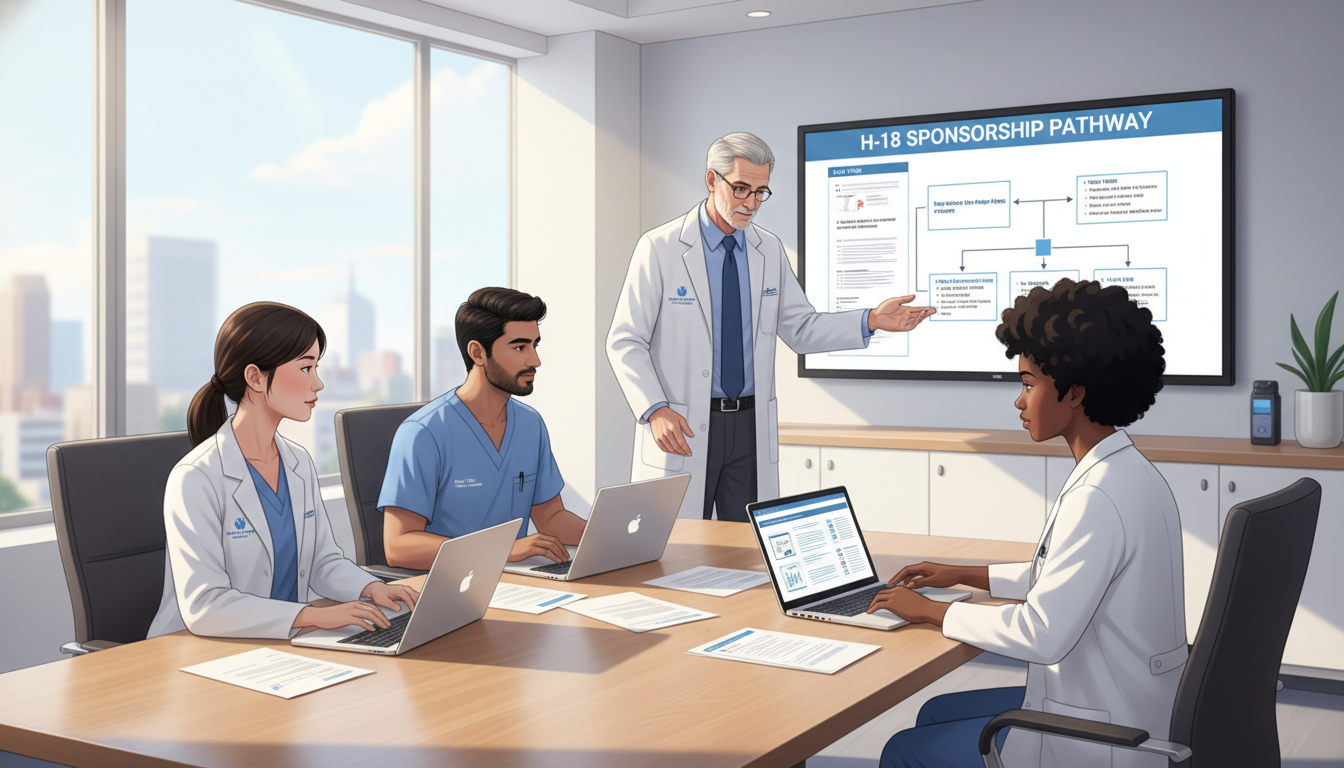
Typical Sponsorship Timeline for Colorado Residency Programs
- July–September (year before match): You apply through ERAS. You should already be planning your Step 3 timeline if aiming for H‑1B.
- September–January: Interview season. Discuss visa type briefly and professionally if/when programs bring it up.
- February–March: Ranking and match. If you match at a Denver program willing to sponsor H‑1B, you’ll need to act quickly.
Post‑Match (March–June):
- Program confirms your visa category (H‑1B vs J‑1).
- If H‑1B is agreed upon:
- You provide Step 3 pass report, ECFMG certificate, passport, CV, diplomas, etc.
- The institution’s legal/immigration office prepares the Labor Condition Application (LCA) and H‑1B petition.
- Petitions are filed well before your residency start date (typically July 1).
- If you’re abroad, you attend a visa interview at a U.S. consulate after approval.
In practice, Denver programs may hesitate to promise H‑1B before they see Step 3 results because of time pressure on their legal teams.
Identifying Denver Residency Programs That Sponsor H‑1B
There is no single, official, comprehensive H‑1B sponsor list for residency programs, and policies can change year to year. However, you can systematically identify H‑1B‑friendly Denver programs using several strategies.
1. Start with Official Program Websites
Search for phrases on Denver program websites such as:
- “Visa sponsorship”
- “H‑1B visa”
- “We sponsor J‑1 and H‑1B”
- “We accept J‑1 only”
Look at sections like:
- “Eligibility & Requirements”
- “FAQ for International Medical Graduates”
- “Visa Information”
Programs may state:
- “We sponsor J‑1 and H‑1B for eligible candidates”
- “We only sponsor J‑1 visas through ECFMG”
- “H‑1B sponsorship is considered on a case‑by‑case basis”
Write down the exact wording in a spreadsheet, along with the last updated date of the page.
2. Verify With GME Offices and Program Coordinators
Because websites can be outdated, it is essential to confirm directly:
- Check the institution’s GME (Graduate Medical Education) office page for a global statement on visa sponsorship.
- Email the GME office or program coordinator with a short, professional query.
Sample email:
Subject: Clarification on H‑1B Sponsorship for [Program Name] Residency
Dear [Coordinator/Dr. X],
I am an international medical graduate preparing my ERAS application for the [Program Name] residency in Denver. I am currently planning to take USMLE Step 3 before the Match and would like to clarify your policy regarding visa sponsorship.
Specifically, does your program sponsor H‑1B visas for eligible IMGs, or do you sponsor only J‑1 visas through ECFMG?
Thank you very much for your time and guidance.
Sincerely,
[Your Name], MD
[AAMC/ERAS ID if applicable]
Keep emails concise and do not ask for special exceptions at this stage; you’re just gathering information.
3. Use Public H‑1B Data to Infer Sponsorship Trends
The U.S. Department of Labor and USCIS release public data on H‑1B petitions. While not residency‑specific, they can show whether a Denver hospital has historically filed H‑1Bs for physicians:
- Look up the hospital name (e.g., large Denver academic hospitals) in public H‑1B datasets.
- If you see entries like “Resident Physician,” “Internal Medicine Resident,” or “House Officer,” that’s strong evidence the institution has recently sponsored H‑1B residents.
- Remember: These records don’t distinguish between residency and fellowship; still, they confirm the system is set up to file H‑1Bs.
4. Network With Current and Former Residents
IMGs currently in or recently graduated from Denver programs are invaluable sources:
- Use LinkedIn or alumni networks to find IMGs who trained in Denver.
- Check if any list “H‑1B” in their visa status or mention it in profiles.
- Politely request a 10–15 minute informational chat to ask about:
- Whether the program sponsored H‑1B for them or colleagues
- Any unwritten rules (e.g., H‑1B only for categorical residents, or only after one year on J‑1, etc.)
- How early they took Step 3 and what documentation was required
Over time, you can build a personal, Denver‑specific H‑1B sponsor list that is more accurate than any static online resource.

Practical Strategies for IMGs Targeting H‑1B in Denver
If you are seeking Colorado residency positions that support H‑1B, you must be realistic and strategic. The bar for H‑1B is generally higher than for J‑1.
1. Prioritize Early USMLE Step 3
For a Denver H‑1B pathway, treat Step 3 as mandatory and time‑sensitive:
- Aim to take and pass Step 3 before interview season or at least before the rank order list deadline.
- If you plan to graduate late or have limited testing windows, consider scheduling Step 3 during a research or clinical observership period in the U.S.
- Strong Step 3 performance can reassure programs about your readiness for independent call and licensure.
Example timeline:
- Step 1 and 2CK completed by early in your final year of medical school (or earlier).
- Step 3 scheduled for late summer or early autumn before the ERAS application year.
Programs are more inclined to consider H‑1B if they know Step 3 is already cleared, removing a major logistical barrier.
2. Be Flexible on Specialty and Program Type
Certain specialties and program types are more open to H‑1B sponsorship:
- Academic internal medicine, pediatrics, and psychiatry may be relatively more flexible, especially when they struggle to fill all positions.
- Highly competitive specialties (dermatology, plastics) rarely consider H‑1B for IMGs, especially for initial residency.
In Denver specifically:
- Look broadly at community‑based but university‑affiliated programs in the metro area. These are often H‑1B cap exempt and may be more willing to sponsor, especially if they serve underserved populations.
3. Tailor Your Application to Showcase “Low‑Risk” Candidate Traits
Programs willing to sponsor H‑1B see it as an investment. They want signs you’ll complete training successfully and remain in good standing.
Emphasize:
- Consistently strong USMLE scores (including Step 3)
- Solid, recent US clinical experience, ideally in internal medicine or your target specialty
- Stability in your CV (no major unexplained gaps; clear progression)
- Good communication skills documented in recommendation letters
- A track record of professionalism and teamwork
Mention your visa preference strategically:
- In most cases, do not place “H‑1B only” in bold statements across your personal statement.
- Instead, be prepared to discuss your visa status honestly during interviews. Some Denver programs may appreciate your flexibility in accepting J‑1 if H‑1B is not possible; others willingly support H‑1B for particularly strong candidates.
4. Understand the Trade‑Offs and Plan for Long‑Term Goals
While H‑1B avoids the J‑1 two‑year home requirement, it is not always objectively “better” for every IMG. Consider:
- Fellowship prospects: Many academic fellowships are comfortable sponsoring J‑1. If you want to stay purely academic, a J‑1 residency followed by a J‑1 fellowship and then a waiver job (often in underserved areas, sometimes in Colorado) can be a viable pathway.
- Employment flexibility after training: With H‑1B, after residency in an H‑1B cap‑exempt institution, moving to a cap‑subject private practice in Denver may require entering the regular cap. Timing your transition, or seeking another cap‑exempt employer (e.g., university‑affiliated clinic), becomes crucial.
- Green card strategy:
- With H‑1B, employers can start PERM and I‑140 processes more straightforwardly, allowing for H‑1B extensions beyond 6 years in some cases.
- With J‑1, you must resolve the home residency requirement before most employment‑based green card paths.
Discussing your long‑term immigration plan with an experienced immigration attorney early is wise, especially if you aim to build a long‑term career in Colorado.
5. Keep Documentation Organized and Anticipate Requests
Denver programs with strict compliance cultures will expect complete, well‑organized files. Start a digital folder system now:
- Passport, previous visas, I‑20s/DS‑2019s or I‑797s
- USMLE score reports (all steps)
- ECFMG certificate
- Medical school diploma and transcript
- Translations and credential evaluations where needed
- CV and copies of publications/presentations
Respond promptly and thoroughly to any document requests from GME offices. Demonstrating reliability and organization reduces the perceived risk of sponsoring you on H‑1B.
Common Pitfalls and How to Avoid Them
Even strong IMG applicants can jeopardize H‑1B possibilities by missteps in timing, communication, or expectations.
Pitfall 1: Taking Step 3 Too Late
If Step 3 is taken too close to residency start, you might:
- Force the Denver program to default to J‑1 because there isn’t enough time for H‑1B processing.
- Create anxiety about delayed start dates or contract complications.
Solution: Plan Step 3 well in advance, ideally before or early in interview season.
Pitfall 2: Sending Demanding or Unclear Visa Messages to Programs
Hard‑line statements like “I will only accept H‑1B” in early emails or your personal statement can:
- Turn off some programs that normally might have considered you.
- Create the impression you are inflexible or uninformed.
Solution:
- In ERAS, indicate that you are visa‑requiring and open to discuss options.
- During interviews or after a match, have an honest conversation about your preference for H‑1B and your reasons (e.g., long‑term plans in the U.S.), but remain respectful of institutional policies.
Pitfall 3: Assuming All Denver Programs Are H‑1B Friendly Because They Are Cap Exempt
Cap‑exempt status simply means the institution can file H‑1B outside the lottery. It does not mean they routinely choose to do so for residents.
Solution:
- Treat cap‑exempt status as a positive sign, not a guarantee.
- Still confirm actual residency‑level policy via official channels.
Pitfall 4: Overlooking Contract and Wage Considerations
H‑1B petitions require that the employer pay at least the prevailing wage determined for the position. While resident salaries usually meet this, there can be:
- Nuances in how wage levels are set
- Occasional discrepancies that require HR/legal team review
Solution:
- Understand that some delays post‑match are purely bureaucratic, not a reflection of your candidacy.
- Maintain patient, professional communication with the GME and HR teams.
FAQs: H‑1B Sponsorship for Denver Residency Programs
1. Are all Denver residency programs able to sponsor H‑1B visas?
No. Many Denver residency programs are structurally able to file H‑1B cap exempt petitions because they’re affiliated with universities or nonprofit teaching hospitals. However, not all choose to sponsor H‑1B for residents. Some sponsor only J‑1 visas via ECFMG, and policies can differ even between departments within the same institution. Always verify program‑specific policies through websites and direct communication.
2. Do I need USMLE Step 3 for H‑1B residency sponsorship in Colorado?
Yes, in almost all cases. For clinical H‑1B positions as a resident physician, Step 3 is a functional requirement. Denver GME offices typically will not start H‑1B processing without a Step 3 pass result. If you cannot complete Step 3 in time, the program is more likely to sponsor you on a J‑1 visa instead (if they accept IMGs and J‑1).
3. Is H‑1B always better than J‑1 for Denver residency programs?
Not necessarily. H‑1B is advantageous if you want to avoid the J‑1 two‑year home requirement and aim for long‑term U.S. employment or a green card. However, J‑1 residency followed by a waiver job (including potential opportunities in Colorado or other states) is a common, workable path to remaining in the U.S. The “better” choice depends on your goals, timing, risk tolerance, and prospects for securing H‑1B‑friendly programs.
4. How can I find a reliable H‑1B sponsor list for Denver residency programs?
There is no official, permanently accurate H‑1B sponsor list for Denver. Instead, build your own, up‑to‑date list by combining:
- Direct statements on program and GME websites
- Email confirmations from program coordinators and GME offices
- Public H‑1B petition data showing which Denver hospitals have filed for resident physicians
- Networking with current and former residents in Colorado residency programs
This approach yields a far more accurate picture than relying on outdated online lists.
By understanding the nuances of H‑1B sponsorship, planning Step 3 strategically, and targeting the right Denver residency programs, you can significantly improve your chances of training in Colorado on a visa that aligns with your long‑term professional and immigration goals.