Understanding H-1B Sponsorship in Diagnostic Radiology
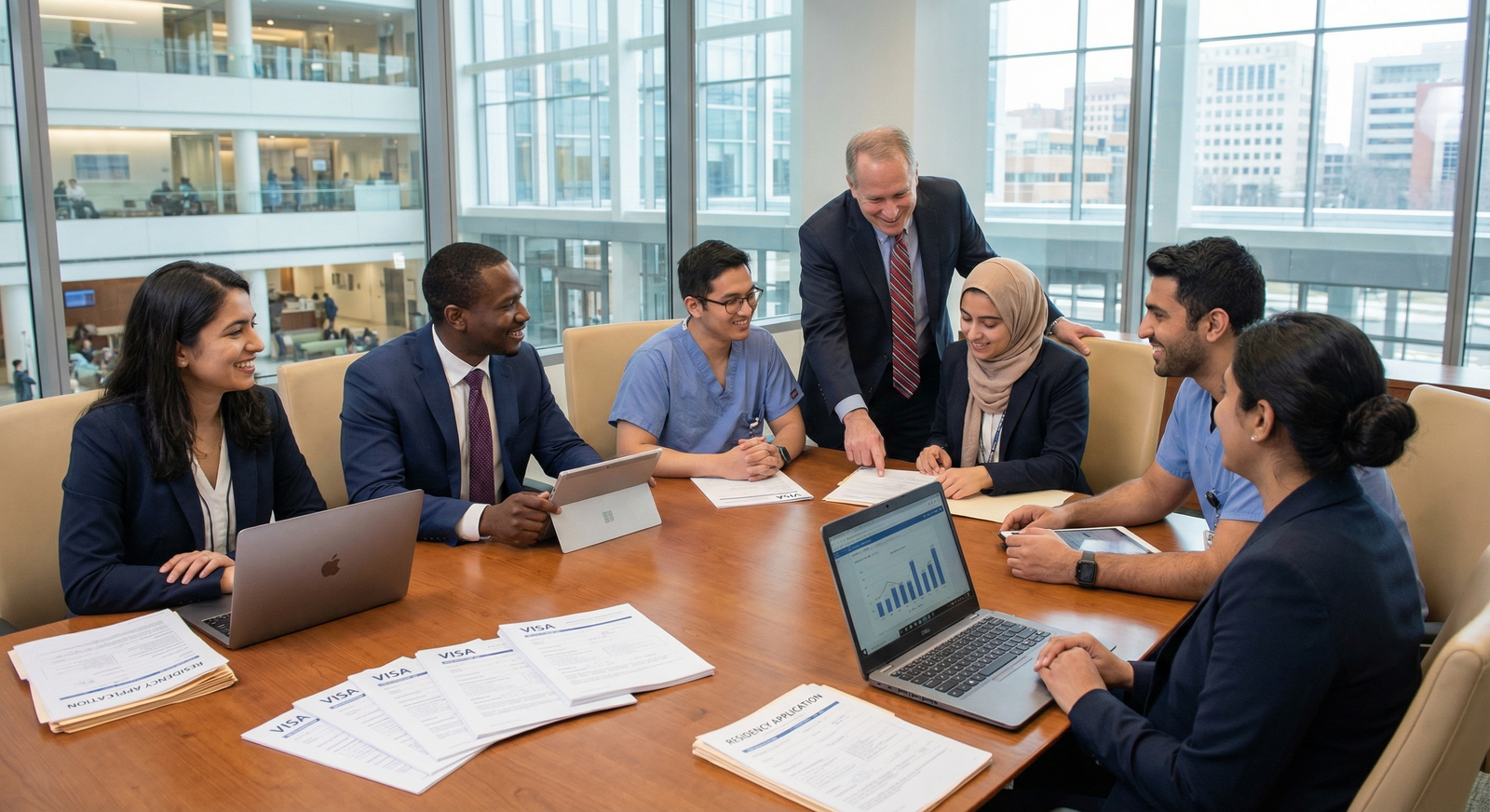
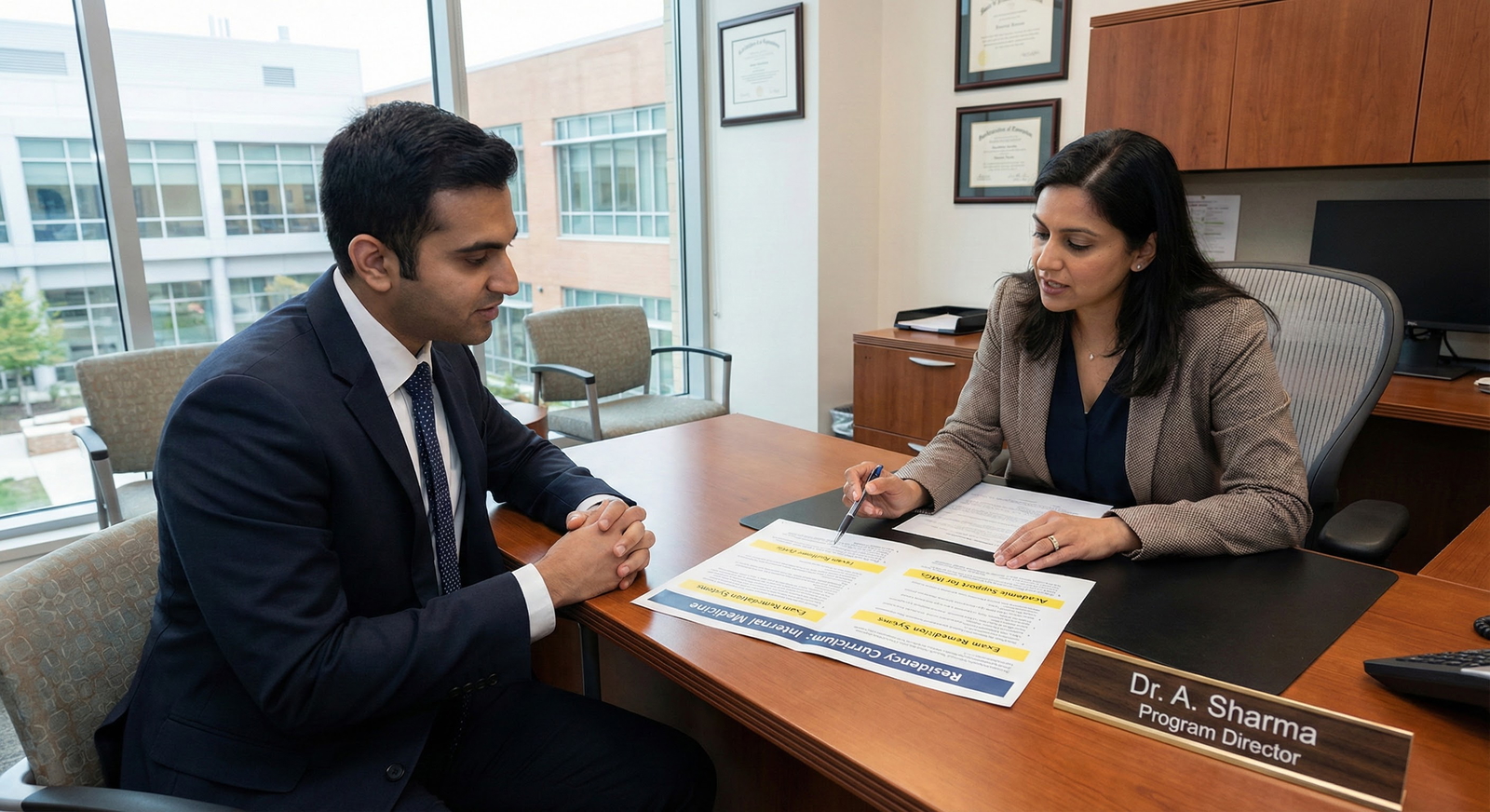
Diagnostic radiology is one of the most competitive specialties in the residency match, and for international medical graduates (IMGs), the visa question adds another layer of complexity. Many talented IMGs aim specifically for H-1B residency programs because the H-1B visa can offer a more direct pathway to long-term practice in the United States than the J-1.
This guide focuses on H-1B sponsorship programs in diagnostic radiology, how to identify them, how the process works, and how to maximize your chances of success in the diagnostic radiology match as an IMG.
We will cover:
- How the H-1B works in the residency context
- Typical eligibility requirements for H-1B in radiology
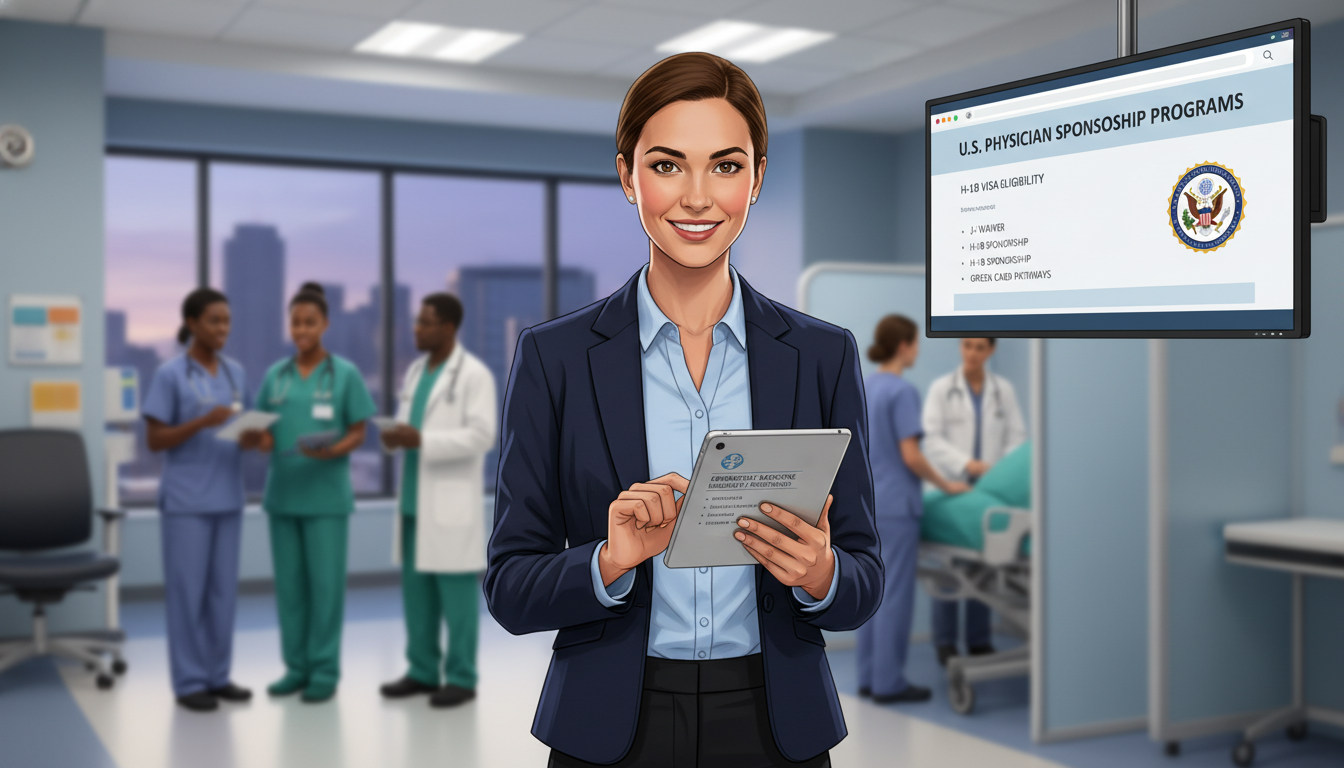
- How to find programs that sponsor H-1B (and build your own H-1B sponsor list)
- Application strategies and timelines
- Practical examples and common pitfalls
Throughout, remember: policies change, individual programs update their rules yearly, and institutional lawyers heavily influence decisions. Always verify directly with programs for the most current information.
1. H-1B vs J-1 in Diagnostic Radiology: Why It Matters
For diagnostic radiology, the choice of visa influences not only residency but also fellowship and early attending life. Understanding these differences helps you decide whether to prioritize H-1B residency programs in your application strategy.
1.1 Basic visa comparison for IMGs
J-1 (ECFMG-sponsored):
- Most common visa type for IMGs in residency.
- Sponsored by ECFMG, not by the hospital directly.
- Typically requires a two-year home-country physical presence after training (unless you obtain a waiver).
- Waiver jobs often require service in underserved or rural areas.
- Easier administratively for most programs, which is why many “J-1 only” policies exist.
H-1B (institution-sponsored):
- Employer-sponsored, dual-intent (immigration-friendly) visa.
- Often preferred by IMGs who plan long-term careers and ultimately green cards.
- No automatic two-year home-country requirement.
- Time-limited: usually a maximum of 6 years total in H-1B status (with some immigration-path exceptions).
- Requires:
- Passing USMLE Step 3 before H-1B petition filing
- State medical license or limited training license (requirements vary by state)
- Salary that meets the prevailing wage for the position
For diagnostic radiology, which includes 1 clinical internship year (PGY-1) plus 4 years of radiology training (PGY-2–PGY-5), your full core training is typically 5 years total. That fits within the standard 6-year H-1B limit, but you must plan ahead if you want fellowships and extra training on H-1B.
1.2 Why IMGs in radiology seek H-1B
Common reasons IMGs in radiology prefer H-1B include:
- Avoiding J-1 waiver constraints so they can choose fellowships and first jobs more freely.
- Smoother transition to employment-based green card sponsorship, since H-1B is dual intent.
- Ability to move into H-1B cap exempt academic positions (e.g., university hospitals) afterward, which can simplify staying in the U.S.
However, these benefits come with trade-offs:
- Fewer programs offer H-1B than J-1.
- Radiology is already competitive; limiting yourself only to H-1B programs can significantly reduce your match odds.
- Administrative burden is higher for programs; some will say “J-1 preferred” but quietly still allow H-1B in exceptional situations.
A practical takeaway: you generally want a mixed strategy—apply widely, prioritize H-1B-friendly programs, but consider including J-1 options unless you have a strong reason to avoid them.
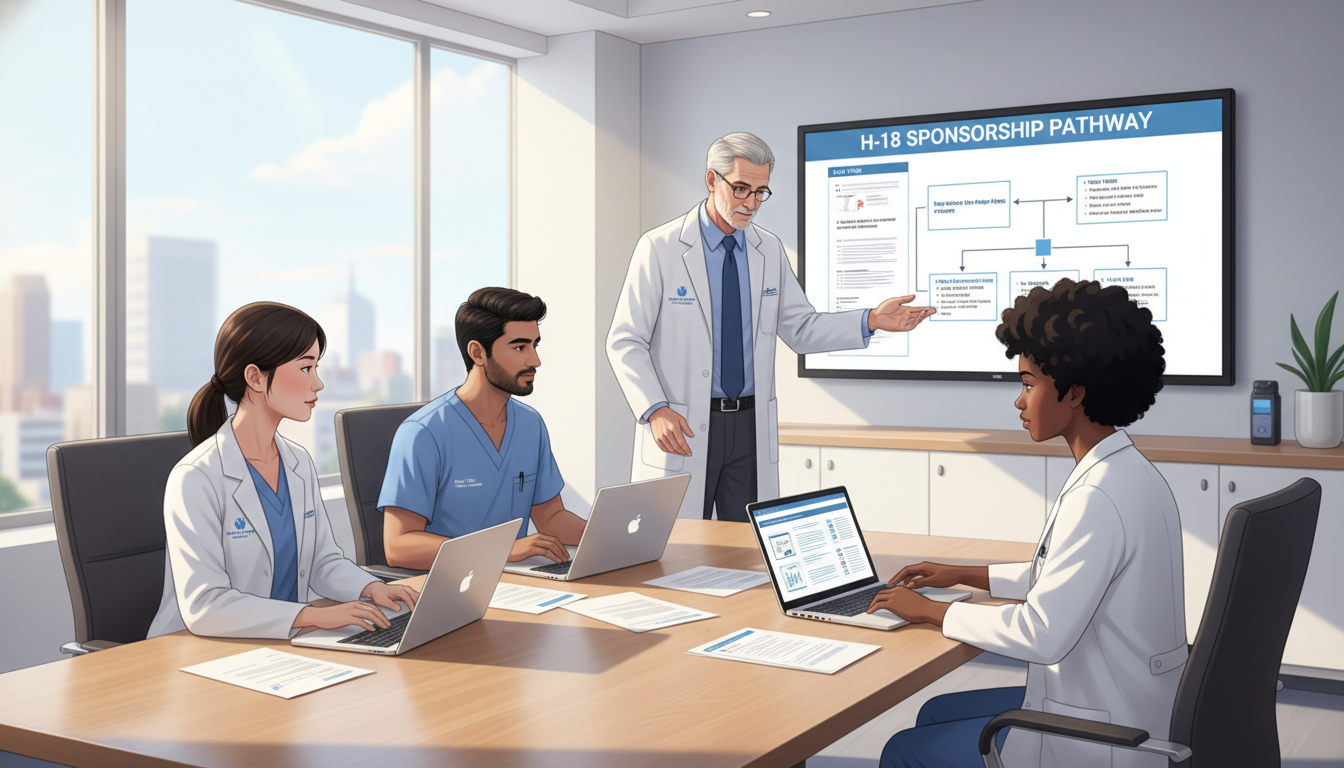
2. How H-1B Works for Diagnostic Radiology Residency
Understanding how the H-1B interacts with residency timelines and radiology training structure is essential for planning.
2.1 Categorical vs advanced diagnostic radiology positions
Diagnostic radiology is commonly offered as:
- Advanced positions (PGY-2 entry): You match into radiology for PGY-2–PGY-5, and separately match into a preliminary or transitional year for PGY-1.
- Categorical positions (PGY-1 entry): Less common, but include the intern year and radiology years in one program.
For visa purposes:
- Some radiology departments sponsor H-1B only for the radiology years (PGY-2–5), expecting you to complete your PGY-1 on J-1 or a separate H-1B.
- Others, particularly large academic centers, can sponsor H-1B starting from PGY-1 for categorical spots, though this is less frequent in radiology than in some other specialties.
You must consider the total number of years on H-1B:
- 1 internship year (if on H-1B)
- 4 radiology residency years
- Potential 1–2 fellowship years (e.g., neuroradiology, interventional radiology, body imaging, MSK)
If you use H-1B from day one of PGY-1, you are at or near the 6-year cap before fellowship. That’s why:
- Some IMGs choose J-1 for internship and then switch to H-1B for radiology residency and/or fellowship.
- Others aim for H-1B only at the fellowship or first attending job stage.
2.2 Key H-1B eligibility points for residents
Most diagnostic radiology programs that sponsor H-1B will expect you to meet specific criteria:
USMLE Step 3:
- Must be passed before H-1B petition filing, often by spring before your start date (e.g., by March–April).
- Programs may set internal deadlines: some require Step 3 at the time of ranking or by Match Day.
State licensing requirements:
- Many states require passing all Steps (1, 2 CK, 3) for a training license; others allow a training license with only Step 1 & 2.
- The hospital’s legal team will check whether you qualify for a training license, which is essential for H-1B.
ECFMG certification:
- Must be obtained before starting residency (this applies regardless of visa).
Prevailing wage and funding:
- The program must demonstrate that resident salary meets or exceeds the prevailing wage for the position.
- University-based academic hospitals are often more familiar with this process than smaller community programs.
2.3 Cap-subject vs H-1B cap exempt institutions
Another crucial concept is H-1B cap vs H-1B cap exempt:
- The standard H-1B category is subject to an annual numerical cap (regular + master’s quota).
- However, certain institutions are H-1B cap exempt, meaning:
- They can file H-1B petitions at any time of year.
- They are not limited by the annual lottery cap.
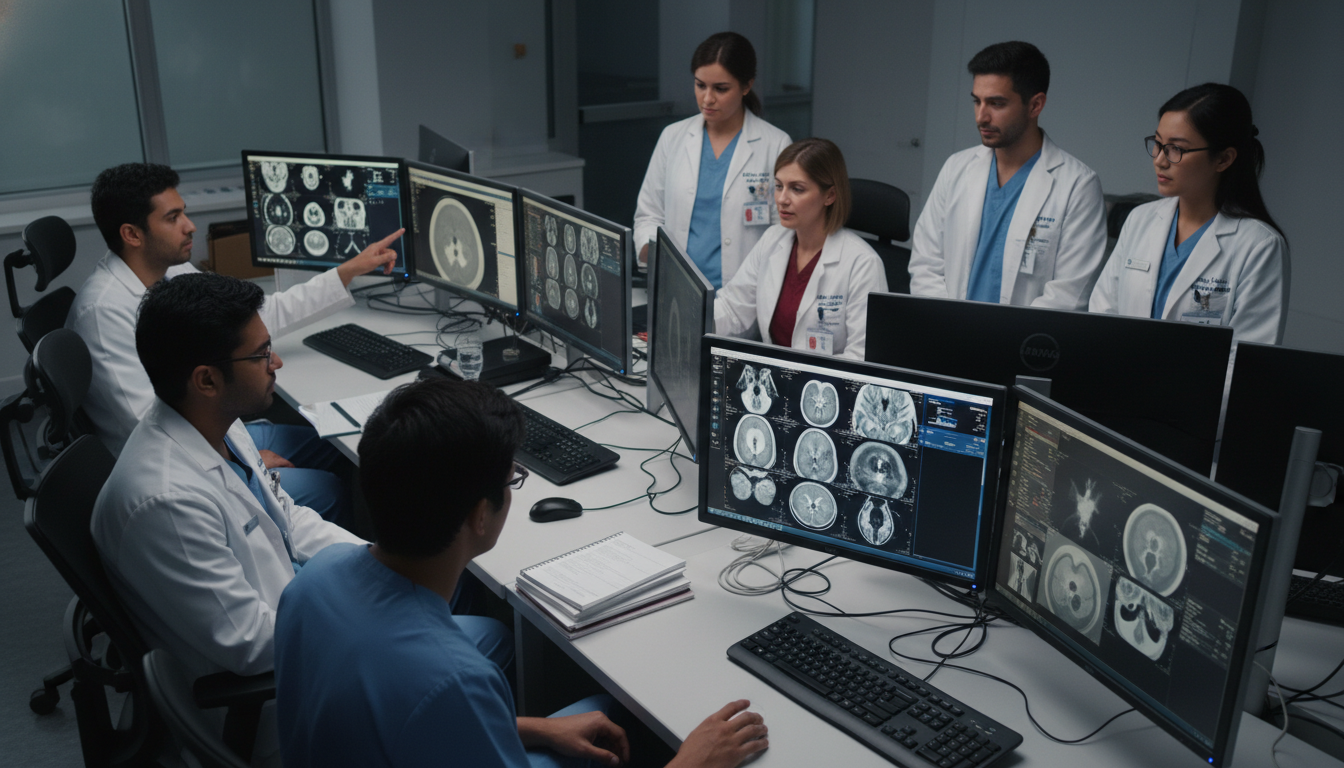
Most large academic diagnostic radiology programs fall into cap-exempt categories such as:
- Institutions of higher education or affiliated entities (university hospitals)
- Non-profit research organizations
- Some major teaching hospitals legally linked to universities
For residency training, this is a major advantage: cap-exempt H-1B allows your program to file outside of the general lottery, significantly reducing risk and timeline stress. When you see a program affiliated with a major university medical center, it’s often (though not always) cap exempt.
3. Identifying H-1B Friendly Radiology Residency Programs
There is no official, permanent H-1B sponsor list for diagnostic radiology. Program policies change, and websites can be vague or outdated. However, you can systematically build your own list.
3.1 Step-by-step approach to building your H-1B sponsor list
1. Start with FREIDA and program websites
Use:
- AMA FREIDA Online
- ERAS program list for diagnostic radiology
- Individual program websites
Look for sections titled:
- “Eligibility & Visa Sponsorship”
- “International Medical Graduates”
- “Resident Visa Types”
Common wordings:
- “We sponsor J-1 and H-1B visas.” → Generally H-1B friendly.
- “We sponsor only J-1 visas” → H-1B usually not available.
- “We prefer J-1; H-1B on a case-by-case basis” → Possible if you are a very strong applicant and meet all criteria early.
2. Search program FAQs and GME office pages
Sometimes the radiology page is vague, but the institution’s GME office gives more direct information:
- Search “[Hospital Name] GME H-1B” or “residency visa policy [Program]”.
- University GME sites often clarify whether the institution sponsors H-1B for residents and under what conditions.
3. Review current residents’ profiles
Program “Current Residents” pages sometimes mention:
- Country of origin/medical school
- Visa type (occasionally)
If you see several IMGs and know from networking or LinkedIn that some hold H-1B, that’s a strong clue the program is H-1B friendly.
4. Use alumni data and networking
Search alumni and current residents on LinkedIn:
- Filter by specialty (Diagnostic Radiology), program name, and country of origin.
- Connect with them politely and ask:
- “Did the program sponsor J-1 or H-1B visas when you matched?”
- “Has the policy changed recently?”
Most residents are busy, but many are willing to give short, honest answers.
5. Directly email the program coordinator
If the policy is unclear, a short, precise email to the program coordinator or GME contact is appropriate. For example:
- State that you are an IMG interested in applying.
- Ask whether the program currently sponsors H-1B visas for radiology residents.
- Mention you have or plan to have USMLE Step 3 by a specific date.
Keep it concise; coordinators are extremely busy but often quite helpful.
3.2 Typical patterns among H-1B friendly radiology programs
While specific programs change over time, certain patterns tend to hold:
- Large academic centers are more likely to sponsor H-1B than small community programs.
- Programs in states with many IMGs and complex visa ecosystems (e.g., New York, New Jersey, Massachusetts, Texas) are more accustomed to H-1B processes.
- Some university programs have an institutional policy like:
- “For diagnostic radiology, we primarily sponsor J-1; H-1B may be considered only if the applicant has Step 3 and exceptional qualifications.”
- Some “IMG-heavy” programs have historically demonstrated flexibility with H-1B, especially if they are H-1B cap exempt.
To construct an effective H-1B sponsor list for diagnostic radiology, aim to:
- Include a core set of clearly H-1B friendly academic centers.
- Add “maybe” programs with case-by-case policies (for which you meet strong criteria).
- Supplement with J-1–only programs if you are not strictly limited to H-1B.
4. Application Strategy for H-1B Sponsorship in Radiology
The visa is only one part of your match success. For such a competitive field, your overall application strength must be excellent, especially when you’re asking a program to take on extra administrative work.
4.1 Academic and exam profile expectations
Diagnostic radiology is selective even for U.S. graduates. As an IMG seeking H-1B, you realistically need:
- USMLE Step 1 and 2 CK: Strong scores (even post-pass/fail Step 1 era, program directors still see previous score data or focus heavily on Step 2 CK).
- USMLE Step 3: Passed early, ideally before September of the application year if aiming for H-1B.
- Clinical experience in the U.S.:
- Rotations in radiology or related specialties.
- Letters of recommendation from U.S. radiologists or faculty.
- Strong research profile:
- Radiology-related publications, abstracts, or presentations are a major plus.
- Experience with imaging labs, AI in imaging, or quality improvement projects involving radiology workflows.
The more competitive your profile, the more likely a program will be willing to commit to H-1B sponsorship.
4.2 Explicitly addressing visa status in your application
You should be transparent and strategic:
ERAS Application:
- Accurately indicate your visa needs and current status.
- There is no need to write long visa explanations in your personal statement; instead, briefly note that you “plan to apply for an H-1B visa and will complete USMLE Step 3 by [date].”
Personal Statement:
- Focus primarily on why diagnostic radiology, your experiences, and your strengths.
- One or two short sentences acknowledging visa needs are enough, if you choose to mention it at all.
Email communications:
- If you email programs regarding H-1B, keep it factual and concise.
- Do not send repeated “update emails” about visas unless there is a major change (for example, you pass Step 3).
4.3 Timelines: aligning Match and H-1B requirements
A practical timeline for an IMG targeting H-1B residency programs in diagnostic radiology might look like:
18–24 months before residency start:
- Begin radiology-focused research or observerships.
- Prepare for and take USMLE Step 2 CK.
12–15 months before residency start (early ERAS season):
- Aim to have Step 2 CK result ready by September.
- Start studying for Step 3.
9–12 months before residency start (during application/interview season):
- Take and pass Step 3 as early as possible.
- Inform programs where appropriate that Step 3 is completed (this is particularly impactful at H-1B–friendly programs).
Spring before residency start (after Match):
- Program initiates H-1B petition through their legal department (if they agreed to sponsor you).
- You provide necessary documents (passport, diplomas, ECFMG certificate, USMLE transcripts, etc.).
If you delay Step 3 until late winter or spring, some programs may:
- Refuse to sponsor H-1B because of tight timelines.
- Offer you only a J-1 option (if institutional policy permits).
Thus, taking Step 3 early is often the single most important tactical move for IMGs seeking H-1B in radiology.
4.4 Example scenarios
Scenario 1: Strong IMG with early Step 3
- Top 10% of class, multiple radiology publications, strong Step 2 CK, passes Step 3 in August.
- Applies broadly, with a focus on academic centers known to sponsor H-1B.
- Programs see that the administrative risk is minimized; H-1B is much more likely to be offered.
Scenario 2: Good profile but late Step 3
- Solid scores, some research; plans Step 3 for February.
- Some programs may still consider H-1B, but others will insist on J-1 due to logistics.
- This applicant might match radiology but on a J-1 even at an H-1B-capable institution.
Scenario 3: IMG without Step 3 and limited research
- Visa requirement + weaker portfolio = high risk for programs.
- Very few radiology programs will invest H-1B resources; the applicant might be screened out early.
- Strategy shift might be necessary (e.g., categorical internal medicine first, then radiology via re-application, or focusing on J-1).

5. Navigating H-1B Policies, Risks, and Long-Term Planning
Even within clearly H-1B friendly institutions, circumstances can change. You need to understand the structural risks and how H-1B affects your long-term career.
5.1 Institutional policy shifts
Residency programs are governed by:
- Hospital leadership
- GME office policies
- Legal/immigration counsel
Factors that can change policies:
- Budget constraints and legal cost concerns
- Changes in institutional immigration preferences
- Past negative experiences with complex cases
That’s why relying on historical word-of-mouth alone is dangerous. Each year, confirm:
- The current policy for the specific match cycle.
- Whether H-1B sponsorship is allowed for PGY-1 and/or PGY-2 entry.
- If any extra conditions apply (e.g., US-trained medical school only, no prior U.S. visa issues, etc.).
5.2 H-1B cap exempt vs cap-subject when you finish residency
As you think beyond residency:
If you start on an H-1B at a cap-exempt academic center:
- You can usually move to another cap-exempt fellowship or academic job more easily.
- Transitioning to a private practice (cap-subject) job might require entering the H-1B lottery, unless you already hold a cap-subject H-1B from previous non-academic work.
If you are on J-1 and then obtain a waiver:
- You will often move into a cap-subject or cap-exempt waiver job on H-1B.
- That job typically fulfills your 3-year J-1 waiver service obligation.
For diagnostic radiology, many fellowships and early careers are at major academic centers, which are frequently H-1B cap exempt—a significant advantage if you start and stay in that environment.
5.3 Residency + fellowship within the H-1B time limit
Consider duration:
- Radiology residency: 4 years (PGY-2–5)
- Internship: 1 year
- Fellowship: 1–2 years
If all of these are on H-1B, you may push past the 6-year limit. Solutions include:
- Doing your internship on J-1 and switching to H-1B later.
- Doing residency/fellowship on H-1B and transitioning to a PERM/green card process early in fellowship, which can allow extension of H-1B past 6 years under U.S. immigration law (if certain stages are approved).
Your program’s legal office and, later, your employer’s immigration counsel are critical. Early in residency, you don’t need to have all details finalized, but you should:
- Be aware that H-1B years accumulate.
- Ask basic questions when choosing fellowships and early jobs.
5.4 Risk management and back-up planning
Because H-1B is more complex than J-1:
Have a backup: If you are strictly H-1B-only and don’t match, consider:
- A preliminary year in medicine or surgery.
- Research positions in radiology departments.
- Strengthening your profile and reapplying with Step 3 completed and stronger letters.
Be open to J-1 at select programs:
- If your long-term plan allows for a J-1 waiver route, J-1 can expand your match opportunities.
- Some IMGs choose J-1 in radiology to secure a spot, then later move to an H-1B waiver job as an attending.
6. Practical Tips and Action Plan for IMG Applicants
To make the information above actionable, here’s a concise plan tailored for IMGs targeting H-1B sponsorship in diagnostic radiology.
6.1 12-point action checklist
Clarify your priorities:
Decide whether H-1B is essential or strongly preferred versus J-1 being acceptable. This will drive your application breadth.Map your exam timeline:
Schedule Step 2 CK and Step 3 so that Step 3 is ideally completed before ERAS submission or early interview season.Target radiology experiences:
Seek U.S.-based rotations or observerships in radiology, neuroradiology, IR, or related areas; prioritize places that write strong letters.Develop a focused research niche:
Join imaging-related projects—AI in imaging, outcomes studies, quality improvement in radiology workflow—to stand out.Shortlist H-1B capable programs:
Use FREIDA, program and GME websites, and alumni networking to build an H-1B sponsor list of radiology residency programs.Categorize programs:
Divide them into:- Clearly H-1B friendly
- Case-by-case H-1B
- J-1 only
Apply broadly but strategically:
Even with excellent credentials, competition is high. Apply to a robust mix of programs, balancing prestige, geographic preference, and visa friendliness.Craft a strong ERAS application:
Emphasize:- Radiology motivation and exposure
- Quantitative strengths (scores, grades)
- Research productivity
- Communication and teamwork skills
Be transparent but concise about your visa needs:
In any communication or interviews, clearly state:- That you are an IMG
- That you have (or will soon have) Step 3
- Your preference for H-1B, but willingness to follow institutional policy (if that’s true for you)
Prepare for radiology-specific interviews:
Expect questions about:- Why radiology vs other specialties
- Understanding of the field and subspecialties
- Teamwork, resilience, and communication
- How you will adapt as an IMG in a new system
Follow up professionally:
If you pass Step 3 during interview season, send a concise update to H-1B–friendly programs, as this can nudge them towards sponsorship.Stay flexible and informed:
Policies and immigration rules shift; stay current through:- Program announcements
- ECFMG and AAMC resources
- Reliable immigration law outlets
FAQs: H-1B Sponsorship in Diagnostic Radiology
1. Can I match into diagnostic radiology on a J-1 visa and later switch to H-1B?
Yes, this happens frequently. Many IMGs complete radiology residency and fellowship on J-1, then obtain a J-1 waiver job as an attending on H-1B. However, switching from J-1 to H-1B during residency is more complex and usually only occurs under specific circumstances (e.g., hardship waivers or marriage to a U.S. citizen). For most, the natural switching point is after training, when starting as an attending in a waiver position.
2. Do all H-1B residency programs require USMLE Step 3 before ranking me?
Not all, but many diagnostic radiology programs that sponsor H-1B will strongly prefer or require Step 3 to be completed before they commit to sponsorship. Some will consider you without Step 3 at ranking time but will conditionally require a pass before they can proceed with H-1B paperwork. Because policies vary, aim to have Step 3 done as early as possible to maximize your chances.
3. Are H-1B cap exempt programs always better for IMGs?
Not necessarily “better,” but often more flexible regarding timelines and visa approvals. H-1B cap exempt institutions (usually large academic centers) are not limited by the annual H-1B lottery. This means they can file your petition whenever needed, which is advantageous. However, some cap-exempt programs still choose to sponsor only J-1 for institutional reasons, so cap-exempt status does not guarantee H-1B availability; you still need to verify each program’s policy.
4. Is it realistic for an IMG without U.S. clinical experience to get H-1B sponsorship in diagnostic radiology?
It is challenging. Diagnostic radiology is highly competitive, and H-1B sponsorship adds administrative effort for the program. Without U.S. clinical experience and strong letters from U.S. radiologists or faculty, your chances are significantly lower. In such a situation, it may be strategic to first obtain U.S. experience through observerships, research positions, or even another residency specialty, then re-apply with a stronger, more U.S.-integrated profile.
By understanding how the H-1B system interacts with the diagnostic radiology match, you can design a realistic, well-timed plan that balances your visa preferences with your overall competitiveness as an applicant. For many IMGs, success comes from a combination of early Step 3 completion, targeted program selection, and consistently strong academic and clinical performance.