Understanding H-1B Sponsorship for Caribbean IMGs in the Northeast Corridor
For Caribbean medical graduates—especially those from schools like St. George’s University, Ross, AUC, Saba, AUA—the path from Caribbean medical school residency aspirations to practicing in the U.S. often runs straight through the Northeast Corridor and through some form of visa sponsorship.
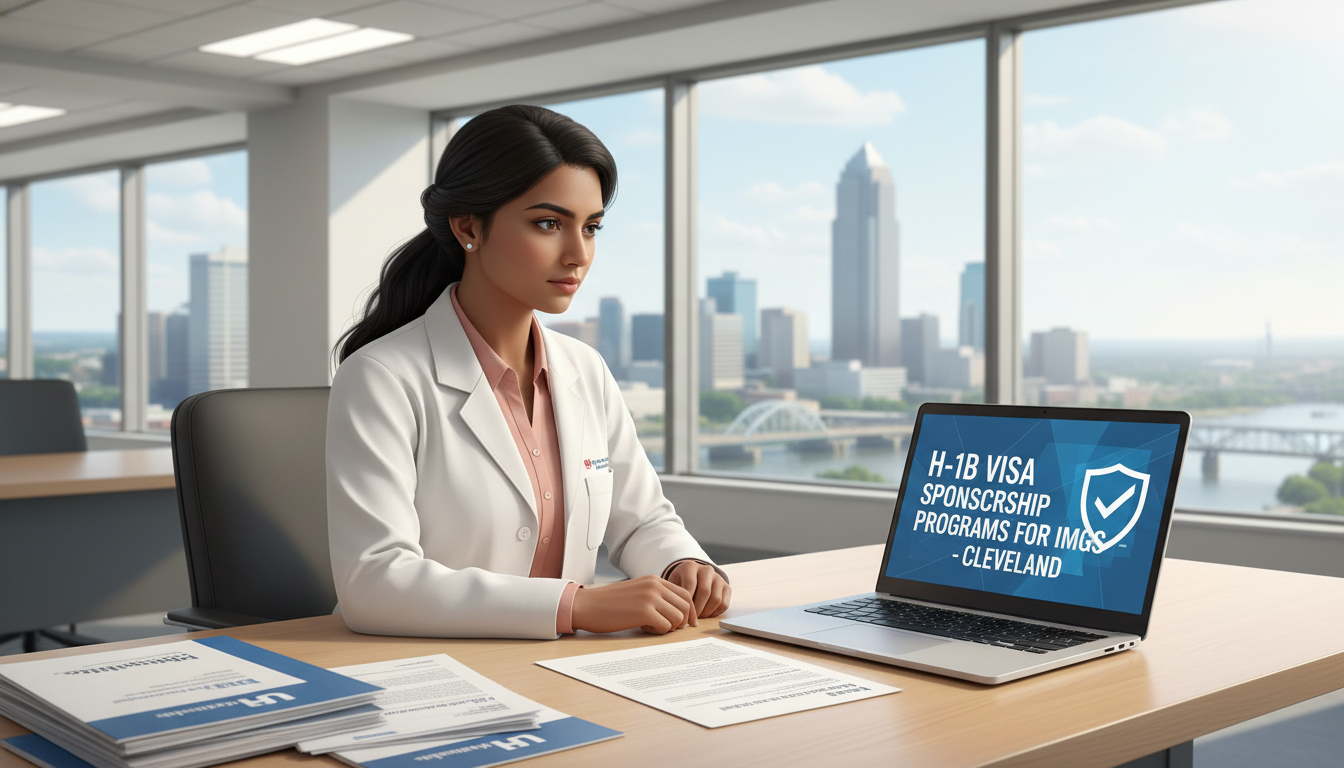
If you are a Caribbean IMG targeting northeast residency programs and you want to avoid or transition away from J‑1, understanding H-1B sponsorship programs is essential. This article breaks down what H‑1B means in the residency context, how to strategize your applications, which institutions in the Northeast are more H‑1B-friendly, and how to position your application for success.
H‑1B vs J‑1: What Caribbean IMGs Need to Know
Before diving into specific H‑1B residency programs and the H‑1B sponsor list concept, you need a clear understanding of how H‑1B differs from J‑1 and why it matters, especially if you trained at a Caribbean medical school.
H‑1B Basics in Residency
In the graduate medical education (GME) setting, the H‑1B visa is a temporary work visa used for “specialty occupations,” which includes resident physicians. Key points:
- You must have passed USMLE Step 3 before an H‑1B petition can be filed for residency.
- H‑1B for residency is generally employer-specific: your residency program (or sponsoring hospital/university) is the petitioner.
- Many academic hospitals/universities are H‑1B cap exempt, which means:
- They can file H‑1B petitions year-round (no lottery timing restriction).
- They are not limited by the national numerical cap.
- H‑1B allows dual intent (you can pursue U.S. permanent residency/green card without violating status), unlike J‑1.
H‑1B vs J‑1: Pros and Cons for Caribbean IMGs
Advantages of H‑1B for Caribbean IMGs:
- No J‑1 home-country two-year return requirement.
- Easier transition to fellowship or attending roles on H‑1B or green card.
- Often preferred if you have clear long-term plans to stay in the U.S.
Challenges of H‑1B for IMGs:
- Many community and some academic programs do not sponsor H‑1B at all.
- You must pass USMLE Step 3 early, ideally before rank lists are due (or at least before visa processing starts).
- Legal fees and filing costs can be higher (some employers may be reluctant).
- Processing may be tight time-wise between Match and July 1 start.
For many Caribbean graduates—especially those with strong USMLE scores, multiple U.S. clinical rotations, and a focused specialty target—H‑1B can be a realistic path, particularly in large academic systems along the Northeast Corridor.

The Northeast Corridor Landscape for H‑1B Residency Sponsorship
The Northeast Corridor (NEC)—stretching roughly from Boston through New York, Philadelphia, Baltimore, and Washington, DC—is a powerful region for IMGs because it has:
- High density of academic medical centers (often cap-exempt).
- Multiple IMG-friendly specialties and programs.
- Strong track record of Caribbean medical school residency matches, including SGU, Ross, AUC, and others.
Why the Northeast Is Strategic for Caribbean IMGs
Cap-Exempt H‑1B Environment
Many of the large teaching hospitals and universities in the NEC are H‑1B cap exempt, including:- University-affiliated hospitals
- Non-profit academic medical centers
- Some public teaching hospitals
For you, this means:
- Less concern about the national H‑1B lottery.
- More predictable start dates for residency on H‑1B status.
- Higher likelihood that the institution already has immigration counsel and established sponsorship policies.
IMG-Friendly Culture
The Northeast has a long history of training IMGs, including Caribbean grads. If you review SGU residency match data or match lists from other Caribbean schools, you’ll see a heavy clustering of matches in:- New York (NYC metro, upstate, Long Island)
- New Jersey
- Pennsylvania (especially Philadelphia and Pittsburgh, though Pittsburgh is slightly outside the strict NEC)
- Massachusetts (Boston and surrounding areas)
- Maryland (Baltimore) and DC-area programs
Robust Specialty Options
The NEC offers both competitive and community-oriented east coast residency opportunities. For Caribbean IMGs seeking H‑1B, the most feasible routes often include:- Internal Medicine
- Family Medicine
- Pediatrics
- Psychiatry
- Neurology
- Pathology
- Transitional Year (TY) or Preliminary Medicine (as a bridge plan, though H‑1B for prelim positions is less common)
Highly competitive specialties (Dermatology, Plastic Surgery, Orthopedics) rarely sponsor H‑1B for IMGs, but there are exceptions when applicants have outstanding academic metrics or U.S. research backgrounds.
Building a Northeast-Focused H‑1B Strategy as a Caribbean IMG
To maximize your chances, treat H‑1B as a strategic project rather than a last-minute detail. This is especially critical for Caribbean graduates aiming to match in the NEC.
Step 1: Clarify Your Visa Priority
Ask yourself:
- Is avoiding the J‑1 two-year home requirement a top priority?
- Are you open to J‑1 if H‑1B options don’t materialize?
- Long-term, where do you see yourself practicing (geographically, specialty-wise)?
If your top priority is H‑1B, you will:
- Apply heavily to known H‑1B sponsor programs.
- Be more aggressive in taking Step 3 early.
- Potentially accept slightly less “prestigious” programs that offer H‑1B over higher-ranked programs that only sponsor J‑1.
Step 2: Plan USMLE Step 3 Timing
For H‑1B, most programs in the Northeast Corridor prefer or require:
- Step 3 passed by:
- The time they submit the H‑1B petition (usually March–May).
- In some cases, by rank list deadline (mid-February).
For Caribbean IMGs, a good Step 3 plan:
- If you finished basic sciences at a Caribbean school and are in clinical rotations:
- Aim to take and pass Step 3 by fall of the application year (September–December).
- If you graduate later or have delays:
- At minimum, schedule Step 3 before Match Day, so your results can be used quickly if you match at an H‑1B-sponsoring program.
This is particularly important when targeting H‑1B residency programs in academically intense NEC institutions.
Step 3: Build a Northeast-Oriented Clinical Profile
Because many of your target programs are on the East Coast, align your CV:
U.S. Clinical Rotations:
- Prioritize rotations in the Northeast Corridor if possible: New York, New Jersey, Pennsylvania, Massachusetts, Maryland, DC, Connecticut, Rhode Island.
- If your school has affiliations with NEC institutions that are historically IMG-friendly, schedule those early and aim for strong letters.
Letters of Recommendation (LoRs):
- At least 2–3 LoRs from U.S. academic physicians in the Northeast.
- Whenever possible, obtain letters from attending physicians connected to residency leadership or PDs in your target region.
Research / QI Projects:
- Many NEC academic centers value research and quality improvement (QI).
- Even small projects or case reports with East Coast mentors can strengthen your regional ties.
Step 4: Identify H‑1B-Friendly Programs in the Northeast
There is no single official H‑1B sponsor list, but you can construct your own targeted list using:
- Program websites (check “Visas” or “Eligibility” sections)
- FREIDA and residency explorer tools
- Current resident rosters (noting visa types if indicated)
- Reaching out to current residents (especially fellow Caribbean IMGs)
- Caribbean schools’ match lists (e.g., SGU residency match outcomes, AUC match lists, etc.)
Look for phrases like:
- “We sponsor both J‑1 and H‑1B visas.”
- “H‑1B sponsorship considered for exceptional candidates.”
- “H‑1B sponsorship available for applicants who have passed Step 3.”
Then build a spreadsheet with:
- Program name and specialty
- Location (state, city)
- Visa policy (J‑1 only, J‑1 + H‑1B, H‑1B limited, case-by-case, etc.)
- Any notes from emails or residents

State-by-State Overview: H‑1B Sponsorship in the Northeast Corridor
The details of which individual programs sponsor H‑1B change frequently. Instead of listing specific hospitals (which could become outdated), this section gives a state-level strategy and examples of settings known to be more open to H‑1B for IMGs.
Massachusetts (Boston and Surroundings)
- Characterized by large academic systems (Harvard-affiliated, Boston University, Tufts, UMass) and strong community teaching hospitals.
- Many major academic hospitals are H‑1B cap exempt and have well-developed immigration infrastructures.
- Historically, H‑1B sponsorship is available mainly for:
- Internal Medicine
- Pediatrics
- Neurology
- Pathology
- Some subspecialties within large teaching hospitals
Strategy for Caribbean IMGs:
- Strong USMLE scores and research or academic experience significantly help in this region.
- If your Caribbean school has Boston or New England clinical sites, prioritize them.
- Use electives at major teaching hospitals to build relationships and LoRs.
New York (NYC Metro, Long Island, Upstate)
New York is arguably the most important state for a Caribbean IMG seeking an east coast residency with possible H‑1B sponsorship.
- Very high number of IMGs and Caribbean grads across Internal Medicine, Family Medicine, Psychiatry, and Pediatrics.
- Many academic centers are cap exempt and sponsor both J‑1 and H‑1B.
- Some community-based programs in NYC and Long Island also sponsor H‑1B, particularly for candidates with:
- High Step scores
- Strong U.S. clinical performance
- Step 3 passed early
Strategy:
- Build a broad list of New York programs that state “H‑1B considered” and apply widely.
- Be realistic: some NYC programs reserve H‑1B for applicants they consider “top-tier,” so your application metrics must be competitive.
- Network with Caribbean alumni in NYC; many SGU, Ross, AUC, and AUA grads can offer program-specific insights.
New Jersey
New Jersey bridges New York and Philadelphia markets and includes a mix of:
- Community hospitals with university affiliations
- Large health systems with multiple residency programs
H‑1B sponsorship here can be:
- More selective than in some NYC academic powerhouses, but still present.
- Often focused on Internal Medicine, Family Medicine, and Psychiatry.
Strategy:
- Look at hospital systems that train many IMGs; check their visa policies for each specialty.
- Because NJ programs may be more accessible than top-tier NYC programs, they can be a good “balanced” target for Caribbean IMGs seeking H‑1B.
Pennsylvania (Especially Philadelphia)
Philadelphia and nearby regions have:
- Several strong academic centers (again, generally cap exempt).
- Large community teaching hospitals known to recruit IMGs.
H‑1B sponsorship is often more likely at:
- University-affiliated IM or Pediatrics programs
- Some community programs that have historically sponsored for high-performing IMGs
Strategy:
- Target a mix of academic and community programs.
- Investigate whether your Caribbean medical school has affiliated rotations in PA; letters from these sites can carry weight.
Maryland and Washington, DC
Baltimore and DC-area institutions include prestigious universities as well as public and private hospitals. Many are cap exempt.
- H‑1B sponsorship here is often tied to academic competitiveness.
- Programs in DC and Baltimore may be more selective; Caribbean IMGs with strong CVs and research benefit most.
Strategy:
- Be realistic: if your scores and experiences are average, expand your applications more broadly beyond DC/Baltimore.
- If you have research or MPH/PhD experience from NEC institutions, highlight it prominently.
Connecticut & Rhode Island
Smaller in number but home to:
- University-based teaching hospitals
- Community-based programs with academic oversight
H‑1B sponsorship exists but tends to be more limited and highly selective.
Strategy:
- Consider these states as part of a balanced portfolio of applications.
- Use them as potential “bonus” targets rather than core of your H‑1B plan, unless you have very strong credentials and local ties.
How to Communicate Your H‑1B Preference Without Hurting Your Match Chances
Many Caribbean IMGs are nervous about asking programs about H‑1B, fearing it might reduce their chances of an interview or ranking.
Before Applying
Use publicly available information first:
- Program websites: note whether H‑1B is explicitly supported.
- FREIDA: check “visa sponsorship” options.
- Alumni and current residents: ask discreetly via LinkedIn, email, or school alumni networks.
If unclear, you may email the program coordinator before applying with a concise message, for example:
“Dear [Coordinator Name],
I am an international medical graduate from [Caribbean School] planning to apply to your [Specialty] residency program this cycle. I will have completed USMLE Step 3 by [month/year].
Could you please let me know whether your program sponsors H‑1B visas for incoming residents who have passed Step 3?
Thank you very much for your time,
[Your Name], MD”
During Interviews
If invited to interview and visa policies are not clearly addressed:
Wait for the Q&A portion and ask in a non-demanding, professional way:
“I am an IMG and will have Step 3 completed by [time]. Does your program ever sponsor H‑1B visas, or is J‑1 the primary visa type for international graduates?”
Avoid sounding as if H‑1B is the only condition of interest; show enthusiasm for the program itself first.
After Ranking Considerations
When creating your rank list:
- Rank programs based on a mix of:
- Overall fit and training quality
- Location and personal life factors
- Visa sponsorship reality
You might create two personal tiers for yourself:
- Programs that actively sponsor or strongly consider H‑1B and where you are a realistic candidate.
- Programs that are J‑1 only or “H‑1B rare,” which you still like, but know will likely mean a J‑1 pathway.
If H‑1B is your top priority, you may rank some H‑1B-friendly programs ahead of slightly more prestigious J‑1-only ones.
Practical Tips: Strengthening Your Application for H‑1B Programs
To stand out among Caribbean IMGs competing for H‑1B residency programs in the Northeast:
Academic and Exam Profile
Aim above average for Caribbean grads:
- Step 1 and Step 2 CK ideally above the national mean.
- Clean attempt history (no failures).
- Early completion of Step 3 with a solid score further strengthens you.
If you have a setback (e.g., a failed exam), compensate with:
- Strong clinical evaluations.
- Additional research or U.S. rotations.
- A compelling, honest explanation in your personal statement.
Clinical Experience and Letters
Use your core and elective rotations to:
- Show consistent professionalism and teamwork.
- Proactively ask for feedback and improvement.
- Earn detailed LoRs that speak to your reliability, clinical reasoning, and communication skills.
Try to obtain at least one letter from:
- A program director or associate program director.
- A faculty member known in your chosen specialty within the NEC.
Personal Statement and Interview Messaging
For H‑1B-friendly programs, tailor your messaging to:
- Express a long-term interest in practicing in the U.S., especially in underserved or regional communities.
- Highlight any personal or family ties to the Northeast (even extended relatives, prior work, or schooling).
- Emphasize resilience, adaptability, and understanding of the U.S. healthcare system—key qualities programs value in IMGs.
H‑1B After Residency: Why the Cap-Exempt Path Matters
As you plan your residency trajectory, understand the long-term implications of H‑1B cap exempt positions.
Cap Exempt vs Cap Subject
Cap-Exempt H‑1B:
- Usually at universities, non-profit hospital systems, or government research institutions.
- Unlimited by the national annual H‑1B cap.
- Great for residency and fellowship because training transitions are more predictable.
Cap-Subject H‑1B:
- Typically for private practices or non-cap-exempt hospitals.
- Requires entering the national lottery.
- Riskier if your employer needs you to start at a specific time.
As a Caribbean IMG, training in a cap-exempt residency AND fellowship gives you multiple years to:
- Explore options for permanent residency (green card).
- Potentially move to a cap-subject role later after securing permanent status.
- Or remain in the cap-exempt world (e.g., academic medicine or large nonprofit health systems).
Understanding this future landscape can help you weigh offers from various east coast residency programs that either are or are not cap exempt.
Frequently Asked Questions (FAQ)
1. Do all Northeast programs that sponsor J‑1 also sponsor H‑1B?
No. Many northeast residency programs accept J‑1 only. Sponsoring H‑1B is more expensive and administratively complex, so programs vary widely. Always check each program’s stated visa policy and confirm directly if needed.
2. Is it realistic for a Caribbean IMG to get H‑1B sponsorship without Step 3 by Match Day?
It’s possible but less ideal. Some programs may rank you before Step 3 is completed, but they will usually require a passing Step 3 before filing the H‑1B petition. If your Step 3 result is delayed or unsuccessful, your H‑1B sponsorship and July 1 start date could be jeopardized. For a Caribbean medical school residency applicant targeting H‑1B, taking Step 3 early strongly improves your chances.
3. How can I find an accurate H‑1B sponsor list for residencies?
There is no official, centralized H‑1B sponsor list for residency programs. To build a reliable list for the Northeast Corridor:
- Check each program’s website for their visa policy.
- Use FREIDA and similar databases.
- Talk to current or former residents (particularly Caribbean IMGs).
- Review match lists from your own school (e.g., SGU residency match outcomes) to see which hospitals have historically taken Caribbean IMGs on H‑1B.
Keep your list updated each year—policies change frequently.
4. If I match on a J‑1, can I ever switch to H‑1B later?
Sometimes, but it’s complex:
- Once you begin training on J‑1, you typically become subject to the two-year home-country return requirement unless you obtain a J‑1 waiver.
- To switch to H‑1B in the U.S., you generally need either:
- A waiver of the two-year requirement, or
- To fulfill the two-year requirement by returning home.
- Given these constraints, if your long-term plan is clearly U.S.-based, it’s worth pursuing H‑1B options upfront during residency applications, especially in the H‑1B-friendly academic centers of the Northeast Corridor.
By understanding the H‑1B landscape, strategically targeting H‑1B residency programs in the Northeast Corridor, and aligning your exams, rotations, and application materials with that goal, you can significantly improve your chances of securing an east coast residency that supports your long-term future in U.S. medicine as a Caribbean IMG.