Understanding H‑1B Sponsorship in County Hospital Residency Programs
If you are a Caribbean IMG completing your MD at a Caribbean medical school and aiming for a U.S. residency, you’ve probably heard conflicting advice about visas. Many say “just take a J‑1,” while others insist “you must get an H‑1B for long‑term options.” For those targeting county hospital residency or safety net hospital residency programs, the picture is even more complex—but also full of opportunity.
This article breaks down how H‑1B residency programs work, why county hospitals can be uniquely IMG‑friendly, and how to strategically target programs if you’re coming from a Caribbean medical school (including SGU, Ross, AUC, Saba and others). You’ll also learn how SGU residency match trends and similar data can help you focus on programs that historically support IMGs and offer work visas.
We’ll cover:
- Key differences between H‑1B and J‑1 for residency
- Why county and safety‑net hospitals are often more open to Caribbean IMGs
- How H‑1B cap exempt rules help teaching hospitals
- Finding and verifying H‑1B residency programs and building your own H‑1B sponsor list
- Application strategies specific to Caribbean IMGs aiming for H‑1B in county hospital settings
H‑1B vs J‑1: What Caribbean IMGs Need to Know
Core differences for residency training
Most international medical graduates train in the U.S. under either a J‑1 or H‑1B visa. Both allow graduate medical education, but they carry very different long‑term consequences.
J‑1 (Exchange Visitor – Physician Category)
- Sponsored by: ECFMG (not the hospital directly)
- Requirement: 2‑year home country physical presence requirement after training, unless you get a waiver
- Moonlighting: Often restricted or more complicated
- Extensions: Tied to length of your residency/fellowship training
- After training: Most physicians must do a J‑1 waiver job in a medically underserved or shortage area for 3 years before getting a green card path
H‑1B (Specialty Occupation Worker)
- Sponsored by: The hospital/residency program
- Requirement: No automatic 2‑year home return rule
- Education level: Requires MD/DO and USMLE exams plus state license eligibility
- Moonlighting: Sometimes allowed if permitted by state GME and visa rules
- After training: Often easier to transition directly to an H‑1B‑sponsored attending job or even a green card–sponsored role
For a Caribbean IMG who hopes to stay in the U.S. long‑term, avoid the J‑1 waiver route, or have more control over career location, H‑1B offers key advantages—if you can get it.
Why many Caribbean IMGs still end up on J‑1
Even if H‑1B residency programs sound ideal, they can be harder to secure:
- Not all programs sponsor H‑1B; many sponsor J‑1 only
- H‑1B petitions require time, institutional support, and legal costs
- Some states have licensing rules that are difficult for IMGs (e.g., requiring full licensure before H‑1B approval)
That said, teaching county hospitals and safety‑net institutions are often more willing to go through this extra effort—especially for competitive candidates coming from strong Caribbean medical school backgrounds and with solid US clinical experience in similar settings.

Why County & Safety‑Net Hospitals Can Be Ideal for Caribbean IMGs
What is a county or safety‑net hospital?
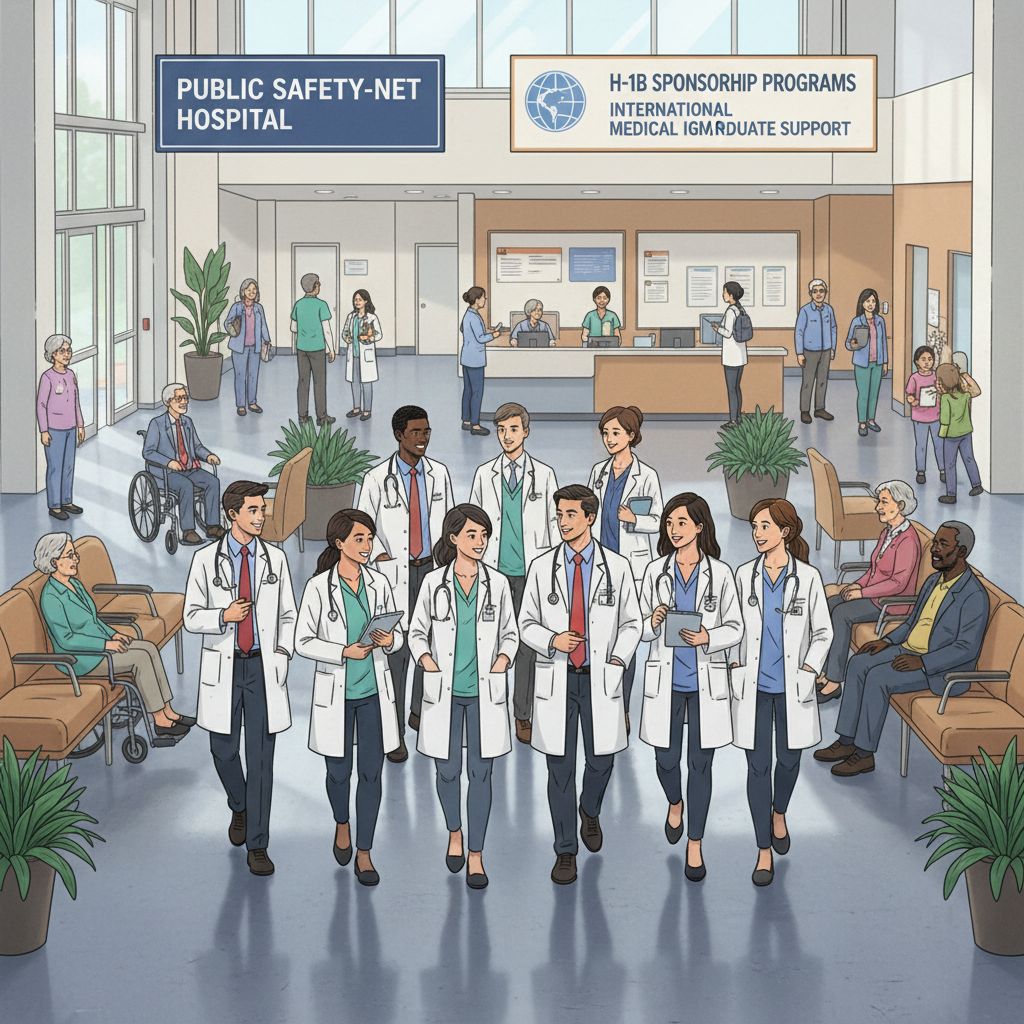
County hospital residency and safety net hospital residency programs are usually based in institutions that:
- Provide care regardless of insurance or immigration status
- Serve a high proportion of Medicaid/uninsured patients
- Often are affiliated with a public university or county health system
- Have strong teaching missions and residency programs across multiple specialties
Examples (just for conceptual purposes, not as an official list):
- Urban public hospitals linked to state universities
- City‑owned hospitals with Level 1 trauma centers
- Large municipal systems serving culturally diverse neighborhoods
These environments often value diverse language skills, cultural competence, and resilience—qualities many Caribbean IMGs possess, especially those who trained at a Caribbean medical school that emphasizes clinical rotations in U.S. hospitals with similar patient populations.
Why county hospitals are often IMG‑friendly
While every program is unique, several trends favor Caribbean IMGs:
Higher historical IMG representation
County and safety‑net hospitals often have more residents who are IMGs, including Caribbean medical school graduates. Internal medicine, family medicine, pediatrics, and psychiatry at these institutions may show a high percentage of international graduates.Strong fit with Caribbean IMG clinical backgrounds
If your core or elective clerkships were at busy urban community hospitals or VA systems, you can show direct readiness for the workflow in county hospital residency programs.Alignment with mission
Caribbean IMGs often come from underserved or resource‑limited environments. County hospitals emphasize care for marginalized communities—your lived experience can be a powerful asset.Openness to H‑1B
Teaching hospitals affiliated with universities are often H‑1B cap exempt, making it easier for them to sponsor trainees annually without worrying about the lottery. Many county hospitals fall into this category if they are:- Owned or operated by a government entity, and/or
- Formally affiliated with a U.S. university or medical school with a teaching agreement
This combination—IMG‑friendly culture plus cap‑exempt status—makes county and safety‑net hospitals prime targets if you are a Caribbean IMG seeking an H‑1B route.
H‑1B Cap Exempt Status and Why It Matters for Residency
Cap‑subject vs H‑1B cap exempt
The standard H‑1B program is cap‑subject—employers must apply in a March lottery and only a limited number of new H‑1B visas are issued each year. However, teaching hospitals and academic medical centers linked to universities are often legally classified as H‑1B cap exempt.
H‑1B cap exempt institutions include many:
- Nonprofit hospitals affiliated with universities
- University medical centers
- Some public (state or county) hospitals tied to a medical school or academic department
What this means for you as a resident:
- Programs can sponsor H‑1B at any time of the year, not just through the March lottery
- You are not competing for a limited “cap” slot
- It is easier for a residency program to bring you in on H‑1B, especially when they have an established in‑house immigration process
How this relates to county and safety‑net hospitals
Many county hospitals are:
- Designated teaching hospitals
- Affiliated with state or public universities
- Part of large public health systems
This often makes them H‑1B cap exempt, so when you look for H‑1B residency programs, county hospital residency and safety net hospital residency options may play an outsized role.
However:
- Not every county hospital is cap exempt, and not every cap‑exempt hospital sponsors H‑1B for residents.
- Some sponsor H‑1B only in certain specialties (e.g., internal medicine yes, surgery no).
You must still verify each program individually—but understanding cap‑exempt status shows you why many H‑1B sponsorship programs are clustered around academic and county institutions.
Building a Target List: How Caribbean IMGs Find H‑1B‑Friendly County Programs
Step 1: Use official program information (but read carefully)
Program websites and ERAS descriptions are your first stop. Look for:
- “Visa sponsorship” or “Eligibility” sections
- Clear statements like:
- “We sponsor J‑1 and H‑1B visas”
- “We sponsor J‑1 visas only”
- “We do not sponsor visas”
If a program explicitly states “J‑1 only”, it’s unlikely to change policy just for one applicant. Focus your effort elsewhere.
If a program says any of the following, treat it as promising, but not conclusive:
- “We sponsor visas for eligible candidates”
- “We support non‑citizen applicants”
- “Contact our GME office for details about visa sponsorship”
These may indicate that H‑1B is possible but not standardized—or that the website is outdated.
Step 2: Analyze recent resident rosters and alumni
Many county and safety‑net programs share:
- Current resident lists with medical schools
- Graduates and where they matched for fellowship or practice
For a Caribbean IMG, look for:
- Names or bios showing Caribbean medical school training (e.g., SGU, AUC, Ross, Saba, etc.)
- Notes like “on H‑1B visa” or “former J‑1” (some programs explicitly mention this)
Why this matters:
If the program has multiple Caribbean IMGs or alumni who successfully moved into U.S. fellowships or hospitalist roles, it likely has:
- Experience processing international credentials
- A culture comfortable with non‑US grad pathways
- In many cases, a track record of at least occasional H‑1B sponsorship
Step 3: Use SGU residency match and other Caribbean match data
Caribbean schools, especially larger ones like SGU, often publish match lists showing which hospitals their graduates match into. While these lists won’t explicitly say “H‑1B sponsored,” they help you:
- Identify county hospital residency and safety net hospital residency programs that are Caribbean‑friendly
- See which institutions regularly appear (suggesting a pattern of acceptance)
- Spot trends where Caribbean IMGs succeed in getting categorical positions, not just prelim spots
If you are still in school, ask your dean’s office or career services whether they track visa types of alumni (e.g., how many match on H‑1B vs J‑1). Some Caribbean medical school residency advisors can point to programs where they know H‑1B sponsorship has happened historically.
This can help build a custom H‑1B sponsor list of:
- County programs where Caribbean IMGs have matched
- Systems that have historically sponsored work visas for graduates
Step 4: Search public H‑1B databases (with caution)
U.S. Department of Labor and third‑party websites compile public data on H‑1B Labor Condition Applications (LCAs). You can search by hospital name to see if it has ever filed H‑1B petitions.
Use this data to:
- Confirm that a hospital (or its university affiliate) has sponsored H‑1B in the past
- Distinguish between hospitals that never file H‑1B vs those that routinely do so
However:
- LCAs might be filed for attendings, fellows, researchers—not strictly residents
- Data is often a few years behind
- Hospital names may be entered under the university or parent system
Still, if you see multiple H‑1B filings for physicians at a county hospital, it’s a good sign for your H‑1B sponsor list.
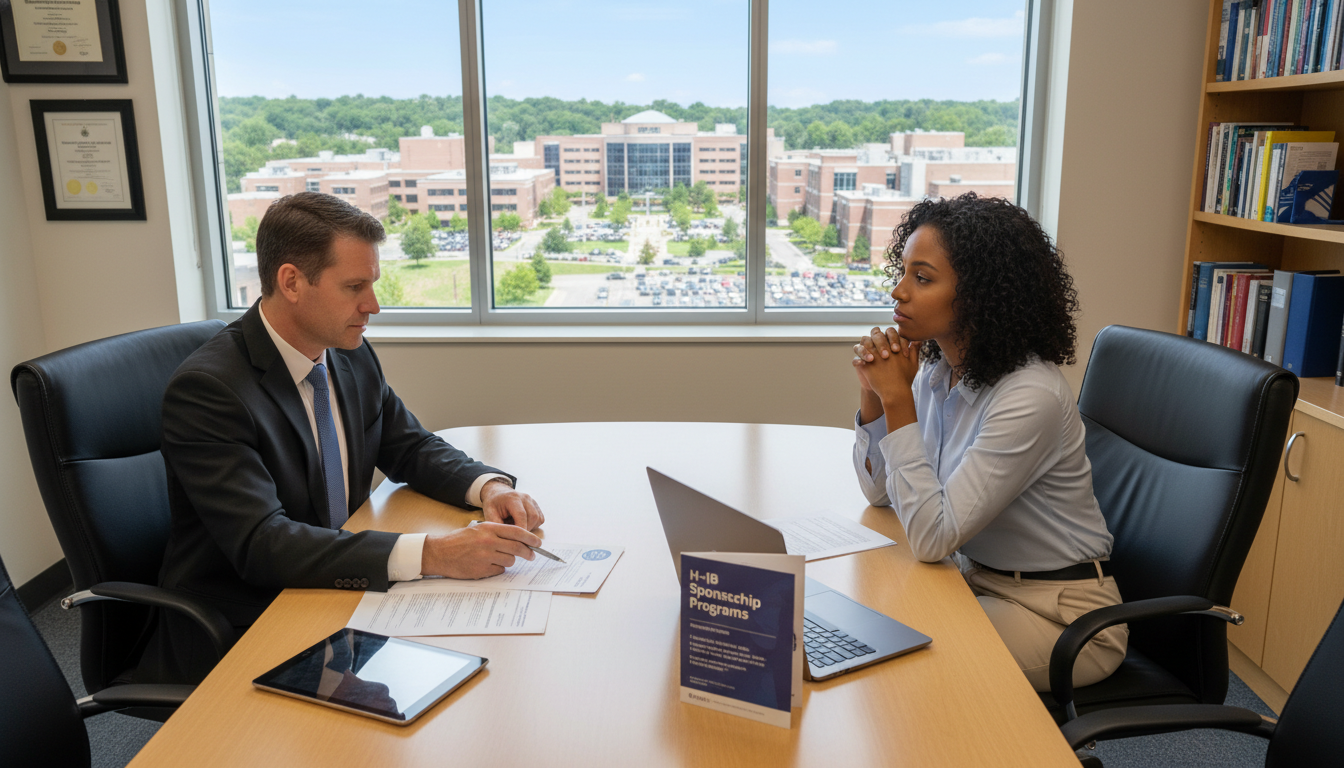
Step 5: Directly contact programs (strategically)
Once you’ve narrowed your list to realistic, Caribbean‑friendly targets:
- Email the program coordinator or GME office with a very specific question:
- Introduce yourself briefly (Caribbean IMG, exam passed, graduation year)
- State your visa need: “I will require H‑1B sponsorship for residency training.”
- Ask: “Does your program sponsor H‑1B visas for incoming residents, or is it limited to J‑1?”
If they respond:
- “We do not sponsor H‑1B” → Cross them off your H‑1B sponsor list
- “Yes, we sponsor H‑1B in some cases” → Keep them and prioritize strong application alignment
Polite, concise communication shows professionalism and helps you avoid wasted applications.
Application Strategy for Caribbean IMGs Targeting H‑1B at County Hospitals
Strengthening your profile as a Caribbean IMG
County and safety‑net programs value readiness, work ethic, and commitment to underserved populations. To stand out:
US Clinical Experience in similar settings
- Aim for core or elective rotations in:
- County or public hospitals
- Community safety‑net hospitals
- VA or inner‑city systems
- Emphasize these in your CV and personal statement.
- Aim for core or elective rotations in:
USMLE performance and attempts
- Many H‑1B residency programs require no more than one attempt on USMLE Step exams.
- A strong Step 2 CK score is especially important now that Step 1 is pass/fail.
Letters of recommendation (LoRs)
- Prioritize LoRs from:
- U.S. attendings in internal medicine, family medicine, pediatrics, psychiatry, or the specialty you’re targeting
- Supervisors at county or safety‑net–style hospitals
- Ask them to comment on your:
- Independence
- Ability to handle complex, underserved patients
- Teamwork and communication
- Prioritize LoRs from:
Demonstrate a track record of service
- Community health outreach
- Volunteering with underserved or immigrant communities
- Leadership roles in global or community health groups
This aligns your story with the mission of county residency programs and makes the extra effort of H‑1B sponsorship seem worthwhile to the program.
Being realistic about specialty choice
For Caribbean IMGs targeting H‑1B in county systems, some specialties are more feasible than others.
Typically more IMG‑friendly (especially in county/safety‑net settings):
- Internal Medicine
- Family Medicine
- Pediatrics
- Psychiatry
- Transitional/Preliminary Internal Medicine (for those planning advanced specialties)
More challenging for H‑1B at the residency (not impossible, but very competitive):
- Dermatology, Plastic Surgery, Neurosurgery
- Radiation Oncology, Ophthalmology, ENT
- Orthopedic Surgery and some surgical subspecialties
If your primary goal is H‑1B sponsorship programs in a county setting, it may be strategic to:
- Focus on a core specialty at a county hospital residency first
- Plan to subspecialize (e.g., GI, cardiology, critical care, ID) later, potentially still via H‑1B cap exempt fellowships
Framing your visa needs appropriately
In your ERAS application and interviews:
- Be honest: Clearly note that you require visa sponsorship
- Be specific: Indicate preference for H‑1B if the program offers both, but also show you understand the J‑1 route
- Avoid sounding entitled or demanding; instead:
- “Given my long‑term career goals in the U.S., I would strongly prefer an H‑1B if your institution sponsors it, but I also understand that visa policy is determined at the institutional level and I respect those constraints.”
Programs want residents who understand that visa decisions are complex, institutional, and not negotiable on an individual basis, yet also show maturity in discussing preferences.
Creating a balanced application list
For a Caribbean IMG with solid but not superstar metrics, a wise approach is:
- Total programs: Often 80–120 for core IM specialties, depending on competitiveness
- Within that list:
- A significant portion of county and safety‑net hospitals known to be IMG‑friendly
- A smaller, focused subset of H‑1B residency programs you’ve identified through research (your H‑1B sponsor list)
- A safety layer of J‑1‑only programs that are historically welcoming to Caribbean graduates
You want to preserve your overall match chances while still taking targeted shots at H‑1B‑friendly county institutions.
After Matching: Transitioning and Planning Your Long‑Term Path
If you match into an H‑1B residency program
Once you secure a spot at an H‑1B‑sponsoring county hospital residency:
Work closely with GME and legal teams
- Respond quickly to document requests (diplomas, ECFMG certificate, USMLE transcripts)
- Understand your H‑1B validity period and renewal process
Avoid unnecessary status changes
- If you’re already in the U.S. on F‑1 (for example, for an MPH), coordinate with the hospital’s lawyers about change of status vs consular processing.
Plan ahead for post‑residency
- Look for H‑1B cap exempt fellowships within the same or affiliated system
- Discuss early with mentors whether the institution historically converts residents to attending roles under H‑1B or supports green card petitions for high‑need specialties
If you match on a J‑1 at a county/safety‑net hospital
Not all Caribbean IMGs will get H‑1B. Matching on a J‑1 in a strong county residency can still be a powerful step:
- You’ll develop in‑demand skills for underserved populations
- You may be positioned for J‑1 waiver jobs in shortage areas, some of which are in attractive regions
- Some physicians later transition from J‑1 waiver positions to green cards
The same traits that help you succeed as a Caribbean IMG in a county hospital residency—resilience, cultural competence, commitment to underserved communities—will serve you throughout your visa and immigration journey, regardless of initial pathway.
FAQs: H‑1B Sponsorship Programs for Caribbean IMGs in County Hospitals
1. Are all county hospital residency programs H‑1B cap exempt?
No. Many are, especially those formally affiliated with a university or designated as nonprofit teaching hospitals, but not all. Cap‑exempt status depends on legal classification and official ties to educational or government entities. Always confirm each program’s status and policies directly.
2. As a Caribbean IMG, do I need a certain USMLE score to be considered for H‑1B sponsorship?
There is no universal score cutoff. However, many H‑1B residency programs prefer strong Step 2 CK performance and may be stricter about multiple attempts. Aim to be at or above the average for matched IMGs in your specialty, and avoid exam failures if possible, as some institutions have policies against sponsoring H‑1B for candidates with multiple attempts.
3. Can I switch from J‑1 to H‑1B during residency at a county hospital?
It is usually difficult. Once you begin GME under a J‑1, ECFMG expects you to complete training on that visa. Changing mid‑residency to H‑1B is rare and requires complex legal steps and institutional support. It is safer to decide your preferred visa path before starting residency and target programs accordingly.
4. How can an SGU or other Caribbean medical school residency match list help me find H‑1B programs?
SGU residency match and similar Caribbean match data show where graduates successfully match year after year, including county and safety‑net hospitals. While they do not state visa type, repeated matches suggest institutions that are comfortable with Caribbean IMGs. You can then cross‑reference those programs with public H‑1B data, program websites, and direct communication to see whether they have a history of H‑1B sponsorship, helping you refine your personal H‑1B sponsor list.
By combining a realistic understanding of H‑1B policies, careful targeting of county and safety‑net hospitals, and a strong application profile that highlights your Caribbean IMG strengths, you can significantly improve your chances of training in the U.S. on an H‑1B visa and building the long‑term career you envision.