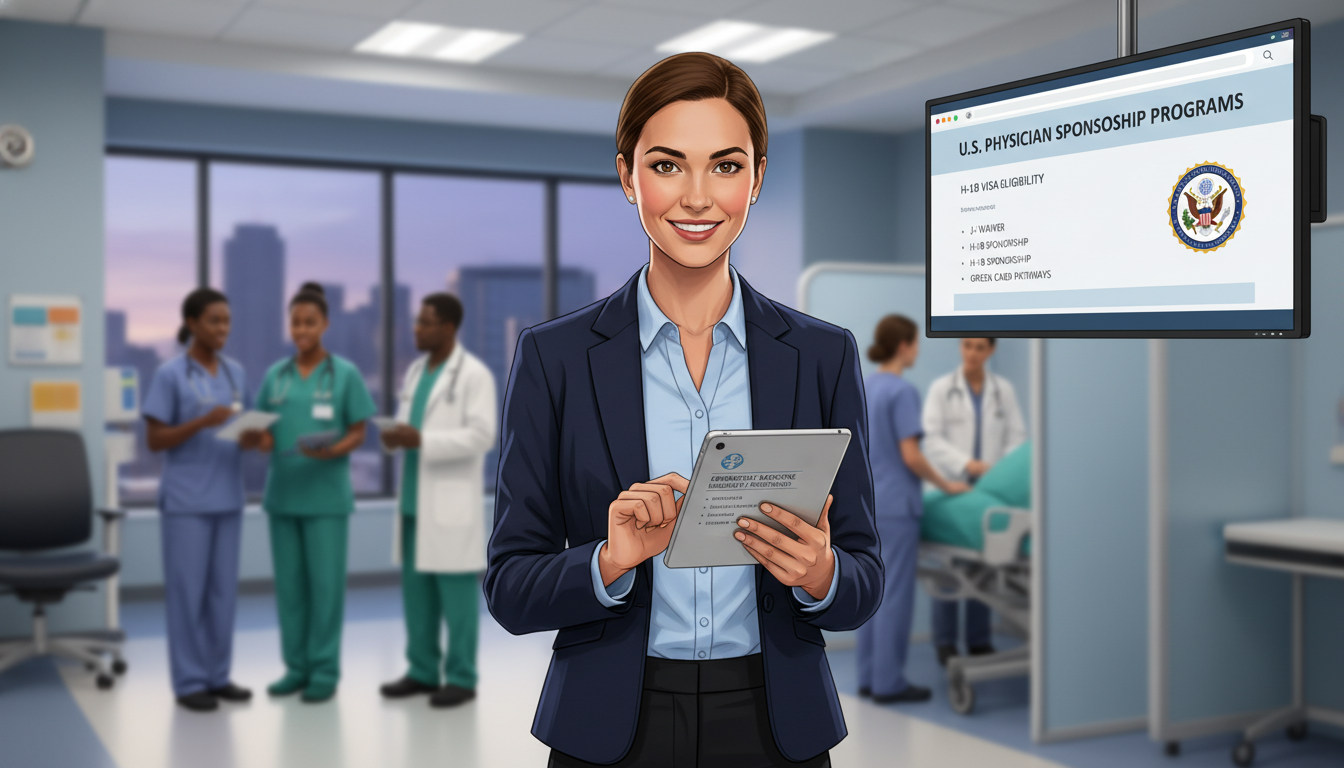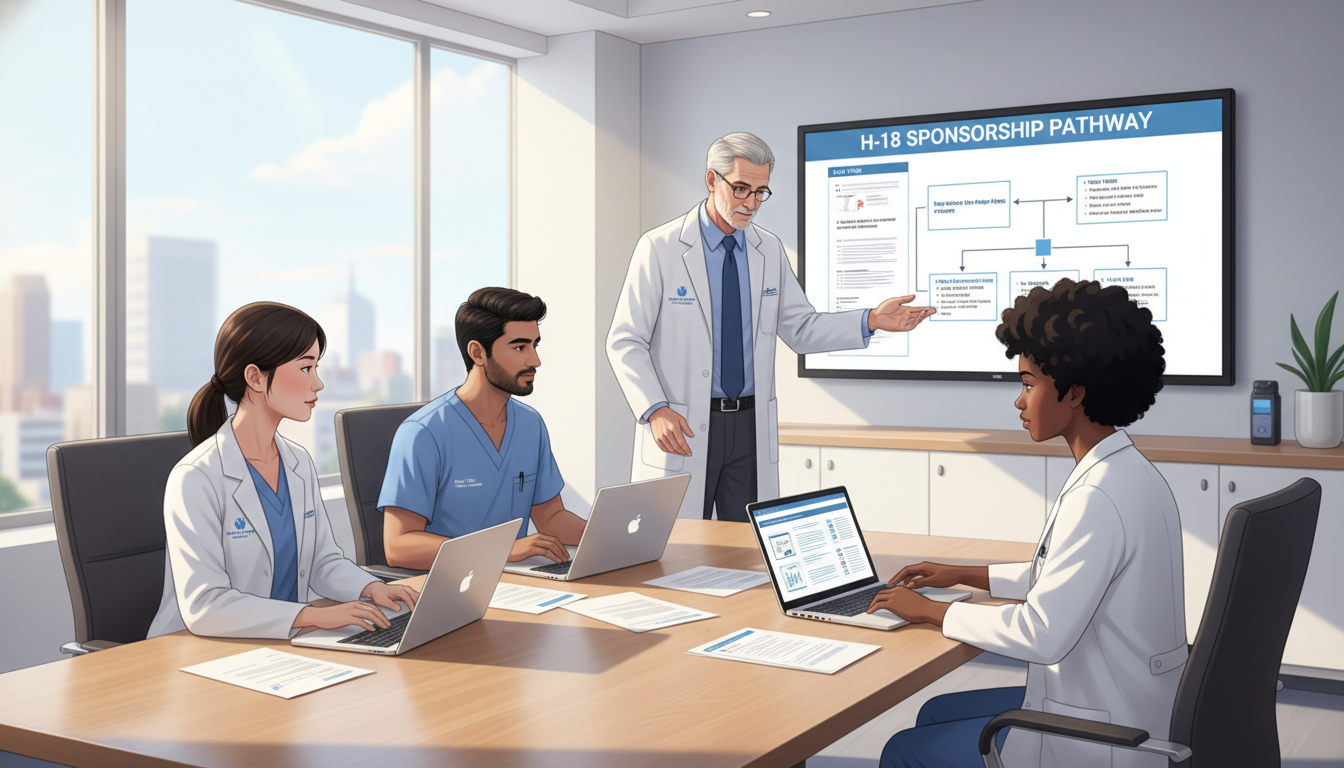
Understanding H-1B Sponsorship for Caribbean IMGs in Chicago
For a Caribbean medical school graduate aiming to train in Chicago, H-1B sponsorship can be both a powerful opportunity and a major source of confusion. Between complex immigration rules, state licensing differences, and variable hospital policies, it’s hard to know where to start.
This guide is written specifically for Caribbean IMGs considering Chicago residency programs and trying to understand H-1B residency programs, H-1B cap exempt rules, and how to identify an effective H-1B sponsor list in Illinois. It will be particularly relevant if you are a Caribbean medical school residency applicant (e.g., SGU, AUC, Ross, Saba) targeting the Chicago area.
We’ll walk through:
- How H-1B works for residency and fellowship
- The Chicago and Illinois landscape for IMGs
- Typical H-1B–friendly program types and specialties
- Practical steps to maximize your chances as a Caribbean IMG
- Common pitfalls and realistic timelines
H-1B Basics for Caribbean Medical Graduates
Before you think about specific Chicago residency programs, it’s critical to understand how H-1B functions in the graduate medical education (GME) context.
H-1B vs J-1 for Residency
Most IMGs train in the U.S. on a J-1 visa, sponsored by ECFMG. However, some programs are willing to sponsor H-1B instead.
Key differences:
J-1 Visa (ECFMG‑sponsored):
- Most common pathway for IMGs in residency
- Two-year home-country physical presence requirement after training, unless waived
- Easier for programs to process (standardized procedures)
- Not dual intent (you’re expected to return home after training unless you change status)
H-1B Visa (employer‑sponsored):
- Dual intent (you can pursue permanent residency while on H-1B)
- No automatic two-year home return requirement
- More complex requirements (e.g., USMLE Step 3, state license eligibility)
- More costly and paperwork-heavy for institutions
- Tied to a specific employer and position
For a Caribbean medical school residency applicant hoping to stay and work in the U.S. long-term, H-1B is attractive because it aligns more smoothly with eventual permanent residency. However, not all programs are willing to take on this extra work.
Cap-Exempt H-1B for Residency
Residency and fellowship positions at teaching hospitals often qualify as H-1B cap exempt, which is crucial for timing and security.
H-1B cap subject:
- Limited annual number of new H-1B visas (general “H-1B lottery” people talk about)
- Starts in October each year
- Not ideal for residency start dates in July
H-1B cap exempt:
- Not subject to the annual numerical limit
- Can file anytime during the year
- Many academic and non-profit hospital systems qualify (universities, university-affiliated hospitals, some research institutions)
Most Chicago academic centers and teaching hospitals offering residency are H-1B cap exempt, which means they can file your H-1B independently of the lottery. When you research H-1B residency programs in Chicago, one of your advantages is that many of them fall into this cap-exempt category.
Eligibility Requirements for H-1B in GME
For a Caribbean IMG, the main hurdles to obtain an H-1B for residency are:
USMLE Step 3 passed
- Nearly universal requirement before filing H-1B for residency.
- Many Chicago programs will not rank you for an H-1B slot unless Step 3 is already passed (or at least scheduled with realistic expectation of passing).
ECFMG Certification
- Must be fully certified by ECFMG (including passing Step 1, Step 2 CK, OET, and primary source verification of your Caribbean degree).
State licensure/permit eligibility in Illinois
- Illinois requires either a Temporary Training License or a form of limited license for trainees.
- Programs typically handle the training license application, but you must meet underlying standards such as degree verification, examinations, and sometimes background checks.
Offer of employment from a qualifying institution
- The residency program (hospital/university) must agree to be your H-1B sponsor.
If you’re from a school like SGU, Ross, AUC, or Saba, program directors in Chicago are familiar with your training, which can help—but you still must demonstrate exam performance, clinical readiness, and strong communication skills.

The Chicago and Illinois Landscape for Caribbean IMGs
Chicago is one of the most IMG-friendly metropolitan regions in the United States, with a dense network of teaching hospitals and community programs. For a Caribbean IMG specifically, the city presents both opportunity and competition.
Why Chicago is Attractive for Caribbean IMGs
High concentration of teaching hospitals
Major university systems and large community hospitals mean more potential Illinois residency positions and varying degrees of familiarity with IMGs.Robust Caribbean IMG presence
Many residents and fellows at Chicago institutions trained at Caribbean schools. This history makes program leadership more comfortable evaluating your application.Range of specialties
From Internal Medicine and Family Medicine to more competitive fields like Radiology and Anesthesiology, you’ll find a spectrum of programs—with differing attitudes toward H-1B.Research opportunities
Several large academic centers offer research positions that can strengthen your profile and sometimes transition into residency.
Typical Attitudes Toward H-1B in Chicago
Program policies around H-1B vary widely, but some patterns are common:
University-based academic centers
- More likely to be H-1B cap exempt
- Often have institutional legal teams and GME offices with experience handling H-1B petitions
- Policies might be standardized: “J-1 only” or “J-1 + limited H-1B slots per year”
Community-based or community–university affiliated programs
- Variable experience with H-1B
- Some are open but cautious due to legal costs and administrative work
- Some prefer J-1 only to avoid complexities
Smaller hospitals
- May lack infrastructure for H-1B processing
- Sometimes rely entirely on J-1 or U.S. graduates on permanent work authorization
As a Caribbean IMG, your challenge is to identify which Chicago residency programs are genuinely open to sponsoring H-1B and what their realistic conditions are.
Identifying H-1B-Friendly Residency Programs in Chicago
There is no single official, up-to-date H-1B sponsor list for residency programs, but you can systematically build your own targeted list of H-1B residency programs in Chicago and across Illinois.
Step 1: Use FREIDA and Program Websites
Start with the basics:
Search FREIDA (AMA Residency & Fellowship Database)
- Filter by state: Illinois
- Filter by city: Chicago (and nearby suburbs if you’re open to them)
- Check each program’s page to see if they list “Visa sponsorship: J-1, H-1B, or both”
Cross-check with program websites
- Go to the “For Applicants” or “International Medical Graduates” section.
- Look for explicit statements:
- “We sponsor J-1 only”
- “We sponsor J-1 and H-1B for qualified candidates”
- “H-1B sponsorship considered on a case-by-case basis”
- Note:
- Step 3 requirement
- Any cutoffs for Step 1/Step 2 CK
- Graduation year limits (e.g., within 3–5 years of grad)
Document this in a simple spreadsheet: Program Name, Specialty, Visa Policy, Contact Email, Notes.
Step 2: Analyze Past and Current Residents
Program websites often list current and former residents, sometimes with medical school names.
- Look for residents from:
- St. George’s University (SGU)
- Ross University
- American University of the Caribbean (AUC)
- Saba University
- If these Caribbean graduates are present, it tells you:
- The program is open to IMGs.
- They may already understand Caribbean curricula and exam patterns.
- If you see alumni with H-1B (sometimes listed on alumni bios or LinkedIn), that’s an even stronger signal for an H-1B sponsor.
Step 3: Use LinkedIn and Alumni Networks
LinkedIn is powerful for confirming if a program has sponsored H-1B before.
- Search:
- “Internal Medicine Resident H-1B Chicago”
- “[Program Name] H-1B”
- “SGU Internal Medicine Chicago H-1B”
You may find profiles explicitly mentioning H-1B status, or at least IMGs who later transitioned to H-1B jobs at the same or related institutions.
Consider reaching out politely:
- Brief message that you’re a Caribbean IMG applying this year
- Ask if the program has any history of H-1B sponsorship
- Respect their time; keep messages short and professional
Step 4: Directly Email Program Coordinators
After doing your homework, a concise inquiry to the program coordinator or GME office is appropriate—especially when website information is unclear.
Example email outline:
- Introduce yourself as a Caribbean IMG (mentioning your school, graduation year, Step scores briefly)
- State that you are very interested in their program
- Ask one clear question about whether they sponsor J-1 and/or H-1B for residency
- If asking about H-1B: mention that you will have USMLE Step 3 completed before Match (if true)
Programs appreciate clarity. If you’re still unsure whether you should push for H-1B at that site, you can also ask, “If your program primarily sponsors J-1, is H-1B ever considered under special circumstances?”

Strategic Considerations for Caribbean IMGs Seeking H-1B in Chicago
Securing an H-1B for residency as a Caribbean IMG is possible but requires strategic planning.
1. Decide Early: Do You Truly Need H-1B?
Ask yourself:
- Is returning to your home country after residency a realistic or acceptable path?
- Are you willing to pursue a J-1 waiver later (e.g., underserved area work, academic positions)?
- Are you aiming for a long-term U.S. career with minimal visa transfers?
If you’re from a Caribbean school like SGU with a strong SGU residency match pipeline, you may have abundant J-1 opportunities. H-1B is particularly valuable for those:
- Who want to avoid the 2-year home-country requirement
- Who plan to seek permanent residency relatively soon after training
- Who may want to transition more seamlessly from residency to fellowship and then to attending roles without multiple status changes
2. Guarantee Step 3 as Early as Possible
For H-1B-friendly programs in Chicago, USMLE Step 3 is non-negotiable.
- Plan Step 3 before or early in the Match cycle:
- Preferably by August–October of the application year, so you can list a passed result on ERAS.
- At minimum, have it scheduled with results expected before rank order lists are due.
- For Caribbean IMGs doing clinical rotations in the U.S., carve out a dedicated period post-graduation for Step 3.
- A strong Step 3 score can also:
- Compensate for slightly lower Step 1/Step 2 CK
- Reassure programs that you can pass board exams and handle clinical decision-making
3. Balance Your Application List: H-1B vs J-1 Programs
A common mistake is applying only to H-1B-sponsoring programs. That can dramatically reduce your match probability.
A balanced approach:
- Target a mix of:
- H-1B-friendly programs in Chicago and broader Illinois
- J-1-friendly programs in Chicago
- Other states where you have geographic/family ties and IMG-friendly reputations
- You might divide your list:
- 25–40% H-1B open programs
- 60–75% J-1 or more flexible programs
This strategy keeps your options open while still prioritizing H-1B where possible.
4. Emphasize Clinical Readiness and Communication
Chicago programs that sponsor H-1B expect a high return on investment for the extra effort and cost of your visa.
Show them:
- Strong US clinical experience (USCE), preferably in teaching hospitals:
- Sub-internships/acting internships
- Core rotations at respected sites
- Excellent letters of recommendation from U.S.-based attendings:
- Highlighting your clinical reasoning
- Professionalism and teamwork
- Communication skills with patients and staff
- Evidence of integration:
- Participation in case presentations, quality improvement projects, or research
Caribbean schools often have well-established clinical networks in the U.S.; leverage these fully to build a robust clinical portfolio.
5. Understand Illinois Licensing Nuances
Illinois licensing requirements can evolve, but in general:
- You’ll need:
- Primary source verification of your Caribbean medical degree
- Proof of completed USMLE exams
- Background checks and documents for a temporary training license
- Programs typically coordinate with the Illinois Department of Financial and Professional Regulation (IDFPR), but you should:
- Review IDFPR physician licensing information
- Make sure all your documents (diploma, transcripts, ECFMG certificate) are organized and translated if necessary
Since H-1B petitions hinge on you being allowed to practice in a supervised residency role, any licensing problems can derail the process.
Building a Practical H-1B Strategy as a Caribbean IMG
Bringing everything together, here’s a step-by-step plan geared specifically toward Caribbean IMGs targeting Chicago.
Year Before Applying (or Earlier)
- Confirm your Caribbean medical school residency pipeline results—look at where senior students and alumni have matched, especially in Chicago.
- Map your exams:
- Finish Step 1 and Step 2 CK early enough to have scores before ERAS opens.
- Tentatively schedule Step 3 so that you’ll have results by mid-application season.
- Seek rotations in Illinois if possible:
- Especially in Chicago teaching hospitals or affiliated sites.
- Develop relationships with attendings who can write strong, personalized letters.
ERAS Season (June–September)
- Build a master list of Chicago residency programs and Illinois residency options:
- Internal Medicine, Family Medicine, Pediatrics, Psychiatry, etc.
- Note which ones clearly mention H-1B on their websites.
- Email uncertain programs to clarify visa policies.
- Apply broadly:
- Prioritize programs that explicitly state “J-1 and H-1B” and appear IMG-friendly.
- Include a healthy number of solid J-1 programs for safety.
- In your personal statement or interviews, you generally:
- Don’t need to over-emphasize your preference for H-1B upfront, unless programs ask.
- Focus on fit, clinical strengths, and your long-term goals.
Interview Season
During or after interviews:
- If you receive interview invites:
- Carefully review each program’s stance on visas in the applicant information they send.
- Judiciously ask about visa sponsorship when appropriate:
- A good moment is often at the end of the interview with the program director or coordinator:
“May I ask briefly about your policy regarding J-1 vs H-1B sponsorship for residents?”
- A good moment is often at the end of the interview with the program director or coordinator:
- Clarify:
- Whether H-1B is offered at all
- Whether prior Step 3 is required
- Whether there is any limit on the number of H-1B residents they can sponsor per year
Post-Match: If You Match at an H-1B Program
If you successfully match to a Chicago program that offers H-1B:
- Confirm that the program is indeed filing an H-1B cap exempt petition for you (most teaching hospitals will be).
- Work closely with:
- GME office
- Hospital’s legal/immigration department
- Prepare all documents early:
- Valid passport
- ECFMG certificate
- USMLE transcripts, especially Step 3
- Diploma and transcripts
- Any required IDFPR forms for a training license
File as early as the institution allows to avoid delays that might affect your start date.
Post-Match: If You Match at a J-1 Program
If you match at a J-1-only program:
- Understand your options later:
- J-1 waiver jobs (Conrad 30, VA, academic positions)
- Subsequent transition to H-1B (cap exempt or cap subject)
- Build a long-term plan:
- Where can you work after residency to waive your J-1 requirement?
- Which hospitals are H-1B cap exempt and can later sponsor you for permanent residency?
This may not be your original plan, but many successful Caribbean IMGs have built stable U.S. careers starting from a J-1.
FAQs: H-1B Sponsorship Programs for Caribbean IMGs in Chicago
1. As a Caribbean IMG, is it realistic to get H-1B sponsorship for residency in Chicago?
Yes, it’s realistic, but it’s competitive and selective. Many Chicago teaching hospitals are H-1B cap exempt and have the capacity to sponsor H-1B. However, they usually reserve it for highly qualified candidates who:
- Have already passed USMLE Step 3
- Show strong performance in clinical rotations
- Bring something distinctive (research, leadership, specific language skills, or strong connections to their patient population)
To maximize your chances, focus on academic or large community programs with a proven IMG track record and explicit mention of H-1B on their websites or in FREIDA.
2. Do all SGU or Caribbean graduates automatically get H-1B if they match in Chicago?
No. Being from a strong Caribbean school with a robust SGU residency match network or similar does not guarantee H-1B. The visa type depends on:
- The individual program’s policy (some are J-1 only)
- The number of H-1B slots they can support in a given year
- Your own exam performance and licensing eligibility
Even within the same hospital system, different specialties can have different visa policies. Always confirm at the program level, not just the institution level.
3. Should I delay my application year until I pass Step 3 if I really want H-1B?
If your top priority is H-1B and you are otherwise competitive:
- Delaying one cycle to complete Step 3 can make sense, especially if:
- Your Step 1 and Step 2 CK are solid and you can use the extra time for research or U.S. clinical experience.
- However, you must weigh:
- Financial and personal costs of waiting a year
- The fact that graduation year recency is also a factor (some programs prefer graduates within 3–5 years)
If you’re already several years out from graduation, it may be better to apply with strong J-1 and H-1B options rather than waiting.
4. Where can I find an official H-1B sponsor list for Chicago residency programs?
There is no single official, always-accurate H-1B sponsor list for residency programs. Instead:
- Use FREIDA and program websites to identify:
- “J-1 only” vs “J-1 and H-1B” programs
- Search alumni and current residents on LinkedIn and program pages to see:
- Whether IMGs have been sponsored for H-1B in the past
- Email program coordinators or GME offices:
- To confirm the most recent policy, as it can change from year to year
By combining these methods, you’ll create a more reliable, current list of H-1B residency programs in Chicago and the rest of Illinois than any static online source.
For a Caribbean IMG, Chicago offers a dynamic and IMG-rich environment where H-1B sponsorship is achievable with the right preparation. Focus on early exam completion (especially Step 3), targeted program research, and strong clinical performance. With a clear strategy, you can turn the complexity of H-1B into a structured pathway toward your training and long-term career in the United States.