Understanding H-1B Sponsorship Pathways for Caribbean IMGs in EM–IM
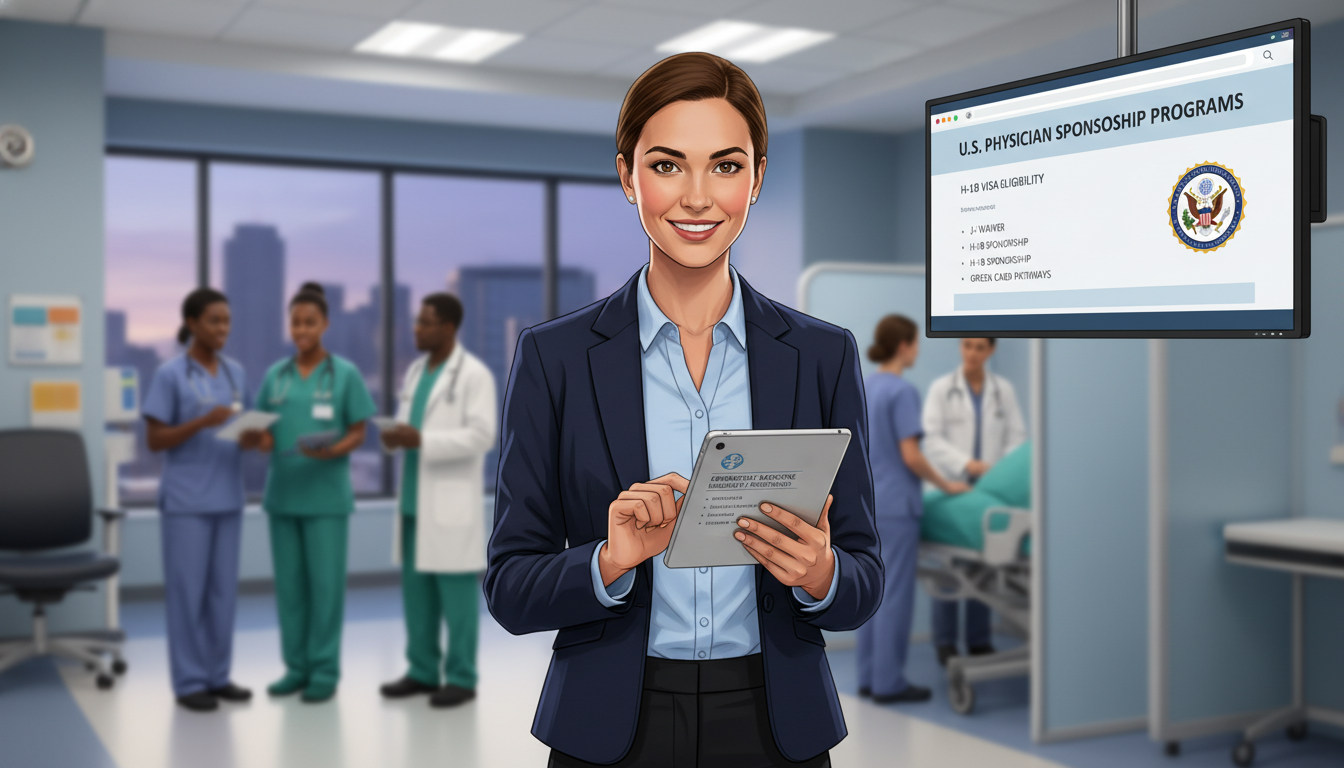
For a Caribbean IMG interested in Emergency Medicine–Internal Medicine (EM–IM) combined residency, the visa strategy is as critical as your ERAS application. Among all US work visas used in graduate medical education, the H-1B is often considered the “gold standard” for long‑term training and future practice—but it is also more complex and less commonly offered than the J‑1.
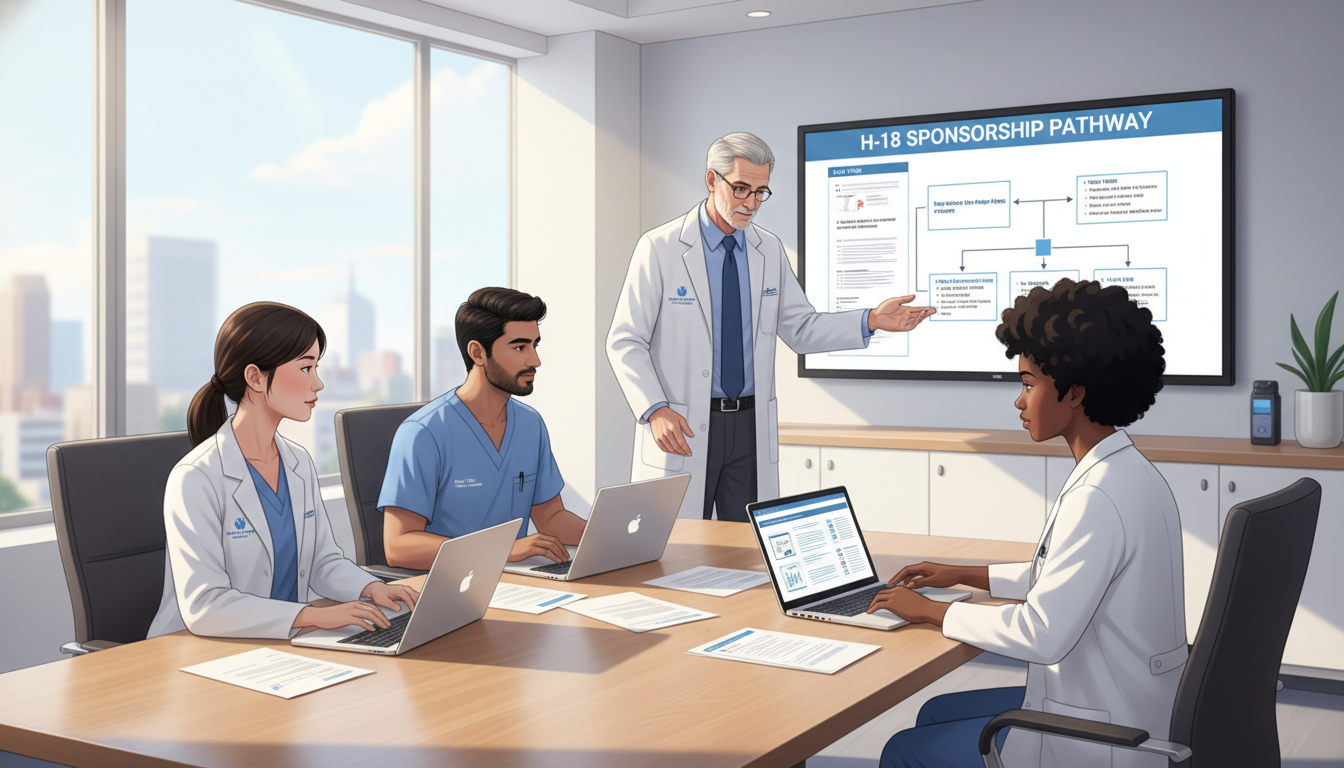
This guide focuses specifically on H-1B sponsorship programs for Caribbean IMGs pursuing Emergency Medicine–Internal Medicine combined training. We will cover how the H‑1B works in residency, which program types are most likely to sponsor, how to research and approach programs, and how to position yourself as a strong H‑1B candidate.
Throughout, you’ll see references to:
- Caribbean medical school residency outcomes
- SGU residency match and similar schools (e.g., AUC, Ross, Saba)
- EM IM combined (Emergency Medicine–Internal Medicine) programs
- Emergency medicine internal medicine training pathways
- H-1B residency programs, the H-1B sponsor list, and H-1B cap exempt rules
H‑1B Basics for Residency: What Caribbean IMGs Must Know
Before you target H‑1B residency programs, you need a clear understanding of how the visa works in the GME world—especially for combined tracks like EM–IM.
J‑1 vs H‑1B in Residency
Most IMGs in residency train on a J‑1 exchange visitor visa. In contrast, H‑1B is a temporary specialty occupation visa that allows you to work and be paid as a resident physician.
Key differences:
- J‑1 Visa
- Sponsored by ECFMG
- Requires return to home country for 2 years after training (unless you get a J‑1 waiver)
- Widely used, simpler for many residency programs
- H‑1B Visa
- Sponsored directly by the residency program/institution
- No automatic 2‑year home residence requirement
- More complex paperwork and institutional cost
- Often preferred by IMGs planning to stay in the US long‑term without a J‑1 waiver
For Caribbean medical school residency applicants, the choice is usually driven by:
- Personal/family plans (willingness to do a J-1 waiver vs desire to move directly to fellowship or employment)
- Whether programs in your target specialty actually offer H-1B and will sponsor an IMG
EM–IM Combined: Visa Considerations
EM–IM combined programs are 5-year residencies that integrate:
- Emergency Medicine training
- Internal Medicine training
because they are longer and more specialized, EM–IM combined programs may be more selective about which visa types they sponsor.
Important implications of the 5‑year length:
- More time in residency = more years on H‑1B
- H‑1B has a typical 6‑year maximum (with exceptions in certain green card situations), so a 5‑year combined program uses most of that allocation
- Some hospitals may be more cautious about sponsoring H‑1B for very long training tracks due to institutional policy or cost
While some EM–IM combined programs support H‑1B, many still default to J‑1. Your job as a Caribbean IMG applicant is to:
- Identify which EM–IM programs have historically sponsored H‑1B
- Understand their requirements (USMLE attempt limits, Step 3 expectations, graduation year cutoffs, etc.)
- Build a profile that makes H‑1B sponsorship worth it for them
How H‑1B Works in Graduate Medical Education
To target H‑1B residency programs, you need to understand a few key concepts: cap-exemption, timelines, and eligibility requirements.
H‑1B Cap-Exempt Status for Residency Programs
Standard private employers are subject to an H‑1B annual cap (65,000 + 20,000 US masters cap). However, many residency programs are part of institutions that are H‑1B cap exempt.
An employer is typically cap‑exempt if it is:
- A non‑profit entity affiliated with a US college or university
- A non‑profit academic medical center
- A governmental research or education institution
Most university-based teaching hospitals and large academic centers fall into this category.
Why this matters for Caribbean IMGs:
- Cap-exempt programs can file your H‑1B petition any time of year
- You don’t compete in the H‑1B lottery
- This makes training on H‑1B much more feasible through residency and fellowship
When researching your H‑1B sponsor list, prioritize:
- University hospitals
- Major academic centers
- Systems clearly affiliated with a medical school
Community hospitals and smaller programs may still sponsor H‑1B, but they are less likely to be cap‑exempt and more likely to avoid H‑1B altogether due to complexity.
Eligibility Criteria for H‑1B in Residency
Most H‑1B residency programs require:
- USMLE Step 1 and Step 2 CK passed (often on first attempt; multiple attempts can be a major barrier)
- Step 3 passed before H‑1B petition filing – many programs insist you have Step 3 done before starting residency, and some require it before ranking you
- ECFMG certification (Caribbean graduates usually achieve this quickly after Step 2 CK and OET)
- No major credential issues (on-time graduation, proper documentation from your Caribbean medical school)
For a combined emergency medicine internal medicine residency, programs may be even more selective:
- Strong EM rotations and letters of recommendation
- Strong IM performance and letters
- Evidence you can handle a rigorous 5‑year track

EM–IM Combined Programs and H‑1B: Where and How to Look
Because EM–IM combined training is relatively niche, you’ll need a deliberate strategy to find H‑1B sponsorship programs and assess your chances.
Step 1: Understand the EM–IM Landscape
Combined EM IM programs are:
- Fewer in number than standalone EM or IM programs
- Primarily located at large academic centers
- Often aligned with strong EM and strong IM departments
This actually works in your favor for H‑1B, because:
- Larger academic centers are more likely to be H‑1B cap exempt
- They may already sponsor H‑1B for other residency tracks or fellows
- They often have GME offices and legal teams comfortable with H‑1Bs
However, each EM–IM program can have its own visa policy independent of other departments. An institution that sponsors H‑1B for, say, Internal Medicine, may still choose J‑1 only for EM–IM, depending on program leadership.
Step 2: Build a Personalized H‑1B Sponsor List
There is no official government “H‑1B sponsor list” specific to residency. Instead, you build your own list through systematic research.
Use the following approach:
Start with ACGME and NRMP data
- Go to the ACGME or FREIDA database and search for Emergency Medicine–Internal Medicine combined programs
- Cross-reference with NRMP lists for EM–IM
Review each program’s website
- Look under “Eligibility & Visa” or “Application Information”
- Look for language like:
- “We sponsor J‑1 and H‑1B visas”
- “We sponsor J‑1 only”
- “We do not sponsor visas”
- If unclear, make a note to email the coordinator directly
Check institution-wide policy
- Sometimes, the EM–IM page is vague, but the main GME office (or the Internal Medicine or Emergency Medicine categorical program) states clearly:
- “Our institution supports both J‑1 and H‑1B visas for residency and fellowship”
- This is a strong indicator EM–IM can potentially support H‑1B, even if not explicitly advertised
- Sometimes, the EM–IM page is vague, but the main GME office (or the Internal Medicine or Emergency Medicine categorical program) states clearly:
Use alumni and match data
- Look at recent EM–IM resident profiles (often listed on program websites or social media)
- Search LinkedIn or Doximity for past EM–IM residents with “H‑1B” in their profiles or for IMGs from your region
- If you see multiple IMGs, especially in other specialties at that institution, there’s a better chance they’re open to H‑1B
Cross-check with Caribbean match results
- Schools like SGU, AUC, Ross, and Saba sometimes publish partial residency match lists
- Look specifically for:
- SGU residency match EM–IM
- EM–IM combined placements for Caribbean graduates
- Identify which programs have already accepted Caribbean IMGs; they are more likely to be open to visa sponsorship
Step 3: Directly Clarify H‑1B Policies
Once you’ve narrowed to a list of EM–IM combined programs that might sponsor H‑1B:
- Email the program coordinator or program director:
- Introduce yourself briefly as a Caribbean IMG applicant
- Ask specifically:
- Do you sponsor H‑1B visas for residents?
- Are there special requirements (e.g., Step 3 by rank order list deadline, single attempts on USMLE)?
- Keep it concise and professional; they are more likely to respond if the questions are direct and specific.
Example email snippet:
I am a final-year medical student at [Your Caribbean School] planning to apply to the Emergency Medicine–Internal Medicine combined program. I am an international medical graduate and hope to train in the US on an H‑1B visa.
Could you please confirm whether your program sponsors H‑1B visas for residents, and if so, whether you require Step 3 to be completed before ranking applicants?
Document each response to refine your personal H‑1B sponsor list.
Building a Competitive EM–IM Application as a Caribbean IMG (With H-1B in Mind)
H‑1B sponsorship is an investment by the program. To be attractive as an H‑1B candidate, especially in a demanding combined field, you must stand out on multiple fronts.
1. USMLE Performance and Step 3 Strategy
For H‑1B, Step 3 is a central pillar:
- Aim to pass Step 3 before ERAS submission if at all possible. For EM–IM:
- It signals strong test‑taking ability
- It reduces administrative burden and risk for the program
- Avoid multiple attempts on any Step; some programs with H‑1B will not sponsor applicants with more than 1–2 total attempts
Practical plan for a Caribbean IMG:
- Take Step 2 CK early enough to allow:
- 3–4 months of preparation for Step 3
- Step 3 completion before or early in the application cycle
- If you are late in the cycle, still schedule Step 3 as early as possible and mention it in your application (“Step 3 scheduled for [date]”).
2. Strong EM and IM Clinical Foundations
Because you’re targeting a dual specialty in emergency medicine internal medicine, your application must show:
- At least one US EM core or sub‑I rotation, ideally at an academic center
- At least one US IM rotation/sub‑I
- Strong letters of recommendation:
- At least one from EM faculty (preferably at a site that knows combined programs)
- At least one from IM faculty
- If possible, one from a combined EM–IM physician or program director
For Caribbean graduates, US clinical experience is non‑negotiable, especially if you are asking a program to sponsor an H‑1B.
3. Research and Scholarly Activities
EM–IM combined programs are typically academic and value scholarship:
- Try to engage in:
- EM or IM research projects
- Case reports or quality improvement projects
- Presentations at local or national meetings (ACEP, SAEM, ACP, etc.)
- Even small‑scale projects signal academic curiosity and perseverance.
Including visa‑relevant work such as health policy, global health, or systems of care can be helpful but isn’t mandatory; clinical competence and strong scores remain the foundation.
4. Personal Statement and Story: Why EM–IM?
EM–IM is a lifelong identity, not just a shortcut to EM or IM. Programs want serious, informed applicants.
Your personal statement should:
- Clearly explain why combined Emergency Medicine–Internal Medicine, not just EM or IM alone
- Show that you understand:
- The clinical scope: acute resuscitation + longitudinal management of complex disease
- Career paths: academic EM–IM, critical care, hospital administration, global health, etc.
- Tie in your Caribbean medical education:
- Exposure to resource-limited settings
- Flexibility and adaptability
- Experience across a broad spectrum of pathology
Don’t make the H‑1B the centerpiece of your story. Instead, frame it as:
- You are committed to long‑term training and service in the US
- You value stable visa status that allows you to fully invest in your chosen career path

Practical Application Strategy: Maximizing Your Chances as a Caribbean IMG
Even with a strong profile, H‑1B adds another layer of selectivity. You need a tiered, realistic application plan.
Tier 1: EM–IM Programs That Explicitly Offer H‑1B
These should be your highest-priority targets.
Actions:
- Confirm visa sponsorship in writing (website or email)
- Confirm Step 3 expectations and deadlines
- Tailor your personal statement to highlight combined interests
- Ask EM or IM mentors who know the program to personally advocate for you if possible
Because these programs are fewer and more competitive, expect:
- Lower interview-to-application ratios
- Strong competition from US grads and non-Caribbean IMGs
Tier 2: EM–IM Programs at H‑1B-Friendly Institutions
These are programs where:
- The institution sponsors H‑1B in other specialties
- The EM or IM categorical program states they sponsor H‑1B
- But EM–IM’s stance is not clearly stated
Here, strategy matters:
- Email the coordinator early with a focused question about H‑1B
- If their answer is uncertain (“case by case”), interpret that as:
- You must be significantly above their usual threshold for them to consider H‑1B
- Having Step 3 passed will be critical
Apply, but also be realistic. Put extra effort into networking: try to rotate there, attend their virtual open houses, and interact with EM or IM faculty.
Tier 3: Consider Related Pathways: Categorical EM or IM
If your ultimate goal is to practice in a hybrid setting (e.g., hospitalist + ED work, or critical care), remember:
- Many categorical IM programs sponsor H‑1B and are more numerous than EM–IM
- Some categorical EM programs also offer H‑1B, though EM is often more J‑1 heavy
For a Caribbean IMG:
- Applying to both EM–IM and categorical IM (or EM) at H‑1B-friendly institutions is a smart hedge
- You can later shape your career via:
- Critical care fellowship
- Hospital medicine roles
- Emergency department shifts in certain systems
This dual approach increases your chances of matching into an H‑1B residency program, even if not specifically EM–IM.
Tier 4: Decide on Your Flexibility Regarding J‑1
If you are strictly H‑1B only, your pool shrinks significantly. Consider:
- Would you be willing to accept:
- EM–IM on J‑1 (and later pursue a J‑1 waiver)?
- Categorical IM or EM on J‑1, with a waiver job afterward?
Your answer determines:
- How many programs you can realistically target
- Whether you should apply broadly to J‑1 programs as a backup
For some Caribbean IMGs with strong ties to the US (family here, desire for immediate career progression), H‑1B may be worth the narrower pool. For others, J‑1 plus a well-planned waiver is a pragmatic, secure path.
Common Pitfalls and How to Avoid Them as a Caribbean IMG
Caribbean graduates often face predictable challenges in H‑1B residency pursuits. You can sidestep them with planning.
Pitfall 1: Ignoring Step 3 Until It’s Too Late
Many otherwise competitive Caribbean applicants lose H‑1B opportunities because they:
- Don’t schedule Step 3 early
- Have no official score before rank list deadlines
Avoid this by:
- Planning Step 3 into your final clinical year
- Using a solid study plan (UWorld, NBME/CCS cases, etc.)
- Confirming that your exam date still allows for score release before key deadlines
Pitfall 2: Applying Blindly Without Visa Reconnaissance
Sending applications to 40 EM–IM programs without checking their visa policies wastes time and money.
Instead:
- Spend time before ERAS opens to:
- Build and refine your H‑1B sponsor list
- Categorize each program by visa status
- Use that list to prioritize applications and tailor your messaging
Pitfall 3: Underestimating the Competition for EM–IM
EM–IM is small and tends to attract high-performing US and international grads.
To stand out as a Caribbean IMG:
- You need at least solid to strong USMLE scores (especially Step 2 CK)
- You must demonstrate serious commitment to EM–IM, not just EM or IM individually
- Networking, rotations at target sites, and well‑aligned letters can make the difference
Pitfall 4: Weak Communication About Visa Needs
Programs don’t like surprises:
- If you hide your visa needs or fail to mention you’re an IMG, it can backfire later in ranking or contract finalization
- Be transparent but concise:
- ERAS: correctly indicate you need visa sponsorship
- Interviews: if asked, clearly state you’re seeking H‑1B but open to discussion depending on the program’s policy
FAQs: H‑1B Sponsorship for Caribbean IMGs in EM–IM
1. Can a Caribbean IMG realistically get H‑1B sponsorship for an EM–IM combined residency?
Yes, it is possible, but competition is high and the number of programs is limited. Your chances improve if:
- You have strong USMLE scores (especially Step 2 CK) and Step 3 passed early
- You target H‑1B cap-exempt academic centers that have a track record of sponsoring H‑1B
- You demonstrate serious, well-documented interest in emergency medicine internal medicine as a combined career
You should still create a layered application strategy that includes categorical programs and possibly J‑1 options as backup.
2. Do all hospitals that sponsor H‑1B for some residents also sponsor it for EM–IM?
No. Visa policy can be program-specific, even within the same hospital. An institution may:
- Sponsor H‑1B for Internal Medicine or certain fellowships
- But offer J‑1 only for EM–IM
That’s why direct verification is critical—check the EM–IM program webpage and, if unclear, email the coordinator to ask about H‑1B for that specific program.
3. Is Step 3 absolutely required for H‑1B residency programs?
In practice, for H‑1B residency programs, Step 3 is nearly always required before H‑1B petition filing, and many EM–IM programs will only seriously consider H‑1B candidates with Step 3 already passed.
Some may interview you with Step 3 pending, but:
- Your application will be stronger if the score is available before ranking
- Having Step 3 done early signals you are serious about H‑1B and reduces administrative risk for them
4. How do Caribbean medical school residency outcomes (like SGU residency match) affect my H‑1B chances?
Programs are often more comfortable sponsoring visas, including H‑1B, for graduates from Caribbean schools that:
- Have a consistent track record of placing residents in US programs
- Provide good documentation and support
- Are known to program directors (e.g., SGU, AUC, Ross, Saba)
If you are from such a school:
- Highlight prior EM–IM or EM/IM matches from your institution
- Use your school’s alumni networks to connect with residents at target programs
However, your individual performance—USMLE scores, rotations, letters, and Step 3—still matters more than the name of the Caribbean school alone.
By understanding the nuances of H‑1B in graduate medical education, carefully constructing a cap‑exempt H‑1B sponsor list, and crafting a strong, EM–IM‑specific application, a Caribbean IMG can absolutely position themselves for a successful H‑1B‑sponsored match in Emergency Medicine–Internal Medicine or a closely related pathway.