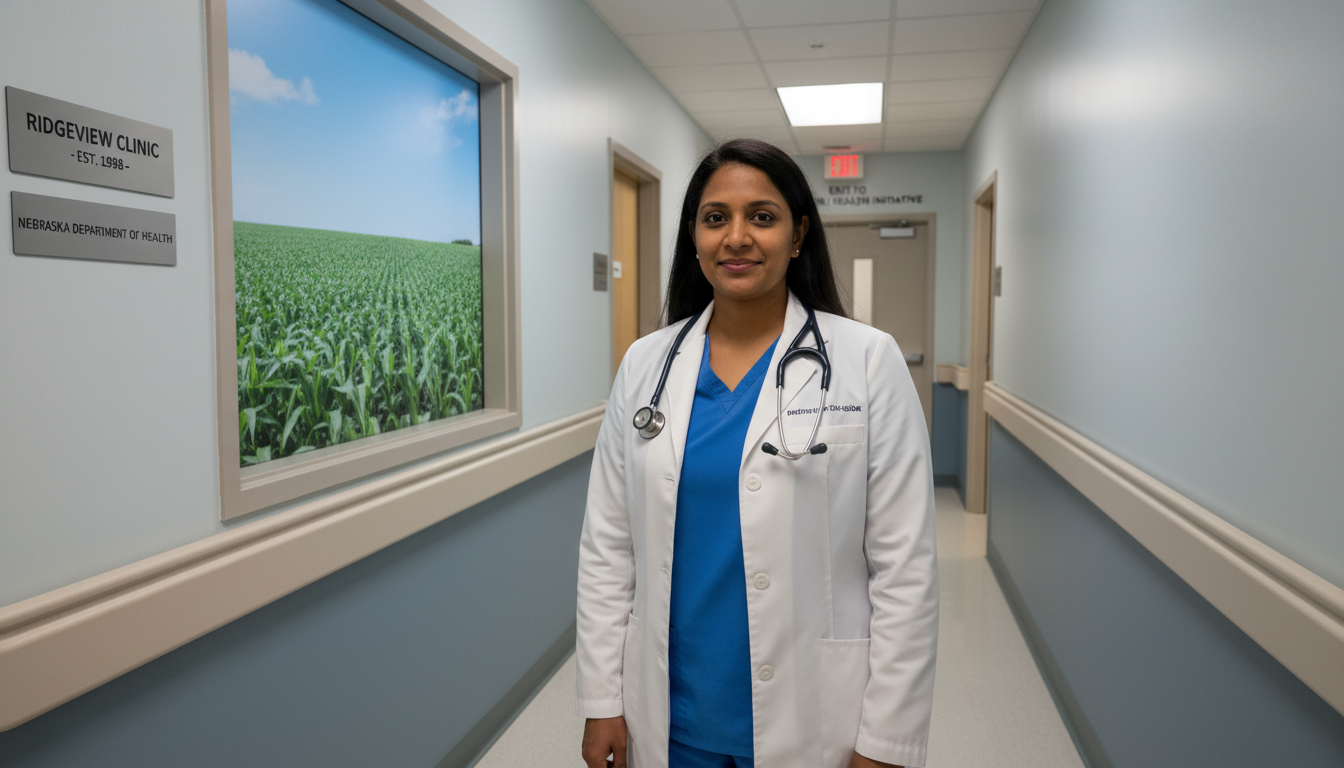
Understanding H-1B Sponsorship for IMGs in General Surgery
For many international medical graduates (IMGs) interested in general surgery residency in the United States, securing an H-1B visa can feel both attractive and confusing. You may have heard that surgery is “unfriendly” for IMGs, that most programs only sponsor J-1 visas, or that H-1B is “impossible” without USMLE Step 3. In reality, a subset of general surgery residency programs do sponsor H-1B status—and with the right strategy, you can target them effectively.
This IMG residency guide will walk you through:
- How H-1B works for residency (and how it differs from J-1)
- Eligibility requirements and common pitfalls
- How to identify H-1B residency programs in general surgery
- The meaning of H-1B cap exempt and why it matters for you
- Practical steps to strengthen your H-1B–focused surgery residency application
- Frequently asked questions from IMGs about H-1B sponsorship
The aim is to give you a realistic, actionable roadmap—not just generic advice—so you can position yourself as a strong candidate while navigating the immigration side intelligently.
1. H-1B vs J-1 for General Surgery IMGs: What You Must Know
Most IMGs enter U.S. graduate medical education (GME) on either a J-1 exchange visitor visa or an H-1B temporary worker visa. Understanding the core differences is essential before you focus your residency strategy on H-1B sponsorship.
1.1 J-1 vs H-1B: Key Differences
J-1 Visa (ECFMG-sponsored):
- The most common visa for IMGs in residency.
- Sponsored by ECFMG, not by the individual hospital.
- Typically easier for programs administratively.
- Usually requires return to home country for two years after training (the “two-year home residency requirement”), unless you get a J-1 waiver.
- J-1 waivers often require service in underserved areas (e.g., Conrad 30 programs) after training.
- Not dual-intent (more restrictive for long-term immigration planning).
H-1B Visa (Employer-sponsored):
- Sponsored directly by the residency program / hospital.
- Dual-intent: can pursue permanent residency while in H-1B status.
- No mandatory two-year home return requirement.
- Requires USMLE Step 3 passed before the H-1B petition is filed.
- More complex and costly for programs (legal fees, filing fees, institutional compliance).
- Requires a full, unrestricted state medical license or at least eligibility for a training license (rules vary by state).
For you as an IMG aspiring to general surgery residency, the practical implication is:
- Many general surgery programs default to J-1 only.
- A smaller, but important, subset will consider or actively sponsor H-1B for residency.
This is where targeted research and strategy become critical.
2. Core Requirements for H-1B Sponsorship in General Surgery Residency
Before you invest energy in building a H-1B-focused surgery residency match strategy, confirm that you can realistically meet the core requirements. These are general principles; always check individual program and state licensing rules.
2.1 Mandatory Requirements
USMLE Step 1 and Step 2 CK Passed
- No surprise here: required for ECFMG certification.
- Competitive general surgery programs often expect strong scores, especially for IMGs.
USMLE Step 3 Passed (Before H-1B Petition)
- This is the single biggest hurdle for many IMGs.
- For H-1B, you must have passed Step 3 before the visa petition is filed, which usually occurs in spring before PGY-1 start.
- In practice, most programs only seriously consider H-1B sponsorship if you already have Step 3 completed by the time they rank you.
ECFMG Certification
- You must be ECFMG-certified by the time residency starts.
- This includes primary source verification and satisfactory USMLE performance.
State Medical Board Requirements
- Some states require Step 3 for even a training license.
- Others allow a training license with only Step 1 and Step 2 CK.
- But for H-1B, USCIS typically expects that you are eligible to be licensed in that state, even if you are initially using a training license.
- Always check the specific state medical board for the programs you’re targeting.
Program and Institution Policy
- Even if you meet all regulatory requirements, you still need a program willing—and authorized—to sponsor H-1B.
- Some hospitals have institutional policies against H-1B for residents; others may restrict it to specific specialties or fellowship-level trainees.
2.2 Additional Factors That Programs Consider
Because H-1B is more resource-intensive than J-1, programs tend to sponsor H-1B only for IMGs they consider particularly strong or for critical recruitment needs. You improve your chances if you:
- Have high Step scores, ideally above national averages (especially Step 2 CK).
- Show consistent, relevant clinical experience in the U.S., particularly surgery-focused.
- Demonstrate excellent communication skills and comfort in high-acuity settings.
- Bring specific strengths (e.g., strong research track record in surgery, technical skills, leadership qualities).
In short: your profile does not have to be perfect, but for H-1B residency programs in general surgery, the bar is typically higher.

3. H-1B Cap-Exempt Programs and Why They Matter for Surgery
Not all H-1B visas are the same. Understanding the concept of H-1B cap exempt is crucial for IMGs targeting general surgery.
3.1 What Does H-1B Cap-Exempt Mean?
In the standard (cap-subject) H-1B system:
- There is an annual cap (currently 65,000 standard + 20,000 U.S. master’s cap).
- Petitions are usually subject to a lottery.
- Filing windows are limited (March lottery, October start dates).
However, many teaching hospitals and academic centers that sponsor residents are H-1B cap exempt:
- They are typically non-profit institutions affiliated with universities or are themselves non-profit academic medical centers.
- Cap-exempt employers can file H-1B at any time of the year, not tied to the regular lottery.
- Their H-1B slots are not counted against the annual cap.
For you, this means:
- Most large academic general surgery residency programs that sponsor H-1B are not subject to the lottery.
- This makes planning your training timeline more predictable.
3.2 Importance for Long-Term Career Strategy
Why does this matter beyond residency?
- If you move from a cap-exempt residency program to a private practice (cap-subject) employer, you may later need to enter the lottery to continue your H-1B employment.
- Conversely, if you stay within academic medicine or at another cap-exempt institution (e.g., university-affiliated hospital, certain public research institutions), you can often change employers without worrying about the cap.
When evaluating an H-1B sponsor list or potential employers, ask:
- Is the hospital cap-exempt?
- If yes, will future employers also be cap-exempt, or will I need to face the lottery later?
- What is the institution’s history of sponsoring permanent residency for faculty or senior staff?
Thinking beyond residency is especially important in general surgery, where post-residency paths often include fellowships, academic appointments, or hospital-employed practice.
4. Identifying H-1B-Friendly General Surgery Residency Programs
There is no single official, fully accurate H-1B sponsor list specific to general surgery residency. Databases exist, but they are often incomplete or outdated. You will need a combination of tools and direct communication.
4.1 Where to Start Your Search
FREIDA (AMA Residency & Fellowship Database)
- Use filters for “Sponsorship of J-1” and “Sponsorship of H-1B” where available.
- Not all programs keep this perfectly updated, but it gives a starting point.
- Focus on categorical general surgery programs first.
Program Websites
- Look under sections like:
- Eligibility & Requirements
- International Medical Graduates
- Visa Information
- Wording to look for:
- “We sponsor J-1 visas only”
- “We sponsor J-1 and H-1B visas”
- “H-1B considered on a case-by-case basis”
- Watch for differences between university and community programs. University academic centers are more likely to be H-1B cap exempt and have established processes.
- Look under sections like:
GME Office / HR Policies
- Some institutions have centralized GME or HR pages with immigration policies.
- Search for “Graduate Medical Education” + “visa” + institution name.
USCIS H-1B Employer Data
- USCIS and various independent sites sometimes publish lists of H-1B employers by year.
- Hospitals with recurring H-1B petitions (often cap-exempt) are more likely to be comfortable sponsoring H-1B residents/fellows.
4.2 How to Verify H-1B Sponsorship Policies
Once you have a short list of potential programs:
Email the Program Coordinator or Program Director
- Politely ask:
- Whether they currently sponsor H-1B for categorical general surgery residents.
- Whether H-1B is available for IMGs or only for U.S. graduates.
- Whether Step 3 must be completed by the time of application, interview, or ranking.
- Keep it concise and professional.
- Politely ask:
Ask About Recent History
- If possible, inquire whether any recent or current residents are on H-1B.
- Programs that have done it recently are more likely to repeat the process.
Clarify Any “Case-by-Case” Language
- Many program websites say “H-1B may be considered on a case-by-case basis.”
- In practical terms, this often means:
- They rarely sponsor H-1B, but may do so for exceptional candidates.
- They require Step 3 and strong reasons to deviate from their default J-1 policy.
- Ask clearly but respectfully:
- “Do IMG residents typically join on J-1, or have you recently sponsored H-1B for IMGs in general surgery?”
4.3 Typical Characteristics of H-1B-Favorable Surgery Programs
While there are exceptions, programs more likely to offer H-1B often share some traits:
- Large academic centers with robust GME infrastructure.
- Long-standing IMG presence in their residency.
- Located in states with:
- Reasonable training license policies.
- Good institutional experience with IMG visas.
- Programs that emphasize:
- Research, complex surgery, subspecialty exposure.
- Long-term recruitment and retention in their hospital system.
By contrast, smaller community programs or those with limited experience with IMGs may be less willing or able to manage H-1B for residents.

5. Application Strategy for IMGs Seeking H-1B in General Surgery
Because the intersection of “IMG,” “general surgery,” and “H-1B” is highly competitive, your strategy must be focused and realistic. Consider a tiered plan.
5.1 Timing Your USMLE Step 3
If you aim to start residency on H-1B:
- Plan to complete Step 3 before ERAS applications open (ideally by early summer of the application year).
- At the latest, aim to have Step 3 results available by interview season.
- This shows programs you are fully H-1B-eligible and reduces risk for them.
If you cannot complete Step 3 before application:
- You can still apply, but explicitly mention your Step 3 plan in your personal statement or emails.
- Understand that many programs will hesitate to consider H-1B if there’s uncertainty.
- You might focus your H-1B hopes more on prelim positions initially, then transition later.
5.2 ERAS Application Tactics
When applying through ERAS:
Targeted Program List
- Include:
- Known H-1B sponsors.
- Programs explicitly stating they consider H-1B.
- A balanced mix of university, university-affiliated community, and strong community programs.
- It’s reasonable for IMGs to apply to 60–100+ general surgery programs, with a subset specifically targeted for H-1B.
- Include:
Personal Statement and CV
- Clearly explain:
- Your interest in general surgery and your long-term commitment to a surgical career in the U.S.
- Any prior research, publications, or hands-on surgical experience.
- Avoid making the entire statement about your visa; instead:
- Briefly and professionally note your preference or eligibility for H-1B.
- Emphasize that you have Step 3 completed (if true) and are fully compliant with licensure requirements.
- Clearly explain:
Letters of Recommendation
- Prioritize strong U.S. letters from:
- General surgeons you have directly worked with.
- Academic surgeons at institutions known for training IMGs.
- Ask letter writers to comment on:
- Your technical aptitude.
- Your work ethic, teachability, and communication skills.
- Prioritize strong U.S. letters from:
Signaling Your H-1B Interest
- During interviews or follow-up emails, you may say:
- “I am eligible for both J-1 and H-1B status and have completed USMLE Step 3. I would greatly appreciate consideration for H-1B sponsorship, as my long-term plan is to build a surgical career in the U.S. without interruption.”
- Emphasize that you are flexible if they prefer J-1, unless you absolutely cannot accept a J-1 for personal or legal reasons.
- During interviews or follow-up emails, you may say:
5.3 Prelim vs Categorical Strategy
Because categorical general surgery spots are highly competitive, some IMGs successfully enter via preliminary (prelim) positions.
For H-1B-seeking IMGs:
- Some institutions are more willing to sponsor H-1B for categorical residents than for prelims, because prelims are only 1–2 years.
- However, others may be open if they see a strong chance you’ll transition into a categorical spot.
- If you accept a J-1 prelim and later secure a categorical spot at the same or a different program, switching to H-1B can be complex but is sometimes possible with careful planning.
Think through:
- Your tolerance for uncertainty.
- Your willingness to risk J-1 and then later seek a waiver or transition.
- Your long-term plans for permanent residency or practice location.
6. Practical Considerations and Common Pitfalls
Even strong applicants can be derailed by avoidable issues. Being aware of these pitfalls can save you time and frustration.
6.1 Over-Reliance on Outdated H-1B Sponsor Lists
- Online lists labeled “H-1B-friendly programs” or “H-1B sponsor list” can be years out of date.
- Program policies change frequently with:
- New GME leadership.
- Institutional restructuring.
- Changes in immigration law or local legal advice.
- Always verify directly with the program or GME office rather than relying solely on third-party lists.
6.2 Ignoring State Licensing Nuances
- Some states have stricter requirements (e.g., Step 3 required before starting PGY-1).
- Others have language or procedural hurdles for IMGs.
- If you aim for H-1B, make sure your licensure eligibility in that state is clear.
6.3 Late Step 3 Completion
- Waiting too long to take Step 3 can:
- Limit your H-1B options.
- Force you into J-1 even at programs that might otherwise consider H-1B.
- If you know you want H-1B, treat Step 3 as a priority—start planning while still in medical school or early in your clinical experience.
6.4 Focusing Only on H-1B at the Expense of Program Fit
- A strong surgery residency match strategy balances:
- Visa feasibility.
- Training quality.
- Resident support and well-being.
- Don’t overlook an excellent J-1 program that could lead to a strong J-1 waiver job and a stable career.
- Likewise, don’t choose a weak or toxic environment solely because they offer H-1B.
6.5 Not Consulting an Immigration Attorney
- While residency programs often have institutional attorneys, as an IMG you may benefit from independent legal advice, especially if:
- You have complicated immigration history.
- You have dependents (spouse/children).
- You are transitioning from another U.S. status (F-1, H-4, etc.).
- A short consultation can clarify:
- Risks of J-1 vs H-1B in your specific situation.
- Long-term green card strategies as a surgeon.
FAQs: H-1B Sponsorship for IMGs in General Surgery
1. Is it realistic for an IMG to match into general surgery on an H-1B visa?
Yes—but it is more challenging than matching on a J-1. Only a subset of general surgery programs sponsor H-1B, and they tend to be selective. Your chances are higher if you:
- Have strong USMLE scores (especially Step 2 CK).
- Complete Step 3 before or early in the application cycle.
- Have robust U.S. clinical experience in surgery with strong letters.
- Apply broadly and strategically to known H-1B-friendly or “H-1B-considering” programs.
Many IMGs do match into general surgery each year, but only a fraction of them are on H-1B. It is realistic, but you must plan ahead.
2. Do I absolutely need USMLE Step 3 done before applying for H-1B sponsorship?
For practical purposes, yes. Legally, Step 3 must be passed by the time the H-1B petition is filed. In reality:
- Most programs will not commit to H-1B sponsorship for a candidate who has not yet passed Step 3.
- Some may invite you to interview but will rank you lower or request J-1 if Step 3 is pending.
- Completing Step 3 and having the result at the time of interviews significantly strengthens your case.
If you cannot take Step 3 before applying, clearly communicate your plan and timeline—but understand that this limits H-1B options.
3. Can I switch from J-1 to H-1B during or after residency?
Switching from J-1 to H-1B without fulfilling or waiving the two-year home residency requirement is typically not allowed. Your main options are:
- Complete the two-year home country requirement, then later apply for H-1B.
- Obtain a J-1 waiver (e.g., through a Conrad 30 program or other federal waiver sponsor) and then change to H-1B for the waiver job.
- In some limited scenarios (e.g., exceptional hardship or persecution waivers), you can request a waiver on different grounds.
Switching mid-residency from J-1 to H-1B is usually not straightforward and often not possible without first resolving the J-1 requirement. Consult an immigration attorney for your specific case.
4. Are H-1B residency programs always better than J-1 programs?
Not necessarily. The quality of training, operative exposure, mentorship, and institutional culture matter more for your surgical development than visa type alone. H-1B is advantageous because:
- It avoids the two-year home residency requirement.
- It is dual-intent and may align better with long-term immigration goals.
However:
- Some top-tier surgery programs only sponsor J-1 and still produce outstanding surgeons with strong career paths and successful J-1 waivers.
- A mediocre H-1B program may not compensate for poor training or burnout.
The best approach is to consider both training quality and visa strategy together and, if possible, keep options open rather than treating H-1B as the only acceptable path.
Navigating H-1B sponsorship programs for international medical graduates in general surgery requires both academic excellence and informed planning. By understanding the nuances of H-1B cap exempt institutions, carefully targeting H-1B residency programs, and preparing your profile with Step 3, strong U.S. experience, and clear communication, you can significantly improve your chances of achieving a successful surgery residency match on H-1B status—and building a stable surgical career in the United States.