Understanding H-1B Sponsorship in Neurology for IMGs
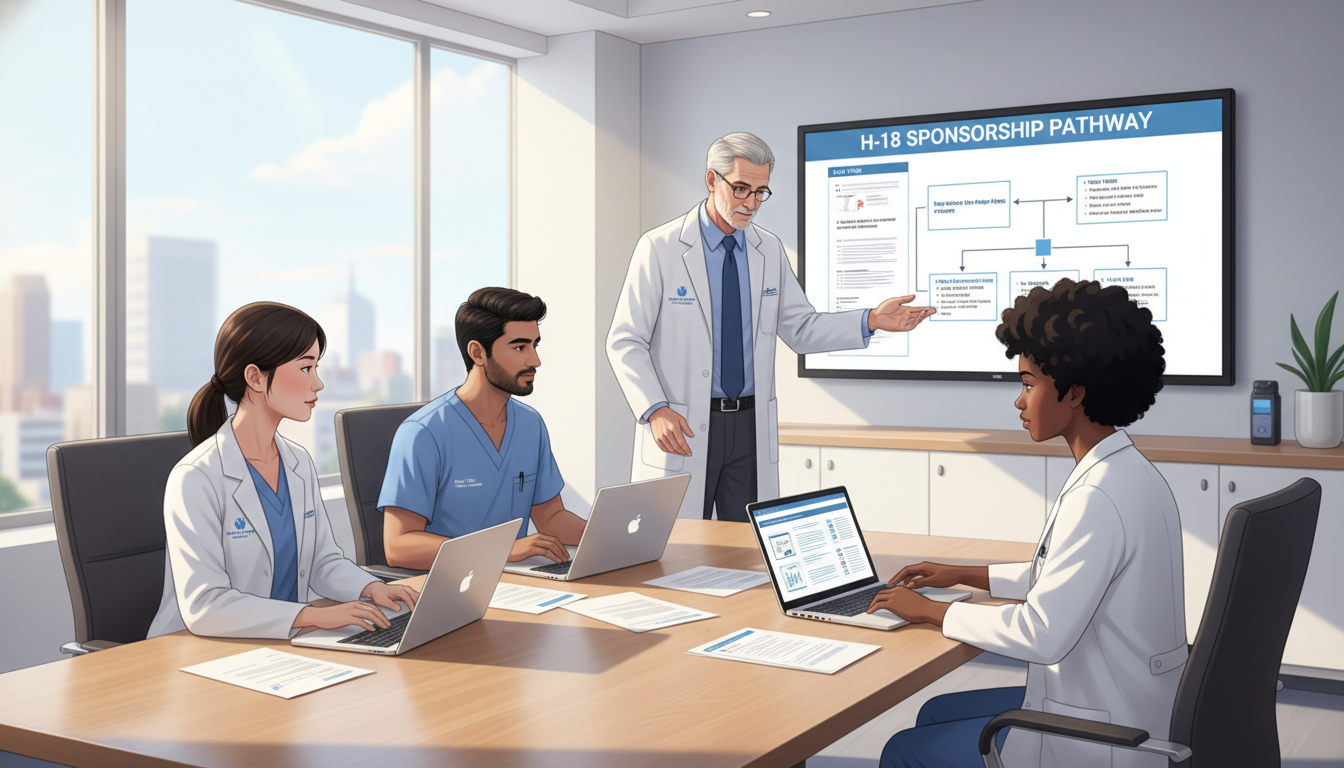
For an international medical graduate (IMG) targeting neurology residency in the United States, understanding H-1B sponsorship is just as critical as understanding the Match itself. A strong USMLE score and an excellent CV will not help if you apply mostly to programs that cannot or do not sponsor your visa type. This IMG residency guide focuses specifically on H-1B sponsorship programs in neurology—how they work, how to find them, and how to strengthen your application for a neuro match under H-1B.
Neurology has become increasingly competitive, and many programs default to J‑1 sponsorship via ECFMG. However, a meaningful subset of neurology residency programs will sponsor H‑1B visas, including some that are H‑1B cap exempt. For the right applicant, this can open a pathway to long‑term practice in the US without the J‑1 home‑country requirement.
This article will walk you through:
- Core concepts of H‑1B visas for physicians in residency
- Pros and cons of H‑1B vs J‑1 for an international medical graduate
- How to systematically identify neurology residency programs that sponsor H‑1B
- Typical requirements and eligibility criteria
- Application strategies and examples tailored to neurology IMGs
- Key FAQs all IMGs should consider before committing to the H‑1B pathway
H-1B Basics for Neurology Residency Applicants
What is the H‑1B visa for physicians?
The H‑1B is a temporary, employment‑based visa for specialty occupations. For residents, the “employer” is usually the teaching hospital or university that runs the residency program. In neurology residency, the visa is usually issued in 1–3 year increments, with a total maximum of 6 years (though details can vary with later fellowship and green card processes).
Key characteristics that matter to neurology IMGs:
- Employer-specific: The visa ties you to a specific institution and position (neurology resident). Changing programs or adding moonlighting requires amendments.
- Specialty requirement: The physician role clearly qualifies as a specialty occupation.
- Dual intent: Unlike J‑1, H‑1B allows dual intent—you can pursue permanent residency (green card) while on H‑1B.
H‑1B Cap vs Cap‑Exempt Programs
Understanding the H‑1B cap is essential when building your neurology residency application list:
- H‑1B cap: Most private employers fall into this category, limited to 65,000 new H‑1Bs per year (plus 20,000 US master’s cap). These are selected by lottery.
- H‑1B cap exempt: Many academic medical centers qualify as cap exempt because they are:
- Non‑profit institutions of higher education, or
- Non‑profit entities affiliated with such institutions, or
- Government research organizations
Most university‑based neurology residency programs sponsoring H‑1B are H‑1B cap exempt, which means:
- You are not subject to the national H‑1B lottery.
- H‑1B petitions can be filed year‑round.
- This significantly reduces risk and timing stress for IMGs starting residency.
When people talk about an “H‑1B sponsor list,” for neurology this typically refers to a list of academic or major teaching hospitals that:
- Are cap‑exempt, and
- Have a track record of sponsoring H‑1B visas for residents or fellows
This IMG residency guide will help you understand how to identify these programs and evaluate if they are realistic options for you.
H-1B vs J-1 for Neurology IMGs: Strategic Comparison
Advantages of the H‑1B Pathway
For an international medical graduate in neurology, the H‑1B pathway offers several strategic benefits:
No two‑year home residency requirement
J‑1 physician visas carry a mandatory two‑year home‑country physical presence requirement at the end of training, unless you obtain a waiver. H‑1B has no such built‑in requirement.Easier transition to long‑term practice
Because of dual intent, you can proceed directly toward:- Employment in neurology (e.g., academic, hospital‑employed, or group practice)
- Green card sponsorship
without first handling J‑1 waiver processes.
Flexibility in fellowship planning
If you’re targeting neurology subspecialties (e.g., epilepsy, neurocritical care, neuromuscular, stroke), being on H‑1B may give you more options for fellowship programs that also sponsor H‑1B, especially in academically strong centers.No J‑1 waiver job constraints
Under J‑1, many waiver jobs are restricted by geography (e.g., underserved or rural areas) and service obligations (often 3 years). H‑1B residency and fellowship training does not automatically impose that.
Potential Disadvantages and Challenges
However, H‑1B is not always the better choice; you should evaluate:
USMLE Step 3 requirement
Most neurology residency H‑1B sponsors insist on USMLE Step 3 passed before rank list certification (sometimes even before interview invitation). This is a major filter.- If you will not complete Step 3 in time, J‑1 programs may be your only viable option.
Program availability
- A majority of neurology programs only sponsor J‑1 visas via ECFMG.
- Some programs list “J‑1 preferred, limited H‑1B” or “H‑1B only in exceptional cases.”
This narrows your pool compared to J‑1 applicants.
Legal and cost burden for the program
H‑1B requires:- Filing fees (which programs usually must pay)
- Legal counsel time
- Prevailing wage and Labor Condition Application (LCA) compliance
Some programs avoid H‑1B sponsorship to sidestep this complexity.
Moonlighting and secondary positions
Because H‑1B is employer‑specific, extra paid work in outside institutions is more complicated than under J‑1. However, many programs don’t allow significant moonlighting anyway, especially in PGY‑2 neurology.
When H‑1B Makes the Most Sense
H‑1B is a particularly rational choice if:
- You have or will have USMLE Step 3 passed by the time rank lists are due.
- You know you want to remain in the U.S. long term without the uncertainty of J‑1 waiver processes.
- You are targeting academic neurology careers where H‑1B cap exempt institutions can later sponsor you again (e.g., staff neurologist, clinician‑scientist).

How to Find H-1B-Friendly Neurology Residency Programs
There is no single official government “H‑1B sponsor list” for neurology residencies, but you can combine multiple strategies to build a reliable set of targets.
1. Review Program Websites Thoroughly
Most neurology residency sites now have a “For Applicants,” “Eligibility,” or “International Medical Graduates” section. Look for key phrases:
- “We sponsor J‑1 and H‑1B visas”
- “We are able to support H‑1B (cap exempt) for qualified applicants”
- “Visa type: J‑1 (through ECFMG). H‑1B may be considered in select cases.”
- Or explicitly: “We do not sponsor H‑1B visas”
Actionable steps:
- Create a spreadsheet with columns:
- Program name
- Location
- University vs community
- Visa policy text (copy/paste)
- Step 3 requirement
- Notes / contacts / last update date
- Mark clearly:
- Green: H‑1B regularly sponsored
- Yellow: H‑1B considered, but with caveats
- Red: J‑1 only / H‑1B not sponsored
2. Use FREIDA and ERAS Filters (With Caution)
Tools like FREIDA and ERAS may list visa types accepted by each program. Use them as starting points, not as final truth.
- Filter neurology programs by “Accepts H‑1B.”
- Then verify each program’s current policy on the official program website.
- Policies change, especially after institutional legal reviews or leadership turnover.
3. Check for Academic, Non-Profit, and University Affiliations
As a rule of thumb, H‑1B cap exempt eligibility is more common at:
- University‑owned hospitals
- Non‑profit academic medical centers
- Large university‑affiliated teaching hospitals
Purely community hospitals or for‑profit systems are less likely to handle H‑1B for residency but may still sponsor J‑1. When in doubt, assume nothing—ask.
4. Contact Program Coordinators and Directors Early
If the website is unclear or outdated, email the program coordinator with a focused question. Example:
Subject: Visa sponsorship for Neurology Residency (IMG applicant inquiry)
Dear [Coordinator Name],
I am an international medical graduate planning to apply to your neurology residency program in the upcoming ERAS cycle. Could you kindly confirm whether your program sponsors H‑1B visas for incoming PGY‑2 neurology residents? If so, is USMLE Step 3 required before rank list certification?
Thank you very much for your time and assistance.
Sincerely,
[Your Name], MD
Track all responses in your spreadsheet. Over time, you will build your personal, accurate “H‑1B sponsor list” for neurology.
5. Leverage IMG Networks and Alumni
Current residents and recent graduates are valuable sources:
- Join neurology‑focused IMG forums, WhatsApp or Telegram groups, and social media communities.
- Ask specifically:
- “Which neurology programs are currently sponsoring H‑1B for residents?”
- “Where are you training, and what visa are you on?”
Look for patterns: if multiple IMGs report that the same program reliably sponsors H‑1B, it’s a strong indication that the program is truly IMG‑friendly under this visa category.
Typical Requirements for Neurology H-1B Sponsorship
While each institution sets its own rules, several common requirements apply to international medical graduates pursuing H‑1B in neurology residency.
1. USMLE Step 3
This is usually non‑negotiable for H‑1B:
- Many neurology residencies require Step 3 passed before they can file the H‑1B petition, which must be completed in time for you to start PGY‑2 neurology.
- Some programs insist on Step 3 before ranking you. Others will rank you conditionally, contingent on Step 3 success by a fixed date.
Practical timing advice:
- Plan to take Step 3 before or during the ERAS season if you aim for H‑1B.
- If you will not have results by February, prioritize J‑1‑sponsoring programs or programs that explicitly accept pending Step 3 at Match time.
2. ECFMG Certification and State License Eligibility
To qualify for H‑1B physician roles, you generally must:
- Hold valid ECFMG certification.
- Be eligible for the state’s required license for trainees (training license, institutional permit, or equivalent).
Programs often coordinate with their GME office and state boards to confirm your eligibility before proceeding with the petition.
3. Degree and Credential Verification
Standard requirements:
- Recognized medical degree (MD/MBBS equivalent)
- Primary source verification via ECFMG
- If your degree title or path is non‑traditional, anticipate extra scrutiny and allow more time.
4. English Proficiency
While not always listed as a formal prerequisite for H‑1B, neurology programs expect:
- Fluent clinical English
- Clear communication for patient care, handoffs, and neurology exams (where subtle language cues matter)
For some states, additional English test requirements or proof may be needed for licensure—verify early.
5. Program-Specific H-1B Rules
Expect program‑level variations, including:
- Cap on total number of H‑1B residents per year
- Priority for candidates with very strong applications (high USMLE scores, strong neurology exposure, meaningful research)
- Requirement that the resident covers some costs (e.g., premium processing), although many institutions appropriately pay all employer‑required fees.
Always clarify:
- Who pays which fees?
- What happens if there are delays in H‑1B approval?
- Is there a backup J‑1 option?
Application Strategy: Maximizing Your Neuro Match Chances with H-1B
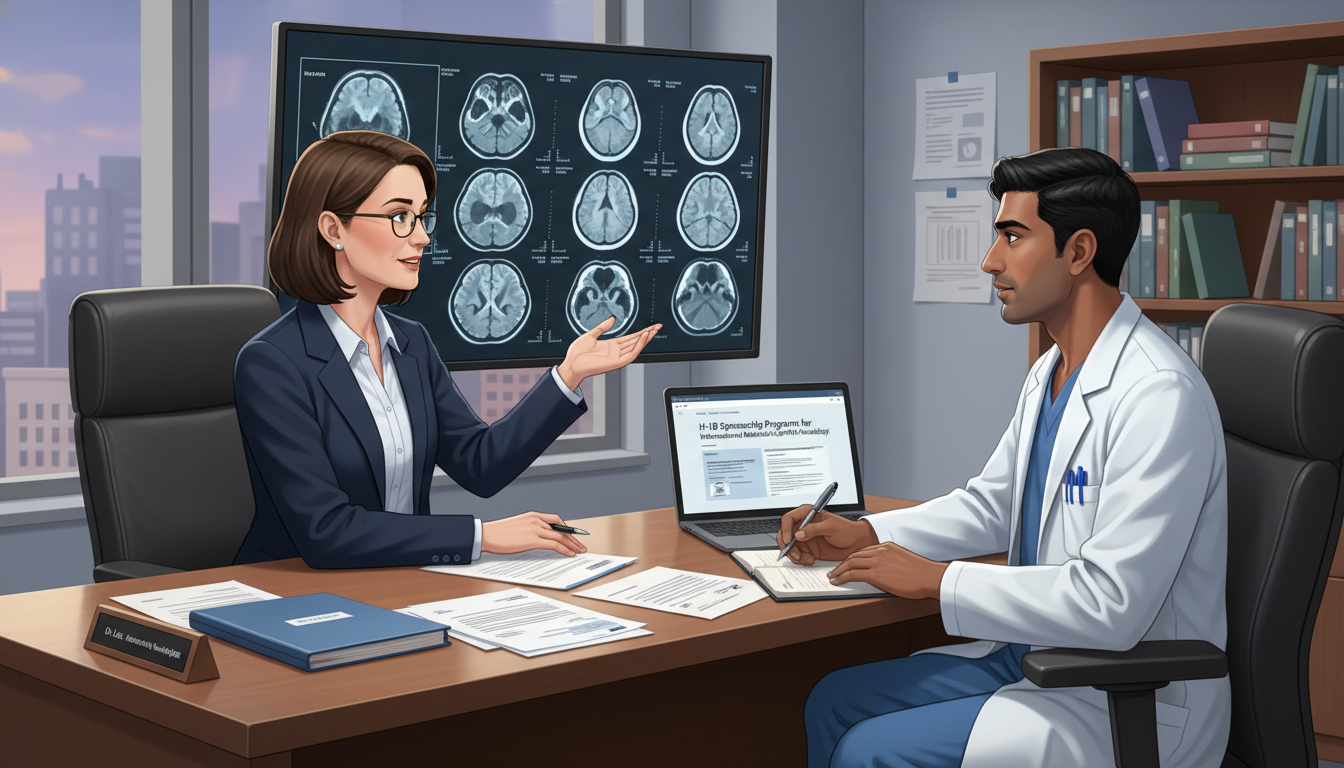
Securing an H‑1B‑sponsoring neurology spot is a combination of visa planning, application targeting, and academic strength.
1. Build a Tiered Application List
Balance risk and opportunity:
Tier 1: H‑1B-Friendly Academic Neurology Programs
- University‑based, cap exempt
- Confirmed to sponsor H‑1B for IMGs
- You meet Step 3 and profile requirements
Tier 2: Programs that “May Consider” H‑1B
- Website says “limited H‑1B sponsorship” or “case‑by‑case”
- Strongly favor well‑qualified applicants
- Apply if your profile is competitive and you can explicitly express interest and readiness (Step 3 passed, etc.)
Tier 3: High-Quality J‑1 Programs (Safety Net)
Even if you prefer H‑1B, you should not rely purely on H‑1B programs unless your application is extremely strong.- Include a reasonable number of J‑1‑sponsoring neurology programs to protect against unmatched outcome.
This diversified approach ensures that your desire for H‑1B does not jeopardize matching into neurology altogether.
2. Highlight “H‑1B-Ready” Attributes
In your ERAS application, personal statement, and interview conversations, subtly show that you are logistically prepared for H‑1B:
- List USMLE Step 3 result prominently if passed.
- Mention your interest in long‑term academic or clinical career in the US (dual intent alignment).
- If asked about visa, state clearly and calmly:
- “I am open to J‑1, but I would particularly value the opportunity to train under an H‑1B if your institution supports it, as I’ve already passed Step 3 and am committed to a long‑term neurology career in the U.S.”
Avoid sounding demanding or inflexible; programs respond poorly to rigid visa ultimatums.
3. Strengthen Neurology-Specific Credentials
Because H‑1B sponsorship adds administrative burden, programs favor H‑1B‑seeking IMGs who present high value:
- US clinical experience in neurology: Observerships, externships, or sub‑internships in neurology or internal medicine with neurology exposure.
- Neurology research: Publications, posters, or case reports in stroke, epilepsy, movement disorders, neuroimmunology, etc.
- Targeted letters of recommendation: Strong letters from US neurologists significantly help your neuro match chances, especially at academic, H‑1B cap exempt institutions.
4. Communicate Early with Programs that Interview You
If you receive interview invitations from programs that do not clearly outline their visa policy:
- Politely clarify before or during the interview:
- “I am an IMG and currently considering both J‑1 and H‑1B options. Does your program sponsor H‑1B visas for neurology residents?”
This helps:
- Avoid ranking programs that later inform you they cannot meet your visa needs.
- Show that you are organized and aware of the process.
5. Plan Beyond Residency: Think About Fellowship and Early Career
If your neurology pathway includes fellowship (e.g., vascular neurology, neurocritical care, epilepsy):
- Research whether your potential future fellowships typically sponsor H‑1B or rely primarily on J‑1.
- Many neurology fellowships at academic centers are also H‑1B cap exempt, which can make the entire trajectory—from residency to fellowship to faculty—feasible on H‑1B.
Consider meeting with an immigration attorney early in your residency (once you match) to map out:
- Timing of H‑1B extensions
- Possibility of transitioning from cap exempt H‑1B (academic center) to cap subject H‑1B (private practice) later
- Optimal timing for green card strategies, especially if you see yourself as a long‑term academic neurologist
Frequently Asked Questions (FAQ)
1. Is it realistic for an IMG in neurology to rely only on H-1B residency programs?
For most IMGs, relying only on H‑1B programs is risky. Neurology is moderately competitive, and the number of programs actively sponsoring H‑1B is smaller than those offering J‑1. Unless you are a very strong candidate (excellent USMLEs including Step 3, robust US neurology experience, strong letters, research), it is safer to:
- Apply broadly to both H‑1B and J‑1 programs, and
- Prioritize H‑1B programs in your rank list if you receive multiple offers.
Balancing your applications protects you from going unmatched while still maximizing H‑1B opportunities.
2. Do all H-1B neurology residency programs require USMLE Step 3 before interviews?
No. Policies vary:
- Some programs require Step 3 completed before they will even consider H‑1B sponsorship, but may still interview you while it’s pending.
- Others demand Step 3 passed before rank list finalization or before filing the H‑1B petition.
- A minority may be more flexible, but this is increasingly rare.
When you aim for H‑1B, treat Step 3 as a core part of your application timeline, not an optional extra.
3. Are H-1B cap exempt neurology programs better than cap-subject ones?
“Better” depends on your perspective:
Cap exempt neurology programs (usually academic centers)
- Advantage: No H‑1B lottery; more predictable start to residency.
- Advantage: Often high academic exposure, research, and subspecialty experience.
- Potential limitation: May be located in specific regions or large academic cities only.
Cap subject neurology positions (less common in residency; more in private practice jobs later)
- In residency, they rarely rely on lottery due to academic affiliations, but if they do, there is an added layer of uncertainty.
- After training, if you move to purely private practice, you will likely face the cap issue.
For residency, cap exempt is almost always preferable. For later practice, discuss strategic transitions with immigration counsel.
4. If I match to a J-1 neurology residency, can I switch later to H-1B?
Switching from J‑1 to H‑1B during residency is often not straightforward:
- ECFMG‑sponsored J‑1 physician status is governed by specific agreements and federal rules.
- Converting mid‑training usually requires complex waiver or status changes and is not routinely done.
However, after completing J‑1 neurology residency and possibly fellowship, you can:
- Seek a J‑1 waiver job (often in underserved areas) and then later move to H‑1B or permanent residence, or
- If you obtain a J‑1 waiver earlier through a fellowship position, continue that pathway.
If avoiding the J‑1 home‑country requirement is a high priority, it’s better to plan for H‑1B from the start, rather than assuming you will switch mid‑stream.
By understanding how H‑1B works, identifying neurology programs with friendly policies for IMGs, and strategically planning your exams and application materials, you can substantially increase your chances of securing an H‑1B‑sponsored neurology residency. This requires extra effort—especially around Step 3 and program research—but for many international medical graduates, it creates a smoother path to a long‑term neurology career in the United States.