Understanding H-1B Sponsorship for Neurology Residency as a Non-US Citizen IMG
For a non-US citizen IMG, neurology is one of the more attainable specialties in terms of visa sponsorship, but the details of H-1B sponsorship can be confusing and high‑stakes. Neurology residency programs vary widely in their policies, and misunderstanding those policies can cost you interviews and ultimately a match.
This article breaks down H-1B sponsorship specifically for foreign national medical graduates targeting neurology residency in the United States. You’ll learn how H-1B works in residency, what makes neurology unique, how to find H-1B-friendly programs, and how to plan your exam, ECFMG, and application timeline for the best possible neuro match.
H-1B vs J-1 for Neurology: What Non-US Citizen IMGs Must Know
Most non-US citizen IMGs in neurology residency will be on one of two visas: J‑1 or H‑1B. Understanding the trade‑offs is essential before you build your strategy.
Core Differences in Simple Terms
J-1 (ECFMG-sponsored)
- Most common visa for residency and fellowship
- Sponsored by ECFMG, not by the program directly
- Typically has a 2‑year home-country physical presence requirement after training
- More flexible for programs (less paperwork, no prevailing wage requirement)
- Good option if you are open to doing a waiver job later (e.g., underserved area) or returning to home country
H-1B (employer-sponsored)
- Dual-intent visa (you can pursue permanent residency while on H-1B)
- Program is your employer and visa sponsor
- No automatic 2‑year home-country requirement
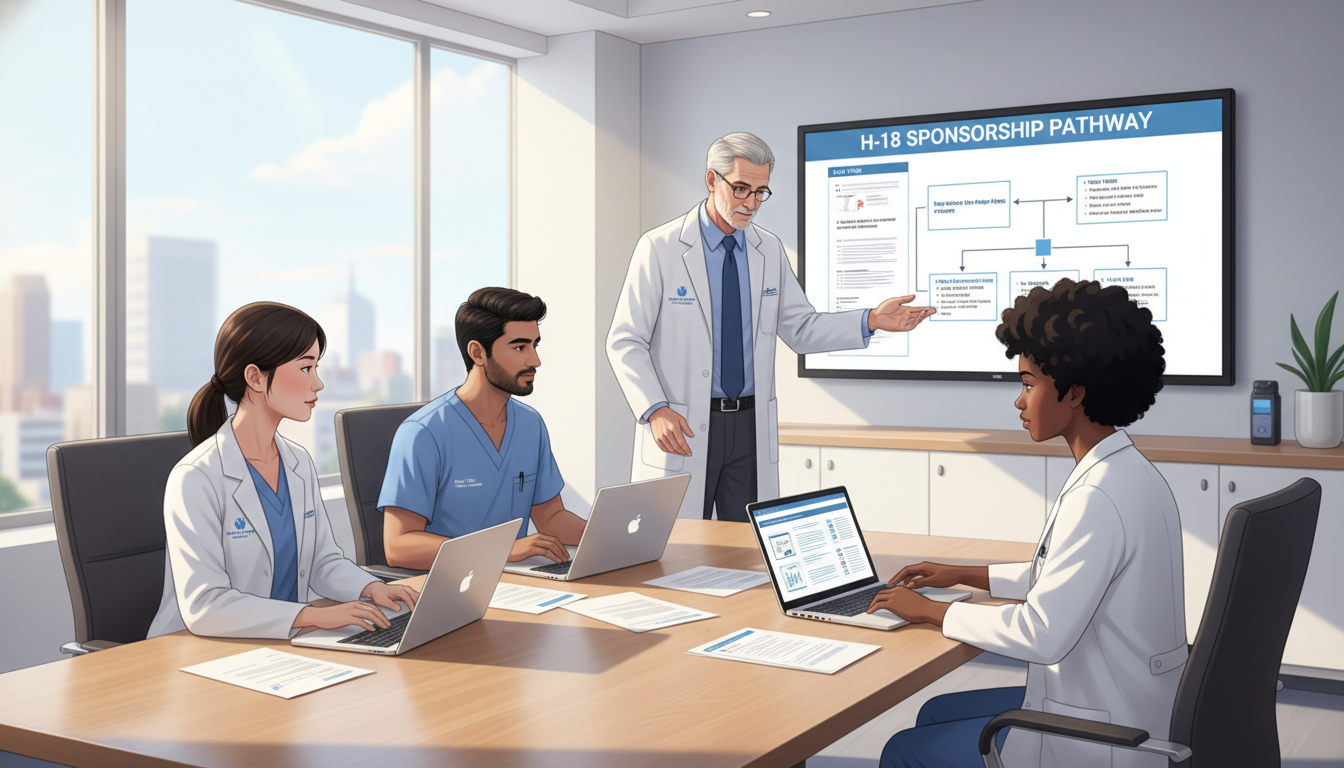
- Requires passing all USMLE Steps including Step 3 before starting residency
- Must be paid at or above prevailing wage, adding cost/administrative burden to the program
- Limited maximum duration (typically 6 years total across all H-1B statuses)
For neurology, many academic programs default to J‑1, but there is a significant subset that offers H‑1B, especially for highly qualified foreign national medical graduates who have completed USMLE Step 3 early.
Why Neurology is Relatively Favorable for H-1B
Compared to ultra‑competitive specialties, neurology has:
- A moderately competitive match, with room for strong IMGs
- Several major academic centers and large teaching hospitals (often H‑1B cap exempt)
- A culture that values subspecialization and research, making long‑term retention of trainees (e.g., via H‑1B and later green card) attractive to institutions
Programs that see you as a future epilepsy, stroke, neurocritical care, or movement disorders specialist on their faculty often view H-1B sponsorship as an investment rather than a liability.
Who Should Strongly Consider H-1B?
You may want to favor H‑1B residency programs if:
- You know you want to stay in the US long term and pursue a green card
- You are not comfortable with the J‑1 2‑year home-country requirement or the uncertainty of waiver jobs
- You can realistically pass USMLE Step 3 before ranking deadlines
- You are prepared to be highly organized with documentation and timelines
If you are less certain about long-term US plans or cannot complete Step 3 in time, J‑1 remains a valid and often more accessible route into neurology.
How H-1B Residency Programs Work in Neurology
H‑1B residency programs share the same broad rules, but neurology has some important nuances you should understand before you apply.
H-1B Cap-Exempt vs Cap-Subject Programs
You will see terms like H-1B cap exempt and cap subject. These are crucial for your strategy.
H-1B cap-exempt institutions
- Typically:
- Non-profit academic medical centers
- University hospitals
- Non-profit research institutions
- Some major teaching hospitals with university affiliation
- Can file H‑1B petitions any time of year
- Not subject to the national annual H‑1B lottery (cap)
- Most neurology residencies at large academic centers fall in this category
- Great for residency and often for subsequent neurology fellowship
- Typically:
Cap-subject H-1B employers
- Many private hospitals, community practices, non-academic employers
- Subject to the annual lottery, usually filed in March with October start
- Not usually relevant during residency itself, but very relevant for your first attending job if it’s outside academia
As a neurology residency applicant, your target list will mostly consist of H-1B cap-exempt programs. This is a key advantage: it protects you from the uncertainty of the lottery during training years.
H-1B Duration and Neurology Training Length
Typical structure:
- Adult neurology residency: 4 years total
- 1 year preliminary or categorical internal medicine (PGY‑1)
- 3 years neurology (PGY‑2 to PGY‑4)
- H‑1B maximum: Generally 6 years (with some exceptions/extensions in special circumstances)
In practice for a neurology resident:
- If you start residency on H‑1B at PGY‑1, a standard 4‑year residency fits comfortably within 6 years.
- However, if you then pursue H‑1B-funded fellowship (e.g., epilepsy, stroke, neurocritical care), you need careful planning:
- Some people use J‑1 for fellowship after H‑1B residency (less ideal if you want a green card path).
- Others transition to employer-sponsored green card during residency or early fellowship to avoid hitting H‑1B year limits.
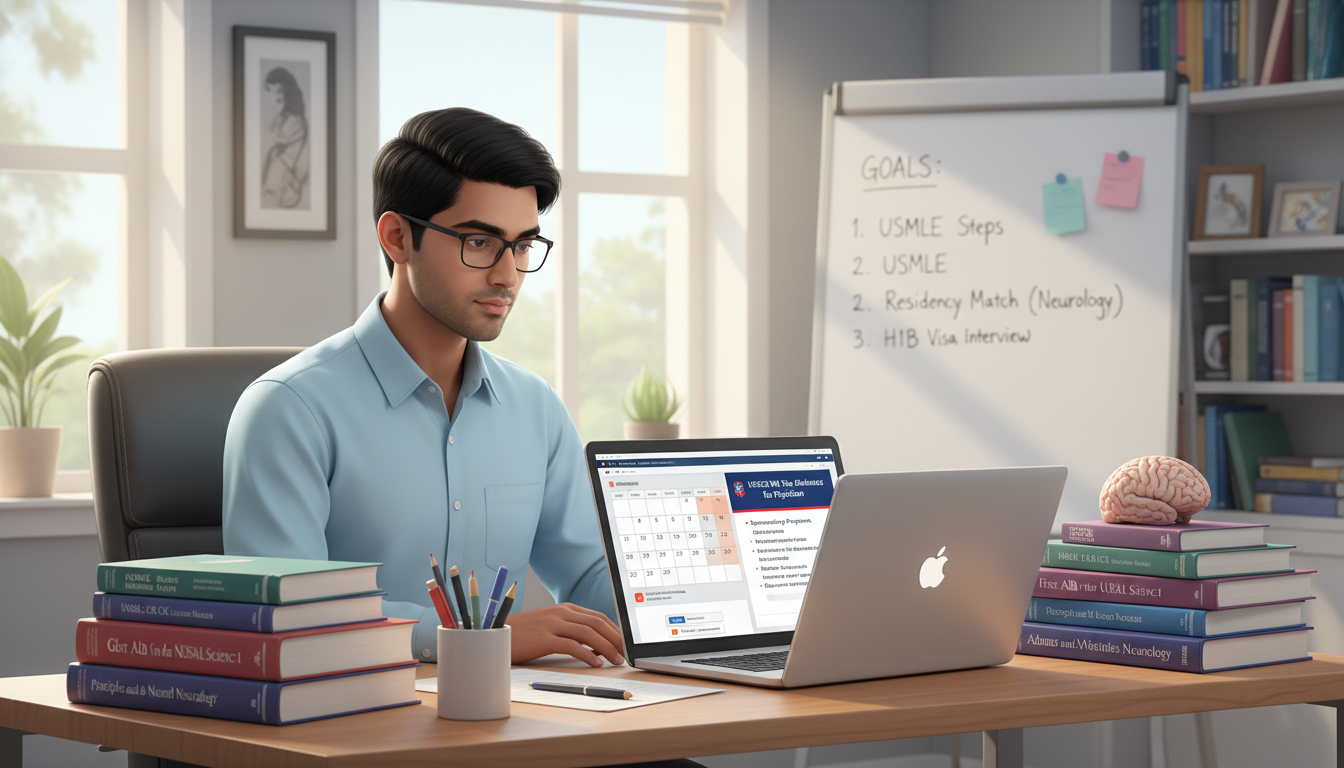
USMLE Step 3 and Timing for H-1B Neurology Programs
Most H‑1B neurology residency programs require:
- Passing USMLE Step 1 and Step 2 CK before applying
- Having at least an attempted Step 3 score (and often passing Step 3) before they can file the H‑1B petition
Many neurology programs specify in their requirements:
- “Step 3 must be passed by rank list deadline”
- Or “Step 3 required before contract issuance/visa processing”
Practical implications for a non-US citizen IMG:
- You should schedule Step 3 early enough so you can receive your score before January–February of the match year (when many rank lists are finalized).
- Since the H‑1B petition needs Step 3, late Step 3 results can force you into the J‑1 route even at an H‑1B-friendly program.
Example timeline for a typical IMG path into neurology:
- Year 0–1: Finish medical school, take Step 1 and Step 2 CK
- Year 1 (spring–summer): Do US clinical experience (if possible), prepare ERAS
- Year 1 (September): Submit ERAS for neurology residency
- Year 1 (winter): Interview season (November–January)
- Year 2 (early): Take Step 3 no later than December–January, so that a passing score is available by February or earlier
- Year 2 (March): Rank list and Match
- Year 2 (July): Start residency, with H‑1B processed in the months before July 1
If you are later in your training path (e.g., already working in another country or doing research), adjust accordingly but keep this structure in mind.
Building a Target List: How to Find H-1B-Friendly Neurology Programs
No official governmental “H‑1B sponsor list” exists just for neurology residencies. However, you can systematically identify neurology residency programs that are friendly to non-US citizen IMGs and willing to sponsor H‑1B.
Step 1: Use Official Program Websites and FREIDA
Start with:
FREIDA (AMA Residency & Fellowship Database)
- Filter by specialty: Neurology
- Filter by IMGs accepted / visa types (if available)
- Some entries specify: “We sponsor J‑1 and H‑1B,” “J‑1 only,” or “No visa sponsorship”
Individual program websites
Look under:- “Eligibility & Requirements”
- “International Medical Graduates”
- “Visa Information”
Common wording you might see:
- “We sponsor J‑1 and H‑1B visas for eligible candidates”
- “Our institution sponsors J‑1 visas only; H‑1B sponsorship is not available”
- “H‑1B sponsorship considered for extraordinary candidates with Step 3 at time of application”
Step 2: Verify Directly With the Program
Program websites are not always up-to-date. For a serious H‑1B strategy, you should confirm directly:
- Email or call the program coordinator or program director
- Ask clear, concise questions:
Sample email:
Dear [Coordinator/Dr. X],
I am a foreign national medical graduate interested in applying to your neurology residency program. I am a non-US citizen IMG who will have passed USMLE Step 3 before the upcoming Match.
Could you please confirm whether your program and institution currently:
- Sponsor H‑1B visas for incoming residents?
- Accept non-US citizen IMGs for H‑1B sponsorship?
Thank you for your time and guidance.
Sincerely,
[Your Name], MD
ECFMG certified / USMLE Steps completed
Write this before applying widely so you can optimize your ERAS list.
Step 3: Prioritize H-1B Cap-Exempt Academic Centers
Many of the most IMG-friendly H‑1B neurology programs are at:
- University hospitals
- Large non-profit teaching hospitals
- Academic-affiliated health systems
Advantages:
- Cap-exempt H-1B status (no lottery)
- Typically have legal/immigration offices experienced with foreign medical graduates
- Often accustomed to sponsoring H-1B and even green cards for faculty, which can benefit you later
When reading program information, look for indications of:
- Long history of IMGs in neurology
- Graduates who stay as faculty or fellows
- Mention of institutional international office / immigration services
Step 4: Use Alumni and Networking
Networking is powerful, especially when official information is vague.
- Reach out to current or former residents (especially IMGs) via:
- Hospital/department websites (often list residents with emails)
- Alumni groups or IMG Facebook/WhatsApp communities
Ask:
- “Were you on H‑1B or J‑1?”
- “Did others in the program get H‑1B?”
- “Did the department seem open and experienced with H‑1B sponsorship?”
Personal accounts help you distinguish between:
- Programs that technically “can” sponsor H‑1B but rarely do
- Programs that routinely and reliably use H‑1B for non-US citizen IMGs
Step 5: Balance H-1B Preference with Match Probability
As a non-US citizen IMG, you must carefully balance:
- Desire for H‑1B sponsorship
- Realistic assessment of your competitiveness for neurology programs
- The total number of applications you can afford
Actionable approach:
- Create 3 tiers of neurology programs:
- Core H‑1B targets: Programs that clearly sponsor H‑1B and are reasonably within your reach
- Mixed visa programs: Sponsor J‑1 and sometimes H‑1B; use them as backups and ask during interview about their current practice
- J‑1 only safety programs: If securing a neurology spot is your top priority, you may still apply to J‑1 programs as a last safety group
For many foreign national medical graduates, a balanced portfolio of all three tiers yields the best chance of matching into neurology while still preserving some H‑1B options.
Application Strategy for the Neuro Match as a Non-US Citizen IMG on H-1B
Once you’ve identified H‑1B-friendly neurology programs, tailor every aspect of your application to show that you are organized, visa-ready, and a strong clinical and academic fit.
Make Yourself “Low Risk” from the Program’s Perspective
Programs fear:
- Visa denials
- Late or incomplete paperwork
- Graduates leaving after residency because of immigration issues
You can counter this by:
Having Step 3 done early
- This immediately removes the largest procedural barrier to H‑1B
- It signals you are serious and proactive
- Mention this clearly in your ERAS CV and personal statement
Being fully ECFMG certified before the Match season
- No outstanding credentials or exam issues
- Clean, straightforward paperwork
Clearly stating your visa preference, but staying flexible
- In the application or during interviews, you can say:
- “My preference is H‑1B if possible, and I am prepared with Step 3; however, I understand institutional policies and am open to discussing options.”
- In the application or during interviews, you can say:
Being rigid (“H‑1B or nothing”) may scare some programs away. A nuanced, professional tone helps.
Highlight Why You Are Worth Sponsoring
Neurology programs are more likely to invest H‑1B resources in candidates who bring clear long-term value. Emphasize:
- Strong clinical performance in neurology and internal medicine
- Neurology‑related research, ideally with posters or publications
- US clinical experience in neurology or stroke units
- Long-term goals that align with academic neurology:
- “I hope to pursue fellowship in epilepsy and build an academic career in clinical neurophysiology and medical education.”
Programs see H‑1B as less risky if they believe you will:
- Complete residency successfully
- Potentially stay for fellowship
- Possibly stay as faculty or a research collaborator
Address the Visa Topic ProfessionalIy During Interviews
When you reach the interview stage:
Bring the topic up once, succinctly, usually with the program director or coordinator.
Example script:
“As a non-US citizen IMG and foreign national medical graduate, I wanted to clarify that I will have USMLE Step 3 completed before rank list deadlines, and I’m interested in H‑1B sponsorship if that fits your institutional policies. Do you mind sharing how your program typically handles visas for incoming neurology residents?”
Listen carefully to the answer and note:
- Is H‑1B a routine process or a rare exception?
- Do they speak confidently about institutional legal support?
- Do they express any concerns or limitations you should know?
Record these details after the interview to inform your rank list.
Plan for the Long Game: Fellowship and Beyond
Many neurology graduates pursue fellowships such as:
- Vascular neurology (stroke)
- Epilepsy / clinical neurophysiology
- Movement disorders
- Neurocritical care
- Neuromuscular medicine
- Behavioral neurology
Consider how H‑1B in residency will affect:
- Visa options for fellowship (H‑1B vs J‑1 vs O‑1)
- Future employment at cap-exempt vs cap-subject employers
- Opportunities for permanent residency during or after training
If your long-term goal is a stable attending job in the US without the J‑1 home-country requirement, then maintaining an H‑1B path and moving towards a green card (labor certification/NIW) becomes central to your planning.
Practical Tips and Common Pitfalls for Non-US Citizen IMGs Seeking H-1B in Neurology
Practical Tips
Take Step 3 as early as realistically possible
- Do not wait until last minute; exam slots and score reporting times can be unpredictable.
- Many non-US citizen IMGs plan it soon after Step 2 CK while content is fresh.
Keep meticulous documentation
- ECFMG certificates, diplomas, translations, exam scores
- Make scanned PDFs organized in folders by type and date
- This speeds up your program’s H‑1B petition process
Build a neurology-focused profile
- Case reports, small audits, or QI projects in stroke or seizures are better than no neuro output at all
- Even short US clinical experiences in neurology departments are valuable
Be transparent about your situation
- If you have prior US experience on another visa (e.g., research J‑1 or F‑1 OPT), mention it.
- It shows you know how to function in US systems and navigate immigration.
Consult an immigration attorney if your case is complex
- Prior visa issues, out-of-status periods, or complicated travel history can affect H‑1B eligibility.
- Programs typically have their own lawyers, but personal advice is wise for unusual histories.
Common Pitfalls to Avoid
Assuming any university program will automatically offer H-1B
- Some prestigious academic neurology programs are J‑1 only for residents due to internal policy. Always verify.
Taking Step 3 too late
- Even if you pass in March or April, it can be too late for some programs to confidently plan H‑1B for a July 1 start.
Being vague or indecisive about visas
- Saying “I’m not sure what visa I want” can make you seem unprepared.
- Have a clear preference and rationale, while remaining polite and open.
Ignoring J-1 programs entirely
- If your profile is average or below-average for neurology, and you apply only to a small number of H‑1B programs, your chance of not matching at all rises sharply.
- Sometimes it is better to start neurology on J‑1 and later navigate waiver/immigration options than to go unmatched.
Over-relying on unofficial “H-1B sponsor lists”
- Online lists can be outdated or inaccurate. Use them as a starting point, but always confirm directly with programs.
FAQ: H-1B Sponsorship for Non-US Citizen IMGs in Neurology
1. Is it realistic for a non-US citizen IMG to get H-1B sponsorship for neurology residency?
Yes. Neurology is relatively IMG-friendly compared to some other specialties, and many academic neurology programs are willing to sponsor H‑1B for strong candidates. Your chances are significantly better if:
- You have competitive USMLE scores and solid clinical experience
- You complete Step 3 before rank list deadlines
- You apply broadly to H-1B-friendly, cap-exempt academic centers
While not guaranteed, H‑1B sponsorship is a realistic goal for a well-prepared foreign national medical graduate.
2. Do I need USMLE Step 3 before applying to neurology programs that offer H-1B?
You can usually apply without Step 3, but to actually receive H‑1B most programs require:
- Step 3 passed by rank list deadline or at least before H‑1B petition filing.
To maximize your neuro match and H‑1B options:
- Aim to take Step 3 so that your score is available no later than January–February of the Match cycle.
- Some programs may still consider H‑1B if Step 3 is in progress, but this is less reliable and varies by institution.
3. Are H-1B neurology residency programs H-1B cap exempt?
Most neurology residency programs that sponsor H‑1B are based in:
- Non-profit academic medical centers
- University hospitals
- Non-profit research/teaching hospitals
These institutions are typically H‑1B cap exempt, meaning:
- They can file H‑1B petitions year-round
- Your residency H‑1B status is not subject to the lottery
However, if after training you take a job in a private, community, or non-academic setting, that employer may be cap-subject, and you could need to enter the H‑1B lottery for that future attending job.
4. If I start neurology on J-1, can I later switch to H-1B?
Yes, in many cases you can transition from J‑1 to H‑1B after you fulfill the J‑1 requirements, which typically include:
- Completing the training period, and
- Either:
- Satisfying the 2-year home-country requirement, or
- Obtaining a J‑1 waiver (e.g., working in an underserved area for 3 years for a cap-exempt or sometimes cap-subject employer).
After that, a new employer can file an H‑1B petition for you. However, switching from J‑1 to H‑1B during residency (without addressing the 2‑year requirement) is usually not possible. If avoiding the 2‑year home requirement is a priority, aiming for H‑1B from the start of neurology residency is strategically better.
By understanding the intersection of neurology training, H‑1B regulations, and institutional policies, a non-US citizen IMG can design a realistic, high-yield strategy for the neuro match. With early Step 3 completion, a carefully curated list of H‑1B-friendly programs, and clear communication about your visa needs, you significantly improve your chances of securing an H‑1B neurology residency that supports both your training and your long-term career in the United States.