Understanding H‑1B Sponsorship in Medicine‑Psychiatry for Non‑US Citizen IMGs
For a non-US citizen IMG interested in med psych residency, the visa pathway and H‑1B sponsorship strategy are just as important as your USMLE scores and clinical experiences. Medicine‑psychiatry combined programs are relatively small and competitive, and only a subset will sponsor H‑1B visas. Knowing how H‑1B works, which programs are realistic, and how to plan your timeline can significantly increase your chances of matching.
This guide is written specifically for the foreign national medical graduate considering medicine psychiatry combined training, and it focuses on H‑1B residency programs, H‑1B cap‑exempt rules, and how to build a targeted H‑1B sponsor list that fits your profile.
H‑1B Basics for IMGs: What Makes Residency Different?
J‑1 vs H‑1B: Why H‑1B Matters for Some IMGs
Most IMGs in GME train on J‑1 visas sponsored by the ECFMG. However, many non-US citizen IMGs actively seek H‑1B because:
- You avoid the 2‑year home residency requirement tied to the J‑1 (unless waived).
- You may find a more straightforward path to transition from residency/fellowship into long‑term H‑1B or permanent residency.
- Some physicians prefer not to rely on Conrad 30 or hardship waivers after training.
For medicine‑psychiatry, this is especially relevant because you graduate with dual board eligibility (Internal Medicine and Psychiatry) and have multiple career pathways; H‑1B allows more flexibility in where and how you practice after training.
Core H‑1B Concepts for Residency
As a foreign national medical graduate, you need to understand these H‑1B fundamentals:
Cap vs Cap‑Exempt
- Standard H‑1B visas are subject to an annual numerical limit (the “cap”), allocated by lottery.
- Most residency programs are H‑1B cap‑exempt because they are:
- Non‑profit entities affiliated with universities, or
- Governmental or certain research institutions.
- Being H‑1B cap‑exempt means:
- No lottery.
- Petitions can be filed any time of year.
- You can remain cap‑exempt as long as you remain at qualifying institutions.
H‑1B Requirements Relevant to IMGs
- Valid USMLE Step 1, Step 2 CK, and Step 3 (most programs require Step 3 passed before they can file the H‑1B petition).
- ECFMG certification by the time you start residency.
- Current, unrestricted state training license or eligibility for one.
- Employment in a specialty requiring at least a bachelor’s degree (medicine clearly qualifies).
H‑1B for Combined Medicine‑Psychiatry
- The petition typically specifies your position as a resident physician in an ACGME‑accredited combined internal medicine‑psychiatry program.
- The fact that it’s a 5‑year combined program is not a problem; H‑1B can be granted in increments up to 3 years, with extensions up to a 6‑year total in most cases.
- Because many med psych programs are at university hospitals, they are typically H‑1B cap‑exempt.
Pros and Cons of H‑1B for Medicine‑Psychiatry Combined Programs
Advantages of H‑1B for Foreign National Medical Graduates
For a non-US citizen IMG who secures H‑1B in a medicine psychiatry combined program, the main benefits include:
No J‑1 Home Residency Requirement
- You are not forced to return to your home country for two years or seek a waiver.
- Easier direct transition to fellowship, hospitalist, consult‑liaison psychiatry, academic medicine, or outpatient practice.
More Flexibility After Training
- You can:
- Transfer H‑1B to another cap‑exempt institution (e.g., academic center, VA).
- Transition into a cap‑subject H‑1B with a private employer (if you enter and are selected in the lottery).
- Use the time during residency to line up long‑term sponsorship or permanent residency.
- You can:
Spouse Work Authorization (H‑4 EAD) in Some Cases
- If your employer initiates green card processes (I‑140 approval), your H‑4 dependent spouse may become eligible for an EAD in certain circumstances.
Challenges and Limitations You Must Plan For
Step 3 Deadline Pressure
- Most H‑1B residency programs require Step 3 completed by Rank List or before contract signing.
- As a non-US IMG, scheduling Step 3 while still abroad can be challenging due to:
- Travel visas
- Exam center availability
- Preparation time
Program Administrative Burden
- H‑1B is more paperwork for GME offices and can incur legal fees.
- Some med psych programs will therefore say: “J‑1 only, no H‑1B.”
6‑Year Total Limit
- H‑1B usually allows a maximum of 6 years (3 + 3). A 5‑year med psych residency uses most of that time.
- If you later pursue a fellowship or need extra time, you must plan early (e.g., start green card process or remain in cap‑exempt institutions).
Not a Guaranteed Green Card Path
- H‑1B is a temporary work visa, not permanent residence.
- You still need an employer (usually post-residency) willing to start a separate permanent residency (e.g., EB‑2/EB‑3) process.

Where to Find H‑1B‑Friendly Medicine‑Psychiatry Programs
Because the medicine‑psychiatry combined specialty is small, your H‑1B sponsor list needs to be built carefully. While specific policies change year to year, the strategy to identify H‑1B residency programs is consistent.
Step 1: Start with All Medicine‑Psychiatry Programs
Begin with the master list of ACGME‑accredited medicine‑psychiatry residency programs from sources such as:
- ACGME public program list
- ERAS listings under “Internal Medicine/Psychiatry”
- Specialty organizations (e.g., AAPL/APM resources; occasionally they list combined programs)
Collect basic data:
- Institution name (e.g., university hospital, county hospital, VA affiliation)
- City and state
- Program size (number of positions per year)
- Contact emails (program coordinator, program director)
- Historical IMG presence (check program websites, resident bios)
Medicine psychiatrist combined programs are often at:
- Large university academic medical centers
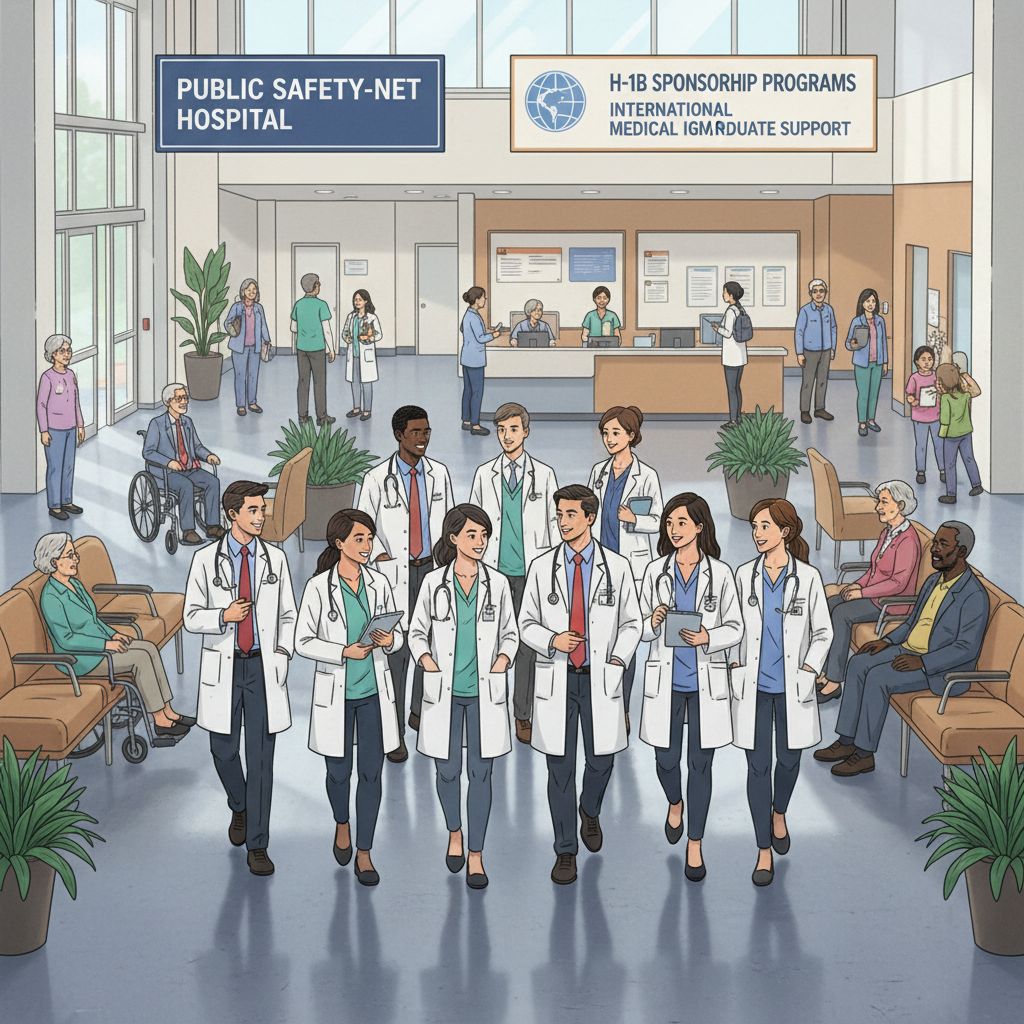
- Safety‑net or county hospitals affiliated with universities
- VA Health Care Systems with academic ties
These settings are commonly H‑1B cap‑exempt, which is crucial.
Step 2: Identify H‑1B Cap‑Exempt Institutions
Most med psych programs are:
- University‑based (non‑profit, affiliated with medical schools), and/or
- VA hospitals or public systems with educational missions.
Such institutions are typically H‑1B cap‑exempt, meaning they can file H‑1B outside the lottery. To confirm:
- Look at the hospital’s human resources or GME website for “visa” or “H‑1B” information.
- Search the hospital name + “H‑1B” in the US Department of Labor’s public disclosure data to see prior H‑1B filings.
- Check other specialties’ residents (e.g., IM, psychiatry, neurology) at the same institution; if they have H‑1B residents, that’s a positive sign.
If the parent institution is cap‑exempt, the residency program can usually sponsor H‑1B if they choose to.
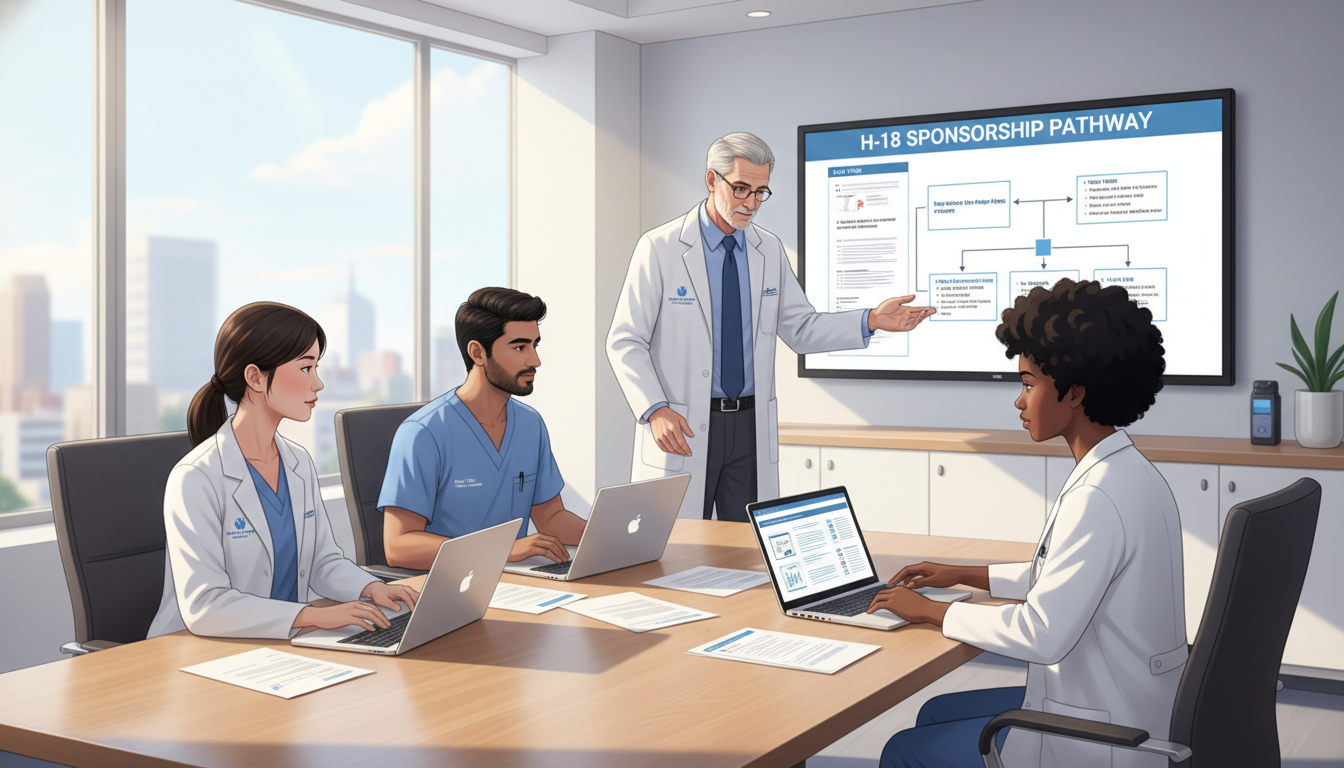
Step 3: Build a Targeted H‑1B Sponsor List for Med Psych
For each medicine‑psychiatry combined program:
- Check their ERAS or FREIDA profile for:
- “Visa sponsorship: J‑1 only” vs “J‑1 and H‑1B.”
- Actual wording: some list “H‑1B considered” or “H‑1B on case‑by‑case basis.”
- Visit the program website’s “FAQ” or “How to Apply” section; many explicitly state their visa policy.
- Email the coordinator or PD politely:
- Ask if they sponsor H‑1B for clinical residents, not just research fellows.
- Ask whether Step 3 must be completed before ranking or only before contract start.
- Clarify if they have sponsored H‑1B for a non-US citizen IMG in the last 2–3 years.
Your goal is to create a live document with columns like:
- Program name
- Institution type (university/VA/county)
- Visa policy (J‑1 only / J‑1 + H‑1B / flexible / unknown)
- Step 3 requirement timing
- Past H‑1B IMG residents (yes/no/unknown)
- Notes (e.g., “prefers US clinical experience,” “IMG‑friendly,” etc.)
This becomes your personal H‑1B sponsor list for medicine‑psychiatry.
Step 4: Use Related Specialties as Proxies
Many med psych programs live inside large Internal Medicine and Psychiatry departments. Even if the combined program doesn’t advertise its own visa policy clearly:
- Look at the categorical IM and categorical Psychiatry programs at the same institution.
- If they sponsor H‑1B for IMGs, your chances of H‑1B sponsorship in the medicine‑psychiatry combined track improve considerably.
- You can ask:
“Given that your Internal Medicine residency sponsors H‑1B for foreign national medical graduates, is the medicine‑psychiatry combined track able to do the same?”
This approach helps when official website language is vague.
Application Strategy: Maximizing Your H‑1B Chances in Med Psych
Plan Your USMLE and Step 3 Timeline Backwards
Because H‑1B residency programs almost always require Step 3:
Ideal Timeline for a Non‑US Citizen IMG
- Step 1 and Step 2 CK completed by 1+ year before your intended match.
- Step 3 taken no later than October–December of the application year, with score back before:
- Rank list deadline (February), or
- Institutional H‑1B filing deadlines.
If You Cannot Complete Step 3 in Time
- You may still apply, but:
- Some H‑1B‑friendly programs may automatically filter out applicants without Step 3.
- You may need to list both J‑1 and H‑1B as acceptable and then negotiate later.
- If your priority is absolutely H‑1B only, delaying application by one cycle to secure Step 3 may be a better strategic choice.
- You may still apply, but:
Tailor Your Application to Med Psych and Visa Reality
Medicine‑psychiatry combined programs want applicants who:
- Understand the unique nature of dual training.
- Show real interest in both Internal Medicine and Psychiatry.
- Can handle 5 years of intensive, integrated education.
As a foreign national medical graduate, you also need to:
- Explicitly mention in your personal statement:
- Why combined medicine‑psychiatry, not just IM or Psych alone.
- Concrete experiences with medically complex psychiatric patients (e.g., delirium, addiction in medically ill, psychosis in medical wards).
- Use your ERAS CV to:
- Highlight any rotations in consultation‑liaison psychiatry, addiction medicine, or psychosomatic medicine.
- Show research, QI, or case reports bridging medicine and psychiatry.
Regarding visa:
- In ERAS, there’s a field about visa needs/eligibility. Be honest and consistent.
- You can note in interview conversations:
- “I’m currently a non-US citizen IMG; I have passed Step 3 and I’m fully eligible for H‑1B sponsorship. I’m also open to J‑1 if necessary,”
or - “My strong preference is H‑1B due to family and long‑term career planning, but I understand each institution’s limitations.”
- “I’m currently a non-US citizen IMG; I have passed Step 3 and I’m fully eligible for H‑1B sponsorship. I’m also open to J‑1 if necessary,”
How Many Programs Should You Apply To?
Medicine psychiatry combined has very few programs and positions nationwide. As a non-US citizen IMG:
- Consider applying to **all med psych programs that:
- Accept IMGs, and
- Consider H‑1B or at least are not strictly “J‑1 only.”**
Additionally:
- Apply broadly to categorical Internal Medicine and categorical Psychiatry programs with H‑1B residency programs, as a backup. Many foreign national graduates match into IM or Psych alone and then pursue consultation‑liaison psychiatry, addiction psychiatry, or collaborative care roles that approximate the med psych profile.
- Balance your list:
- A core set of combined medicine‑psychiatry programs.
- A larger set of IM and Psych programs with known IMG‑ and H‑1B‑friendly policies.
Aim for an application list where at least:
- 15–20 programs overall are clearly H‑1B‑friendly or historically H‑1B‑supportive.
- The rest include some “reach” programs where policies are uncertain but possible.

Common Pitfalls and How to Avoid Them
Pitfall 1: Ignoring the H‑1B Cap‑Exempt Issue
Some applicants worry excessively about the H‑1B lottery. For most residency positions:
- The teaching hospital is H‑1B cap‑exempt, so no lottery is involved.
- Your main challenge is program willingness to sponsor, not the federal cap.
Actionable advice:
- Confirm your desired program(s) are at non‑profit university hospitals, VA systems, or government institutions.
- Once confirmed as cap‑exempt, focus your energy on being a competitive applicant, not on lottery fears.
Pitfall 2: Underestimating Step 3 Requirements
Many non-US citizen IMGs focus heavily on Step 1 and Step 2 CK, then run out of time for Step 3 before application.
Actionable advice:
- Treat Step 3 as essential if H‑1B is a high priority.
- Use dedicated study blocks with a USMLE‑style plan (UWorld, NBME, etc.).
- If you’re still abroad, plan visa/entry logistics for test centers early.
Pitfall 3: Weak Communication About Visa Needs
Some applicants never discuss visa clearly with programs; others talk about it too early or aggressively.
Actionable advice:
- On your initial application:
- Indicate you are a non-US citizen IMG needing sponsorship.
- If Step 3 is done, highlight it prominently (e.g., “Step 3 passed, H‑1B eligible” line in your ERAS CV or personal statement).
- During the interview:
- Only after you’ve discussed your training goals and fit with the program, ask politely:
- “Could you share how your program typically handles visas for non-US citizen IMG residents, particularly regarding H‑1B or J‑1 sponsorship?”
- Listen carefully and take notes; visa policy answers help you refine your H‑1B sponsor list.
- Only after you’ve discussed your training goals and fit with the program, ask politely:
Pitfall 4: Over‑Focusing on a Single Path
Medicine‑psychiatry combined is highly attractive, but also niche. Depending solely on a few programs is risky.
Actionable advice:
- Maintain parallel plans:
- Primary goal: medicine‑psychiatry combined at an H‑1B‑friendly institution.
- Secondary goal: categorical Internal Medicine or Psychiatry at an H‑1B‑friendly program.
- Remember: Many physicians build “med‑psych” careers through:
- IM residency + Psych/addiction/CL fellowship, or
- Psych residency + strong medically oriented rotations and CL fellowship.
Your H‑1B and long‑term career goals remain achievable through multiple pathways.
Long‑Term Planning: After a Med Psych H‑1B Residency
If you successfully match into an H‑1B‑sponsoring medicine psychiatry combined program, it’s important to think several years ahead.
Managing the 6‑Year H‑1B Limit
A 5‑year residency leaves:
- 1 year remaining on standard H‑1B.
- If you later stay in cap‑exempt institutions (university, VA), there are sometimes ways to extend beyond the 6‑year limit in conjunction with permanent residency processes.
- If you move to a cap‑subject employer (e.g., private hospital or group), you may need:
- Selection in the H‑1B lottery, and
- Careful timing of transfers.
Discuss timeline early with:
- Your program’s GME office.
- Future employers (e.g., academic centers, hospital systems).
- An experienced immigration attorney if possible.
Green Card and Career Strategy
As a dual‑trained medicine psychiatrist, you are often in high demand, particularly in:
- Academic centers
- Safety‑net and rural hospitals
- VA systems
- Integrated behavioral health and primary care networks
Many such employers:
- Are familiar with sponsoring green cards (EB‑2/EB‑3).
- Have in‑house legal teams or external immigration counsel.
Plan to:
- Start conversations about permanent residency sponsorship in your final 1–2 years of training.
- Clarify whether the role you’re accepting after graduation is:
- At a cap‑exempt institution (easier continuous H‑1B), or
- At a cap‑subject employer (requires lottery planning).
FAQs: H‑1B Sponsorship for Non‑US Citizen IMGs in Medicine‑Psychiatry
1. As a non‑US citizen IMG, can I insist on H‑1B only for med psych residency?
You can express a strong preference for H‑1B, but you cannot force a program to sponsor H‑1B if they typically use J‑1. Many medicine psychiatry combined programs default to J‑1 because it is administratively simpler. To maximize options, some applicants state: “I’m open to both J‑1 and H‑1B,” then prioritize ranking programs that are known H‑1B residency programs. If H‑1B is absolutely essential for you (e.g., due to family or home country issues), then you must target only programs that have clearly sponsored H‑1B recently—and understand that this may narrow your match chances.
2. Do all medicine‑psychiatry programs sponsor H‑1B if they are at a university hospital?
No. Being at a university hospital usually means the institution is H‑1B cap‑exempt, but sponsorship is still a program‑level choice. Some combined programs say “J‑1 only” despite being at cap‑exempt institutions. Others are flexible and sponsor H‑1B for strong candidates who have completed Step 3. Always verify by checking program websites, ERAS entries, and communicating with the coordinator or PD.
3. Is it realistic to take Step 3 before applying as an IMG abroad?
Yes, but it requires early planning:
- You must obtain the appropriate visa to enter the United States for testing.
- You should complete Step 1 and Step 2 CK early enough to leave time for Step 3 preparation.
- Many non-US citizen IMGs take Step 3 during an observership, research position, or short visit. Having Step 3 passed by the time you apply dramatically improves your chances with H‑1B‑friendly medicine‑psychiatry programs and strengthens your position as a foreign national medical graduate.
4. If I match on a J‑1 in med psych, can I switch to H‑1B later during residency?
Sometimes, but it is complicated:
- Switching from J‑1 to H‑1B during residency usually triggers issues with the J‑1’s 2‑year home country requirement, unless you have obtained a waiver.
- Most residents remain on J‑1 for the duration of training and then seek a J‑1 waiver job (often in underserved areas) or permanent residency later.
- If you strongly prefer H‑1B, it’s best to start residency on H‑1B rather than hoping to convert mid‑training. Discuss any possibilities with both your program’s GME office and a qualified immigration attorney.
By understanding the nuances of H‑1B cap‑exempt status, Step 3 timing, and program‑level policies, a non-US citizen IMG interested in medicine psychiatry combined training can design a realistic, strategic application plan. Build a clear H‑1B sponsor list, apply broadly (including to related IM and Psychiatry programs), and treat visa planning as an integral part of your med psych career pathway—not an afterthought.