
Understanding H‑1B Sponsorship for IMGs in Houston
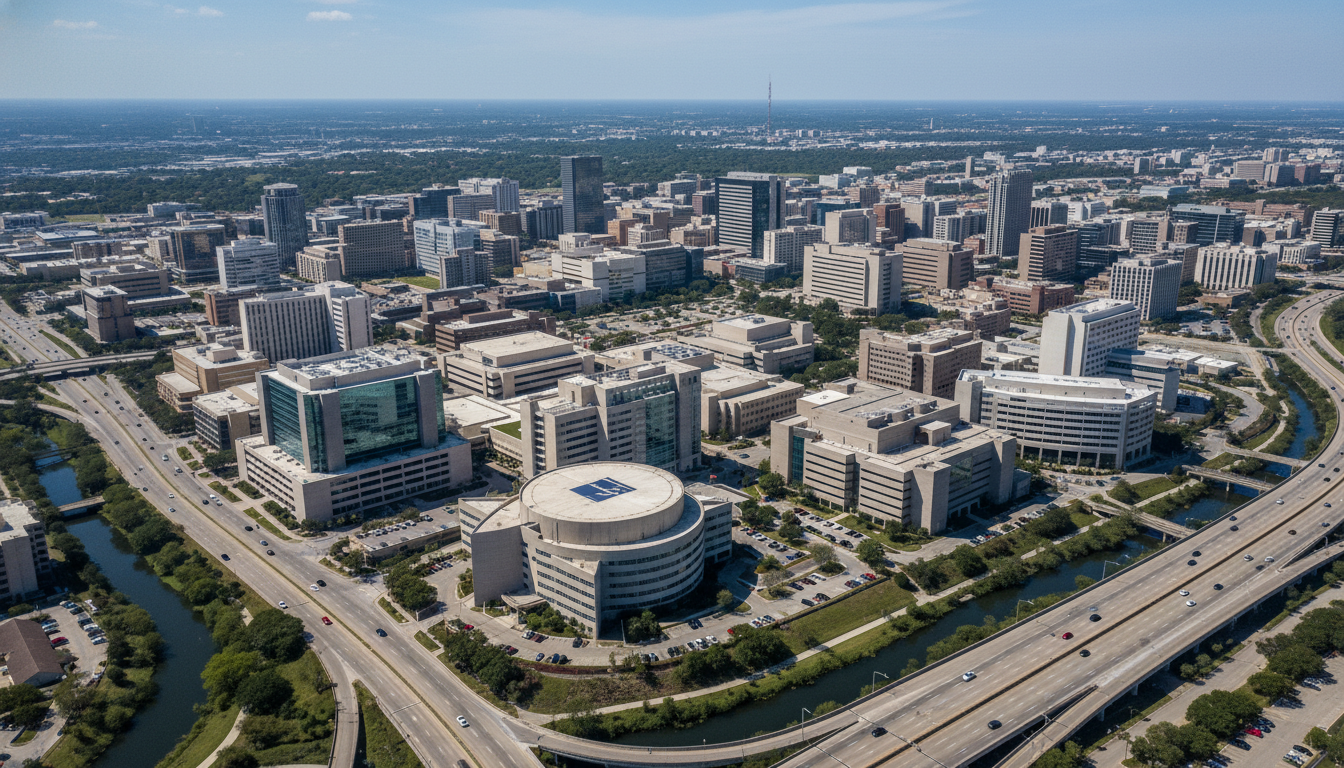
For an international medical graduate (IMG), Houston is one of the most attractive places in the United States to pursue residency training. The city’s Texas Medical Center (TMC) is the largest medical complex in the world, home to dozens of hospitals, specialty centers, and academic institutions. Many applicants search for an IMG residency guide that focuses on visa‑friendly institutions—especially those willing to sponsor H‑1B visas.
This article explains how H‑1B sponsorship works for residency and fellowship, highlights key Houston residency programs that have historically supported IMGs, and offers practical strategies to improve your chances of matching into H‑1B residency programs in the Houston area.
Important disclaimer: Visa policies and sponsorship practices can change every year and even within the same institution. Always confirm current information directly with each program and institutional GME office. This article is for educational purposes and not legal advice.
1. H‑1B Basics for International Medical Graduates
Before looking at specific Houston residency programs, you should understand how the H‑1B visa works for graduate medical education.
1.1 What is the H‑1B Visa in the Residency Context?
The H‑1B is a temporary, employment-based visa that allows U.S. institutions to hire foreign professionals in specialty occupations. For physicians, this often includes:
- ACGME‑accredited residency positions
- ACGME‑accredited fellowship positions
- Some non‑accredited clinical fellowships or faculty roles
For residency, the H‑1B is generally issued in up to three‑year increments, with a maximum of six years total (some extensions may be possible in the green card process, but that’s beyond residency scope).
1.2 H‑1B vs. J‑1 for IMGs
Most IMGs in residency are on J‑1 visas sponsored by ECFMG. However, many candidates strongly prefer H‑1B because:
- No two‑year home residence requirement (unlike J‑1), which can restrict post‑training options.
- Easier transition to employment after training—H‑1B years in residency count toward the 6‑year total but are still compatible with later H‑1B employment or green card sponsorship.
- Family considerations—H‑4 dependents can obtain certain benefits, and there is no J‑2 waiver complexity.
However, the H‑1B route is more demanding:
- Programs must handle more complex immigration paperwork and higher legal/filing costs.
- You must have Step 3 passed before H‑1B filing for residency (virtually always required).
- Some institutions have strict institutional policies that limit or prohibit H‑1B sponsorship for residents.
1.3 H‑1B Cap‑Exempt vs. Cap‑Subject
For IMGs interested in H‑1B residency programs, one key advantage in Houston is the presence of many H‑1B cap exempt employers.
Cap‑subject H‑1B:
- Limited annual national quota (the “H‑1B lottery”).
- Filings are usually in March/April for an October 1 start date.
- Risk of not being selected in the lottery.
H‑1B cap‑exempt:
- Certain institutions—such as universities, university‑affiliated nonprofit hospitals, and nonprofit research organizations—are exempt from the national H‑1B cap.
- They can file H‑1B petitions at any time of year.
- Most large academic residency programs in the Texas Medical Center are cap‑exempt.
For an IMG in Houston residency programs, targeting university or academic medical center–based institutions usually means you are dealing with H‑1B cap exempt positions—eliminating lottery uncertainty for residency itself.
2. Houston’s Training Landscape: Why It’s Attractive for H‑1B‑Seeking IMGs
Houston is a unique environment for an IMG wanting both strong clinical training and visa‑friendly options.
2.1 The Texas Medical Center (TMC) Advantage
The Texas Medical Center is a central hub encompassing:
- Baylor College of Medicine and affiliated hospitals
- McGovern Medical School at UTHealth Houston and its partners
- MD Anderson Cancer Center
- Multiple VA and county hospitals (e.g., Harris Health’s Ben Taub Hospital)
- Specialty hospitals and children’s hospitals (Texas Children’s Hospital, Houston Methodist, CHI St. Luke’s, etc.)
Most of these institutions fall under categories that generally qualify as H‑1B cap exempt. This means:
- They can hire residents and fellows on H‑1B without worrying about the annual cap.
- They often have in‑house immigration support or experienced legal counsel.
- They routinely handle visa sponsorship for large numbers of trainees.
2.2 Diversity and IMG-Friendliness
Houston residency programs serve a highly diverse patient population. This often translates into:
- An appreciation of multilingual and multicultural residents
- Established histories of matching international medical graduates
- Greater familiarity with visa categories, including H‑1B and J‑1
Programs that have matched IMGs consistently over the years are more likely to appear on any informal H‑1B sponsor list circulated among applicants. While such lists are unofficial, they often reflect real institutional openness to international hires.
3. Major Houston Institutions: H‑1B Sponsorship Patterns
Because individual program policies can change yearly, you must always double‑check current details. However, understanding the institutional culture and historical patterns is very useful when planning your strategy as an international medical graduate.
3.1 Baylor College of Medicine–Affiliated Programs
Baylor College of Medicine (BCM) is one of the cornerstone institutions in the Texas Medical Center. BCM sponsors numerous ACGME‑accredited residency and fellowship programs in:
- Internal Medicine
- Pediatrics
- Surgery and surgical subspecialties
- OB/GYN
- Psychiatry
- Anesthesiology
- Neurology and Neurosurgery
- Emergency Medicine
- Radiology and pathologic specialties
- Many subspecialty fellowships
H‑1B Considerations:
- BCM and its affiliated hospitals are university‑affiliated and typically H‑1B cap exempt.
- Historically, several Baylor programs have sponsored H‑1B visas for residents and fellows, especially when candidates are strong and already have USMLE Step 3 completed.
- Visa sponsorship policies may differ by department. Some programs may state explicitly in their program FAQs whether they support H‑1B, J‑1, or both.
Practical Steps:
- Visit individual Baylor program websites and look for a “Visa” or “International Applicants” section.
- Email the program coordinator if information isn’t clearly listed:
- Briefly introduce yourself, mention your visa needs, and ask whether they sponsor H‑1B visas for categorical residents.
- Pay attention to past resident profiles—if you see IMGs with H‑1B or no J‑1 reference, that’s a positive sign.
3.2 UTHealth Houston (McGovern Medical School) Programs
McGovern Medical School at UTHealth Houston is another major academic anchor. It partners with institutions such as:
- Memorial Hermann–Texas Medical Center
- Lyndon B. Johnson Hospital (Harris Health)
- UT Physicians clinics
- TIRR Memorial Hermann and subspecialty centers
Many IMGs find that UTHealth Houston programs have a track record of hiring international trainees.
H‑1B Sponsorship Patterns:
- UTHealth is typically H‑1B cap exempt due to its status as an academic institution.
- Some departments actively sponsor H‑1B for residents and fellows, especially in fields like Internal Medicine, Neurology, Pediatrics, and subspecialties.
- Others may limit sponsorship to J‑1 only, citing institutional or financial constraints.
Actionable Advice:
- On UTHealth GME and program pages, carefully review the visa policy.
- In ERAS applications, do not leave visa questions unanswered—clearly indicate that you are seeking H‑1B if that is your preference and you meet the requirements (e.g., Step 3).
- If a program’s website states “J‑1 only,” there is usually little flexibility, but you can still confirm with the coordinator before excluding it from your list.
3.3 MD Anderson Cancer Center and Subspecialty Fellowships
Many IMGs target fellowships in oncology, hematology, pathology, radiology, and surgical subspecialties at MD Anderson Cancer Center.
- MD Anderson is deeply research‑oriented and often engages in specialty fellowships and postdoctoral positions.
- As a large academic cancer center, it is usually H‑1B cap exempt.
For residency (e.g., Pathology or Radiation Oncology), you may find H‑1B opportunities depending on departmental policy. For fellowships, MD Anderson has historically sponsored both J‑1 and H‑1B, but you must:
- Confirm ACGME vs. non‑ACGME status of the position.
- Check visa sponsorship type with the fellowship coordinator.
3.4 Houston Methodist, Texas Children’s, and Other Major Partners
Other major TMC institutions—such as Houston Methodist Hospital, Texas Children’s Hospital, CHI St. Luke’s Health/Baylor St. Luke’s, and the Michael E. DeBakey VA Medical Center—are all deeply engaged in residency and fellowship training.
Many of these hospitals:
- Are affiliated with BCM or UTHealth and thus typically fall within H‑1B cap exempt frameworks for residency positions.
- Have institutional GME policies that may override individual program preferences.
When preparing your personal H‑1B sponsor list targeting Houston residency programs, include:
- Program name (e.g., Internal Medicine at Houston Methodist/BCM)
- Affiliated university (BCM, UTHealth)
- Stated visa policy from the program website (J‑1 only, H‑1B and J‑1, or case‑by‑case)
- Any notes from conversations or emails with coordinators

4. Requirements and Profile Strength for H‑1B Residency Sponsorship
Not all IMGs who want H‑1B sponsorship will receive it. Programs often apply stricter selection criteria for H‑1B candidates than for J‑1 applicants due to the additional cost and paperwork.
4.1 Core Requirements for H‑1B Sponsorship
While each institution may have its own specifics, typical requirements include:
USMLE Step 3 Passed
- For almost all H‑1B residency sponsorships, you must have USMLE Step 3 completed before the visa is filed.
- Practically, this usually means Step 3 should be passed before rank list submission or at least by the time the program decides on visa types.
- Some programs will not rank an IMG for H‑1B without a documented Step 3 pass.
ECFMG Certification
- You must be ECFMG‑certified before starting residency, regardless of visa.
State Medical Board Requirements (Texas)
- Texas has specific licensure/permit requirements for residents.
- Programs usually coordinate this, but your Step 3 and documentation must align with Texas rules.
English Proficiency and Communication Skills
- Programs are especially cautious with H‑1B sponsorship, preferring candidates who demonstrate excellent communication skills and readiness for U.S. clinical responsibilities.
4.2 What Makes an IMG Competitive for H‑1B in Houston?
To be realistic, an IMG residency guide focusing on H‑1B must emphasize profile strength. Programs often reserve H‑1B sponsorship for candidates they consider “exceptional.”
Key components:
- Strong USMLE scores (especially Step 2 CK)
- While there is no magic cutoff, higher scores make a difference when programs consider taking on extra immigration work.
- Robust U.S. clinical experience (USCE)
- Hands‑on electives, sub‑internships, or observerships, ideally in Houston or Texas; familiarity with the Texas Medical Center environment is a plus.
- Research and publications
- Particularly valued at academic centers like Baylor, UTHealth, and MD Anderson.
- Excellent letters of recommendation from U.S. faculty
- Letters from recognized TMC or other academic centers carry weight.
- Clear career goals
- A convincing narrative in your personal statement explaining why you are seeking H‑1B and your long‑term commitment to practicing in the U.S., especially Texas.
4.3 Timing Strategy: Step 3 and Application Season
For an IMG targeting H‑1B residency programs in Houston:
- Plan to take Step 3 as early as feasible (usually after you have enough clinical exposure, often after internship or during a research year).
- If you are applying to residency directly after graduation, you might not yet have Step 3. In that case:
- Some programs will still interview and rank you with the condition that you pass Step 3 by a certain deadline.
- Others state explicitly that Step 3 must be completed before interview season to be eligible for H‑1B consideration.
Action point: Review each program’s stated Step 3 requirement and schedule your exam accordingly. For H‑1B-centered strategies, treating Step 3 as mandatory rather than optional is wise.
5. Building a Targeted H‑1B Strategy for Houston Residency Programs
Instead of applying randomly, you should develop a structured plan tailored to Houston’s environment and to your profile as an international medical graduate.
5.1 Creating a Personal H‑1B Sponsor List for Houston
Use the following process:
Identify academic institutions
- Baylor College of Medicine
- UTHealth Houston (McGovern Medical School)
- MD Anderson Cancer Center
- VA and county hospitals tied to these universities
List programs by specialty
- Internal Medicine, Pediatrics, Family Medicine, Neurology, Psychiatry, Surgery, etc.
- Note which specialties tend to be more IMG‑friendly historically (e.g., Internal Medicine, Pediatrics, Family Medicine often have more IMGs; Derm, Plastics, Ortho generally fewer, with greater competition).
Check program websites and FREIDA
- Look specifically for visa policy: “H‑1B and J‑1”, “J‑1 only”, or “We sponsor visas” (then confirm type).
- FREIDA sometimes lists visa types but may be outdated; cross‑check with program pages.
Communicate directly
- Email coordinators with a concise question:
- “Do you currently sponsor H‑1B visas for categorical residents?”
- “Is USMLE Step 3 required before ranking for H‑1B?”
- Keep a spreadsheet with responses.
- Email coordinators with a concise question:
Update yearly
- Because institutional budgets and policies change, update your list every application cycle.
5.2 Applying Strategically Within Houston and Beyond
While Houston is a strong focus, you should also:
- Apply to other Texas programs (Dallas, San Antonio, Austin, etc.) that may be H‑1B friendly.
- Include a mixture of:
- Programs that stated they sponsor H‑1B
- Programs that are visa‑open but not explicit (you clarified by email)
- Some J‑1–only programs if you are open to that visa as a backup
This approach balances your preference for H‑1B with the practical need to maximize Match chances.
5.3 Matching Your Profile to Program Type
- If you have strong research, high scores, and U.S. experience, you can prioritize larger academic centers like Baylor and UTHealth, which are more likely to be cap‑exempt and experienced with H‑1B.
- If your profile is moderate (average scores, fewer publications), consider also:
- Community‑based or hybrid programs in the broader Houston metro that may still sponsor H‑1B.
- Less competitive specialties where programs are more open to sponsoring visas for strong, committed applicants.
5.4 Communicating Clearly About Your Visa Needs
During ERAS and interviews:
- Answer visa questions honestly and directly.
- If the program supports both J‑1 and H‑1B, you may say:
- “I am eligible for J‑1 and H‑1B, but I strongly prefer H‑1B because of my long‑term plan to practice in the U.S. I have already passed Step 3 [or will complete it by X date].”
- Be prepared to explain briefly why you prefer H‑1B without criticizing J‑1 or causing concern.
Programs want to see that your visa situation will be manageable and predictable, not a source of uncertainty.
6. Common Pitfalls and Practical Tips for IMG Applicants Seeking H‑1B in Houston
6.1 Over‑reliance on Outdated or Informal Lists
Many IMGs share informal H‑1B sponsor lists and IMG residency guides on forums and social media. While helpful as a starting point, they can be outdated or inaccurate.
Recommendation: Treat such lists as leads, not as definitive truth. Always verify:
- Visa policy on the current program website
- Recent practices by asking current residents or program staff
6.2 Ignoring the Strength of Overall Application
Some applicants focus almost entirely on visa sponsorship and forget that:
- H‑1B sponsorship is a secondary question; first, you must be chosen as a competitive candidate.
- Programs will rarely go through extra immigration effort for a marginal applicant.
To enhance your application:
- Seek observerships, externships, or research positions in Houston if possible. Directly experiencing the Texas Medical Center and building connections can significantly help.
- Polish your personal statement to emphasize resilience, adaptability, and your fit with Houston’s diverse patient population.
- Prepare thoroughly for interviews, especially for behavioral questions and U.S. healthcare system scenarios.
6.3 Not Planning a Backup Visa Strategy
Even if your primary goal is H‑1B, you should:
- Understand J‑1 terms, including the two‑year home requirement and available waiver routes (e.g., Conrad 30, hardship, persecution).
- Decide in advance whether you are willing to accept J‑1 if an otherwise ideal Houston residency program offers it.
- Consult an experienced immigration attorney for complex situations (prior out‑of‑status periods, dependents with special needs, prior U.S. visas, etc.).
Having a clear hierarchy of preferences (e.g., “Houston H‑1B > Houston J‑1 > Other Texas H‑1B > other states J‑1”) will help you organize applications and rank lists logically.
FAQ: H‑1B Sponsorship Programs for IMGs in Houston
1. Are most Houston residency programs H‑1B cap exempt?
Most large academic programs in the Texas Medical Center—such as those affiliated with Baylor College of Medicine and UTHealth Houston—are H‑1B cap exempt because they are university or university‑affiliated nonprofit institutions. This means they can sponsor H‑1B positions without entering the general lottery. However, cap‑exempt status does not guarantee that every program will choose to sponsor H‑1B for residents; each department has its own policies.
2. Do I absolutely need USMLE Step 3 to get H‑1B residency in Houston?
In practice, yes. For residency training, nearly all Houston institutions require USMLE Step 3 passed before they can file H‑1B petitions. Many programs will not even consider H‑1B sponsorship without proof of a Step 3 pass by a certain date (often before ranking). You may still be interviewed, but H‑1B cannot be finalized without Step 3, and some programs will not rank H‑1B‑seeking applicants who haven’t passed it yet.
3. How can I find out if a specific Houston program sponsors H‑1B visas?
Use a three‑step approach:
- Check the program website—look for “Visa Information,” “International Applicants,” or FAQs.
- Review FREIDA entries for visa types (keeping in mind they may be outdated).
- Email the program coordinator or GME office with a concise question about current visa sponsorship, explicitly mentioning H‑1B and your Step 3 status. Document responses in a personal spreadsheet to build your own up‑to‑date H‑1B sponsor list.
4. Is it realistic for an IMG with average scores to secure H‑1B residency in Houston?
It is more challenging but not impossible. H‑1B sponsorship typically goes to candidates with strong profiles because of the additional cost and complexity for programs. If your scores are average, you can improve your chances by strengthening other aspects: substantial U.S. clinical experience (ideally in Houston or Texas), strong letters from U.S. faculty, research or QI projects, and outstanding interview performance. Also, expand your applications beyond the most competitive specialties and consider both Houston and other Texas cities to maximize opportunities.
By understanding how H‑1B residency programs operate, identifying cap‑exempt institutions in the Texas Medical Center, and building a focused yet flexible application strategy, an international medical graduate can significantly improve their chances of training in Houston under H‑1B sponsorship.