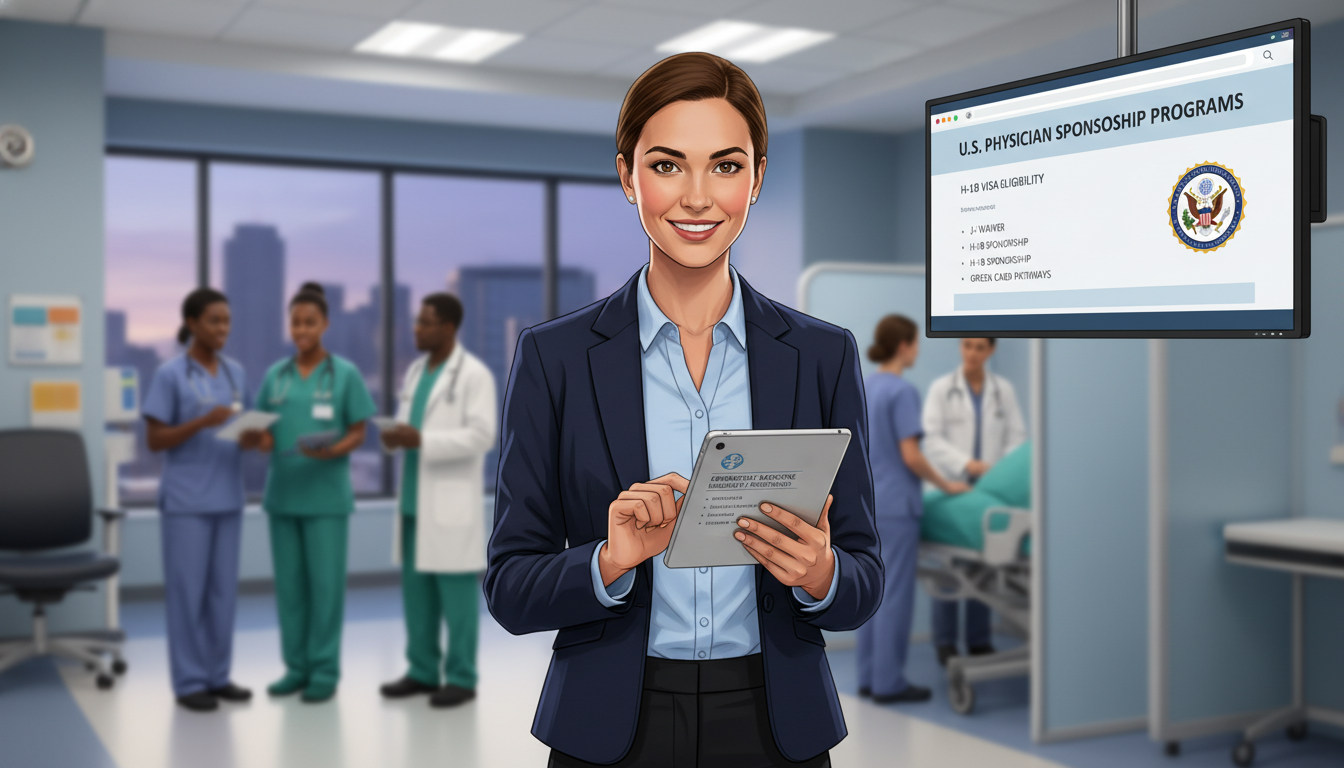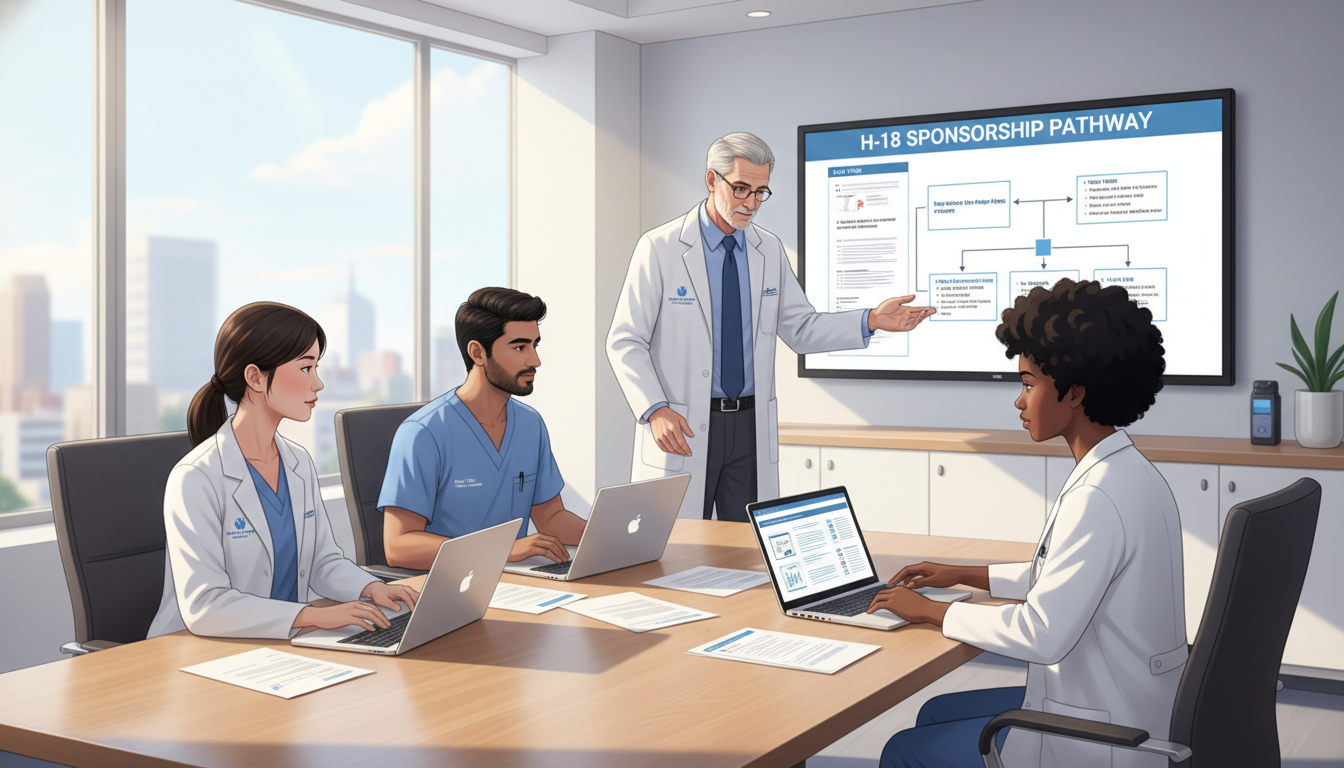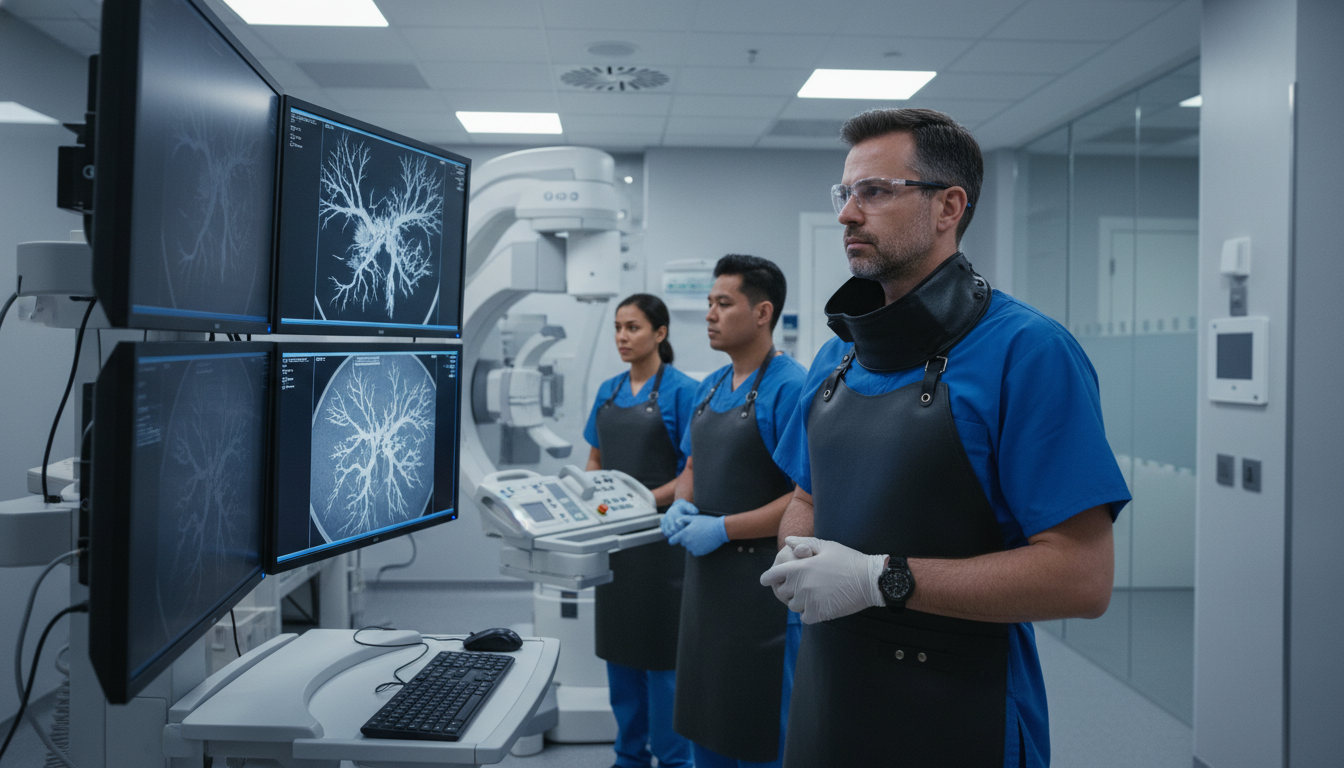
Understanding H‑1B Sponsorship in Interventional Radiology
For international medical graduates (IMGs) who dream of practicing cutting‑edge minimally invasive procedures, interventional radiology (IR) is one of the most exciting—but also one of the most competitive—specialties in the United States. When you add visa sponsorship questions on top of the already complex IR match process, it can feel overwhelming.
This guide focuses specifically on H‑1B sponsorship programs in interventional radiology residency and independent IR pathways. You’ll learn how the IR match works for visa holders, which types of institutions are more likely to sponsor H‑1B, how H‑1B cap exempt rules help residency applicants, and how to systematically build your own H‑1B sponsor list for IR.
Throughout, the perspective is practical: what you, as an IMG, can do now to maximize your chances of matching into an interventional radiology training program with H‑1B support.
1. Core Basics: Interventional Radiology Training Pathways & Visa Types
Before focusing on H‑1B, you need a clear view of how IR training is structured and where visa issues appear.
1.1 Interventional Radiology Training Pathways
In the U.S., the main accredited training paths are:
Integrated IR Residency (6 years total)
- 1 year of clinical internship (often prelim or categorical surgery, medicine, or transitional year)
- 3 years core diagnostic radiology training
- 2 years focused interventional radiology
- Entered directly from medical school via the NRMP Main Match.
Independent IR Residency (2 years)
- Enter after completing a diagnostic radiology residency (DR).
- Designed for those who complete DR and then specialize in IR.
- Filled via NRMP as well, often through the IR match in a different cycle than integrated spots.
Early Specialization in Interventional Radiology (ESIR)
- A pathway within diagnostic radiology residency that gives IR‑focused experience.
- ESIR residents can often complete independent IR in 1 year instead of 2.
1.2 Visa Types: J‑1 vs. H‑1B in IR Programs
For IMGs, the two main visa types in residency are:
J‑1 (ECFMG‑sponsored):
- Most common for residency.
- Typically requires a 2‑year home‑country return obligation after training (unless waived).
- Generally easier paperwork for programs, which is why many IR residencies default to J‑1.
H‑1B (Institution‑sponsored):
- Dual‑intent visa (allows intent to later pursue U.S. permanent residence).
- Requires passing USMLE Step 3 before H‑1B activation.
- More complex and costlier for institutions, so fewer programs sponsor it.
- Highly attractive to IMGs who plan a long‑term U.S. career and want to avoid J‑1 home return issues.
For interventional radiology residency, H‑1B sponsorship is less common than J‑1, but it absolutely exists, particularly in larger academic centers and some university‑affiliated hospitals.
2. How H‑1B Works in the IR Match Context
2.1 Cap‑Subject vs. Cap‑Exempt H‑1B
A crucial concept for residency applicants is whether a program is H‑1B cap exempt:
H‑1B Cap‑Subject:
- Most private companies are limited by an annual national cap.
- Visas are usually distributed via a lottery.
- Risky and unpredictable for residency timing.
H‑1B Cap Exempt:
- Certain institutions can sponsor H‑1B visas outside the lottery:
- Nonprofit hospitals affiliated with universities
- Academic medical centers
- Nonprofit research institutions
- Residency and fellowship programs at these places can generally get H‑1Bs anytime (if they choose to sponsor).
- Certain institutions can sponsor H‑1B visas outside the lottery:
Most major academic IR residency programs are at university‑affiliated teaching hospitals, which makes them H‑1B cap exempt. This helps IMGs, because it removes the lottery risk; the main challenge becomes whether the program’s policy allows H‑1B for residents.
2.2 Where in the IR Pathway H‑1B Matters Most
For IR, H‑1B considerations appear at multiple points:
Clinical Internship Year (PGY‑1)
Many integrated IR spots are paired with a specific prelim/categorical program. If you need an H‑1B:- Both the IR residency and the linked intern year program must be willing to sponsor H‑1B.
- Alternatively, you might match an IR program that allows you to arrange your own internship at an H‑1B‑friendly program.
Integrated IR (PGY‑2 and beyond)
The main IR residency itself must:- Accept H‑1B for radiology residents.
- Be prepared for a multi‑year sponsorship.
Independent IR (Post‑DR)
If you are already on H‑1B from a diagnostic radiology residency:- Going into independent IR at a cap‑exempt academic center can be simpler (H‑1B transfer/extension).
- Some IR residencies will only sponsor J‑1 but can accept candidates who already have H‑1B from within the institution.
2.3 Timing, Step 3, and H‑1B
To start residency on H‑1B, you typically must:
- Have all USMLE Steps including Step 3 passed before visa filing (often by January–March before July start).
- Ensure ECFMG certification is complete.
For IR, this timing is critical because:
- The IR match occurs relatively early in the cycle (parallel to other specialties).
- If you’re determined to pursue an H‑1B‑sponsoring IR program, plan to:
- Schedule Step 3 early (ideally before the application season or by late fall).
- Communicate with program coordinators about deadlines for filing H‑1B petitions.
Actionable advice: If your top priority is H‑1B, do not postpone Step 3. Build your test preparation into your final year of medical school or your research year so that scores are ready before interviews.

3. Identifying H‑1B‑Friendly Interventional Radiology Programs
There is no single official, public H‑1B sponsor list specifically for interventional radiology residency programs, so you must build your own. This section outlines a systematic approach.
3.1 Start with Institutional Type
Programs more likely to sponsor H‑1B usually fall into these categories:
Large academic medical centers / university hospitals
- Often cap‑exempt.
- Have in‑house legal/immigration offices.
- Frequently sponsor H‑1B for other specialties, making IR sponsorship more feasible.
VA‑affiliated academic programs
- Sometimes have additional HR complexity, but many sponsor H‑1B for residents and fellows.
University‑affiliated community programs
- Mixed policies, but if the main university hospital sponsors H‑1B, the affiliated IR residency may as well.
Programs less likely to sponsor H‑1B include:
- Small community hospitals without a strong academic affiliation.
- Programs that historically sponsor only J‑1 for all specialties.
3.2 Reading Program Websites Critically
Most IR residency program websites have a “For Applicants” or “FAQ” section with visa language. Look specifically for phrases like:
- “We sponsor J‑1 visas only.” → Not H‑1B‑friendly.
- “We sponsor J‑1 and H‑1B visas for eligible candidates.” → H‑1B‑friendly.
- “Visa sponsorship considered on a case‑by‑case basis.” → May sponsor H‑1B if you are an exceptional candidate and meet Step 3 and timing requirements.
- “We accept only U.S. citizens and permanent residents.” → Not IMG‑friendly.
Because websites may be outdated, treat them as starting points, not absolute truth. Always verify.
3.3 Direct Verification: Email and Phone Strategy
To build a truly accurate H‑1B sponsor list for IR:
Create a spreadsheet with:
- Program name and ACGME code
- Institution type (university, community, VA, etc.)
- Visa information from website
- Contact details (coordinator email, phone)
- Notes on your communication (date, response, policy details)
Email program coordinators with a short, clear question. For example:
Subject: Visa Sponsorship for Interventional Radiology Applicants
Dear [Coordinator Name],
I am an international medical graduate planning to apply for the [Integrated/Independent] Interventional Radiology residency at [Institution Name]. Could you please confirm whether your program sponsors H‑1B visas for residents, or if you accept only J‑1 sponsorship?
Thank you very much for your time and assistance.
Sincerely,
[Your Name], MDYou can optionally add:
- That you will have ECFMG certification and USMLE Step 3 completed by the time of rank lists.
- That you are particularly interested in long‑term academic or research‑oriented IR.
If no response, follow up with a polite email after 1–2 weeks, or call the GME office.
3.4 Leverage Existing GME H‑1B Policies
Sometimes, even if the interventional radiology residency page is vague, the institution’s GME office has a standardized policy that applies to all programs. Search:
- “[Institution name] GME visa policy”
- “[Hospital name] residency H‑1B J‑1”
If the GME page says:
“The institution sponsors H‑1B and J‑1 visas depending on program policies.”
→ IR may or may not sponsor, but at least H‑1B infrastructure exists.“The institution does not sponsor H‑1B visas for residency or fellowship training.”
→ No H‑1B for IR there.
3.5 Using Past Residents and Alumni Networks
Another powerful approach is connecting with:
- Current IR residents via:
- Program Instagram or X (Twitter) accounts
- Virtual open houses and information sessions
- Medical student/resident Facebook or WhatsApp groups
Questions to ask (briefly and respectfully):
- “Does your program currently have any residents or fellows on H‑1B?”
- “Does the IR program or DR program typically sponsor H‑1B, or mostly J‑1?”
- “If IMGs are in the program, which visas do they hold?”
This real‑world evidence can confirm or refine your H‑1B sponsor list.
4. Application Strategy for IMGs Seeking H‑1B in IR
Once you have a sense of which interventional radiology residency programs are H‑1B‑friendly, you need a strategy that matches your profile and goals.
4.1 Be Realistic About Competitiveness
Interventional radiology is one of the most competitive specialties. For IMGs aiming for H‑1B in IR:
Typical successful candidates often have:
- Strong USMLE scores.
- U.S. clinical experience, preferably in radiology or procedural fields.
- U.S. research (often with publications or presentations in radiology/IR).
- Excellent letters from U.S. faculty (ideally interventional radiologists).
H‑1B makes it more complex:
- Some programs might prefer J‑1 due to simpler paperwork.
- You may be competing with U.S. graduates who have no visa issues.
Actionable approach:
Consider a two‑step pathway:
- Match into diagnostic radiology (with or without ESIR) at an H‑1B‑friendly institution.
- Then pursue independent IR residency at the same or another H‑1B‑sponsoring academic center.
This pathway is often more attainable for IMGs than direct entry into integrated IR with H‑1B.
4.2 Optimize Your ERAS Application for H‑1B‑Friendly IR Programs
Specific steps you can take:
Highlight readiness for H‑1B:
- Include Step 3 completion and date prominently.
- In your personal statement or CV, mention your readiness to start on H‑1B and long‑term academic interests that align with cap‑exempt institutions.
Target programs strategically:
- Apply broadly to IR‑friendly diagnostic radiology programs that sponsor H‑1B, not only to integrated IR.
- Include both top‑tier academic centers and smaller university‑affiliated hospitals.
Tailor your personal statement:
- Emphasize commitment to IR as a long‑term career.
- Show understanding of the broader scope of IR (oncologic interventions, trauma, PAD, venous interventions, etc.).
- Connect your background (e.g., prior procedural experience or research) to IR.
Letters of recommendation:
- Aim for at least one letter from an interventional radiologist if possible.
- U.S. letters from procedural specialties (surgery, cardiology, vascular) are also valuable.
4.3 Handling Visa Conversations During Interviews
You will need to balance transparency with strategy.
Do:
- Be clear and honest about your status (IMG needing visa sponsorship).
- Mention you have or will have Step 3 completed by the program’s H‑1B filing deadline.
- If asked directly about visa preference:
- You can state that you prefer H‑1B for long‑term career reasons, but that you understand and respect institutional policies.
Don’t:
- Lead with visa questions at the beginning of the interview; focus first on fit and your qualifications.
- Sound as if the visa is your only priority; emphasize your genuine interest in the program’s strengths in IR.
A way to phrase it near the end of an interview:
“I’m an IMG and will require visa sponsorship. I will have USMLE Step 3 completed by [month], so I would be eligible for H‑1B if your institution sponsors it. Does your program typically sponsor H‑1B for residents, or is J‑1 the standard pathway?”
This shows professionalism and preparedness.
5. Special Considerations: H‑1B, Cap‑Exempt Institutions, and Long‑Term IR Careers
Interventional radiology is a long training journey, and your visa pathway will influence your career for years. Understanding how H‑1B cap‑exempt status and institutional policies intersect with your long‑term IR plans is critical.
5.1 Using Cap‑Exempt H‑1B Strategically
If you complete IR training (integrated or independent) on an H‑1B at a cap‑exempt institution:
- You can continue working in similar cap‑exempt settings (academic hospitals, VA, some nonprofits) without entering the H‑1B lottery.
- If you want to move to a private practice or purely for‑profit outpatient IR setting:
- You will likely need to obtain a cap‑subject H‑1B (through the lottery) or transition toward permanent residency (e.g., via employment‑based green card).
Some IR physicians build careers entirely within academic hospitals to avoid lottery risk, while others pursue permanent residency during training to allow private practice roles later.
5.2 Transitioning from Residency to Fellowship or Early Practice
While IR training often culminates in independent practice without another “fellowship,” some graduates still pursue:
- Advanced IR fellowships (e.g., neurointerventional, complex oncologic interventions).
- Research fellowships in IR innovation or device development.
For each transition:
- H‑1B extensions or transfers must be coordinated carefully.
- Remaining at the same cap‑exempt institution usually simplifies this.
- Moving to a new institution requires that they also be cap‑exempt and willing to sponsor H‑1B for a fellow or junior faculty.
5.3 Comparing H‑1B vs. J‑1 Waiver Options for IR
Some IMGs choose J‑1 residencies and later seek a J‑1 waiver (e.g., Conrad 30) by working in underserved areas, often in internal medicine, family medicine, or psychiatry. For IR, this is more complex because:
- IR is highly specialized and practice opportunities in underserved areas may be limited.
- Many waiver positions are not in IR.
This is why many IR‑bound IMGs strongly prefer H‑1B residency programs from the start. However:
- J‑1 remains a viable path if you are flexible about your early‑career work (e.g., radiology in underserved areas) or if H‑1B sponsorship in IR is not achievable for you.
6. Practical Roadmap: Step‑by‑Step Plan for IMGs Targeting H‑1B in IR
To bring everything together, here is a practical sequence you can follow.
Step 1: Clarify Your End Goal
- Do you want:
- A long‑term academic IR career?
- A mix of academic and private practice?
- Mainly private IR practice after training?
The more you aim for academic IR, the more attractive cap‑exempt H‑1B settings become for both residency and long‑term work.
Step 2: Early Exam Strategy
- Complete USMLE Steps 1 and 2 with strong scores.
- Plan USMLE Step 3 early:
- Ideally during a research year, U.S. observership, or final year of medical school (if allowed).
- Aim to have Step 3 results by November–January of the application year.
Step 3: Build Your IR‑Focused CV
Seek:
- Research with IR or diagnostic radiology departments.
- Abstracts, posters, or publications in IR topics (e.g., embolization, TIPS, oncology interventions).
- Observerships or rotations in IR (if hands‑on is not possible, at least shadowing with meaningful exposure).
Document all IR‑specific experiences clearly in ERAS.
Step 4: Map the IR and DR Program Landscape
Download or compile a list of:
- Integrated IR programs.
- Diagnostic radiology residencies with ESIR.
- Independent IR residencies.
Identify which institutions are likely H‑1B cap exempt (university hospitals, major academic centers).
Build a personal H‑1B sponsor list by:
- Checking each program’s visa page.
- Emailing coordinators for confirmation.
- Recording responses in your spreadsheet.
Step 5: Apply Broadly and Strategically
For the IR match, consider:
- Applying to a mix of integrated IR and diagnostic radiology programs that sponsor H‑1B.
- Using DR (with ESIR) → independent IR as a robust backup path.
Emphasize in your materials:
- IR commitment.
- Academic or research interests (fit with cap‑exempt institutions).
- Step 3 readiness and visa requirements.
Step 6: Communicate Professionally About Visa Needs
- During interviews and program correspondence:
- Be transparent but not visa‑obsessed.
- Demonstrate flexibility: you prefer H‑1B, but you focus on training quality and fit.
- Ask targeted, polite questions about H‑1B sponsorship late in the conversation.
Step 7: Plan Long‑Term IR Career Moves
During residency:
- Explore pathways to permanent residency if that is your goal (NIW, EB‑1, EB‑2 via academic work).
- Build a scholarly portfolio (research, presentations, leadership) that strengthens both your IR profile and immigration options.
Before finishing IR training:
- Decide whether to stay in academia (cap‑exempt H‑1B or faculty sponsorship) or consider future transition to private practice (lottery, green card, or both).
FAQs: H‑1B Sponsorship in Interventional Radiology Residency
1. Are there interventional radiology residency programs that sponsor H‑1B?
Yes. While many IR residencies sponsor only J‑1, a subset of academic interventional radiology residency and diagnostic radiology programs do sponsor H‑1B. These are typically large university hospitals or academic medical centers that are H‑1B cap exempt. However, you must identify them individually by checking program and GME websites, contacting coordinators, and confirming recent practice.
2. Is it easier to get H‑1B for integrated IR or for diagnostic radiology leading to IR?
In practice, it is often easier to obtain H‑1B sponsorship for diagnostic radiology residency at an academic center, then pursue ESIR and independent IR within the same institution. Integrated IR spots are few and highly competitive, and some integrated programs prefer J‑1 only. A DR‑first strategy widens your pool of H‑1B‑friendly options while still leading to interventional radiology.
3. Do I need USMLE Step 3 for H‑1B IR residency?
Almost always yes. U.S. residency programs that sponsor H‑1B typically require:
- ECFMG certification.
- Passage of USMLE Step 3 before they can file the H‑1B petition.
If you plan to start IR or DR residency on H‑1B, schedule Step 3 so that your score report is available before the program’s visa filing deadlines, usually early in the calendar year before your July start.
4. How can I tell if a hospital is H‑1B cap exempt for IR residency?
Most university‑affiliated teaching hospitals and major academic medical centers are H‑1B cap exempt. Clues include:
- Direct affiliation with a medical school.
- Presence of multiple residency and fellowship programs.
- Mention of “nonprofit” or “academic medical center” status on their website.
However, being cap exempt does not automatically mean they will sponsor H‑1B for residents; that depends on GME policy. Always verify by reviewing institutional visa policies and contacting program coordinators.
By understanding how H‑1B residency programs, cap‑exempt sponsorship, and the IR match intersect, you can design a realistic, strategic pathway into interventional radiology as an IMG. With early planning, strong credentials, and careful targeting of H‑1B‑friendly institutions, an IR career in the United States is an achievable goal.