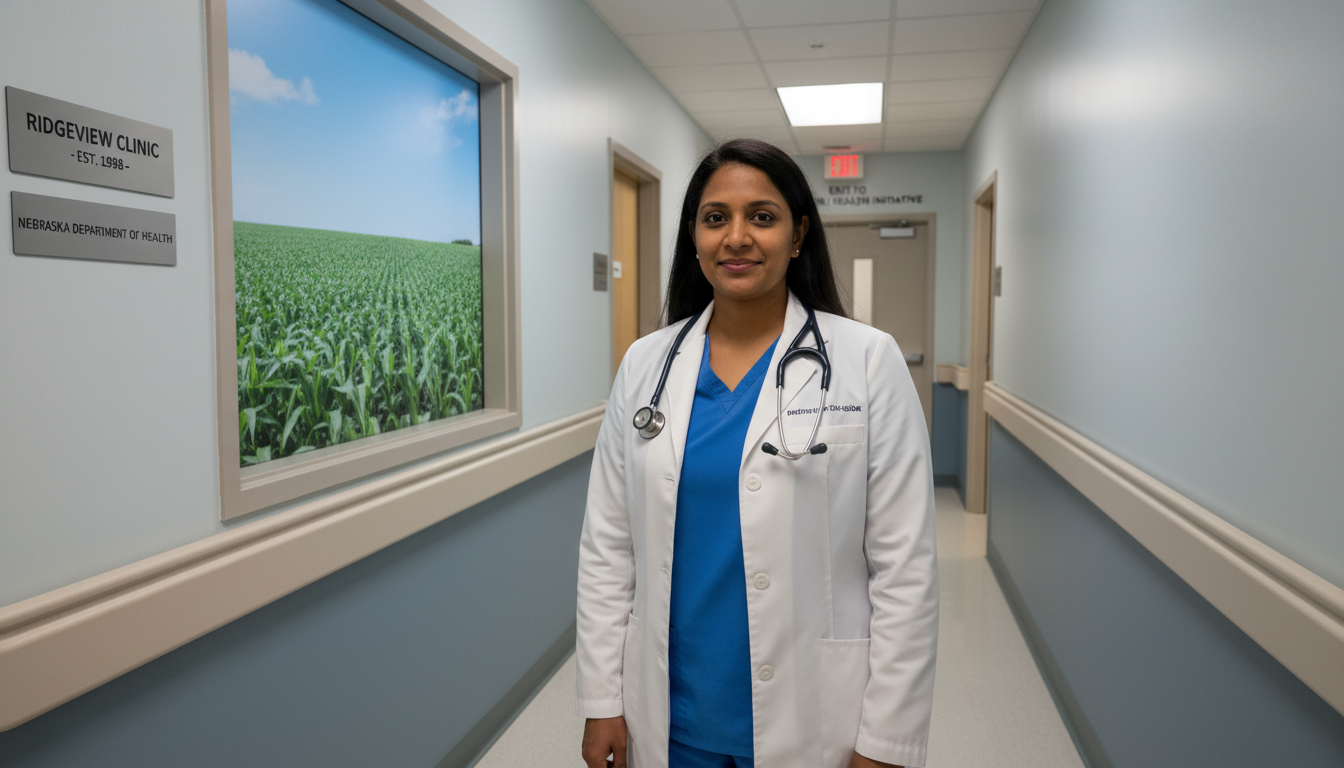
Understanding H‑1B Sponsorship in Ivy League & Top‑Tier Residency Programs
For many international medical graduates (IMGs), matching into an Ivy League residency or another top medical school residency is only half the battle. The next critical question is: Will the program sponsor an H‑1B visa?
H‑1B sponsorship affects where you can train, how long you can stay, and what your early career options look like—especially if you did not pursue, or cannot extend, a J‑1 visa. This article breaks down how H‑1B residency programs work in the Ivy League and other elite academic centers, how to identify them, and how to strategically position yourself as an IMG applicant.
1. J‑1 vs H‑1B for Residency: What IMGs Need to Know
Before diving into specific institutions, it’s essential to understand the fundamental differences between J‑1 and H‑1B visas for residency training, and why some top-tier programs choose one over the other.
1.1 Basic Definitions
J‑1 Visa (ECFMG-sponsored Alien Physician)
- Primary route for many IMGs in residency/fellowship.
- Sponsored by ECFMG, not the hospital.
- Usually requires a two-year home country physical presence after training (the “J‑1 waiver” issue), unless waived via a Conrad 30 or similar program.
- Easier and more widely accepted by residency programs.
H‑1B Visa (Temporary Specialty Worker)
- Employer-sponsored (the residency program/hospital directly petitions for you).
- No automatic two-year home residence requirement.
- Allows dual intent (you can pursue permanent residency while on H‑1B).
- Often preferred by applicants planning long-term careers in the U.S.
- Requires passing USMLE Steps 1, 2 CK, and 3 before H‑1B petition filing (a common stumbling block).
1.2 Why Ivy League & Top-Tier Programs Matter
Ivy League and similarly elite academic centers offer:
- Strong subspecialty exposure and research opportunities
- Name recognition that helps in future fellowships and academic careers
- Access to major health systems often designated as H‑1B cap exempt (more on this later)
For IMGs, training at these programs on an H‑1B can:
- Avoid J‑1 home return requirements
- Enable a smoother transition into physician jobs or fellowships that also use H‑1B or offer permanent residency sponsorship
However, not all Ivy League or top medical school residency programs are willing to sponsor H‑1B, even if they technically can. Understanding the landscape is key.
2. How H‑1B Residency Sponsorship Works in Academic Medical Centers
2.1 Cap‑Subject vs H‑1B Cap Exempt
The standard H‑1B system involves an annual numerical cap and a lottery. But many large teaching hospitals are H‑1B cap exempt, meaning they can file H‑1B petitions any time of year and are not limited by the cap.
Hospitals and institutions that are typically H‑1B cap exempt include:
- Non-profit entities related to or affiliated with institutions of higher education
- University-owned or university-hospital systems
- Some major research institutions linked to universities
This category includes many Ivy League-affiliated hospitals and other top-tier academic centers. For you, that means:
- No H‑1B lottery risk for your residency position
- Greater timing flexibility for petition filing
- Often more institutional experience with physician H‑1B petitions
When you review a program’s materials, look for statements like:
- “Our institution is H‑1B cap exempt.”
- “We sponsor H‑1B visas without being subject to the annual lottery.”
2.2 Common Institutional Policies
Even when hospitals are cap exempt and legally able to sponsor, programs may still choose not to offer H‑1B, or may tightly restrict it. Common policies among Ivy League and top-tier programs include:
- J‑1 only: The program states they only sponsor J‑1 visas.
- J‑1 preferred, H‑1B in rare exceptions: H‑1B may be considered case-by-case (e.g., for outstanding applicants, or if J‑1 is not an option).
- H‑1B sponsorship limited to certain specialties: A department policy that differs from the institution’s general rule.
- USMLE Step 3 requirement: Many top programs require Step 3 passed before ranking or before any H‑1B petition is filed.
Always check both the GME office policy (institution-wide) and the specific residency program website. Departmental decisions can vary even within the same Ivy League health system.
2.3 Timing and Practical Steps
To secure an H‑1B through a residency program, typically you must:
- Pass USMLE Step 3 early (preferably by fall of the application year).
- Obtain ECFMG certification (except for some Canadian graduates with special conditions).
- Be selected and ranked by a program that is willing to sponsor H‑1B.
- Have your program’s GME and international office prepare and file the petition after Match.
Since Step 3 is often the most significant bottleneck, many IMGs targeting Ivy League H‑1B residency programs prioritize:
- Taking Step 3 before application season
- Scheduling Step 3 early enough that results are available by November–January

3. Ivy League & Top-Tier Institutions with H‑1B-Friendly Patterns
Policies change frequently, and every applicant must verify directly with programs, but several Ivy League and top medical school residency programs have historically appeared on unofficial H‑1B sponsor lists and are known for relatively IMG- and H‑1B-friendly approaches.
Below, programs are discussed in general terms, not as definitive legal or institutional statements.
3.1 Ivy League Systems: General Trends
Ivy League medical centers often fall into a few broad categories regarding H‑1B:
- Consistently H‑1B supportive, especially in certain specialties
- Selective H‑1B use, often for fellows or highly competitive candidates
- J‑1 dominant, with limited or no H‑1B consideration at the residency level
Commonly, internal medicine, neurology, pathology, and psychiatry may be more open to H‑1B, while some surgical specialties are more restricted.
3.2 Examples of Ivy League–Affiliated Programs (Generalized)
Important: Names below are used for educational context only. Always confirm current policies on each program’s official website or by contacting their program coordinator or GME office.
Harvard-affiliated hospitals (e.g., MGH, Brigham and Women’s, Beth Israel Deaconess)
- As major academic centers associated with a leading university, these institutions have extensive experience with H‑1B petitions.
- Historically, some of their departments (e.g., internal medicine, neurology, pathology) have sponsored H‑1B for residents and fellows.
- However, some programs may state J‑1 preferred and only use H‑1B in special circumstances.
Columbia, Cornell, and NewYork-Presbyterian network
- This large teaching system has been known to sponsor H‑1B in various residency and fellowship programs.
- Because the hospital is university-affiliated and research-intensive, it usually fits H‑1B cap exempt criteria.
- Some departments explicitly mention H‑1B sponsorship on their websites or in FAQ sections.
Yale-New Haven, Penn Medicine, and similar Ivy League hubs
- Frequently appear on anecdotal H‑1B sponsor lists.
- Often emphasize ECFMG certification and Step 3 as prerequisites to H‑1B sponsorship.
- May sponsor H‑1B primarily for residents who are in advanced years or in fellowship-level training.
Dartmouth-Hitchcock, Brown (affiliated with an Ivy peer group), and others
- While not all are Ivy League, they share “top-tier academic” status and may offer similar visa policies.
- Some have well-documented histories of H‑1B sponsorship for IMGs in internal medicine, psychiatry, or subspecialty fellowships.
3.3 Non-Ivy Top-Tier Programs with Strong H‑1B Track Records
In addition to Ivy League programs, many top medical school residency programs at institutions like:
- Johns Hopkins
- Mayo Clinic
- Cleveland Clinic
- Stanford
- University of Chicago
- University of Michigan
- Washington University in St. Louis
- University of California systems (e.g., UCSF, UCLA)
have substantial experience with H‑1B cap exempt petitions for residents and fellows. Historically, multiple IMGs have reported successful H‑1B sponsorship at these centers, especially in internal medicine, neurology, and pathology.
When considering Ivy League vs non-Ivy, think of them as a larger ecosystem of top-tier programs where cap-exempt H‑1B residencies are possible.
4. Finding H‑1B Residency Programs and Building Your Target List
Since there is no single official, up-to-date government “H‑1B sponsor list” specifically for residency programs, you need a systematic approach to identifying Ivy League and top-tier options.
4.1 Use Multiple Data Sources
Program Websites (Visa Policy Sections)
- Many programs clearly state: “We sponsor J‑1 and H‑1B visas” or “We only sponsor J‑1 visas.”
- Check the GME office website for general policy, and the department residency page for specialty-specific rules.
FREIDA (AMA Residency & Fellowship Database)
- FREIDA sometimes lists accepted visa types.
- Use it as a starting point, but always confirm details directly, as FREIDA entries can be outdated.
NRMP and Program Information Sheets
- Some programs publish downloadable brochures or handbooks containing visa information.
Alumni & Resident Profiles
- Look up current or recent residents from your home country or medical school.
- Many alumni share on LinkedIn or program websites where they trained and what visa they held.
- Reaching out politely can yield first-hand confirmation of H‑1B sponsorship.
4.2 Questions to Ask Programs (Politely and Strategically)
When contacting program coordinators or administrators, ask:
- “Does your residency program sponsor H‑1B visas for incoming residents, or only J‑1?”
- “Is USMLE Step 3 required before you can sponsor an H‑1B?”
- “Is there a preference for J‑1 over H‑1B, or does it depend on the applicant’s situation?”
- “Are there specialties or tracks within your institution where H‑1B is more commonly used?”
Avoid sending vague mass emails. Instead:
- Introduce yourself briefly (name, medical school, degree year).
- Specify that you are interested in their program and that understanding visa options will help you plan exams and timeline.
- Keep the message concise and professional.
4.3 A Stepwise Strategy to Build Your Ivy/Top-Tier H‑1B List
List Target Institutions
- Start with Ivy League and elite non-Ivy programs where you want to train.
Check GME and Residency Websites
- Mark each as J‑1 only, J‑1/H‑1B, or unclear.
Cross-Check with FREIDA and Alumni Networks
- Confirm where current residents/fellows are on H‑1B.
Contact Programs with Ambiguous Information
- Get direct confirmation by email.
Tier Your List
- Tier 1: Programs confirmed to sponsor H‑1B without unusual restrictions.
- Tier 2: Programs that prefer J‑1 but occasionally accept H‑1B in special situations.
- Tier 3: J‑1 only (you can still apply if J‑1 is acceptable to you).
This approach helps you create a personalized H‑1B sponsor list focused on Ivy League and top-tier centers relevant to your specialty.

5. Strengthening Your Application to H‑1B-Sponsoring Ivy & Top-Tier Programs
Competition at Ivy League and elite programs is intense—especially for IMGs. When asking a program to invest time and resources into an H‑1B petition, you must present yourself as a clear value-add.
5.1 Academic and Exam Profile
To stand out:
USMLE Scores
- Competitive Step 2 CK score is critical (especially now that Step 1 is pass/fail).
- A solid Step 3 score completed early is a major advantage at H‑1B-residency programs.
Research and Publications
- Ivy League and top medical school residency programs heavily value research.
- Aim for:
- Peer-reviewed publications
- Abstracts or posters at U.S. or international conferences
- Meaningful participation in research projects (not just honorary authorship)
Clinical Experience
- U.S. clinical experience (USCE) in academic centers—sub-internships, electives, or observerships—is highly valued.
- Letters of recommendation from U.S. academic faculty, particularly from well-known institutions, can carry significant weight.
5.2 Strategic Timing of Step 3
Because H‑1B requires Step 3, and Ivy-level programs can be selective, plan:
- Take Step 3 before or early in application season, ideally by:
- July–September for the Match starting that same September.
- This allows:
- Including your Step 3 result in ERAS
- Programs to evaluate your complete file and be confident about H‑1B eligibility
If you cannot complete Step 3 early:
- Focus on programs that state they only need Step 3 before starting residency, not before ranking. Be cautious, as policy interpretations can differ between GME and departments.
5.3 Communicating About H‑1B During the Application Process
Personal Statement
- You do not need to center your statement on visa issues, but it’s acceptable to mention that you are committed to building a career in U.S. academic medicine and value visa pathways that support long-term contribution.
Interviews
- If visa type comes up, be honest about your preference for H‑1B.
- Emphasize that you:
- Have completed or are scheduled for Step 3
- Understand paperwork and timing demands
- Are committed to the full duration of residency and potentially beyond
Post-Interview Communication
- If necessary, you can clarify visa details in follow-up emails, especially if the program is uncertain or if they say “we don’t usually do H‑1B but might consider it.”
- Express your strong interest and readiness to meet all requirements.
5.4 Practical Example: Targeting H‑1B in Internal Medicine at a Top Center
Imagine an IMG from India with:
- Step 1: Pass
- Step 2 CK: 253
- Step 3: 228 (already passed by August)
- 1 year of research at a U.S. Ivy League lab, 2 publications, 1 poster
- 2 strong letters from U.S. academic faculty
This candidate could:
- Target Ivy League internal medicine programs known to have IMGs on H‑1B.
- Highlight research productivity and academic goals aligned with those institutions.
- Mention in interviews:
- Clear interest in an academic career
- Specific subspecialty and how the program’s research matches their plans
- That Step 3 is already completed, making H‑1B sponsorship smoother.
Their combination of early Step 3, real research output, and U.S. academic connections positions them well for an H‑1B-supported slot at a top-tier program.
6. Planning Beyond Residency: Long-Term Strategy with H‑1B
Thinking ahead is essential. Your choice of visa in residency shapes your options for fellowship and early attending practice.
6.1 H‑1B for Fellowship at Top-Tier Institutions
Many Ivy League and elite programs that sponsor H‑1B for residency also:
- Sponsor H‑1B (or extend H‑1B) for fellowships
- Remain H‑1B cap exempt, allowing continuous training despite the national cap
If you start residency on H‑1B at a cap-exempt institution:
- You can often remain in cap-exempt H‑1B status through multiple years of residency and fellowship at similar institutions.
- This can create a multi-year secure pathway while you work on long-term options (e.g., employment-based green card with an academic or hospital employer).
6.2 Transition to H‑1B Cap-Subject Jobs
Once you leave a cap-exempt environment (e.g., moving from Ivy League hospital to a private practice):
- You may become subject to the H‑1B cap and lottery.
- Planning ahead with your future employer is crucial:
- Many physicians undergo H‑1B cap lottery while on J‑1 waiver or during the final year of training.
- Some choose employers that are also cap exempt (e.g., academic or non-profit hospitals) to avoid this.
6.3 H‑1B vs J‑1 Waiver Pathways
If you avoid J‑1 and use H‑1B from the start:
- You will not need a J‑1 waiver job after training.
- However, you also won’t be eligible for certain state-based waiver programs that target underserved areas.
If your long-term goal is academic medicine in top-tier centers, starting on H‑1B at an Ivy League residency can be particularly aligned with:
- Seamless fellowship transitions
- Early faculty appointments in cap-exempt institutions
- Concurrent pursuit of permanent residency (e.g., EB-2 NIW, EB-1B, or employer-sponsored petitions)
FAQs about H‑1B Sponsorship in Ivy League & Top-Tier Residency Programs
1. Is it harder to get into an Ivy League residency program if I need H‑1B instead of J‑1?
Needing H‑1B does add complexity, but it does not automatically disqualify you. Many Ivy League and top-tier programs have long histories of training IMGs on H‑1B. However:
- Programs may prefer J‑1 due to simpler administration.
- To offset that, you must present a stronger-than-average application: high USMLE scores, early Step 3, research, and robust U.S. letters of recommendation.
Ask programs directly about their openness to H‑1B for strong candidates.
2. Do I absolutely need USMLE Step 3 before applying for an H‑1B residency?
For almost all H‑1B residency petitions, yes—Step 3 is required by U.S. immigration regulations. Some institutions insist that Step 3 be passed before they rank you, others allow Step 3 to be completed between Match and the start of residency, but in practice:
- Completing Step 3 before or during the ERAS application window is the safest and most competitive strategy.
- Ivy League and top-tier programs are particularly likely to require early Step 3 for H‑1B sponsorship.
3. How can I verify if a specific Ivy League or top-tier program is H‑1B cap exempt?
Cap exemption usually stems from being:
- Affiliated with an accredited U.S. institution of higher education (e.g., a university)
- A non-profit research or educational institution
Most Ivy League and major university hospitals meet this condition. To verify:
- Check the hospital’s GME or international office website.
- Look for phrases like “cap exempt” or explanations about physician H‑1B petitions.
- If unclear, email the GME office with a precise question about whether their institution is H‑1B cap exempt for residency positions.
4. Should I avoid J‑1 completely if my goal is an Ivy League or top-tier academic career?
Not necessarily. Many outstanding academic physicians trained on J‑1 and later obtained waivers, faculty positions, and green cards. However:
- If you strongly prefer to avoid the two-year home return or waiver requirement, and you can realistically secure H‑1B, it may be advantageous.
- If J‑1 is your only path into a top-tier training environment, it can still be a very powerful career move, as long as you plan ahead for waivers and future visa options.
Key Takeaway:
Ivy League and top-tier residency programs can be excellent destinations for IMGs seeking H‑1B residency programs in a cap-exempt environment, but policies vary significantly across institutions and specialties. By researching carefully, prioritizing early USMLE Step 3, and targeting programs with a track record of H‑1B sponsorship, you can design a realistic and strategic path into high-level U.S. training without the constraints of a J‑1 home return requirement.