Understanding H‑1B Sponsorship in Philadelphia Residency Programs
For international medical graduates (IMGs) targeting a Philadelphia residency, understanding H‑1B sponsorship can make or break your application strategy. Philadelphia is home to several major academic medical centers—most prominently the Penn residency programs at the University of Pennsylvania/Perelman School of Medicine—along with community and safety‑net hospitals that differ widely in their visa policies.
This article focuses specifically on H‑1B sponsorship programs for residency in Philadelphia: what they are, how they work, which types of programs tend to sponsor, and how you can realistically plan your applications as an IMG.
We’ll also integrate practical advice on timing, exams, and documentation to help you navigate both the residency match and the U.S. immigration process in parallel.
1. H‑1B Basics for Residency Applicants
1.1 What the H‑1B Is (and Why It Matters for IMGs)
The H‑1B is a temporary “specialty occupation” work visa that many IMGs prefer for residency and fellowship because:
- It is an employment-based visa directly tied to the sponsoring hospital or institution.
- It does not require a home-country return (unlike many J‑1 visas with two‑year home residence rules).
- It can be a more straightforward path toward long-term employment and, eventually, permanent residency (green card), assuming you later find a sponsoring employer.
However, H‑1B for residency is not the same as H‑1B for the tech industry. Academic hospitals and universities often operate under H‑1B cap exempt rules, which is an important distinction.
1.2 Cap‑Subject vs. Cap‑Exempt H‑1B
In the broader U.S. job market, H‑1B visas are often cap‑subject—limited by an annual quota and assigned via lottery. Fortunately, most Philadelphia residency programs that sponsor H‑1B visas are H‑1B cap exempt because they are:
- Nonprofit hospitals or
- University‑affiliated institutions or
- Governmental or public entities.
Practical implications for you as an IMG:
- No need to compete in the general H‑1B lottery for residency.
- Petitions can often be filed outside the April filing window typical of private employers.
- Residency programs can usually match you in March and start your H‑1B process soon after, assuming you meet all eligibility criteria.
When researching a program, confirm whether:
- They sponsor H‑1B at all, and
- Whether they are cap exempt (most major academic centers in Philadelphia are, but don’t assume).
1.3 Key H‑1B Requirements for Residency
Most Philadelphia residency programs that sponsor H‑1B will require:
- USMLE Step 1 and Step 2 CK: Passed with scores reported before ranking (many require passes by interview season; some insist on Step 3 before rank list).
- USMLE Step 3:
- Often required before the H‑1B petition is filed, and increasingly before rank order list certification in competitive programs.
- ECFMG Certification:
- Must be fully certified (not just exam‑complete) by the time of starting residency; many H‑1B programs insist on certification by rank list.
- Valid medical degree and appropriate state documentation for training license.
- Clear immigration history (no major violations, overstays, or status issues).
Not all Philadelphia programs give the same weight to these factors, but Step 3 and ECFMG certification timing are the two most critical for H‑1B.

2. Philadelphia Landscape: Types of H‑1B-Friendly Residency Programs
Philadelphia offers a rich ecosystem of training environments. For H‑1B sponsorship, it helps to break them into categories.
2.1 Major Academic Centers (Including Penn Residency Programs)
The city’s largest academic institutions typically house multiple ACGME‑accredited residency programs, fellowships, and research units. While policies change, academic centers are often the first place to look for H‑1B residency programs because they are:
- Usually H‑1B cap exempt.
- Familiar with complex immigration histories.
- More experienced with IMGs and dual‑track (J‑1 and H‑1B) sponsorship.
When you research Penn residency programs (e.g., Internal Medicine, Neurology, Anesthesiology), pay attention to:
- The GME office website: They often include a section on visa sponsorship.
- Program FAQs: Some explicitly mention whether they sponsor J‑1 only or both J‑1 and H‑1B.
- Current and recent residents: LinkedIn or program biographies often show visa type (J‑1 vs H‑1B) and IMG backgrounds.
At major centers, H‑1B may be more common in:
- Internal Medicine and its subspecialties
- Anesthesiology
- Radiology
- Pathology
- Neurology
- Some surgical specialties (depending on institution)
…while smaller or less resourced departments may default to J‑1 only.
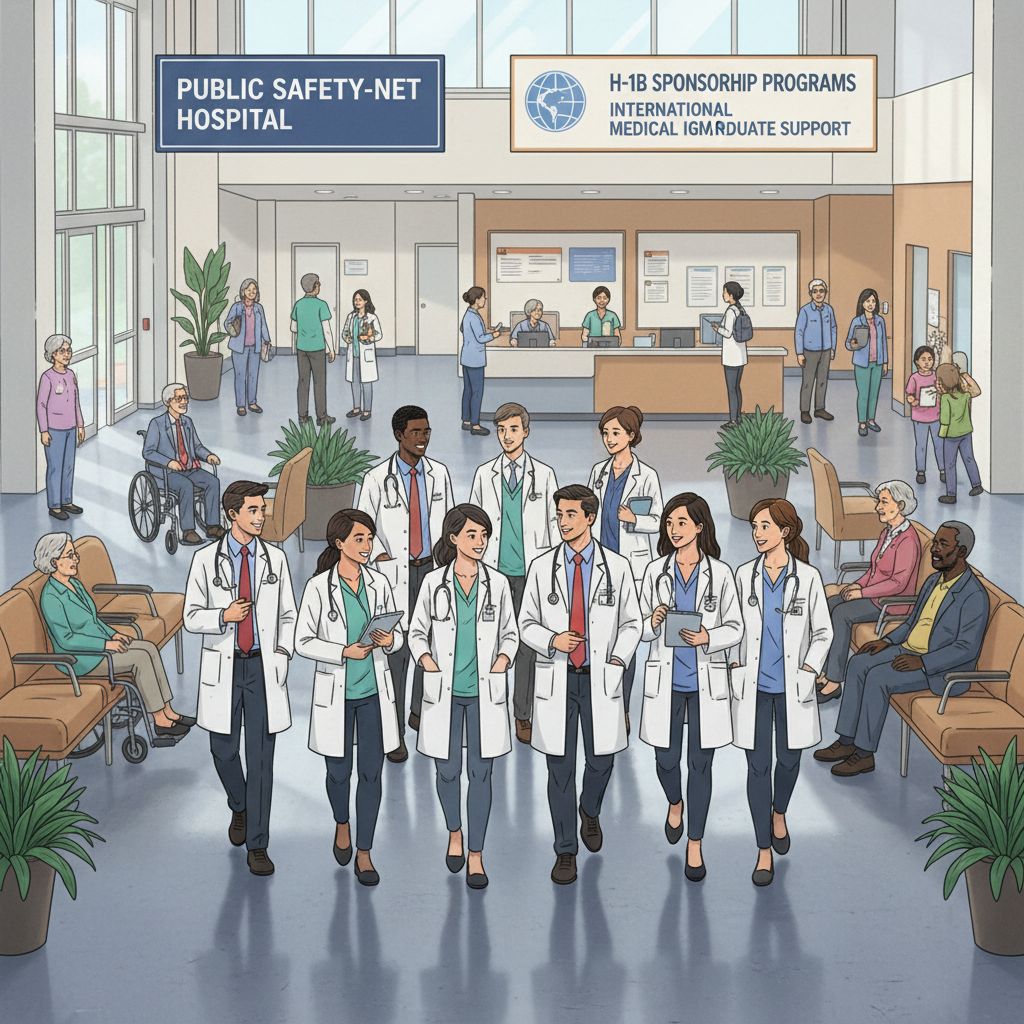
2.2 Community and Safety‑Net Hospitals
Philadelphia also has community‑based and safety‑net hospitals with their own ACGME‑accredited programs. These institutions may:
- Prefer J‑1 only due to lower legal costs and simpler administration.
- Allow case‑by‑case H‑1B sponsorship, especially for strong candidates with Step 3 and clear long‑term plans.
- Occasionally have no visa sponsorship at all, focusing on U.S. citizens/permanent residents.
You should not assume H‑1B availability just because a program has IMGs; they may all be on J‑1.
Actionable approach:
- Review the residency program’s GME policy page or visa FAQ.
- If unclear, write a brief, focused email to the program coordinator asking:
- “Do you sponsor H‑1B visas for residents, or do you accept only J‑1?”
- “Is there a minimum set of requirements (e.g., Step 3, ECFMG certification by a certain date) for H‑1B sponsorship?”
2.3 How to Build Your Own H‑1B Sponsor List for Philadelphia
There is no perfect public H‑1B sponsor list specifically for Philadelphia residencies, but you can construct a reliable working list using:
- GME Websites
- Check each hospital’s GME page for “Visa Policies,” “International Graduates,” or “Graduate Trainee Visas.”
- ACGME Program Websites
- Some residency pages explicitly state, “We sponsor J‑1 and H‑1B visas.”
- Residency Forums and Recent Match Data
- Look for recent posts by IMGs who matched in Philadelphia, noting their visa type.
- LinkedIn and Program Bios
- Search for “H‑1B Resident Physician Philadelphia” or specific hospital names; some doctors list their visa status.
Create a simple spreadsheet with:
- Program name
- Specialty
- Visa policy (J‑1 only / H‑1B & J‑1 / unclear)
- Minimum requirements (Step 3 required? ECFMG by interview vs by start date?)
- Notes from correspondence or your own research
Over 2–3 weeks, you can build a personal, up‑to‑date H‑1B sponsor list for Philadelphia that is more accurate than generic online lists.
3. Step‑by‑Step Strategy: Matching Into an H‑1B Residency in Philadelphia
3.1 Prioritize Early: Decide If H‑1B Is Non‑Negotiable
First, be clear with yourself:
- Is H‑1B essential, or would you accept a J‑1 if the program is excellent?
- Are you willing to return home for two years (or seek a waiver) if you end up on a J‑1?
If H‑1B is non‑negotiable, you will:
- Apply to fewer total programs, because fewer sponsor H‑1B.
- Need stronger exam performance, especially Step 2 CK (and Step 3).
- Accept a more competitive and narrower application field.
If you can accept either visa, you can:
- Include both H‑1B residency programs and J‑1‑only programs in your list.
- Use H‑1B preference as a secondary factor during ranking, not initial selection.
3.2 Exam Planning: Why Step 3 Is Critical for H‑1B
Many Philadelphia programs that offer H‑1B require USMLE Step 3 before initiating the H‑1B petition. Some insist on Step 3 results before rank order list certification.
If you want H‑1B in the same cycle:
- Plan Step 3 so scores are available no later than January/early February of the Match year.
- This usually means taking Step 3 by October–December of the prior year, allowing for score reporting delays.
- Ensure your ECFMG certification process is aligned; you cannot be ECFMG certified without passing Step 3 if your pathway requires it.
Example timeline (for a July 2027 start):
- 2025–early 2026: Complete Step 1 and Step 2 CK.
- Mid‑2026: Take Step 3 (latest by, say, November 2026).
- September 2026: Submit ERAS application for the 2027 Match, mentioning your Step 3 plans/booking date.
- December 2026–January 2027: Step 3 score arrives; update programs via ERAS.
- February 2027: Programs finalize rank lists; you now qualify for H‑1B consideration.
3.3 Application Content for H‑1B‑Friendly Programs
Many H‑1B residency programs in Philadelphia are more exam‑focused because:
- H‑1B petitions demand clear evidence you have passed all licensing exams.
- Institutions incur higher legal and filing costs.
In your ERAS application and personal statement for these programs:
Highlight exams clearly:
- Include Step 1, Step 2 CK, and Step 3 scores in your CV and ERAS fields.
- If Step 3 is pending, write: “Step 3 scheduled for [Month Year], intending to complete prior to rank list finalization.”
Demonstrate academic readiness:
- Emphasize any research, publications, or teaching.
- Show your ability to integrate into a U.S. academic environment.
Clarify long‑term goals:
- For programs open to H‑1B, mention your interest in long‑term practice in the U.S. and commitment to their health system or region (e.g., long‑term practice in the greater Philadelphia area or underserved Pennsylvania communities).
Address visa in a concise way:
- In the ERAS “Additional Information” or personal statement, you may briefly note:
- “I am an international medical graduate seeking a training position on an H‑1B visa and have completed/passed Step 3.”
- In the ERAS “Additional Information” or personal statement, you may briefly note:
Avoid long immigration narratives; keep it professional and factual.
3.4 During Interviews: How to Discuss H‑1B
When interviewing for Philadelphia residency programs:
When to bring it up:
- Only after you have established your fit, motivation, and qualifications.
- Typically near the end of the interview, or with the program coordinator during logistics discussions.
How to phrase it:
- “I wanted to ask about your policy regarding visa sponsorship. I’m eligible for both J‑1 and H‑1B, and I have already passed Step 3. Do your residents generally come on J‑1, or do you also sponsor H‑1B when appropriate?”
If you must have H‑1B:
- Be transparent but not demanding:
- “Given my long‑term career plans, H‑1B sponsorship is important to me. I understand if your program sponsors J‑1 only, but if there is flexibility, I would greatly appreciate consideration for H‑1B.”
3.5 After the Match: H‑1B Petition Timing
Once you match to a Philadelphia program willing to sponsor H‑1B:
- The GME or HR office will coordinate with:
- Their in‑house legal team, or
- Outside immigration counsel.
- They will request documentation:
- ECFMG certificate
- USMLE transcripts
- Medical school diploma and translations
- Passport copies and any prior visa/I‑94 records
- CV and employment details
Because these hospitals are generally H‑1B cap exempt, they can usually file as soon as:
- All paperwork is ready,
- Prevailing wage and LCA steps are complete,
- You meet licensing/Step 3 requirements defined by the institution and the state.
Stay responsive and organized; delays often come from missing documents or late responses.

4. Special Considerations: H‑1B, Cap‑Exempt Paths, and Long‑Term Planning
4.1 H‑1B Cap‑Exempt: Advantages in Academic Settings
As mentioned, many Philadelphia residency programs are H‑1B cap exempt. Key benefits:
- No lottery risk: You don’t compete in the national H‑1B lottery used by private employers.
- Flexible timing: Petitions can be filed when needed, not just in April.
- Potential extension into fellowship: If you continue training at cap‑exempt institutions, you may maintain cap‑exempt H‑1B status.
This is a major reason some IMGs prefer to start their careers in academic centers like those associated with Penn residency programs.
4.2 Transitioning from Cap‑Exempt to Cap‑Subject
If, after training, you want to work for a private practice or community hospital that is not cap exempt:
- You will eventually need a cap‑subject H‑1B (i.e., you must go through the lottery).
- Some graduates:
- Stay in cap‑exempt jobs long‑term (academic faculty, VA hospitals, public institutions).
- Plan their move carefully with immigration counsel so they maintain legal status.
If you foresee a strong interest in private practice in the Philadelphia suburbs or elsewhere in the U.S., discuss long‑term visa strategy with an attorney early—even during residency.
4.3 Comparing J‑1 vs. H‑1B for Philadelphia Residencies
J‑1 advantages:
- More widely available; many programs accept J‑1 but not H‑1B.
- Streamlined sponsorship through ECFMG rather than individual hospital lawyers.
J‑1 disadvantages:
- Typically carries a two‑year home‑country physical presence requirement after training.
- To remain in the U.S., you must pursue a J‑1 waiver job, often in underserved or rural areas (less likely in central Philadelphia).
H‑1B advantages:
- No mandatory home‑return rule.
- More straightforward transition to employment and green card sponsorship.
H‑1B challenges:
- Fewer programs sponsor it.
- Requires Step 3 and more careful timing.
- Institutions bear higher cost and administrative burden.
For IMGs strongly committed to a career in Pennsylvania or in U.S. academic medicine, an H‑1B‑friendly Philadelphia residency can be a strategic launch point.
5. Practical Checklist: Applying to H‑1B‑Friendly Philadelphia Programs
Use this checklist as you prepare your application strategy.
5.1 18–24 Months Before Match
- Complete Step 1 and Step 2 CK with competitive scores.
- Begin clinical exposure in the U.S.:
- Observerships, research positions, or hands‑on electives when possible.
- Start mapping Philadelphia residency programs:
- List all major teaching hospitals and community programs.
- Identify which may be H‑1B cap exempt institutions.
5.2 12–15 Months Before Match
- Schedule USMLE Step 3 with score results planned before January of the Match year.
- Draft your ERAS personal statement, tailoring a version for academic, H‑1B‑friendly programs.
- Reach out to potential letter writers (ideally U.S.-based if possible).
5.3 9–12 Months Before Match (ERAS Season)
- Finalize your personal spreadsheet H‑1B sponsor list:
- Mark programs that clearly state “H‑1B sponsored.”
- Note programs that are “J‑1 only” to avoid wasting fees.
- Prioritize:
- Academic programs tied to Penn and other universities.
- Community programs explicitly stating H‑1B sponsorship.
- Submit ERAS early in the application window.
5.4 Interview Season
- Practice a clear, short explanation of your visa status and goals.
- During interviews:
- Focus on your qualifications, clinical reasoning, and fit.
- Ask one or two focused visa questions near the end.
- After interviews:
- Send thank‑you emails when appropriate.
- Update programs when your Step 3 score becomes available.
5.5 Rank List and Post‑Match
- Rank programs in truthful order of preference, considering:
- Training quality
- Location and culture
- Visa policy (H‑1B vs J‑1)
- Long‑term goals
- After matching to an H‑1B‑friendly program:
- Respond quickly to all GME/HR requests.
- Gather documents in advance (diplomas, transcripts, translations, ECFMG, USMLE).
- Stay in close communication with your program’s administrative staff regarding petition status and start date.
6. Frequently Asked Questions (FAQ)
1. Do all Philadelphia residency programs sponsor H‑1B visas?
No. Philadelphia has a mix of policies:
- Some programs are J‑1 only and will not consider H‑1B sponsorship at all.
- Some sponsor both J‑1 and H‑1B, typically large academic centers and certain community hospitals.
- A few may not sponsor any visas, focusing on U.S. citizens and permanent residents.
Always verify the current policy on the GME website or by emailing the program coordinator.
2. Are Penn residency programs generally H‑1B friendly?
Many Penn residency programs are housed within large, university‑affiliated hospitals that are H‑1B cap exempt and have experience working with IMGs. However:
- Not every department has the same policy.
- Requirements (especially Step 3 timing) can vary.
- Some may still prefer J‑1 for logistical reasons.
Review each individual program’s website and, when necessary, confirm by contacting the program office.
3. Is Step 3 mandatory to get an H‑1B for residency in Philadelphia?
In practice, for most H‑1B residency programs in Philadelphia, yes:
- Many require Step 3 completed and passed before they can file an H‑1B petition.
- Some even require Step 3 results before they rank you.
- Rare exceptions may exist, but you should not rely on them.
If H‑1B is important to you, plan to complete Step 3 before the Match rank deadline.
4. If I start on a J‑1, can I switch to H‑1B later in the same residency?
Switching from J‑1 to H‑1B during residency is normally difficult and often not permitted due to ECFMG and immigration regulations, especially once the J‑1 is issued for graduate medical education.
Most IMGs who want H‑1B:
- Either start residency on H‑1B from the beginning, or
- Complete J‑1 training and then seek a J‑1 waiver job or transition after fulfilling the two‑year home‑residency requirement.
Discuss any potential change of status plans with both your GME office and a qualified immigration attorney before making assumptions.
By understanding the visa landscape in Philadelphia, planning your exams—especially Step 3—strategically, and methodically building your own H‑1B sponsor list, you can target H‑1B residency programs in this region far more effectively. For IMGs intent on long‑term careers in U.S. academic medicine or within Pennsylvania’s healthcare system, a Philadelphia‑based H‑1B residency can be a powerful and realistic pathway.